Last-mile delivery challenges are all about that final, chaotic, and surprisingly expensive step of getting a package from a local warehouse to your front door. Think high costs, snarled city traffic, and the dreaded "Sorry We Missed You" slip—these issues combine to make it the toughest part of the entire shipping process.
The Final, Most Expensive Leg of Your Package's Journey

Picture this: a package travels thousands of miles across oceans and highways without a hitch. It moves with incredible speed and efficiency right up until it hits the last few blocks. Suddenly, that smooth journey grinds to a halt, turning into a high-stakes, block-by-block obstacle course. To really get it, you have to understand what makes efficient last mile delivery the most critical—and often most expensive—part of any delivery.
It’s a bit like the final push to the summit on a mountain climb. Most of the distance is covered with relative ease, but that last, steep ascent is where the real struggle begins. It’s slower, more demanding, and requires a totally different approach.
This final stage is so complicated because it shifts from moving items in bulk to making individual stops at countless unique addresses. Each stop comes with its own set of problems, from tricky building access to finding a safe spot to leave the box.
Why This Matters to Urban Residents
If you live in a city, you experience last-mile challenges firsthand. It's the frustration of a missed delivery notice on your door, even though you were home all day. It’s the anxiety of being stuck waiting during a vague four-hour delivery window, or the headache of trying to coordinate with a concierge just to get a package.
These personal annoyances are just the tip of the iceberg. The financial and operational burdens on companies are massive. Last-mile delivery now accounts for a staggering 53% of total shipping costs, a huge jump from 41% back in 2018.
Worse yet, every failed delivery attempt piles on more costs, averaging nearly $18 just to try again. These eye-opening last-mile delivery statistics highlight the growing financial strain this final step puts on the entire system.
To break it down, let's look at the main hurdles and how they affect everyone involved.
Top Last Mile Delivery Hurdles at a Glance
The table below summarizes the key problems that make the last mile so difficult and what they mean for both businesses and the people waiting for their packages.
These hurdles don’t just affect a company's bottom line—they directly shape your customer experience. For city dwellers, especially those dealing with the logistics of moving or decluttering, these problems add another layer of stress to an already complex task.
Thankfully, understanding how modern services work can make a huge difference. Learning about the options in a complete guide to storage pickup and delivery can help you sidestep these common headaches altogether.
Why the Last Mile Is So Difficult and Expensive

The last mile’s high costs and logistical nightmares aren’t from one single problem. It's a combination of small inefficiencies, rising expenses, and our own sky-high expectations as customers. Imagine a single delivery driver trying to drop off one hundred different meals to one hundred different apartments. That’s the puzzle of the last mile.
Instead of one truck making a single, efficient trip from a warehouse to a store, the final leg of the journey involves one van making dozens, if not hundreds, of unique stops. Each stop adds more fuel cost, more driver hours, and another chance for something to go wrong.
This is all happening while we, the customers, demand faster and cheaper shipping. We want our stuff now, and we’d prefer not to pay for shipping at all. This forces businesses into a tight corner, trying to manage these last-mile delivery challenges without losing money on every order.
The Urban Obstacle Course
If you live in a city, you already know the hurdles of the last mile. Urban areas create a special kind of chaos that makes on-time delivery a daily challenge for logistics companies.
And it’s so much more than just traffic.
- Crippling Traffic Congestion: A single fender-bender during rush hour can throw off an entire day's delivery schedule. Drivers end up burning fuel just sitting in gridlock, falling further and further behind.
- The Impossible Hunt for Parking: Finding a legal parking spot in a dense city neighborhood is often a lost cause. Drivers have to double-park, circle blocks, or park far away, which adds precious minutes to every single drop-off.
- Navigating Building Labyrinths: Just getting into a secure apartment building is its own mission. It means buzzing multiple times, trying to get a hold of the concierge, or finding a hidden mailroom, all of which eats up time.
These little delays add up fast over a route with 100+ stops. An eight-hour shift can easily stretch into ten hours. That’s why your package can be "out for delivery" all day, only to finally show up after dark. Improving efficiency at the distribution center is a start—as you can see in these warehouse management best practices—but all that planning can fall apart in these final, crucial moments.
The High Cost of Customer Demands
Our modern expectations have turned the last mile into the most expensive part of the entire shipping process, now accounting for over 50% of total shipping costs. At the same time, high shipping fees are one of the top reasons people abandon their online shopping carts. It's a massive pressure cooker for retailers.
This puts businesses in a tough spot. They have to absorb the huge operational costs to meet our demands for cheap, fast delivery. It’s a financial tug-of-war, and something has to give—which often means compromises in service or just baking the cost into higher product prices.
The core tension of the last mile is balancing customer desire for speed and low cost with the operational reality of high-cost, inefficient, single-stop deliveries in congested areas.
The whole system is also incredibly fragile. A single wrong address, a locked gate, or a customer who isn't home can cause a failed delivery. This doesn't just disappoint the customer; it sends costs through the roof. The package has to go all the way back to the hub, get re-processed, and be sent out again the next day, essentially doubling the delivery expense for that one order.
The Domino Effect of a Single Failed Delivery
A single failed delivery might feel like a minor hiccup, but it kicks off a frustrating chain reaction for both you and the company you bought from. For customers, it means a wasted day and a headache. For businesses, it’s a direct hit to their profits and customer trust.
We’ve all been there. You take a day off work, rearrange your schedule, and wait for that important package. You keep refreshing the tracking page, only to see that dreaded "Delivery Attempted" update. The package is nowhere in sight. Now you’re stuck in a loop of calling customer service and hoping it doesn’t happen all over again.
This all-too-common scenario is one of the most painful last mile delivery challenges. It can quickly turn the excitement of a new purchase into a major source of stress.
Common Causes of Delivery Failures
A package can fail to arrive for a lot of reasons, but most of the time, it comes down to just a few common culprits. It really shows how fragile that final step of the journey can be.
- Incorrect Address Information: A simple typo in a street name or a forgotten apartment number can send a driver on a wild goose chase, leaving them with no choice but to mark the delivery as undeliverable.
- No One Is Home: This is the classic, most frequent reason for failure. In households where everyone works or is constantly on the go, being home for a delivery window is a huge logistical challenge.
- Porch Piracy Concerns: Drivers are often told not to leave packages out in the open. If there isn't a secure spot to tuck a box away, they have to take it back to the hub for safety.
These seemingly small slip-ups create big problems that echo back through the entire system, hurting the company's bottom line and its reputation.
The True Cost of One Missed Package
When a delivery fails, the financial impact is immediate. The package has to be driven back to the warehouse, sorted all over again, and reloaded onto another truck for a second try. This process nearly doubles the delivery cost for that one order, often wiping out any profit the company made.
But the money is only half the problem. The damage to customer loyalty can be much worse. Studies have shown that a bad delivery experience can sour a customer’s entire view of a brand, making them think twice before ordering again.
A failed delivery isn't just a logistical problem; it's a broken promise to the customer. Each failure erodes brand trust and increases the likelihood of customer churn, turning a potential loyal advocate into a detractor.
This issue is especially tough for anyone going through a major life event. During a move or a big decluttering project, your schedule is chaotic and your address might be in flux, making missed deliveries almost inevitable. A seamless storage pickup service can be a game-changer, letting you schedule professional pickups for your belongings and completely bypass the uncertainty of standard package delivery.
How Technology Is Reshaping the Last Mile
While last-mile delivery problems can feel overwhelming, a new wave of technology is bringing some serious solutions to the table. Businesses are no longer just absorbing the high costs and logistical nightmares; they’re fighting back with smart tools and innovative strategies. This shift is slowly taming the chaotic final leg of delivery, making it a more predictable and efficient process.
Think of it as ditching a crumpled paper map for a high-powered GPS that not only shows your destination but also anticipates traffic jams and finds faster routes in real time. This evolution is tackling the core challenges head-on, from runaway costs to missed deliveries, creating a system that works better for everyone.
Smarter Routes with AI and Machine Learning
One of the biggest game-changers is AI-powered route optimization. This isn’t your average navigation app. These sophisticated systems chew through massive amounts of data—real-time traffic, weather forecasts, vehicle capacity, and even delivery time patterns in specific neighborhoods—to map out the most efficient routes imaginable.
Picture a driver in a busy city. Instead of following a rigid, pre-set path, the system might dynamically re-route them around a sudden accident or adjust the stop order to avoid school-zone gridlock. It’s like having a logistics guru with a crystal ball riding shotgun.
This kind of intelligent planning does more than just save time. Since the last mile accounts for over 50% of total supply chain emissions, efficiency is everything. Many companies are now pairing electric vehicles with AI analytics to optimize routes, which can slash delivery times by 15-25%. Even so, failed deliveries still plague urban areas at rates of 10-20%, proving that a multi-pronged approach is needed. You can find more statistics on last-mile delivery emissions and efficiency on Spherical Insights.
Bringing Goods Closer with Micro-Fulfillment
Another key strategy is the rise of micro-fulfillment centers (MFCs). These are small, highly automated warehouses tucked right inside urban neighborhoods, often in the back of an existing retail store or a compact industrial space. By moving inventory closer to the end customer, companies dramatically shorten the final delivery distance.
This approach pays off in a few big ways:
- Faster Delivery Times: With products just a few miles from a customer’s door, same-day or even one-hour delivery becomes a real possibility.
- Lower Transportation Costs: Shorter routes mean less fuel burned and lower labor costs per delivery.
- Reduced Carbon Footprint: Fewer miles traveled directly translates to lower emissions, helping companies hit their sustainability targets.
Think of MFCs as a network of mini-hubs that decentralize distribution. Instead of one massive warehouse serving an entire region, dozens of smaller facilities can handle specific zip codes, making that final delivery leg much quicker and more agile.
This simple flowchart shows just how damaging a single failed delivery can be.

As you can see, a missed package is more than just a logistical headache—it's a direct hit to a company's bottom line and the trust it has built with its customers.
Flexible Delivery Models for Modern Life
Beyond just routing and warehousing, companies are completely rethinking how packages get to the customer. Traditional doorstep delivery just doesn’t work for people with busy, unpredictable schedules. This has fueled the growth of more flexible and secure options.
By decoupling the delivery time from the pickup time, companies give customers control, turning a potential point of friction into a moment of convenience.
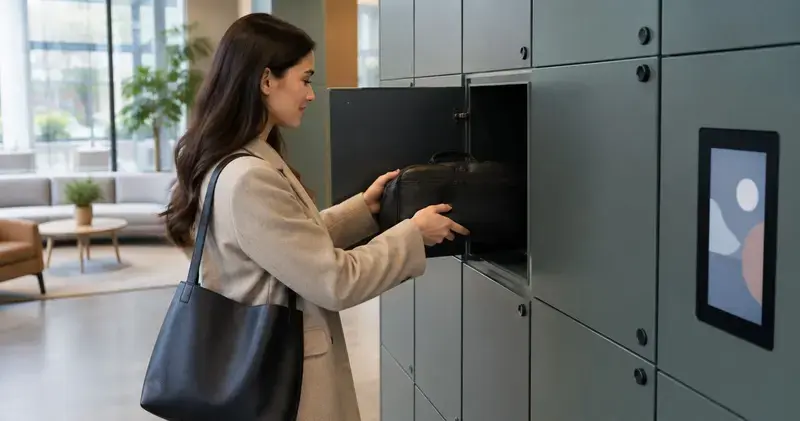
One popular solution is the use of secure smart lockers. You’ve probably seen them in apartment building lobbies, grocery stores, or transit hubs. A driver delivers the package to a secure locker, and the customer gets a code to retrieve it whenever they want, completely eliminating the need to be home for the delivery.
Another emerging model is crowdshipping, which taps into a network of local, non-professional couriers—much like how rideshare apps work. This on-demand model is perfect for urgent, same-day deliveries within a city. For anyone managing belongings during a move or a big decluttering project, learning about on-demand storage solutions offers a similar level of flexibility, helping you sidestep many of these common delivery headaches.
Comparing Modern Last Mile Delivery Solutions
To make sense of these new options, here’s a quick breakdown of the leading technologies and strategies companies are using to solve last-mile problems, along with their pros and cons.
Each of these solutions offers a unique way to tackle the last mile. While none is a silver bullet, they represent a powerful toolkit that businesses can use to build a more resilient, efficient, and customer-friendly delivery network.
A Smarter Way to Manage Your Things Amid Delivery Chaos

While companies are pouring money into complex tech to solve their delivery problems, there’s a much simpler way for you to sidestep the chaos, especially when it comes to your own belongings. If you're living in the city and dealing with a move, a decluttering project, or just a lack of space, a full-service storage model offers a welcome escape from the delivery headaches that are just part of urban life.
This approach completely flips the script. Instead of worrying about missed delivery slips or having your personal items stolen from your porch, you get a scheduled, professional service that’s built around security and your convenience.
It’s a total rethink of what storage should be. It’s not about you lugging boxes to some far-off unit; it’s about the logistics coming directly to you, on your schedule.
A Stress-Free Alternative for City Dwellers
For anyone in a small apartment or juggling a packed schedule, the full-service model is a perfect fit. You don’t have to block out a four-hour window anymore, just hoping a delivery shows up. There’s no more hauling bulky boxes down three flights of stairs or trying to find parking at a self-storage facility miles away.
The whole process is designed to get rid of those common frustrations. Imagine a service where all the logistical heavy lifting is just handled for you, from beginning to end. This is a lifesaver during big transitions like a move, when your schedule is already maxed out and you might even be between addresses.
This service simply avoids the usual last-mile traps by taking the guesswork and waiting out of your hands. It’s a managed process that puts you back in control.
How Full-Service Storage Works
The system is refreshingly straightforward. It turns the overwhelming chore of storing your stuff into a few simple steps you can manage without ever leaving your apartment.
- Get Your Supplies: The process kicks off with durable, specially designed storage boxes and all the packing supplies shipped right to your door.
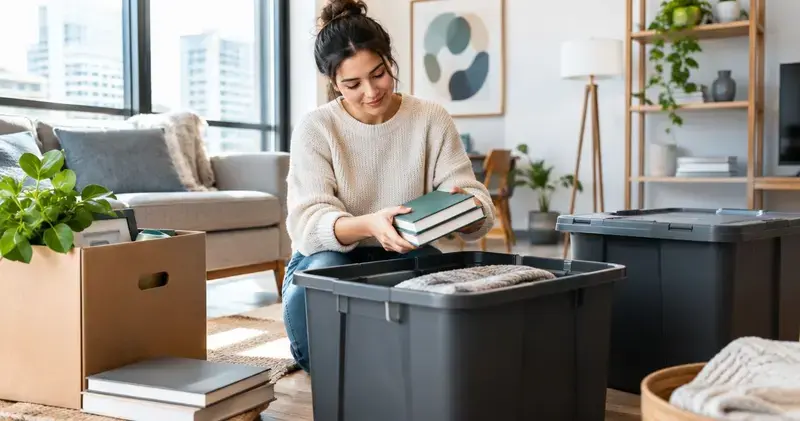
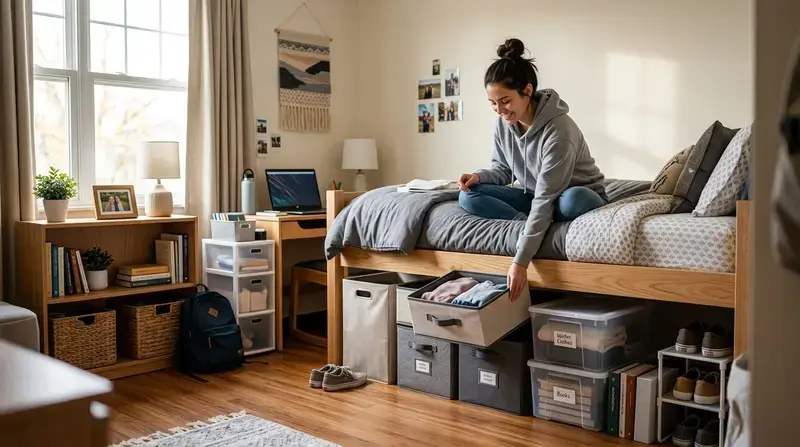
- Pack on Your Time: You pack up your things at your own pace. There’s no pressure and no looming deadlines.
- Schedule a Pro Pickup: Once you’re packed and ready, you just schedule a pickup time that works for you. A professional team comes right to your doorstep to collect your boxes. No waiting games, no missed appointments.
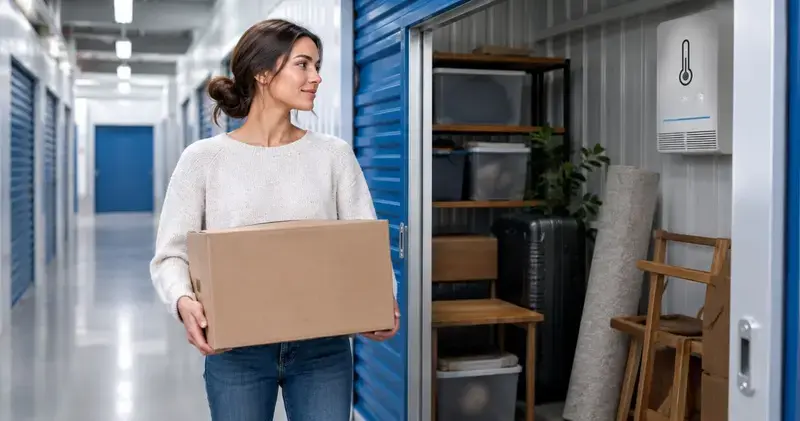
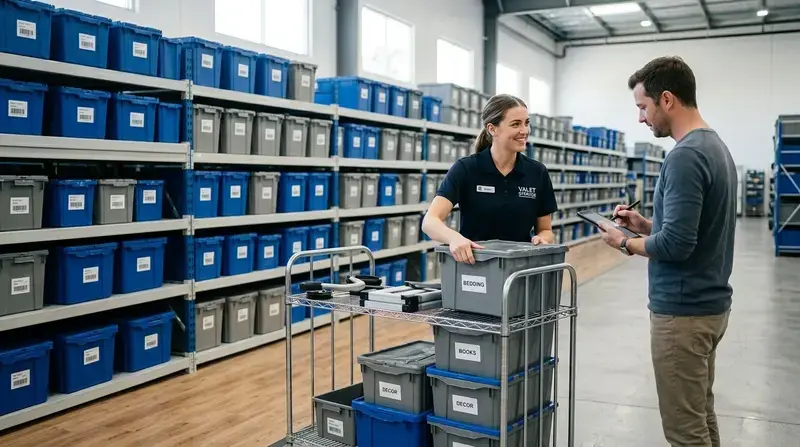
- Manage It All Online: Your items are taken to a secure, climate-controlled facility. You can see everything you have in storage through a digital inventory, so you never forget what you put away.
When you need something back, it’s just as easy. You select the box from your online account, and it’s delivered back to you within a guaranteed window, usually within 48 hours.
By building professional pickups and returns into its model, full-service storage essentially solves the last-mile problem for personal belongings. It delivers the reliability and security that standard shipping services often can't guarantee.
This approach gives you a predictable and secure way to handle your possessions. It’s a practical solution for anyone tired of the uncertainty that comes with so many modern delivery services. For a complete overview, our deep dive on the benefits of full-service storage has all the details.
Ultimately, it’s about peace of mind. Your things are handled by professionals every step of the way, from pickup to return, making sure they’re safe, secure, and there when you need them. This makes it an ideal fix for storing seasonal gear, family keepsakes, or anything you need out of the way without adding more stress to your life.
Your Action Plan for a Smoother Delivery Experience
Dealing with online deliveries doesn't have to be a constant source of frustration. While companies are working on big-picture solutions for last-mile delivery, you can take a few simple steps to make your own experience much more reliable. A little bit of planning goes a long way.
Think of it as setting your deliveries up for success from the start. A few thoughtful actions can make a huge difference for a driver on a tight schedule, especially if you live in an apartment building or a neighborhood that’s tricky to navigate.
Take Control of Your Deliveries
You can dramatically lower the odds of a failed delivery by giving drivers all the information they need and choosing services that work with your schedule. It’s all about removing the guesswork so the final drop-off is as easy as possible.
A few practical tips can make all the difference:
- Be Hyper-Specific with Instructions: Don't just rely on your address. Use the "delivery instructions" field to add clear, simple details. Mention the color of your front door, a nearby landmark, or the gate code for your building.
- Utilize Secure Delivery Locations: If you’re worried about porch pirates or are rarely home, send your packages to a secure spot. An Amazon Locker, a P.O. box, or even your workplace (if allowed) means your packages aren't left unattended.
- Choose Flexible Delivery Windows: When you can, shop with retailers that offer tight delivery windows. It’s often worth paying a little extra for a one-hour slot instead of waiting all day for a vague "by 9 PM" promise.
These small changes help make sure your package gets to you on the first try, saving you a lot of time and hassle.
Think Proactively About Your Belongings
The last mile is complicated, but smart planning and the right services can solve most of the headaches. This is especially true when you're managing your personal belongings during a move, a decluttering project, or just swapping out seasonal items. Instead of shipping boxes to yourself and hoping they arrive, you can choose a system built for reliability.
Proactive planning is the best defense against delivery chaos. When you choose services that use scheduled, professional handling, you trade uncertainty for guaranteed security for your most important items.
For example, a full-service storage solution like Endless Storage is designed to avoid these common last-mile problems entirely when it comes to your personal items. We schedule professional pickups and returns, which eliminates the risk of missed deliveries, porch piracy, and the stress of coordinating with drivers. It’s a smarter, more predictable way to manage your belongings in a world full of logistical challenges, giving you one less thing to worry about.
Frequently Asked Questions About Last Mile Delivery
Even after breaking down the problems and solutions, you might still have a few questions buzzing around. Let's tackle some of the most common ones about how last-mile logistics really works and what it means for your deliveries.
What Is the Single Biggest Cause of Last Mile Delivery Delays?
While a lot of things can go wrong, urban traffic congestion is hands-down the most chaotic and unpredictable culprit. A driver can have a perfectly optimized route, but one unexpected accident or rush-hour gridlock can throw the entire schedule off course.
This is exactly why so many delivery companies are pouring money into AI that can analyze traffic in real time and find better routes on the fly. Still, it’s a constant battle, especially in packed city centers.
Are Drones and Delivery Robots a Realistic Solution?
Yes, they’re definitely a realistic part of the future, but we’ve still got some major hurdles to clear. Getting regulatory approval to fly and roll autonomous vehicles through our neighborhoods is a tricky, complicated process. The tech also needs to get smarter to handle challenges like navigating apartment complexes or dealing with a sudden downpour.
While we're seeing more and more successful pilot programs, widespread drone and robot delivery is probably still a few years out. Think of them as a new type of team member that will work alongside human drivers, not replace them entirely.
How Can I Reduce the Chance of My Package Being Stolen?
The absolute best way to stop porch pirates is to make sure your package is never left unattended in the first place. Having it delivered to a secure location creates a foolproof handoff, and luckily, there are more options for this than ever.
Give these alternatives a try:
- Use your workplace address if your company’s policy allows for personal deliveries.
- Opt for an Amazon Locker or another company's pickup point if one is nearby.
- Add specific delivery instructions asking the driver to leave the package somewhere less obvious, like behind a planter.
And for anything particularly valuable, it’s always wise to choose a delivery option that requires a signature. That way, you know it was handed directly to a real person.
Why Does Free Shipping Seem to Be Disappearing?
"Free shipping" was a great perk, but it’s not really going away so much as it's getting smarter. Retailers are just being more strategic because the cost of that final delivery is incredibly high.
Instead of offering it on every order, many are shifting to models that require a minimum purchase amount or reserving it as a benefit for loyalty program members. This is a direct response to a tough reality: that last leg of the journey can eat up over 50% of the total shipping cost, which is a massive expense for a business to absorb on every single sale. For additional insights into common challenges and solutions in logistical operations, consider reviewing a comprehensive set of Frequently Asked Questions.
Tired of worrying about missed deliveries for your personal belongings? Endless Storage offers a smarter way. We provide scheduled, professional pickups and returns, so you can manage your stored items with guaranteed reliability and none of the last-mile stress. Learn more at https://www.endless-storage.com.
Frequently Asked Questions
Unveiling the Secrets to Effortless Storage
Endless Storage is available nationwide. You pick a plan, tell us where to pickup, and we'll send a UPS van to collect, whichever state you're in.
Your shipping label will be sent to your email within a few minutes, if not instantaneously. It can also be accessed through your customer profile.
Your box will be shipped to one of our climate controlled self storage facilities in our closest self storage facility. Our manager will accept your package, notify you that your box has been received, and securely stored. Only our managers will have access to Endless Storage boxes.
Email us at admin@endless-storage.com click to live chat with us, or send us a message below.
Never! We're committed to transparent pricing with no surprises. You'll lock in your rate with no hidden fees and no long-term contracts.
Fast access guaranteed! Your boxes will arrive at your doorstep within 48 hours of requesting them back. Need to check on delivery? We provide tracking information for complete peace of mind.
Totally flexible! Store month-to-month with no long-term commitment and cancel anytime.
Everything's online! Use your account dashboard to:
• Set up automatic monthly payments
• Request box returns
• Update your address
• Order additional boxes
• Track shipments
Your boxes are insured up to $100 each. Our customer service team will help you file any necessary claims and resolve issues quickly.
Don't worry – we'll email you right away if there's a payment issue. Your items stay safe, though you may have temporary service interruption or late fees until payment is resolved.
When you request our free storage kits, you'll have 30 days to send in your boxes to activate your 3 months of free storage. Think of it like starting a gym membership – your activation window begins when you receive your kits, and your full free trial begins once you send in your first box. During your free months, you'll experience our complete storage service at no cost.
Your 30-day activation window begins when you receive your storage kits. We'll send you an email confirmation when your kits are delivered, marking the start of your activation period.
If you haven't sent any boxes for storage within your 30-day activation window, your free trial will expire and we'll begin charging the regular monthly rate of $9.99 per box. This helps ensure our storage kits go to customers who are ready to use our service.
A box costs $9.99 per month to store (plus sales tax). This price includes free shipping for standard boxes under 50 lbs. and smaller than 16"x16"x16"
Log into your Endless Storage account, locate the box you would like returned, and simply click Return My Box.
Yes, each box stored with us is insured for up to $100 throughout transit as well as the duration of storage within our facilities.
Your box will be at your doorstep within 48 hours of you requesting it back.
Store 10+ boxes? We'll pick them up for free! After your purchase, we'll contact you to schedule a convenient pickup time and arrange UPS collection.
We trust UPS with all shipments, and every box includes $100 insurance coverage. You'll receive tracking information to monitor your items' journey.
Yes! Visit any of our locations by appointment. Just bring a photo ID matching your customer profile.
For everyone's safety, we can't store hazardous materials, firearms, or perishables. All items must fit within our standard boxes.
It's easy! Order your storage kit online, and we'll ship it to you within 1-2 business days. Your shipping labels will be emailed instantly and available in your account.
We're here to help! Email us at admin@endless-storage.com, use our live chat, or send us a message through your account.
To cancel your storage service with Endless Storage, please email your cancellation request to admin@endless-storage.com. Our team will process your request within 2 business days and confirm your cancellation via email.
We understand packing takes time. However, to maintain your free trial benefits, you'll need to send at least one box within the 30-day activation window. If you need more time, you can always start with one box to activate your trial and send the rest later. You can always reach out to admin@endless-storage.com if you have any issues or concerns.
When you request our free storage kits, you're starting a 30-day window to begin using our storage service.
Important: To activate your free trial, send at least one box for storage within 30 days. If no boxes are sent within this 30-day window, a one-time $50 fee applies to cover materials and shipping costs. This fee is clearly disclosed before you sign up.
Think of it like reserving a hotel room – we're setting aside space and sending specialized packing materials for your use. The fee only applies if you request materials but don't begin storage, similar to a hotel's no-show charge.