
Organized Storage Unit: Your Ultimate Guide
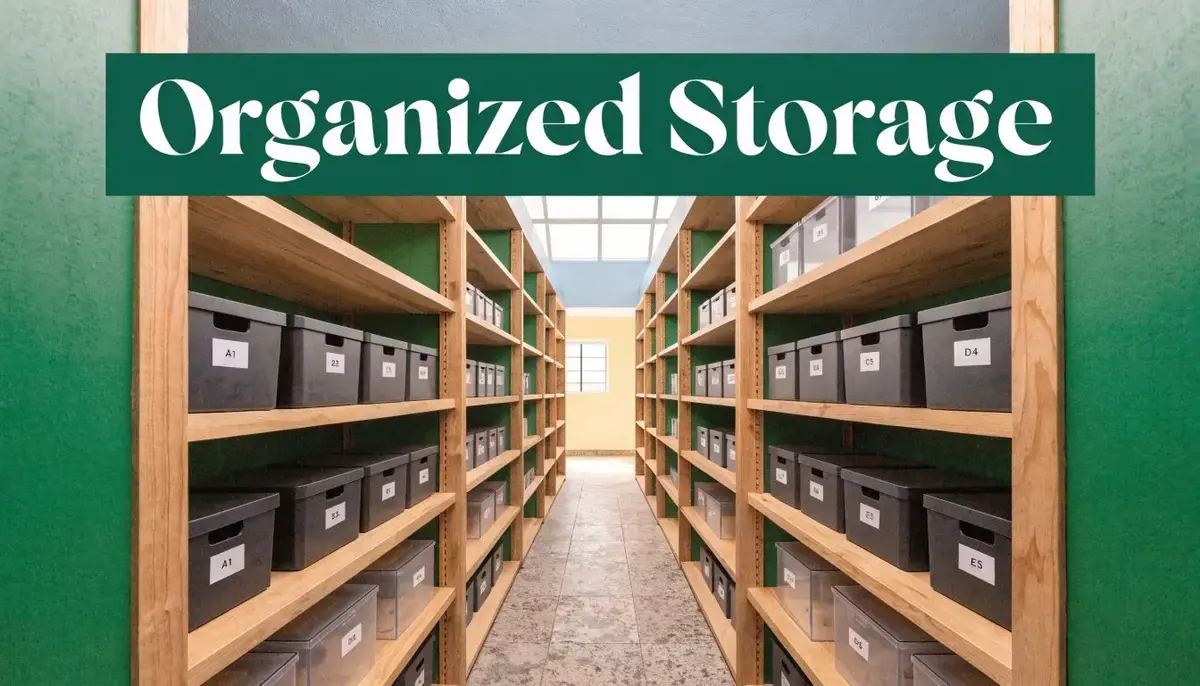
You open the storage unit to grab one winter coat, and ten unlabeled boxes lean forward like they’ve been waiting for this moment. A lamp is wedged behind a chair. Holiday decor is mixed with tax papers. You know your things are in there somewhere, but finding one item now means touching everything.
That’s what is commonly called storage. I don’t.
An organized storage unit should work like a system, not a pile with a lock on it. The unit itself matters, but the better answer for many people, especially in cities and small apartments, is often a blended setup: a traditional unit for bulky, low-access items and a by-the-box service for the things you may want back without planning a Saturday around it. That combination saves space, cuts friction, and stops the usual pattern of paying for empty air and forgotten boxes.
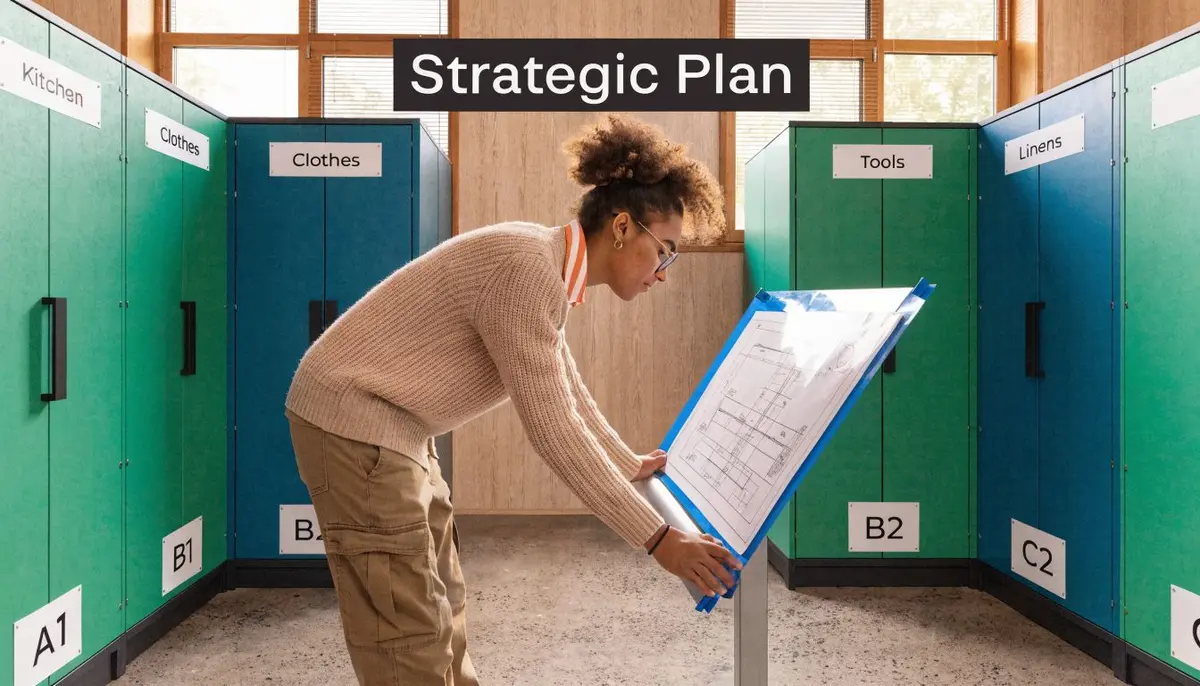
The Blueprint Before the Boxes
Most storage problems start at home, not at the facility. People get overwhelmed, buy a stack of boxes, and start packing whatever is closest. That feels productive for about an hour. Then the boxes get heavier, the labels get vaguer, and the future version of you inherits a mess.
Start slower. You need a plan before you need packing tape.
The need is massive. The U.S. self-storage industry provides 2.1 billion square feet of rentable space, which is about 5.9 square feet per American, and over 11% of households rent a unit. At the same time, 65% of renters have garages and 47% have attics, which tells you the issue usually isn’t just lack of space. It’s unmanaged volume and poor systems, as outlined in these self-storage industry statistics.
Declutter before you decide what deserves storage
Storage gets expensive when it becomes a place for delayed decisions. If you haven’t used it, don’t love it, and don’t have a clear reason to keep it, paying monthly to preserve the question usually isn’t worth it.
Use four categories:
- Keep: Items with active value, real emotional significance, or a defined future use.
- Donate: Good-condition items that someone else can use now.
- Sell: Pieces worth the effort because they have meaningful resale value.
- Discard: Broken, expired, incomplete, moldy, or obsolete items.
Practical rule: Never store duplicates of low-value household basics unless you know exactly when they’ll be used.
People often get stuck emotionally. They think decluttering means making one giant permanent decision. It doesn’t. It means deciding what deserves rent, labor, and retrieval effort.
Build a rough inventory before you choose the setup
Don’t guess your storage needs by looking at a room and thinking, “Probably a small unit.” That’s how people over-rent or under-rent. Make a simple list first. You don’t need a color-coded spreadsheet yet. A notes app works.
List by category, not by random object:
- kitchen overflow
- off-season clothing
- documents
- sports gear
- furniture
- sentimental items
Then mark each category with one of these tags:
| Access need | Meaning | Best fit |
|---|---|---|
| Frequent | You may need it within weeks | Keep at home or use flexible box storage |
| Occasional | You’ll want it seasonally or during transitions | Either system can work |
| Deep storage | You likely won’t touch it for months | Traditional unit |
If you’re unsure what physical size makes sense, a storage unit size guide can help you estimate more realistically before you commit.
Set the goal before you pack
A move creates one kind of storage plan. Long-term household overflow creates another. Renovation, downsizing, inheritance sorting, and apartment living all change what “organized” should look like.
Ask three questions:
- How long will this be stored?
- How often will I need access?
- Am I storing furniture, boxes, or both?
If you’re also comparing alternatives beyond self-storage, this complete guide to storage in shipping containers is useful for understanding how different storage environments affect packing and access decisions.
A good plan lowers cost because it cuts waste. It also lowers stress because every item enters storage with a reason, a category, and an exit path.
Choosing Your Tools and Materials
The fastest way to ruin an organized storage unit is to build it with weak containers and lazy packing supplies. Flimsy boxes buckle. Cheap tape peels open. Thin markers fade. Months later, everything looks tired before you even start unpacking.
The gear matters because storage is pressure over time. Stacked weight, dust, shifting, humidity changes, and repeated handling all expose bad materials.
Cardboard versus plastic
Both work. Neither is perfect. The right choice depends on what you’re storing, how long you’re storing it, and whether those containers will be moved often.
| Material | Best for | Pros | Trade-offs |
|---|---|---|---|
| Cardboard boxes | Shorter-term storage, light household goods, moves | Affordable, easy to source, easy to label | Can crush, absorb moisture, wear out fast |
| Plastic bins | Long-term storage, repeated handling, fragile categories | Durable, stackable, better protection from dust | Cost more, can tempt overpacking |
Cardboard makes sense when you need a lot of boxes quickly and your contents are dry, light, and well packed. Plastic bins earn their cost when you’re storing items for longer periods, building vertical stacks, or dealing with items you really don’t want to re-pack later.
For smaller packed items, especially if you want more standardized options, this roundup of storage boxes for different household uses is a practical reference.
Don’t mix ten box sizes if you can help it
Mismatched containers create unstable towers and wasted gaps. Uniform sizes stack better and make layout planning easier. If you need variety, keep it limited. Use small boxes for dense items and medium boxes for most household categories. Save larger containers for light, bulky things.
Good packing isn’t about fitting the most into one box. It’s about making every box safe to lift, stack, and identify later.
The shopping list that prevents repacking
You don’t need fancy gear, but you do need dependable basics. Buy once and buy decent quality.
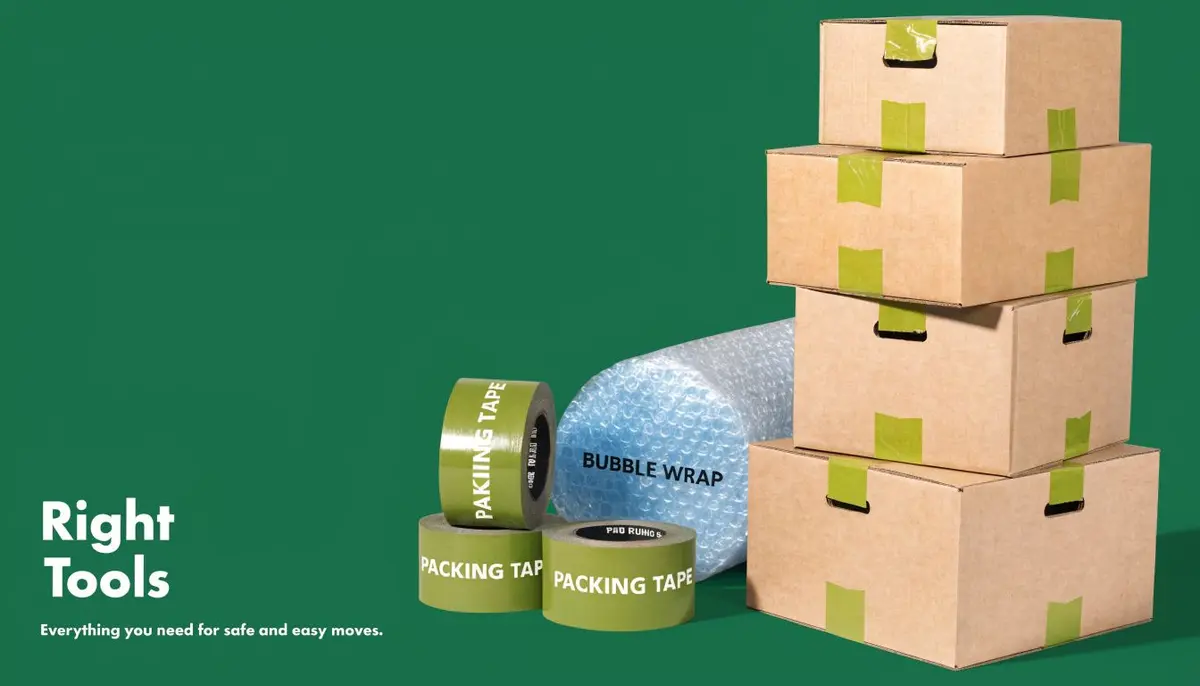
- Packing tape: Choose tape that stays sealed instead of lifting at the corners after a few weeks.
- Bubble wrap or packing paper: Use it for breakables, framed items, ceramics, and small electronics.
- Permanent markers: Label on multiple sides. If the ink fades, your whole system weakens.
- Furniture covers: Useful for soft goods and upholstered pieces that collect dust.
- Clear pouches or zip bags: Keep screws, remotes, cords, and hardware attached to the item they belong to.
- Labels or painter’s tape: Helpful when you want clean, readable category labels.
A lot of damage blamed on “bad storage” is really bad packing. Strong materials don’t just protect belongings. They preserve your organization so the system still works months from now.
Smart Packing and Labeling Strategies
An organized storage unit doesn’t begin when boxes are stacked. It begins when every box gets packed with a purpose. Random packing is what creates mystery boxes, duplicate purchases, and frustrating retrieval trips.
Pack in zones. Label like someone else will need to find the item six months from now.
Pack by zone, not by urgency
People often pack by whatever is closest. The kitchen chair goes in with the desk lamp. Winter boots land next to printer paper. That box gets labeled “misc.” and becomes useless the minute it leaves your apartment.
Use zones instead:
- kitchen overflow
- bedroom linens
- seasonal decor
- personal records
- hobby equipment
- kids’ keepsakes
Within each zone, keep weight in mind. Books, tools, and dishes belong in smaller boxes. Bedding, pillows, and coats can go in larger ones. That simple rule prevents torn box bottoms and makes stacking safer.
If you want a deeper labeling framework, this ultimate guide to storage box labels has helpful ideas for making labels easier to read and maintain.
Use one labeling formula every time
A label should answer three questions fast: where it belongs, what’s inside, and whether it needs special handling.
I like this format:
Room or zone | Main contents | Handling note
Examples:
- Hall closet | scarves, gloves, wool hats | seasonal
- Kitchen overflow | serving bowls, cake stand | fragile
- Office archive | tax records, manuals | do not crush
That’s much better than “Kitchen Stuff” or “Winter.” Vague labels force you to open boxes. Clear labels let you plan retrieval without touching the stack.
For practical examples of box naming systems, box numbering, and side labeling, this guide on how to label boxes is worth keeping open while you pack.
Why digital inventory beats memory
Memory is unreliable in storage. That’s not a personal failing. It’s normal. A 2025 study of 800 urban respondents found that 25% of people forget the contents of their storage boxes after six months, and AI-driven photo-cataloging reduced item retrieval errors by 40% in beta tests, according to this piece on storage room organization ideas and decluttering.
That’s why I recommend a digital inventory even for small setups.
Try this:
- Give each box a unique code, such as Kitchen-01 or Winter-03.
- Photograph the contents before sealing the box.
- Store the photos in an album or note linked to that box code.
- Add one line about where that box lives, such as “left wall, front shelf” or “pickup service inventory.”
The best label is the one that saves you from opening the box at all.
Manual labels still matter
Digital inventory is excellent, but it doesn’t replace physical labels. You need both. A phone helps before you visit the unit. A visible label helps once you’re standing there.
Use at least two visible sides on every box. If boxes might rotate during loading, label the top too. If something is fragile, say what it is. “Fragile” alone isn’t enough. “Fragile, glassware” changes how people handle it.
A modern storage system works because it combines old-school clarity with digital backup. That’s what turns storage from a guessing game into a usable archive.
Designing Your Storage Unit Layout
I’ve seen the same mistake hundreds of times. Someone rents a unit, opens the door, and starts filling the back wall first. Then they build upward and outward until the unit becomes a solid block. It looks efficient on move-in day. It’s a disaster the first time they need one item from the rear corner.
That layout is what I call the fortress. It stores volume, but it kills access.
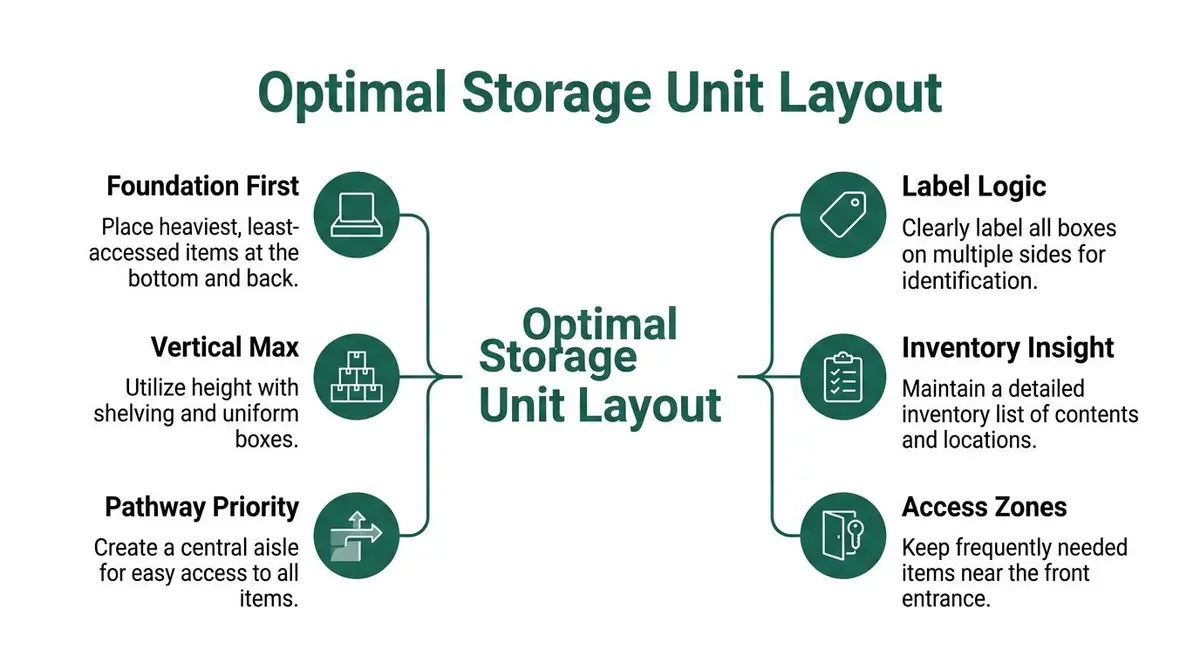
The better model is a unit you can walk into and work inside.
The bad version and the one that actually works
In the bad version, chairs are turned sideways, bags are stuffed into open gaps, and every box looks equally important because there’s no zoning. To get a document file, you move a lamp. To reach the lamp, you shift a mattress frame. One quick visit becomes a full unload.
In the good version, the center stays open. Heavy items anchor the perimeter. Frequently needed categories stay near the front. Furniture creates boundaries instead of obstacles.
Industry guidance on unit mix offers a useful analogy here. The 10x10 unit is considered the workhorse, but stronger performance comes from a diversified mix rather than one-size thinking. Inside your own storage unit, the same principle applies. Large, stable stacks combined with accessible aisles create a more efficient setup, as described in this article on designing the ideal unit mix for self-storage success.
Build the center aisle first
Don’t leave an aisle if there’s room left over. Reserve it from the beginning.
A clear center path lets you:
- reach the back without unloading the front
- inspect for moisture or damage
- rotate seasonal items
- remove one box without destabilizing a stack
Make the aisle feel intentional. If it’s too narrow, you’ll fill it later. If it’s clear and easy to walk, you’ll protect it.
Leave yourself enough room to enter the unit, turn, and lift safely. If retrieval feels awkward on day one, it will get worse after a few months.
Arrange by weight, frequency, and shape
Good layouts use three placement rules at once.
- Heavy and sturdy go low: Books, tools, file boxes, and dense bins form the base.
- Fragile and light go high: Lampshades, decor, and boxed glass sit on top or on protected shelves.
- Frequently needed items go forward: Seasonal clothing, records, and event supplies should never be buried behind furniture.
Furniture can help when used well. Dressers hold soft items. Tabletops can support lighter, flat bins. Bed frames and headboards stand best when protected and placed along edges, not dropped into the middle like barriers.
Make a simple map
You don’t need a full blueprint pinned to the wall. A rough map in your phone is enough:
- front right: holiday bins
- back left: archive boxes
- rear wall: furniture
- center access: clear
That map saves time because it reduces decision-making during retrieval. You’re not scanning every label and trying to remember what changed. You already know the unit’s logic.
An organized storage unit should feel more like a stockroom than a closet explosion. If you can step in, spot the category, and remove the right item without shifting half the room, the layout is doing its job.
Protecting Your Belongings Long-Term
People often focus on the monthly rate and ignore the cost of damage. That’s backwards. A cheap unit isn’t cheap if wood warps, paper curls, fabric picks up moisture, or electronics degrade while sitting still.
Preservation matters as much as organization. Sometimes more.
Climate control is not where I’d cut corners
If you’re storing paperwork, artwork, electronics, wood furniture, instruments, photos, or anything with glue, veneer, or fabric, climate control is usually the smarter choice. These items don’t need drama to get damaged. They just need enough time in poor conditions.
The phrase “air-conditioned” can sound reassuring, but it doesn’t always mean stable conditions for sensitive belongings. What you want is a space designed to manage temperature swings and moisture more consistently, especially for long-term storage.
Use standard units for tougher categories like:
- basic tools
- sealed plastic household goods
- patio items that are already weather-tolerant
- luggage
- low-risk utility items
Choose protected storage conditions for the items that would be expensive, difficult, or impossible to replace.
Insurance fills the gap most people assume is covered
A lot of renters assume the facility will cover whatever goes wrong. That assumption causes problems. Facility protections often have limits and exclusions, and those limits may not line up with what you’re storing.
Review three things before move-in:
- What the facility requires
- What your renter’s or homeowner’s policy already covers
- Whether you need additional protection for higher-value categories
If replacing the item would upset you financially or emotionally, don’t rely on assumptions. Check the policy language before storage day.
Security should be visible and boring
Good security isn’t flashy. It’s consistent. You want a facility where access control, lighting, surveillance, and day-to-day management all look routine and maintained.
Walk through this checklist:
- Gated access: Entry should be controlled, not casual.
- Camera coverage: Look for cameras in visible, logical areas.
- Lighting: Hallways and access points should be easy to see.
- On-site presence: Active management usually means issues get noticed sooner.
- Clean condition: A well-kept property often reflects stronger operating discipline.
If you’re planning to store things for an extended period, these long-term storage tips can help you pressure-test your setup before you lock the door.
The cheapest option often costs more later because it asks your belongings to absorb the risk. Better protection is rarely the flashy decision. It’s just the one you won’t regret.
The Hybrid Approach A Modern Storage Solution
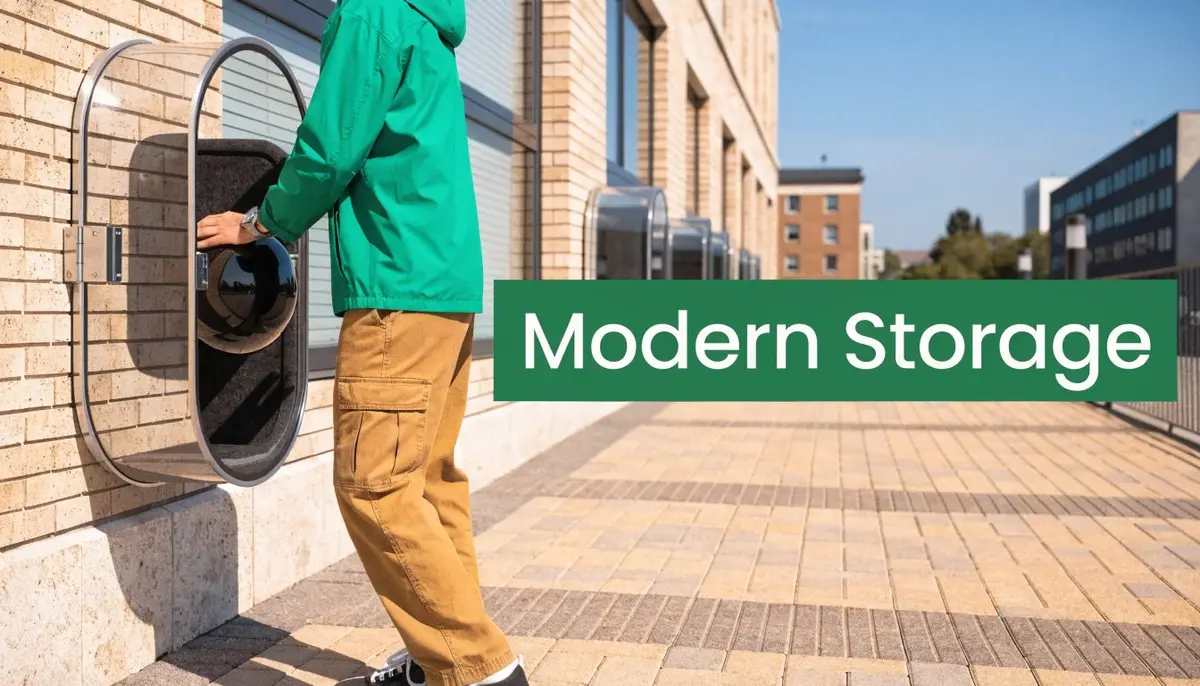
Traditional self-storage works well for some situations. If you’re storing furniture during a move, holding a whole room of belongings, or parking long-term household overflow, a unit makes sense. But plenty of people don’t need a room. They need a few boxes out of the apartment and a sane way to get them back.
That’s where a hybrid system makes more sense than forcing everything into one model.
Why the small-unit model often fails city dwellers
A lot of urban renters get pushed into the same default choice: rent a 5x5 unit, haul boxes there, and hope it feels worth it. But for a small load, that setup can be inefficient on both cost and effort.
For urban renters, traditional 5x5 storage units average $100 to $200 per month, while a 2025 survey found that 62% cite transport hassle as the top barrier. By-box services starting at $7.99 per month for multiple boxes can save 70% to 90% for people who don’t need a full unit, according to this guide on organizing your storage unit without the stress.
The money matters, but the convenience issue matters just as much. If getting to storage requires booking a car, borrowing help, carrying bins down apartment stairs, and driving across town, small storage tasks become procrastinated storage tasks.
The break-even question people should ask sooner
The right question isn’t “Which option is cheaper?” It’s “How much space am I using, and how often do I need access?”
Here’s a cleaner way to compare:
| Situation | Traditional unit | By-the-box service | Hybrid setup |
|---|---|---|---|
| Storing furniture and many boxes | Strong fit | Poor fit | Strong fit |
| Storing a few seasonal boxes | Weak fit | Strong fit | Strong fit |
| Need occasional retrieval without visiting a facility | Weak fit | Strong fit | Strong fit |
| Need deep storage for bulky items plus flexible access | Moderate fit | Moderate fit | Best fit |
If your load is mostly boxes, especially in an apartment, by-the-box storage can be a much tighter match. If you have bulky furniture plus a rotating set of seasonal or personal items, the hybrid model is usually the cleanest answer: keep the deep-storage pieces in a smaller traditional unit, and keep the accessible categories in a service built for pickup and delivery.
For people navigating a move, this Ultimate Guide to Moving and Storage is a useful planning resource because it frames storage as part of a bigger logistics decision, not an isolated purchase.
How the hybrid system works in real life
A practical hybrid setup might look like this:
- Traditional unit: bed frame, dresser, extra dining chairs, archived keepsakes, hard-sided luggage
- Flexible box storage: off-season clothing, holiday decor, baby items between stages, spare linens, documents you may request later
This model reduces one of the most common storage mistakes, which is renting space for volume you don’t have. It also reduces another mistake, which is burying useful items behind bulky ones because you only gave yourself one storage channel.
If you want a clearer picture of how pickup-and-delivery storage fits modern households, this guide to storage pickup and delivery modern solutions gives a solid overview of the model.
Storage works better when it matches the shape of your life. If your storage needs are small, flexible, and spread across the year, a room-sized solution can be the wrong tool.
An organized storage unit isn’t always one unit. For many people, the best system is a combination that separates deep storage from active storage and treats convenience as part of the plan, not an afterthought.
Maintaining and Retrieving Your Items
A good storage system can drift if nobody maintains it. Boxes get added “just for now.” The aisle narrows. One retrieval trip turns into a reshuffle. The answer isn’t a full reorganization every time. It’s light maintenance on a schedule.
The quick check-in routine
Every few months, do a simple review:
- Inspect the floor and corners: Look for dust buildup, moisture signs, or pests.
- Check box condition: Replace crushed cardboard before it fails under weight.
- Review the aisle: Make sure access paths still exist and haven’t become overflow space.
- Update the inventory: Remove what’s gone and log what’s been added.
That small routine keeps the organized storage unit from slowly becoming a pile again.
Retrieval should be boring
That’s the standard. Retrieval shouldn’t require improvising.
For a traditional unit, use your map, identify the box code, and clear only the minimum needed to remove it. If one retrieval causes a cascade of shifting boxes, the layout needs correcting.
For a by-the-box setup, the process is simpler. Log into your account, request the specific boxes you want returned, and the shipment comes back without a facility trip. If you’re using Endless Storage specifically, the company offers 48-hour return shipping, which is one of the biggest advantages of that model for people who want access without travel or hauling.
The best storage system isn’t the one that looks neat on move-in day. It’s the one that still works when life gets busy.
If you want storage that doesn’t require renting a truck, driving to a facility, or paying for more space than you use, Endless Storage is worth a look. Their by-the-box model is especially useful for urban residents, people in small apartments, and anyone who wants a more flexible setup for seasonal items, overflow, or moving transitions. You can store only what you need, manage it online, and request returns when you need your things back.