
Can You End a Lease Early? Legal Rights and Costs
The short answer? Yes, you can end a lease early. But it’s almost never simple or free.
Maybe you just landed a dream job in another city, or a family emergency requires you to move—and you only have a few weeks to get everything sorted. This happens more often than you'd think, forcing many renters to figure out the tricky, and often expensive, process of breaking a rental agreement.
The Reality of Ending a Lease Early
A sudden life change can make your current lease feel like a major roadblock. While it's legally possible to terminate your agreement before it’s up, you have to be ready for the financial and legal side of things. Breaking a lease isn't just about giving notice; it's a negotiation that requires a smart, strategic approach.
This has always been a high-stakes situation for renters. In fact, recent data showed that over 65% of tenants who leave early get hit with penalties, often equal to two or three months' rent. This is especially true in big cities like New York and Toronto, where lease-breaking incidents jumped by 22% after 2020 as remote work and job relocations became more common. You can find more details in this analysis of U.S. lease trends.

Understanding the Financial Stakes
The biggest hurdle is almost always the money. Landlords are legally entitled to the rent they were promised for the full lease term. When you leave early, they lose that income, and the penalties in your lease are there to cover their losses.
Key Takeaway: Your lease agreement is a binding legal contract. Ending it early without a valid legal reason or your landlord's consent can lead to significant financial consequences.
Breaking a lease without a legally protected reason can be expensive. The table below outlines the common costs you might face.
Potential Costs of Early Lease Termination
| Potential Cost | Average Amount (based on market rates) | Likelihood |
|---|---|---|
| Early Termination Fee | 1-2 months' rent | High |
| Remaining Rent Due | Varies (until a new tenant is found) | Moderate |
| Forfeiture of Security Deposit | Full deposit amount | High |
| Marketing & Admin Fees | $200 - $500+ | Moderate |
| Legal Fees | $1,000+ if it goes to court | Low |
Keep in mind that these costs can stack up, making it crucial to handle the situation carefully.
Successfully navigating this process starts with one critical step: understanding every word of your lease and knowing your local tenant laws. This knowledge is your best defense against making a costly mistake.
As you plan your next moves, don't forget the logistics of the move itself, including what you'll do with your belongings during the transition. To help you budget, check out our guide on the price of storage.
When You Have a Legal Right to Break Your Lease
Before you even think about negotiating with your landlord, it’s worth checking if the law already gives you a penalty-free way out. In some specific cases, you have powerful legal protections on your side that let you end a lease early without owing a dime.
These aren't secret loopholes. They're legally recognized situations where your rights as a tenant come first. It’s essential to know if your situation falls into one of these categories, as there are many valid grounds for ending a lease that your landlord must honor.
Legally Protected Scenarios
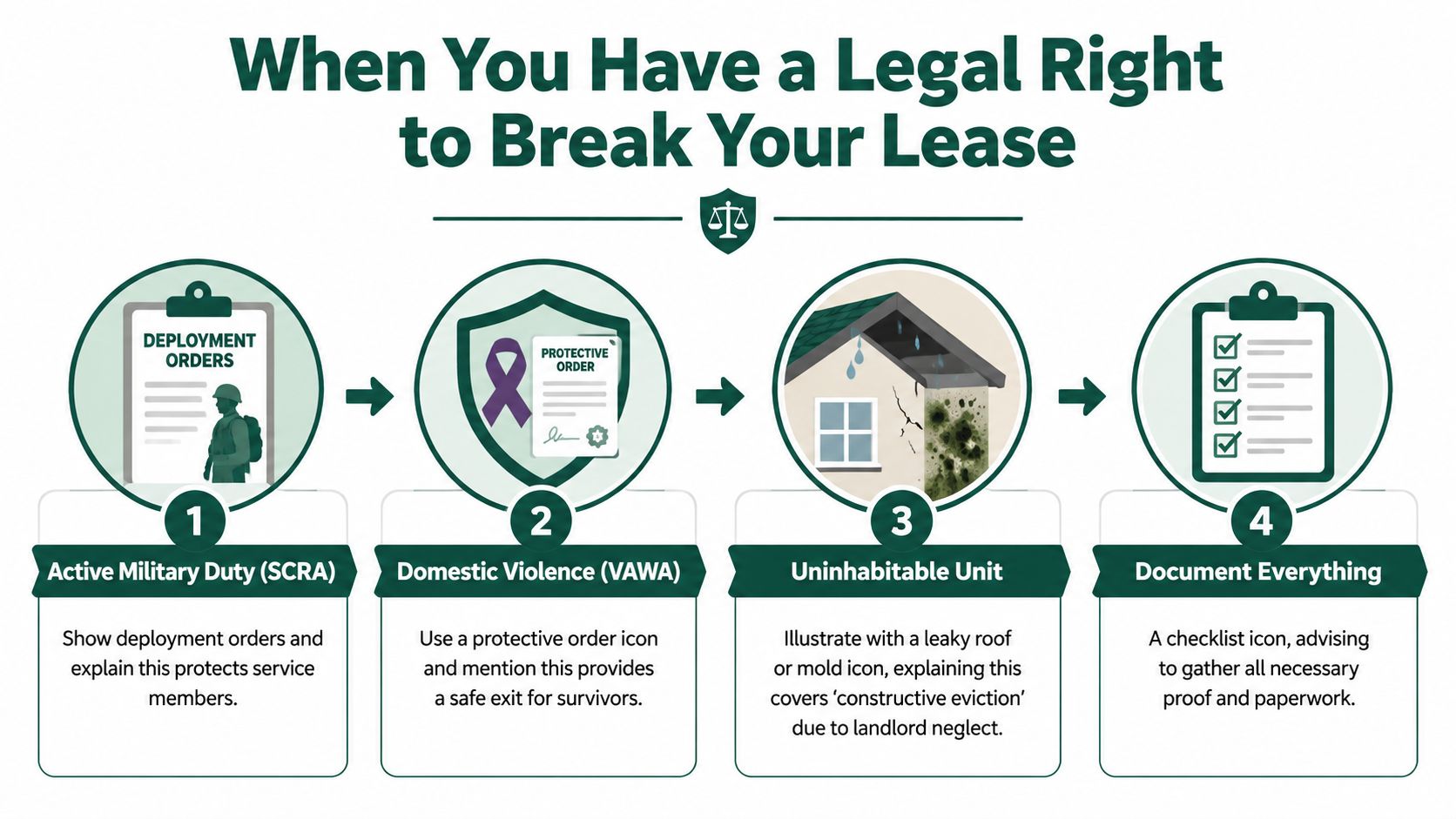
While laws vary by state, a few circumstances almost always give you the right to walk away. The most common ones involve military service, uninhabitable living conditions, and domestic violence.
Active Military Duty: If you're a service member who gets orders for a permanent change of station (PCS) or a deployment lasting 90 days or more, the Servicemembers Civil Relief Act (SCRA) has your back. All you need to do is give your landlord written notice along with a copy of your orders.
Uninhabitable Living Conditions: You have a right to a safe, livable home. If your landlord is neglecting major issues—think a broken heater in the dead of winter, a serious mold problem, or a major plumbing failure they won't fix—it could be considered a "constructive eviction." This legal term basically means the place is so unlivable that you're being forced out.
Domestic Violence: Many states now have laws allowing survivors of domestic violence, stalking, or sexual assault to break their lease without penalty. You’ll typically need to provide official documentation, like a police report or a protective order, to prove your case.
These protections are more common than you might think. Under the SCRA, active-duty military personnel broke their leases 12,500 times in 2023, a 10% increase from the year before. In that same year, there were 25,000 instances of survivors of domestic violence ending leases early, and disputes over uninhabitable conditions led to constructive evictions in 15% of landlord-tenant cases.
Critical Tip: Documentation is everything. For any of these claims, you must provide official proof. Keep meticulous records of all communication, photos, and official documents to support your case.
Once you’ve legally ended your lease and are getting ready to move, our moving out of a rental checklist can be a lifesaver to make sure you don’t miss a single step.
How to Negotiate an Early Exit with Your Landlord
So, your reason for leaving doesn't fall into one of those neat, legally protected categories. Now what? It’s time to have a talk with your landlord. The key here isn't to start a fight, but to open a negotiation. Your goal is to find a path forward that works for everyone.
The single most important thing you can do is give your landlord a ton of notice. A sudden two-week warning is a landlord’s nightmare. But giving a 60-day or even 90-day heads-up? That changes the entire conversation. It gives them plenty of time to find a new tenant and minimizes their financial hit, making them much more likely to work with you.
Frame the Conversation Productively
Always start this conversation in writing. A polite and professional email is perfect. It creates a paper trail and sets a cooperative tone right from the start.
Briefly and honestly explain why you need to move, but there's no need to write a novel. The main point is your request to terminate the lease early and your commitment to making the transition as smooth as possible for them.
This is also a good moment to gently bring up their "duty to mitigate." In most places, landlords can't just sit back and collect rent from you for the rest of the lease term; they have to make a real effort to re-rent the apartment. By offering to help, you’re not just being nice—you’re aligning with their legal obligation.
Pro Tip: Offer to become your landlord's best new-tenant-finder. Seriously. Offer to take great photos of the apartment, write up a compelling listing, and blast it on your own social networks. Showing you're proactive about filling the vacancy proves you're a partner in solving the problem.
Before you even start this talk, it helps to know if you might have a legally protected reason to leave. The infographic below gives you a quick rundown.
If you're not covered by one of these situations, don't worry. That’s exactly when good negotiation skills come into play.
Propose a Clear Agreement
The best way to handle this is with a lease buyout agreement. Instead of a vague and stressful situation, you propose a clean break for a set price. This usually means offering to pay one or two months' rent.
- Offer a lump sum: This gives your landlord cash in hand to cover the risk of the apartment sitting empty.
- Agree to forfeit your security deposit: If your apartment is in stellar condition, sometimes letting them keep the deposit is enough to call it even.
- Put it all in writing: This is critical. Once you’ve shaken hands on a deal, get it documented and signed by both of you. This is your get-out-of-lease-free card, preventing any "he said, she said" down the road.
Breaking a lease almost always comes with a price tag. To make sure you're financially prepared for the whole move, check out our guide to help you estimate moving costs.
Subletting vs. Lease Assignment: Which Is for You?
If breaking your lease just isn't in the cards, you might be able to hand it off to someone else. This is a super common strategy to end a lease early without facing a mountain of fees, especially in cities with hot rental markets.
The two main ways to do this are subletting and lease assignment, and you’ll want to understand the key differences.
With subletting, you essentially become a landlord yourself. You find a new tenant (the sub-tenant) who pays rent to you, and you keep paying your landlord. Your name stays on the original lease, which means you’re still legally on the hook for rent and any damages—even if your sub-tenant is the one who flakes.
A lease assignment is a much cleaner break. This process involves transferring your entire lease agreement to a new tenant. They take over your lease, pay rent directly to the landlord, and you are completely out of the picture. It's like you were never there.
Choosing the Right Path
So, which one is better? It really depends on your situation and what your landlord will greenlight.
A lease assignment is almost always the better option because it completely cuts your ties and responsibilities to the apartment. The catch? Landlords are often more hesitant to approve assignments. They’re losing you—the tenant they already vetted—and have to take a chance on someone new.
Expert Insight: Subletting is often easier to get approved but carries more risk. If your sub-tenant bails on rent, you have to cover it. An assignment is the gold standard for a clean exit, but it requires your landlord’s full cooperation to transfer the lease.
To make it clearer, here’s a quick breakdown of how the two options stack up.
Subletting vs. Lease Assignment At a Glance
This table compares the fundamental differences between having someone sublet your apartment versus assigning the lease to them entirely.
| Factor | Subletting | Lease Assignment |
|---|---|---|
| Your Responsibility | You remain the primary tenant, liable for rent and damages. | Your responsibility is completely transferred to the new tenant. |
| Rent Payments | The sub-tenant pays you, and you pay the landlord. | The new tenant pays the landlord directly. |
| Landlord Approval | Often easier to get approved, as you're still liable. | More difficult; the landlord must approve a brand-new tenant. |
| Best For | Short-term absences or when you might return. | Permanent moves when you need a clean break. |
Ultimately, a lease assignment is what you want for a permanent move, while subletting can work if you’re just gone for the summer and plan to return.

No matter if you sublet or assign your lease, you might have a gap between moving out and your new place being ready. If you need somewhere to stash your stuff temporarily, check out our guide on short-term storage for flexible options that can save the day.
Managing Your Move in a Lease Break Scenario
Breaking a lease can really throw a wrench in your moving plans. Instead of having a solid move-out date, you're suddenly dealing with an uncertain timeline, which can make the logistics feel like a nightmare. The best way to get some of that control back is to start decluttering right away.
This isn't just about making packing easier, though. Think of it as a strategic move. A tidy, less-crowded apartment looks much more appealing to potential new tenants. If your landlord can find a replacement renter quickly, it can seriously help your case when you need to end a lease early.
Find a Flexible Storage Solution
In a situation like this, a modern storage solution can be a total lifesaver. You can forget about the old-school hassle of renting a truck and driving out to a traditional storage unit. These days, there are services that bring storage right to your door.
Box-by-box storage, in particular, is perfect for this kind of unpredictable move. A company drops off durable boxes, you pack them up, and then they're picked up and taken to a secure facility. This works for a few key reasons:
- Bridge the Gap: It’s the perfect way to handle your belongings if there's an awkward gap between your old move-out date and your new move-in date.
- Show Your Space: You can pack away all the non-essentials to make your small apartment feel bigger and more inviting during showings.
- Reduce Stress: It saves you from the higher cost and commitment of a big storage unit that you might only need for a short time.
This flexible approach to storage takes a huge weight off your shoulders. It turns a massive moving headache into a simple, straightforward task so you can focus on negotiating your lease and figuring out your next steps.
Juggling the details of a sudden move is tough. If you need a more structured plan to keep everything in order, check out our detailed moving checklist and timeline.
Common Questions About Ending a Lease Early
So, you’re thinking about breaking your lease. Once you get past the initial "can I even do this?" question, the practical "what if's" start to surface. Getting straightforward answers is the best way to figure out the right move for you.
Will I Lose My Security Deposit?
This is usually the first question on everyone's mind. The short answer? It depends. If you just walk away from your lease without getting your landlord's permission, you can pretty much count on them using your security deposit to cover their losses, like unpaid rent and the cost of finding a new tenant.
But if you handle it strategically by negotiating a buyout or finding someone to take over your lease, you can—and absolutely should—make the full return of your deposit part of the agreement. In many states, landlords are legally required to return your deposit within 14-30 days, minus any documented costs for damages beyond normal wear and tear.
Key Insight: Your security deposit isn't a penalty fee for breaking your lease. It's meant to cover actual damages and unpaid rent. If you leave the apartment in pristine condition and settle your accounts, you have a solid claim to get it back.
Can Ending a Lease Early Hurt My Credit Score?
Simply ending your lease early won't show up on your credit report. Landlords don’t typically report your monthly rent payments to the credit bureaus, so the lease termination itself won't cause a direct hit.
The real danger is leaving with unpaid debt. If your landlord takes you to court for unpaid rent or fees and wins a judgment, that debt can be sent to a collection agency. A collections account is a serious red flag that can tank your credit score for up to seven years.
What Is a Lease Buyout?
Think of a lease buyout as a clean, negotiated break. It's a formal deal where you pay your landlord a one-time fee—often one or two months' rent—to terminate the lease early. This officially releases both of you from any further obligations.
This is usually your best bet if you don't have a legally protected reason to leave but need a guaranteed exit without any strings attached.
For more specifics on lease-related policies and management practices, many property managers offer helpful resources, like these questions about Inland Empire rental management.
Facing an uncertain moving timeline? Endless Storage offers a flexible, stress-free solution. We deliver storage boxes to your door, pick them up when you're ready, and store them securely until you need them again. Visit Endless Storage to see how simple storage can be.