Public Storage Boxes: The Modern User's Guide (2026)
Your apartment feels smaller than it did a few months ago. The hallway has a stack of delivery boxes. A closet rod is bending under winter coats. The “temporary” pile near the desk has become part of the furniture.
That’s usually the moment people start searching for public storage boxes. Not because they want more cardboard in their lives, but because they want less friction. Less clutter, fewer trips across town, and a cleaner way to hold onto things they still need.
The useful shift is this. Public storage boxes aren’t just containers. They’re part of a storage system. Once you see them that way, it gets easier to choose what to pack, what to store, and which kind of service fits your life.
Rethinking Your Space with Public Storage Boxes
A lot of clutter problems aren’t really about owning too much. They’re about having the wrong amount of space at the wrong time.
Maybe you live in a studio and need your ski gear out of the closet until winter. Maybe you’re between apartments and don’t want every sentimental item underfoot. Maybe your spare room became a home office, and now family keepsakes are competing with your printer.
That’s where public storage boxes become more useful than they first sound. Instead of thinking, “I need a storage unit,” think, “I need a simple system for the things I don’t need in my daily space right now.”
The scale of this problem is often underestimated. The U.S. self-storage industry generated $58.3 billion in revenue in 2024, and over 11.1% of renting households use storage, often to declutter small apartments or handle life transitions. Even 65% of users already have garages, which shows that extra square footage alone doesn’t always solve the issue (Neighbor self-storage industry statistics).
Why boxes change the problem
A box creates a boundary. It forces a decision.
When you pack by box, you stop treating storage like a giant miscellaneous pile. You start grouping your life into clear categories such as winter clothes, paperwork, baby keepsakes, extra kitchen gear, or seasonal decorations. That makes your belongings easier to protect and much easier to retrieve later.
Practical rule: If you can name the category on the outside of the box in three words or fewer, you’re probably packing the right amount together.
That’s also why people often make better storage decisions after a basic decluttering pass. If you need a starting point, this guide to decluttering your home is a helpful way to sort what stays nearby and what can live elsewhere.
Think in layers, not piles
A simple way to reframe your home is to divide belongings into three layers:
- Daily-use items stay at home and stay accessible.
- Occasional-use items are good candidates for public storage boxes.
- Rarely used but worth keeping items belong in longer-term storage.
That small mental model turns storage from a last-minute scramble into an organized choice.
Choosing the Right Boxes for Your Belongings
The box matters more than people think. Size, material, and shape all affect how safe your items are, how easy the box is to carry, and whether the stack holds up over time.
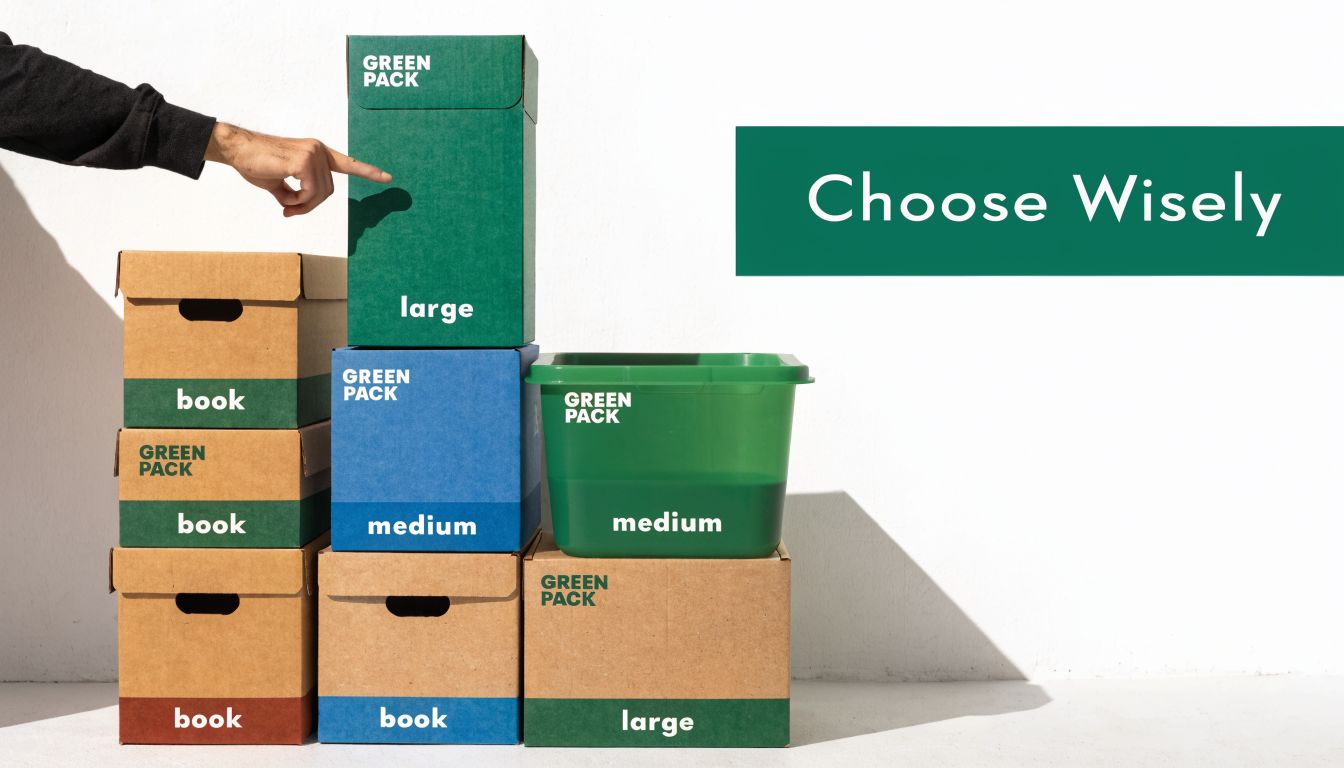
If you’ve ever tried to move a giant box full of books, you already know the most common mistake. Bigger doesn’t always mean better.
Public Storage notes that small book boxes measure 16″ x 12″ x 12″ and are designed for a 50-60 lbs capacity. It also warns that filling larger boxes with heavy items like books can push them beyond the 50 lbs safe lifting limit referenced there from OSHA guidance, and overstuffing can reduce compressive strength enough to cause collapse (Public Storage moving box guide).
Match the box to the item
Here’s the simplest way to choose:
| Box type | Best for | Watch out for |
|---|---|---|
| Small cardboard box | Books, tools, pantry items, cables | Don’t overpack with mixed heavy items |
| Medium cardboard box | Kitchenware, folded clothes, toys | Pad empty spaces so things don’t shift |
| Large cardboard box | Linens, pillows, lightweight bulky items | Don’t use for dense items |
| Plastic bin | Long-term household storage, items needing a sealed lid | Harder to collapse and store when empty |
| Wardrobe box | Hanging clothes, coats, formalwear | Takes up more space than standard boxes |
The “heavy in small boxes, light in big boxes” rule solves most problems.
Cardboard or plastic
Cardboard is usually easier to label, easier to stack neatly, and easier to recycle. It also works well when you’re packing a lot of categories at once.
Plastic bins are useful when you want a firmer shell and a lid that closes securely. They can make sense for items you’ll repack and reuse often, or for belongings you want separated from dust and casual handling. For many people, the answer isn’t one or the other. It’s a mix.
A good storage setup often uses cardboard for general categories and a few plastic bins for the items you’re most protective of.
Buy your own or use a storage service kit
Some people prefer collecting boxes themselves. Others want a ready-made kit because they don’t want to hunt for matching sizes, tape, and packing materials.
If you’re estimating volume, it helps to understand how box dimensions translate into usable space. This explainer on how to find cubic feet makes it easier to judge whether a small box, medium box, or a group of boxes will fit your plan.
If you’re moving and want a broader primer on box selection, Posch & Silva Moving Solutions has a practical guide to master your move with proper boxes.
A quick decision checklist
Choose a box based on these questions:
- How dense is the item? Books and tools need smaller boxes.
- Will it need padding? Dishes and electronics need room for protection.
- Will you stack it? Uniform sizes stack better than random free boxes.
- Will you open it soon? Frequent-access items should be easy to lift and easy to relabel.
People get into trouble when they choose boxes by what’s available, not by what the item needs. Start with the item. Then pick the box.
Packing and Labeling Your Boxes Like a Pro
Good packing doesn’t just protect your things. It protects your future self from digging through five boxes to find one charger, one tax file, or one wool coat.
The difference between “stored” and “organized” usually comes down to process.

Pack in layers
Start with the heaviest items on the bottom, medium-weight items in the middle, and the softest or most crushable items on top. That sounds obvious, but people often break the rule when they’re tired.
Wrap fragile pieces individually. Use soft textiles you already own, like towels or sweaters, as cushioning when it makes sense. Keep sets together. If a lamp belongs with its shade and hardware, pack those pieces so they can be found together later.
A box should feel full, but not strained. If the sides bulge, it’s overpacked. If things rattle when you gently shake it, add fill material so the contents don’t shift.
Label for retrieval, not just for packing day
Most labels are too vague. “Bedroom” or “Misc” won’t help you three months from now.
Use a label format that answers three questions:
- What category is inside
- Whose items they are
- Whether anything is fragile or time-sensitive
A label like “Winter Clothes | Hall Closet | Coats + Gloves” is much more useful than “Clothes.”
Write labels on at least two sides and the top. You won’t control how every box is turned when it’s stacked.
If you want a simple system to copy, this walkthrough on how to label boxes is worth saving before you start packing.
Build a basic inventory
You don’t need complicated software. A notes app, spreadsheet, or paper list works fine.
Try this simple format:
| Box name | Contents summary | Priority |
|---|---|---|
| Winter Clothes 1 | Coats, hats, gloves | Medium |
| Office Archive | Tax records, manuals, cables | Low |
| Guest Bedding | Sheets, duvet cover, spare blanket | Medium |
The inventory matters because your memory fades faster than you expect. A month later, many boxes start to sound the same.
Don’t ignore coverage and restrictions
Before storing anything, check what your provider allows and what kind of coverage applies to loss or damage. Insurance and protection plans vary. Some storage services include a level of coverage, and some ask you to rely on renter’s or homeowner’s insurance.
Read the prohibited items list too. Hazardous materials, perishables, and items that can leak or spoil usually aren’t allowed. If something is valuable, fragile, or irreplaceable, ask for the rules in writing before you pack it.
The five-minute final check
Before sealing each box, pause and ask:
- Can I lift this safely?
- Would I know what’s inside from the label alone?
- Are breakable items wrapped and immobilized?
- Would I be annoyed to open this six months from now?
That last question catches a lot of lazy packing.
Traditional Self-Storage vs Modern Box-by-Box Services
Two storage models dominate most decisions. One asks you to rent a physical unit. The other treats storage as a service built around the box itself.
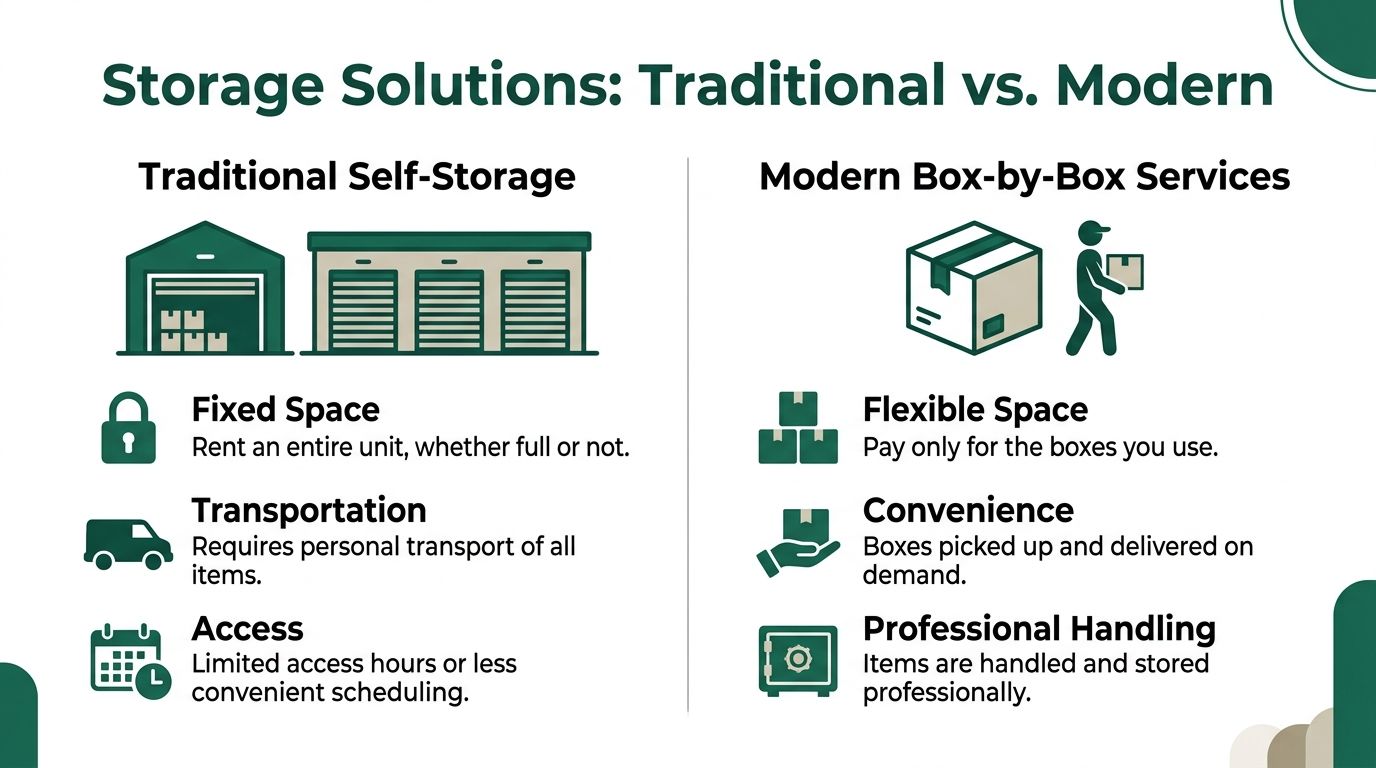
Neither option is automatically better. The right fit depends on what you’re storing, how often you expect to retrieve it, and how much work you want to do yourself.
How traditional self-storage works
With a traditional unit, you choose a space size, buy or gather your own boxes, transport everything to the facility, and organize the unit yourself.
That model can work well if you have large furniture, lots of oddly shaped items, or you want one place to put an entire household during a move. It also gives you direct control over layout and packing density.
But it comes with its own workload:
- You handle transportation. That may mean a car, rental van, or help from friends.
- You pay for space, not precision. If the unit is partly empty, you’re still renting the unit.
- You build your own access system. If the labels are poor, retrieval gets messy fast.
If you’re comparing facility-style options as part of a move, these self-storage tips for your move from On The Move Moving & Junk Removal are a useful companion read.
How box-by-box services work
A box-by-box service is built for people who don’t want to rent more storage than they need. Instead of managing an entire unit, you store by individual container.
That changes the workflow. You pack the boxes, arrange pickup, and manage what’s stored through a more itemized process. Retrieval usually works box by box too, which is often easier when you only need one category back.
This approach tends to fit apartment living especially well because the problem is often selective overflow, not full-house displacement. You may need to store off-season clothes, archived documents, baby items, or decor, but not a couch and dining table.
Side-by-side differences that matter
| Decision factor | Traditional self-storage | Box-by-box service |
|---|---|---|
| Space model | Rent a unit size | Store by individual box |
| Transport | You bring items to the facility | Pickup and return are part of the experience |
| Best for | Furniture, large mixed loads, whole-home transitions | Apartment overflow, seasonal items, category-based storage |
| Retrieval style | Visit unit and search physically | Request back what you need |
| Effort level | Higher hands-on effort | Lower logistics burden |
Why climate control matters for boxes
This point gets skipped too often. The environment around your boxes affects the boxes themselves.
Public Storage states that climate-controlled units maintain 30-50% relative humidity, and that cardboard can lose up to 70% of its stacking strength when humidity exceeds 60%. That kind of control helps prevent mold and preserves box integrity (Public Storage size guide).
That’s especially relevant when your storage system depends on stacked cardboard boxes instead of loose bins and furniture. If you’re storing paper, textiles, photos, or electronics, environmental stability becomes part of the storage decision, not a luxury add-on.
If the container weakens, the contents become harder to protect. People often focus on what’s in the box and forget to think about the condition of the box itself.
A useful way to choose
Traditional storage is often better when the unit is the product.
Box-by-box storage is often better when convenience is the product.
If you want a fuller look at pickup-and-delivery style storage, this complete guide to storage pickup delivery modern solutions breaks down how the service model works in everyday use.
For a renter in a dense city, the primary advantage isn’t just fewer trips. It’s avoiding the oversized solution to a smaller, more specific problem.
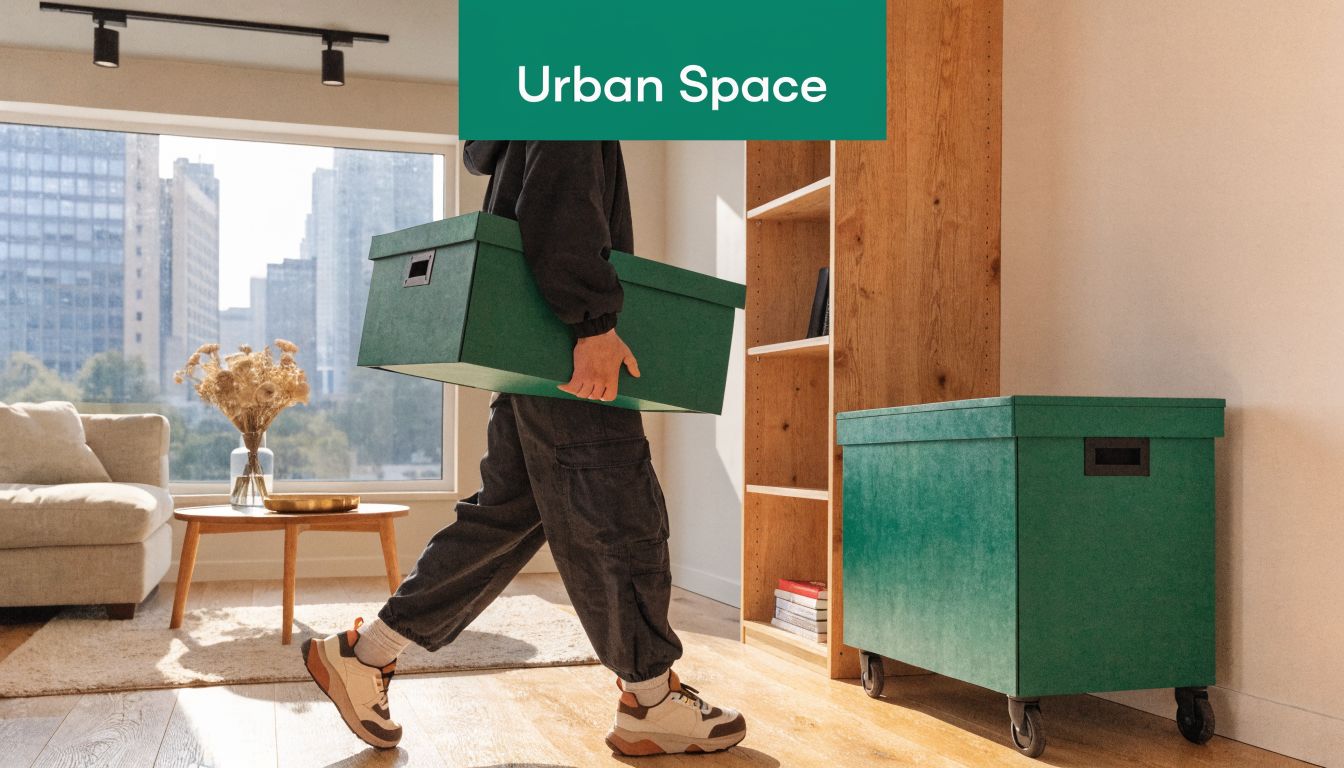
How Box-by-Box Storage Simplifies Urban Living
The people most likely to use storage services are largely residential customers aged 25-55 in high-density urban areas, and many use storage to declutter small apartments or manage belongings during life transitions. That’s a big reason convenience sits at the center of box-by-box storage (target market overview for storage services).
That description feels abstract until you translate it into real apartments and real routines.
The studio apartment problem
A renter in a studio doesn’t usually need a giant storage unit. They need breathing room.
Think of the items that crowd a small place without being daily essentials. Heavy winter coats in July. Holiday decor in spring. Sentimental boxes that matter, but don’t need to live under the bed. A box-by-box setup helps because each category can leave the apartment without turning storage into a full weekend project.
That’s why compact-space planning matters. These smart storage solutions for small apartments pair well with off-site storage because they help you decide what should stay in the apartment and what should rotate out.
The mid-move holding pattern
Now consider someone moving between leases. They may spend a few weeks with family, in a short-term rental, or in a furnished sublet. In that situation, they often don’t want all their belongings with them, but they also don’t want to disappear everything into a unit they’ll have to visit and reorganize later.
A box-based service fits this in-between period well. You pack by category, keep essentials with you, and send the rest off in a controlled way. Later, you request back what you need when the new place is ready.
Store for your next apartment, not your last one. Label boxes based on where they’ll go next, such as “new kitchen” or “entry closet,” instead of where they came from.
The home office tradeoff
A spare corner can’t be both a clean workspace and long-term archive storage. Many people discover this the hard way when remote work pushes old files, craft supplies, guest bedding, and keepsakes into the same room as a desk.
Box-by-box storage helps because it supports selective removal. You don’t have to empty the whole room. You just remove the categories that are stealing useful space from your daily life.
What the user journey feels like
The service model makes the process feel lighter because it breaks it into small actions:
- Order a kit or prepare approved boxes.
- Pack on your own schedule.
- Label clearly and keep an inventory.
- Schedule pickup from your building or doorstep.
- Request individual boxes back when you need them.
That sequence is what turns storage from a warehouse errand into a household system. For city renters, that difference matters. The goal isn’t to own less overnight. It’s to make the home you have function better right now.
Finding the Right Storage Solution for You
The best storage choice usually becomes obvious once you stop asking, “What’s cheapest?” and start asking, “What will be easiest to live with?”
Traditional self-storage makes sense when you need room for furniture, bulky equipment, or a large mixed load. It gives you one physical place to manage everything yourself.
Box-by-box storage makes more sense when your problem is selective overflow. Seasonal clothes, archived papers, keepsakes, decor, and extra household items are easier to manage when the box is the unit of organization.
Use this quick filter:
- Choose traditional storage if you need space for large items and want direct in-person access.
- Choose box-by-box storage if convenience, pickup, and category-based retrieval matter more.
- Choose climate-conscious storage if cardboard, paper, fabric, or delicate household items are part of the mix.
If you’re still comparing options, it can help to review examples of secure storage solutions so you can see how providers frame access, protection, and handling.
Storage has changed. Public storage boxes aren’t just supplies anymore. They’re the building blocks of a more flexible service model, and for many urban households, that model fits real life better than a giant empty unit ever could.
Frequently Asked Questions About Storage Boxes
What should never go into public storage boxes
Avoid anything hazardous, flammable, perishable, leaking, or illegal. Most providers also restrict live plants, food, and materials that can attract pests or create odors. If you’re unsure about a specific item, ask before packing it.
Can box-by-box storage handle awkward or oversized items
Sometimes, but not always. Box-by-box services are best for items that fit safely into standardized containers. Lampshades, artwork, instruments, and other unusual pieces may need specialty packing or a different storage approach. Always check size rules before assuming something will qualify.
How fast can you get a stored box back
That depends on the provider’s return process and service area. Some services offer scheduled return delivery, while traditional self-storage lets you retrieve items yourself during facility access hours. The key difference is who handles the trip. You or the service.
Do I need insurance for stored belongings
You should understand your coverage before storing anything. Some providers include a level of protection. Others may require you to rely on renter’s or homeowner’s insurance, or offer optional coverage. Read the policy carefully so you know what’s covered, what isn’t, and whether there are category exclusions for fragile or high-value items.
Are cardboard boxes good enough for longer storage
They can be, if they’re strong, packed correctly, and kept in a stable environment. Good labeling, sensible weight distribution, and protection from excess humidity all matter. If you’re storing for longer periods, pay close attention to the condition of the box itself, not just the items inside.
If you want a simpler way to store seasonal items, moving overflow, or apartment clutter without renting an entire unit, Endless Storage offers storage-by-the-box with climate-controlled storage, online account management, and return shipping that’s built for modern city life.