Storage Space for Furniture: The Complete 2026 Guide
You’re probably here because your home doesn’t feel like a home right now. It feels like a staging area. There’s a chair blocking the hallway, a mattress leaning against a wall, and a dining table that suddenly seems much larger now that you’re trying to fit it into a smaller place.
That’s a normal moment in a move, a downsizing project, or a serious declutter. The hard part isn’t just finding storage space for furniture. It’s choosing an option that fits your budget, your schedule, and the reality of city living, where you may not have a car, a garage, or a spare afternoon to drive across town.
Why Finding Storage Space for Furniture Feels Impossible
You get the keys to a smaller apartment, open the door, and do the math in about 30 seconds. The sofa fits, but only if the bookshelf goes. The dresser fits, but then the walkway disappears. The table technically fits, but dinner starts feeling like an obstacle course.

That’s why this problem feels so frustrating. Furniture takes up space in three ways at once. It uses floor space, it limits how you move through a room, and it contributes to mental weight every time you have to work around it. In a small apartment, one extra piece can make the whole home feel harder to use.
The stress is not just about square footage. It’s also about friction. If a chair blocks a closet, or a mattress turns your office into a storage zone, your home stops supporting daily life and starts asking you to constantly adapt. That wears people down, especially during a move, a breakup, a renovation, or a downsizing phase when your schedule is already tight.
Urban living makes the decision even harder. Many city renters do not have a garage, basement, driveway, or car waiting downstairs. So the question is not only, “Where can this furniture go?” A better question is, “What will it cost me to keep this item accessible, protected, and out of my way?”
That cost has several parts:
- Monthly price
- Pickup or transportation effort
- Time spent loading, driving, and retrieving
- How often you’ll need the item
- The stress of giving up precious living space
Convenience belongs on that list too. If visiting a storage unit takes two hours, a rideshare, and a lot of planning, that convenience cost is not small. It is part of the price, just like rent or insurance. For many apartment dwellers, this is the piece that gets missed. A cheaper option on paper can become the more expensive choice once you count your time, energy, and access problems.
A simple way to frame it is this. Storing furniture at home is like keeping luggage open in the middle of a hotel room. You still have your things, but the room stops working the way it should. Off-site storage can solve that problem, but only if the trip, labor, and fees make sense for your routine and budget.
That’s why people often feel stuck. Every option asks for a trade-off, and the wrong one usually shows up later as wasted time, extra hassle, or furniture you stop using because it’s too hard to reach. If you want a broader look at alternatives to a storage unit, start there. You can also compare categories in this Ultimate Guide to Furniture Storage Options.
Practical rule: If your storage solution saves money but steals hours, access, or peace at home, it may not be the cheaper choice after all.
Decoding Your Main Furniture Storage Options
Choosing furniture storage is a little like choosing how to commute across a city. The cheapest option on paper is not always the one that costs you the least once you count time, effort, and how hard it is to get what you need. For apartment dwellers, that trade-off matters a lot. If you do not have a car, a nearby friend with a truck, or spare weekends, convenience is not a luxury. It is part of the total price.
A good way to sort your options is to ask two questions first. How much furniture are you storing? How often will you realistically need it back? Those answers usually point you toward the right category faster than monthly rent alone.
Traditional self-storage units
A self-storage unit is an off-site room you rent by the month. You choose the size, move your furniture in, lock it, and return when you want access.
This option usually makes the most sense if you are storing several large pieces at once, such as a sofa, dining set, mattress, or the contents of a bedroom. It can also work well if you expect to visit occasionally and you already have a practical way to get there.
The trade-off is straightforward. Self-storage gives you a lot of space, but it asks you to do more of the work. You may need to book a van, borrow a car, hire movers, carry items through a facility, and repeat that process whenever you need something back. In a dense city, that effort can turn a low monthly rate into a high-friction choice.
If you are unsure what size unit your furniture might require, a storage space calculator for furniture and household items can give you a rough starting point before you start calling facilities.
Self-storage usually fits best when:
- You have multiple bulky items and need full-unit space
- You want direct access to everything in one place
- You can handle transportation without too much cost or stress
Portable containers
Portable containers sit between moving service and storage rental. The company drops off a container, you load it, and then the container either stays put for a short period or gets taken to a storage site.
This setup can save a lot of handling during a move. Your furniture goes from apartment to container once, instead of moving from apartment to truck to storage unit. If your lease timing is messy or your home is being renovated, that can be a real advantage.
But urban logistics can get in the way fast. A container needs curb space, building approval, and enough time for loading. If your street has tight parking, heavy traffic, or strict management rules, the convenience can disappear. Portable containers often work better in suburban settings than in apartment-heavy neighborhoods.
They tend to fit best when:
- You are between homes and need short-term storage
- You have enough loading help for heavy furniture
- Your building and street allow it without extra complications
Storage by the box or by the item
This option is closer to pickup-and-return storage than renting a room. Instead of paying for an entire unit, you store specific boxes, smaller furniture pieces, or disassembled items.
For city renters, this can be the easiest model to live with. If your real problem is not just space, but also stairs, traffic, parking, and the lack of a car, item-based storage can remove several layers of hassle. That makes it especially useful for side tables, chairs, lamps, decor, folded rugs, boxed hardware, and furniture parts you want to keep but do not need nearby every week.
It is usually a weaker fit for oversized items that you may want to access often. If retrieving one stored chair is simple but getting back a full sectional is slow or expensive, the convenience math changes.
If you want another comparison of the main categories, the Ultimate Guide to Furniture Storage Options gives a practical overview.
At-home storage alternatives
At-home storage includes beds with drawers, storage benches, wall cabinets, lift-top coffee tables, and under-bed containers. This option works best when the amount of furniture is modest and the goal is to make your apartment function better, not to hide a full extra room’s worth of belongings.
That distinction matters. Smart furniture storage at home should make daily life easier. It should not turn your studio into an obstacle course.
Use this route for items you still use sometimes, such as extra linens, seasonal decor, or a folding chair set. It is usually a poor fit for large furniture you are keeping out of guilt or indecision. If a spare armchair blocks light, floor space, or movement, your home is acting like an overpriced storage unit.
The simplest way to choose is this. Large volume and regular access often point to self-storage. Short-term transition can favor portable containers. Smaller urban loads with limited time and transportation often fit item-based services better. At-home storage works when it supports the room instead of swallowing it.
How to Measure and Plan for Furniture Storage
Storage estimation is frequently misjudged. This involves looking at floor space and asking, “Will this fit?” Storage planning works better when you ask, “How much volume am I trying to protect and stack?”
A sofa that looks huge in your living room may store efficiently if the legs come off and cushions are packed separately. A dining table may look simple but become awkward if the top can’t be removed. Planning is less about visual guesswork and more about shape, stackability, and access.
Start with an inventory that separates keep and store
Make a simple list with three headings:
- Staying with you now. Daily-use furniture
- Going into storage. Pieces you want later
- Leaving for good. Donate, sell, recycle, or toss
This step matters because people often pay to store furniture they don’t want. If you hesitate every time you write an item down, that’s worth noticing.
Measure dimensions, not just room size
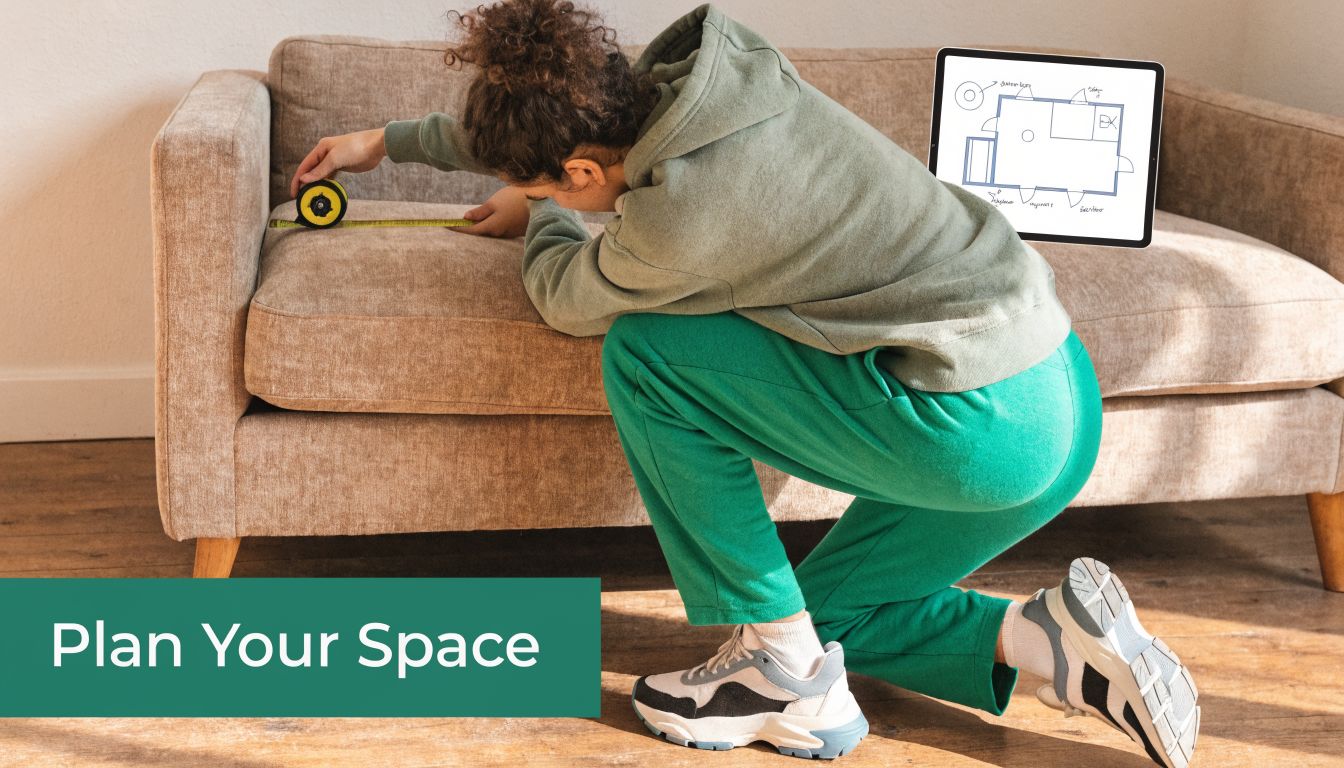
Measure each furniture piece by height, width, and depth. Include anything that changes packing, such as removable legs, detachable shelves, or glass tops.
Then note whether each item can be:
- Disassembled
- Stacked safely
- Stored upright
- Wrapped and nested with other pieces
That’s how you turn a random furniture pile into a realistic storage estimate. If you need help thinking spatially before you pack, this guide on arranging bedroom furniture for a perfect layout is useful because it trains your eye to notice clearance, traffic flow, and furniture footprint.
Think in layers, like Tetris
Storage space for furniture is a lot like Tetris, but with fewer second chances. Heavy and stable items go first. Fragile surfaces need protection. Frequently needed items should stay reachable.
A few planning questions make a big difference:
- Will you need access during storage? If yes, leave a path.
- Can long pieces stand vertically without damage? Some can. Some shouldn’t.
- Are you paying for empty air? Bulky but lightweight items can waste space if not disassembled.
A good storage plan doesn’t just fit everything. It lets you retrieve one thing without unpacking the entire setup.
If you want a tool to estimate volume more clearly, a storage space calculator can help you sanity-check your first guess before you commit to any option.
Protecting Your Investment Packing Furniture Correctly
Furniture usually gets damaged before it ever reaches storage. Most problems start during cleaning, wrapping, carrying, or stacking. Good packing protects both the piece and your budget.

Wood furniture needs airflow and surface protection
Clean wood first and make sure it’s fully dry before wrapping. Dust and trapped moisture can create problems over time, especially on finished surfaces.
Use moving blankets or furniture pads for outer protection. Avoid wrapping wood tightly in plastic for long periods if moisture could get trapped. Remove table legs when possible, and keep hardware in a labeled bag taped to the underside or packed in a clearly marked box.
Upholstered pieces need cleanliness more than compression
Sofas, dining chairs, and headboards should be vacuumed thoroughly before storage. Any stain or damp spot you ignore now can get worse later.
For fabric pieces:
- Use breathable covers rather than old sheets that slip off easily
- Don’t stack heavy items on cushions or arms
- Keep pieces off the floor if there’s any chance of floor moisture
- Store matching cushions together in labeled bags or bins
If a chair smells slightly musty before storage, deal with that now. Storage won’t fix it.
Glass, mirrors, and delicate parts need separate treatment
Glass tabletops, mirrors, and framed pieces should be removed from furniture and packed on their own whenever possible. Wrap them with protective material, label them clearly, and store them where they won’t flex under pressure.
If a piece has one vulnerable part, pack for that weak point first. A sturdy dresser can still be ruined by one chipped mirror or cracked leg.
Mattresses and disassembled parts are where mistakes pile up
A mattress should go into a proper mattress bag, not bare into a truck or unit. Bed frames, shelving, and desks should be disassembled only as far as it helps. Over-disassembling can make reassembly frustrating and increases the chance of lost hardware.
Use a simple packing routine:
- Photograph the item before disassembly
- Bag and label all screws and brackets
- Tape labels to wrapped parts
- Keep the hardware with the item, not in a random tool drawer
For a more detailed walkthrough on prep and materials, this article on how to protect furniture when moving is a solid reference.
A Practical Comparison Cost Climate Control and Insurance
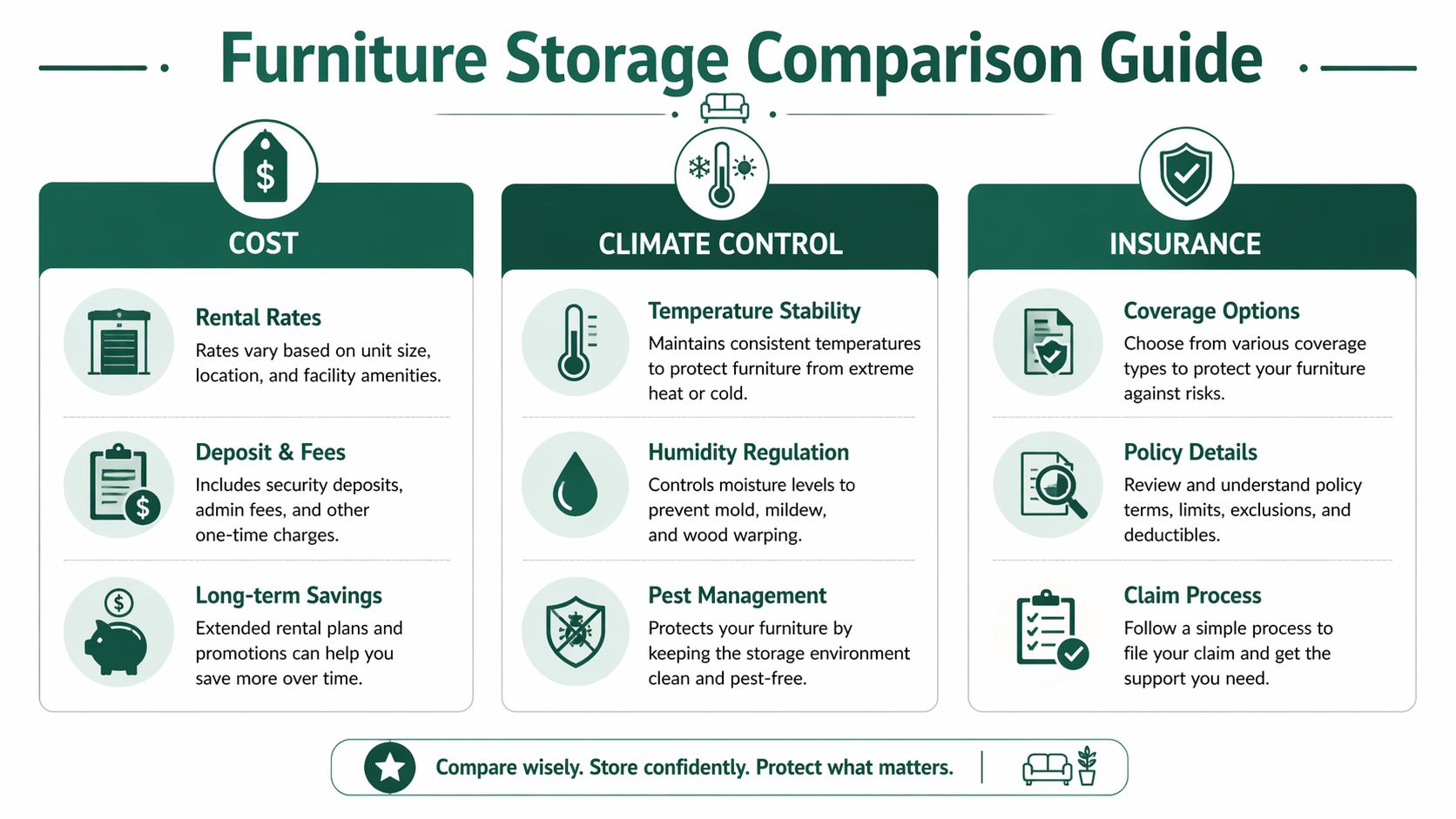
Price matters, but the cheapest line item often isn’t the cheapest experience. Furniture storage has hidden costs in labor, transportation, packing extras, risk, and how hard it is to retrieve things later.
One useful benchmark comes from a comparison of under-home storage and off-site services. For infrequent-access items, per-box services starting at $2.99 per box per month can be more economical than a small self-storage unit at $50+ per month once you factor in upfront bins costing $50 to $200 and the limits of DIY under-furniture storage, according to Homes & Gardens’ discussion of underused storage spots.
What actually belongs in the cost calculation
When readers say, “A storage unit is cheaper,” they often mean the monthly rent looks lower at first glance. But the full cost should include:
- Transport costs if you need a car, rideshare, van rental, or movers
- Packing materials such as covers, bins, tape, and blankets
- Time cost for pickup, travel, elevator trips, and repeat visits
- Risk cost if climate swings or weak coverage could damage valuable pieces
That last one gets overlooked a lot. A cheap setup becomes expensive fast if a wood table warps or upholstered furniture absorbs moisture.
Furniture Storage Options Compared
| Factor | Self-Storage Unit | Portable Container (POD) | Storage-by-the-Box (Endless Storage) |
|---|---|---|---|
| Best for | Larger furniture loads and longer-term storage | Moves with awkward timing and temporary overflow | Smaller-volume storage and convenience-focused households |
| Transportation | You handle delivery and visits | You usually handle loading, container transport is arranged | Pickup and return process is simpler for people without cars |
| Access style | Direct facility access | Access depends on container setup and location | Best for items you don’t need constantly |
| Climate control | Varies by facility and unit type | Varies by provider and plan | Included in the service described by the brand |
| Insurance setup | Often separate or limited, check details carefully | Varies, read terms closely | Included in the service described by the brand |
| Convenience level | Lower if the facility is far away | Moderate, especially during a move | High for urban renters with limited time |
| Space efficiency | You may pay for unused room if you overestimate | Good for bulky loads | Good for smaller, clearly defined storage needs |
Climate control and coverage are not side details
Wood, fabric, and mixed-material furniture need stable conditions. If you’re storing anything valuable, sentimental, or hard to replace, check climate control and insurance before you compare monthly price.
A lower sticker price can hide a weaker overall value. This is especially true if you’re storing furniture for more than a quick gap between leases. If you want a clearer sense of how facilities price temperature-stable options, this explainer on climate-controlled storage cost helps frame what you’re paying for.
Cheap storage is only cheap if your furniture comes back in the same condition.
The Ultimate Decision Checklist and Action Plan
The right answer depends less on the furniture itself and more on your daily life. A great storage choice for someone with a car and flexible weekends may be terrible for someone in a fifth-floor walk-up working long hours.
Ask these questions in order
Start with access.
- How often will you need the item? If the answer is monthly or more, easier access matters.
- How much are you storing? A full apartment’s worth of furniture points toward one path. A handful of items points toward another.
- Do you have a car or easy transport? If not, travel friction becomes part of the price.
- How long do you expect to store it? Short transitions and open-ended storage aren’t the same problem.
- Would replacing the item be painful? If yes, protection matters more.
Those answers usually narrow the field quickly.
A simple framework for choosing
Choose self-storage if you have bulky furniture, may want regular access, and can realistically manage transport.
Choose a portable container if you’re in the middle of a move and timing is your biggest challenge.
Choose a by-the-box model if convenience is the priority, your stored volume is limited, and you don’t want the burden of repeated trips.
One modern option in that category is storage-by-the-box service with pricing starting at $7.99 per month, along with climate control, insurance, and 48-hour return shipping, which is especially useful for city residents who don’t want to drive to a facility, as described on the Endless Storage website.
A realistic action plan for a small apartment move
Use this sequence to stay organized:
- Separate furniture into keep, store, and release
- Measure every store item
- List fragile materials and special-care pieces
- Estimate your real access needs
- Compare the all-in hassle, not just the monthly bill
- Book early if your move date is fixed
If you’re coordinating both moving and storage logistics, location-specific moving guides can help you think through timing and handoffs. For example, this expert guide to Perth removals and storage is useful for seeing how professionals structure the process from move-out to storage.
A written checklist also prevents last-minute scrambling. This moving checklist and timeline can help you map the tasks in order so furniture storage doesn’t become a move-day surprise.
Frequently Asked Questions About Furniture Storage
Is the facility’s insurance enough
Sometimes yes, sometimes not. Read the coverage details carefully. You want to know what’s covered, what isn’t, and whether damage from moisture, pests, or handling is excluded. If the furniture is valuable or sentimental, don’t assume basic coverage is enough.
Should I store wooden furniture in climate-controlled conditions
If you can, yes. Wood reacts badly to unstable temperature and humidity. That can show up as warping, cracking, finish damage, or stuck joints. Climate stability matters most for solid wood, veneered surfaces, and antique pieces.
Can I store a mattress vertically
Sometimes, but only if the manufacturer allows it and the mattress will stay properly supported. Many people store mattresses flat to reduce the chance of distortion. Use a mattress bag either way, and never place items directly on top unless that setup is clearly safe.
What furniture should I avoid storing long term without prep
Anything fabric-covered, wood-based, or mixed-material. Those pieces need cleaning, full drying, and proper wrapping. Don’t put dirty upholstery, damp furniture, or loosely protected glass into storage and hope for the best.
What items are usually not allowed in storage
Rules vary, but hazardous, flammable, perishable, and illegal items are commonly prohibited. Batteries, food, paint, and fuel are the kinds of things to double-check before packing.
How do I know if I’m storing too much
If your storage bill feels easier to justify than your attachment to the item, pause. The best storage space for furniture protects things you still want and will realistically use later. It shouldn’t become a waiting room for decisions you’ve already made.
If you want a simpler way to store furniture overflow, seasonal decor, boxed household items, or the smaller pieces that don’t fit your next place, Endless Storage offers a flexible storage-by-the-box option built for people who want convenience, climate control, insurance, and returns without making trips to a storage facility.