8 Bedrooms Ideas for Small Rooms to Maximize Space
You shift the nightstand six inches so the bed is easier to make. Then the closet door clips it. The hamper ends up in the only clear walking path, a chair becomes a clothing pile, and by evening the room feels smaller than it did that morning.
That pattern usually has less to do with decorating and more to do with fit. In a small bedroom, every piece needs a job, every storage spot needs a limit, and the layout has to protect a clear path around the bed. If it does not, the room starts fighting you.
Good bedrooms ideas for small rooms solve three problems at once. They improve circulation, increase closed storage, and reduce what has to live in the room full time. That third step gets skipped often, but it matters. If off-season clothes, extra linens, keepsakes, or hobby gear are taking up prime bedroom space, smart furniture alone will not fix the squeeze. An external storage option such as Endless Storage can take the pressure off the room so the design choices that follow work.
The ideas in this guide stay practical. You will see where a 10 to 12 inch deep wall shelf works better than a bulky dresser, why a bed with 12 inches of clearance underneath stores more than one with a lower frame, and how a mirror helps only when it reflects light instead of clutter. I also call out trade-offs, because the right fix for a renter, a studio apartment, and a kid's room is not always the same.
Before and after is the ultimate test.
Before, a 9 by 10 bedroom often feels cramped because the floor is crowded and low-use items are mixed in with daily essentials. After, the same room can feel calmer and function better once storage moves upward, furniture does double duty, and overflow leaves the bedroom entirely.
1. Vertical Storage and Wall-Mounted Solutions
A small bedroom usually feels tight at ankle height first. Shoes collect near the bed, books land on the nightstand, and a chair turns into a drop zone. The fastest way to relieve that pressure is to move storage up the wall so the floor can stay open.

What to mount and where
Start with depth. In a small bedroom, wall storage works best when shelves stay around 6 to 12 inches deep. That is enough for folded clothes, books, or baskets, but shallow enough that the room does not feel boxed in. Anything deeper starts to behave like furniture.
One tall unit usually works better than several low ones. A slim bookcase, an upright cube shelf, or two to three floating shelves stacked vertically can store a surprising amount while keeping more floor visible. I use this approach often in narrow rooms because it pulls the eye upward and reduces the spread of small storage pieces across the walls.
Placement matters as much as the product. Mount everyday items between waist and eye level so they are easy to grab. Use the top shelf for backup stock, keepsakes, or things you touch once a month. If the room already has a dresser, add storage above it first. That wall is already doing storage duty, so the new shelves feel intentional instead of scattered.
Practical rule: Leave at least one part of each wall visually open. Full coverage makes a small room feel busy fast.
Before and after
Before, a 9 by 10 bedroom might have a 30-inch-wide nightstand, a low dresser, stacked books on the floor, and phone chargers draped across every surface. After, the nightstand can shrink to a wall-mounted shelf 10 to 12 inches wide, books can move onto two floating shelves, and hooks behind the door can hold the bag or robe that used to live on a chair. The room gains walking space without adding square footage.
There is a trade-off. Open shelving is easy to access, but it also shows everything. If you know visual clutter stresses you out, use matching bins or baskets and limit each shelf to one category. Labels help here because the system only works if you can reset it in under a minute.
A few setups that consistently earn their wall space:
- For daily reach: Floating shelves above a desk, beside the bed, or over a dresser for books, chargers, glasses, and a small lamp.
- For awkward gaps: Narrow vertical shelves in corners or between the dresser and wall, often 8 to 10 inches wide.
- For renters and dorms: Over-the-door organizers and adhesive hooks where drilling is not practical.
- For low-use overflow: Upper shelves with lidded bins for extra linens, keepsakes, or travel gear.
Do not use your highest shelf as permanent overflow for everything that does not fit. That just lifts the clutter. Off-season clothes, spare bedding, and sentimental boxes are better moved out of the bedroom entirely so wall storage can support daily life. If those items still need to stay accessible, this is one of the clearest cases for using Endless Storage as the off-room layer of your organization system.
2. Multi-Functional Furniture Pieces
You feel the problem as soon as you try to get dressed. The chair holds clothes, the dresser eats up one wall, and the desk leaves a narrow path around the bed. In a small bedroom, furniture has to reduce congestion, not add to it.
The rule I use is simple. If a piece takes floor space, it should do at least two jobs well. A bed can sleep and store. A nightstand can hold a lamp and contain nightly essentials. A bench can provide seating and hide extra bedding. That standard cuts down the furniture count, which usually matters more than squeezing in one more tiny item.
Pieces that earn their footprint
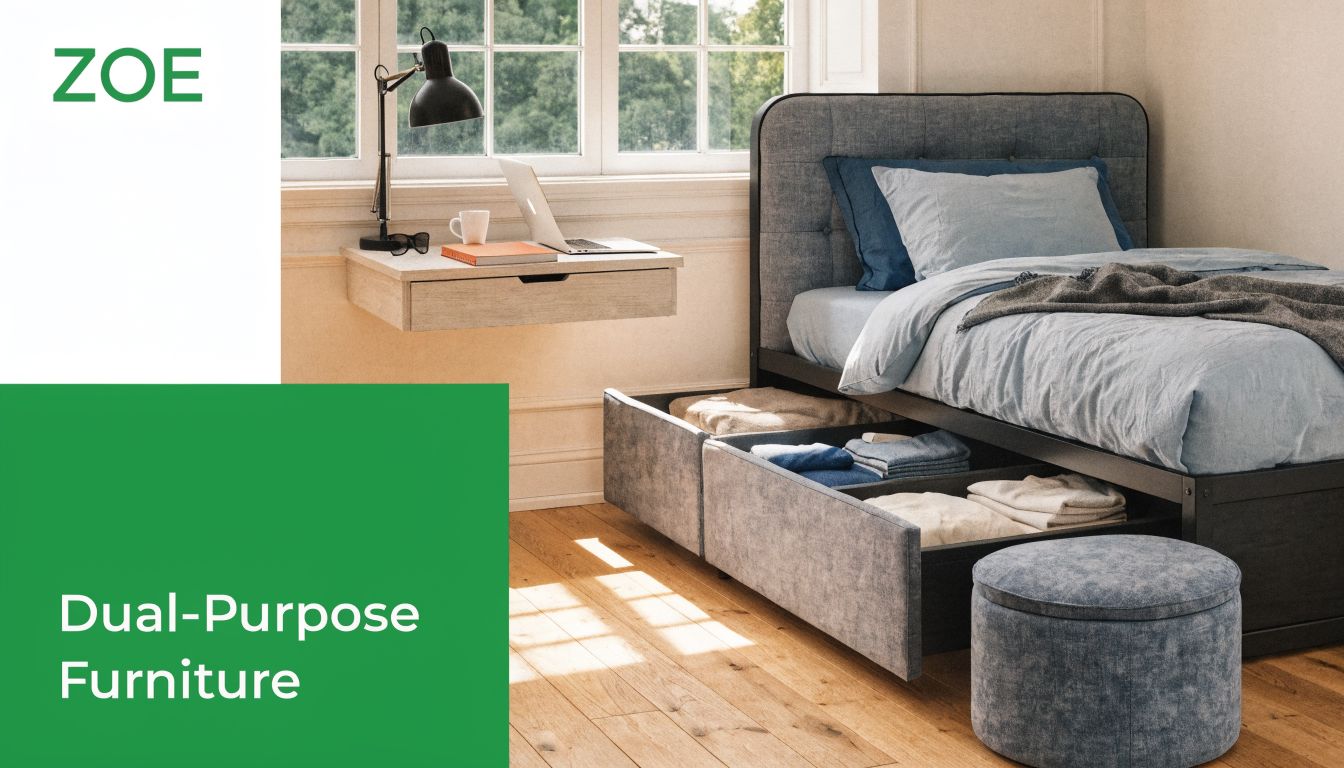
Start with the largest item in the room. For many small bedrooms, that means replacing a standard frame with a storage bed. Drawer beds work best when you have enough side clearance to open them fully. Aim for at least 24 inches beside the bed, and closer to 30 if that walkway is also your main path to the closet or door. In tighter rooms, a lift-up ottoman bed often works better because it uses vertical access instead of side clearance.
Nightstands deserve the same scrutiny. A piece that is 18 to 22 inches wide with one drawer or shelf usually handles the job without crowding the bed. If the current nightstand is deeper than 18 inches and blocks the path, swap it for a slimmer model or a compact C-table that can slide partly over the bed.
A storage bench at the foot of the bed helps, but only if the room can support it. Leave about 24 inches between the bench and the next obstacle so you can walk past without turning sideways. If that clearance is not there, skip the bench and put those blankets somewhere else. Off-season bedding, guest pillows, and rarely used soft goods are often better moved out of the bedroom through Endless Storage so the furniture you keep can serve daily use instead of overflow.
What works in real rooms
The best combinations are usually restrained.
- A platform bed with drawers plus one compact nightstand
- A wall-mounted desk or fold-down desk plus a closed storage stool
- A narrow dresser that also functions as a vanity or landing surface
- A guest room setup with a daybed and drawers underneath
The trade-off is visual weight. Multi-functional furniture helps with storage, but bulky pieces can still make a room feel compressed. I would rather see one clean-lined storage bed and a small bedside table than three oversized pieces that each promise extra function.
A practical before-and-after often looks like this. Before, the room has a basic bed frame, a separate dresser, and a small desk pushed into whatever corner is left. After, the dresser is removed, clothes shift into bed drawers, the desk folds to the wall when not in use, and the walking path opens up by several inches. That difference changes how the room feels every day.
Measure before you buy. Check door swing, radiator clearance, drawer extension, and the space needed to make the bed without bruising your shins. A so-called space-saving piece fails fast if you cannot open it comfortably or move around it without adjusting your body every time.
3. Under-Bed Storage Systems
You change the sheets, drop to one knee, and have to shove aside a loose tote, a gift bag, and one lonely boot to reach the storage you meant to use. That setup wastes space and turns a good hiding spot into a clutter trap. Under-bed storage works best when it follows the same rules as a well-run closet: clear categories, easy access, and firm limits.
Use this area for items you need sometimes, not every morning. Good candidates include off-season clothes, spare bedding, travel pouches, extra towels, and shoes you wear a few months a year. Paperwork, sentimental keepsakes, and heavy miscellaneous boxes usually belong somewhere else.

Set it up so you will actually use it
Start with clearance. Most under-bed bins need roughly 6 to 8 inches of height, and rolling drawers often need closer to 8 to 10 inches to move without scraping. Measure from the floor to the lowest point of the bed frame, not just to the mattress edge.
Then match the container to the room:
- Low frames: Use flat, lidded bins or zippered fabric cases.
- Beds with decent clearance: Use rolling bins with a handle on the short side.
- Dust-prone rooms: Choose hard-sided containers that fully close.
- Linens and natural fibers: Use breathable fabric containers or bins with ventilation.
Labels matter more here than in a closet because you cannot see everything at once. Label the side that faces outward. If you have to pull every container to find one set of flannel sheets, the system is already inefficient.
A practical setup usually looks like this: one bin for cold-weather accessories, one for spare bedding, one for off-season shoes, and one flex bin for travel items. Four defined containers beat eight half-filled ones every time.
What changes before and after
Before, the space under the bed holds random spillover: shopping bags, old cables, decor from another room, and clothes that do not fit anywhere else. The room still feels crowded because the clutter problem has only been pushed lower.
After, the under-bed zone holds only current seasonal overflow, each category has one container, and retrieval takes less than a minute. The visual difference is subtle, but the daily friction drops fast.
There is a trade-off. Under-bed storage increases capacity, but it also makes it easier to keep too much. If the closet is full, the dresser is full, and the bed is full, the room is still overstuffed. In small bedrooms, I usually recommend keeping under-bed storage for active rotation and moving true surplus out of the room through Endless Storage. That could mean guest bedding you use twice a year, sentimental clothing, baby keepsakes, or hobby gear that does not need to live under your mattress.
The goal is simple: use the space under the bed as an organized extension of the room, not as a backup junk drawer.
4. Mirror Placement and Illusion of Space
A mirror won't create storage, but it can correct the cramped feeling that comes from bad sightlines and weak light. In a small bedroom, perception matters. If the room reflects daylight and shows more wall than clutter, it reads larger.
The mistake is using mirrors as decoration without thinking about what they reflect. A mirror facing a messy closet corner doubles the mess. A mirror catching a window or open floor area expands the room.

Best placements for small bedrooms
A full-length mirror near a window is usually the strongest move. If that's not possible, mirrored closet doors or a large mirror above a low dresser can still help. In awkward rooms, a corner mirror can brighten dead space that otherwise feels closed off.
Frameless mirrors tend to look cleaner in very small rooms. Heavier frames can work, but they become more of a style feature and less of a visual trick.
Before and after
Before, the room has one overhead light, dark corners, and no reflective surface, so everything feels compressed at night and flat during the day. After adding a mirror across from natural light and keeping the reflected view simple, the room feels brighter and less boxed in.
Don't place a mirror where it becomes a full-time clutter amplifier. Reflection is multiplication.
Clean the mirror often. It sounds minor, but dusty glass kills the effect. If glare becomes annoying, shift the angle slightly rather than downsizing to a tiny mirror that doesn't do enough work.
5. Minimalist Décor and Decluttering
You open the bedroom door, and nothing is technically wrong. The bed is made. The furniture fits. Yet the room still feels tight because every surface is carrying something. In small bedrooms, visual noise steals space faster than bad furniture choices.
Decluttering fixes two problems at once. You get back usable room, and the room stops asking your eyes to process twenty small items before you even sit down.
Edit the room by zones
Work in this order: visible surfaces first, stored items second. That gives you a quick win and makes the room feel lighter within an hour.
Start with the nightstand, dresser top, desk, windowsill, and floor. If an item lives there, it needs a reason. Daily-use items can stay. Decorative pieces need to earn their footprint. In a small room, even 12 to 18 inches of cleared surface on a dresser changes how open the room feels.
Then move to the hidden clutter. Drawers, baskets, under-bed bins, and the closet often hold the overflow that keeps creeping back onto open surfaces. If something has not been used in months and is not seasonal, move it out of the bedroom. If you want to keep it but do not need it nearby, this is the right point to use an off-site option like Endless Storage so the room only holds what supports sleep, dressing, and daily routines.
What to keep in a small bedroom
Minimalist décor works best when the room has one clear focal point and a small number of supporting pieces.
- Choose one visual anchor: the bed, headboard, or one piece of art
- Limit bedside items: lamp, book, water, and one personal item is usually enough
- Cut duplicates: extra candles, spare baskets, and filler décor create bulk without adding function
- Leave some space empty: a blank section of wall or a clear dresser top makes the room feel finished, not bare
The trade-off is real. A room with fewer objects can feel less personal if you strip out everything meaningful. The fix is editing, not erasing. Keep the pieces that matter and remove the ones that only create maintenance.
Before and after
Before, the dresser holds skincare, receipts, jewelry, chargers, framed photos, and folded clothes with no home. The nightstand has six items stacked around the lamp. A chair becomes a drop zone for tomorrow's outfit and last week's laundry. The room feels busy even after cleaning.
After, the dresser keeps one tray for daily essentials and one framed photo. The nightstand holds only what gets used before bed. Out-of-season clothes and sentimental keepsakes move to labeled storage or off-site. The floor opens up, cleaning takes less time, and the room starts reading as calm instead of cramped.
Minimalism that still feels warm
A small bedroom does not need to look stark. It needs restraint. Good bedding, one lamp with presence, a plant if you will care for it, and a shelf that is not overcrowded usually feel better than a room full of tiny accessories marketed as cozy.
If sentimental items are the sticking point, rotate them. Display a few at a time. Store the rest elsewhere. That approach is easier to maintain, and it keeps the bedroom from turning into long-term storage with a pillow on top.
6. Smart Lighting Design and Color Psychology
Small bedrooms often have one central ceiling light doing all the work. That's why they feel flat at best and gloomy at worst. Good lighting for a compact room comes from layers, not brightness alone.
A better setup combines overhead light, bedside light, and one secondary light source such as a wall sconce or desk lamp. This reduces harsh shadows and helps the room feel finished.
Light first, paint second
If the room is dim, test lighting before repainting. People often blame wall color when the actual problem is a single cold bulb. Warm white lighting usually makes bedding, wood tones, and neutral paint look calmer and more expensive.
Wall sconces are especially useful in small bedrooms because they free up the nightstand. If hardwiring isn't realistic, plug-in sconces are often good enough and renter-friendly.
A small room feels bigger when the corners are visible. Dark corners make the walls feel closer.
Colors that usually help
Light neutrals are the safe choice because they reflect available light well. Soft white, pale beige, muted greige, and light warm gray are easier to live with than bright stark white in most bedrooms. You can bring personality in through bedding, a throw, or a headboard instead of covering every wall in a strong color.
That said, not every small room needs to be pale. If the room already gets good natural light, a deeper color can feel cozy rather than cramped. The key is consistency. Don't pair dark walls with random visual clutter and expect the room to feel serene.
A simple before-and-after change looks like this. Before, one overhead fixture, heavy curtains, and dark corners. After, sheer curtains, a bedside sconce, a second lamp, and a paint color that doesn't fight the light.
7. Closet Optimization and Smart Organization Systems
You can usually spot a closet problem from the bed. A chair starts holding tomorrow's outfit, shoes collect near the door, and folded items drift onto any open surface. In a small bedroom, closet failure spreads fast because there is nowhere for overflow to hide.
The fix is a system with measurements, limits, and clear categories.
Start by checking the closet against what it needs to hold now, not everything you own. Everyday clothes should sit between waist and eye level. High shelves should hold low-use items only. If the rod runs full width with one level of hanging, add a second rod for shirts, skirts, and folded pants. In many standard closets, that single change gets far more usable hanging space than buying another bin ever will.
Assign zones by use and frequency
A good small-closet layout works in layers. Daily items go in the center zone. Shoes and bags go low. Seasonal or occasional pieces go up high. Accessories need a contained spot, or they become visual clutter within a week.
Here's a simple setup that works in tight bedrooms:
- Center hanging zone: Current-season clothes you wear weekly
- Upper shelf: Luggage, memory boxes, guest linens, or labeled bins
- Lower zone: Shoes, a small drawer unit, or baskets for bags
- Door back: Belts, scarves, caps, and other small accessories
- Top priority edit: Keep only the current season in the main closet
Slim velvet hangers help because they keep spacing consistent and stop wide plastic hangers from wasting rod space. Shelf dividers help folded stacks stay upright instead of collapsing into one large pile by day three.
For deeper planning, these ways to improve home storage efficiency show how custom systems solve dead space and awkward dimensions.
Use a before-and-after test
Before: one rod, one overloaded shelf, shoes on the floor, and mixed categories everywhere.
After: double hanging on one side, shelves split by category, shoes corralled in a rack or bins, and only in-season clothing kept in the room.
That kind of reset changes how the whole bedroom functions. You spend less time searching, less time refolding, and you stop using furniture outside the closet as backup storage.
One trade-off matters here. People often try to make the bedroom closet hold keepsakes, guest bedding, luggage, out-of-season clothes, and everyday wear all at once. In a small room, that usually fails. The better move is to protect the closet for daily use and move low-use items elsewhere. If you do not have another storage area at home, Endless Storage can take the pressure off by holding bins, extra bedding, and seasonal clothes outside the bedroom so the closet can do its actual job.
Audit the closet every few months. If an item has not been worn, used, or needed in the current season, donate it, sell it, or store it out of the room. Small bedrooms stay functional when the closet is edited like a tool, not treated like an attic.
8. Lofted Beds and Elevated Sleep Platforms
Some rooms don't have enough floor area to solve the problem conventionally. That's when raising the bed starts making sense. In a dorm, studio, or very tight bedroom, a lofted bed can create a work zone, lounge spot, dresser area, or open storage zone underneath.
This works best when ceiling height cooperates and when you're comfortable climbing into bed daily. It isn't the right answer for everyone. But in the right room, it completely changes the layout options.
A recent design angle that deserves more attention is the oddly shaped room. Recent styling guidance acknowledges angled walls, windows, and awkward bed placement, but often stops before giving a real decision framework. A more practical method is to choose one anchor function, like sleep, work, or storage, and remove what competes with circulation, as explored in The Decorologist's small bedroom angle-layout discussion.
A lofted setup in action can help you picture the trade-off.
When lofting works best
If you need a desk more than a wide-open bedroom floor, lofting can be excellent. If you hate climbing, change sheets often, or have low ceilings, it may become annoying fast. Platform risers can offer a middle ground by lifting the bed enough to expand storage without making the sleep zone fully raised.
Before, the bed consumes most of the room and forces the desk or dresser into awkward circulation space. After, the bed moves up and one clear zone opens underneath for work or storage.
Raised beds work when they solve a specific need. They don't work as a novelty piece dropped into a room without a purpose.
Safety and comfort matter
Measure carefully before buying. You need enough clearance to sit up comfortably in bed and enough headroom below if the lower zone will be used for work. Anchor the structure properly, check weight ratings, and add lighting under the loft if the lower area becomes a desk or reading nook.
Done badly, a loft feels like a bunk in a storage unit. Done well, it turns dead vertical air into useful living space.
8 Small-Bedroom Ideas Comparison
| Item | Implementation Complexity 🔄 | Resource Requirements ⚡ | Expected Outcomes 📊 | Ideal Use Cases 💡 | Key Advantages ⭐ |
|---|---|---|---|---|---|
| Vertical Storage and Wall-Mounted Solutions | Medium 🔄, secure mounting and layout planning | Moderate ⚡, shelves, hardware, possible tools | High 📊, significant floor-space freed and visible storage | Small bedrooms wanting accessible storage; use above headboards or desks | Maximizes vertical real estate; customizable |
| Multi-Functional Furniture Pieces | Medium 🔄, assembly and precise measuring required | Higher ⚡, higher upfront cost for integrated pieces | High 📊, concealed storage, fewer furniture items | Studios, compact bedrooms needing hidden storage and multifunction use | Reduces footprint while adding concealed capacity |
| Under-Bed Storage Systems | Low 🔄, simple to implement (bins/risers) | Low ⚡, inexpensive bins, bags, or risers | Moderate 📊, adds substantial out-of-sight storage | Seasonal storage, small apartments with low cost needs | Cost-effective use of dead space; easy access with rolling options |
| Mirror Placement and Illusion of Space | Low 🔄, placement-focused; some large installs | Low ⚡, mirrors or mirrored panels; minimal install | High 📊, immediate perception of larger, brighter room | Rooms lacking light or feeling cramped; opposite windows ideal | Instant visual expansion; affordable aesthetic boost |
| Minimalist Décor and Decluttering | Medium 🔄, requires sustained effort and decisions | Low ⚡, low monetary cost, time and discipline needed | High 📊, calmer, visually larger feel; easier maintenance | People seeking long-term simplicity and reduced belongings | Timeless aesthetic; reduces visual clutter and decision fatigue |
| Smart Lighting Design and Color Psychology | Medium 🔄, layered lighting planning, possible wiring | Moderate ⚡, fixtures, bulbs, paint, dimmers | High 📊, brighter, more open perception; mood benefits | Dark rooms or multi-use spaces needing flexible ambiance | Enhances brightness and perceived size; improves mood |
| Closet Optimization and Smart Organization Systems | Medium 🔄, reconfiguration and installation possible | Moderate ⚡, organizers or custom systems | High 📊, dramatically increased usable closet capacity | Homes with closets wanting efficient seasonal rotation | Maximizes closet storage; improves access and organization |
| Lofted Beds and Elevated Sleep Platforms | High 🔄, structural planning and secure installation | High ⚡, significant cost and ceiling-height needs | High 📊, creates large usable floor area underneath | High-ceiling studios, dorms, and multi-functional rooms | Transforms vertical space into functional living or storage area |
Your Action Plan for a Bigger-Feeling Bedroom
The best bedrooms ideas for small rooms usually follow the same sequence. First, clear what doesn't need to live there. Second, make the room store upward instead of outward. Third, choose furniture that earns its footprint. Last, use light, mirrors, and layout to make the room feel calmer than its square footage suggests.
That order matters. People often start with bedding, paint, or a new nightstand because those upgrades are fun and visible. But if the closet is overstuffed, the floor is crowded, and the room is carrying luggage, seasonal clothes, old keepsakes, and spare linens all at once, cosmetic changes won't hold for long.
The strongest small-bedroom setup is usually simple. A bed with useful storage. Walls that do some of the work. A closet organized by category and season. Enough empty surface area that the room doesn't feel like a catchall. A mirror and layered lighting to improve the sightline. Then a hard boundary around what belongs in the room at all.
That last part is where many people get stuck. You may need the items, but you may not need them in the bedroom every day. Seasonal coats, guest bedding, memory boxes, extra books, hobby supplies, and backup household goods often eat up the exact space that would make a bedroom feel restful. For urban residents, renters, and people in transition, treating storage as a rotation system is often more realistic than trying to cram everything into one room.
That's also why a box-based service can fit naturally into a small-bedroom plan. Endless Storage is one option for moving low-use items out of the room without committing to a traditional self-storage routine. The company offers storage-by-the-box, climate-controlled facilities, insurance coverage, and 48-hour return shipping, with pricing starting at $2.99 per box per month. If your goal is to keep the bedroom minimal while still keeping certain belongings accessible, that setup can be practical.
Effective maintenance is the ultimate victory. Once the room feels better, protect it. Keep only current-season clothing in the closet. Edit surfaces weekly. Don't let under-bed storage become a junk drawer. If something new comes in, decide what leaves the room. Small bedrooms stay functional when you treat them as active systems, not one-time makeovers.
If your bedroom feels full no matter how much you rearrange it, it may be time to remove low-use items instead of hiding them better. Endless Storage offers storage-by-the-box with shipped kits, climate-controlled storage, and return shipping, which can be useful for seasonal clothing, spare bedding, keepsakes, and other overflow that doesn't need to stay in your room every day.