
How to Find Cubic Feet: A Simple Guide for Storage
You’re probably here because you have a pile of boxes, a piece of furniture that won’t fit where you want it, or a move coming up fast. You need a realistic answer to one question: how much space do this stuff take up?
That’s where cubic feet helps. It sounds technical, but it’s just a practical way to measure volume so you can stop guessing. Once you know how to find cubic feet, it gets much easier to compare box sizes, estimate storage needs, and avoid paying for more space than your belongings require.
Why Cubic Feet Matter for Your Space and Wallet
In a small apartment, every bit of space counts. The challenge is a lack of volume-based thinking, with focus instead falling on piles, corners, and “maybe this will fit.” That usually works right up until moving day, or until you start comparing storage costs and realize you don’t have a clear sense of how much you’re storing.
Cubic feet is the language of space. It tells you how much three-dimensional room an item uses, not just how wide or tall it looks. That matters when you’re stacking boxes, fitting furniture into a room, or deciding whether a storage solution is oversized for what you own.
The financial side matters too. If you overestimate, you may pay for more storage than you need. If you underestimate, you end up reworking your plan, repacking, or scrambling for extra capacity. If you want a broader sense of how storage pricing works before measuring, this guide on how much storage units cost is a useful companion.
Practical rule: Don’t measure only what touches the floor. Storage costs and fit depend on volume, not footprint alone.
I’ve seen the same pattern again and again with decluttering projects. People are usually relieved once they realize this is basic arithmetic, not advanced math. A few careful measurements can replace a lot of stress.
The Simple Math Behind Calculating Cubic Feet
Cubic feet sounds more technical than it is. In practice, it is just a way to measure how much three-dimensional space an item takes up, which is exactly what matters when you are choosing storage for a studio apartment, planning a move, or trying to avoid paying for space you will not use.
The core formula
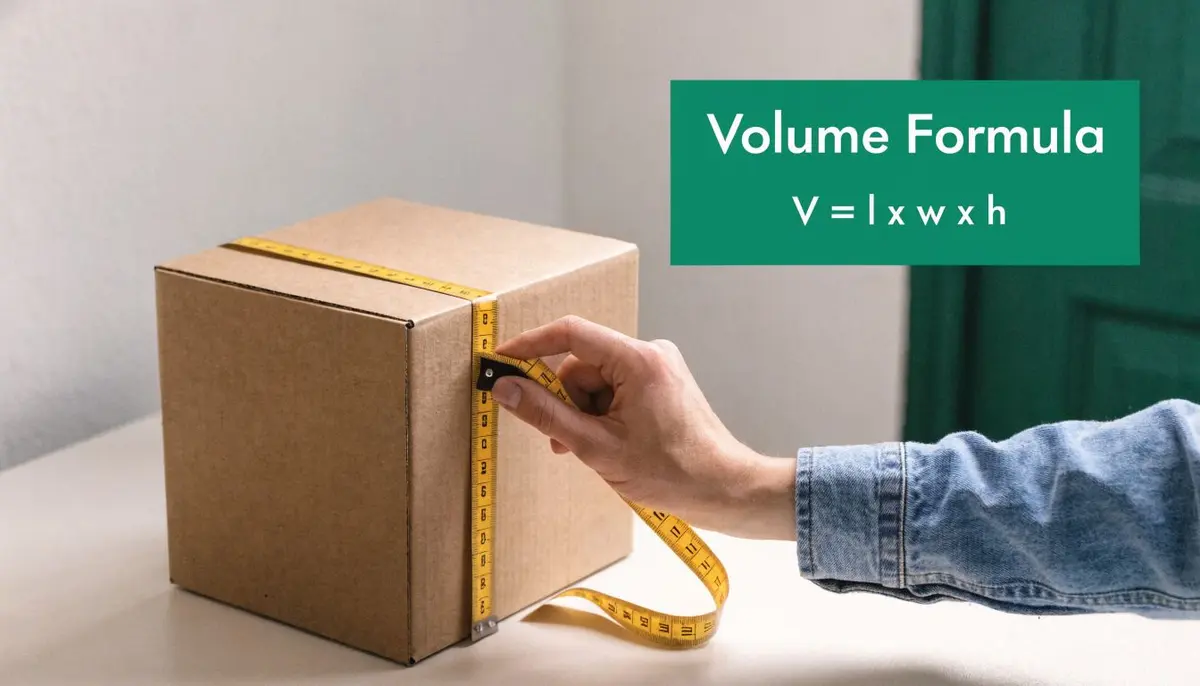
Use this formula:
Length × Width × Height = Volume
If your measurements are already in feet, the answer is in cubic feet.
That is the whole calculation. A box that is 2 feet long, 1.5 feet wide, and 2 feet tall takes up 6 cubic feet of space. For storage planning, that number gives you something much more useful than “medium-sized box” or “small couch.” It lets you compare items consistently and estimate how much room your belongings will need. If you want to check your math against real storage sizes, this storage unit size calculator is a practical next step.
Why 1728 matters
Many household items are measured in inches, not feet. That is where 1728 comes in.
There are 12 inches in a foot, so one cubic foot equals 12 × 12 × 12, or 1728 cubic inches. If you measure in inches, multiply length, width, and height first. Then divide the result by 1728.
For example, a box that measures 24" × 18" × 16" comes out to 6912 cubic inches. Divide 6912 by 1728, and you get 4 cubic feet.
This is the conversion I use most often with city movers, because very few people measure a bookshelf or moving carton in feet at home. They use a tape measure, jot down inches, and need a fast way to turn that into a realistic storage estimate.
A practical shortcut
You do not need perfect math to make a good storage decision. You need consistent math.
Measure the item at its longest, widest, and tallest points. Convert to feet if needed. Multiply once. If you are estimating several items for pickup or storage, round slightly up instead of down. That small buffer usually costs less than finding out too late that your plan was short on space.
Warehouse teams use the same basic idea when they maximize your cube with high-density storage design. The scale is different, but the principle is the same. Volume drives storage efficiency.
How to Measure Everything from Boxes to Couches
A box is straightforward. A couch is where apartment moves usually get expensive, because one bad estimate can push you into the wrong storage plan.
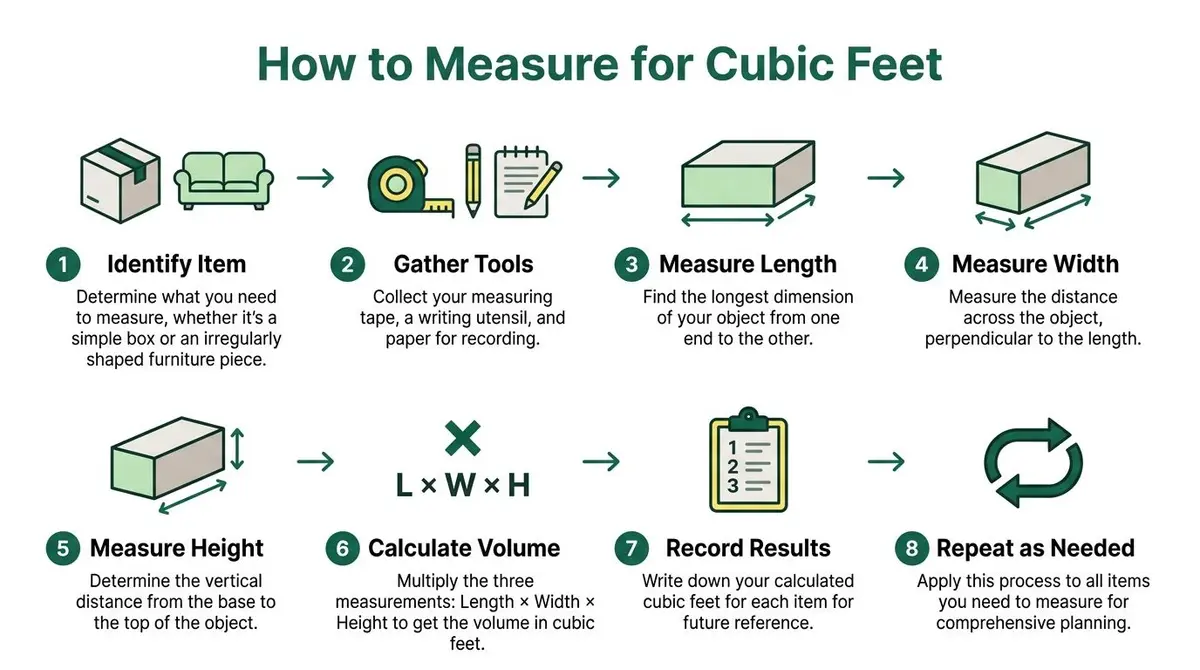
For storage planning, the goal is not perfect geometry. The goal is a measurement that matches the space your item will occupy in pickup, transit, and storage. That matters even more in city apartments, where every extra cubic foot can affect what you pay and how tightly your inventory fits.
Measuring a standard box
Boxes are the best place to start because they teach the method clearly and give you a reliable baseline for the rest of your inventory.
- Set the box on a flat floor or table.
- Measure length, width, and height at the outside edges.
- Convert each number to feet if you measured in inches.
- Multiply the three dimensions.
For example, an 18" × 18" × 16" moving box becomes 1.5 ft × 1.5 ft × 1.333 ft. That works out to about 3 cubic feet.
Use the outer dimensions, not the usable space inside the box. Storage and moving plans are based on the space the box takes up, especially once it is taped shut and stacked with other items.
Measuring furniture with straight edges
Dressers, bookcases, file cabinets, and nightstands are usually easier than they look. Treat them like solid rectangles and measure the outside frame.
A simple process works well:
- Measure the longest side for length.
- Measure side to side for width.
- Measure floor to top for height.
- Ignore interior shelves and drawers and stick to the outer dimensions.
That last point saves a lot of bad estimates. A dresser may have empty drawer space inside, but your storage plan still has to account for the dresser's full outside footprint.
If you are comparing storage volume with transport costs for larger furniture, this furniture shipping cost calculator for bulky household items is a useful companion to your cubic-foot estimate.
Measure the item the way it will be stored and moved. That gives you the number that actually matters.
Measuring couches, chairs, and irregular items
Couches, accent chairs, floor lamps, and packed duffel bags do not sit neatly in a perfect rectangle, but the measuring method is still practical. Use a bounding box. Measure the smallest imaginary rectangle that fully contains the item.
For a couch, measure the farthest arm-to-arm point for length, the deepest front-to-back point for width, and the highest point, often the back cushion or frame, for height. For a chair, use the widest, deepest, and tallest outside points. For soft goods like bedding bags or overstuffed totes, measure them in their packed condition, since that is how they consume storage space.
A short video can make that easier to picture:
When to estimate tighter
The bounding-box method is fast and consistent, which makes it useful for apartment inventories and early storage quotes. It can also overstate the volume of open or oddly shaped furniture.
In those cases, break the item into a few simple sections and estimate each one separately. A dining chair, for example, can be measured as a seat block plus a back block, instead of one oversized rectangle that includes a lot of empty air. I use this tighter method when someone is close to a storage threshold and wants a more realistic number before booking.
Here is a practical rule set:
- Use a full bounding box for quick planning and mixed household inventories.
- Split the item into sections when shape matters and you need a closer estimate.
- Measure soft items as packed rather than flat or empty.
- Write each measurement down right away so numbers do not get swapped between pieces.
If you are measuring a full apartment for storage, start with the clear rectangular items first. Boxes, bins, dressers, and shelves give you a solid base number. Then add sofas, chairs, lamps, and other awkward pieces with a little more care. That approach is usually fast enough for real planning and accurate enough to avoid paying for space you do not need.
Essential Conversions and Quick Math
Unit mix-ups cause more bad storage estimates than the actual multiplication. In small apartments, that usually means one of two expensive mistakes. Booking too much space because inches were treated like feet, or booking too little and realizing it when move-out day gets tight.
A few conversion numbers solve most of the problem. There are 1,728 cubic inches in 1 cubic foot, 27 cubic feet in 1 cubic yard, and about 35.31 cubic feet in 1 cubic meter. For a simple room check, a space that measures 10 ft × 10 ft × 8 ft has 800 cubic feet of volume. That last number does not need a source. It is straight arithmetic: 10 × 10 × 8.
Common Measurement Conversions
| To Get Feet | From | Divide by |
|---|---|---|
| Feet | Inches | 12 |
| Feet | Centimeters | 30.48 |
| Feet | Yards | 0.333... |
| Cubic feet | Cubic inches | 1728 |
| Cubic feet | Cubic yards | Multiply by 27 |
| Cubic feet | Cubic meters | Multiply by 35.31 |
Fast ways to handle everyday math
For items measured in inches, use the method that keeps you from second-guessing yourself halfway through a list.
- Convert each side to feet first, then multiply length × width × height.
- Multiply in inches first, then divide the total by 1,728.
Both methods give the same answer. I usually suggest the second method for boxes and bins because it is faster on a phone calculator. For furniture, converting each side first is often easier to sanity-check when dimensions are awkward.
Here is a quick example. A box that measures 24 × 18 × 18 inches has a volume of 7,776 cubic inches. Divide by 1,728 and you get 4.5 cubic feet. That is the kind of number that helps when you are deciding whether a few extra boxes will still fit comfortably in storage.
If you are estimating a full move or comparing service options, the storage savings calculator for comparing storage costs helps turn those item totals into a more realistic budget decision.
Quick check: If a single box comes out to 40 cubic feet, or a couch comes out smaller than a carry-on suitcase, check the units before you trust the result.
Metric items and international purchases
Metric dimensions show up all the time now, especially with flat-pack furniture, imported shelving, and marketplace listings. Convert them before you combine them with measurements taken in feet or inches.
The safest habit is simple. Write the unit next to every number in your notes. “cm,” “in,” and “ft” take an extra second to write, and that one step prevents the kind of estimating error that can push an urban storage plan over the wrong size threshold.
Estimating Your Needs for Moving and Storage
A small measuring mistake can turn into a bigger monthly bill. In city apartments, that usually shows up in one of two ways. People book more storage than they need, or they squeeze into too little space and end up repacking under pressure.
Add up categories, not chaos
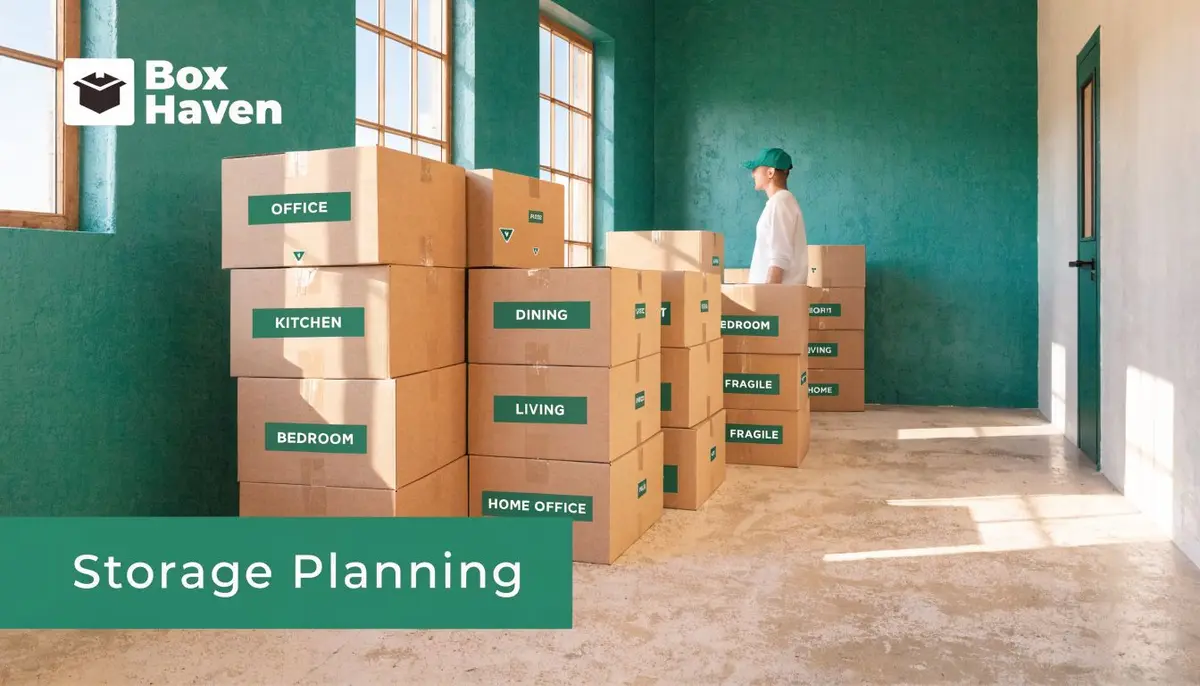
Start by sorting your estimate into groups that match how things will be packed and stored. Keep boxes together. List furniture separately. Put soft goods, luggage, sports equipment, and seasonal items in their own categories.
That gives you a total you can trust more easily. It also shows where the space really goes. Three medium book boxes can matter more than a bulky lamp, and a stack of bedding bags may look large while compressing well in storage.
For Endless Storage customers, this step matters because the goal is not just getting a number. The goal is choosing a plan that fits your real inventory without paying for space you will never use.
Plan for usable space, not perfect volume
Raw cubic feet is your starting point. Real storage planning needs one more layer of judgment.
Boxes do not stack like perfect digital blocks. Sofas have arms. Dining chairs leave empty pockets between legs. Plastic bins may nest cleanly, while laundry bags and loose household items waste space fast. In practice, packed volume and usable volume are rarely the same.
A simple rule works well. Add your measured cubic feet, then leave a buffer for awkward shapes and less-than-perfect stacking. For tightly packed boxes, a small cushion is usually enough. For mixed apartments with furniture, soft goods, and odd-shaped items, use a larger cushion so the estimate reflects real loading conditions.
A practical planning rhythm
Use this process to build an estimate that holds up on moving day:
- Measure large furniture first so the biggest space users are accounted for early.
- Batch repeated items like ten identical moving boxes or four matching storage bins.
- Separate compressible items such as bedding or winter coats from rigid items like book boxes.
- Add a planning buffer for gaps, curved furniture, and items that cannot be stacked safely.
- Review the final total against your layout so the number matches how things will sit in storage.
If you want a more specific sizing check, this guide on how much storage you need helps translate your item list into a more practical storage decision.
If you are also comparing storage formats, the self-storage options handbook is a useful outside reference for weighing access, flexibility, and space trade-offs.
The best estimate gives you room to pack realistically, protect your furniture, and avoid paying for air.
Common Pitfalls That Lead to Wasted Space and Money
A bad cubic-foot estimate usually shows up later, when the truck is packed, the pickup is booked, or the storage order is already placed. In a city apartment, that often means paying for extra space you did not need, or realizing too late that your plan was too tight to work.
One common error is mixing inches and feet in the same calculation. Another is treating every item like a clean rectangle, even when the shape leaves dead space, open space, or awkward curves. Cubic feet is only useful if the measuring method matches how the item will sit in storage.
The fix is simple. Stay in one unit system from start to finish, measure the outermost points for anything going into storage, and treat irregular furniture as an estimate instead of a perfect geometric answer.
The mistakes worth catching early
- Using mixed units throws off the math before the estimate even starts.
- Measuring inner dimensions instead of outer dimensions leads to undercounting, especially for sofas, chairs, and dressers with overhangs.
- Ignoring empty space inside a shape can overstate usable volume for open furniture like chairs or small tables.
- Trusting memory leads to swapped numbers and expensive sizing mistakes. Write measurements down as you go.
- Skipping a reality check causes trouble on moving day. A piece can fit on paper and still be hard to stack, rotate, or place safely.
For storage planning, the practical question is not just "What is the volume?" It is "How much room will this item claim once it is wrapped, carried, and placed next to everything else?" That is why I always recommend a measured estimate plus a small buffer instead of chasing false precision.
If you’re comparing different storage approaches after measuring, a neutral resource like this self-storage options handbook can help you weigh access, flexibility, and sizing trade-offs.
A consistent method saves money. It also saves you from the very common urban-moving mistake of reserving too little space for bulky furniture, then scrambling to add more at the last minute.
If you want a simpler way to store what you’ve measured, Endless Storage gives you a flexible storage-by-the-box option that works especially well for apartment moves, seasonal decluttering, and in-between-life stages. Once you know your cubic feet, it’s much easier to choose the right number of boxes and avoid paying for space you won’t use.