
Storing a Refrigerator: The Complete Step-by-Step Guide
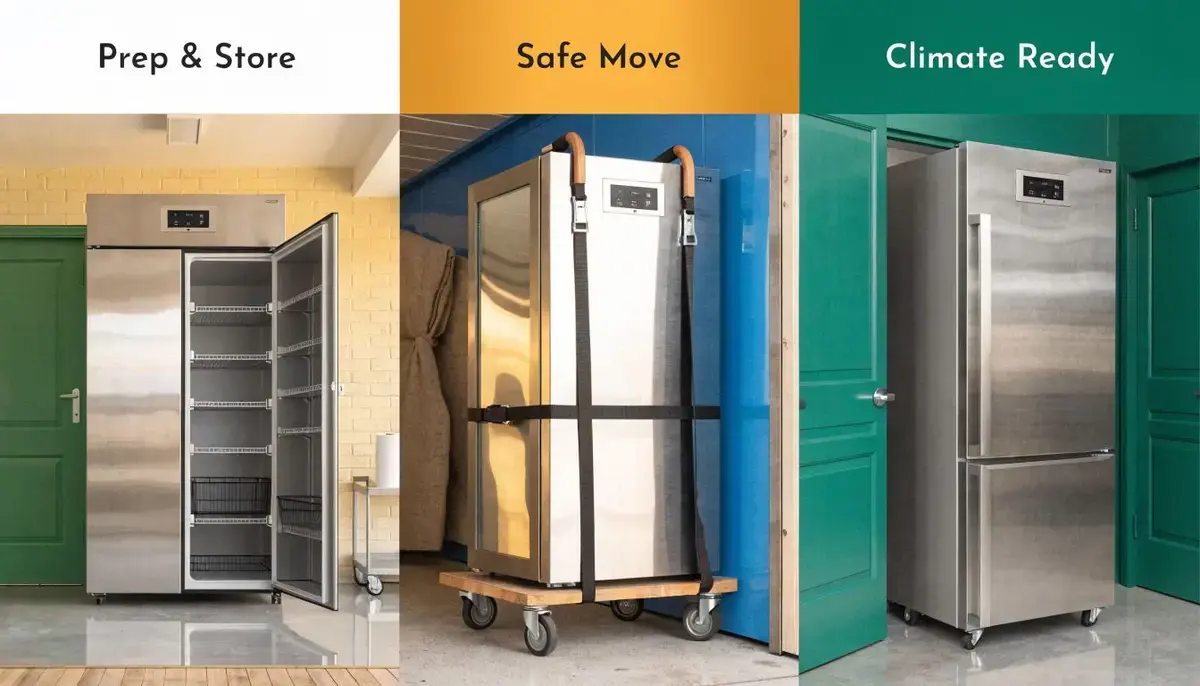
You’re usually not thinking about storing a refrigerator until you have to. The lease is ending. The kitchen renovation starts Monday. You’re combining households, downsizing, or trying to reclaim space in a cramped apartment. Everything else can go in boxes. Then you hit the fridge, one of the most awkward items in the home.
People frequently make costly errors. They unplug it, wipe it quickly, tape it shut, and slide it into a garage or storage unit. Months later, the inside smells terrible, the seals are warped, moisture has done its work, or the appliance won’t cool properly when plugged back in.
A refrigerator can survive storage well, but only if you treat it like an appliance with moving parts, sealed systems, insulation, electronics, and moisture risks. It isn’t just a big cabinet. It’s a machine. If you prep it badly or store it in the wrong conditions, you can shorten its life fast.
Why Storing a Refrigerator Correctly Matters
You clear a kitchen for a remodel, get the fridge out of the way, and park it in a garage or storage unit because it feels temporary. That quick decision is where a lot of expensive problems start.
A refrigerator is a machine with a sealed cooling system, insulation, wiring, gaskets, shelves, and moisture-prone interior surfaces. The cabinet may look tough, but storage damage usually shows up later. Musty odor, interior mold, warped seals, rust around hidden metal parts, and cooling trouble after restart are all common results of bad prep or bad storage conditions.
Short-term storage can do real harm.
The risk gets higher in apartments and dense urban moves, where there may be no dry garage, no covered loading area, and very little time to handle the appliance carefully. People end up making practical but risky choices. They leave water inside, tape the doors shut, lay the fridge down too long, or store it in a hot, damp unit because it is the only space available. I see this a lot with temporary moves. The appliance survives the trip, then fails weeks later because the storage setup was wrong.
That delay is what catches people. A scratched side panel is obvious on moving day. Mold behind a gasket or stress on the cooling system is not.
Storage conditions matter as much as cleaning and transport. If you are comparing unit types, this guide to items that need climate-controlled storage gives useful context. Refrigerators share some of the same temperature and moisture concerns as other sensitive household equipment.
There is also a practical point that box-by-box storage services do not solve. A service like Endless Storage can be a smart fit for boxes, bins, and smaller household items. A refrigerator is different. It is bulky, heavy, awkward to move, and sensitive to how it is positioned and where it sits. Honest storage advice should say that clearly.
Done right, storing a refrigerator is manageable. Done casually, it can shorten the life of an appliance that is expensive to replace.
Your Essential Pre-Storage Preparation Guide
The fridge is unplugged, the movers are booked, and there is still ice in the freezer, sauce in the door bins, and a water line hooked up behind the unit. That is how refrigerator storage goes wrong. The work that protects the appliance happens before it reaches the storage unit.
Give yourself more time than you expect. A refrigerator often needs a full day or two to defrost and dry properly, especially if the freezer has heavy ice buildup or the room is cool. People who leave this until the night before the move usually end up hauling a wet appliance.
Start with a full empty-out
Remove everything. Food, condiments, ice trays, freezer packs, produce drawers, and anything tucked into the door shelves all need to come out before defrosting starts.
If the refrigerator has an icemaker or water dispenser, shut off the water supply first. Then disconnect the line carefully so you are not dealing with drips during the move or stale water sitting in the system during storage.
A practical approach is to eat down the fridge and freezer in the week before moving day. It cuts waste, reduces last-minute cooler problems, and gives you enough time to prep the appliance properly. If you are packing the rest of the room at the same time, this guide on how to pack a kitchen for moving helps with the smaller items while you handle the fridge on its own timeline.
Defrost fully and let it dry
Unplug the refrigerator and leave the doors open. Put towels around the base to catch meltwater. If your model has a drain pan or drain plug, check it and empty it as needed.
Let the ice melt on its own. Knives, screwdrivers, and hard scraping tools can damage the liner, puncture a channel, or ruin a seal. I have seen people save an hour and create a repair bill.
Drying matters just as much as defrosting. Water hides in drawer tracks, gasket folds, under crispers, and around drain points. Wipe those areas until they are dry to the touch, then give the interior extra air time before you close anything for transport.
Clean it for storage conditions
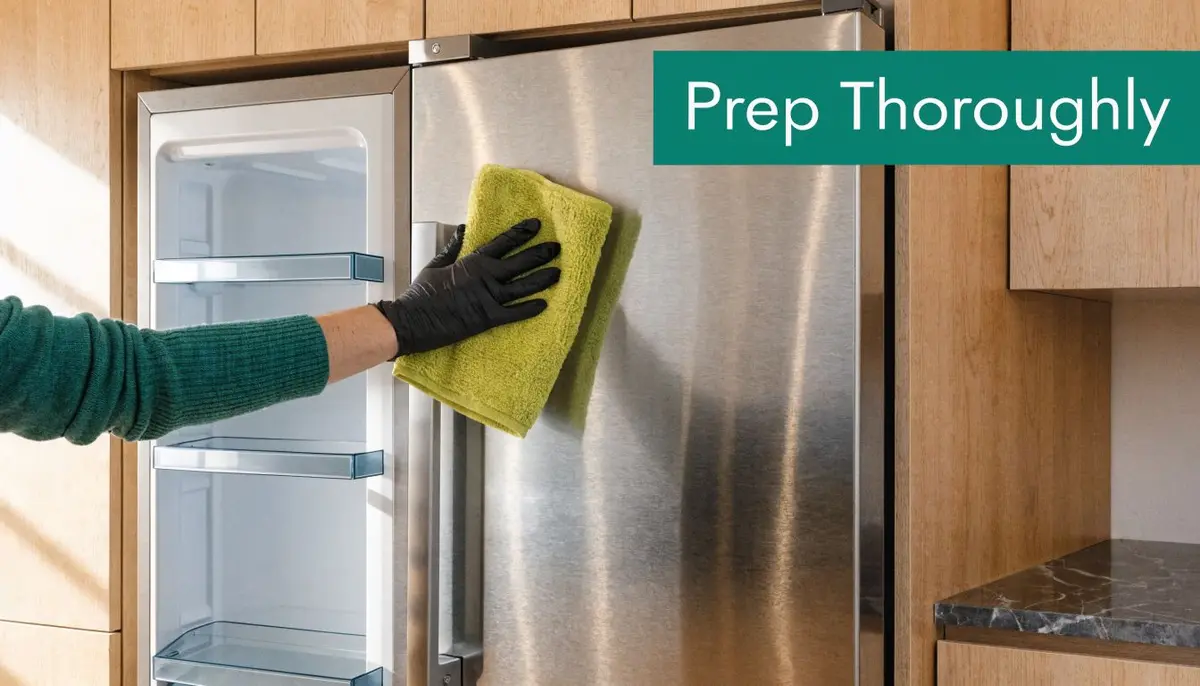
A fridge going into storage needs more than a quick wipe. Any residue left inside can turn into mildew, odors, or sticky buildup that is much harder to remove months later.
Focus on the parts that trap moisture and food residue:
- Shelves and drawers: Wash removable parts separately and dry them fully before putting them back or wrapping them.
- Door gaskets: Clean deep into the folds where moisture and crumbs collect.
- Interior corners and shelf tracks: Spills often sit in edges and channels you do not notice at first glance.
- Drain areas: If accessible, check for trapped water and dry the area thoroughly.
The goal is a clean, dry interior with no standing moisture anywhere.
Disconnect and secure anything that can shift
Loose parts break during moves. Glass shelves crack, bins pop out, and cords snag on door frames.
Work through the fridge methodically:
- Remove or secure shelves and bins. If they stay inside the fridge, pad them so they cannot rattle.
- Wrap drawers or tape them in place for transport. Keep pressure light so you do not crack the plastic.
- Coil the power cord and fasten it to the back. That keeps it from dragging or getting pinched.
- Bag and label removed hardware. Handles, hinge covers, and screws disappear fast on moving day.
If you are doing the move yourself, review how to move heavy furniture without injury or damage before the appliance leaves the kitchen. The same planning and body-positioning rules apply here, especially in tight hallways and apartment buildings.
Close it for transport. Vent it for storage.
This is one of the most common mistakes. Securing the doors for the trip is fine. Leaving them sealed shut in storage is not.
Use tape or straps only long enough to move the refrigerator safely. Once it is in place, remove the tape and leave the doors slightly open so air can circulate. A folded towel, foam spacer, or built-in door stop works well.
That small gap prevents the stale, damp interior that causes mold and bad odors. For a bulky item like this, the details matter. Box-by-box storage services are useful for cartons and smaller household goods, but they are not built for a full-size refrigerator. Straight advice means saying that clearly.
A short prep checklist
Use this before the appliance leaves the home:
| Task | What done looks like |
|---|---|
| Empty all contents | No food, ice, condiments, or loose items remain |
| Defrost fully | No ice buildup anywhere in freezer sections |
| Dry completely | No moisture on walls, gaskets, drawers, or drain areas |
| Disconnect water supply | Water line is off, disconnected, and drained |
| Secure loose components | Shelves, bins, cord, and accessories won’t shift |
| Close for move only | Doors secured for transport, not sealed for storage |
Slow prep protects the appliance. Rushed prep usually shows up later as odor, mold, cracked interior parts, or a fridge that does not perform the same when you plug it back in.
How to Move a Refrigerator Without Damaging It
A refrigerator usually gets damaged in the same few places. The first hard pull away from the wall. The tight turn at a doorway. The moment someone decides to lay it down because it seems easier.

The job is manageable with the right gear, enough space, and a realistic plan. It is also one of those moves where honesty matters. A full-size refrigerator is not a good fit for box-by-box storage services, and it is not a smart DIY carry if the route includes narrow stairs, sharp turns, or a truck that cannot keep the unit upright.
Use the right equipment
Start with an appliance dolly that has built-in straps. That is the tool made for this weight, height, and balance point. A basic hand truck leaves too much of the load unsupported, and that is how doors get bent, cabinets get dented, and people get hurt.
Measure everything before the fridge moves an inch. Check the refrigerator itself, then check doorways, hallways, elevator openings, stair landings, and the truck opening. Remove handles or doors if needed, bag the hardware, and label it.
If you are doing this without movers, read this guide on how to move heavy furniture without injury or damage. The body mechanics and planning principles for heavy furniture also apply to refrigerators.
Keep it upright whenever possible
Transport the refrigerator upright whenever you can. That protects the sealed system and lowers the risk of internal problems when the appliance is turned back on later.
A short, controlled tilt to get over a threshold or through a doorway is sometimes unavoidable. Keep that angle modest and keep it brief. Laying the refrigerator flat in a van or pickup is where people create trouble for themselves, especially with older or heavier models.
I give simple advice here because it saves arguments later. If the only way to move the refrigerator is to transport it on its side, reconsider the plan, change vehicles, or hire an appliance mover.
A moving sequence that works
Use a clear order and stick to it:
- Pull the refrigerator straight out: Avoid twisting the base across tile, vinyl, or hardwood.
- Wrap the exterior: Moving blankets protect the finish and help prevent dents at corners and door edges.
- Secure it tightly to the appliance dolly: The load should feel attached to the dolly, not perched on it.
- Assign positions before you start moving: One person guides and watches clearances. The other controls the weight and dolly angle.
- Slow down at thresholds, ramps, and transitions: Sudden drops can rack the frame and shift internal parts.
Stairs change the decision. Some compact units can be handled safely by a skilled two-person team. Many full-size refrigerators should be left to professionals, especially French door and side-by-side models. The weight is awkward, the center of gravity is high, and one mistake can damage the appliance and the home in the same minute.
Protect the route too. Floors, trim, and wall corners usually take damage before the refrigerator does. These tips on how to protect furniture when moving are useful for setting up floor coverings, padding door frames, and clearing a stable path before the dolly starts rolling.
A quick visual helps if you’ve never handled an appliance dolly before:
Inside the truck
Once the refrigerator is loaded, place it against the truck wall and strap it so it cannot walk or tip during transit. Blankets help prevent rubbing, but they do not secure the load on their own.
Do not count on loose boxes to brace it. They shift. The refrigerator should ride as its own secured item.
If you hire movers, ask a direct question before booking: “Will the refrigerator stay upright from pickup to delivery?” A clear answer matters more than a low quote.
Choosing the Right Storage Location and Conditions
Where you store the refrigerator often matters more than people expect. The appliance may be unplugged, but it still has seals, insulation, metal parts, electrical components, and interior surfaces that react badly to heat, cold, and moisture.
A detached garage can work for some items. It’s usually not the best place for a refrigerator unless conditions stay stable and dry. Most don’t.
Garage versus climate-controlled storage
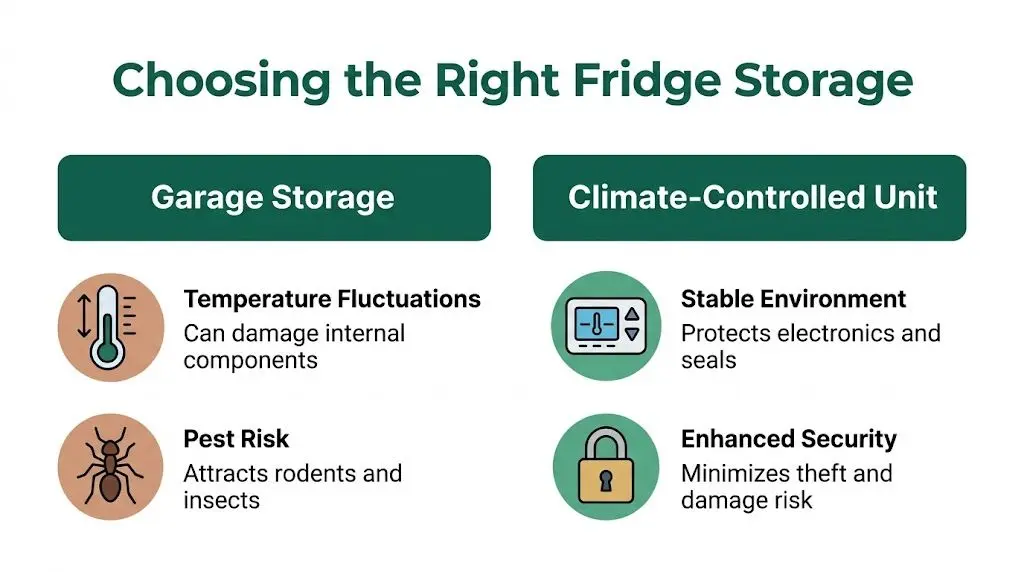
A proper climate-controlled unit is built for consistency. That matters because refrigerators don’t like environmental swings while sitting idle.
According to Extra Space, climate-controlled units maintain temperatures between 50 and 85°F and humidity below 60%, while humidity above 60% can allow mold to develop within 24 to 48 hours in a dark, damp refrigerator interior. The same guidance says proper climate control can prevent an estimated 40% to 60% of temperature-related failures seen in standard storage conditions (climate-controlled storage for refrigerators).
Here’s the trade-off in simple terms:
| Storage option | What works | What goes wrong |
|---|---|---|
| Garage or shed | Easy access, no facility trip | Temperature swings, humidity, pests, dust |
| Standard storage unit | Better security than many garages | Still vulnerable to heat and moisture if not climate-controlled |
| Climate-controlled unit | Stable environment for seals, electronics, and interior surfaces | Higher cost, but usually better protection |
What good storage looks like
A good storage setup for a refrigerator has a few essential requirements:
- Level placement: The unit should sit flat and stable, not leaning on one corner.
- Door left slightly open: This prevents trapped moisture and stale odor.
- Space around the appliance: Don’t jam boxes or furniture tightly against it.
- Dry floor and clean surroundings: Moisture from the slab or nearby leaks can create problems fast.
Store the refrigerator as if you expect to use it again, not as if you’re just getting it out of the way.
That mindset changes decisions. People stop wrapping it in plastic with the doors shut. They stop wedging it into the dampest corner of a garage. They stop treating it like dead weight.
When climate control is worth paying for
If the refrigerator is newer, high-end, has electronic controls, or includes an icemaker and dispenser system, climate control is usually the smart call. The more features it has, the more there is to protect.
It also matters if storage will be more than brief. Extended exposure to unstable conditions is where hidden damage starts to show up later. Not always immediately. Sometimes the fridge restarts, seems fine, and then cooling performance drops or odor never fully leaves.
For a broader breakdown of what stable conditions protect, this article on temperature-controlled storage is useful. The same principles apply to appliances, electronics, fabrics, and anything that doesn’t respond well to heat and humidity swings.
What doesn’t work well
A few setups consistently cause trouble:
- Wrapped tight in plastic: That traps moisture unless the unit is perfectly dry, and most aren’t.
- Stored with doors shut: This is the classic mold-and-odor mistake.
- Placed next to chemicals or strong smells: Refrigerators absorb odors surprisingly well.
- Used as a shelf in storage: People stack boxes on top or lean items against the doors, which can distort alignment and gaskets.
If the only available option is a damp garage, unfinished basement, or outdoor shed, ask whether storing the refrigerator is worth it at all. Sometimes the right answer is not storage. It’s disposal, sale, or donation.
Smart Alternatives When Self-Storage Is Not an Option
You clear the apartment, price out transport, and start calling storage places. Then the numbers catch up with you. For an older refrigerator, the moving cost, the storage bill, and the risk of bringing back a musty or unreliable appliance often add up to more than the fridge is worth.
That is a sensible decision.
When letting it go is the better move
Storage is not automatically the right answer just because the appliance still runs. If the refrigerator already cools unevenly, seals poorly, runs loud, or no longer fits the next kitchen, paying to store it usually just postpones a replacement.
I tell people to judge the fridge as if they were deciding whether to buy it today. That frames the decision properly.
Ask yourself:
- Does it hold temperature reliably right now? Storage will not fix weak cooling.
- Would you choose this same model again for your next place? If not, that matters.
- Will it fit the new layout? A large top-freezer can be awkward in a tighter apartment kitchen.
- Is the storage period defined, or are you paying month to month with no clear end? Open-ended storage is where low-value appliances become expensive clutter.
Your main alternatives

If self-storage is off the table, there are still practical exits.
Sell it locally.
A clean, working refrigerator can move quickly through local marketplaces, especially if you include exact dimensions, age, and clear pickup terms. Good photos help. So does honesty.
Donate it.
Some charities, housing groups, and reuse networks will take working appliances. This route makes sense when speed matters more than squeezing out the last bit of resale value.
Recycle it properly.
If the unit is near the end of its life, use a municipal appliance program or a licensed recycler. Refrigerators contain refrigerants and other components that need proper handling.
For a broader decision framework, the Self-Storage Options Handbook is a useful reference. It helps compare storage against disposal, donation, and other off-ramps without assuming every item belongs in a unit.
A better use of your storage budget
A refrigerator is often the one item that makes the whole move harder. Treat it separately. Sell, donate, or recycle the appliance, then store the things that are easier to move, easier to protect, and more likely to justify the cost.
That matters with services like ours, too. Box-by-box storage can work well for clothes, documents, books, kitchenware, seasonal gear, and sentimental items. It is not the right fit for a full-size refrigerator, and pretending otherwise is not helpful.
If the fridge is the outlier, compare your options for the rest of your home with a storage unit alternative. That approach lets you solve the bulky-appliance problem separately instead of letting one awkward item dictate the entire storage plan.
The smartest call is often to stop asking how to keep the refrigerator and start asking whether it earns its place.
That question saves money fast.
Bringing Your Refrigerator Back to Life After Storage
You finally get the fridge home, slide it into place, and want the kitchen working again that day. That is where people make mistakes. If you rush the restart, you can turn a perfectly usable appliance into a warm box with a bad smell.
Bring it back online in stages.
Let it stand before plugging it in
Set the refrigerator where it will live. Level it properly, open both doors, and check the cabinet, shelves, gasket, and cord for signs of transport damage or trapped moisture.
Then leave it unplugged for a while so the compressor oil and refrigerant can settle. The right wait time depends on how the unit was moved. If it stayed upright, the delay is usually shorter. If it rode on an angle or spent any time laid down, give it more time before startup. Patience here is cheaper than a service call.
Put it in its final position first. Do not plug it in, test it, and move it again.
First startup checklist
Before restoring power, reset the interior so air can move the way it should:
- Remove towels, spacers, or tape that kept the doors cracked open.
- Wipe interior surfaces if dust, residue, or stale moisture built up.
- Reinstall shelves and drawers in their proper slots.
- Reconnect water lines carefully if the unit has an icemaker or dispenser.
- Inspect the power cord for cuts, pinching, or wear from the move.
Once it is plugged in, let it run empty first. Loading it with groceries too soon slows cooling and makes it harder to tell whether the appliance is working normally.
To be considered food-safe, a refrigerator should cool to 40°F within 2 hours after being brought back into service, according to Ohio State University Extension's refrigerator food safety guidance. The same guidance notes that hot leftovers can go straight into the refrigerator if they are in shallow containers, which helps them cool faster without stacking heat in one dense mass.
What is normal and what is not
A refrigerator that has been sitting may sound a little busy on startup. Clicking, fan noise, and the compressor cycling on are all common early on.
What deserves a closer look is simple:
- It does not reach a safe temperature. Give it time, then verify with a fridge thermometer.
- The interior still smells musty after cleaning. That usually means moisture lingered somewhere, often in bins, gaskets, or the drain area.
- Water shows up underneath. Check the drain pan, meltwater, and any reconnected supply line.
- The door will not seal. Look for a twisted gasket, dirt on the seal, or a cabinet that is not level.
Do not pack the shelves full on day one. Leave space for airflow, confirm stable cooling, and then load it normally.
A simple recommissioning routine
Use this if you want a straightforward restart process:
| Step | What to do |
|---|---|
| Position | Put the fridge where it will stay and level it |
| Rest | Leave it unplugged long enough for internal fluids to settle |
| Inspect | Check the cord, gasket, shelves, and water connections |
| Clean | Wipe the interior and remove any odor-control materials |
| Power on | Run it empty at first |
| Verify cooling | Confirm it reaches a safe temperature before adding food |
If the refrigerator was cleaned well before storage, moved with care, and kept in a stable environment, it usually comes back without much trouble. If it does not, the problem is often earlier in the chain. Poor prep, too much tilting, moisture left inside, or bad storage conditions.
If your refrigerator is the one item that does not fit your storage plan, that does not mean everything else has to stay in your way. Endless Storage is a practical option for the boxes, clothes, books, decor, and seasonal items that are cluttering your apartment while you deal with the big stuff separately.