
Moving to Philadelphia PA: A 2026 Relocation Guide
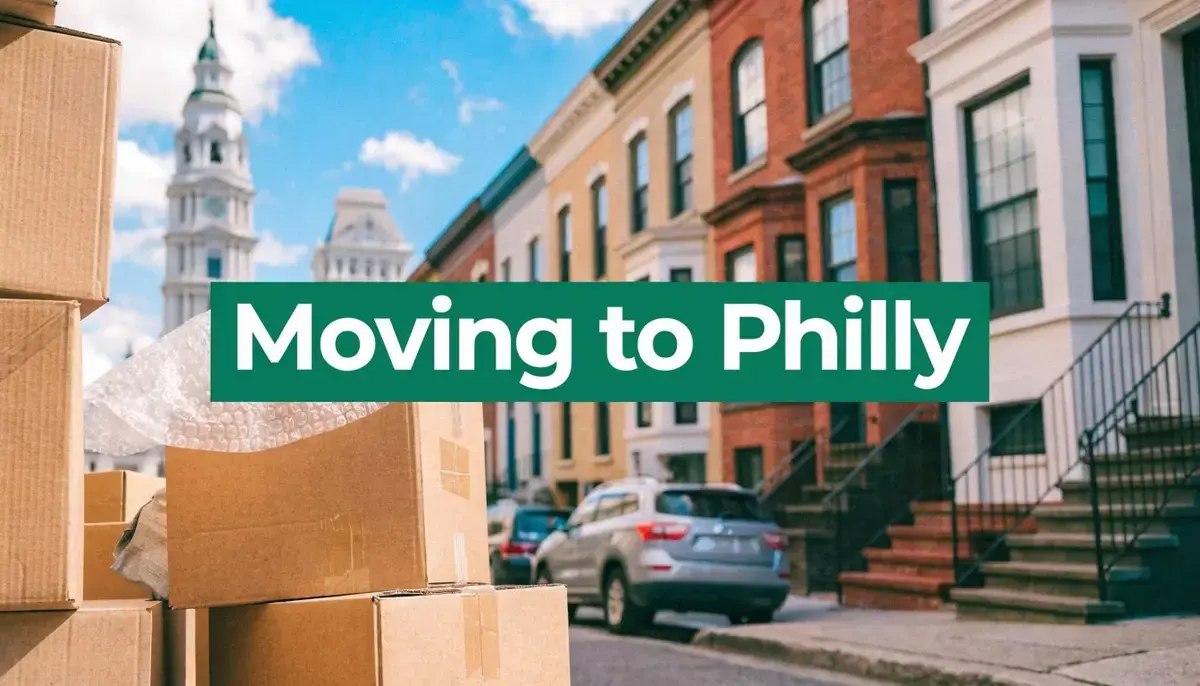
You're probably staring at a map of Philadelphia, a few apartment tabs, a running budget, and a mental list of furniture that may or may not fit through a rowhouse stairwell.
That's a normal way to start moving to Philadelphia PA. The city is exciting, but it's not a place where you can rely on broad advice like “find a cute neighborhood” or “just rent a truck.” Philly rewards people who plan for the details. Street width matters. Stair shape matters. Parking matters. Closet space matters more than is typically expected.
I've helped enough people move into this city to know that the big mistakes usually aren't dramatic. They're small assumptions that pile up. A block that looked easy online has nowhere to stop a truck. The apartment is great, but there's no hall closet. The neighborhood is walkable, but keeping a car there becomes a daily nuisance. The budget works on paper, until you add move-in friction.
Philadelphia gives you a lot in return for dealing with that friction. You get real neighborhoods, old architecture, strong local identity, and more variety than many newcomers expect. But the move goes better when you treat it like an urban logistics project, not a suburban house-to-house transfer.
Welcome to Philly Your New Beginning
Philadelphia feels approachable at first, and that's part of the appeal. It's a major city without the same polished distance some people feel in other Northeast markets. But once you commit to the move, you start seeing what makes it different. You're not moving into a blank grid. You're moving into a lived-in city with older housing stock, narrow streets, dense blocks, and neighborhoods that can feel completely different just a short distance apart.
That scale is real. Philadelphia has about 1.58 million residents, and its role as a gateway city continues, with immigrants making up 15.1% of residents in 2023, according to Philadelphia resident data compiled by Niche. For a newcomer, that means two things at once. There's a lot of opportunity to find your people, your block, and your routine. There's also competition for housing, services, and space.
What that means on the ground
In Philly, density changes how you move and how you live after the move.
- Apartments run small: Even attractive units can have limited closets, tight kitchens, and awkward entryways.
- Rowhomes come with quirks: You may gain charm and location, but lose storage, easy furniture access, or dedicated parking.
- Neighborhood choice affects daily friction: The right area for your lifestyle isn't always the one that looks best in photos.
Practical rule: Choose your home based on how you'll actually live there on a Tuesday, not how it feels on a Saturday afternoon showing.
A good Philly move starts with honesty. How much stuff do you have? Do you need your car every day? Can you handle stairs? Will your current furniture fit the kind of place you're likely to rent here?
Those questions matter more than the usual “best neighborhoods” list. Philly works well for newcomers who accept that space is limited, blocks are busy, and convenience often depends on planning ahead.
Finding Your Perfect Philadelphia Neighborhood
The best neighborhood in Philadelphia is usually the one that matches your tolerance for trade-offs. People often shop by vibe first, then regret the logistics later. A better approach is to pair lifestyle with housing type, commute pattern, and your willingness to deal with parking.

One thing I always tell people: don't evaluate a neighborhood only by rent. In Philadelphia, car ownership can become a hidden cost, especially in the most walkable, transit-rich areas where parking permits can be complicated and street parking is limited, as noted in this Philadelphia neighborhood affordability overview from Apartments.com. A cheaper apartment can stop feeling cheap if you circle the block every night or pay for off-street parking.
For people who want walkable energy
If you're drawn to places like Fishtown, Northern Liberties, parts of Center City, Old City, or Rittenhouse, you're usually choosing convenience, restaurant density, and easy access to city life.
That trade is simple. You can often live with less driving, but your living space may be tighter and your block may be less forgiving on move-in day. These areas work well for people who want to be out in the city often and don't need a lot of room for gear, seasonal items, or oversized furniture.
Common reality checks:
- Street access can be awkward: Narrower streets and heavy parking make truck placement harder.
- Storage is often limited: A polished apartment can still lack linen closets, pantry space, or basement access.
- Cars become optional, or annoying: If you keep one, expect that decision to shape your daily routine.
For people who want a neighborhood feel
Areas like Mount Airy, Chestnut Hill, or other quieter residential pockets often appeal to movers who want more breathing room and a less compressed daily pace.
These spots can feel easier if you're coming from a smaller city or a suburb. You may get more interior space or a setup that feels less intense than a hyper-dense central neighborhood. The trade is that your routine often becomes more commute-dependent, and you need to think carefully about whether your life will run better with a car, transit, or a mix of both.
A lot of people moving to philadelphia pa make one mistake here. They assume “more residential” automatically means “simpler.” It doesn't. It just changes the problem set. You may gain square footage and lose some spontaneity.
For people who want historic core living
Old City, Washington Square-adjacent areas, and nearby central neighborhoods attract people who want the classic city experience. Brick buildings, older layouts, and walkability are part of the charm.
They're also part of the challenge.
Older buildings can have:
| Living factor | What works | What doesn't |
|---|---|---|
| Character | Beautiful details and central location | Unusual layouts and less usable wall space |
| Access | Great for walking and errands | Tougher move-ins with stairs or older entries |
| Car ownership | Possible if you really need it | Stressful if you expect easy parking |
The neighborhood isn't just where you sleep. It decides how hard groceries, guests, deliveries, and move-ins will be.
A simple filter before you sign
Before you pick any Philly neighborhood, ask these five questions:
- Do I need a car, or do I just like having one?
- What kind of building am I renting in?
- Where will bulky items live once I unpack?
- Can a moving truck access this block without drama?
- Will this place still work after the excitement of the first month wears off?
If you're still exploring, it helps to compare your options against actual storage and access needs, not just rent and photos. Looking at different city setups through a resource like Endless Storage locations can help you think more practically about what kind of space constraints you're signing up for.
Philly neighborhoods reward specificity. Don't move to a brand name area. Move to a block and building you understand.
Budgeting Your Move and Philadelphia Cost of Living
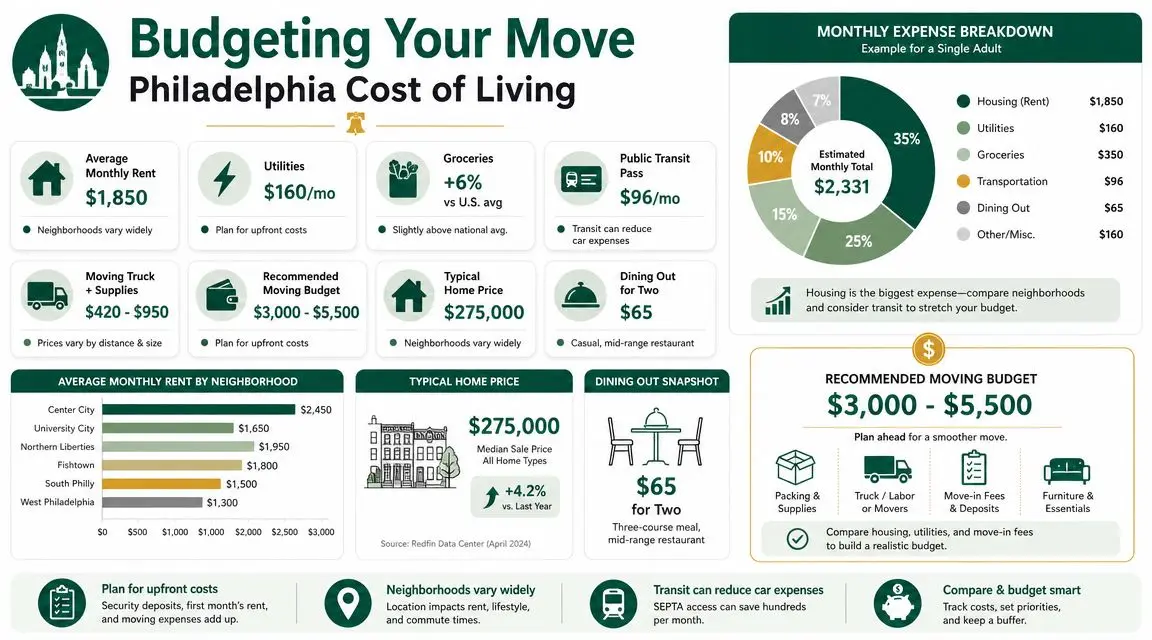
Philly is still attractive to people who want a major East Coast city without the same price level as some nearby markets. That doesn't mean it's cheap in day-to-day practice. It means you have to budget with discipline.
According to Colonial Van Lines' Philadelphia moving guide, Philadelphia's cost of living is about 6% higher than the Pennsylvania average. The same source notes an average rent of $1,958, an average home value of $216,914, and reports that the median home price rose to $240,625 in 2024. It also notes that nearly half of renters were cost-burdened, meaning they spent 30% or more of income on housing. That's the part many newcomers need to hear clearly. The city may look manageable compared with other big Northeast markets, but housing pressure is still very real.
Build the budget in layers
A Philly move usually breaks into four buckets.
- Housing up front: Security deposit, first month, and any building or move-in requirements.
- Transportation and labor: Movers, truck rental, supplies, and possible parking complications.
- Setup costs: Utilities, internet, and the little purchases that always appear after move-in.
- Overflow costs: Storage, furniture that doesn't fit, replacement items, and repeat trips.
The overflow category is where people get sloppy. In a dense city, you don't always get to keep every item just because you own it. A sectional that worked in your old place may dominate a rowhome living room. Extra shelving may have nowhere sensible to go. Holiday bins and luggage can take over your only decent closet.
What to watch in your move budget
This isn't the city for a vague spreadsheet.
A practical budget should include room for:
- Building friction: Elevator scheduling, stairs, and difficult loading paths can affect moving labor.
- Street friction: If the truck can't park close, the move gets slower and more tiring.
- Storage friction: Smaller units often force decisions after the lease is signed, not before.
Philadelphia-specific moving costs can also shift based on the building and block. One relocation guide notes that some moves into Philadelphia can run at about $80 to $200 per hour depending on route and conditions, with price affected by stairs, elevators, and parking constraints, according to this Philadelphia moving logistics guide from Airtasker. That range matters because the city punishes underestimating access problems.
Budget for the apartment you can live in, not the listing you won. Those aren't always the same thing.
A better way to pressure-test the numbers
I like a simple checklist before anyone signs a lease:
| Budget question | Why it matters in Philly |
|---|---|
| How much empty space is really usable? | Small layouts can force storage decisions fast |
| Will I keep a car? | Parking and neighborhood fit can change your monthly costs |
| How hard is the move-in path? | Labor increases when the path from truck to unit gets messy |
| What items am I paying to move that I may not keep? | Bulky furniture is expensive to transport and hard to place |
If you want to tighten your planning before booking movers, this guide on how to estimate moving costs is useful for stress-testing the budget categories people usually forget.
A strong move budget isn't conservative because it's gloomy. It's conservative because Philadelphia makes small logistical problems expensive.
Your Philadelphia Moving Checklist A Step by Step Timeline
Two bad Philly moves happen all the time. Someone signs a lease for a nice place, then realizes the couch will never make the stair turn. Someone else budgets for the truck, but not for the extra labor that comes with a narrow rowhome entry, a walk-up, or furniture that has nowhere sensible to live once it arrives.
A clean move starts with sequencing. In Philadelphia, timing affects cost, access, and how much stuff you should even bring into the city.
The most useful planning window is about eight weeks. The Philadelphia moving checklist from Suburban Solutions lays out the basic order well: start with budget and mover research early, spend time on neighborhood choice before you commit, lock in housing and movers about a month out, and handle utility setup right away once you land.
Eight weeks out
Start by matching your inventory to the kind of home you are moving into.
That matters in Philly because older apartments and rowhouses often have less forgiving layouts than the listing photos suggest. A one-bedroom with good light can still have tiny closets, a steep basement stair, or no practical place for a full dining set. If your floor plan is tight, every large item needs a job.
Use this stretch to handle the decisions that save money later:
- Build a real move budget: Include movers, packing supplies, cleaning, deposits, and the cost of moving bulky items that may not fit well.
- Get quotes early: Better time slots go first, especially during busy leasing periods.
- Inventory room by room: Mark what you are keeping, donating, selling, or putting into storage.
- Ask access questions now: Check stairs, elevator rules, loading access, door widths, and move-in windows before you book anything.
Decluttering belongs here, not at the end. The less dead weight you haul into a small Philadelphia space, the easier the move and the first month will be.
Two to three months out
Neighborhood research should include housing type, not just vibe.
A block can feel right and still be wrong for your daily setup. Street parking, laundry access, package security, basement storage, and how far you carry groceries matter. So does whether your next place gives you enough room to live without stacking boxes in the bedroom for six months.
Renting first can be the smarter call if you're new to the city. Philly neighborhoods change block by block, and it usually takes real routines to figure out whether a place fits your budget, your commute, and your tolerance for space trade-offs.
One month out
This is when choices become commitments.
Finalize the lease. Confirm move-in instructions with the landlord or building. Book movers. Start packing the items you use least, and keep packing by room or function so you do not create a mess you have to sort again on arrival.
A practical one-month checklist looks like this:
- Confirm housing details including keys, entry codes, insurance requirements, and any building rules.
- Reserve movers or a truck while you still have decent scheduling options.
- Measure big furniture again against doors, stair turns, and the actual rooms it needs to fit.
- Update your address for banks, work, subscriptions, and deliveries.
- Set aside overflow items that may need short-term storage instead of taking up prime living space.
If you want a second planning tool to compare against your own schedule, this moving checklist and timeline for staying on schedule is a useful reference.
Final week and first week in the city
The last week is about reducing friction on day one.
Pack an open-first set of basics: toiletries, medication, chargers, bedding, towels, a few dishes, paper goods, and cleaning supplies. Keep important documents and lease paperwork with you, not on the truck.
Then treat your first week like setup week. Get utilities and internet turned on quickly. Break down boxes fast. Decide early which items deserve apartment space and which ones are only making a small home harder to use. In Philadelphia, square footage disappears quickly, and the best moves usually come from being honest about that before every closet and corner gets filled.
Navigating Moving Day Logistics in Philly
Moving day in Philadelphia usually goes wrong in the same old ways. The truck arrives and there's nowhere to put it. The block is narrower than expected. The apartment stairs are tighter than what the listing implied. Someone assumed they could “just double park for a bit,” and now everyone's stressed.
That's why a Philly move day needs a street plan, not just a packing plan.

What a normal Philly move actually looks like
Let's say you're moving into a rowhouse block in South Philly or a tight apartment corridor near Center City. The truck can't just glide up and idle without consequence. You may be dealing with one-way streets, packed curbs, limited turnaround room, and neighbors who also need access.
If you're moving into a larger building, add another layer. Some buildings require elevator reservations, specific move-in windows, or loading coordination. If you skip those details, the whole day gets slower.
The practical playbook
Use this checklist before the truck ever arrives:
- Confirm parking strategy: If the move requires reserved curb space, handle that ahead of time.
- Measure access points: Hallways, stair turns, and door widths matter more than floor plan square footage.
- Call the building directly: Don't rely on old listing details for elevator or loading information.
- Stage the load by priority: First-night items should unload last, so they come off first.
A DIY move can work if your route is simple, your furniture is modest, and you have enough help. But Philly can punish DIY optimism. Tight corners, stairs, and bad parking turn “saving money” into an all-day grind.
Professional movers often earn their keep in city moves because they know how to manage awkward approaches and building constraints. DIY works best when you've got light volume, flexible timing, and a place that isn't fighting you at every step.
If the building access is messy, the cheapest move option can become the hardest one by noon.
For a good comparison of moving approaches before you commit, this guide on the best way to move helps sort out when DIY, hybrid, or full-service options make sense.
What doesn't work
These are the habits that create rough move days in Philadelphia:
| Bad assumption | What happens instead |
|---|---|
| “We'll figure out parking when we get there.” | You lose time immediately |
| “The couch fit in the old place, so it'll fit here.” | Old Philly layouts prove otherwise |
| “We can make a few extra trips.” | Dense blocks make every trip slower |
| “The building probably doesn't care.” | Many buildings care a lot |
Good Philly move days look boring. That's the goal.
Settling In Your First Month Checklist
You get the keys, stack boxes in the living room, and tell yourself you'll sort everything out over the next few weekends. Then the first month starts in earnest. Mail still goes to the old place, the car situation is worse than expected, and the apartment starts showing you whether it functions for daily life or just looked good on tour.
In Philadelphia, settling in means handling two jobs at once. You need to get your records updated, and you need to make a small city home function without tripping over your own stuff.
Do the paperwork in an order that prevents headaches
Start with the address changes that affect everything else. Once those are done, move to the documents and accounts tied to that address.
A clean first-month order looks like this:
- Update your USPS address
- Change your address with banks, insurers, employers, and healthcare providers
- Transfer your driver's license
- Register your vehicle in Pennsylvania if you have one
- Update voter registration
The goal is simple. Keep your mailing address, billing records, insurance details, and ID aligned so you are not fixing mismatches later.
Set up the apartment based on how you actually live
The first month tells the truth about a Philly apartment or rowhouse. Older homes have charm, but they also expose every weak point fast. A shallow closet, a steep stair run, or a basement that is useful for some items but bad for others can change how livable the place feels by week two.
Pay attention to the friction points early.
- Boxes you never open usually mean the space cannot support keeping everything in reach.
- Daily clutter around the entry or kitchen means you need better zones, not just better intentions.
- A bad parking routine gets old quickly, especially if you use the car for work or errands.
- Missing basic storage pieces like hooks, shelving, under-bed bins, or a slim entry bench make a small place feel tighter than it is.
If you are still working around stacks of unopened bins after a couple of weeks, it helps to review a few storage solutions for apartments before the clutter becomes your default layout.
Learn the block, not just the neighborhood
This part gets overlooked. The listing sold you on the neighborhood. Your first month is about learning your actual block.
Figure out trash and recycling pickup. Test your walk to SEPTA at the time you really leave for work. Notice when parking gets tight. Find the grocery store, pharmacy, and takeout spot you will use on a tired Tuesday, not just on a sunny Saturday.
That practical layer matters more in Philly than people expect. Two apartments in the same neighborhood can live very differently based on stair access, basement storage, loading convenience, and parking pressure.
A place starts to feel like home when your routines fit the space and the block, not when every box is gone.
A first-month reality check
Ask yourself these questions after the first couple of weeks:
| Question | Why it matters |
|---|---|
| Am I still surrounded by packed boxes? | You may be trying to store more than the space can handle comfortably |
| Does my car fit this block and routine? | In some parts of Philly, ownership adds daily hassle faster than expected |
| Are all my records updated? | Misaligned addresses create billing, insurance, and mail problems |
| Is the apartment working day to day? | A good-looking Philly layout can still be awkward for real storage and daily movement |
Use the first month to fix what keeps annoying you. Small adjustments early save money, space, and patience later.
Smart Storage for Philadelphia Apartment and Rowhouse Living
Philadelphia teaches people a simple lesson fast. Square footage and usable space aren't the same thing.
A rowhome may have beautiful character and almost no practical closet system. An apartment may look modern but still leave you wondering where luggage, winter gear, extra bedding, hobby equipment, and sentimental boxes are supposed to go. That's why storage planning isn't a side issue in this city. It's part of living well.
Why storage matters more here
Dense housing changes the value of every square foot. A hallway closet can do the work of an entire spare room. A basement can solve problems, or create them if it's awkward, shared, or not ideal for everything you own.
Many individuals don't need more stuff. They need fewer items competing for daily space.
That means separating what you use all the time from what you need to keep but don't need in reach.
- Daily-use items should stay easy to access.
- Seasonal items shouldn't dominate your main living space.
- Sentimental or low-frequency belongings need a plan before they become apartment clutter.
What works and what doesn't
Traditional self-storage can make sense if you need to store furniture, a full apartment's worth of belongings, or large equipment. But for many Philly renters, that's too much solution for the actual problem. They don't need a whole unit. They need a flexible way to get a manageable amount of stuff out of the apartment.
That's why by-the-box storage makes sense for city living. It matches how people live in smaller homes. You can remove pressure without renting more storage space than you need.
Here's a key advantage: storage stops being an emergency fix and becomes a planning tool.
| Storage approach | Best fit |
|---|---|
| Traditional unit | Larger furniture, full-home overflow, longer holding periods |
| By-the-box storage | Seasonal items, decor, keepsakes, documents, smaller apartment overflow |
A useful starting point is this guide to storage solutions for apartments, which gets into the kinds of storage decisions small-space residents usually face.
The smartest time to solve storage
Before move-in is good. Right after move-in is still fine. Waiting until every closet is jammed and your entryway is lined with bins is what doesn't work.
Good storage planning helps with:
- Downsizing without panic
- Keeping small rooms functional
- Avoiding the cost of moving low-priority items from place to place
- Making a compact home feel calmer
In Philadelphia, that calm is worth a lot. A place can be modest in size and still feel excellent if it isn't overfilled.
If you're moving into a smaller Philly apartment, a classic rowhome, or any place where every closet matters, Endless Storage is worth a look. Their storage-by-the-box model fits the way people live in dense cities. You can move seasonal items, keepsakes, extra linens, and other low-use belongings out of your apartment without paying for more storage space than you need. It's a practical option when your new home works best with less clutter and more breathing room.