Best Time for Garage Sale: Your 2026 Profit Guide

Your hallway is lined with donation bags, the closet won't close, and you've already moved the same box three times this month. That's usually when people ask the wrong question. Not “Should I do a garage sale?” but “What's the best time for garage sale success so this stuff finally leaves?”
Timing decides whether you get brisk, motivated buyers or a slow trickle of browsers. It also decides whether you clear space in one weekend or drag the project across multiple weekends and lose momentum. For people in apartments, condos, and tight urban homes, that difference matters.
The short version is simple. Saturday morning is the strongest core window. But the best results usually come from planning beyond that one block of time. Season, payday timing, local permits, nearby events, and your plan for leftovers all matter. Treat the sale like an operation, not a casual yard cleanup, and it usually performs better.
Choosing the Right Season and Month
Pick the wrong month and you create work for yourself. Good items sit too long, shoppers rush past your tables, and you end the weekend with the same clutter stacked back in the hallway.

Spring versus summer versus fall
Season sets the tone for your sale before the first sign goes out. Weather affects how long people browse, local competition affects how much attention you get, and your own space situation affects how patient you can afford to be. If you need clutter gone from a small apartment, speed matters. If you have room to store leftovers for another month, you can wait for a better seasonal window.
Spring is the safest bet in many markets. People are cleaning out garages, setting up patios, shopping for kids' gear, and generally more willing to stop at a sale. It suits broad, everyday inventory such as kitchenware, books, decor, baby items, and clothing.
Summer can still produce strong results, but it rewards sellers who operate tightly. Hot weather shortens browsing time, and more households run sales, so buyers become pickier. Start with shade, cold water, clear pricing, and a sharper display than the sale down the street or you blend in.
Fall deserves more attention than it gets. Cooler temperatures often keep shoppers out longer, and there are usually fewer competing sales on the same block. That can be a better setup for higher-value household goods, tools, furniture, and curated categories that need a little inspection time.
The right choice depends on your goal:
- Choose spring if you want the widest buyer pool and the easiest time attracting casual traffic.
- Choose summer if you can open early, keep the setup comfortable, and stand out in a crowded local market.
- Choose fall if you want less competition and shoppers who will slow down enough to buy more selectively.
How to choose the month, not just the season
A good month lines up four things. Buyer spending power, weather stability, local event pressure, and your own deadline to clear space.
Space Shop Self Storage's garage sale planning article recommends the first weekend of the month because many buyers have more room in their budgets around common pay cycles. In practice, that timing often helps with mid-priced items such as lamps, small furniture, kitchen appliances, and kids' gear. People are still browsing for bargains, but they are not as tapped out as they may be later in the month.
Skip the month that looks good on paper but clashes with your area. A city neighborhood with heavy street parking pressure, permit rules, or a major festival nearby can kill turnout even in peak garage sale season. Before you commit, check your municipal calendar, neighborhood association page, and any permit rules that affect signage, curb use, or multi-day sales. Timing works best when it fits the local situation, not just the season.
Use this filter before you lock in a date:
| Timing factor | What to prefer | What to avoid |
|---|---|---|
| Season | A period with mild weather and buyer demand for your item mix | Weeks with heat, storms, or cold that shorten browsing |
| Month timing | The first weekend, or a weekend close to common paydays | Holiday weekends and end-of-month slowdowns |
| Local calendar | Neighborhood-wide sale dates or quiet weekends with easy parking | Major events, road closures, or permit conflicts |
If part of your goal is to clear closets, coat bins, and under-bed storage, pair the sale with a broader reset so you do not drag half-sorted clothing back inside. This guide to seasonal clothing storage can help you decide what to sell now, what to pack away, and what should leave for good.
Nailing the Perfect Day and Time
A strong sale can lose money before the first item sells. Sellers in cities often spend all week sorting, then open too late, hit the wrong traffic window, and watch the serious buyers head to the next block.
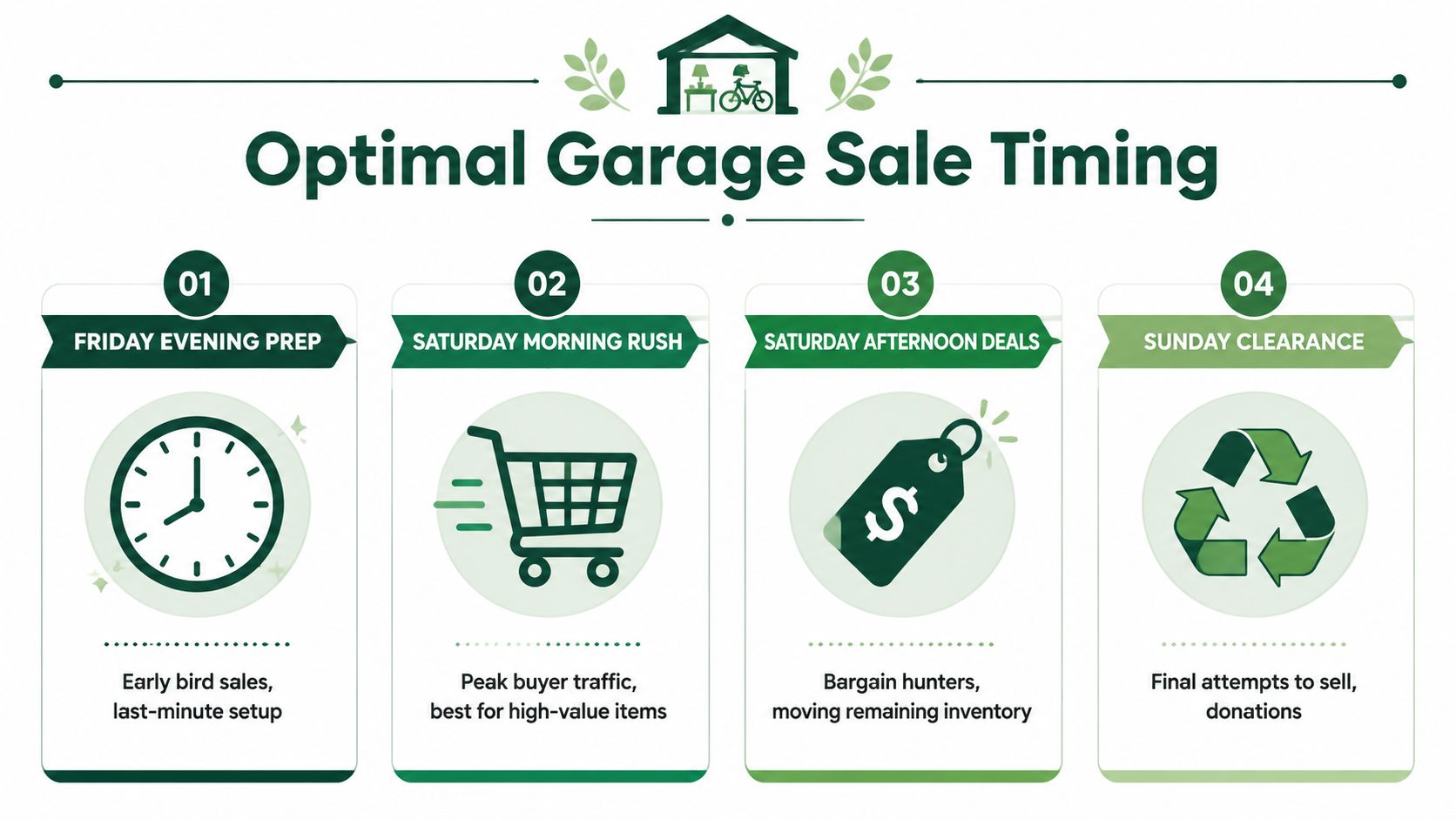
Saturday morning still does the heavy lifting. If you want the best mix of foot traffic, buyer urgency, and clean decision-making, plan around an early Saturday opening and build the rest of the weekend around that anchor.
The strongest weekend schedule
The best buyers shop early for a reason. Resellers want first pick. Families want to hit several sales before the day gets hot or crowded. Apartment dwellers and small-space buyers often come with a short list and limited carrying capacity, so they make fast calls and leave once they have what fits.
That changes how you should schedule the sale. Start early, be fully set up before opening, and treat the first few hours as your premium selling window.
A one-day Saturday sale works when your goal is speed. A Friday evening plus Saturday format works better when you have a lot of inventory, live in a dense neighborhood, or want to catch two different buyer groups. Friday tends to bring nearby shoppers getting off work. Saturday brings the broader bargain crowd.
Sunday usually works better as a cleanup option than the main event.
A practical weekend timeline
Use a schedule that matches how people shop:
Friday evening
Finish setup, place signs where local rules allow, and consider a short opening window if your building, HOA, or city allows it. This is useful for smaller items, décor, kitchenware, and anything easy for walk-up buyers to carry home.Saturday at 7 AM or 8 AM
Open on time with pricing done, tables arranged, and high-interest items visible from the curb. The first wave often includes the fastest buyers of the day.Mid-morning
Keep the sale tidy. Refill empty spots, group related items, and move overlooked items into better sight lines. A cluttered table can hide profitable inventory.Early afternoon
Shift your goal from protecting every price to clearing volume. Offer bundles, mark a discount table, and make it easy for people to buy multiple pieces at once.
Timing mistakes that cut into profit
Late starts cost money. A 9 AM opening feels easier for the seller, but it misses the buyers who plan their route in advance and hit the strongest sales first.
Slow setup causes the same problem. If shoppers arrive while boxes are still closed, they will glance, leave, and spend elsewhere. They rarely come back.
Overextending the sale also hurts. After the best traffic window passes, energy drops, decision-making slows, and the remaining crowd becomes more price sensitive. If you want to run into the afternoon, prepare for lower margins and focus on moving bulk, not squeezing every extra dollar from one lamp or side table.
What works best in small spaces
Urban sellers often do not have a full driveway or large front yard, so timing and layout have to work together. Pull your best pieces out first. Hold back overflow stock in labeled bins so you can restock without turning the sale area into a pile. If your garage, hallway, or storage corner is slowing you down, use this hands-on guide to organizing your garage before sale weekend to create a cleaner staging area.
The sellers who earn more are rarely the ones with the most stuff. They are the ones who open at the right hour, show the right items first, and know when to switch from selling to clearing out.
Leveraging Local Conditions for Success
Generic advice says “do it on a Saturday in spring.” That's fine until your city has permit rules, your neighborhood has restricted signage, or a street festival wipes out your traffic pattern.

Permits can override perfect timing
One of the most overlooked facts in garage sale planning is that local regulations can decide whether your “ideal” date is even possible. As noted in You Move Me's garage sale planning guide, some cities cap how many sales a household can hold per year and require permits, while nearby places may have no limits.
For urban sellers, that changes the whole strategy. If you live in a regulated area, you can't afford to burn your best date on poor planning. You may only get one clean shot for the season, especially if you're moving or trying to declutter on a schedule.
Check permit rules first. Not after you've made signs, posted listings, and asked friends to help.
Local research that pays off
The strongest sellers do a small amount of local homework before they commit to a date. That research is usually simple:
- City rules: Confirm whether permits, sale limits, or signage restrictions apply.
- HOA or building policies: Condos, co-ops, and managed communities often have their own rules.
- Competing events: Car shows, sports tournaments, and neighborhood festivals can drain buyers or create parking headaches.
- Neighborhood sale days: If your area runs coordinated sale weekends, joining can increase visibility because shoppers already plan to browse multiple stops.
There's also a practical location question. If your place is hard to find, a solo sale may underperform even with good items. In that case, joining a community sale or partnering with neighbors often works better than insisting on doing it alone.
Urban sellers need a backup plan
Apartment dwellers and city movers have a narrower margin for error. You may not have a driveway, a large garage, or the option to leave unsold items spread out for another weekend. That makes local logistics part of timing, not a separate issue.
If you're sorting a move and need a sense of what services are available nearby, browsing Endless Storage locations can help you understand storage options by area while you plan the sale around local constraints.
Advanced Tactics for Maximizing Profit
At 7:00 a.m., two shoppers stop at the same table. One grabs the clean power tools and leaves. The other circles back at noon for the kitchenware after the seller drops prices. That is why the highest-earning sales are run in phases, not as a single flat event.

Why a phased sale often earns more
One-day sales are easier to manage, but they force every item into the same pricing window. A better approach is to treat the weekend like a retail clearance plan.
Start with your strongest inventory at full asking price during the first few hours, when serious buyers are out early and willing to pay for the best pieces. If you can legally and practically run a second window, Friday evening plus Saturday morning works well in dense neighborhoods because it catches commuters, weekend browsers, and nearby apartment residents who shop on foot. Sunday can work too, but only if you still have enough desirable inventory to justify another setup.
This structure also protects your time. If you live in a condo, row house, or small apartment with limited staging room, a short first round tells you quickly whether the sale has enough demand to extend.
Run pricing like a plan, not a mood
Strong sellers decide markdowns before the first customer arrives.
Use three tiers:
- Full price early: furniture, tools, small appliances, collectibles, unopened goods
- Negotiable by late morning: decor, kitchenware, books, basic housewares
- Bundle or clear out in the last stretch: kids' items, miscellaneous bins, older linens, low-value extras
Mark every item. Unpriced tables slow people down and create friction. Buyers in a busy sale want to scan, decide, and carry items to the checkout without asking a question every two minutes.
Bundle pricing helps small items move. Try “3 for $5” boxes, fill-a-bag offers for clothes, or a single price table for paperback books and mugs. This matters even more in small spaces, where the primary win is getting volume out the door without spending another week sorting it.
Merchandise the table for fast decisions
Layout changes revenue.
Put your best items where they are visible from the sidewalk or parking area. Keep premium pieces off the ground if possible. Group like items together so buyers can compare quickly. Testing cables, adding batteries to simple electronics, and taping measurements to furniture all reduce hesitation.
I also separate “worth listing online later” from “sell today no matter what.” That keeps me from accidentally discounting the few items that have better resale value elsewhere. If you need a framework for that call, this guide on how to sell unwanted items is useful for sorting sale items from better online candidates.
Weather changes the sales plan
Rain, wind, and extreme heat do not just lower turnout. They change how long shoppers stay and what they are willing to browse.
Set up covered tables first if the forecast looks shaky. Keep paper goods, books, and electronics in bins you can close fast. If bad weather is likely in the afternoon, start earlier and front-load your best inventory. In city neighborhoods, a shorter, sharper selling window often beats dragging the day out.
A short visual walkthrough can help if you're sorting sale-worthy items from donate, store, and toss piles:
Know your cutoff point
Profit is not only about top-line sales. It is also about labor, cleanup, and what happens to leftovers.
Set a hard time when you stop haggling and start clearing. For larger transitions, inherited property cleanouts, or downsizing projects, having help with estate cleanouts in Ontario lined up can prevent unsold items from coming back inside. That is often the difference between a sale that feels productive and one that creates a second round of clutter.
The Post-Sale Plan for Leftover Items
Most garage sale guides stop at closing time. That's a mistake, especially if you live in a small space. The last hour of the sale should already include your decision for what happens next.
Sort leftovers fast
When the sale ends, split what's left into four groups:
- Keep and use soon: Items that still belong in your home and have a place.
- Donate immediately: Clothes, housewares, books, and basics that aren't worth another sale weekend. This guide on where to donate old clothes is a good starting point if apparel made up a large part of your unsold pile.
- List online: Smaller groups of items that may perform better individually than on a folding table.
- Clear out with help: If the sale was part of a larger property transition, estate cleanout, or downsizing project, outside help can save a lot of time. For readers who need help with estate cleanouts in Ontario, that resource is worth considering.
Don't let leftovers become a second wave of clutter. Decide their destination the same day.
Don't refill your apartment with “maybe”
Many decluttering projects fail at this stage. People sell half the pile, feel tired, and bring the rest back inside without a plan. A week later, the home feels almost exactly the same.
Keep only what has a clear reason to stay. Seasonal decor, documents, sentimental items, and backup household goods may still be worth keeping, but they shouldn't take over a closet, hallway, or bedroom corner.
If you've cleared out what you can sell and still need a clean way to store the rest, Endless Storage gives you a simpler option than stuffing boxes back into your apartment. It's a practical fit for city living, moving transitions, and anyone who wants the clutter gone without renting more space than they need.