Let's be honest: a cramped, chaotic kitchen is more than just an inconvenience—it's a daily source of frustration. The secret to reclaiming your small kitchen isn't about wishing for more square footage. It’s about a smart, three-pronged attack: ruthless decluttering, creating strategic work zones, and maximizing every vertical inch. This approach will turn your kitchen from a space you dread into one you genuinely enjoy.
Before we dive in, let's get on the same page with a simple framework. Think of it as your roadmap to a sane and functional kitchen.
The 3 Pillars of Small Kitchen Organization
This is your mental framework for success. Here’s a quick summary of the core strategies we'll cover to reclaim your kitchen.
Stick to these three principles, and you're already halfway to a kitchen that feels twice as big. Now, let’s get to the first step.
Conquering Kitchen Chaos and Why Organization Is Key

If you feel like you're drowning in gadget overload with zero counter space, you're not alone. This is a real problem, especially for city dwellers. With 65% of people living in apartments under 800 square feet, organizing a small kitchen has become a modern survival skill. The fact that the global kitchen storage market hit a staggering USD 140.51 billion in 2023 proves just how many of us are fighting this battle.
But here’s the good news: a functional kitchen isn't about size, it’s about having a system. The real problem is almost never the room itself but the lack of an intentional plan. Without one, cabinets turn into black holes, counters vanish under clutter, and finding a spatula feels like an archaeological dig.
This guide is your battle plan. We're moving past the fluffy, generic tips to give you a real-world strategy for reclaiming your space.
The Real Payoff of an Organized Kitchen
Getting your kitchen in order does more than just make it look good for guests. It fundamentally changes how you feel and function in the most-used room of your home. The benefits are real, and you'll feel them every day.
- Less Stress, More Zen: A tidy space is a calm space. Knowing where everything is cuts out that daily, low-grade frustration and decision fatigue.
- Saves Time and Money: When you can actually see what you have, you’ll stop buying duplicate spices or that third can of chickpeas. Meal prep gets faster, and your grocery bill gets smaller.
- A Safer, Cleaner Space: Overstuffed cabinets are an accident waiting to happen. Good organization prevents things from toppling out and makes surfaces infinitely easier to clean, keeping grime and bacteria at bay.
- Rediscover the Joy of Cooking: Let’s face it, no one feels inspired to cook when the kitchen is fighting them. An efficient space makes cooking a pleasure again, not a chore.
The ultimate goal is to create a system where retrieving an item and putting it away is effortless. When your kitchen flows logically, you'll find that maintaining order becomes second nature.
The first step in this journey is always the most important—and sometimes the hardest. It’s all about making thoughtful choices and, yes, letting some things go. Understanding the benefits of decluttering can give you the push you need to finally tackle those cabinets. This isn't just about tossing stuff; it’s about intentionally creating breathing room.
Your Guide to a Ruthless Kitchen Declutter

Alright, this is where the real work begins. Before you even think about buying cute bins or fancy labels, you have to get ruthless. We're not just tidying up here; we're performing a full-on kitchen purge to reclaim your space. Honestly, this is the single most important part of organizing a small kitchen.
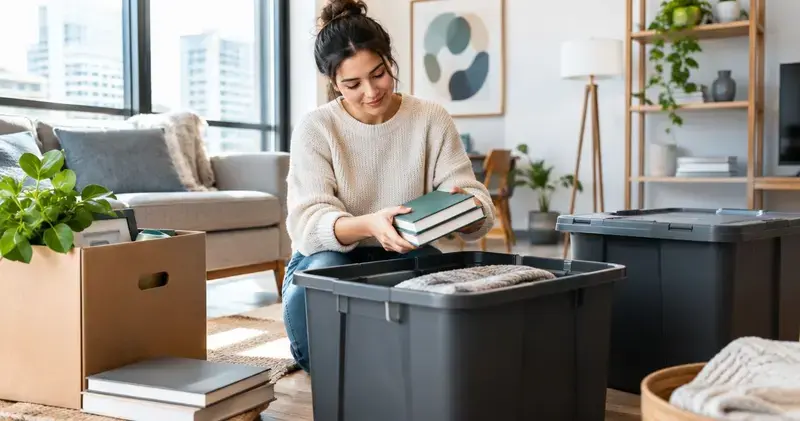
The first step is a big one: take everything out. And I mean everything. Pull every last plate, pan, and spatula out of your cabinets and drawers. Spreading it all out on your counters or dining table is the only way to get a true, unfiltered look at what you actually own. It can be a little shocking, but it's a necessary shock to the system.
As you start pulling things out, sort them into four piles. Don't overthink it—be decisive.
- Keep: These are your daily drivers. The coffee mugs you grab every morning, your favorite chef's knife, that one pan you use for everything.
- Donate: Items that are perfectly good but you just don’t use. Think of that bundt pan you got as a gift, the extra set of measuring cups, or the juicer you swore you'd use every day.
- Discard: It’s time to say goodbye to anything broken, expired, or just plain worn out. Chipped mugs, melted spatulas, and ancient spices have got to go.
- Relocate: This pile is a game-changer for small kitchens. It’s for bulky, seasonal, or sentimental items like the giant turkey roaster, the ice cream maker, or your grandmother's fancy china. These things don’t need to hog your prime kitchen real estate.
The Mindset For Making Tough Calls
Staring at a mountain of kitchen gadgets is tough, especially when you have an emotional attachment to some of them. To get through it, you need a couple of simple rules to quiet that nagging "but what if I need this someday?" voice in your head.
Your best friend here is the 80/20 principle. It’s the simple idea that we use just 20% of our kitchen stuff 80% of the time. The goal is to find that essential 20%, give it pride of place, and then take a hard look at everything else.
Another great rule of thumb is the one-year test. If you haven't touched a gadget in the last 12 months, it’s a prime candidate for the donate pile. Be honest—if that specialty pasta maker hasn't seen any action in over a year, it’s just clutter.
The real goal is to get rid of the 'just in case' items that are suffocating your kitchen. You create breathing room by keeping only what you truly use and love.
Have some items you’re on the fence about? Think about their function. Do you really need five different spatulas that all do the same thing? Probably not. Pick the best two and let the others go. If you want to dig deeper into clearing off your most-used surfaces, our guide on decluttering kitchen counters has some great tips for that specific zone.
What To Do With the 'Relocate' Pile
That 'Relocate' pile is where you really start to win back your kitchen. The huge stand mixer you only break out for holiday baking doesn't deserve a permanent spot on your counter. These items are perfect candidates for off-site storage.
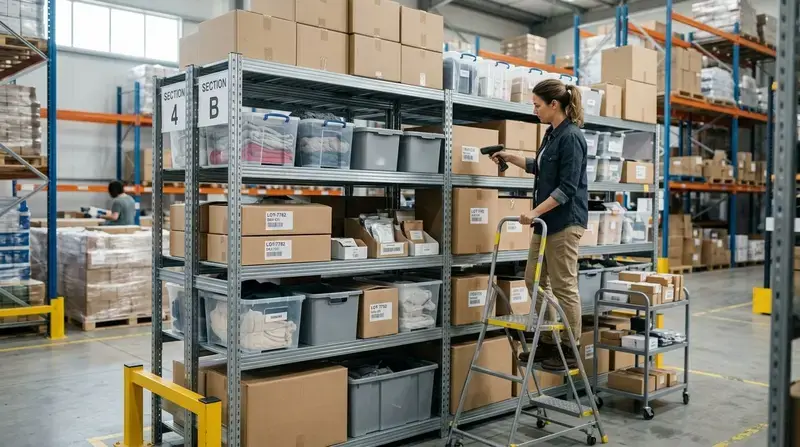
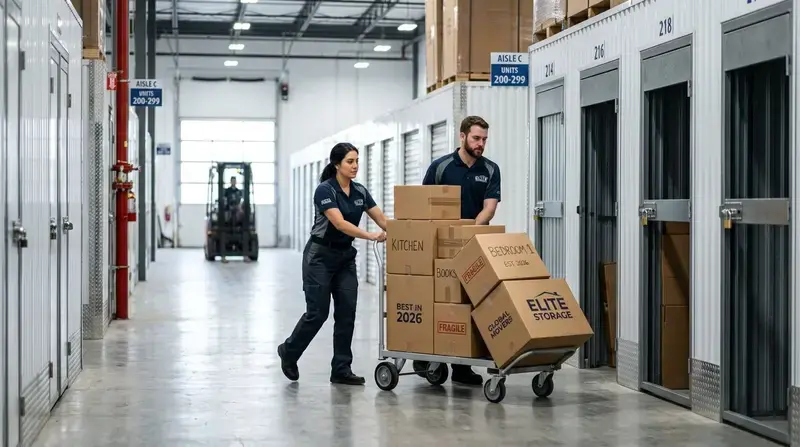
This is where a by-the-box storage service can be a lifesaver. You can think of it as your own personal, on-demand pantry. Pack up the bulk-buy paper towels, seasonal decor, and specialty bakeware, send them away, and get them back with 48-hour notice whenever you need them.
This isn’t just about making things look neat; it’s about making your life easier. For the 52 million apartment dwellers in the U.S. trying to make a tiny kitchen work, stashing the overflow off-site is a smart, modern solution. Visible clutter can drain your productivity, but a decluttered space can seriously cut down the time you waste hunting for things, a trend backed by the latest market research.
Once you’ve finished this decluttering phase, you'll be left with only the things you actually need. Your kitchen will feel lighter, bigger, and ready for the fun part: organization.
Creating Smart Kitchen Zones for a Better Workflow
Once you’ve decluttered, your kitchen is like a blank canvas. This is where the real work begins—the part where you stop just storing things and start organizing them for how you actually cook. The best way to do this is with a concept called zoning.
It’s a simple but powerful idea: group items together based on their function, not just their category. By creating an invisible map that connects tasks to the tools you need for them, your kitchen will start to feel incredibly intuitive. No more frantic searching for the whisk while your sauce is burning. Everything you need will be right where you expect it to be.
Establish Your Primary Work Zones
Every kitchen, no matter how small, has a few core jobs to do. Your goal is to create a dedicated home for each of these functions, keeping all the necessary tools and supplies within easy reach. This builds a natural workflow that makes everyday tasks feel second nature.
Here are the most common zones you’ll want to set up:
- Prep Zone: This is where the action starts—chopping, mixing, and measuring. It should ideally be a clear stretch of counter between your sink and stove. Keep your cutting boards, knives, mixing bowls, and measuring cups here.
- Cooking Zone: Centered around the stovetop and oven, this area should hold everything you need when the heat is on. Your pots, pans, cooking spoons, spatulas, spices, oils, and potholders should live in the cabinets and drawers right next to the stove.
- Cleaning Zone: Naturally, this space is built around your sink. Keep dish soap, sponges, brushes, a dish rack, and dishwasher pods right under or next to the sink for easy access.
- Storage Zone (Pantry & Fridge): This is for all your food. Try to group similar foods together inside your refrigerator and your pantry cabinet—canned goods get one shelf, while pasta and grains get another.
The most effective small kitchen organization comes from assigning a logical "home" to every single item. When everything has a place, cleanup becomes a quick reset instead of a major chore.
By defining these key areas, you build a solid foundation for an efficient kitchen. To take this idea even further, you can learn more about strategic space planning in your home, which applies these same principles on a much larger scale.
Create Specific Mini-Zones for Daily Routines
Beyond the main work areas, take a moment to think about your daily habits. Creating small, dedicated "mini-zones" for these routines can make a huge difference in how your kitchen feels and functions, all while keeping your main prep counters clear.
A perfect example is a coffee station. Instead of having the coffee maker on one counter, mugs in a cabinet across the room, and sugar somewhere else entirely, pull them all together. A small corner or even a dedicated tray can hold your coffee maker, a canister of grounds, a sugar bowl, and your favorite mugs. Your whole morning routine is now contained in one tidy spot.
Another powerful mini-zone is what I like to call the "Hot Zone." This is a designated spot on your counter for the small appliances you use every single day, like your toaster, electric kettle, or blender. Small kitchens often get overrun with gadgets—the small kitchen appliances market is projected to hit USD 65.46 billion by 2026. To fight back against the clutter, dedicating just 12-18 inches of counter to these daily workhorses can cut meal prep time by a reported 22%. With 62% of urban millennials owning more than 15 countertop appliances, grouping them by function is the only way to reclaim your workspace. You can read more about these trends from this market analysis.
Smart Storage Solutions That Maximize Your Space
With the clutter gone and your zones mapped out, it’s time to get clever. This is the really satisfying part—finding and implementing smart storage that makes your small kitchen feel twice as big. We're going to start thinking vertically and look for all that untapped real estate hiding in plain sight.
The goal here is to move beyond just putting things on a shelf. True kitchen harmony comes from making every single nook and cranny pull its weight. With the right tools, you can turn chaotic cabinets and jammed drawers into models of efficiency, making your daily routine feel effortless.
Go Vertical and Use Hidden Spaces
Look up. The most overlooked storage goldmine in any small kitchen is the empty air in your cabinets and on your walls. By capturing this space, you can often double your storage capacity without a single major renovation. These are the quick, affordable wins that make a huge difference.
Think about that pocket of dead air above your stack of plates or mugs. Sliding in an under-shelf basket is a five-second fix that instantly creates a new tier for napkins, foils, or shallow bowls. Likewise, adding tiered shelves or shelf risers to a pantry cabinet means you'll never have to unstack ten cans just to get to the one you need in the back.
Here are a few other powerful ways to put hidden space to work:
- Cabinet Doors: Don't let the inside of your cabinet doors be lazy. A simple over-the-door rack is perfect for holding cutting boards, rolls of foil, or your cleaning supplies under the sink. You can also use small, stick-on racks to get all your spices out of a valuable drawer or cabinet.
- Magnetic Strips: A magnetic knife strip is a classic for a reason. It clears an entire drawer of bulky knives, keeping them visible and easy to grab. You can also use them to hold metal spice tins, freeing up even more shelf space.
- Over-the-Sink Racks: If counter space is your main pain point, an over-the-sink drying rack is a total game-changer. It gives you a spot for drying dishes, washing produce, and holding utensils, all without taking up a single inch of precious prep area.
This chart really drives home how setting up efficient zones directly impacts your time and gives you back precious workspace.

As you can see, a well-organized prep zone dramatically cuts down on wasted motion and frees up that critical counter space for actually cooking.
Space-Saving Storage Solutions Comparison
To help you decide which solutions are right for you, I've put together a quick comparison of some of the most popular and effective options.
These tools are all relatively low-cost, but the return on organization and sanity is huge. Choose one or two to start with based on your biggest pain points.
Tame Your Drawers and Deep Cabinets
Drawers and deep corner cabinets are the usual suspects for kitchen chaos. They either become a "junk drawer" jumble or a black hole where pots and pans disappear forever. The right organizers bring immediate order to these trouble spots.
For utensil drawers, adjustable drawer dividers are non-negotiable. They put an end to that frustrating search for the right spatula, giving every tool its own home. It’s a simple fix that turns a frustrating rummage into a quick, easy grab.
The best storage solutions are the ones that make items easy to see and easy to reach. If you have to move three things to get to one, the system isn't working.
Those deep corner cabinets are notoriously difficult, but a Lazy Susan turntable completely changes the game. Instead of getting on your hands and knees to find something, a simple spin brings everything to you. They're perfect for spices, oils, condiments, and even small appliances. If you're looking for more innovative ways to optimize every inch, there are plenty of other effective smart small kitchen storage solutions that tackle these common problem areas.
When to Use Off-Site Storage
Even with the cleverest hacks, some items just don't earn their keep in a small kitchen. This is where you can turn to that "Relocate" pile from your decluttering session. Anything that’s bulky, used only seasonally, or just has sentimental value is a perfect candidate for off-site storage.
Think about items like:
- The giant stand mixer you only use for holiday baking.
- The turkey roaster that sees the light of day once a year.
- Specialty bakeware like Bundt pans or your extensive cookie-cutter collection.
- Bulk supplies of paper towels or other non-perishables you bought on sale.
Using a by-the-box storage service like Endless Storage essentially gives you an extension of your pantry. For more ideas on what to pack and how, our guide on the best storage for small spaces offers an in-depth look at picking the right containers and systems. By moving these rarely used items out, you create invaluable breathing room for the things you actually need every single day.
How Off-Site Storage Can Free Up Your Kitchen
Remember that "Relocate" pile you made during the big declutter? It’s full of things you want to keep but don’t necessarily need for Tuesday night dinner. Now it’s time to find a smart home for those items. Most people think storage units are just for moving, but that's an outdated idea.
Think of off-site storage as your kitchen’s secret weapon—a second pantry or a seasonal closet just for your cooking gear. This is the perfect spot for those bulky, rarely-used items that are currently hogging precious real estate in your tiny kitchen. It's the key to finally getting some breathing room.
Identify What Belongs in Your Second Pantry
Take another look at your "Relocate" pile. Let's be honest, which of these things are just collecting dust for 90% of the year? By moving them out, you reclaim prime cabinet and counter space for the tools you grab every single day. This is a game-changing move for anyone trying to master small kitchen organization.
Here are some of the usual suspects that are perfect for this strategy:
- Seasonal Bakeware: The giant Thanksgiving turkey roaster, that huge collection of holiday cookie cutters, and the fancy Bundt pan you use once a year.
- Specialty Appliances: Your ice cream maker that only comes out in July, the stand mixer reserved for big birthday cakes, or that fondue pot for special occasions.
- Bulk Purchases: You got a great deal on that case of olive oil or the giant box of paper towels. Great! But they don't need to live in your kitchen until you're ready for them.
- Sentimental China: Your grandmother’s beautiful dish set deserves to be kept safe, but it doesn't need to take up a whole cabinet if you aren't using it for weeknight meals.
You're not getting rid of these things; you're just giving them a more sensible home. This simple shift makes your daily kitchen routine so much more efficient and pleasant.
The goal isn't to banish your belongings, but to curate your daily-use space. An organized small kitchen keeps essentials at arm's reach and everything else accessible when you need it.
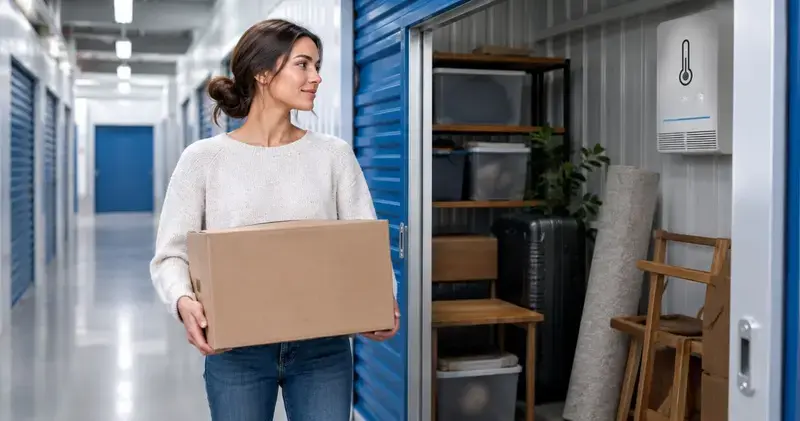
Modern storage has come a long way from dusty, inconvenient lockers. Today’s by-the-box services have completely changed the game. You simply pack your things into sturdy boxes they provide, and they pick them up to be stored in a secure, climate-controlled facility.
Need something back? Say, your stand mixer for a holiday baking spree? You just request it online with a few clicks. With a service like Endless Storage, your items can be shipped right back to your door, often within 48 hours. This turns off-site storage from a clunky chore into a flexible, on-demand extension of your home. You can learn more about how to rent a storage box to see if this modern approach works for you.
If you have a larger collection or furniture to store, exploring options like the best storage units can offer the right solution. This approach allows you to enjoy a clean, functional kitchen without saying goodbye to the items you love but only use once in a while. It’s all about creating calm in your daily life by being smart about storing what you don’t need right now.
Keeping Your Kitchen Organized for Good
You’ve done it. You put in the work to declutter and create a system that actually works for your kitchen. But now comes the real challenge: making it stick. An organized kitchen isn't a one-and-done project; it’s the result of small, consistent habits that keep the clutter from slowly creeping back in.
The first habit to adopt is your new secret weapon against gadget overload: the one-in, one-out rule. It's incredibly simple. Anytime a new kitchen item comes through the door—a new mug, a trendy appliance, another spatula—an old one has to leave. This forces you to be incredibly mindful about what truly earns its keep in your limited space.
Build Your Weekly and Semi-Annual Routines
When it comes to maintaining order, consistency will always beat intensity. You don't need to block off a whole Saturday for reorganizing every month. Instead, a few minutes each week is all it takes to keep things from spiraling into chaos.
The 10-Minute Weekly Reset is an absolute lifesaver. Just set a timer once a week and quickly run through this list:
- Wipe down your countertops and stovetop.
- Put any stray items back in their designated homes.
- Do a quick scan of the fridge for any old leftovers that need to go.
- Straighten up your most-used drawers and cabinets.
This isn’t about deep cleaning. It’s a quick tidy-up that reinforces the new systems you've created and keeps everything running smoothly.
Your goal is to make maintaining your kitchen so easy it becomes second nature. These small habits are the key to long-term success and a permanently calm, functional space.
On top of your weekly reset, plan for a Semi-Annual Pantry Audit twice a year. This is a slightly deeper dive to make sure nothing gets lost in the back of your cabinets. During this audit, you'll want to check expiration dates on canned goods, spices, and other pantry staples.
This is also the perfect time to ask yourself some honest questions. Remember that bread maker you decided to keep six months ago? If it's still gathering dust, that's a pretty clear sign it might be time to donate it or move it to off-site storage. These simple, scheduled habits are your insurance policy against future clutter.
Answering Your Small Kitchen Organization Questions
Even with the best plan, you're bound to hit a few snags when organizing a tiny kitchen. You’ve done the hard work of decluttering and creating zones, but a few tricky spots are probably still giving you trouble. Let's tackle some of the most common questions we hear and get those last few problems sorted out.
How Do I Organize All My Utensils Without a Crock?
In a small kitchen, counter space is practically currency, and a big utensil crock can feel like a waste of prime real estate. If you’re ready to reclaim that surface, your drawers are the next best bet. But just tossing them in there is a recipe for chaos.
The secret is using expandable drawer dividers. These nifty organizers let you create custom-sized slots for everything. Your everyday tools, like spatulas and whisks, can live right at the front for easy grabbing. The more specialized stuff, like that fish spatula or corn-on-the-cob holders, can hang out in the back. Everything stays neat, visible, and off your counter.
Another trick is to go vertical. Stick some narrow, self-adhesive containers on the inside of a cabinet door. It's the perfect spot for smaller utensils and makes use of space that’s almost always forgotten.
The best organization systems make items easy to see and even easier to put away. If retrieving a tool feels like a chore, the system needs a tweak.
What’s the Best Way to Store Lids for Pots and Pans?
Ah, the dreaded pot lid avalanche. It’s a classic small kitchen nightmare. They’re clunky, impossible to stack, and devour precious cabinet space. The easiest fix is to stop storing them with the pots.
A wall-mounted or over-the-door lid rack is a game-changer. These simple organizers store lids on their side, keeping them perfectly neat and accessible. You can mount one on the inside of your pantry door to keep them totally out of sight. Or, if you have a sliver of empty wall near the stove, it keeps them right where you'll need them most.
Any Tips for That Awkward Cabinet Above the Fridge?
We all have one. That super deep, hard-to-reach cabinet above the refrigerator that becomes a black hole for kitchen gadgets you completely forget you own. Don't let that space go to waste—transform it into your designated "deep storage" area.
This is the ideal spot for items you decided to keep but don't need every day (and didn't send to remote storage). Think of things like:
- Lightweight serving platters for holidays
- Bulk paper towels or extra napkins
- That novelty bundt cake pan you use once a year
To keep everything from getting lost in the back, use long, handled baskets. This trick essentially turns that deep cabinet into a set of pull-out drawers. When you need something, you just slide the whole basket out instead of blindly reaching into the abyss.
Ready to reclaim your kitchen but need a home for those seasonal and rarely used items? Endless Storage offers by-the-box storage with pickup right from your door, giving you the extra space you need. Free up your cabinets and get organized at https://www.endless-storage.com.
Frequently Asked Questions
Unveiling the Secrets to Effortless Storage
Endless Storage is available nationwide. You pick a plan, tell us where to pickup, and we'll send a UPS van to collect, whichever state you're in.
Your shipping label will be sent to your email within a few minutes, if not instantaneously. It can also be accessed through your customer profile.
Your box will be shipped to one of our climate controlled self storage facilities in our closest self storage facility. Our manager will accept your package, notify you that your box has been received, and securely stored. Only our managers will have access to Endless Storage boxes.
Email us at admin@endless-storage.com click to live chat with us, or send us a message below.
Never! We're committed to transparent pricing with no surprises. You'll lock in your rate with no hidden fees and no long-term contracts.
Fast access guaranteed! Your boxes will arrive at your doorstep within 48 hours of requesting them back. Need to check on delivery? We provide tracking information for complete peace of mind.
Totally flexible! Store month-to-month with no long-term commitment and cancel anytime.
Everything's online! Use your account dashboard to:
• Set up automatic monthly payments
• Request box returns
• Update your address
• Order additional boxes
• Track shipments
Your boxes are insured up to $100 each. Our customer service team will help you file any necessary claims and resolve issues quickly.
Don't worry – we'll email you right away if there's a payment issue. Your items stay safe, though you may have temporary service interruption or late fees until payment is resolved.
When you request our free storage kits, you'll have 30 days to send in your boxes to activate your 3 months of free storage. Think of it like starting a gym membership – your activation window begins when you receive your kits, and your full free trial begins once you send in your first box. During your free months, you'll experience our complete storage service at no cost.
Your 30-day activation window begins when you receive your storage kits. We'll send you an email confirmation when your kits are delivered, marking the start of your activation period.
If you haven't sent any boxes for storage within your 30-day activation window, your free trial will expire and we'll begin charging the regular monthly rate of $9.99 per box. This helps ensure our storage kits go to customers who are ready to use our service.
A box costs $9.99 per month to store (plus sales tax). This price includes free shipping for standard boxes under 50 lbs. and smaller than 16"x16"x16"
Log into your Endless Storage account, locate the box you would like returned, and simply click Return My Box.
Yes, each box stored with us is insured for up to $100 throughout transit as well as the duration of storage within our facilities.
Your box will be at your doorstep within 48 hours of you requesting it back.
Store 10+ boxes? We'll pick them up for free! After your purchase, we'll contact you to schedule a convenient pickup time and arrange UPS collection.
We trust UPS with all shipments, and every box includes $100 insurance coverage. You'll receive tracking information to monitor your items' journey.
Yes! Visit any of our locations by appointment. Just bring a photo ID matching your customer profile.
For everyone's safety, we can't store hazardous materials, firearms, or perishables. All items must fit within our standard boxes.
It's easy! Order your storage kit online, and we'll ship it to you within 1-2 business days. Your shipping labels will be emailed instantly and available in your account.
We're here to help! Email us at admin@endless-storage.com, use our live chat, or send us a message through your account.
To cancel your storage service with Endless Storage, please email your cancellation request to admin@endless-storage.com. Our team will process your request within 2 business days and confirm your cancellation via email.
We understand packing takes time. However, to maintain your free trial benefits, you'll need to send at least one box within the 30-day activation window. If you need more time, you can always start with one box to activate your trial and send the rest later. You can always reach out to admin@endless-storage.com if you have any issues or concerns.
When you request our free storage kits, you're starting a 30-day window to begin using our storage service.
Important: To activate your free trial, send at least one box for storage within 30 days. If no boxes are sent within this 30-day window, a one-time $50 fee applies to cover materials and shipping costs. This fee is clearly disclosed before you sign up.
Think of it like reserving a hotel room – we're setting aside space and sending specialized packing materials for your use. The fee only applies if you request materials but don't begin storage, similar to a hotel's no-show charge.