What Is the Real Price of Storage A Complete Cost Breakdown
Trying to figure out how much storage costs can feel a bit like asking, "How much does a car cost?" There's no single answer. A basic sedan is one price, a moving truck another. The same idea applies to storage.
For a traditional self-storage unit, you're typically looking at a monthly cost between $60 to $300. But with newer on-demand services, you might pay per item, like $2.99 per box. The final price tag really boils down to how you decide to store your things.
How Storage Pricing Actually Works
The storage industry really operates on two completely different pricing models. Your needs, budget, and what you’re storing will steer you toward one or the other. Think of it as choosing between renting an entire empty apartment for your belongings or hiring a valet service that only charges you for the specific items they look after.
The Two Core Pricing Models
The first and most common approach is traditional self-storage. This is where you rent a physical unit measured in square feet—a 5x5, a 10x10, and so on. It’s a straightforward concept, but it often means you're paying for empty space if your items don't perfectly Tetris their way into the unit.
The second, more modern model is on-demand, per-item storage. This is a totally different way of thinking about it. Instead of renting a big empty box, you only pay for the specific items you're storing, whether it's a standard moving box, a bike, or a piece of furniture. It’s a much more precise way to pay—you're not spending money on empty air. This approach also usually comes with the major convenience of pickup and delivery.
To get a better feel for how different industries value space and materials, it helps to see parallels in other areas, like figuring out how much do custom cabinets cost, where the final price is also a sum of its parts.
To give you a quick snapshot, here's how the two models generally compare.
Storage Pricing at a Glance
This table shows the fundamental difference: paying for a whole space versus paying just for what you use.
Key Takeaway: The fundamental choice in storage pricing is between renting a fixed amount of empty space (self-storage) or paying only for the volume your specific items occupy (on-demand). Your needs will dictate which offers better value.
Let's dive deeper into both models so you can figure out which one makes the most sense for you and your wallet.
The Key Factors That Determine Your Storage Bill
So, what actually goes into the price of a storage unit? It's not just about the square footage. You could find two identical 10x10 units with wildly different monthly bills, and it all comes down to a handful of crucial factors.
Figuring these out is the key to getting the best value and making sure you don't pay a premium for features you'll never use.
Think of it like booking a hotel. A room in downtown Manhattan will always cost more than the exact same size room in a quiet suburb. Storage works the same way, which is why location is almost always the biggest piece of the pricing puzzle.
Location, Location, Location (And Real Estate)
Yep, the single biggest influence on your storage bill is geography. A facility in a dense urban center like NYC or Boston is paying top dollar for real estate, and that cost gets passed on to customers. A unit in a major city can easily cost 30-50% more than a similar one just outside the city limits.
This isn't just a hunch; it's backed by economic data. The industry's Producer Price Index, which tracks what facilities pay for real estate and logistics, has climbed steadily. When their costs go up, so do the prices you see. You can actually track these industry-wide trends to get a sense of where things are headed.
The Amenities That Add to the Bottom Line
Beyond where the facility is located, the specific features it offers will layer costs onto your monthly bill. These are the add-ons that provide extra convenience or protection, but they definitely come at a premium.
- Climate Control: This is the big one. Climate control keeps temperature and humidity stable, which is a must for protecting things like wood furniture, electronics, artwork, or important documents. For that peace of mind, expect to pay 25-50% more.
- Access Hours: Need to get to your stuff at 3 AM? A facility with 24/7 access will often charge more than one with standard business hours. You're paying for the convenience and the added operational costs of keeping the place open and secure around the clock.
- Security Features: Better security almost always means a higher price. We're talking about things like individual unit alarms, extensive video surveillance, and on-site staff. The level you need really depends on what you're storing.
Pro Tip: Before you automatically check the box for climate control, do a quick mental inventory. If you're just storing plastic bins of holiday decorations, patio furniture, or garage tools, you can probably save a good chunk of cash by choosing a standard, non-climate-controlled unit.
At the end of the day, it's all about matching the features to your actual needs. The best way to do that is to compare storage unit prices based on these different factors and find the sweet spot between protection, convenience, and your budget.
How On-Demand Storage Is Changing the Game
Imagine if cloud storage worked like a traditional storage unit. You’d have to rent a massive, fixed block of data, even if you just wanted to save a few photos. Sounds pretty inefficient, right? That’s the exact problem on-demand storage is solving for our physical stuff.
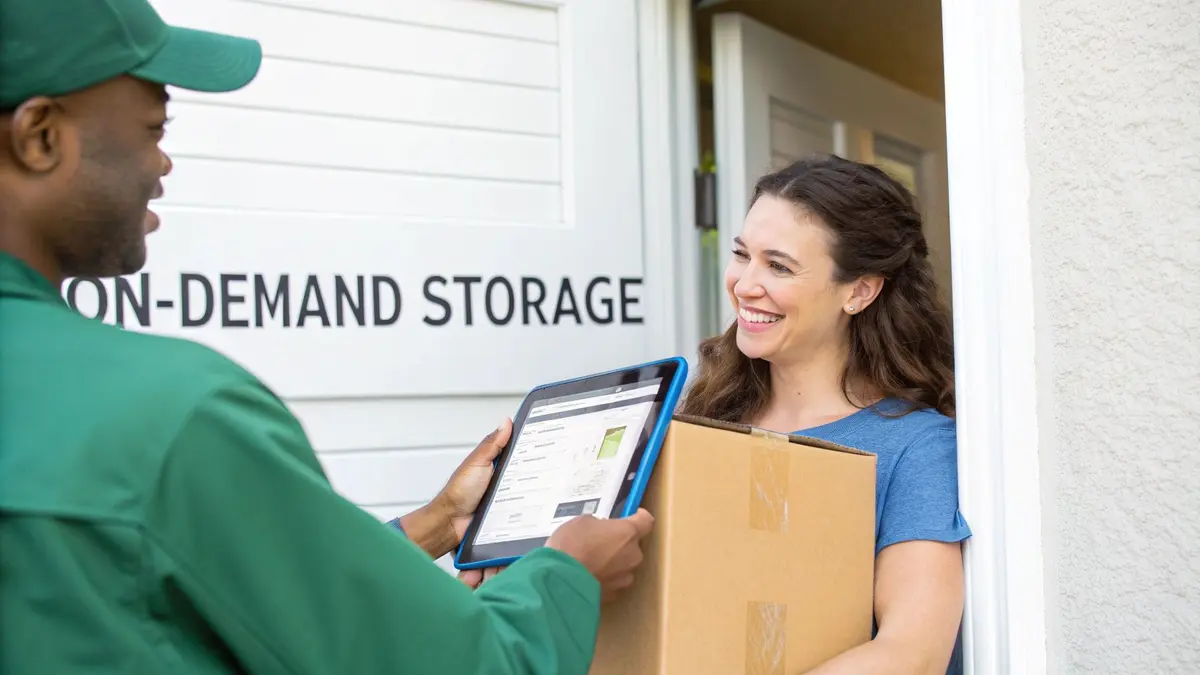
This model completely flips the old way of doing things on its head. Instead of you driving to a facility and renting a room, the service comes right to your door. They pick up your items, keep them safe in a secure warehouse, and bring them back whenever you need them.
But the biggest shift is in how you pay. With this approach, you can finally stop paying for all that empty, unused space.
Pay Only for What You Use
The core idea behind on-demand storage is per-item billing. You're only charged for the specific things you’re storing—not for a big, half-empty room. This makes budgeting incredibly clear and is often a lot more affordable, especially if you don’t have enough stuff to fill a whole unit.
Here’s a typical breakdown of how it works:
- Standard Boxes: You’ll pay a simple flat monthly rate for each box. At Endless Storage, for example, a standard box costs just $7.99 per month.
- Bulky Items: Bigger, unboxed things like furniture, bikes, or golf clubs each have their own set monthly price. A bicycle might be $14.99 per month, while a small sofa could be $24.99 per month.
- Digital Inventory: One of the best perks is the photo inventory. You get an online dashboard where you can see pictures of everything you have in storage. This makes it a breeze to request a specific item back without having to guess which box it's in.
This pay-as-you-go model ensures your storage costs scale perfectly with your needs. If you take an item out of storage, your monthly bill goes down immediately. You’re never stuck paying for space you no longer need.
The Convenience Factor
Beyond just the cost savings, the convenience is a huge deal. The service includes both pickup and delivery, which means no more renting a truck, hauling heavy boxes, or spending your weekend trying to Tetris everything into a storage unit. It's a game-changer for anyone in an urban apartment or who just values their time.
This new way of thinking has completely transformed the storage experience. If you’re curious and want to dig deeper, you can learn more about the specifics of on-demand storage solutions and see if it's the right fit for you.
This model is especially perfect for things like:
- Storing seasonal items like winter coats or holiday decorations.
- Decluttering a small apartment without committing to a big unit.
- Managing belongings during a renovation or move.
By combining precise, item-based pricing with door-to-door service, on-demand storage offers a powerful alternative that can seriously lower the overall price of storage for a lot of people.
Choosing Your Best Fit: Self-Storage vs. On-Demand
Figuring out whether to use a traditional self-storage unit or a modern on-demand service feels a lot like deciding between owning a car and just using a ride-sharing app. One option gives you total control and anytime-access, while the other is all about convenience, letting you pay only for what you actually use.
There’s no single right answer—it really comes down to your specific stuff, your budget, and how often you’ll actually need to get to your things. To make the best call, we need to get past the sales pitches and look at the real-world differences in cost, access, and pure, simple effort.
Comparing Cost and Convenience
The biggest fork in the road is the pricing model. With a traditional self-storage unit, you're renting a fixed amount of space—say, a 5’x10’ or 10’x10’ locker—for a flat monthly rate. This works great if you have enough stuff to fill most of that space and you want the freedom to pop in whenever you like. The catch? If you only use half the unit, you're still paying for all that empty air.
On-demand storage flips that script completely. Its pricing is surgical—you pay per box or per item. This way, your bill is a perfect match for what you’re actually storing, not a cent more. This model almost always includes pickup and delivery, saving you the headache and expense of renting a U-Haul and doing all the heavy lifting yourself. For anyone who puts a premium on convenience, our guide on storage companies that pick up your items is a must-read.
This "pay-for-what-you-use" approach isn't new. Think about data storage. Over the last twenty years, the cost has dropped by over 90%, from thousands of dollars per gigabyte to literal pennies. That massive shift happened because technology got smarter and more efficient, a principle on-demand services are now bringing to the physical world. You can discover more insights about storage cost trends here.
To make it even clearer, here’s a side-by-side look at the two models.
Self-Storage vs. On-Demand Storage
This table shows the fundamental trade-offs. One isn't inherently better, but one is definitely better for you depending on your priorities.
Access and Use Cases
How you intend to use your storage is just as critical as the price. Your access needs should be a huge part of your decision.
Frequent, Unplanned Access: Are you a small business owner grabbing inventory every other day? A contractor who needs tools at a moment's notice? A traditional self-storage unit located near your home or work is your best bet. That 24/7 key-card access gives you unbeatable flexibility.
Infrequent, Planned Access: Storing seasonal items like holiday decorations or winter coats? Archiving old documents? Just decluttering for a while? On-demand is the clear winner here. You simply schedule a delivery for the specific items you need, and they show up at your door. You trade that instant, drive-up access for ultimate convenience and cost savings.
Key Takeaway: The choice is a trade-off. Self-storage offers total access and control at the cost of your own time, labor, and potentially paying for unused space. On-demand offers ultimate convenience and precise pricing but requires you to plan retrievals in advance.
Once you take a hard look at what you’re storing, how often you’ll need it, and what your budget looks like, the right choice becomes pretty clear. You can easily figure out which model delivers the best value and fits seamlessly into your life.
How to Calculate Your Storage Needs (and Avoid Overpaying)
Figuring out how much storage space you actually need can feel like a guessing game. Do you just eyeball the pile of boxes in your living room and hope for the best? A little bit of planning goes a long way here, and taking a methodical approach is the single best way to avoid paying for space you'll never use.
Let's break it down.
The first step is surprisingly simple: just make a list. Grab a notepad or open a new document and jot down everything you plan to put into storage. You can group things into rough categories like "books," "kitchen stuff," "winter clothes," and "furniture."
This quick inventory does two things. It gives you a much clearer picture of your total volume, and it often helps you spot items you’d be better off selling or donating instead of paying to store.
From Your List to a Real Estimate
Once you have your inventory, the next move is to translate that list into a specific storage size or item count. This is the fork in the road where you'll decide between renting a physical room or paying on a per-item basis.
- For Traditional Self-Storage: You'll need to estimate the square footage required. A good rule of thumb is that the contents of a single, full bedroom usually fit into a 5'x10' unit. A small one-bedroom apartment often bumps up to a 10'x10' space.
- For On-Demand Storage: This is much more straightforward. You just count your boxes and any large, individual items. If you have 10 boxes, a floor lamp, and a bicycle, that’s your exact inventory—and that's all you pay for.
Not sure which path makes sense for you? It really boils down to one simple question: how often will you need to access your stuff?
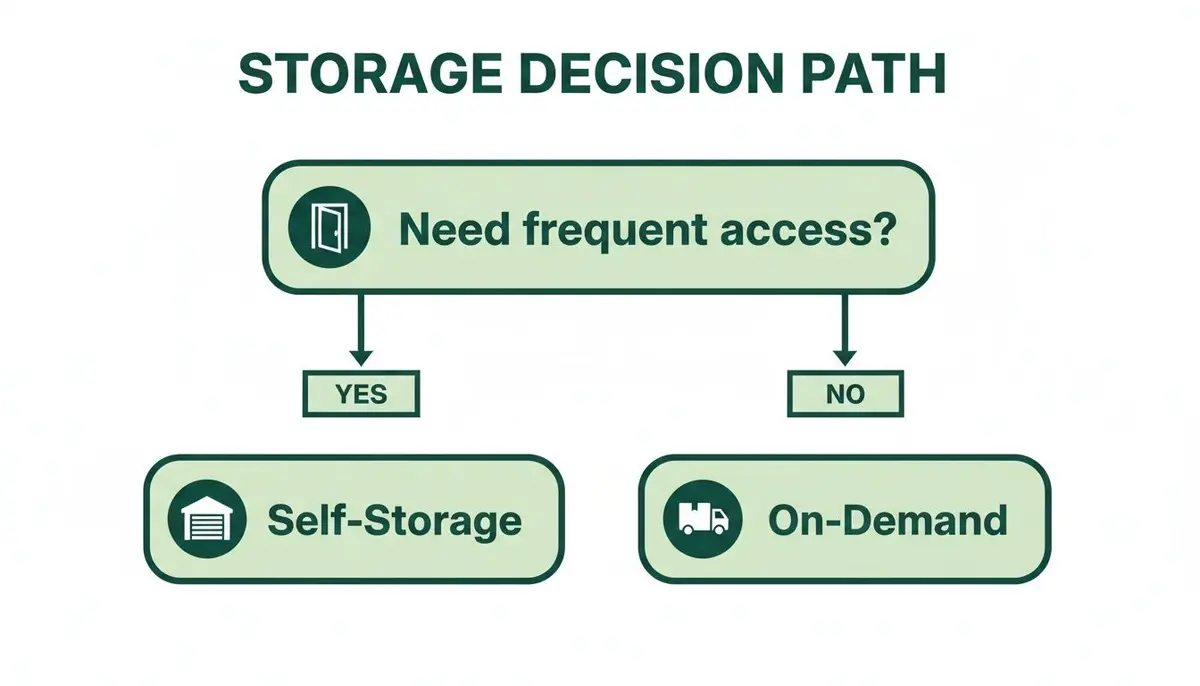
As you can see, if you need to pop in and out without notice, self-storage is probably your best bet. But if your items are going away for a while and you value convenience over constant access, on-demand services are the clear winner. For a more precise calculation, a dedicated storage space calculator can do all the math for you.
Don't Forget the Hidden Costs
Finally, remember to look beyond the monthly rent. There are always a few extra costs that can sneak up and inflate your total bill if you aren't prepared for them.
Budgeting Tip: A smart move is to add an extra 10-15% to your initial monthly estimate. This creates a buffer for things like mandatory insurance, special packing supplies, one-time administrative fees, or even the cost of a required lock.
This granular, pay-for-what-you-use approach mirrors the revolution we've seen in digital storage. Back in the 1950s, a single megabyte of computer storage cost thousands of dollars. Today, we pay mere cents for a gigabyte. This incredible price drop was driven by the shift toward paying only for the capacity we actually consume. By applying that same mindset to your physical belongings, you can find a much more efficient and cost-effective solution.
Actionable Tips to Lower Your Storage Costs
Securing the best price on storage is less about hunting for last-minute discounts and more about smart planning. With a few strategic moves before you book, you can seriously reduce your monthly bill without skimping on quality or security.
Honestly, the most powerful tactic has nothing to do with the storage company itself. Think of it this way: every single item you store has a carrying cost. So, the single most effective way to lower your storage bill is simply to store fewer things.
Declutter Before You Pack
Before a single item goes into a box, do a thorough decluttering session. It’s a classic for a reason. Go through your belongings and sort everything into three piles: keep, donate/sell, and discard.
This one step can often slash your storage needs by 20-30%. That might mean you can rent a much smaller, cheaper unit or, with a service like ours, just pay for fewer items from the get-go.
Once you know exactly what you’re keeping, you can pick the right size unit with confidence. You’ll avoid the common mistake of overestimating and paying for a bunch of empty air. To see how this plays out with per-item pricing, check out our Endless Storage savings calculator.
Look Beyond the Initial Offer
Many facilities reel you in with tempting introductory rates like "first month free" or 50% off. While these can be great deals, you have to ask what the standard rate will be after the promotion ends. A low initial price can sometimes hide a much higher long-term cost that catches you by surprise.
For businesses trying to manage storage as part of a larger plan, applying sound IT procurement best practices can help you figure out the true total cost over the entire time you'll need the service.
Insurance Check: Before you say yes to the facility's insurance plan, take a minute to check your existing homeowner's or renter's policy. A lot of policies already include off-premises property coverage, which could save you an extra $10-$20 every month.
Finally, always ask about the little things that add up: administrative fees, late payment penalties, or even if you're required to buy their specific lock. Getting a clear picture of all potential charges ensures your final bill has no surprises, keeping your storage costs predictable and affordable.
Got Questions About Storage Costs? We've Got Answers
When you’re trying to budget for storage, a few last-minute questions always seem to pop up. Getting these sorted out is the final step to making sure you know exactly what you’re paying for—and avoiding any nasty surprises on your bill.
Let's clear up some of the most common questions so you can finalize your plan with confidence.
Is Storage Insurance Something I Absolutely Have to Pay For?
Most of the time, yes. Just about every storage company, whether it's a traditional facility or an on-demand service, will require you to have some kind of insurance. It’s a simple protection for both you and them.
But here’s a tip: you don’t always have to buy their insurance plan. Before you sign anything, pull out your current homeowner's or renter's insurance policy. A lot of policies already cover personal items stored off-site, which could easily save you $10-$20 every month. Just give your agent a call to confirm the details and coverage limits.
How Much More Does Climate Control Actually Add to the Bill?
Opting for climate control is one of the biggest factors that can hike up your monthly rate. This feature keeps the temperature and humidity steady, which is a must-have for protecting sensitive things like wood furniture, electronics, artwork, or important documents from warping, mildew, and other damage.
Expect to pay a premium of 25% to 50% more for a climate-controlled unit compared to a standard one.
You have to weigh the value of what you’re storing against that recurring cost. If it's just some plastic tubs of holiday decorations or garage tools, climate control is probably an expense you can skip.
What Sneaky Fees Should I Keep an Eye Out For?
Most companies are upfront about their pricing, but some fees can still catch you by surprise if you're not looking for them. Always, always read the contract from top to bottom and ask about these specific costs before you commit:
- Administrative Fees: This is often a one-time charge just for setting up your account.
- Required Locks: Some places insist you buy their specific high-security lock instead of letting you bring your own.
- Late Payment Penalties: These can be surprisingly steep. Make sure you know the grace period and what the penalty is.
- Rate Increases: This is a big one. Ask how often your rate can go up and by how much, especially after any introductory offer ends.
Ready to see how a pay-for-what-you-use model can simplify your costs? With Endless Storage, you get transparent, per-item pricing with pickup and delivery included. Find out more at https://www.endless-storage.com.