10 Smart Waste Recycling Ideas for Apartment Living in 2026
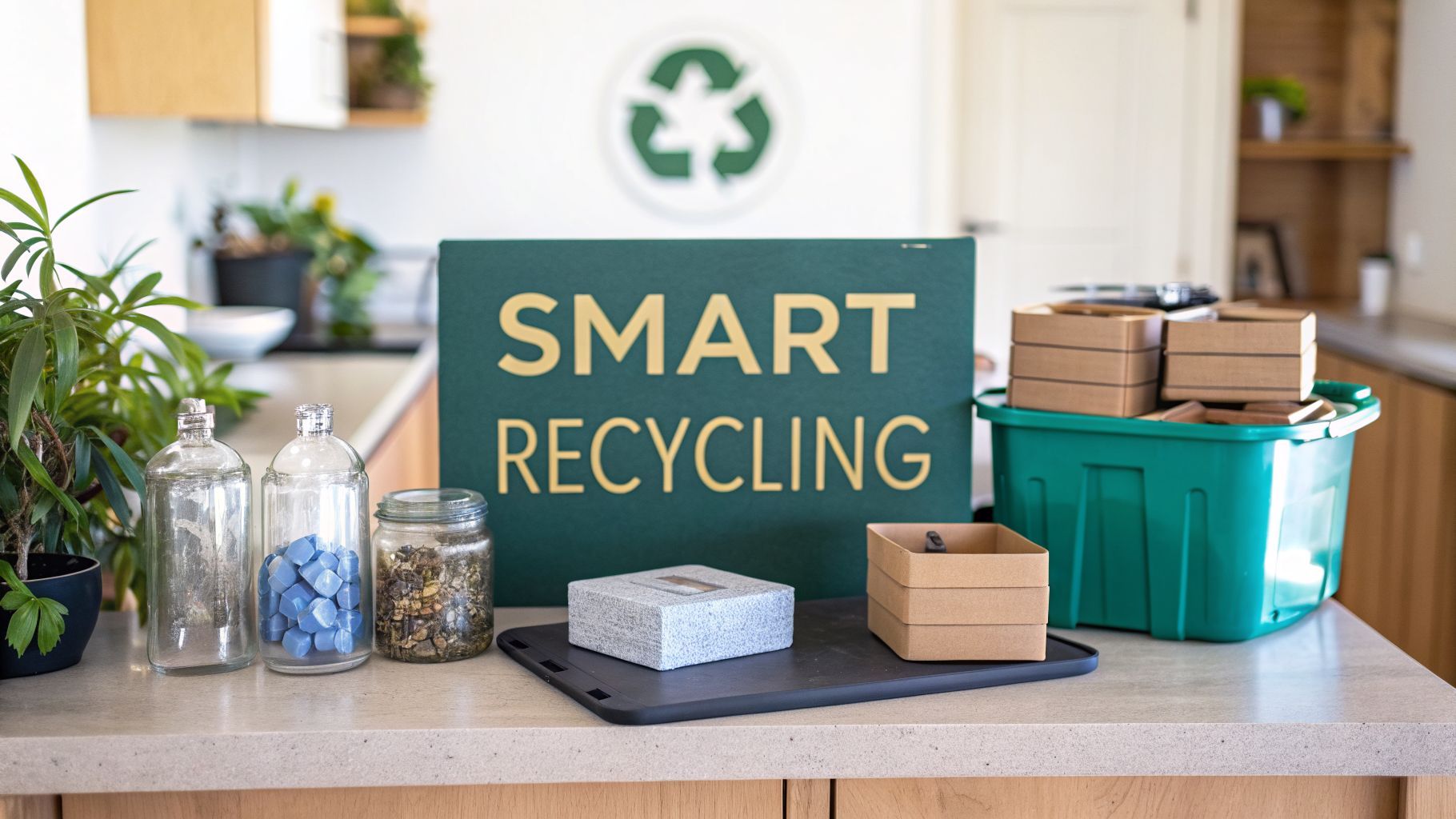
Reimagine Your Waste: A Guide for the Modern Apartment Dweller
Welcome to your go-to guide for mastering waste reduction in a small living space. Living in an apartment often presents unique challenges for sustainability. Limited room, shared bins, and navigating local regulations can feel like major hurdles. But what if you could turn these constraints into opportunities for smarter living? This article presents 10 practical waste recycling ideas created specifically for apartment dwellers. We are moving beyond the simple "reduce, reuse, recycle" mantra to offer direct, step-by-step strategies for everything from managing electronic waste to starting a simple countertop compost system.
Each idea is designed to be space-efficient and impactful, helping you declutter your home while contributing to a circular economy. You'll find clear instructions on how to handle different types of materials, where to take them, and how to store them without sacrificing precious square footage. We will explore:
- Decluttering and donation programs
- Upcycling and creative repurposing
- E-waste recycling and textile reuse
- Organic composting solutions for small kitchens
- Maximizing paper, glass, plastic, and metal recycling
The goal is to provide you with a full toolkit of actionable methods. Forget vague advice; this guide focuses on tangible steps you can take today. Whether you're trying to clear out clutter, responsibly dispose of old electronics, or simply reduce what goes into your trash bin, you'll find fresh perspectives and real-world solutions here. Let's get started on transforming how you see and manage waste in your home.
1. Decluttering and Donation Programs
One of the most effective waste recycling ideas begins not with your trash can, but with your closets, shelves, and storage spaces. A systematic decluttering and donation program involves sorting through unwanted items and giving them a second life through charitable organizations. This approach directly reduces the volume of goods heading to landfills while providing valuable resources to communities. Instead of becoming waste, your gently used clothing, furniture, and household goods can support those in need or be resold to fund vital community services.
How It Works
This method focuses on mindful removal and responsible redistribution. Before you can effectively utilize donation programs, a crucial first step is successfully decluttering your wardrobe and home. Once items are sorted, organizations like Goodwill Industries and The Salvation Army make it easy to donate. They operate vast networks of drop-off centers and thrift stores, ensuring your items are processed efficiently. For larger items like furniture or appliances, Habitat for Humanity ReStore is an excellent option, as they resell these goods to fund housing projects.
Small-Space Solutions & Actionable Tips
Living in an apartment shouldn't stop you from participating. A planned approach is key.
- Schedule Quarterly Sessions: Dedicate one weekend every three months to go through a specific area, like your closet or kitchen cabinets.
- Create a Donation Hub: Designate a sturdy box or bag in a closet or entryway for items you decide to donate. This prevents clutter from piling up elsewhere.
- Document for Taxes: Snap a quick photo of higher-value items before donating. Many charitable donations are tax-deductible, and having a record is helpful.
- Consider Temporary Storage: If you're undertaking a large decluttering project and feel overwhelmed, a box-based storage service can hold items temporarily while you decide what to keep, sell, or donate.
Key Insight: The goal of decluttering for donation is not just to get rid of things, but to mindfully redirect resources. Every item you donate is one less item in a landfill and one more asset for your community.
By adopting a regular decluttering and donation habit, you actively participate in a circular economy, reduce personal waste, and can even discover the mental clarity that comes with a more organized living space. The benefits of decluttering extend far beyond just a tidy apartment.
2. Upcycling and Creative Repurposing
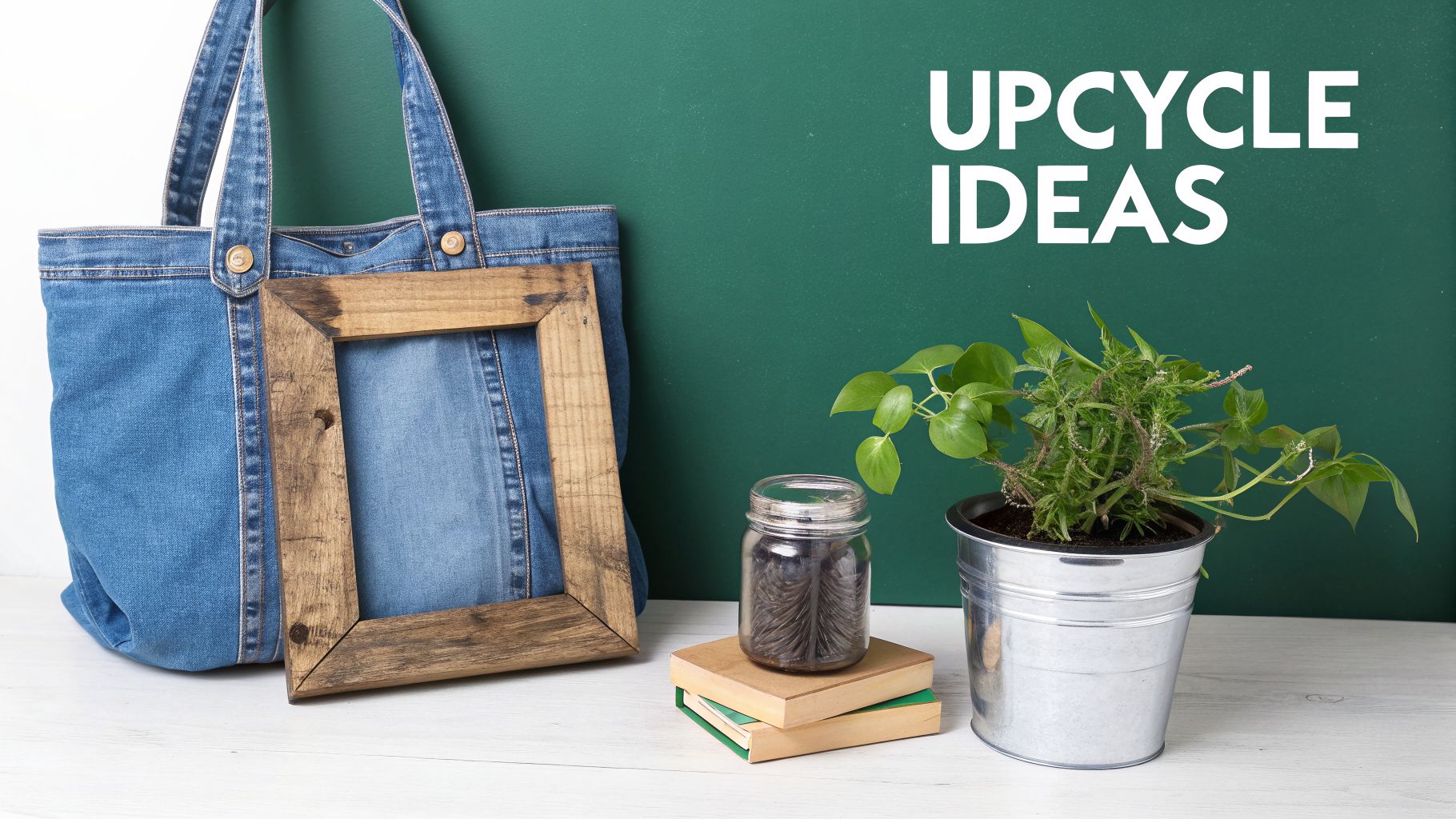
Upcycling is the art of transforming discarded items or old materials into new products of higher value or quality. This creative approach to waste recycling ideas gives items a second life with imaginative modifications, rather than breaking them down into raw materials. It’s an ideal practice for resourceful urban residents looking to minimize their footprint and add a personal touch to their home decor.
How It Works
This method champions creativity and resourcefulness. Instead of discarding items like old denim, glass jars, or wine bottles, you reimagine their purpose. For instance, worn-out jeans can be sewn into durable tote bags, and empty Mason jars become stylish storage containers or candle holders. Organizations like TerraCycle have popularized large-scale upcycling programs, while DIY communities on Instagram and YouTube provide endless inspiration for projects, from converting wooden pallets into furniture to turning old sweaters into cushion covers.
Small-Space Solutions & Actionable Tips
Even in a compact apartment, upcycling is an accessible and rewarding hobby. Organization is the secret to success.
- Start with Simple Projects: Begin with easy tasks like turning glass jars into herb planters before moving to more complex projects.
- Create an Upcycling Kit: Dedicate a labeled box to store essential tools like scissors, glue, paint, and twine. This keeps your supplies organized and ready.
- Join Online Communities: Follow upcycling hashtags on social media and join DIY groups for fresh ideas and troubleshooting advice.
- Store Materials Smartly: Use under-bed containers to hold materials like fabric scraps or old magazines. For more ideas, you can explore creative solutions for what to do with old magazines.
Key Insight: Upcycling shifts the focus from disposal to reinvention. Every bottle you turn into a vase or t-shirt you weave into a rug is a direct action against a throwaway culture, adding unique, personal value back into your home.
By embracing upcycling, you not only reduce landfill waste but also develop a creative outlet that can save you money and beautify your living space. It's a hands-on way to make sustainability a visible and functional part of your daily life.
3. E-Waste Recycling Programs
In our technology-driven world, outdated electronics quickly accumulate, creating a stream of "e-waste." One of the most critical waste recycling ideas involves using specialized programs to handle these items. E-waste recycling targets discarded electronics like phones, computers, tablets, and TVs, which contain both hazardous materials and valuable recoverable resources. Proper disposal is essential to prevent toxic substances from contaminating soil and water while allowing precious metals to be reclaimed and reused.
How It Works
This recycling method depends on certified handlers who can safely dismantle electronics. Retailers often lead these efforts; for instance, Best Buy's recycling program accepts a wide range of electronics, regardless of where they were purchased. Similarly, manufacturers like Apple offer trade-in and recycling services for their old products, often providing credit toward new purchases. For local solutions, many municipalities host periodic e-waste collection events, providing a convenient and responsible disposal option for residents.
Small-Space Solutions & Actionable Tips
Managing old gadgets in an apartment requires a clear strategy to prevent them from becoming permanent clutter.
- Wipe Your Data: Before recycling any device, perform a factory reset to completely erase your personal information. This is a critical step for protecting your privacy.
- Create an "E-Waste" Box: Designate a specific box in a closet or under a bed to collect small electronic items like old chargers, cables, and phones as you replace them.
- Check Manufacturer Programs: Always check the brand's website first. Many companies have mail-in or take-back programs that are simple to use.
- Store Until Ready: If you miss a local collection event or have several large items, you can use a box-based storage service to hold them securely until you can arrange for proper recycling.
Key Insight: E-waste is not just trash; it's a trove of recoverable materials. Recycling your old electronics is a direct way to reduce the demand for virgin resources and prevent environmental contamination from hazardous components like lead and mercury.
By seeking out dedicated e-waste programs, you ensure that your old technology is managed responsibly. This conscious choice supports a more sustainable manufacturing cycle and keeps dangerous materials out of our landfills.
4. Composting for Organic Waste
One of the most impactful waste recycling ideas addresses the significant portion of household trash that is organic: food scraps and yard trimmings. Composting is a natural biological process where microorganisms break down organic materials into a nutrient-rich soil amendment called compost. For apartment dwellers, this practice dramatically reduces landfill contributions, minimizes trash odors, and produces a valuable resource for houseplants or community gardens, directly tackling a major source of urban waste.

How It Works
This method transforms kitchen waste into black gold through controlled decomposition. Various systems are available, making it feasible even without a backyard. Vermicomposting (worm bins) and Bokashi bins are compact, indoor-friendly options that use worms or fermentation, respectively, to process scraps with minimal odor. Countertop electric composters offer a high-tech solution, quickly breaking down food waste into a dry, usable material in hours. Many municipalities, like San Francisco and New York City, also offer curbside collection programs or convenient drop-off sites at local farmers' markets. Just as it's important to stop storing old electronics at home by using proper disposal programs, diverting organic waste through composting is a key step in responsible household management.
Small-Space Solutions & Actionable Tips
An apartment-friendly composting system is entirely achievable with the right tools and habits.
- Choose a Compact System: A small countertop pail for daily scraps paired with an under-sink worm bin or a sealed Bokashi bucket works well in tight spaces.
- Balance Your Browns and Greens: Maintain a healthy ratio of carbon-rich "browns" (like shredded paper or cardboard) to nitrogen-rich "greens" (like fruit and vegetable scraps) to prevent odors and speed up decomposition.
- Know What to Avoid: Keep meat, dairy, oily foods, and diseased plants out of your home compost bin to deter pests and bad smells.
- Store Materials Smartly: If you have access to a balcony or small patio, you can collect larger volumes of "browns" like fallen leaves in a sealed container or bag.
Key Insight: Composting is not about managing trash; it's about closing the loop. By returning nutrients from your food back to the soil, you actively participate in a natural cycle and reduce your environmental footprint from your own kitchen.
By integrating a simple composting routine, you can significantly decrease your contribution to methane-producing landfills. This sustainable habit not only enriches soil but also connects you more deeply to the food you eat and the waste you produce.
5. Textile Recycling and Clothing Swaps
The fast fashion industry produces an immense amount of textile waste, making responsible wardrobe management one of the most impactful waste recycling ideas for apartment dwellers. Beyond simple donations, a broader approach includes specialized textile recycling and clothing swaps. This method extends the life of garments, reduces the environmental cost of manufacturing new clothes, and prevents old textiles from occupying landfill space for decades.
How It Works
This strategy centers on creating a circular fashion economy right from your closet. Instead of discarding worn or out-of-style clothing, you can engage with platforms designed for resale, rental, or recycling. Online marketplaces like ThredUP and Depop offer a user-friendly way to sell gently used items, giving them a new home. For those who enjoy fashion variety without the ownership, services like Rent the Runway provide a sustainable alternative. Many major retailers, including H&M and The North Face, now offer in-store collection programs that accept old garments from any brand for recycling or reuse.
Small-Space Solutions & Actionable Tips
Managing a rotating wardrobe in a small apartment is achievable with a bit of organization.
- Host a Clothing Swap: Organize a quarterly swap party with friends. It's a fun, social way to refresh your wardrobe for free and find new homes for your clothes.
- Create a Resale Kit: Keep a designated box with a tape measure, shipping supplies, and a good light source to easily photograph and list items for sale on platforms like Depop.
- Inspect Before Donating: Always check fabric care labels and the condition of items before passing them on. Clean and repair garments to ensure they are ready for their next owner.
- Use Off-Site Storage: If you sell clothing online or have a large seasonal wardrobe, a box-based storage service can hold your inventory or off-season items, freeing up valuable closet space.
Key Insight: Textile recycling is about seeing clothing as a durable resource, not a disposable good. Every swap, sale, or recycled shirt actively counters the "buy-and-toss" culture of fast fashion.
By participating in clothing swaps and utilizing take-back programs, you contribute to a more sustainable fashion cycle. For more guidance on where to direct your unwanted garments, you can learn more about where to donate old clothes and what organizations will accept.
6. Plastic Recycling and Reduction Programs
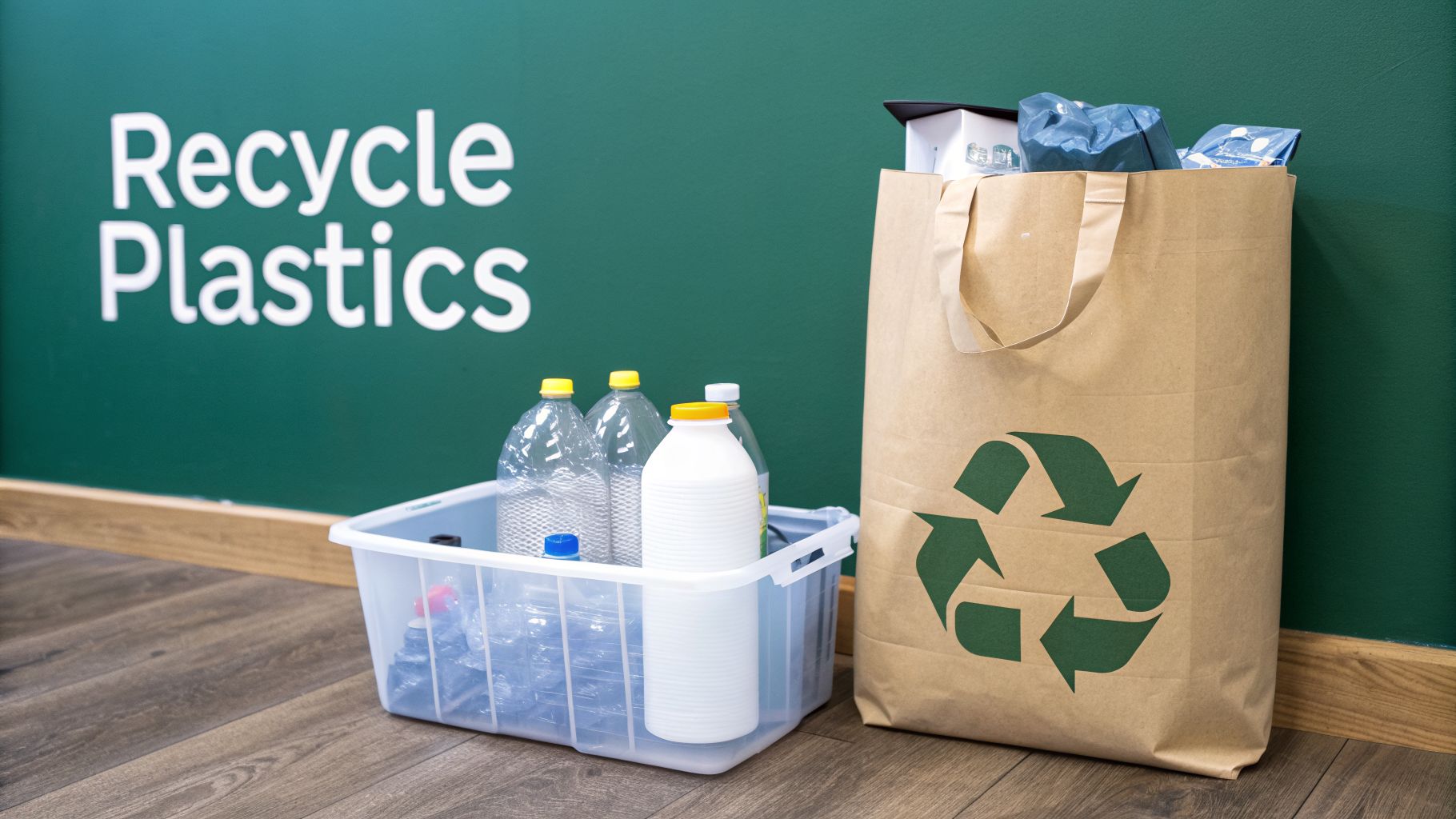
Addressing plastic waste is one of the most critical waste recycling ideas for any urban resident. With most plastics taking over 400 years to decompose, implementing effective recycling and reduction programs is essential. This approach involves a dual strategy: first, actively reducing the amount of single-use plastic you bring into your home, and second, correctly recycling the plastics you do use through municipal and private-sector programs. This directly combats landfill overflow and ocean pollution, turning a persistent environmental problem into a manageable resource stream.
How It Works
This method combines personal habits with community-wide systems. Success starts with understanding your local recycling rules, as they vary significantly by municipality. Programs like San Francisco's aggressive plastic reduction laws demonstrate how city-level policies can drive change. On a corporate level, initiatives like Starbucks' elimination of plastic straws and REI's plastic film collection program provide convenient drop-off points for consumers. Organizations such as the Plastic Free Foundation promote global movements like Plastic-Free July to encourage widespread participation.
Small-Space Solutions & Actionable Tips
Even in a small apartment, you can make a big impact on plastic waste. A strategic approach is all you need.
- Know Your Numbers: Look for the recycling symbol (a triangle of arrows) on plastic items and learn which numbers (1-7) your local program accepts.
- Create a Plastic Recycling Station: Designate a specific bin for accepted plastics. Rinse all containers to avoid contaminating the recycling stream with food residue.
- Store and Drop Off in Bulk: Collect harder-to-recycle plastics like film and bags in a separate container. When it's full, drop them off at a participating retailer like Target or through a TerraCycle collection point.
- Use Reusables Everywhere: Keep reusable shopping bags, water bottles, and coffee cups in your daily carry bag to refuse single-use plastics on the go.
Key Insight: Reducing plastic consumption is as important as recycling it. Every reusable bag or container you use prevents a piece of plastic from entering the waste stream in the first place, making it the most effective first line of defense.
By combining mindful reduction with proper recycling, you directly contribute to a cleaner environment. This two-part strategy is a powerful way to manage one of the modern world's most challenging waste materials right from your apartment.
7. Paper and Cardboard Recycling
Given the rise of online shopping and home offices, managing paper and cardboard is a central part of any effective waste recycling ideas. This process involves collecting paper waste, from delivery boxes to junk mail, and sending it to facilities where it is reprocessed into new paper products. As paper products constitute a significant portion of municipal solid waste, recycling them is a highly impactful and accessible way to conserve natural resources, save energy, and reduce landfill volume.
How It Works
This recycling stream focuses on separating clean paper and cardboard from other household waste. The key is to keep these materials dry and free from contaminants like food, grease, or plastic. Municipal curbside programs are the most common collection method, where residents place sorted paper in designated bins. Many office buildings also have dedicated paper recycling initiatives. Once collected, the materials are sorted, pulped, and reformed into products like new cardboard boxes, paper towels, and office paper, completing the circular journey.
Small-Space Solutions & Actionable Tips
Even a small apartment can become an efficient paper recycling hub with a bit of organization.
- Flatten and Stack: Immediately break down and flatten all cardboard boxes. Stack them neatly behind a door, under a bed, or in a designated closet corner.
- Create a Paper Station: Use a dedicated bag or a slim bin next to your desk or mail area to collect paper waste like envelopes, flyers, and old documents. This prevents it from mixing with other trash.
- Keep It Dry: Moisture is the enemy of paper recycling. Always store your paper and cardboard indoors and away from potential leaks or spills.
- Use Storage for Bulk Collection: If you receive many deliveries, you can use a sturdy box to collect flattened cardboard. Once full, you can take it to a recycling center. This is much more manageable than handling a messy pile.
Key Insight: The efficiency of paper recycling depends on contamination prevention. A clean and dry piece of paper is a valuable resource, while a greasy pizza box top can contaminate an entire batch, rendering it useless for recycling.
By integrating these simple habits, you can significantly cut down on your household waste. For those dealing with large amounts of documents, developing a system is crucial; you can find helpful advice on how to organize papers to make the recycling process even smoother.
8. Glass Recycling and Container Reuse
One of the most sustainable waste recycling ideas involves separating your glass containers for dedicated recycling and reuse. Glass is unique because it is infinitely recyclable without any loss in quality or purity, meaning a glass bottle can be turned into another glass bottle over and over again. This process significantly reduces the need for raw materials and conserves energy compared to making new glass from scratch. By diverting glass from the general waste stream, you prevent a perfectly reusable material from taking up space in landfills for centuries.
How It Works
This method centers on collecting glass separately from other recyclables to prevent contamination and ensure it can be effectively reprocessed. Once collected, glass is crushed into a material called "cullet," which is then melted down and reformed into new containers. Many communities offer designated drop-off centers for this purpose. Additionally, some beverage companies and breweries have initiated their own reuse programs where they collect, sterilize, and refill their bottles. In over ten states, bottle deposit return programs provide a financial incentive for returning glass bottles, further boosting recycling rates.
Small-Space Solutions & Actionable Tips
Even a small apartment kitchen can accommodate a robust glass recycling system with a bit of organization.
- Designate a Glass Bin: Use a small, durable bin or a sturdy reusable bag under your sink or in a pantry specifically for clean glass jars and bottles.
- Rinse Immediately: Get into the habit of rinsing glass containers right after you empty them. This prevents food residue from hardening and creating odors.
- Know Your Local Rules: Check if your local recycling program requires you to remove lids or labels. Most metal caps can be recycled separately with other metals.
- Upcycle for Storage: Reuse pasta sauce jars and jam containers for storing bulk pantry items like rice, nuts, and spices. They also make great organizers for office supplies or craft materials.
Key Insight: The infinite recyclability of glass makes it a champion of the circular economy. Every jar you recycle or reuse directly contributes to a system that minimizes waste, saves energy, and preserves natural resources.
By separating your glass and exploring creative reuse options, you make a significant impact. This simple habit turns what could be trash into a valuable resource, proving that powerful waste recycling ideas can start with something as common as a glass jar.
9. Metal Recycling and Scrap Collection
One of the most valuable and impactful waste recycling ideas involves the proper collection of metals. Metal is infinitely recyclable without losing its quality, making it a cornerstone of the circular economy. This process involves separating items like aluminum, steel, copper, and brass from the general waste stream and directing them to specialized facilities. This not only conserves immense amounts of energy and natural resources but also reduces greenhouse gas emissions associated with mining and processing virgin ore.
How It Works
This method focuses on separating and accumulating metal waste for processing. Most municipal recycling programs accept common household metals like aluminum and steel cans. However, a more dedicated approach involves collecting all types of metal scrap, from old appliances to wiring. Organizations like the Scrap Metal Industry Association represent a vast network of processors and buyers who purchase scrap metal, melt it down, and reform it into new products. Many local scrapyards will even pay you for your collected metal, turning your waste into a small source of income.
Small-Space Solutions & Actionable Tips
Even in a compact apartment, you can effectively manage metal recycling with a bit of organization.
- Rinse and Crush: Always rinse food and drink containers to prevent pests and odors. Crushing aluminum cans saves a significant amount of space.
- Create a Designated Bin: Use a sturdy, dedicated container for metals. A small, clearly labeled bin can fit under a sink or in a utility closet.
- Separate If Possible: If you have space, keeping aluminum (soda cans, foil) separate from steel (food cans) can make drop-off easier, as some centers sort them differently.
- Store and Consolidate: For larger items or if you plan to sell your scrap, accumulate materials in a secure container. A service like Endless Storage can be used to safely hold a larger volume of collected metals before you transport them to a recycling facility or scrapyard.
Key Insight: Metal recycling is a powerful economic and environmental tool. Unlike many other materials, metal retains its value and structural integrity through endless recycling loops, making every can and piece of scrap a permanent resource.
By setting up a simple system for metal collection, you contribute to one of the most efficient recycling streams available. This practice is a perfect example of how small, consistent efforts can support a large-scale industrial process that benefits the entire planet.
10. Circular Economy Resale and Secondhand Markets
Beyond donation, another powerful waste recycling idea involves participating in the growing ecosystem of resale and secondhand markets. This approach directly supports a circular economy by extending the life of products, ensuring that well-maintained items find new homes instead of heading to the landfill. By selling your unwanted goods, you not only reduce waste but also recoup some of your original investment, turning potential clutter into cash. This method transforms the end of a product's life with you into the beginning of its life with someone else.
How It Works
This system is built on digital platforms that connect sellers with buyers, creating a vibrant marketplace for pre-owned goods. From local transactions to global shipping, these services make resale accessible to everyone. You can successfully learn how to sell your unwanted items by listing them on platforms like Facebook Marketplace for local exchanges or eBay for a wider audience. Fashion-specific apps like Poshmark and Vinted are perfect for clothing, while platforms like Letgo simplify selling furniture and electronics. The core principle is keeping valuable items in circulation and out of the waste stream.
Small-Space Solutions & Actionable Tips
Even in a compact apartment, you can effectively manage a small-scale resale operation. Organization is your greatest asset.
- Take Clear, Honest Photos: Use natural light and photograph items from multiple angles. Be upfront about any wear or imperfections in your description.
- Price Competitively: Research similar sold items on the platform to set a fair price. Consider the item's condition, brand, and current demand.
- Designate a "For Sale" Zone: Keep items you've listed for sale in a dedicated box or a specific corner to avoid mixing them with your daily-use belongings.
- Use Temporary Storage: If you're selling several items or larger pieces, a box-based storage service can hold them securely after they are prepped and photographed, keeping your apartment clutter-free until they sell.
Key Insight: Selling on secondhand markets is a direct contribution to the circular economy. You're not just decluttering; you are actively providing a sustainable alternative to new consumption and reducing manufacturing demand.
By engaging with resale platforms, you become a key player in a system that values longevity and resourcefulness. This waste recycling idea empowers you to minimize your environmental footprint while benefiting financially from mindful consumption habits.
10-Way Comparison of Waste Recycling Ideas
Integrating Sustainable Habits into Your Compact Lifestyle
Embarking on a journey toward sustainability within the confines of a small apartment can feel like a significant challenge, but as we've explored, it's entirely achievable with the right strategies. The path forward isn't about attempting everything at once. It's about building a sustainable mindset through small, consistent actions that fit your unique space and daily routine.
This guide has provided a detailed look at ten powerful waste recycling ideas, from mastering local plastic and paper guidelines to finding new life for old textiles and electronics. Each approach offers a distinct way to reduce your environmental footprint, demonstrating that impactful change doesn't require a large home, only thoughtful choices.
Key Takeaways for Apartment Dwellers
The core message is one of empowerment and practicality. You don't need a sprawling garage or a dedicated recycling room to make a difference. The most successful efforts begin by focusing on what you can control.
- Start Small and Build Momentum: Choose one or two areas that genuinely interest you. Perhaps it's setting up a small-batch compost bin on your balcony or creating a designated bag for textile donations. Master that habit first.
- Knowledge is Your Best Tool: Understanding your local recycling programs is fundamental. Knowing precisely which plastics are accepted or where to drop off e-waste removes the guesswork and ensures your efforts aren't wasted.
- Embrace Creative Solutions for Space: A compact lifestyle demands ingenuity. Use vertical space for your recycling bins, repurpose containers for storage, and find multi-functional uses for items you already own.
Making Sustainability a Second-Nature Habit
The real value of these waste recycling ideas is unlocked when they move from being conscious tasks to subconscious habits. This transition happens over time as you integrate these practices into your life. It starts with planning your shopping trips to reduce packaging, then evolves into seeing an old glass jar not as trash but as a potential spice container or planter.
You'll begin to notice the flow of materials through your home in a new way. The cardboard box from a delivery becomes a valuable resource for your building's recycling. The old t-shirt becomes a cleaning rag or part of a craft project. This shift in perspective is the ultimate goal, turning your apartment into an efficient hub of resource management rather than a generator of waste. It’s about recognizing the inherent value in the items we often discard without a second thought.
By connecting with local donation centers, textile recycling programs, and e-waste drop-offs, you also strengthen your community ties. You become part of a larger, circular system that benefits everyone. The positive impact extends beyond your own four walls, contributing to a healthier city and planet. Remember, your small space is a powerful platform for positive change, proving that mindful consumption and responsible disposal are possible for everyone, everywhere.
Ready to reclaim your space while staying committed to your recycling and upcycling goals? Endless Storage offers a perfect solution for managing donation piles, storing seasonal items, or keeping upcycling materials out of sight until you need them. Let us help you maintain a clear, organized home so you can focus on what matters most. Learn more about how Endless Storage can support your sustainable lifestyle.