
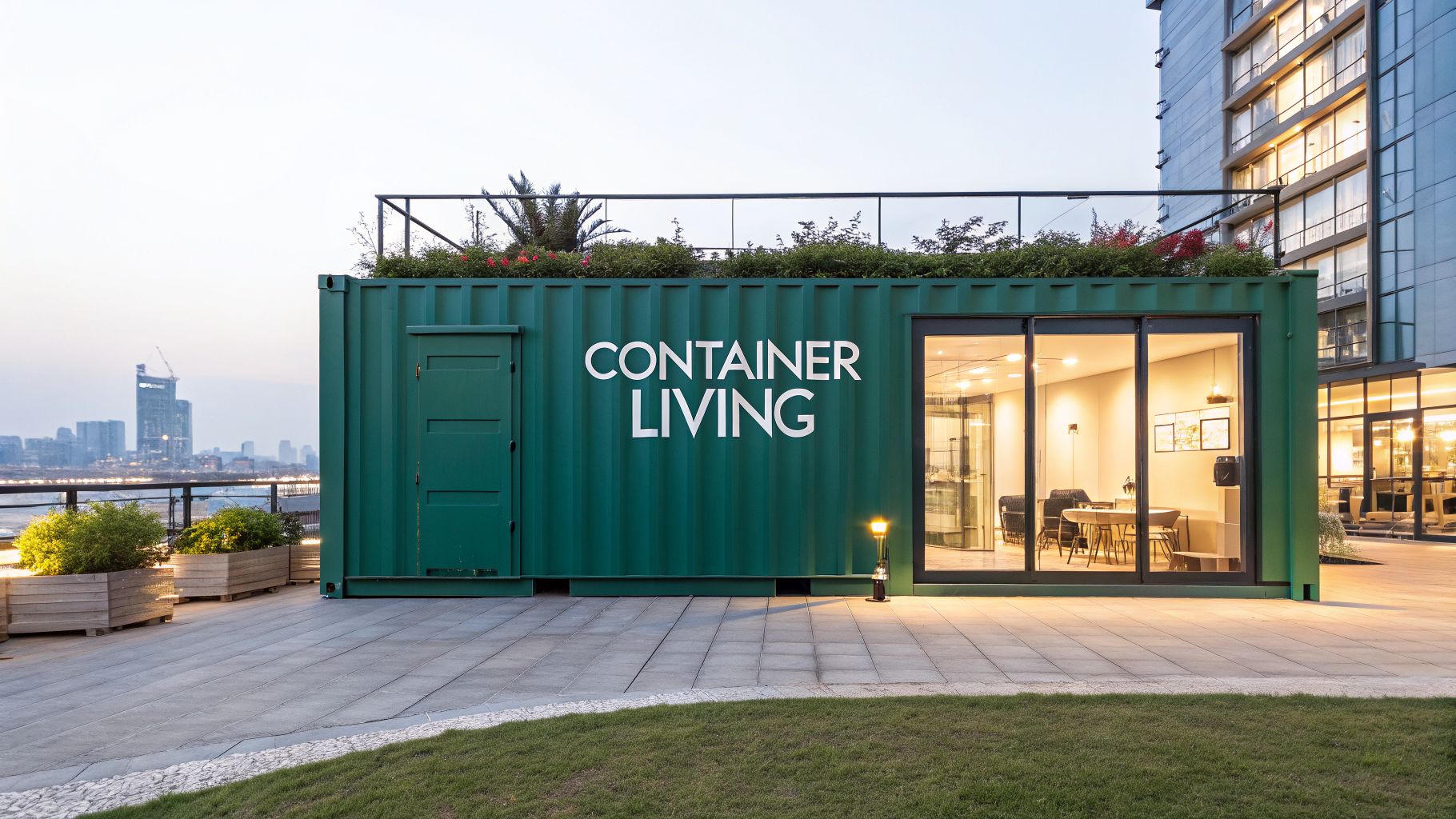
You've probably seen them on cargo ships or trains—those massive steel boxes built to withstand the toughest conditions. Now, imagine taking those same containers, cleaning them up, and transforming them into stylish, modern homes. That's the basic idea behind a shipping container apartment.
These aren't just empty metal shells. They are fully finished living spaces, complete with insulation, plumbing, electricity, and all the interior comforts you'd expect in any home.
This approach to housing is gaining traction for a few key reasons. It’s a great example of upcycling, which appeals to the sustainability-minded. It also offers a creative solution to the high cost of housing and fits perfectly with a minimalist lifestyle. To learn more about living with less, check out our guide on what is minimalist living.
To give you a clearer picture, let's quickly compare shipping container apartments to traditional ones.
Quick Comparison Shipping Container vs Traditional Apartments
| Feature | Shipping Container Apartments | Traditional Apartments |
|---|---|---|
| Cost | Generally lower, especially for structure and materials. | Higher upfront construction and material costs. |
| Construction Time | Significantly faster due to modular pre-fabrication. | Slower, with more on-site work and potential weather delays. |
| Durability | Extremely durable; made of Corten steel to resist weather. | Varies by material, but typically not as robust as steel. |
| Design | Unique industrial look, but can have spatial limitations. | Highly flexible design and layout possibilities. |
| Sustainability | High potential for upcycling used containers. | Relies on new materials, though green options are available. |
This table gives a high-level overview, but the numbers behind the trend really tell the story of its growth.
A Rapidly Growing Housing Solution
This isn't just a niche fad—it's a serious segment of the housing market. North America accounts for about 35% of the global container homes market. In the U.S. alone, the market was valued at USD 18.82 billion in 2024 and is expected to more than double to USD 36.79 billion by 2034.
Much of this boom comes from city dwellers looking for a way out of sky-high housing prices. A container home can often be built for as little as 20-30% of what a conventional home costs.
The real appeal of shipping container apartments lies in their duality. They are both a practical solution to housing affordability and a bold architectural statement, blending industrial grit with modern design.
Key Benefits of Container Living
So, what are the biggest draws for people choosing this unique housing style? We'll get into the details later, but here are the main highlights:
- Cost-Effectiveness: You're looking at much lower costs for materials and construction compared to a typical stick-built apartment.
- Speed of Construction: Since the main structure is already built, the timeline from laying the foundation to moving in is drastically shorter.
- Durability and Strength: These containers are made from Corten steel, meaning they're designed to handle harsh ocean voyages, making them incredibly storm and fire-resistant.
- Predictable Building Process: A lot of the work can be done off-site in a factory setting. This means fewer on-site surprises and weather delays.
Calculating the Real Cost of Your Container Apartment
It's easy to get excited about the low sticker price you see for shipping container apartments, but the final cost is a lot more than just buying a couple of steel boxes. To get past the vague estimates, you need to take an honest look at the entire budget, from the raw materials all the way to the final coat of paint.
Think of it this way: buying the car is just the start of a road trip. You still have to budget for gas, insurance, and all the tolls along the way. To avoid any nasty surprises that could sink your project, let's break down exactly what you can expect to pay for.
Core Construction Costs
These are the big, non-negotiable costs that form the basic structure of your new home. Getting these numbers right from the start is absolutely essential for keeping your project on track and on budget.
- Acquiring Containers: This is your first major expense. A new, 'one-trip' container will run you between $3,000 and $6,000, but it arrives in near-perfect condition. A used container can be half that price, though it might come with rust, dents, or chemical residues that need a lot of work to clean up.
- Land Acquisition: The price of land changes drastically depending on where you want to build. If you don't already own a plot, this will likely be one of your biggest single investments.
- Foundation: Your container home needs a solid base to sit on. A simple concrete pier foundation might only cost a few thousand dollars, while a full slab foundation could easily top $10,000 or more, depending on the size and your local soil conditions.
The demand for container homes is climbing fast. The market is projected to double from $18 billion in 2024 to $36 billion by 2034, which is a great sign for the long-term value of these unique properties.

This strong growth suggests that container housing is becoming more mainstream, which can boost your confidence in its future resale value.
Modification and Finishing Expenses
Once the containers are on your property, the real work of turning them into a home begins. This is where you transform those industrial shells into a comfortable living space, and the costs can vary widely depending on your taste and the materials you choose.
For instance, building a simple 640-square-foot apartment from two 40-foot containers isn't just a matter of placing them together. Every time you cut an opening for a window or door, you weaken the container's structure, which means you'll need to add steel reinforcements. This adds to both material and labor costs.
The total cost for a finished container apartment can range from $10,000 for a simple DIY build to over $175,000 for a larger, high-end custom design. This figure typically doesn't include the cost of land.
Key finishing costs to budget for include:
- Insulation: This is crucial for keeping your home comfortable and your energy bills down. Spray foam is a popular and effective choice, but it can cost $3,000 to $5,000 or more for a two-container setup.
- Interior Finishing: This covers everything from drywall and flooring to paint and kitchen cabinets. Your choices here, from budget-friendly to luxury finishes, will have a huge impact on the final price.
- Utilities: Getting hooked up to the grid is a major job. You'll need licensed professionals to install your plumbing, electrical, and HVAC systems, which can often cost $10,000 to $20,000 combined.
Uncovering Hidden Costs
Finally, there are always a few "hidden" costs that tend to catch first-time builders by surprise. These are the expenses that aren't immediately obvious but are absolutely necessary to complete your project safely and legally.
Make sure you set aside money for these items:
- Crane Rental: You’ll need a crane to lift and place the containers onto the foundation. A one-day rental can easily cost $500 to $1,000.
- Permit and Inspection Fees: Getting the right permits involves architectural plans, engineering reports, and local government fees, which can add several thousand dollars to your total.
- Specialized Labor: Welding is a critical skill for modifying containers, and you'll need to hire professionals whose rates will add to your labor bill.
- Site Preparation: Before you can even pour the foundation, the land needs to be cleared, leveled, and prepared for construction. This can be a surprisingly big expense depending on your lot's condition.
By thinking through all these costs—both the obvious and the hidden—you can build a realistic budget that turns your container apartment dream into a reality you can actually afford.
Inspiring Designs and Layouts for Container Living
This is where things get really fun. You’re taking an industrial steel box and turning it into a home, which is a pretty cool design challenge. The long, narrow shape of a shipping container might seem like a limitation, but it actually forces you to get creative and design some truly efficient and stylish spaces.
Forget any ideas you have about living in a dark, cramped box. Modern container homes are all about smart layouts, tons of light, and personal style.
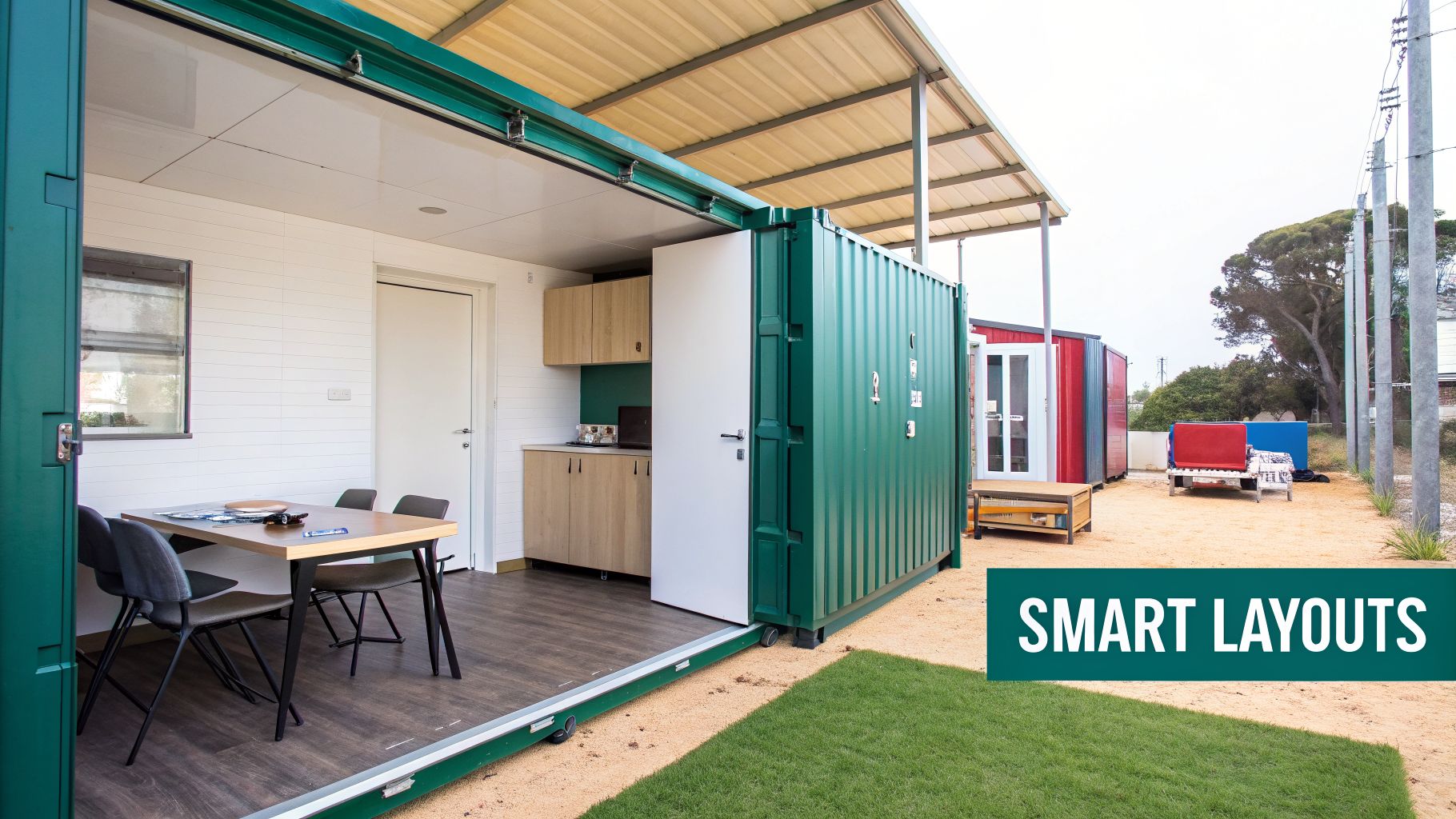
The trick to making a standard 8x40-foot container feel like a real home is all in the design. Think of it less as a box and more as a canvas with some interesting rules. The goal is to create distinct zones for living, sleeping, and cooking without making the whole place feel chopped up or claustrophobic.
Single-Container Layouts The Art of Efficiency
When you’re working with just one container, efficiency is the name of the game. These layouts are perfect for minimalist studios, backyard offices, or accessory dwelling units (ADUs). The best approach is to embrace an open-concept design that lets light flow from one end to the other.
- Linear Kitchens: One of the best moves is placing the kitchen along one of the long walls. This really opens up the walkway. Slim-profile appliances and cabinets are your best friends here.
- Murphy Beds: It’s a classic for a reason. A bed that folds up into the wall during the day gives you back a huge amount of floor space for a living room or workspace.
- Glass and Light: Using large glass doors or even floor-to-ceiling windows at both ends of the container makes the space feel so much bigger and brighter than it is.
A lot of these ideas are borrowed from smart studio apartment design. For a deeper dive into making small spaces feel huge, check out our guide on studio apartment layout ideas for more tips.
Multi-Container Configurations Expanding Your Vision
Once you start combining two or more containers, your design options really open up. This is how you can build multi-bedroom homes with separate living areas, making them great for couples or small families.
The real magic happens when you break the box. By strategically cutting and joining containers, you can create courtyards, double-height ceilings, and dynamic interior spaces that defy their modular origins.
Some common ways to arrange multiple containers include:
- Side-by-Side: Place two containers parallel to each other and remove the adjoining walls. This creates a wonderfully wide and open living area, perfect for a spacious kitchen and living room.
- L-Shape: When you join two containers at a right angle, you naturally form a private courtyard or patio space. It's a fantastic way to blend your indoor and outdoor living areas.
- Stacked: Stacking containers vertically gives you a two-story home. This is a brilliant strategy for getting more living space on a smaller piece of land, and it often leads to cool cantilevered designs with a lot of architectural pop.
Global Design Inspiration
The flexibility of container architecture is being proven all over the world. Europe, which makes up about 30% of the global market, is a hotspot for stunning designs, from raw Corten steel facades to roofs covered in living plants.
Projects like London's Boxpark show how containers can create buzzing shopping and dining districts. Meanwhile, in the Netherlands, they're being used to build stylish temporary homes that can reduce construction time by an incredible 50-70%. You can explore more about these market trends and their architectural impact by reading the full research on container homes.
Smart Storage for Compact Living
No matter how you lay it out, smart storage is absolutely essential in a shipping container apartment. Since your floor space is precious, you have to think vertically and get creative.
- Integrated Cabinetry: Custom, floor-to-ceiling cabinets can blend right into the walls, giving you a massive amount of storage that doesn't feel bulky.
- Under-Furniture Storage: Don't waste the space under your bed, sofa, or even stairs. This is prime real estate for built-in drawers or pull-out bins.
- Vertical Shelving: Open shelving is great because it draws your eye upward and gives you a spot for books and decor without the heavy look of closed cabinets.
By bringing together a thoughtful layout with clever storage and design, a simple steel box can become a beautiful, functional, and truly personal place to call home.
Navigating Building Codes and Zoning Permits
Alright, before you even think about placing a single container, you’ve got to dive into the world of local regulations. This part of the journey is often the biggest hurdle for container home dreamers, but trust me, it’s completely manageable if you know what you’re doing.
Getting the official green light comes down to understanding two different but connected things: zoning rules and building codes.
Zoning: The Neighborhood Rulebook
Zoning laws basically decide what you can build on your land. Think of them as the neighborhood's rulebook, making sure a quiet residential street doesn't suddenly have a factory pop up. For your container apartment, the big question is whether the local rules even allow for non-traditional or modular homes.
Some areas are really forward-thinking and have clear guidelines for container homes. Others? Not so much, which can cause a lot of headaches. Your first move should be to call your local planning or zoning department to see how your land is classified and what's permitted.
Building Codes: The Safety Manual
If zoning is the "what," building codes are the "how." These are the non-negotiable safety and construction standards your home has to meet to be legal and livable. We’re talking about everything from structural strength and fire safety to insulation requirements and plumbing.
Because shipping containers aren't exactly a conventional building material, you'll need to prove to the officials that your design is just as safe—or safer—than a traditional build. This is where you absolutely need to bring in the pros.
A huge misconception is that since containers are tough enough for ocean travel, they automatically pass building codes. The truth is, every time you cut a hole for a window or a door, you weaken the structure. You’ll need an engineer to sign off on plans showing how you’ll reinforce it.
Your Step-by-Step Action Plan
The best way to tackle this is with a clear, structured plan. This methodical approach shows the local authorities that you’re serious and professional. While getting permits for a container home has its own quirks, it shares some challenges with other alternative living setups. If you're curious about residency rules for other unique structures, check out our article on whether you can live in a storage unit.
Here’s how to get started on the permitting process:
- Do Your Homework: Start by searching your city or county's website. Look for terms like "zoning map," "building permits," and "accessory dwelling unit" (ADU) regulations. Many local governments have this information online.
- Talk to a Real Person: Call your local planning or building department. Your goal is to speak with a planner who can give you straight answers about the feasibility of a container project in your specific area.
- Hire Your Team Early: Before you even buy a container, get an architect or engineer on board—preferably one with experience in modular or container projects. They’ll create the professional plans you need for your permit application, including all the structural calculations, foundation designs, and code compliance details.
- Submit a Rock-Solid Application: Your application needs to be complete and look professional. Make sure it includes your engineered blueprints, a site plan showing where the home will sit on the property, and detailed info on your electrical, plumbing, and HVAC systems.
By tackling this process with preparation and a professional attitude, you can turn a potential roadblock into a clear path forward for your shipping container apartment.
Mastering Structure and Insulation For a Comfortable Home
Two things absolutely make or break a shipping container apartment: its structural integrity and its insulation. Getting these right isn't just a technicality—it’s the difference between a safe, cozy home and a metal box that’s an oven in the summer and an icebox in the winter. Let's get you up to speed so you can have smart, productive conversations with your builder.
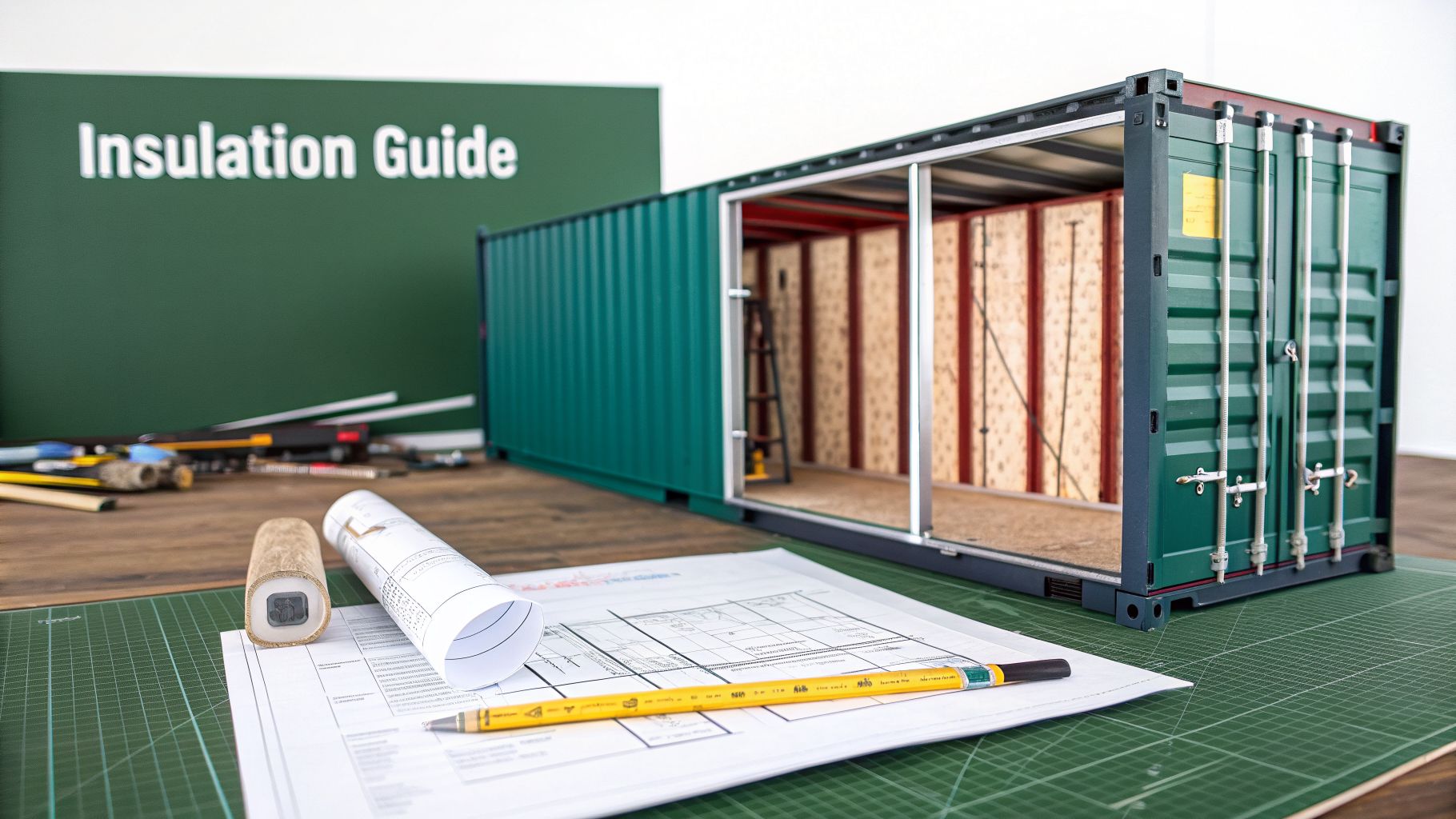
Shipping containers are incredibly strong, but that strength relies on all their parts working together—the corrugated steel walls, the floor, the roof, and the corner posts. The second you cut a big hole for a window or a sliding glass door, you compromise that system. It's like poking a hole in a soda can; it instantly loses its rigidity and is way easier to crush.
Reinforcing Your Container's Skeleton
To counter this weakness, every single opening you create has to be properly reinforced. This isn't a suggestion; it’s a structural requirement that building codes demand.
- Steel Framing: For every window and doorway, welders will typically frame the opening with heavy-duty steel tubing. This new frame takes on the structural load, transferring it around the hole and making the container strong again.
- Engineering Approval: You'll need a structural engineer to sign off on your plans. They do the math to figure out exactly what kind of reinforcement is needed based on the size and location of your cuts, ensuring the final structure is completely safe.
This process guarantees your modified container can handle its own weight, the weight of any other containers stacked on top, and any extra loads from things like heavy snow. Of course, a solid structure always starts from the ground up. You can learn more about what your container will sit on in this excellent guide to Shipping Container Foundations.
Solving The Metal Box Insulation Problem
Steel is an amazing conductor of heat. That’s great for a frying pan, but terrible for a house. In the summer, the sun will bake the walls and turn your home into an oven. In the winter, any warmth inside will escape right through the metal. Proper insulation is the only way to solve this "metal box problem" and create a comfortable, energy-efficient home.
The whole point of insulation is to create a thermal break—basically, a barrier that stops heat from passing through the steel walls. An insulation’s power is measured by its R-value. The higher the R-value, the better it is at stopping heat transfer.
In a shipping container, every inch of interior space counts. That’s why you need insulation with a high R-value per inch. Using a bulky, low-R-value material will eat up precious living area you just can’t afford to lose.
Choosing the right insulation involves weighing the pros and cons of each type.
Insulation Options For Your Container Home
Here’s a quick rundown of the most common choices to help you decide what's best for your project and budget.
| Insulation Type | Pros | Cons | Average R-Value per Inch |
|---|---|---|---|
| Spray Foam | Highest R-value; creates a perfect air and moisture barrier. | More expensive; requires professional installation. | R-6 to R-7 |
| Rigid Foam Panels | Good R-value; DIY-friendly; moisture resistant. | Can leave small air gaps if not perfectly sealed. | R-4 to R-6.5 |
| Blanket Insulation | Inexpensive; widely available. | Lower R-value; can trap moisture, leading to rust. | R-3 to R-3.7 |
For most shipping container homes, closed-cell spray foam is the gold standard. It costs more upfront, but it creates a seamless seal that completely prevents condensation—a huge enemy of steel. Plus, it gives you the best thermal performance in the slimmest possible layer.
Rigid foam panels are a solid runner-up, especially for DIYers trying to stick to a tighter budget. And if you're curious about how containers are used in different ways, our article on self-storage shipping containers offers some interesting perspectives.
By planning your structural cuts carefully and picking the right high-performance insulation, you’re setting the stage for a safe, durable, and truly comfortable container home that will last for years to come.
Smarter Living in a Compact Space
Okay, the build is done. Now for the fun part: actually living in your new container home. This is where your journey shifts from construction plans to daily life, and it's a unique experience that’s all about smart, creative living.
Embracing the container lifestyle means making every square inch count to maximize both comfort and function.
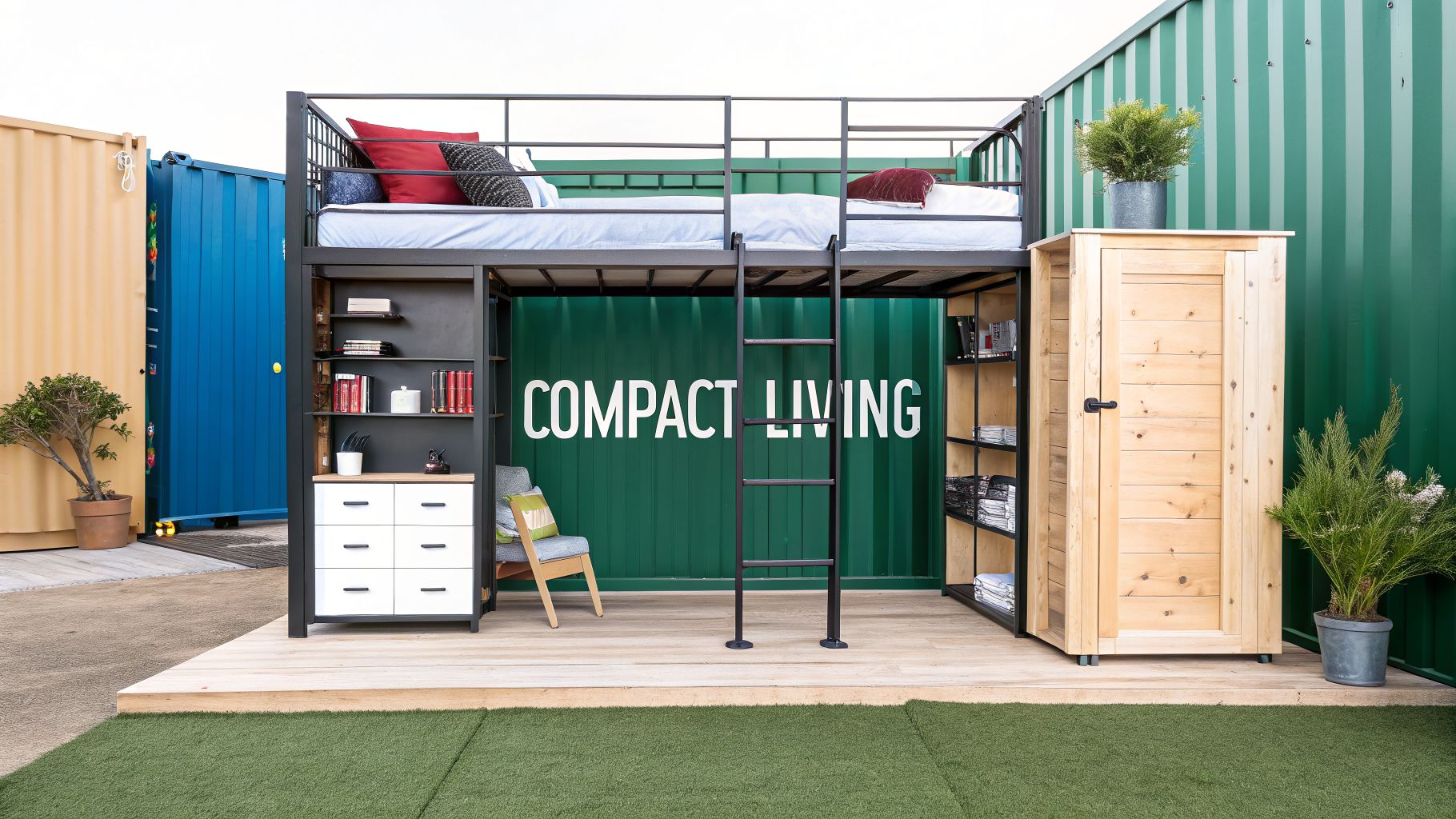
Unlike a regular apartment, your home’s steel shell needs a little specific attention. Sure, it's incredibly durable, but you have to be proactive to keep it in top shape. With just a bit of care, your container home can easily last for over 25 years.
Maintaining Your Steel Home
Staying on top of maintenance is surprisingly simple. Your biggest enemy is rust, so routine inspections are your best defense.
- Spot Check for Rust: A couple of times a year, take a walk around the outside and look for any paint chips, scratches, or bubbling. If you spot any rust, just sand it down to the bare metal, hit it with a rust-inhibiting primer, and repaint to seal out moisture.
- Maintain Weatherproof Seals: Take a close look at the seals around your windows, doors, and any other joints. A tight seal is critical for preventing moisture from creeping in, which stops rust before it can start and helps keep your energy bills low.
Maximizing Every Square Inch
Living well in a shipping container apartment comes down to mastering the art of storage. With an interior width just shy of eight feet, you’ve got to think vertically and get creative.
The real goal isn’t just to cram your stuff in; it’s to design a space that feels open, organized, and totally uncluttered. You do this by making your furniture and storage work double-duty.
For some fantastic inspiration, check out these space-saving secrets and furniture hacks from tiny homes. The same principles can completely transform your container apartment.
These ideas are a great starting point for turning a narrow box into a seriously functional home.
Smart Storage Strategies
- Go Vertical: Your walls are your best friend. Install floor-to-ceiling shelving or modular wall units to store books, display plants, and hang decor. This draws the eye upward, making the space feel taller and keeping your floors clear.
- Choose Multi-Purpose Furniture: Every big piece of furniture should do more than one thing. Think about a coffee table that lifts up into a dining table, an ottoman with hidden storage inside, or a sofa that easily converts into a bed for guests.
- Find Hidden Opportunities: Don't forget about those sneaky, unused spots. The space under your bed is gold, as are the toe-kicks under your kitchen cabinets or the area inside a staircase. These are perfect for custom drawers to tuck away shoes, extra linens, or seasonal items.
Even with the smartest strategies, some things just won't fit the minimalist vibe. We've got tons of other small apartment storage ideas that can help. This is where a modern storage solution becomes the perfect partner for container living, letting you keep seasonal gear or sentimental items safe without cluttering up your home.
Frequently Asked Questions About Container Homes
As you get closer to turning your shipping container apartment dreams into a reality, a handful of practical questions always seem to pop up. Let's tackle some of the most common ones to help you move forward with confidence.
Lifespan and Financing
How long do shipping container apartments last?
With the right care, a shipping container apartment can easily last 25 years—and often much longer. The real enemy is rust, so routine maintenance is everything. A home’s ultimate lifespan really boils down to the container's original condition, the quality of the construction (especially the welds and seals), and the climate you build in.
Can I get a mortgage for a shipping container home?
Financing can be a bit of a hurdle, but it's definitely not a dealbreaker. Traditional mortgages can be tough to secure, but many lenders are open to offering construction or personal loans for these projects. It gets much easier if your home is permanently fixed to a foundation and meets all local building codes, since it can then be appraised more like a standard house. Your best bet is to find lenders who already have experience with non-traditional homes.
The resale market for container homes is still finding its footing. A home's value is strongly tied to its location, design quality, and how well alternative housing is accepted in the local market. As these homes become more mainstream, their resale values are expected to stabilize and improve.
Safety and Resale Value
Are shipping container homes safe?
Absolutely. When built correctly, they are incredibly safe. Remember, these containers are engineered to be ridiculously strong, capable of withstanding harsh conditions at sea. However, their safety as a home depends entirely on proper engineering—especially reinforcing any cuts made for windows and doors. Using non-toxic interior materials and strictly following all local fire and structural building codes is non-negotiable.
Ready to create more space in your life, whether it's in a container home or a city apartment? Endless Storage offers by-the-box storage solutions that make decluttering simple. We ship boxes to you, store them in our secure facilities, and return them when you need them. Learn more at Endless Storage.
Frequently Asked Questions
Unveiling the Secrets to Effortless Storage
Endless Storage is available nationwide. You pick a plan, tell us where to pickup, and we'll send a UPS van to collect, whichever state you're in.
Your shipping label will be sent to your email within a few minutes, if not instantaneously. It can also be accessed through your customer profile.
Your box will be shipped to one of our climate controlled self storage facilities in our closest self storage facility. Our manager will accept your package, notify you that your box has been received, and securely stored. Only our managers will have access to Endless Storage boxes.
Email us at admin@endless-storage.com click to live chat with us, or send us a message below.
Never! We're committed to transparent pricing with no surprises. You'll lock in your rate with no hidden fees and no long-term contracts.
Fast access guaranteed! Your boxes will arrive at your doorstep within 48 hours of requesting them back. Need to check on delivery? We provide tracking information for complete peace of mind.
Totally flexible! Store month-to-month with no long-term commitment and cancel anytime.
Everything's online! Use your account dashboard to:
• Set up automatic monthly payments
• Request box returns
• Update your address
• Order additional boxes
• Track shipments
Your boxes are insured up to $100 each. Our customer service team will help you file any necessary claims and resolve issues quickly.
Don't worry – we'll email you right away if there's a payment issue. Your items stay safe, though you may have temporary service interruption or late fees until payment is resolved.
When you request our free storage kits, you'll have 30 days to send in your boxes to activate your 3 months of free storage. Think of it like starting a gym membership – your activation window begins when you receive your kits, and your full free trial begins once you send in your first box. During your free months, you'll experience our complete storage service at no cost.
Your 30-day activation window begins when you receive your storage kits. We'll send you an email confirmation when your kits are delivered, marking the start of your activation period.
If you haven't sent any boxes for storage within your 30-day activation window, your free trial will expire and we'll begin charging the regular monthly rate of $9.99 per box. This helps ensure our storage kits go to customers who are ready to use our service.
A box costs $9.99 per month to store (plus sales tax). This price includes free shipping for standard boxes under 50 lbs. and smaller than 16"x16"x16"
Log into your Endless Storage account, locate the box you would like returned, and simply click Return My Box.
Yes, each box stored with us is insured for up to $100 throughout transit as well as the duration of storage within our facilities.
Your box will be at your doorstep within 48 hours of you requesting it back.
Store 10+ boxes? We'll pick them up for free! After your purchase, we'll contact you to schedule a convenient pickup time and arrange UPS collection.
We trust UPS with all shipments, and every box includes $100 insurance coverage. You'll receive tracking information to monitor your items' journey.
Yes! Visit any of our locations by appointment. Just bring a photo ID matching your customer profile.
For everyone's safety, we can't store hazardous materials, firearms, or perishables. All items must fit within our standard boxes.
It's easy! Order your storage kit online, and we'll ship it to you within 1-2 business days. Your shipping labels will be emailed instantly and available in your account.
We're here to help! Email us at admin@endless-storage.com, use our live chat, or send us a message through your account.
To cancel your storage service with Endless Storage, please email your cancellation request to admin@endless-storage.com. Our team will process your request within 2 business days and confirm your cancellation via email.
We understand packing takes time. However, to maintain your free trial benefits, you'll need to send at least one box within the 30-day activation window. If you need more time, you can always start with one box to activate your trial and send the rest later. You can always reach out to admin@endless-storage.com if you have any issues or concerns.
When you request our free storage kits, you're starting a 30-day window to begin using our storage service.
Important: To activate your free trial, send at least one box for storage within 30 days. If no boxes are sent within this 30-day window, a one-time $50 fee applies to cover materials and shipping costs. This fee is clearly disclosed before you sign up.
Think of it like reserving a hotel room – we're setting aside space and sending specialized packing materials for your use. The fee only applies if you request materials but don't begin storage, similar to a hotel's no-show charge.