
So, what is this "minimalist living" thing everyone's talking about? At its heart, it’s about intentionally choosing to own only the things you truly need and genuinely love.
It’s less of a strict rulebook and more of a mindset shift. You're essentially freeing yourself from the constant pressure to accumulate more stuff, which in turn lets you focus on what actually matters—things like new experiences, stronger relationships, and your own well-being.
What Is Minimalist Living Really About?

Let's bust a myth right away: minimalism isn't about living in a stark, white room with nothing but a mattress on the floor. It's not about depriving yourself.
Think of it more like becoming a curator of your own life. Every single object in your home should either serve a real, practical purpose or bring you a spark of joy. Making that simple shift helps you sidestep the crushing weight of consumerism and clears out the mental fog that comes with owning too much.
This isn't just a niche trend, either. It’s catching on in a big way. By 2025, a whopping 70% of U.S. consumers said they'd rather buy only what they actually need. That signals a huge cultural move toward more intentional spending. People are tired of the waste and stress, and they're looking for a better way.
The Mindset of Intentionality
At its core, minimalism is simply a tool to help you live more intentionally. It forces you to pause and ask some really important questions before you buy something or decide to keep it:
- Does this actually add value to my life?
- Do I have a genuine, practical use for this?
- Does this thing even reflect who I am today, or is it for a past version of me?
Answering those questions honestly is the first step toward building a life that’s based on your values, not what society tells you to want. This is a game-changer, especially if you're navigating a small city apartment where every square foot is prime real estate. An intentional approach can transform a cramped, cluttered space into a serene, functional sanctuary.
If you’re ready to dive deeper into this, our complete guide on how to live minimally is a great place to start.
Minimalism is not the lack of something. It's the perfect amount of something.
And this way of thinking doesn't stop with your physical possessions. It can ripple out to influence how you manage your time, your finances, and even your relationships, encouraging you to pour your energy into the things that give you the most back.
The Tangible Benefits of a Minimalist Lifestyle
Switching to a minimalist lifestyle offers real, tangible rewards that go way beyond just having a tidy apartment. The benefits are practical and genuinely life-changing, touching everything from your bank account to your mental well-being and, most importantly, your time.
It’s about building a life with less noise and more purpose. This isn’t just about owning fewer things; it's about gaining more freedom. When you step off the treadmill of constantly wanting the next new thing, you free up resources you can pour into what actually matters to you.
Achieve Greater Financial Freedom
One of the first things people notice about minimalism is the positive impact on their finances. It’s pretty simple, really. When you start consciously deciding what you need versus what you just want, you naturally put the brakes on impulse buys and avoid the trap of consumer debt. That intentionality translates directly into more savings and a whole lot less financial stress.
In fact, minimalist living in 2025 is expected to lead to some serious savings. Followers have reported cutting their monthly expenses by up to 30%. For city dwellers in small apartments, simple moves like downsizing can slash mortgage costs by 25% and utility bills by 40%—a powerful way to fight back against rising living costs. This mindset helps you sidestep the shocking $18,000 the average U.S. household wastes each year on things they don't even use.
A minimalist mindset also encourages smarter resource use at home. For example, you can discover ways to make your home more energy-efficient and trim those utility bills even more.
Enhance Your Mental Clarity
There's a well-documented connection between the clutter in your home and the clutter in your head. An environment overflowing with stuff is constantly pulling at your attention, which can seriously ramp up stress and anxiety. But a simplified space does the exact opposite.
Clutter is not just physical stuff. It’s old ideas, toxic relationships, and bad habits. Clutter is anything that does not support your better self.
By editing your home down to only the items that serve a real purpose, you create a peaceful sanctuary. This drop in sensory overload lets your mind finally relax, making it easier to focus and just be present. You’re no longer sidetracked by piles of stuff that need to be cleaned, organized, or just moved out of the way.
Reclaim Your Valuable Time
Just think for a minute about how much time you spend managing your possessions. You shop for them, organize them, clean them, and eventually figure out how to get rid of them. A minimalist lifestyle cuts that time commitment down dramatically. With fewer things, cleaning is suddenly a quick and easy task instead of a weekend-long project.
This reclaimed time is one of the biggest payoffs. It opens up your schedule for things that actually bring you joy:
- Diving into a new hobby or finally giving an old passion the attention it deserves.
- Spending quality time with family and friends, free from the distractions of a messy home.
- Investing in yourself, whether that means reading more, learning a new skill, or just enjoying some quiet time to think.
Ultimately, minimalism gives you the space to build a life around experiences, not possessions. By clearing out what doesn't matter, you make room for what truly brings you joy. Our guide on the specific benefits of the minimalist lifestyle dives even deeper into this rewarding journey.
Why Minimalism Thrives in Small Urban Spaces
For anyone navigating the realities of city life—where every square foot comes at a premium—minimalism isn't just an aesthetic. It's a survival strategy for reclaiming your space and your sanity. When the rent is high and the apartments are tiny, a minimalist mindset gives you a powerful way to make your home feel bigger, brighter, and way more peaceful.
Instead of fighting a constant battle with clutter in a cramped studio, you start making every single object earn its keep. This shift in perspective is everything. Your home stops being just a container for stuff and becomes a functional, calming retreat from the sensory overload of the city.
Creating More with Less
The real magic of minimalism in a small apartment is rooted in its core design principles. By intentionally choosing fewer, more functional pieces, you unlock the hidden potential of your limited space.
Think about it like this: a bulky, single-use desk just clogs up a room. But a sleek, wall-mounted desk that folds away? That creates an instant feeling of openness. This is minimalism in action. It’s not about emptiness; it’s about efficiency and purpose.
Minimalism is built around the idea that there is nothing that you are lacking. It’s an inner shift that changes your outer environment.
This way of thinking is catching on, especially among younger city dwellers. Millennials, in particular, are driving home trends by embracing minimalist designs that make compact living feel downright luxurious. For the 40% of city renters in apartments under 800 square feet, things like open floor plans, neutral colors, and multifunctional furniture are the secret to turning a chaotic pad into a serene home. You can dig into more of these trends over on bhgrebeyond.com.
Key Design Principles for Small Spaces
Putting a few key minimalist concepts into practice can dramatically change how your apartment feels. These aren’t complicated rules, just simple, effective strategies for maximizing what you've got.
Multifunctional Furniture: Look for pieces that do double or even triple duty. A storage ottoman can be a coffee table, extra seating, and a place to hide blankets. An extendable dining table works for your morning coffee or for hosting a few friends.
Strategic Negative Space: In the design world, "negative space" is just the empty area around your stuff. By leaving walls, floors, and surfaces intentionally uncluttered, you give the items you do have more impact. It also creates a powerful sense of calm and order.
Calming Color Palettes: Using light, neutral colors like soft grays, whites, and beiges is a classic trick to make a room feel larger and more airy. These colors reflect light, creating an illusion of spaciousness that dark, heavy colors just soak up.
By pulling these elements together, you can create a stylish, organized home that serves your needs perfectly. For more specific ideas, check out our guide on studio apartment design tips. This approach proves you don't need more square footage to have a beautiful and functional place—you just need more intention.
Your Actionable Guide To Begin Decluttering
Getting started with a minimalist lifestyle boils down to one powerful first step: decluttering. But this isn't about frantically tossing everything you own in a single weekend. Think of it more like a calm, intentional process of deciding what truly earns its place in your home and, by extension, your life.
The goal here is to build momentum, not burn yourself out. That overwhelmed feeling most people get? It comes from trying to do way too much, way too fast. The secret is to start small—so small it feels almost ridiculously easy. Pick one drawer. One shelf. Heck, just start with your kitchen counter. That little win is what sparks the motivation to keep going.
This is about so much more than just getting rid of physical stuff; it's about taking back your space and your mental energy. Studies have even shown that cluttered homes are linked to higher levels of cortisol, the stress hormone. When you clear out the excess, you're literally creating a more peaceful environment for your mind.
Start With The Four-Box Method
To give your decluttering some structure, try the brilliantly simple Four-Box Method. Just grab four boxes and label them: Keep, Donate, Store, and Trash/Recycle. As you work through your small, chosen area, every single item gets placed into one of these four categories. No exceptions.
This simple framework takes the guesswork out of the equation. You aren't creating a dreaded "maybe" pile. You're making a clear, definitive choice for each object, which is a core muscle you'll be building on your minimalist journey.
For a more detailed walkthrough, our complete decluttering checklist is a great resource to guide you room by room so you don’t miss a thing.
Questions To Guide Your Decisions
Picking up each item and deciding its fate can be surprisingly tough. Sentimental value and that nagging "just in case" voice can really get in the way. To keep yourself on track, ask these direct questions:
- Do I use this regularly? If it’s a hard no, that's a strong sign it's ready for a new home.
- Does this item bring me genuine joy? Not a vague flicker of nostalgia, but actual happiness.
- Would I buy this again today? This question is fantastic for cutting through any attachment to past purchases.
- Am I keeping this out of guilt or obligation? Give yourself permission to let go of unwanted gifts or inherited things that just don't fit your life now.
Minimalism is built around the idea that there is nothing that you are lacking. It’s an inner shift that changes your outer environment.
This way of thinking helps you see a powerful truth: most of us only use about 20% of our possessions. The other 80%? It’s often just taking up precious physical and mental real estate. Letting it go is one of the most freeing feelings there is.
This little flowchart can help you figure out if a minimalist approach is the right move for your space and current state of mind.
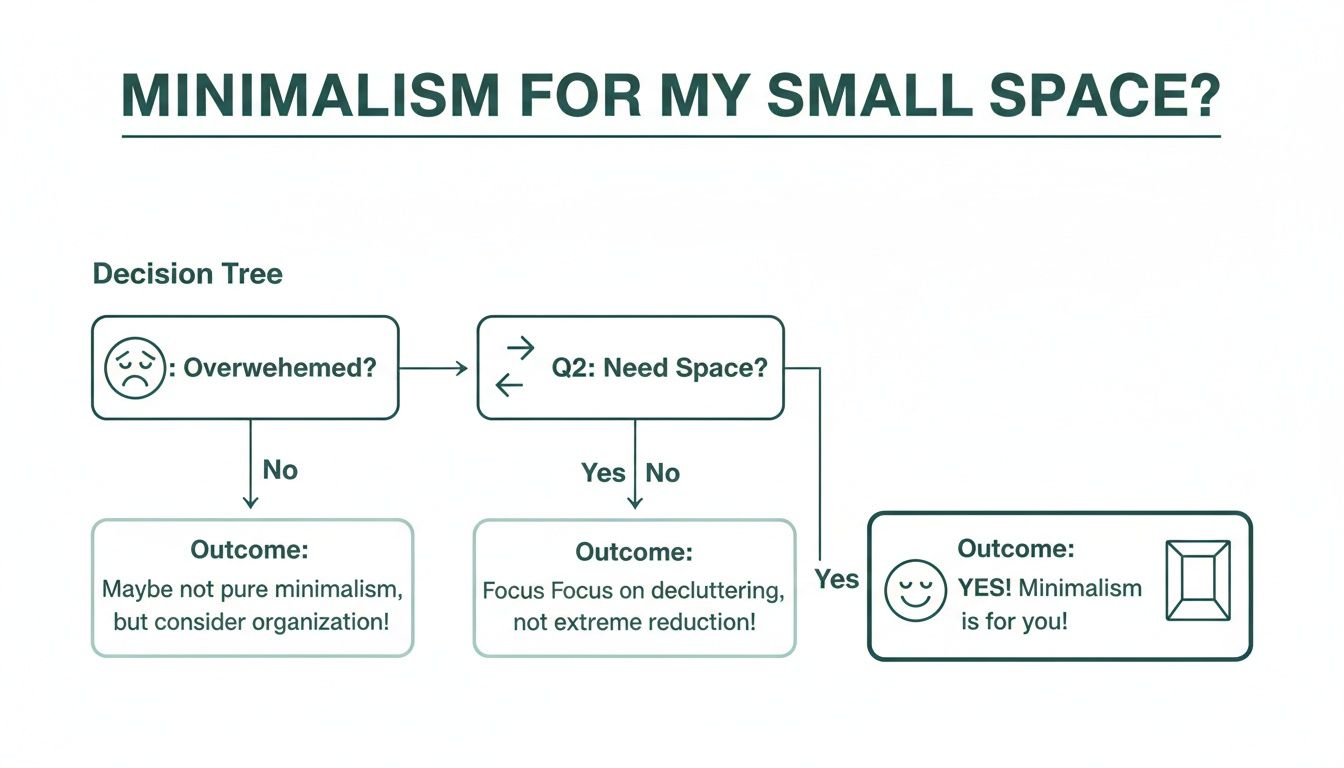
As the decision tree shows, if you're feeling overwhelmed and craving more space, minimalism is very likely a path that could bring you some serious relief.
Your First 30 Days Of Decluttering A Room-by-Room Checklist
To make this all feel less theoretical and more actionable, here’s a simple 30-day plan. The idea is to break the elephant into bite-sized pieces, focusing on one small area at a time to build unstoppable momentum.
This checklist is just a starting point. Feel free to adapt it to your own space and pace. The most important part is consistency, not intensity. A little bit every other day adds up to massive change over a month.
Tackling Digital And Sentimental Clutter
Don't forget that clutter isn't just physical. Digital clutter—like a desktop full of old files, thousands of unread emails, and apps you never use—can be just as mentally draining. Set aside some time to clean up your digital life, unsubscribing from newsletters and organizing your important files. While you're at it, learn how to reduce electronic waste by properly recycling those old gadgets.
Sentimental items are almost always the toughest category. The key is to remember you're not getting rid of the memory, just the physical object tied to it. Try taking a photo of an item before you let it go, or maybe keep just one meaningful piece from a larger collection. For those truly precious things you can't part with but don't have room for, the "Store" box is your best friend. A service like Endless Storage is perfect for keeping heirlooms or seasonal gear safe, giving you a clear home without losing your cherished memories.
Using Smart Storage to Support Your Minimalist Home
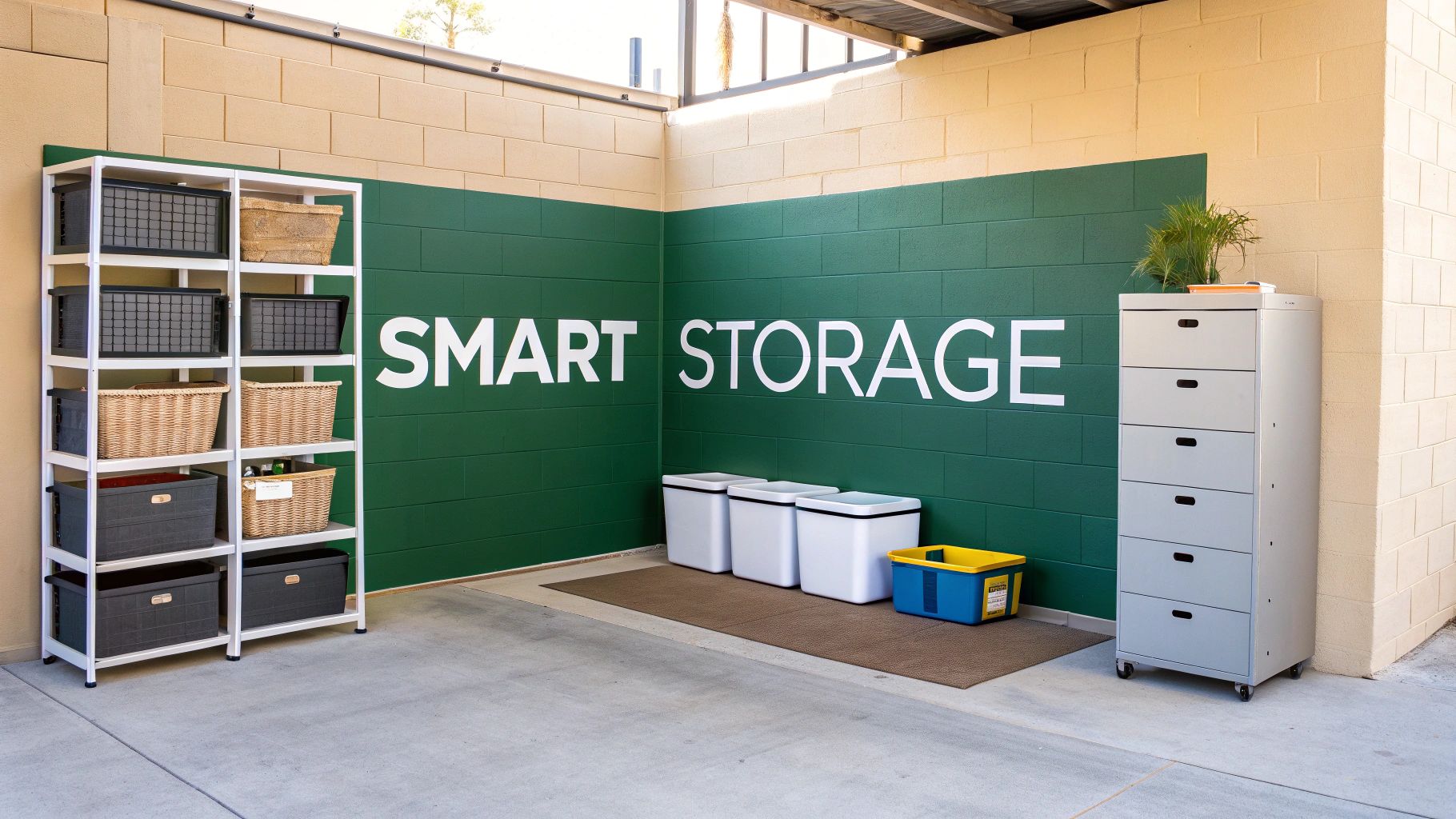
One of the biggest hurdles people face when going minimalist is figuring out what to do with sentimental items that just don't fit into daily life. We all have them—family heirlooms, seasonal sports gear, or that box of hobby supplies. They hold real value, but they can quickly turn into clutter.
This is where smart storage becomes your secret weapon, not a contradiction to the lifestyle.
Minimalism was never about getting rid of things you genuinely love. It’s about creating a living space that feels functional and serene. By moving those important but rarely used items out of your immediate environment, you really can have the best of both worlds.
Your home stays open and peaceful, while your belongings remain safe and accessible whenever you need them. It's the perfect bridge between the initial decluttering phase and the long-term upkeep of a minimalist home.
Beyond The Traditional Storage Unit
For many, the word "storage" conjures up images of a rusty metal unit in a far-flung part of town. But modern solutions have evolved into something far more flexible—something that actually aligns with a minimalist mindset. Instead of renting a huge space you’ll only ever half-fill, you can find options designed for specific, smaller needs.
Services like Endless Storage are leading this new wave. They let you store items by the box, which is perfect for a minimalist who only needs to tuck away a curated collection of things. This approach completely sidesteps the wastefulness of paying for empty space and the headache of managing a traditional unit.
“Often, you don’t realize the true weight of your clutter until it’s gone. Clearing the clutter has immediate benefits—your nervous system relaxes with each excess possession that you relinquish.”
That insight really gets to the heart of it. Off-site storage lets you experience that mental clarity of an uncluttered home without the stress of permanently parting with meaningful possessions. It’s an intentional choice that directly supports your well-being.
How Smart Storage Complements Minimalism
Integrating a flexible storage solution isn't about hiding your clutter; it’s a strategic move to reinforce your minimalist lifestyle. You're simply honoring the items you choose to keep while fiercely protecting the peace and purpose of your home.
This method works especially well for:
- Seasonal Items: Think bulky winter coats, holiday decorations, or camping gear. Storing them keeps your closets clear for what you’re actually using right now.
- Sentimental Belongings: Family photo albums, inherited furniture, or your kids' childhood artwork can be preserved without taking up precious real estate in your living room.
- Hobby Equipment: From skis to painting supplies, you can keep your passions alive without letting the gear overflow into your sanctuary.
By tapping into these modern solutions, you stay in complete control of your environment. You can explore more ideas for finding the perfect fit with these storage solutions for apartments.
Ultimately, smart storage acts as a reliable support system, making minimalist living sustainable and stress-free for the long haul.
Common Questions About Minimalist Living
As you start picturing what minimalism could look like for you, it’s only natural for some practical questions to pop up. Let's tackle the common hesitations head-on, because clearing up these points is how you move forward with confidence.
Think of these as straightforward answers to the questions we hear all the time. Each one reinforces a core idea: minimalism isn’t a rigid rulebook. It’s a flexible tool you can shape to fit your own life.
Does Minimalism Mean Getting Rid of My Collections?
This is a big one. People worry that minimalism means they have to say goodbye to cherished collections or sentimental items. Absolutely not. This lifestyle is about being intentional, not about depriving yourself.
If your collection brings you genuine joy and adds real value to your life, it has a place. The goal is simply to be mindful. Ask yourself: do you truly love the entire collection, or are there a few key pieces that hold all the meaning? Minimalism encourages you to become a curator of your own life, making sure everything you keep is something you genuinely love, not just something you’re holding onto out of habit.
Can I Be a Minimalist With a Family?
Not only is it possible, but it can also be incredibly rewarding. Of course, minimalism with a family looks a lot different than it does for a single person living alone. The focus shifts from stark emptiness to a simple mantra: "less, but better."
This might mean investing in high-quality toys that actually spark creativity instead of accumulating mountains of plastic junk.
Some practical ways to make it work include:
- Adopting a "one in, one out" rule for new toys and clothes. This is a game-changer for preventing clutter creep.
- Creating designated, organized zones for everyone's belongings to keep the chaos contained.
- Teaching your kids the value of experiences over physical things—a gift that lasts a lifetime.
Get your kids involved in donating toys they've outgrown to help them learn about generosity. The goal isn't a picture-perfect, empty house. It’s a functional, less stressful home where your family has more room to connect.
What Is the Biggest Beginner Mistake?
The most common trap people fall into is trying to do way too much, way too fast. They see dramatic before-and-after photos online and decide to declutter their entire home in a single weekend. This almost always leads to burnout, decision fatigue, and a deep sense of regret over things they tossed in a hurry.
The best approach is to start small. Choose one drawer, one shelf, or one tiny category of items, like just your coffee mugs. Celebrate that small win, and let the momentum build from there.
Minimalism is a marathon, not a sprint. It’s about making a gradual, sustainable shift in your habits and your mindset—not just a one-time, overwhelming purge.
How Does Minimalism Save Money if I'm Buying Expensive Items?
This question gets right to the heart of minimalism's financial logic. It seems counterintuitive, but it’s simple: while a high-quality, durable item might have a higher price tag upfront, it saves you a ton of money over time by breaking the cycle of constant replacement.
Instead of buying five cheap, trendy sweaters that fall apart after a few washes, you invest in one classic, well-made sweater that lasts for years. You end up buying far fewer things overall, which is what slashes your impulse spending. This focus on quality over quantity is what leads to real savings and a lot less waste.
Finding the balance between the things you cherish and the clear space you crave can be tough. For those sentimental or seasonal items you love but don't need out all the time, Endless Storage is the perfect middle ground. Keep your home feeling serene and your belongings safe by storing them by the box. Explore your options and get started.
Frequently Asked Questions
Unveiling the Secrets to Effortless Storage
Endless Storage is available nationwide. You pick a plan, tell us where to pickup, and we'll send a UPS van to collect, whichever state you're in.
Your shipping label will be sent to your email within a few minutes, if not instantaneously. It can also be accessed through your customer profile.
Your box will be shipped to one of our climate controlled self storage facilities in our closest self storage facility. Our manager will accept your package, notify you that your box has been received, and securely stored. Only our managers will have access to Endless Storage boxes.
Email us at admin@endless-storage.com click to live chat with us, or send us a message below.
Never! We're committed to transparent pricing with no surprises. You'll lock in your rate with no hidden fees and no long-term contracts.
Fast access guaranteed! Your boxes will arrive at your doorstep within 48 hours of requesting them back. Need to check on delivery? We provide tracking information for complete peace of mind.
Totally flexible! Store month-to-month with no long-term commitment and cancel anytime.
Everything's online! Use your account dashboard to:
• Set up automatic monthly payments
• Request box returns
• Update your address
• Order additional boxes
• Track shipments
Your boxes are insured up to $100 each. Our customer service team will help you file any necessary claims and resolve issues quickly.
Don't worry – we'll email you right away if there's a payment issue. Your items stay safe, though you may have temporary service interruption or late fees until payment is resolved.
When you request our free storage kits, you'll have 30 days to send in your boxes to activate your 3 months of free storage. Think of it like starting a gym membership – your activation window begins when you receive your kits, and your full free trial begins once you send in your first box. During your free months, you'll experience our complete storage service at no cost.
Your 30-day activation window begins when you receive your storage kits. We'll send you an email confirmation when your kits are delivered, marking the start of your activation period.
If you haven't sent any boxes for storage within your 30-day activation window, your free trial will expire and we'll begin charging the regular monthly rate of $9.99 per box. This helps ensure our storage kits go to customers who are ready to use our service.
A box costs $9.99 per month to store (plus sales tax). This price includes free shipping for standard boxes under 50 lbs. and smaller than 16"x16"x16"
Log into your Endless Storage account, locate the box you would like returned, and simply click Return My Box.
Yes, each box stored with us is insured for up to $100 throughout transit as well as the duration of storage within our facilities.
Your box will be at your doorstep within 48 hours of you requesting it back.
Store 10+ boxes? We'll pick them up for free! After your purchase, we'll contact you to schedule a convenient pickup time and arrange UPS collection.
We trust UPS with all shipments, and every box includes $100 insurance coverage. You'll receive tracking information to monitor your items' journey.
Yes! Visit any of our locations by appointment. Just bring a photo ID matching your customer profile.
For everyone's safety, we can't store hazardous materials, firearms, or perishables. All items must fit within our standard boxes.
It's easy! Order your storage kit online, and we'll ship it to you within 1-2 business days. Your shipping labels will be emailed instantly and available in your account.
We're here to help! Email us at admin@endless-storage.com, use our live chat, or send us a message through your account.
To cancel your storage service with Endless Storage, please email your cancellation request to admin@endless-storage.com. Our team will process your request within 2 business days and confirm your cancellation via email.
We understand packing takes time. However, to maintain your free trial benefits, you'll need to send at least one box within the 30-day activation window. If you need more time, you can always start with one box to activate your trial and send the rest later. You can always reach out to admin@endless-storage.com if you have any issues or concerns.
When you request our free storage kits, you're starting a 30-day window to begin using our storage service.
Important: To activate your free trial, send at least one box for storage within 30 days. If no boxes are sent within this 30-day window, a one-time $50 fee applies to cover materials and shipping costs. This fee is clearly disclosed before you sign up.
Think of it like reserving a hotel room – we're setting aside space and sending specialized packing materials for your use. The fee only applies if you request materials but don't begin storage, similar to a hotel's no-show charge.