
Best Way to Move: A 2026 Comparison for Apartment Movers

The best way to move usually doesn’t feel obvious when you’re standing in the middle of a small apartment, surrounded by half-used kitchen gear, winter coats, cords you forgot you owned, and a lease-end date that suddenly feels too close. Most apartment moves don’t fail because people are lazy. They get messy because the plan doesn’t match the space, the building rules, or the timing.
That’s why broad advice like “just rent a truck” or “just hire movers” often falls apart in city moves. A fifth-floor walk-up, a loading dock reservation, a narrow elevator window, or a gap between leases changes everything. For urban renters, the best way to move is rarely the most traditional option. It’s the option that reduces friction at the exact points where apartment moves usually go sideways.
Finding Calm in the Chaos of Moving
A lot of moves start with the same moment. You look around your apartment and realize the problem isn’t only transportation. It’s volume. The books under the bed, the off-season clothes in the hall closet, the extra cookware above the cabinets, the bike gear in the corner, the sentimental stuff you don’t want to sort at midnight before move-out.

In a small apartment, clutter multiplies stress because every surface becomes staging space. Your sofa becomes a packing table. The entryway becomes a pile of donation bags. The bedroom turns into a maze of boxes. If you’re already running on work deadlines and landlord emails, that chaos drains your decision-making fast.
Why moving feels harder in apartments
Apartment moves are tight moves. You’re not just packing. You’re negotiating with elevators, hallways, neighbors, parking rules, and deadlines that don’t always line up.
A calmer move starts when you stop asking for one magic answer and start choosing the right tool for each part of the job. Renters commonly choose from four practical options:
- DIY hauling
- Full-service movers
- Portable containers
- Box-by-box storage and shipping
Each solves a different problem. None solves every problem.
Practical rule: The best way to move isn’t the cheapest-looking option. It’s the option that removes the hardest bottleneck in your move.
For some renters, that bottleneck is labor. For others, it’s timing. For many city movers, it’s having too much stuff in too little space too close to move day. If that sounds familiar, it helps to tackle the mental side early too. A good starting point is this piece on decluttering for mental health, because moving stress is often half logistics and half overload.
The Four Main Ways to Move Decoded
Before comparing methods, it helps to name them clearly. People often mix up truck rental, container moves, and box storage, even though they solve different problems.
| Moving method | What it is | Best fit | Main trade-off |
|---|---|---|---|
| DIY move | You pack, carry, transport, and unload yourself | Tight budgets, short distances, strong help network | Highest physical and mental effort |
| Full-service movers | A moving company handles loading, transport, and unloading | Busy professionals, complex furniture, low tolerance for labor | Highest overall cost |
| Portable containers | A container is dropped off, you load it, then it’s moved or stored | Moves that need flexible loading time | Tough fit in dense apartment areas |
| Box-by-box shipping and storage | You send selected boxes out of the apartment before or during the move | Small apartments, phased moves, interim storage needs | Not ideal for large furniture-heavy moves |
DIY move
A true DIY move means you do nearly everything yourself. You source boxes, pack the apartment, borrow or rent equipment, get help from friends, secure transportation, load, drive, unload, and return the vehicle or gear.
This method fits people who have more time than cash and who can handle lifting, coordination, and last-minute surprises. It also works better when the move is local and the inventory is modest. In a studio or one-bedroom with lightweight furniture, DIY can be manageable. In a building with strict loading windows, it gets harder fast.
Full-service movers
Full-service movers take over the labor-heavy core of the move. You still need to prepare, label, and make decisions, but the company handles the carrying and transport. Some movers also offer packing, though many renters still prefer to pack personal items themselves.
This is usually the right fit when convenience matters more than keeping costs to the floor. It’s also useful when the move includes bulky furniture, awkward stairs, or a schedule that leaves no room for trial and error. If your back, your time, or your work calendar can’t absorb a hard move day, professional labor can be worth it.
Portable containers
Portable containers sit between DIY and full-service. A company drops off a container, you load it on your schedule, and the company transports it to your new place or stores it for later access.
The appeal is flexibility. You don’t have to finish everything in a single frantic day. But urban apartment movers often hit practical constraints. Containers need space. Buildings may restrict placement. Streets may require permits. In dense neighborhoods, this option can be clean in theory and frustrating in practice.
Box-by-box shipping
This method is different from a full move replacement. It’s usually best for part of the move, not always all of it. You pack individual boxes, ship them out of your apartment, and have them stored or returned when needed.
That’s why it’s especially useful for apartment dwellers who need to clear nonessential items before moving day. Seasonal clothes, books, decor, archived paperwork, baby gear between uses, and hobby supplies are strong candidates. If you want more background on how these options fit together, this guide to moving and storage solutions is a useful reference.
Your Decision Matrix Finding Your Moving Method Match
The cleanest way to choose the best way to move is to judge every option against the same four pressures. Cost, effort, timing, and space constraints tell you more than generic pros and cons lists ever will.
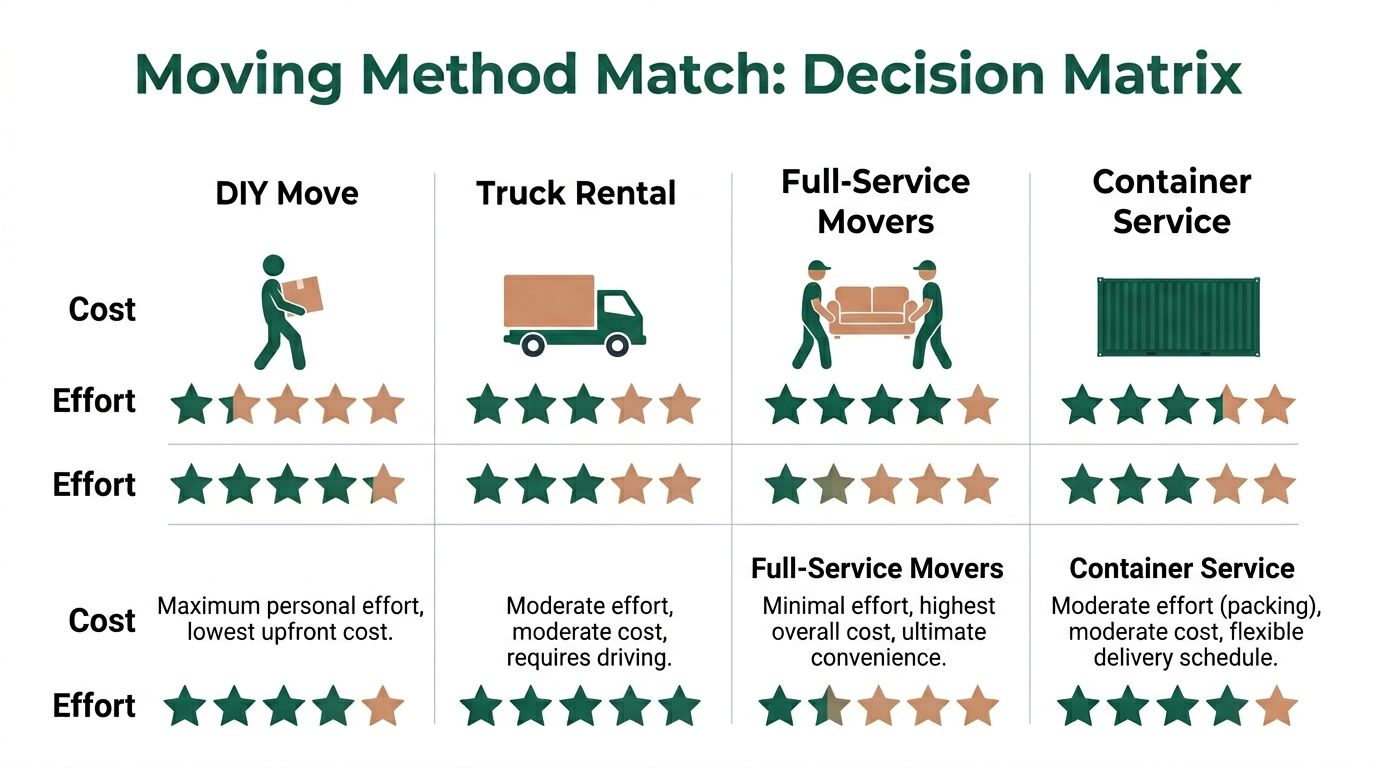
Cost means more than the quote
DIY looks cheapest at first glance because you’re not paying for labor. But apartment movers know where the hidden costs show up. Extra packing supplies. Dollies and blankets. Parking tickets. Pizza for helpers. Time off work. A second trip because the first load didn’t fit. Replacing damaged items because the packing job was rushed.
Full-service movers usually present the clearest labor-for-money trade. You pay more, but the bill buys speed and reduced strain. The catch is that some renters compare only the base estimate and forget to account for stairs, long carries, building access issues, or extra stops.
Portable containers can land in the middle, but only if your building and street setup cooperate. If permits, placement problems, or delayed loading create workarounds, the convenience advantage shrinks.
Box-by-box shipping often makes the most sense when you use it surgically. Not as a replacement for all moving methods, but as a way to remove a chunk of nonessential belongings before the main move. If that cuts truck size, mover hours, or the need for temporary self-storage, the overall move can get simpler.
Effort is physical and mental
Often, effort is measured only by the amount of lifting involved. Coordination is often the primary drain in apartment moves.
| Factor | DIY | Full-service | Containers | Box-by-box |
|---|---|---|---|---|
| Physical labor | High | Low | Moderate | Low to moderate |
| Scheduling complexity | High | Moderate | Moderate to high | Low to moderate |
| Need for friends or extra help | High | Low | Sometimes | Low |
| Building logistics pressure | High | Moderate | High | Low |
A DIY move asks you to be planner, packer, loader, driver, and problem-solver. That’s a lot of roles for one weekend. If one friend flakes or one loading zone is blocked, the whole day can slide.
Full-service movers remove the heaviest labor, but you still need to prepare the apartment so the crew can work quickly. If your boxes aren’t labeled or your management office hasn’t approved elevator use, a paid crew can still lose time waiting.
Portable containers lower the pressure of one-day loading, but they don’t lower the pressure of packing. You still have to get everything from apartment to container. In a walk-up, that’s real work.
If your move already includes job deadlines, lease paperwork, and utility transfers, don’t choose a method that also makes you project manager for six moving parts unless the savings are worth it.
Timing decides more moves than price
A move can be affordable and still be wrong if the timeline doesn’t work. A mismatched timeline often traps many urban renters. The old lease ends before the new place is ready. The elevator reservation is narrow. A family helper is only available on one day. The truck has to be returned by a certain hour.
DIY is least forgiving when plans change. A late key handoff or delayed friend arrival can unravel the whole day.
Full-service movers perform well when the move date is fixed and the building access is clear. They’re less helpful if your problem is a staggered move where some belongings need to disappear now and return later.
Portable containers are useful for flexible loading windows, but not every apartment building allows that flexibility to happen on-site.
Box-by-box methods shine when your timing problem is about phasing rather than transport. If the coats, books, records, extra linens, and holiday items can leave now, your move-day plan gets smaller. That changes everything.
For budgeting that timing realistically, I recommend using a framework like this guide on how to estimate moving costs, because the wrong timeline usually turns into the wrong budget.
Space constraints change the answer in cities
This is the most overlooked factor. In suburban moves, a driveway solves a lot. In apartment moves, access rules often matter more than distance.
Where each method struggles
- DIY truck rental struggles when curb access is poor, parking is limited, or the truck can’t stop close to the entrance.
- Full-service movers handle difficult access better, but narrow hallways, freight elevator rules, and long building carries can still slow things down.
- Portable containers often run into the hardest urban obstacle: having nowhere practical to place the container.
- Box-by-box shipping avoids many of those building-level obstacles because it doesn’t require a truck-sized footprint outside your building for loading over multiple days.
Where each method fits
A walk-up with no loading dock often favors either full-service movers or a hybrid plan. A luxury tower with strict elevator reservations can work well with professional movers because speed matters. A lower-density neighborhood with driveway access can make containers far more workable. A tiny apartment with no room to stage boxes benefits from getting items out early.
Bottom line: The best way to move for a house and the best way to move for a city apartment are often not the same decision.
A simple match guide
If you’re still stuck, use this practical filter:
- Choose DIY if you have a small load, reliable help, and tolerance for hassle.
- Choose full-service movers if your main problem is labor, heavy furniture, or limited time.
- Choose containers if you need loading flexibility and your location can physically support the drop-off.
- Choose box-by-box storage or shipping if your move is being sabotaged by clutter, tight space, or a gap between when items need to leave and when you want them back.
For many renters, that last option isn’t the whole move. It’s the move stabilizer.
The Hybrid Move A Smarter Strategy for Urban Renters
You’re packing for a one-bedroom move, the landlord wants the place photo-ready, and every taped box makes the apartment harder to live in. The problem is not just getting from one address to another. It is finding a way to clear space before move day without committing to a full storage-unit routine.
For city renters, a hybrid move often solves that better than any single method. Separate your move into two streams. Keep the items you need in the next two weeks with you, and send out the items you want to keep but do not need right away. That simple split reduces pressure on your apartment, your packing process, and move day itself.

Why staging works in small apartments
Urban apartments punish all-at-once packing. In a house, boxes can sit in a garage or spare room for weeks. In a studio, one stack of boxes can block a closet, crowd the bed, and turn normal packing into a daily obstacle course.
Staging fixes that. Getting low-use items out early gives you room to sort what is left, clean properly, and deal with building logistics without climbing over your own belongings.
It also helps with the handoff. Movers work faster in a space that is organized. Landlords and property managers see a cleaner apartment. You make fewer rushed keep-or-toss decisions at midnight.
What should leave first
The first wave is usually the stuff that matters, but not this week.
- Seasonal clothing and gear such as heavy coats, boots, holiday decor, or sports equipment
- Extra household items like spare linens, backup kitchenware, and serving pieces
- Books, files, and paper storage that add bulk fast and are rarely needed during the move window
- Sentimental items you want protected, but do not want mixed into last-minute packing
- Decor and hobby supplies that can stay out of the way until you are settled
That is where storage pickup and delivery services fit well. They give renters a middle option between keeping everything in the apartment and renting a self-storage unit that requires car access, repeated trips, and time many city movers do not have.
Why the hybrid approach works
The payoff is practical.
- Less clutter before move day means you can pack the apartment in workable zones instead of one pile.
- A smaller main move can reduce labor time if movers are charging by the hour.
- Fewer boxes in the apartment makes it easier to clean, patch walls, and handle showings or walkthroughs.
- A softer landing after the move means you unpack the items you use first, then bring back the rest when you are ready.
I recommend this approach most often for renters with tight layouts, elevator rules, or a lease gap of a few days or weeks. It is also useful for people who know they are moving into another small apartment and do not want every possession arriving at once.
A hybrid move does have trade-offs. You need to label carefully, keep a clear list of what went into storage, and avoid sending away anything you may suddenly need, like work equipment, daily cookware, or important documents. But those are manageable problems. Spending two weeks living inside a maze of boxes is usually worse.
If you need a planning reference for the apartment handoff itself, this ultimate moving out checklist is a useful companion to a staged move.
Urban renters usually do not need more hauling power. They need less compression, less clutter, and better timing. A box-by-box storage plan gives you that breathing room.
An Apartment Movers Countdown Timeline
Apartment moves reward early decisions. Not because every task is hard, but because building logistics punish delay. The elevator gets booked. The loading dock slot disappears. The super wants insurance paperwork. The street permit takes longer than you hoped.
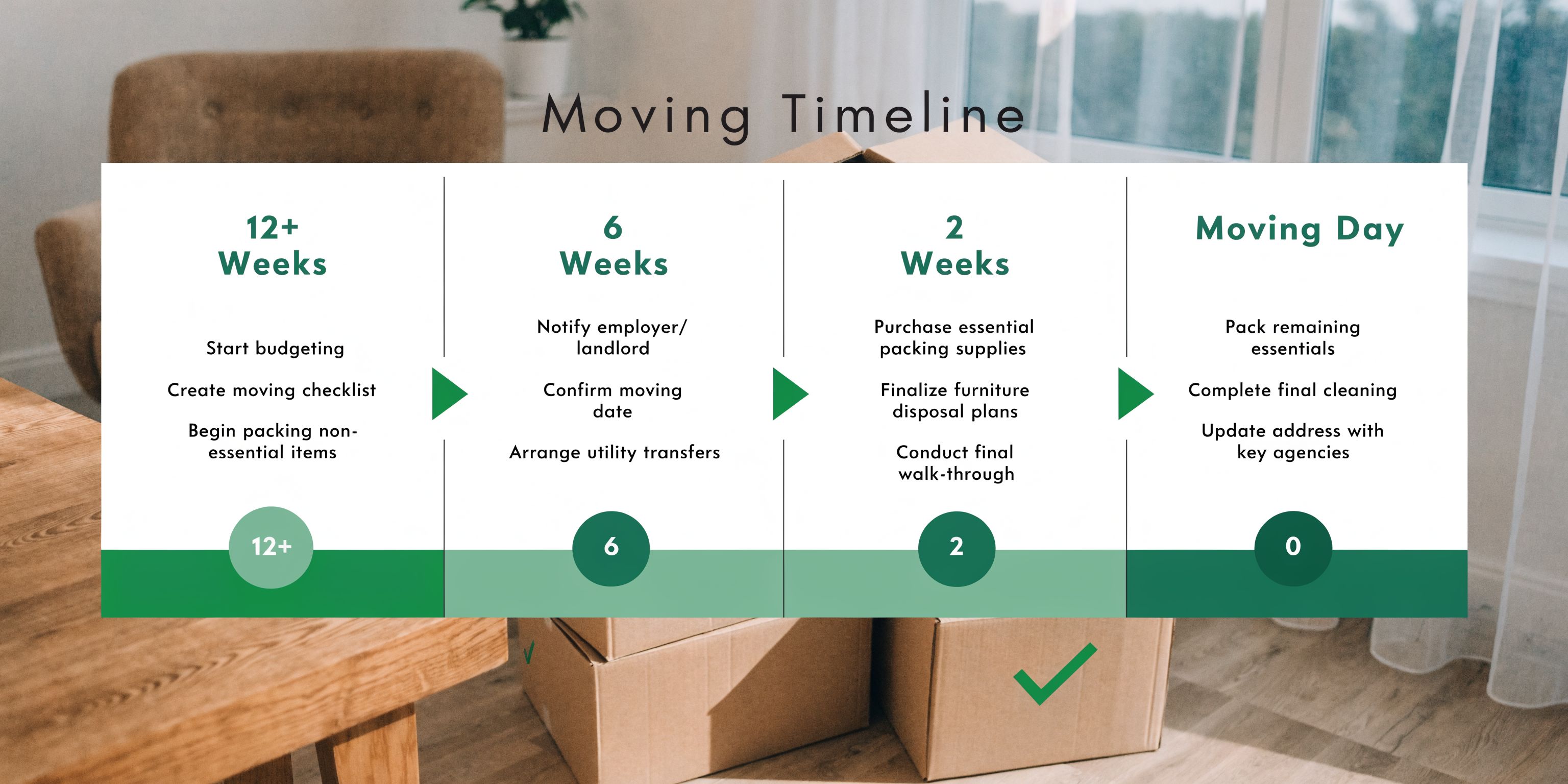
Eight weeks out
Start with the hard constraints.
- Confirm your dates with your landlord, new building, or broker.
- Ask both buildings about move rules such as elevator reservations, certificate requirements, loading hours, and weekend restrictions.
- Measure your largest items and compare them to doorways, stair turns, and elevator interiors.
- Choose your move style early so you’re not defaulting into whatever is still available later.
If your move may involve a gap between leases, plan for that now, not after you’re already packed. According to a 2026 Zillow urban report, 41% of renters delay moves due to timing mismatches between leases. This highlights the growing need for flexible, interim storage solutions that don't require long-term commitments, a gap that on-demand box storage services are uniquely positioned to fill.
Six weeks out
This is the right time to reduce apartment volume.
Create three lanes in your home:
- Going with you immediately
- Store or ship ahead
- Sell, donate, or recycle
If you’re in a compact apartment, don’t wait until the final week to start boxing up nonessentials. Early removal matters more than early packing. That’s also when it helps to review a detailed external resource like this ultimate moving out checklist, especially for utility shutoffs, cleaning coordination, and the admin tasks people forget while focusing on boxes.
Four weeks out
Lock in the services and access.
Confirm the building side
- Reserve the service elevator
- Ask about floor protection rules
- Confirm loading dock or curbside procedure
- Check insurance or vendor requirements if using movers
Build your essentials plan
Separate what must stay available until the last day:
- work equipment
- medication
- chargers
- toiletries
- basic cookware
- bedding
- pet supplies
- important documents
This step prevents the classic apartment mistake of packing for neatness instead of usability.
Two weeks out
Now the move becomes operational.
Pack room by room, but leave the apartment functional. In small spaces, that means finishing categories, not trying to visually “complete” a room. For example, pack all books and decor across the apartment before you pack daily kitchenware.
The cleanest apartment move isn’t the one with the most labeled boxes. It’s the one where every remaining item still serves a purpose until move day.
Also walk your move route. Check if the truck path, lobby door, stairwell, and curbside setup still make sense. City conditions change.
Final week
Keep the apartment livable and the paperwork visible.
- Reconfirm reservations and arrival windows
- Photograph fragile items and furniture condition
- Defrost and clean appliances if needed
- Pull together keys, fobs, IDs, and lease papers
- Set aside cleaning supplies for the final sweep
The final days should not be a mass sorting event. If you’re still making major keep-or-toss decisions then, the timeline started too late.
Move day
Work the sequence, not the emotion.
Get essentials out of the way first. Keep hallways clear. Protect the items that are staying with you immediately. Do a full final pass of closets, overhead shelves, bathroom cabinets, and under-bed storage. Apartment moves leave things behind in hidden places more often than house moves do.
Mastering Your Small Space Pack and Declutter
Packing in a small apartment is a spatial problem before it’s a supply problem. If you treat the whole apartment like one big staging zone, it becomes unusable in a day. The fix is to create controlled micro-zones.
Build one packing station, not five
Pick one surface and one supply corner. That’s it. A folding table, the dining table, or one cleared section of floor works. Keep tape, labels, markers, and box cutters there.
When supplies spread across the apartment, packing slows down and clutter expands. Vertical storage helps too. Stack completed boxes upward along one wall instead of spreading them across walkways.
Use your last move as a filter
One of the smartest ways to declutter is to stop pretending every item deserves a fresh decision. Use your own history.
Apply that same logic to belongings. Ask:
- Did I use this since the last move?
- Did I resent carrying this last time?
- Would I pay to move this again today?
Those questions cut through guilt quickly.
A ruthless but workable keep framework
Try four decisions only:
- Keep now for items you use weekly or need immediately after arrival
- Store for items worth keeping but not worth tripping over during the move
- Sell or donate for useful items that no longer fit your space or life
- Discard responsibly for broken, expired, or low-value clutter
For packing technique, this guide on how to pack efficiently for moving is a good companion. The most useful mindset is simple. Pack by function, not by room purity. Apartments blur room boundaries anyway.
Packing truth: In a studio or one-bedroom, “kitchen stuff” and “office stuff” often live in the same sightline. Label for retrieval, not for idealized floor plans.
A month before the move, adopt a one-in, one-out rule. Don’t buy organizers, decor, or replacement household items unless something leaves. Moving gets easier when the apartment stops taking on new volume.
Choosing Your Best Way to Move with Confidence
The best way to move depends on what is difficult about your move.
If labor is the problem, full-service movers make sense. If budget is the main constraint and your load is small, DIY can still work. If your location supports it and you need schedule flexibility, containers can be useful. If clutter, tight quarters, or lease gaps are the core issue, a staged or hybrid move will often feel more manageable than trying to force everything through one move-day funnel.
Reliability should be part of the final decision, not an afterthought. When choosing a moving or storage service, look for providers who can prove their reliability. Industry standards suggest that dependable services, such as a 48-hour return shipping guarantee, should be consistently met, ensuring customers receive transparent and reproducible performance, not just marketing promises. In plain terms, don’t choose based on nice copy alone. Choose based on whether the provider can consistently do what it says it will do.
One more useful cross-check is to review a practical guide on avoiding common moving mistakes. Most bad moves don’t collapse because of one dramatic failure. They unravel through small preventable misses, like poor labeling, bad timing, unrealistic packing volume, or not planning for building access.
If you’re moving out of an apartment, the winning plan is usually the one that reduces pressure early. Less stuff in the apartment. Fewer decisions on move day. Fewer surprises at the curb. That’s what confidence looks like in a move.
If your move would get easier by getting nonessential boxes out of the apartment before the main haul, take a look at Endless Storage. It’s a storage-by-the-box option built for phased moves, decluttering, and lease-gap situations where you want flexible storage without making trips to a facility.