
15 Genius Small Apartment Storage Solutions That Actually Work
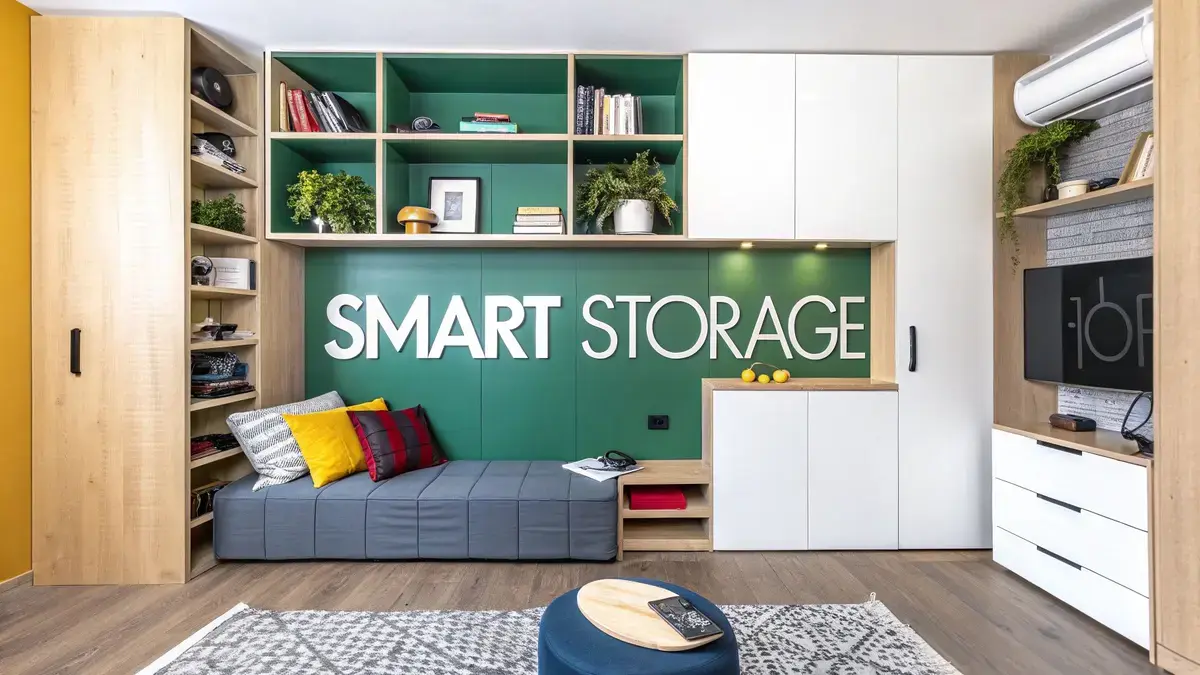
The best storage solutions for small spaces in 2026 do three things: use vertical space, claim the gaps under furniture and behind doors, and move long-term overflow out of the room. Start with the fix that matches the item you need to store. A pegboard beats a drawer for daily tools; a low bin beats a closet shelf for spare linens; off-site box storage beats buying another cabinet when the apartment is already full.
This guide covers 15 concrete small-apartment storage solutions, including IKEA KALLAX shelving, SKÅDIS pegboards, under-bed bins, over-door organizers, and a practical option for the boxes that do not belong in the apartment every day.
Small-space storage solutions at a glance
| Solution | Best for | Where it works | Main tradeoff |
|---|---|---|---|
| IKEA KALLAX cube shelving | Books, bins, and room zoning | Living room or entry | Uses floor space |
| IKEA EKET wall cabinets | Closed wall storage | Desk or entry wall | Requires secure mounting |
| IKEA SKÅDIS pegboard | Small daily-use items | Desk, kitchen, or entry | Not for heavy loads |
| IKEA RÅSKOG utility cart | Supplies that move room to room | Kitchen, bath, or desk | Needs a parking spot |
| Sterilite under-bed bins | Seasonal clothes and linens | Under the bed | Needs enough clearance |
| Low fabric under-bed bags | Soft, lightweight items | Low-clearance beds | Less rigid protection |
| Over-door pocket organizer | Toiletries and accessories | Bathroom or closet door | Can block door movement |
| Over-door pantry rack | Food and cleaning supplies | Kitchen or utility door | Weight must stay balanced |
| Back-of-door hook rail | Bags, coats, and robes | Entry or bedroom door | Visible when full |
| Shelf dividers | Sweaters, towels, and bags | Closet shelves | Does not add shelf depth |
| Storage ottoman | Blankets and living-room clutter | Living room | Only holds light household items |
| Lift-top coffee table | Remote work and small supplies | Living room | Opening clearance matters |
| Bed with drawers | Clothes and linens | Bedroom | Harder to move |
| Narrow rolling cart | Cleaning or cooking supplies | Gaps beside appliances | Needs a stable, flat path |
| Endless Storage | Long-term box overflow | Outside the apartment | Not for daily-access items |
What makes a storage solution work in a small apartment?
Put storage at the point of use. A solution fails when it makes everyday items harder to put away. Keys need an entry hook, coffee supplies need a kitchen zone, and work tools need a desk-side home.
- Use height before adding width. Walls, doors, and tall shelving usually protect walking space.
- Keep retrieval simple. Clear bins, front-facing labels, and open shelving are useful when the item is needed often.
- Match the container to the item. Heavy books need sturdy shelving; soft bedding can use a fabric bag.
- Protect rental walls. Confirm the mounting method and rental rules before making holes.
- Stop storing long-term overflow at home. A packed apartment does not become organized just because the items are in nicer bins.
1. IKEA KALLAX cube shelving: best for flexible room storage
An IKEA KALLAX unit gives books, baskets, media, and closed bins a clear home. Use open cubes for items reached daily and matching bins for visual clutter. In a studio, a KALLAX can also create a soft division between a sleeping area and living area.
- Place the heaviest books in lower cubes.
- Give each bin one category, such as cables, stationery, or winter accessories.
- Leave at least one cube partly open so the unit does not become a wall of hidden clutter.
Best for: renters who need a freestanding shelf that can change jobs after the next move.
2. IKEA EKET wall cabinets: best for closed wall storage
EKET cabinets turn an empty wall into a place for small household items without taking up a floor corner. Closed fronts work well near an entry, desk, or dining table where visual calm matters as much as extra capacity.
Mount only into a suitable surface with the correct hardware, and follow the product and building guidance. Keep the heaviest items low or choose a freestanding solution instead.
Best for: small apartments with a clear wall and a need to hide paper, cables, or occasional-use supplies.
3. IKEA SKÅDIS pegboard: best for items used every day
An IKEA SKÅDIS pegboard is a direct fix for tiny items that otherwise spread across a desk or counter. Add hooks, cups, or small shelves for scissors, headphones, mail, utensils, or craft tools. It keeps each item visible, which makes the system easier to maintain.
Use a pegboard for light, frequent-use gear rather than heavy cookware or large bags. The wall and mounting method decide what the board can safely hold.
Best for: work corners, small kitchens, and entries where small items need a fixed landing place.
4. IKEA RÅSKOG utility cart: best for storage that moves
The three-tier IKEA RÅSKOG utility cart works when one category travels around the apartment. It can hold coffee supplies in the kitchen, toiletries in a bathroom, art materials near a desk, or cleaning supplies for a quick reset.
Give the cart one job. A cart loaded with unrelated items becomes a rolling junk drawer.
Best for: supplies that need to move between rooms but should not live on the counter.
5. Sterilite under-bed bins: best for hard-sided seasonal storage
Sterilite under-bed bins are a practical choice for clean off-season clothing, spare sheets, shoes, and wrapping materials. The clear base helps identify contents, while a lid reduces dust. Measure the bed clearance before buying anything.
Label the short end facing outward. A label such as “guest sheets and towels” is useful; “bedroom stuff” is not.
Best for: apartments with a bed frame that leaves usable space underneath.
6. Low fabric under-bed bags: best for low-clearance beds
Fabric under-bed bags fit where rigid bins do not. Use them for lightweight, clean items such as duvets, extra pillows, or folded seasonal clothes. They are not the right choice for fragile items, paperwork, or anything that needs rigid sides.
Keep one category per bag and avoid overfilling it. A bag that drags or bulges is hard to retrieve and easy to forget.
Best for: low bed frames and soft items that do not need hard-shell protection.
7. Over-door pocket organizer: best for bathroom and closet overflow
An over-door pocket organizer creates vertical pockets without using a drawer or shelf. Use it for hair tools, skin-care backups, cleaning cloths, scarves, or small accessories. It is most useful when every pocket has a category.
Check that the door closes without rubbing the frame. If it catches, choose a thinner hanger or move to a wall-mounted option.
Best for: lightweight items that disappear in deep bathroom or closet cabinets.
8. Over-door pantry rack: best for narrow kitchen storage
An over-door pantry rack can hold snacks, spices, foil, cleaning supplies, or reusable bottles when cabinets are full. Keep heavier containers low and do not overload a single side of the rack.
Use a door that opens fully without hitting another cabinet. This is a storage fix, not a reason to block a frequently used path.
Best for: kitchens with shallow cupboards and an unused utility or pantry door.
9. Back-of-door hook rail: best for entry clutter
A hook rail on the back of a door gives bags, jackets, umbrellas, and robes a home without adding an entry table. Assign a hook per household member or activity. That makes the door a reset zone instead of a pile-up zone.
Do not hang heavy luggage or overfill every hook. Doors still need to open smoothly and safely.
Best for: apartments where coats and bags usually land on chairs.
10. Shelf dividers: best for keeping closet stacks upright
Shelf dividers turn one closet shelf into separate bays for sweaters, towels, handbags, or linens. They do not create more depth, but they stop a neat stack from collapsing into everything beside it.
Use one divider between categories, then keep the stack low enough to remove one item without pulling down the rest.
Best for: wide closet shelves that currently turn into mixed piles.
11. Storage ottoman: best for living-room soft goods
A storage ottoman earns its footprint twice: it can serve as a footrest or extra seat while holding blankets, board games, remotes, or kids’ supplies. Pick a size that leaves a clear walking path around the seating area.
Reserve it for a small number of categories. It is not where paperwork, cables, and random objects should disappear.
Best for: living rooms that need hidden storage without another cabinet.
12. Lift-top coffee table: best for a living room that doubles as a work zone
A lift-top coffee table can hold a laptop, chargers, notebooks, and small games while also giving a higher surface for occasional work or meals. Check its open position before buying; the top needs room to lift without hitting the sofa or knees.
Use the internal compartment for current projects only. Archive paperwork elsewhere so the table still opens easily.
Best for: studio apartments where the living room also serves as a desk and dining space.
13. Bed with drawers: best for a permanent bedroom storage upgrade
A bed frame with built-in drawers uses the footprint already reserved for sleeping. It is useful for folded clothes, spare linens, or extra bedding when a dresser would make the bedroom too tight.
Measure the drawer path, not just the bed size. The drawers need clear space to open, so this is a poor fit for a bed placed close to another piece of furniture.
Best for: a bedroom layout with clear side access and a long-term furniture plan.
14. Narrow rolling cart: best for awkward gaps
A narrow rolling cart can turn the gap beside a refrigerator, washer, desk, or bathroom vanity into usable storage. Keep the top shelf for items used most often and the bottom shelf for backups.
Measure the gap at its narrowest point, including baseboards and appliance handles. A cart that only barely fits becomes difficult to use.
Best for: slim unused spaces that cannot accept a fixed cabinet.
15. Endless Storage: best for the boxes that do not need to stay home
Not every item needs a closer organizer. Seasonal clothes, holiday decorations, documents, hobby supplies, and keepsakes can take over a small apartment even after every shelf and door is working hard.
Endless Storage collects packed boxes from the door, stores them in a climate-controlled facility, and returns a requested box within 48 hours. Storage starts at $2.99 per box per month, with $100 insurance per box. It is built for box-sized overflow, not furniture or daily-access items.
Best for: belongings worth keeping but not worth giving permanent apartment space.
Which small-space storage solution should you choose?
Choose KALLAX or EKET when the problem is a missing shelf or cabinet. Choose SKÅDIS, an over-door organizer, or a hook rail when small daily-use items have no landing place. Choose under-bed storage when the bed clearance is real and the items are used only occasionally.
Choose Endless Storage when the apartment is organized but still full of boxes that are not needed this month. Storage that comes to the door keeps the apartment for the items used now, instead of turning every room into a long-term holding area.
Frequently asked questions
What are the best storage solutions for small spaces?
The best storage solutions for small spaces use walls, doors, under-bed clearance, and furniture that already earns its floor space. Start with the storage point closest to where an item is used, then move seasonal overflow out of the apartment.
How can I add storage to a small apartment without remodeling?
Add freestanding or removable solutions first: cube shelving, pegboards, rolling carts, under-bed bins, shelf dividers, and over-door organizers. Check rental rules before drilling into walls or doors.
What should I store under a bed?
Store clean, dry items used occasionally, such as off-season clothing, spare linens, shoes, or wrapping supplies. Use shallow containers with labels facing outward so the right bin can be found without opening every one.
Are over-door organizers worth it in a small apartment?
Over-door organizers are useful when a door has clear swing space and the items are light enough for the hardware. Pocket organizers work for toiletries and accessories, while rack-style organizers suit pantry items or shoes.
When should I use off-site storage instead of another organizer?
Use off-site storage for box-sized belongings that are worth keeping but not needed often, such as seasonal clothes, holiday decorations, documents, or hobby supplies. It is a better fit than adding another piece of furniture when the apartment is already full.