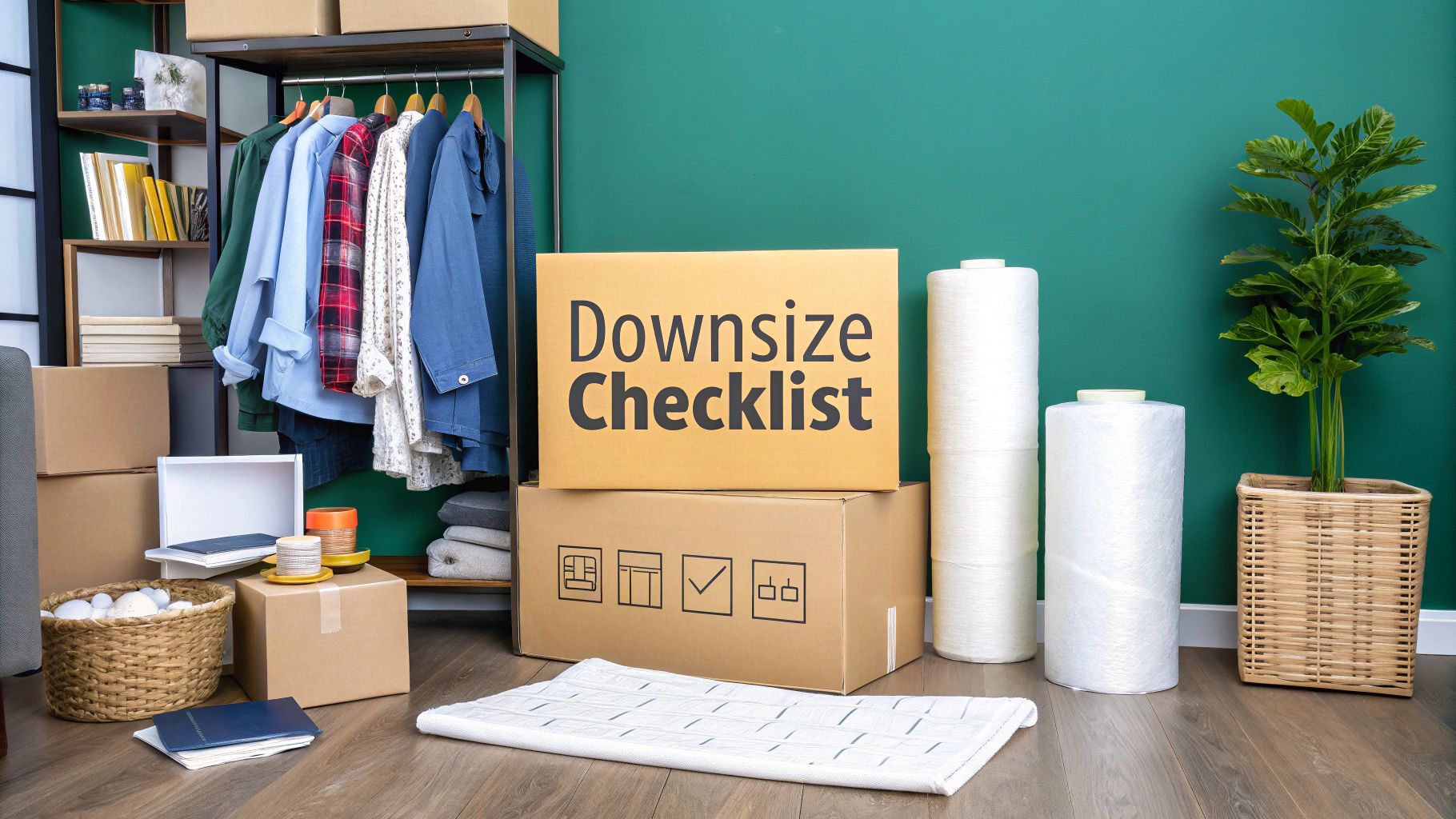
Downsizing is more than just moving; it's a strategic process of curating a life with less clutter and more freedom. Whether you're moving to a smaller urban apartment, embracing a minimalist lifestyle, or simply transitioning to a cozier home, the task can feel overwhelming without a clear plan. The process involves a series of critical decisions about what to keep, donate, sell, or store, and executing those choices efficiently is key to a smooth transition. A well-structured downsizing home checklist is not just a to-do list; it's a strategic roadmap that prevents last-minute panic and ensures you only bring what truly adds value to your new, more compact life.
This comprehensive guide transforms that potential chaos into a manageable, step-by-step plan. We'll provide a timeline-driven, room-by-room strategy, complete with decision-making frameworks to help you categorize every item you own. You'll get actionable advice on the best platforms for selling unwanted goods, understanding donation logistics, and choosing the right storage solutions, especially for city residents with limited space. Forget generic tips; this is a practical playbook for executing your move with precision.
By following these 8 essential steps, you'll methodically work through your inventory, prepare your physical space, and gain the mental clarity needed to embrace your new environment. Our goal is to equip you with a system that makes the entire process less about stress and more about a positive, intentional shift. This checklist will help you confidently and efficiently transition to a streamlined lifestyle, saving you time, money, and emotional energy along the way.
1. Assess Your Current Space and Inventory
Before a single box is packed, the foundational first step in any successful downsizing home checklist is to conduct a thorough audit of your current living space. This process involves creating a comprehensive inventory of everything you own, from large furniture pieces to the contents of your junk drawer. Think of it as creating a data-driven map of your possessions, which will guide every subsequent decision you make.

This initial assessment isn't just about counting items; it’s about understanding the scale of your project. By documenting everything, you create a clear baseline that prevents you from underestimating the task ahead. It’s the difference between guessing you have "a lot of books" and knowing you have 250 that need a new home. This clarity is crucial for setting realistic timelines and avoiding last-minute panic.
Why This Step Is Essential
A detailed inventory forces you to confront the reality of your belongings. For instance, a couple moving from a 4,000-square-foot house to a 2,000-square-foot condo might discover they own four sets of holiday dishes and eight different sets of bath towels. This knowledge immediately highlights redundant items that are easy targets for donating or selling. Without this audit, duplicates often get packed and moved, only to become clutter in the new, smaller space.
Actionable Tips for Your Home Audit
To make this process manageable, approach it systematically. Follow these steps for an effective inventory:
- Go Room by Room: Tackle one space at a time to avoid feeling overwhelmed. Start with a smaller area like a guest bathroom before moving to a high-clutter zone like the kitchen or garage.
- Use Digital Tools: Apps like Sortly or Evernote are perfect for creating digital lists. You can easily add photos, notes, and dimensions, keeping your inventory organized and accessible from your phone.
- Measure Everything: Don’t just list "brown leather sofa." Measure its length, width, and height. This data is non-negotiable when you compare it against the floor plan of your new, smaller home.
- Group and Count: Instead of listing every single fork, group them: "Silverware, service for 12." This saves time while still giving you an accurate picture.
- Document Valuables: Take clear photos of antiques, artwork, and electronics. This serves as a record for insurance purposes and can be helpful if you decide to sell them online.
By investing time in this crucial first step, you are setting the stage for a more organized, less stressful move. For a structured approach, you can explore a comprehensive home inventory checklist to guide your process. See how to create your own with this home inventory checklist template from Endless Storage.
2. Define Your Target Space Parameters
Once you have a complete inventory of your current possessions, the next critical step is to intimately understand the space you're moving into. This involves moving beyond a simple square footage number and establishing specific measurements for your new home. By defining your target space parameters, you gather concrete data that will dictate every keep, sell, or donate decision, transforming the process from guesswork into a precise, logical exercise.
This step acts as the filter through which you'll pass your entire inventory. It prevents the common and costly mistake of moving furniture that simply won’t fit, saving you time, money, and frustration. Knowing the exact dimensions of each room, closet, and entryway allows you to pre-plan your layout and make informed decisions long before moving day arrives.
Why This Step Is Essential
Defining your space parameters with data is a non-negotiable part of any downsizing home checklist. For example, a couple moving to a modern condo used a floor plan app and discovered their oversized, traditional bedroom set would not fit through the narrower hallway, let alone leave adequate walking space around the bed. This early discovery gave them months to sell the old set and purchase a new, appropriately scaled one that complemented their new home perfectly. Without this step, they would have faced a logistical nightmare on moving day.
Actionable Tips for Measuring Your New Space
To create a functional and accurate blueprint of your new home, be methodical. Use these tips to gather the necessary data:
- Create a Digital Floor Plan: Use apps like RoomSketcher or Floorplanner to create a to-scale model of your new space. You can drag and drop your inventoried furniture into the digital rooms to test layouts and visualize flow.
- Measure More Than Just Rooms: Don’t forget to measure doorways, hallways, stairwells, and elevators. A sofa that fits in the living room is useless if you can't get it inside the building.
- Document with Photos and Videos: Take comprehensive photos and a slow walkthrough video of the empty space. This helps you recall details like outlet placement, window locations, and architectural quirks when you are not physically there.
- Note Vertical Space: Measure ceiling heights and the dimensions of built-in storage like closets and pantries. This will help you plan for vertical storage solutions, a key strategy for maximizing smaller living areas.
- Check Natural Light: Visit the space at different times of the day. Understanding how natural light moves through the rooms will influence your furniture placement and even your color palette.
3. Categorize Possessions Using Decision Framework
Once you know what you have, the next critical step in your downsizing home checklist is to decide what to do with it all. This requires a systematic approach to avoid decision fatigue and emotional paralysis. Implementing a proven decision-making framework helps you evaluate each item objectively, based on its utility, sentimental value, and relevance to your future lifestyle.

This structured process removes the guesswork and emotional weight from difficult choices. Instead of asking a vague question like, "Should I keep this?" you ask specific, framework-guided questions like, "Does this spark joy?" (KonMari Method) or "Have I used this in the last year?". This transforms an overwhelming task into a manageable series of simple, logical decisions.
Why This Step Is Essential
A decision framework is the engine of the downsizing process. Without one, you're likely to hold onto items "just in case" or because of guilt, filling your new, smaller home with things that don't serve you. For example, a family using the Four-Box Method (keep, donate, sell, discard) for their kitchen might quickly identify three blenders when they only need one, reducing their household goods significantly. This system provides the clarity needed to part with duplicates and items that no longer fit your life, ensuring you only move what you truly need and love.
Actionable Tips for Categorizing
To effectively sort through your belongings, adopt a clear system and stick to it. These strategies will accelerate the process and build momentum:
- Choose Your Framework: Select a method that resonates with you. Popular options include the Four-Box Method, the KonMari Method (focusing on what "sparks joy"), or the 80/20 rule (we use 20% of our things 80% of the time).
- Start with Easy Categories: Begin with low-emotion items like linens, cleaning supplies, or office stationery. Save photographs, heirlooms, and personal collections for last, when your decision-making skills are well-practiced.
- Use Visual Cues: Apply colored stickers or painter's tape to items as you categorize them. For example: green for keep, blue for donate, yellow for sell, and red for discard. This provides a clear visual progress report.
- Work in Focused Bursts: Set a timer for 30-minute sessions. This creates a sense of urgency and prevents you from getting bogged down overthinking a single item.
- Enlist an Objective Helper: Ask a friend, family member, or professional organizer to help. Their impartial perspective can be invaluable when you're struggling with sentimental attachments.
By applying a structured framework, you create a clear path forward, making the sorting process less about loss and more about intentionally designing your new life. For more in-depth strategies, explore this comprehensive decluttering guide from Endless Storage.
4. Research and Utilize Disposition Options
Once you've decided what to keep, the next critical step in your downsizing home checklist is to efficiently offload the items you're leaving behind. This means researching and leveraging the best channels for selling, donating, recycling, or disposing of your belongings. A strategic approach ensures you maximize value, minimize waste, and clear out your space effectively.

Simply hauling everything to a donation center is a missed opportunity. High-quality furniture, designer clothing, and collectibles can generate significant cash to offset moving expenses. Conversely, knowing where to properly recycle electronics or dispose of old paint prevents last-minute headaches. A smart disposition plan is as important as a good packing strategy.
Why This Step Is Essential
Matching each item to its optimal disposition channel is key to a successful downsize. For instance, a downsizer who strategically used Facebook Marketplace to sell antique furniture and light fixtures earned an extra $3,200 before their move. Another family received a donation receipt for over $8,000 worth of household goods, which provided a valuable tax deduction to offset moving costs. For those looking to declutter their wardrobe, investigating the best places to sell designer clothes can provide valuable options for making space and some extra cash. These outcomes are only possible with thoughtful planning.
Actionable Tips for Disposing of Your Items
To make this process profitable and efficient, match your items to the right platforms:
- Sell High-Value Items Online: Use platforms like Facebook Marketplace or OfferUp for large furniture, as they cater to local buyers who can handle pickup. For designer clothing or accessories, specialized consignment shops or apps like Poshmark and TheRealReal are ideal.
- Price Competitively: Research what similar items have sold for on eBay or Mercari to set a realistic price. Items priced 10-15% below comparable listings often sell faster.
- Create Appealing Listings: Take clear, well-lit photos from multiple angles against a neutral background. Write detailed, honest descriptions, including dimensions and any imperfections.
- Bundle to Increase Value: Group related items, like a set of kitchenware or a collection of power tools, to create a more attractive offer for buyers.
- Track Donations Carefully: When donating to charities like Goodwill or The Salvation Army, get a receipt. Keep a detailed list with photos of donated items and their estimated value for tax purposes.
By dedicating time to this phase, you can turn your unwanted clutter into cash and charitable contributions. For more tips on getting the most value, you can learn more about how to sell unwanted items from Endless Storage.
5. Digitize and Archive Important Documents and Memories
One of the biggest hurdles in any downsizing home checklist is dealing with the sheer volume of paper, photos, and sentimental items that consume valuable space. The solution isn't to discard these memories but to transform them. Digitizing your documents and mementos allows you to preserve everything you cherish without sacrificing precious square footage in your new, smaller home.
This process involves scanning physical items like photos, letters, and important paperwork into a digital format. Instead of keeping fifteen heavy photo albums, you can store those same images on a single, compact external hard drive. It's a modern approach to archiving that frees you from the physical burden of the past while ensuring it remains accessible for generations to come.
Why This Step Is Essential
Emotional attachment often leads to keeping boxes of items that are rarely, if ever, looked at. For example, a retiree might have 40 years of family photos stored in bulky boxes, taking up an entire closet. By digitizing them, they can reduce those 15 boxes to one small device and easily share decades of memories with relatives via a simple link. Similarly, a grandmother can scan heirloom documents and create a digital family tree to share with over 30 relatives, preserving history without physical clutter.
Actionable Tips for Your Digitization Project
A systematic approach makes this task feel less daunting. Follow these steps to create an organized digital archive:
- Invest in a Quality Scanner: For high volumes of photos and documents, a dedicated scanner like a Fujitsu ScanSnap or a Canon imageFORMULA can save hundreds of hours. They often have automatic feeders for faster processing.
- Use Professional Services: For irreplaceable items like old film reels, slides, or entire photo albums, consider services like Legacybox. They specialize in professionally converting and preserving delicate media.
- Create a Logical Filing System: Don't just dump scans into one folder. Organize files by year, event, or person (e.g., "Photos > 1990s > 1995_FamilyVacation"). This makes finding specific memories effortless.
- Implement a Dual Backup System: Technology can fail, so protect your digital archive. Use a combination of a physical external hard drive and a cloud storage service like Google Drive or Dropbox.
- Tag Your Files: Use metadata tagging to add keywords, names, and dates to your digital files. This makes them easily searchable in the future, so you can find a photo just by typing a name.
This step is a powerful way to honor your past while making room for your future. To understand which physical documents you should keep after scanning, you can learn more about how to store important documents from Endless Storage.
6. Plan Furniture Layout in New Space
Once you know what you own, the next critical step in your downsizing home checklist is to determine what will actually fit and function in your new, smaller home. This involves creating a detailed floor plan and furniture layout before you make any final decisions about what to keep, discard, or purchase. This strategic planning prevents the costly and frustrating mistake of moving a beloved sectional only to find it blocks the only usable doorway.
By mapping out your new space virtually or on paper, you transition from guesswork to a concrete plan. You can visualize traffic flow, confirm clearance for doors and drawers, and ensure every piece of furniture serves a clear purpose. This proactive step is the key to creating a comfortable, functional, and uncluttered environment from the moment you move in.
Why This Step Is Essential
Planning your layout in advance forces practical decision-making. For example, a couple downsizing from a large house might discover their enormous sectional sofa simply won’t fit in the new living room. By creating a floor plan, they can identify this issue early, sell the oversized piece, and purchase an appropriately-sized sofa that complements the new space. Similarly, a downsizer might realize that the smaller master bedroom only has room for one nightstand, immediately eliminating a redundant piece of furniture.
Actionable Tips for Your Layout Plan
Approach your floor plan with precision to ensure accuracy. Follow these steps to create a functional and realistic layout:
- Use Digital Planning Tools: Free software like Sweet Home 3D or the Ikea Room Planner allows you to create digital mockups of your new home. You can drag and drop furniture to scale and see how different arrangements work.
- Measure Everything Accurately: Your plan is only as good as your measurements. Be sure to note the locations of doorways, windows, electrical outlets, and any permanent fixtures like radiators or built-in shelving.
- Consider Traffic Flow: Leave clear pathways (ideally 30-36 inches wide) in major traffic areas. To effectively plan your furniture layout in your new, potentially smaller space, consult essential furniture arrangement tips for optimal flow and functionality.
- Create Cardboard Mockups: For large or questionable pieces, create life-sized cardboard cutouts of their footprint. Place them on the floor of your new space (if accessible) to get a real-world sense of scale.
This planning phase ensures every item you choose to move has a designated and functional spot. For more ideas on maximizing limited square footage, explore these layouts for a studio apartment.
7. Set Timelines and Create Accountability Systems
A successful downsizing project runs on structure and momentum, not just motivation. Establishing a clear timeline and building in accountability are the strategic moves that transform the overwhelming task of downsizing into a series of manageable, achievable steps. This approach prevents procrastination and ensures you stay on track from the initial purge to the final box.
Think of your downsizing home checklist as a project plan. Without deadlines and milestones, even the best intentions can falter. By breaking the large project into smaller weekly or monthly goals, you create a clear path forward and prevent the common pitfall of last-minute panic. Accountability adds a layer of commitment, turning your private goal into a shared objective that you're more likely to see through to completion.
Why This Step Is Essential
Downsizing is as much a psychological challenge as it is a physical one. It's easy to lose steam when faced with sentimental items or sheer volume. Accountability systems provide external motivation when internal drive wanes. For instance, a downsizer who scheduled weekly sessions with a professional organizer completed their 6-month project in just four months because each appointment created a non-negotiable deadline. Similarly, online downsizing groups that create monthly challenges see member completion rates soar as high as 85%, fueled by peer support and shared progress.
Actionable Tips for Timelines and Accountability
To build a framework that guarantees progress, integrate these strategies into your plan:
- Work Backward from Your Move-Out Date: Start with your final deadline and map out key phases in reverse. This ensures every task, from sorting the garage to changing your address, is scheduled with enough time.
- Allow a 20% Buffer: Unexpected delays are inevitable. Build a time buffer into your schedule to handle complications like a delayed home sale or illness without derailing the entire process.
- Find an Accountability Partner: Share your weekly goals with a trusted friend or family member. A simple check-in text can be a powerful motivator to tackle that weekend's sorting goal.
- Track Progress Visually: Use a large wall calendar, a whiteboard, or a digital app to mark off completed tasks. Seeing your progress provides a sense of accomplishment and keeps you focused on what’s next.
- Schedule Professional Help: If you’re using professional organizers or movers, book them well in advance. These fixed appointments act as firm deadlines that structure your own decluttering efforts around them.
- Celebrate Milestones: Reward yourself for finishing a major task, like clearing out the attic or listing 10 items for sale. Small celebrations help sustain morale throughout a long process.
8. Execute Strategic Disposal and Transition Plan
With your decisions made and timelines set, this is where your downsizing home checklist transitions from planning to action. Executing the disposal and transition plan involves the physical removal of all designated items and the logistical coordination of your move. It’s the final, crucial phase that transforms your decluttered vision into a tangible, organized reality.
This step is about momentum and management. Successfully executing your plan means scheduling pickups, overseeing movers, and ensuring every "donate," "sell," and "discard" pile leaves your home according to schedule. It’s the culmination of all your hard work, where you physically clear the space and pave the way for a smooth move into your new, smaller home.
Why This Step Is Essential
A well-executed plan prevents last-minute chaos and the emotional drain of a disorganized move. For example, a family who coordinated three separate donation pickups over a week significantly reduced the stress on their actual moving day, as they were only dealing with the items they intended to keep. This strategic execution ensures that your old home is emptied efficiently and your new home isn't immediately filled with lingering clutter. Without a managed disposal phase, you risk moving items you had planned to get rid of, defeating the purpose of downsizing.
Actionable Tips for Execution and Transition
To ensure a seamless transition from your old home to your new one, follow these systematic steps:
- Schedule Pickups in a Tight Window: Book all donation pickups, consignment appointments, and waste removal services within a concentrated one or two-week period. This creates momentum and prevents the process from dragging on.
- Protect Your Spaces: During the move, use floor runners and moving blankets to protect the floors and walls of both your old and new homes from scuffs and damage.
- Do a Final Walkthrough: After the movers have left your old home, do one last, slow walkthrough of every room, closet, and storage area. It's common to find forgotten items in a quiet, empty space.
- Unpack with Intention: As you unpack in your new home, resist the urge to simply recreate old arrangements. Place items thoughtfully and use this fresh start to establish new, clutter-free organizational systems from day one.
- Allow for an Adjustment Period: Give yourself at least two weeks in the new space before making any final decisions on furniture placement or buying new organizational tools. Living in the space will reveal the best ways to use it.
8-Point Downsizing Checklist Comparison
Embracing Your New Space: Beyond the Checklist
The journey through your downsizing home checklist is complete. You have navigated the difficult decisions, sorted through years of memories, and successfully transitioned from a larger home into a more manageable, intentional living space. The physical move might be over, but the most rewarding part of this process is just beginning: embracing the freedom, clarity, and lifestyle that comes with living with less. This is not merely about having fewer things; it’s about making room for more life.
Successfully downsizing is a monumental achievement. You have done more than just clean out closets and sell furniture. You have critically evaluated your needs versus your wants, preserved your most cherished memories digitally and physically, and designed a new home that reflects your present and future, not just your past. This process cultivates a powerful mindset of intentionality that will serve you long after the last box is unpacked.
From Checklist to Lifestyle: Maintaining Your Curated Home
The principles you applied from this guide, from the initial assessment to the final move, are not one-time fixes. They are the foundation of a new, more streamlined way of living. The challenge now is to maintain this hard-won clarity and prevent the slow, insidious return of clutter.
Practice Mindful Consumption: Before making a new purchase, ask yourself the same questions you did during the initial purge. Does this item serve a specific purpose? Do I have a designated place for it? Does it add genuine value to my life, or is it a fleeting want? Adopting a "one in, one out" policy can be a powerful tool, especially in a smaller apartment where every square foot counts. For every new item you bring in, one similar item must go.
Schedule Regular "Clutter Audits": Just as you would schedule home maintenance, plan for a quick decluttering session every quarter or every six months. This isn't a massive overhaul but a simple check-in. Go through your closets, pantry, and digital files to identify anything that no longer serves you. This proactive approach prevents small accumulations from becoming overwhelming piles.
Redefine Gift-Giving and Receiving: Share your downsizing philosophy with friends and family. Suggest experiences over physical gifts for birthdays and holidays, like concert tickets, a nice dinner out, or a weekend class. When you do receive physical gifts, be gracious but firm in applying your "keep or donate" framework. Your home is a sanctuary, and you are the gatekeeper of what enters it.
Key Insight: True downsizing success isn't measured by what you got rid of, but by the quality of what you chose to keep and the space you created for new experiences.
The Lasting Impact of an Intentional Downsize
Moving beyond the tactical steps of your downsizing home checklist allows you to fully reap the psychological and financial rewards. You are no longer just managing "stuff"; you are curating a life. This shift has a profound ripple effect. You’ll find you have more time for hobbies, more financial resources for travel or investments, and a greater sense of peace in a home that is truly a refuge.
The skills you've honed, from decisive categorization to strategic planning, are life skills. You’ve learned to prioritize what matters, let go of what doesn’t, and build a system that supports your goals. This isn't just about organizing a home; it's about organizing your life. By thoughtfully executing each step, you have given yourself the ultimate gift: a space that is not just smaller, but richer in meaning, purpose, and peace.
Still wrestling with cherished items that don't fit in your new space? Endless Storage offers the perfect solution with by-the-box storage, including pickup and delivery right from your urban apartment. Keep your sentimental belongings, seasonal items, and important documents safe and accessible without sacrificing your minimalist aesthetic. Visit Endless Storage to see how you can bridge your past and future, clutter-free.
Frequently Asked Questions
Unveiling the Secrets to Effortless Storage
Endless Storage is available nationwide. You pick a plan, tell us where to pickup, and we'll send a UPS van to collect, whichever state you're in.
Your shipping label will be sent to your email within a few minutes, if not instantaneously. It can also be accessed through your customer profile.
Your box will be shipped to one of our climate controlled self storage facilities in our closest self storage facility. Our manager will accept your package, notify you that your box has been received, and securely stored. Only our managers will have access to Endless Storage boxes.
Email us at admin@endless-storage.com click to live chat with us, or send us a message below.
Never! We're committed to transparent pricing with no surprises. You'll lock in your rate with no hidden fees and no long-term contracts.
Fast access guaranteed! Your boxes will arrive at your doorstep within 48 hours of requesting them back. Need to check on delivery? We provide tracking information for complete peace of mind.
Totally flexible! Store month-to-month with no long-term commitment and cancel anytime.
Everything's online! Use your account dashboard to:
• Set up automatic monthly payments
• Request box returns
• Update your address
• Order additional boxes
• Track shipments
Your boxes are insured up to $100 each. Our customer service team will help you file any necessary claims and resolve issues quickly.
Don't worry – we'll email you right away if there's a payment issue. Your items stay safe, though you may have temporary service interruption or late fees until payment is resolved.
When you request our free storage kits, you'll have 30 days to send in your boxes to activate your 3 months of free storage. Think of it like starting a gym membership – your activation window begins when you receive your kits, and your full free trial begins once you send in your first box. During your free months, you'll experience our complete storage service at no cost.
Your 30-day activation window begins when you receive your storage kits. We'll send you an email confirmation when your kits are delivered, marking the start of your activation period.
If you haven't sent any boxes for storage within your 30-day activation window, your free trial will expire and we'll begin charging the regular monthly rate of $9.99 per box. This helps ensure our storage kits go to customers who are ready to use our service.
A box costs $9.99 per month to store (plus sales tax). This price includes free shipping for standard boxes under 50 lbs. and smaller than 16"x16"x16"
Log into your Endless Storage account, locate the box you would like returned, and simply click Return My Box.
Yes, each box stored with us is insured for up to $100 throughout transit as well as the duration of storage within our facilities.
Your box will be at your doorstep within 48 hours of you requesting it back.
Store 10+ boxes? We'll pick them up for free! After your purchase, we'll contact you to schedule a convenient pickup time and arrange UPS collection.
We trust UPS with all shipments, and every box includes $100 insurance coverage. You'll receive tracking information to monitor your items' journey.
Yes! Visit any of our locations by appointment. Just bring a photo ID matching your customer profile.
For everyone's safety, we can't store hazardous materials, firearms, or perishables. All items must fit within our standard boxes.
It's easy! Order your storage kit online, and we'll ship it to you within 1-2 business days. Your shipping labels will be emailed instantly and available in your account.
We're here to help! Email us at admin@endless-storage.com, use our live chat, or send us a message through your account.
To cancel your storage service with Endless Storage, please email your cancellation request to admin@endless-storage.com. Our team will process your request within 2 business days and confirm your cancellation via email.
We understand packing takes time. However, to maintain your free trial benefits, you'll need to send at least one box within the 30-day activation window. If you need more time, you can always start with one box to activate your trial and send the rest later. You can always reach out to admin@endless-storage.com if you have any issues or concerns.
When you request our free storage kits, you're starting a 30-day window to begin using our storage service.
Important: To activate your free trial, send at least one box for storage within 30 days. If no boxes are sent within this 30-day window, a one-time $50 fee applies to cover materials and shipping costs. This fee is clearly disclosed before you sign up.
Think of it like reserving a hotel room – we're setting aside space and sending specialized packing materials for your use. The fee only applies if you request materials but don't begin storage, similar to a hotel's no-show charge.