You're probably asking this while standing in the middle of a real mess. There are half-packed boxes in the hallway, a chair you can't fit in the new apartment, winter clothes you don't need right now, and a few things you'd hate to damage. The question isn't really abstract. It's whether your wooden table, family photos, laptop monitor, or record collection will come back out of storage in the same condition they went in.
That's where people usually split into two groups. One group stores everything in the cheapest standard unit and hopes for the best. The other pays for protection where it matters. If you're trying to decide between those two, or comparing a full unit with a more flexible option, this guide will help you sort it out without overcomplicating it.
Your Guide to Smart Storage Decisions
In small apartments, storage decisions get forced on you fast. A lease overlap falls through. A roommate situation changes. You're decluttering to make one room function like two. Suddenly, items that normally live in your home need to survive somewhere else for a while.
Not every stored item requires the same treatment. A box of spare hangers and a stack of old pans can usually tolerate a standard space. Your photo albums, wood furniture, upholstered chair, and electronics are a different story. That's where storage stops being about extra square footage and starts being about risk.
I've found the most useful way to answer “Do I need climate controlled storage?” is to stop thinking in unit sizes first. Start with what you're storing, how long it will sit, and what kind of weather that storage space will track. If you're comparing local providers while moving internationally or relocating between cities, resources on the best self-storage in Perth can help frame the practical differences between storage types. For a broader look at flexible options beyond the usual unit rental, this overview of modern storage solutions is also worth a read.
Practical rule: If losing the item would upset you more than paying a bit more to protect it, climate control usually belongs in the conversation.
What Climate Controlled Storage Actually Means
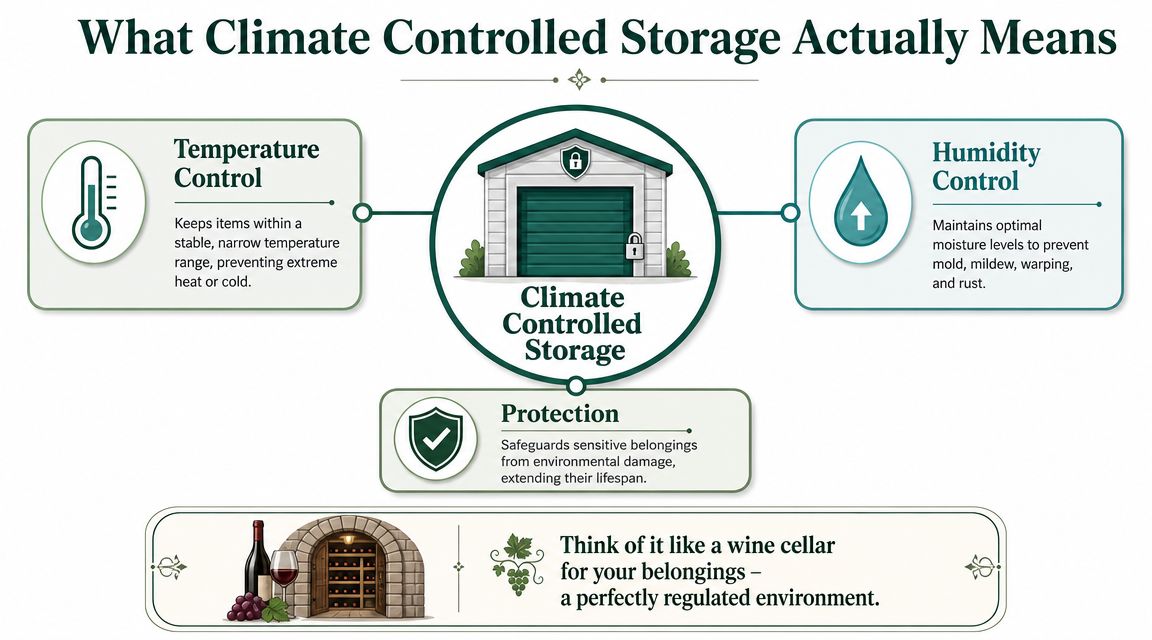
A standard storage unit protects belongings from rain, direct sun, and basic exposure. A climate-controlled unit does more than that. Think of it less like a garage and more like a wine cellar for household items. The point is stability.
Climate-controlled storage became a practical standard because many everyday items react badly to repeated swings in heat and moisture. Storage guidance commonly describes these units as keeping conditions in a 55°F to 85°F range with regulated humidity rather than blocking the weather outside, as explained in this guide on how climate-controlled storage works.
Temperature control matters, but it's only half the job
When facilities regulate temperature, they reduce the expansion and contraction that can stress wood, leather, plastic, adhesives, and electronics. That sounds technical, but the effects are easy to recognize. Drawers stop fitting right. Veneers lift. Leather stiffens. Old glue weakens.
A heated room isn't the same thing. Air conditioning alone isn't the same thing either. If the room is cool but damp, or warm but humid, delicate belongings can still deteriorate.
Humidity control is what people miss
Moisture is often the bigger issue. Good climate control manages humidity, not just temperature. Some storage guidance notes targets below about 55% relative humidity to reduce mold and corrosion risk. That's why a helpful explainer on storage for sensitive belongings in Sydney can be more relevant than a simple “heated or not” comparison, especially if you're storing fabrics, paper, or electronics in a humid city.
For a more specific breakdown of what facilities usually mean by the term, this guide to what temperature is climate controlled storage gives the practical context most renters are trying to pin down.
Climate control isn't just comfort for your stuff. It's active environmental management designed to reduce the conditions that cause warping, mold, rust, cracking, and condensation.
The Real Risks of Uncontrolled Temperatures and Humidity
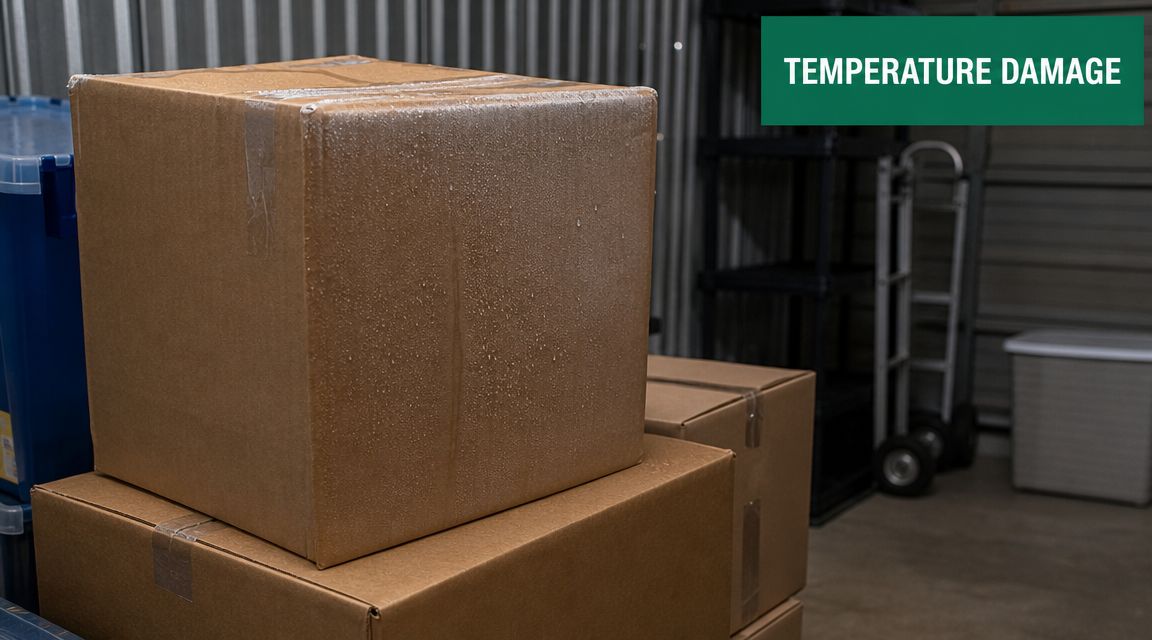
The damage from a standard unit usually doesn't show up on day one. It shows up later, when you unwrap something and realize the problem developed slowly. Seasonal swings are the issue. Storage guidance consistently points out that materials such as wood, leather, paper, and electronics are vulnerable to moisture-driven degradation, and that storing for months rather than weeks raises the risk because each swing adds stress, as outlined in this article on why climate-controlled storage helps protect belongings.
What happens to common household items
Wood furniture expands and contracts as conditions shift. Over time, joints loosen, panels warp, and finishes can separate from the surface underneath.
Leather and upholstered pieces absorb moisture from damp air and dry out in unstable conditions. That can leave them smelling musty, feeling brittle, or showing visible cracking.
Paper items are especially unforgiving. Documents, books, photos, and cardboard boxes can cockle, curl, stick, discolor, or support mold growth when moisture lingers.
Electronics don't need obvious water exposure to fail. Condensation and corrosion inside components are enough to create problems later.
Why humidity usually causes the ugliest surprises
People often focus on heat or cold because those are easy to imagine. In practice, moisture does some of the worst damage because it doesn't always announce itself until unpacking day. If you've ever had a damp closet, basement, or boxed-up fabric develop that stale smell, you already know the pattern. Advice on how to protect your home from moisture damage lines up with what storage professionals see in units too. Moisture creates the conditions that let mildew, rust, and warping start.
A short visual explanation helps if you want to see how quickly these conditions can affect packed items.
The scenarios where standard units usually disappoint
- Long holds during a move: You think it will be brief, then your items sit through a season change.
- Urban overflow storage: You're keeping good furniture or keepsakes because your apartment is small, not because those items are disposable.
- Mixed loads: One durable item category tricks people into storing everything together, including books, frames, textiles, and devices.
- Poor packing choices: Cardboard and unsealed fabric covers make moisture problems worse. If books are part of your load, this guide on how to store books long term for preservation is useful because paper is one of the first materials to show environmental damage.
A Checklist for Your Most Valuable Belongings
If you want a clean answer to “Do I need climate controlled storage,” inventory beats guesswork. Don't decide based on the cheapest monthly rate first. Decide by grouping your items by sensitivity.
Climate Control Decision Checklist
| Item Category | Needs Climate Control? | Primary Risk Factor |
|---|---|---|
| Solid wood furniture | Usually yes | Warping, cracking, joint movement |
| Leather furniture | Usually yes | Drying, cracking, moisture damage |
| Upholstered furniture | Often yes | Mold, mildew, trapped moisture |
| Important documents | Yes | Moisture damage, discoloration, mold |
| Photographs and albums | Yes | Sticking, curling, deterioration |
| Books | Often yes | Warping, mold, page distortion |
| Artwork and framed prints | Usually yes | Moisture, warping, surface damage |
| Musical instruments | Usually yes | Material movement, cracking |
| Electronics and screens | Usually yes | Condensation, corrosion |
| Vinyl records | Usually yes | Heat-related deformation, humidity exposure |
| Fabrics you care about | Often yes | Mold, odor, fiber deterioration |
| Plastics and sealed household bins | Usually not | Lower sensitivity unless contents are delicate |
| Metal tools and hardware | Often no for short term | Surface moisture, possible rust |
| Kitchenware and dishes | Usually not | Low sensitivity unless mixed with paper packing |
| Patio furniture | Usually not | Built for tougher conditions |
| Seasonal decor | Depends on material | Mixed materials, adhesives, fabrics |
A faster way to audit your own storage pile
Use this three-part test:
- Ask what it's made of. Wood, leather, paper, fabric, and electronics are the usual problem categories.
- Ask how long it will sit. A few weeks is one thing. Several months increases exposure to weather changes.
- Ask whether replacement is realistic. Sentimental items and expensive-to-replace items deserve more protection.
If you'd hesitate to leave something in a garage for an entire season, that hesitation is usually telling you something useful.
For a more item-by-item list, this resource on what items need climate-controlled storage is a strong companion to your own checklist.
What's probably fine without it
A lot of belongings don't need premium protection.
- Durable outdoor gear: Camping chairs, plastic bins, and yard tools usually handle standard conditions better.
- Basic household overflow: Pots, pans, lamps, and similar non-sensitive items are usually fine if packed clean and dry.
- Short-term staging items: If you're rotating things briefly during a move and they aren't moisture-sensitive, a standard unit can work.
The key is not to let these hardy items justify putting delicate ones in the same environment.
Comparing Costs and Discovering Smarter Alternatives
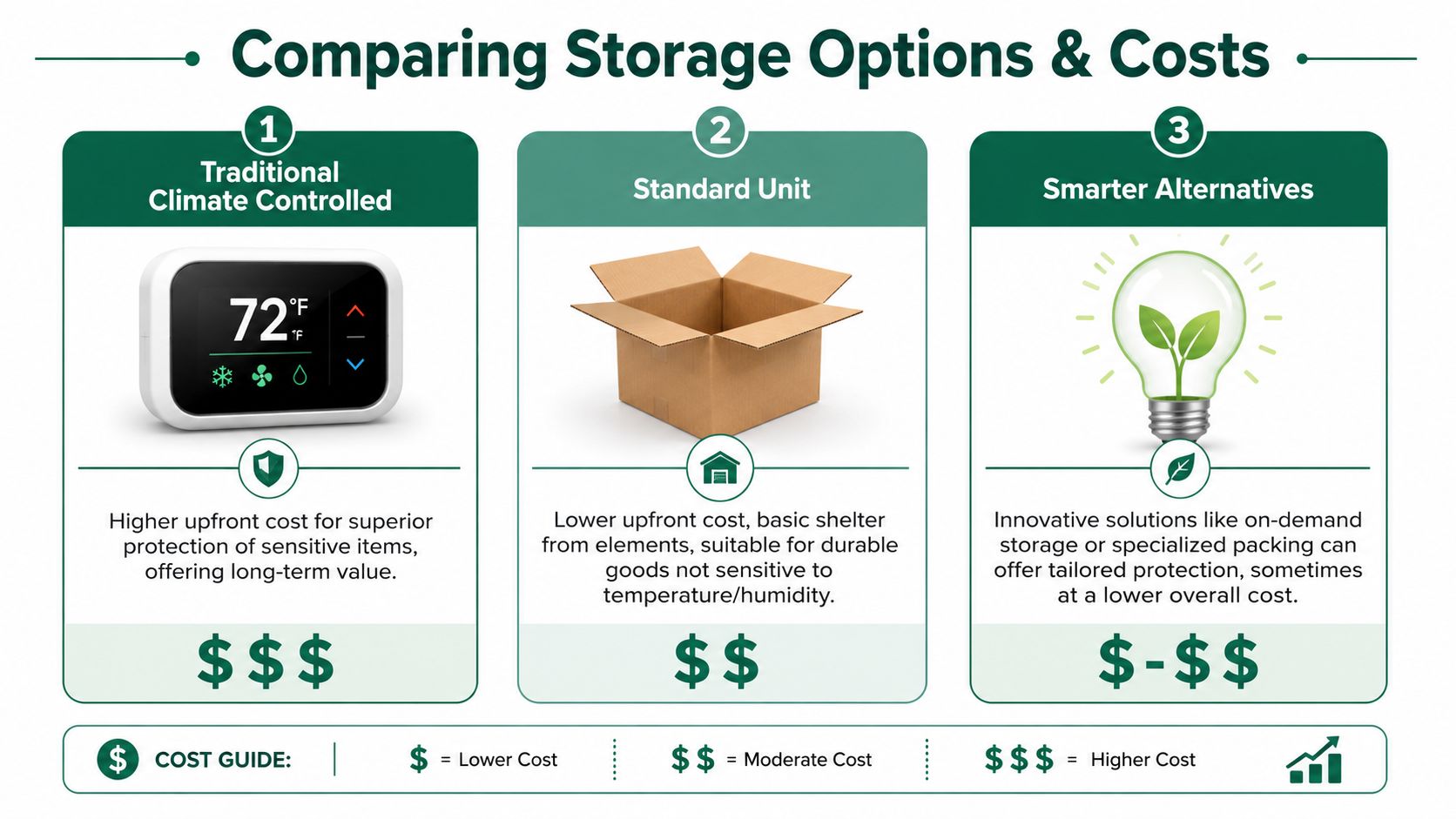
Climate-controlled storage usually costs more than a standard unit. That part is true, and there's no reason to dodge it. The better question is whether you're paying for unused space or for actual protection.
For some people, the traditional climate-controlled unit makes sense immediately. If you're storing a room's worth of furniture, archive boxes, and electronics for an extended stretch, renting a full unit can be the simplest answer.
When a full unit is the right fit
A traditional unit works well when you need walk-in access to bulky items like sofas, dining tables, dressers, or multiple rooms of belongings. It also makes sense if you expect to move things in and out yourself on a regular basis.
The downside is efficiency. Many urban renters don't have enough sensitive belongings to justify paying for an entire room. They may only need to protect off-season clothing, documents, media, a monitor, a few decor pieces, and one or two keepsakes.
When per-box storage makes more sense
That's where a per-box model is worth considering. Instead of renting empty cubic space you don't fill, you store only the items that need protection. Endless Storage is one example. It offers storage by the box in climate-controlled facilities, which can fit apartment dwellers, movers, and anyone storing a limited number of sensitive items rather than a whole apartment's contents. If you're weighing the trade-off in more detail, this breakdown of climate-controlled storage cost helps frame the decision.
A practical comparison
Traditional climate-controlled unit
- Better for bulky furniture and large mixed inventories
- Gives you physical unit access
- Less efficient if you only need a small amount of protected storage
Standard unit
- Better for durable items and shorter holds
- Lower upfront monthly cost
- Riskier for paper, wood, textiles, leather, and electronics
Per-box climate-controlled storage
- Better for small apartment overflow, seasonal storage, and selective protection
- You pay for what you store
- Not ideal if you need to stash large furniture
The cheapest option on paper can become the expensive one if it exposes a few high-value items to the wrong environment.
How to Prepare Your Items and Make the Right Choice
Once you know which items need protection, packing matters almost as much as the storage type. Climate control reduces risk. It doesn't excuse sloppy prep.
Prep the items before they ever leave home
- Clean furniture first. Dust, food residue, and body oils can set into fabric, wood, and leather during storage.
- Dry everything completely. Even slightly damp items can create odor or mildew issues once packed.
- Use the right containers. Plastic bins work better than weak cardboard for many household goods. For photos and paper records, archival-safe sleeves or folders are the safer move.
- Pack electronics carefully. Remove batteries if appropriate, wrap items to prevent dust and scratches, and avoid cramming cords tightly against screens or ports.
Match the storage method to the scenario
If you're a mover storing a full household, a climate-controlled unit is often the practical answer. If you're an urban renter trying to reclaim closet space, your smarter move may be selective storage rather than renting a room you barely fill.
Use this short decision filter:
- Sensitive items for months: choose climate control.
- Only durable items for a brief hold: a standard unit may be enough.
- Just a few boxes of valuable or sentimental items: look at a per-box service instead of a full unit.
The right answer isn't always “get climate control for everything.” It's “protect the things that need it, and don't pay for more space than your situation requires.”
Frequently Asked Questions About Climate Control
Is a heated unit the same as climate-controlled?
No. A heated unit only addresses temperature on the cold side. True climate control also manages humidity, which matters because moisture is what drives many storage problems. Guidance on the subject notes that many consumer articles focus on a 55°F to 85°F temperature range but miss the point that real protection also means humidity control, often below 55% relative humidity, to reduce mold, mildew, rust, and corrosion risk, as explained in this article about storage unit climate control.
How long can items sit in a standard unit safely?
That depends on what the items are and what the local weather is doing. Durable goods can do fine for a shorter hold. Sensitive items become riskier when they sit through changing seasons.
Do I need climate control for seasonal storage?
Sometimes. Holiday decorations made mostly of plastic may not need it. Seasonal clothing, paper decor, textiles, electronics, and keepsakes often benefit from it.
Are there items that shouldn't go into storage casually?
Yes. Anything irreplaceable, moisture-sensitive, or highly sentimental should never be packed without thought. Family photos, original documents, artwork, heirlooms, and electronics deserve a storage plan, not just an empty corner in the cheapest unit you can find.
If your checklist points to only a handful of boxes or a small group of sensitive belongings, take a look at Endless Storage. It's a practical option when you need climate-controlled protection without renting an entire traditional storage unit.
Frequently Asked Questions
Unveiling the Secrets to Effortless Storage
Endless Storage is available nationwide. You pick a plan, tell us where to pickup, and we'll send a UPS van to collect, whichever state you're in.
Your shipping label will be sent to your email within a few minutes, if not instantaneously. It can also be accessed through your customer profile.
Your box will be shipped to one of our climate controlled self storage facilities in our closest self storage facility. Our manager will accept your package, notify you that your box has been received, and securely stored. Only our managers will have access to Endless Storage boxes.
Email us at admin@endless-storage.com click to live chat with us, or send us a message below.
Never! We're committed to transparent pricing with no surprises. You'll lock in your rate with no hidden fees and no long-term contracts.
Fast access guaranteed! Your boxes will arrive at your doorstep within 48 hours of requesting them back. Need to check on delivery? We provide tracking information for complete peace of mind.
Totally flexible! Store month-to-month with no long-term commitment and cancel anytime.
Everything's online! Use your account dashboard to:
• Set up automatic monthly payments
• Request box returns
• Update your address
• Order additional boxes
• Track shipments
Your boxes are insured up to $100 each. Our customer service team will help you file any necessary claims and resolve issues quickly.
Don't worry – we'll email you right away if there's a payment issue. Your items stay safe, though you may have temporary service interruption or late fees until payment is resolved.
When you request our free storage kits, you'll have 30 days to send in your boxes to activate your 3 months of free storage. Think of it like starting a gym membership – your activation window begins when you receive your kits, and your full free trial begins once you send in your first box. During your free months, you'll experience our complete storage service at no cost.
Your 30-day activation window begins when you receive your storage kits. We'll send you an email confirmation when your kits are delivered, marking the start of your activation period.
If you haven't sent any boxes for storage within your 30-day activation window, your free trial will expire and we'll begin charging the regular monthly rate of $9.99 per box. This helps ensure our storage kits go to customers who are ready to use our service.
A box costs $9.99 per month to store (plus sales tax). This price includes free shipping for standard boxes under 50 lbs. and smaller than 16"x16"x16"
Log into your Endless Storage account, locate the box you would like returned, and simply click Return My Box.
Yes, each box stored with us is insured for up to $100 throughout transit as well as the duration of storage within our facilities.
Your box will be at your doorstep within 48 hours of you requesting it back.
Store 10+ boxes? We'll pick them up for free! After your purchase, we'll contact you to schedule a convenient pickup time and arrange UPS collection.
We trust UPS with all shipments, and every box includes $100 insurance coverage. You'll receive tracking information to monitor your items' journey.
Yes! Visit any of our locations by appointment. Just bring a photo ID matching your customer profile.
For everyone's safety, we can't store hazardous materials, firearms, or perishables. All items must fit within our standard boxes.
It's easy! Order your storage kit online, and we'll ship it to you within 1-2 business days. Your shipping labels will be emailed instantly and available in your account.
We're here to help! Email us at admin@endless-storage.com, use our live chat, or send us a message through your account.
To cancel your storage service with Endless Storage, please email your cancellation request to admin@endless-storage.com. Our team will process your request within 2 business days and confirm your cancellation via email.
We understand packing takes time. However, to maintain your free trial benefits, you'll need to send at least one box within the 30-day activation window. If you need more time, you can always start with one box to activate your trial and send the rest later. You can always reach out to admin@endless-storage.com if you have any issues or concerns.
When you request our free storage kits, you're starting a 30-day window to begin using our storage service.
Important: To activate your free trial, send at least one box for storage within 30 days. If no boxes are sent within this 30-day window, a one-time $50 fee applies to cover materials and shipping costs. This fee is clearly disclosed before you sign up.
Think of it like reserving a hotel room – we're setting aside space and sending specialized packing materials for your use. The fee only applies if you request materials but don't begin storage, similar to a hotel's no-show charge.