Cheap Moving Supplies: Save Big on Your Move
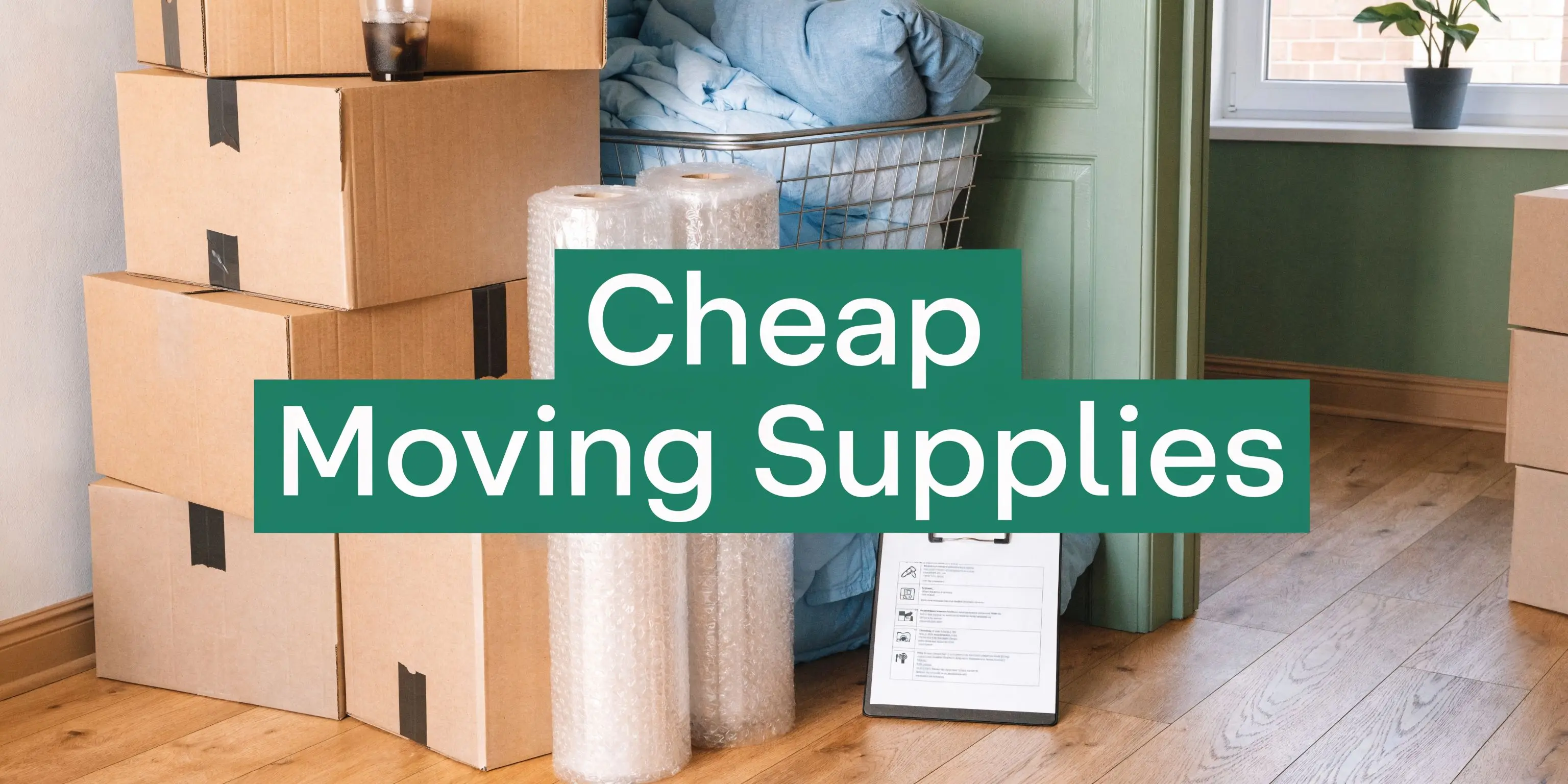
You’re probably staring at a pile of stuff that somehow multiplied while you lived in a small apartment. The coffee maker fits nowhere. The winter coats are still in the closet. The kitchen drawer with three kinds of chargers is mocking you. Then you price out moving boxes and tape, and the supply bill starts to feel like its own moving expense.
That’s usually when people get told to “just grab free boxes.”
Sometimes that works. Sometimes it gives you damp grocery cartons, mystery odors, weak bottoms, and a bad surprise halfway down the hallway. Cheap moving supplies should save money, not create a second problem.
The smart approach is simpler than most advice makes it sound. Use what you already own. Buy a small set of cheap new essentials where failure would hurt. Be skeptical of random free supplies unless they pass a real inspection. That balance is what keeps a move affordable without turning moving day into a box-collapse drill.
Your Moving Day Reality Check
A city move has a way of exposing every bad packing habit at once. You think you own a normal amount of stuff until you start emptying cabinets, closets, and the storage area under the bed. Then you realize the apartment wasn’t organized. It was just compressed.

Urban moves make this worse. You’re dealing with stairs, elevators, parking windows, narrow doorways, and usually not enough floor space to sort properly. Every weak box and every missing tape roll matters more when you can’t spread out.
The bigger problem is that “cheap” gets confused with “free.” Those aren’t the same thing.
A free box from a neighbor can be a great score. A free box from behind a store, or from a stranger’s damp basement, can carry dirt, moisture damage, odors, pests, or crushed corners that don’t show up until you lift it. That’s not thrift. That’s gambling with your dishes, books, and electronics.
Practical rule: If a box has to survive stairs, stacking, a car trunk, or even brief storage, treat condition as part of the price.
There’s a reason demand keeps climbing for affordable moving materials. The global moving supplies market is projected to grow from USD 741,800 million in 2025 to USD 1,183,012 million by 2035, with a projected 4.8% CAGR, and that tracks with rising urbanization and more frequent relocations in city life (Future Market Insights). Cheap supplies are in demand because people need them. But low cost only helps if the materials still do the job.
What cheap should mean
Cheap moving supplies should do three things:
- Protect essentials so you don’t replace broken items later.
- Keep the move simple so you’re not scavenging for boxes the night before.
- Fit small-space living where every extra box gets in the way.
That’s the lens for everything below. Not “how to spend nothing.” How to spend less, avoid junk supplies, and keep your sanity.
The Moving Supply Pyramid Your Budget-First Checklist
Many people start with a shopping list. I prefer a supply pyramid because it forces you to spend in the right order.
At the bottom are items you already own. In the middle are cheap buys that matter. At the top are a few targeted protective supplies for items that can’t take a hit.

Base layer free and reusable
Start in your apartment, not the store.
Suitcases, duffel bags, backpacks, laundry baskets, reusable grocery bags, storage totes, and shoeboxes all count as moving supplies. So do towels, hoodies, socks, pillowcases, and extra bedding. These items are stable, clean, and already paid for.
Use them intentionally:
- Rolling luggage for books: Heavy items belong in something with wheels.
- Laundry baskets for pantry goods: Easy to carry, quick to unload.
- Towels for dish padding: Better than buying extra filler for basic kitchenware.
- Reusable bags for cleaning supplies: They stand upright and don’t waste a box.
For this reason, random free boxes shouldn’t be your first stop. You already have better options at home than a questionable produce box from a loading dock.
Middle layer essential and cheap
A little spending here pays off. Buy these new if your current stash is weak.
- Packing tape: Bad tape fails at the worst time. Don’t bargain-bin this.
- Permanent markers: Clear labels save time when you arrive.
- Standard moving boxes: Clean, uniform boxes stack better and waste less space.
- A few small boxes: Heavy items need smaller containers, not oversized ones.
A lot of people underrate consistency. Uniform boxes stack neatly in an elevator, hallway, and truck. Mixed free boxes rarely do.
Used boxes from community groups can still help, but they need scrutiny. Anecdotal guidance collected in this space suggests 30% to 50% of free boxes from community boards may be unsuitable because of dirt, moisture, or structural weakness, with a possible 20% to 40% increase in damage risk compared with reliable new boxes (My Half Price Movers).
If you’re trying to keep the whole move lean, this kind of budget-friendly moving planning matters more than any single box price. Savings come from deciding what can be reused, what must be bought new, and what’s not worth moving at all.
For planning the rest of the spend, this moving budget planner is a useful way to keep supply costs visible before they sprawl.
Top layer strategic and specific
Not every item belongs in a standard box.
Spend selectively on:
- TV boxes if you’re moving a screen you’d hate to replace.
- Dish packs for glassware-heavy kitchens.
- Wardrobe boxes if you need a fast closet transfer.
- Bubble wrap or furniture pads for fragile or scratch-prone pieces.
Buy specialty supplies for the item, not for your anxiety. Most belongings don’t need premium packaging. A few do.
That’s the pyramid. Reuse first. Buy cheap essentials second. Add specialty protection only where failure is expensive.
Where to Find Cheap and Safe Moving Boxes
The best cheap moving supplies come from sources that are both affordable and predictable. Predictable matters. You don’t want to build your packing plan around “maybe someone online has boxes left.”
Best bet for new boxes
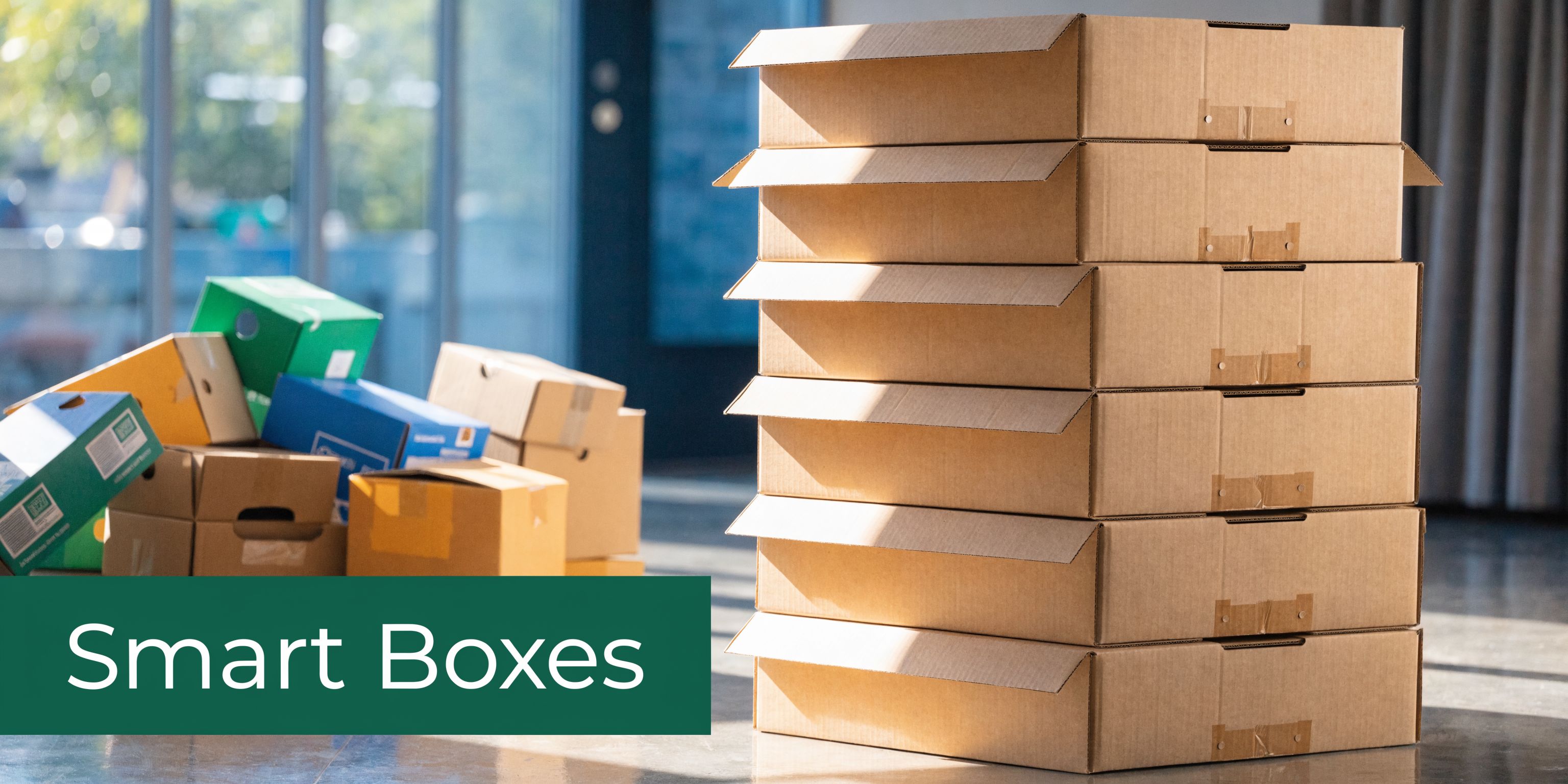
If you want clean, simple, low-cost boxes without a scavenger hunt, start with Walmart.
As of 2026, Walmart’s moving box prices are listed around $1.08 for small boxes, $1.73 for medium, and $2.26 for large, and for a studio apartment needing 18 to 51 boxes, that puts total box cost at about $18 to $51 (Moving Place). For budget movers, that’s often the point where buying new becomes more sensible than driving around town for leftovers.
Here’s the practical comparison:
| Retail option | What works well | Main trade-off |
|---|---|---|
| Walmart | Low prices, easy pickup, clean standard sizes | Popular sizes may sell out close to weekends |
| Home improvement stores | Good box selection, specialty sizes | Usually not the cheapest for standard boxes |
| Amazon bulk packs | Convenient if you can plan ahead | Less flexible if you only need a few |
| Local moving supply shops | Better specialty options | Standard boxes often cost more |
If your move is small and fast, buying a controlled set of new boxes often wins on both time and reliability.
The community route done right
Free boxes can still be useful. You just have to screen them like someone who’s had a box split in a stairwell before.
Good places to look:
- Buy Nothing groups
- Facebook Marketplace
- Craigslist
- Building recycling areas after move-out days
A directory of places offering free moving boxes can help if you want a broad starting list, but the important part is what you do after you find them.
Use this inspection checklist before accepting any box:
- Check the bottom seams: If the tape line looks stressed or the cardboard bows, skip it.
- Press the corners: Soft corners mean the box has already lost strength.
- Smell the box: Any musty or chemical odor is enough reason to leave it.
- Look for stains: Water marks and grease spots are a no.
- Check for pests: Tiny dark marks, egg traces, or debris in folds are a hard pass.
- Match size to use: Small sturdy used boxes are better than giant weak ones.
A free box is only cheap if you’d trust it with something you own and care about.
For more retailer-focused options and price-conscious sourcing ideas, this guide to cheap moving boxes is a solid companion resource.
Unexpected places that are useful
Not all free box sources are equal.
Liquor stores often have compact, sturdy boxes built for glass. They’re excellent for pantry items, books, and barware.
Office supply stores sometimes have clean paper boxes with lids. Those are handy for documents, cables, and desk items.
Bookstores and libraries can have small reinforced cartons that handle weight better than large grocery boxes.
A quick visual walk-through can help if you’re sorting box types and packing priorities:
Boxes I’d avoid unless they’re in excellent condition:
- Produce boxes with soft bottoms
- Any box stored outside
- Oversized retail cartons for heavy contents
- Boxes with torn handles or crushed edges
Cheap and safe isn’t about one source. It’s about choosing a source that won’t force you to repack at midnight.
Pack Smarter Not Harder to Reduce Supply Needs
The cheapest moving supplies are the ones you never have to buy.
Most small-apartment moves don’t fail because people lacked boxes. They fail because people packed inefficiently, overbought filler, and used the wrong container for the wrong item.

Use your belongings as packing material
Clothing and linens are free padding. That’s the easiest win in any move.
Wrap bowls in T-shirts. Use dish towels between plates. Put scarves around vases. Slide glassware inside clean socks before placing it upright in a small box. You’re reducing both supply cost and unpacking volume.
A few methods work especially well:
- Nesting-doll packing: Stack pots, bowls, and containers inside each other with soft fabric between layers.
- Drawer transfer: If a drawer isn’t overloaded, remove it, wrap the contents lightly, and move it as a unit when practical.
- Basket loading: Put lightweight loose items into hampers and baskets instead of buying more cartons.
Reduce box count by packing by weight
People waste money when they think by room instead of by load.
Books, canned food, tools, and ceramics belong in small boxes or rolling luggage. Bedding, pillows, and coats belong in larger boxes or bags. When you sort by weight first, you stop buying extra boxes to correct bad packing later.
Pre-configured moving kits and a more systematic approach can improve outcomes. One source notes 92% damage-free moves for kit users versus 78% for improvised supplies, says proper labeling can cut retrieval time in half, and reports that furniture sliders can prevent floor scratches with 90% effectiveness (Starboxes).
That doesn’t mean everyone needs a full kit. It does mean method beats improvisation.
The labels that help
Don’t label boxes with vague words like “misc” or “bedroom stuff.”
Write:
- Room
- Contents
- Priority
For example: Kitchen | Mugs and utensils | Open first
Organized packing in this context pays for itself. If you want a detailed system for grouping, loading, and labeling, this guide on how to pack efficiently for a move is worth keeping open while you pack.
Label for your tired future self, not your optimistic current self.
Build one open-first box
Pack one clearly marked box or tote with the things you’ll need during the first day:
- Toilet paper
- Phone charger
- Dish soap
- One pan or plate set
- Medications
- Basic tools
- Clean clothes
- Toiletries
This doesn’t just reduce stress. It also stops the classic post-move behavior of ripping open six boxes to find one charger, then creating fresh clutter in the new place.
The Cost Analysis When to Stop Hunting for Supplies
Free boxes get expensive fast in a city move.
I see the same pattern over and over. Someone spends hours refreshing Facebook groups, texting store managers, and making two pickup trips for “free” boxes. Half are soft on the bottom, a few smell like food, one has clearly been sitting in a damp back room, and none match well enough to stack safely in the van. By that night, they’re still buying tape, still short on boxes, and now they’ve lost half a day.
That is usually the point where the bargain stops being a bargain.
Count the hidden costs
Before you chase another batch of used supplies, check four things:
- How much time will pickup take?
- Are the boxes clean, dry, and strong enough to stack?
- What happens if one splits under books, dishes, or electronics?
- Will these supplies hold up if your move gets pushed to tomorrow?
That last question matters more than people expect. City moves slip all the time. Freight elevator windows get shortened. Keys are late. Rain shows up. Help cancels. A box that survives a quick same-day carry can fail after sitting packed overnight in a hallway or trunk.
Free supplies also come with risks that cheap new ones usually avoid. Used grocery boxes can attract pests. Retail boxes often have crushed corners. Random sizes waste space in the truck and force awkward stacking, which leads to more shifting, more tape, and more breakage.
When buying new is the cheaper choice
Buy new boxes if the free options are inconsistent, dirty, or too far away to collect efficiently.
Buy new if you’re packing fragile items. Buy new if you need boxes that stack cleanly. Buy new if your apartment is small and you cannot afford a pile of mismatched cardboard taking over the floor for a week.
A controlled batch of standard boxes, decent tape, and markers usually costs less than one preventable mistake. Broken dishes, a dropped appliance, or a last-minute late-night supply run wipes out the savings fast. If you’re trying to cut total moving costs, not just box costs, this guide to the cheapest way to move helps put supplies in the bigger budget picture.
The cheapest box is often the one you never need
The best cost cut is reducing what has to enter the move at all.
If you know you will not need certain вещи in the next few weeks, treat them as a separate category instead of forcing them into your day-one move. Seasonal clothes, old files, keepsakes, spare cookware, and extra decor do not need to compete with daily-use items for boxes, floor space, and unpacking time.
This approach matters because much moving waste comes from transporting items you do not need yet, then stuffing those boxes into an already tight apartment. In practice, that means you buy more supplies, carry more weight, and create clutter the minute you arrive.
If an item does not need to be unpacked this month, it should not drive your moving-day supply count.
For urban movers, per-box storage is often the cleanest answer. It cuts the number of boxes in your active move, reduces unpacking pressure, and keeps the new place usable from day one. This often marks the true stopping point. Stop hunting when the search costs more than the supplies, and stop packing low-use items into a move that is already tight.
Your Smart Moving Day Blueprint
A cheap move works best when you stop treating supplies like a single category.
Some supplies should be free because you already own them. Some should be bought new because failure is expensive. Some items shouldn’t stay in your active move at all if they’re just going to crowd a small apartment.
The three-part system that holds up
First, use what you already have. Suitcases, bags, towels, baskets, and bins are the safest kind of cheap because they’re already in your home and you know their condition.
Second, buy a controlled set of cheap new essentials. That usually means standard boxes, tape, markers, and a few specialty protective items for fragile belongings. In this context, “cheap” should still mean clean and dependable.
Third, separate what you need now from what you don’t. That one choice reduces supply demand, shrinks the move, and keeps your next place from starting cluttered.
One trade-off worth remembering
Cardboard is usually the right call for one-off moves, but not always for repeat movers. For frequent movers, renting reusable plastic bins can reduce costs by 40% to 60% over multiple moves, and demand for plastic bins has risen 25% in recent years, tied to waste reduction concerns around 1 billion cardboard boxes that end up in US landfills annually (NerdWallet).
That doesn’t mean everyone should switch to bins. It means the best cheap moving supplies depend on how often you move, how long items stay packed, and how much risk you can tolerate.
For loading day itself, this guide on the best way to pack a moving truck helps finish the job properly once your boxes are ready.
A good move isn’t built on getting everything for free. It’s built on good judgment. Reuse what’s solid. Buy what protects your stuff. Skip the false economy of weak boxes and dirty hand-me-downs. That’s how you save money without paying for it later.
If you want the easiest way to keep low-use items out of your move entirely, take a look at Endless Storage. It’s a practical option for storing by the box during a move, especially if you’re between apartments, short on space, or trying to avoid filling your new place with things you won’t need right away.