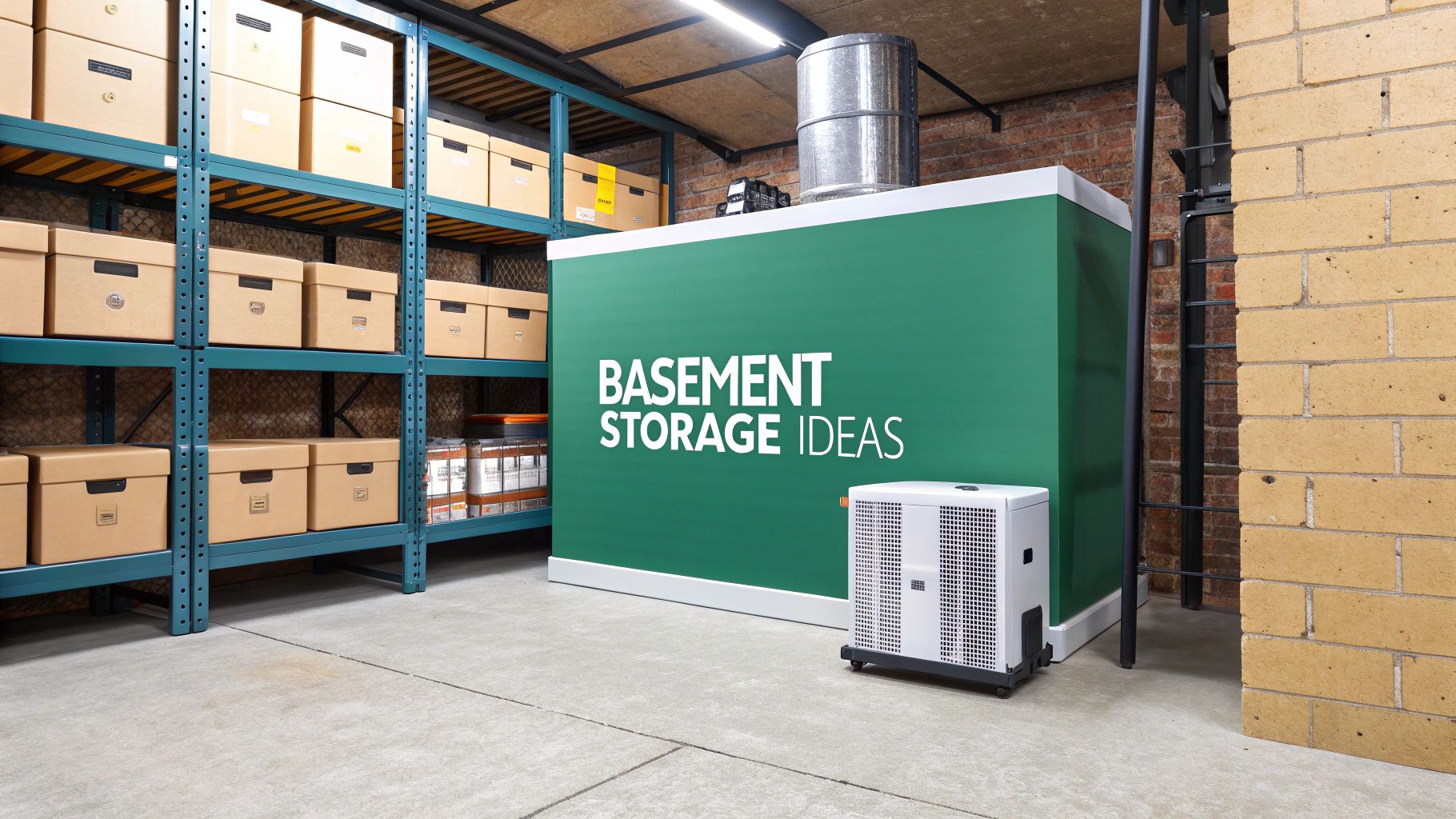
The basement often becomes the forgotten zone of our homes, a repository for everything from cherished holiday decorations and seasonal gear to items we simply don't know where else to put. But this valuable square footage holds incredible potential beyond being a mere dumping ground. Left unchecked, it can quickly become a source of stress, with unchecked moisture and growing clutter threatening your most important belongings. A disorganized basement isn't just an eyesore; it's a waste of usable space that could serve your family's needs far more effectively.
This guide provides 10 actionable basement storage ideas designed to conquer the chaos and reclaim your lower level. We'll explore everything from essential moisture control and smart shelving systems to the strategic use of vertical space and off-site solutions, helping you transform your basement from a cluttered cavern into a functional, organized extension of your home. For an even broader perspective on optimizing this often-underutilized space, explore additional smart basement storage solutions that can completely transform your home. Let’s dive into the systems and strategies that will help you build a more organized and accessible storage area once and for all.
1. Shelving Units and Wall-Mounted Racks
The most effective basement storage ideas begin with maximizing vertical space. Freestanding shelving units and wall-mounted racks are foundational for getting items off the floor, which is critical in a basement environment prone to moisture, pests, and dust. By utilizing wall height, you reclaim valuable floor area for walkways, a workshop, or a home gym. This strategy transforms cluttered piles into an organized, accessible system.
Why This Method Works
This approach is highly adaptable to any basement size or layout. Industrial-grade metal shelving, like those from Home Depot or Uline, is perfect for storing heavy-duty bins of seasonal decor or camping gear. For finished basements where aesthetics matter, customizable wooden systems like the IKEA Ivar series blend seamlessly with the decor while providing robust storage for hobby supplies and archived documents.
Actionable Implementation Tips
To get the most out of your shelving, follow a few key principles for safety and efficiency.
- Prioritize Safety: Always place the heaviest items, such as power tools or bulk supplies, on the bottom shelves. This creates a low center of gravity and prevents the unit from becoming top-heavy and tipping over.
- Organize by Use: Store frequently accessed items at eye level. Seasonal or rarely used items should go on the highest and lowest shelves.
- Use Clear Bins: Opt for clear plastic bins with secure lids. This allows you to quickly identify contents without having to open every box, saving you significant time and effort.
- Label Everything: Even with clear bins, detailed labels are a must. Use a label maker to specify contents, the year items were stored, and the designated room they belong to.
2. Climate-Controlled Box Storage Services
For those with limited space or who want to bypass basement storage altogether, climate-controlled box storage services offer a modern, convenient solution. Companies like Endless Storage and Clutterly provide an on-demand service where they deliver empty boxes, pick them up once packed, and store them in a secure, climate-controlled facility. This approach is one of the most effective basement storage ideas because it completely outsources the work, protecting your most sensitive items from temperature fluctuations and humidity.
Why This Method Works
This "storage-by-the-box" model is ideal for urban apartment dwellers, college students, or anyone in a transitional phase who lacks a basement. It allows you to store seasonal clothing, important documents, or sentimental keepsakes without cluttering your living space. The online inventory system lets you see what you have stored and request delivery of specific boxes whenever you need them, offering unparalleled flexibility. Learn more about the benefits of climate-controlled storage for preserving your valuable possessions.
Actionable Implementation Tips
To maximize the benefits of a box storage service, a little planning goes a long way.
- Create a Photo Inventory: Before sealing each box, take a quick photo of the contents. This visual record, paired with the service's online portal, makes recalling specific items effortless.
- Store Strategically: Use this service for items you won't need for several months, such as off-season coats or holiday decorations. This minimizes the need for frequent deliveries.
- Consolidate Pickups: To make the service more cost-effective, try to fill and send multiple boxes at once. This often helps you meet minimum requirements for free pickups.
- Label for Your Own Records: While the service tracks your boxes, add your own clear labels with general categories (e.g., "Winter Sweaters," "Tax Docs 2018-2022") for easy reference on your end.
3. Plastic Storage Containers and Bins
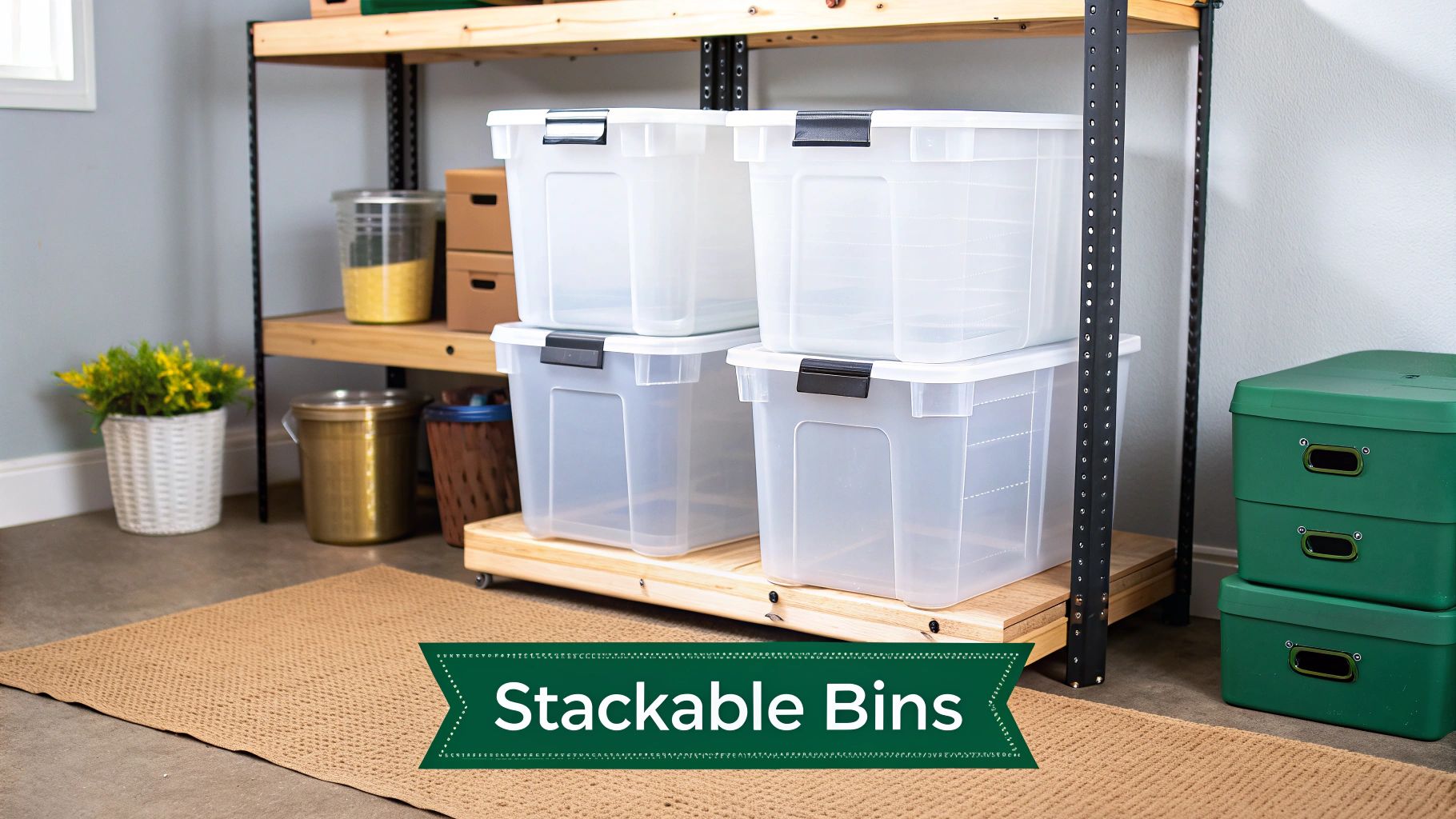
Durable, stackable plastic containers are non-negotiable for basement storage. Unlike cardboard boxes that absorb moisture and attract pests, high-quality plastic bins from brands like Rubbermaid or Sterilite create a protective seal around your belongings. This is one of the most crucial basement storage ideas for safeguarding everything from sentimental photo albums and seasonal clothing to important documents against the specific environmental threats of a below-ground space.
Why This Method Works
This approach offers unparalleled protection and organization. The modular, stackable nature of plastic bins allows you to create stable, uniform columns on shelves or directly on pallets, maximizing space while keeping items contained. Clear bins, in particular, provide an immediate visual inventory, while opaque bins are ideal for items sensitive to light. This system transforms a chaotic basement into a manageable archive, protecting your valuables for the long term.
Actionable Implementation Tips
To effectively use plastic containers, a systematic approach is key for accessibility and preservation.
- Elevate Everything: Never store bins directly on the concrete floor. Place them on shelves or plastic pallets to create an air gap, protecting them from potential water seepage or condensation.
- Use the Right Size: Store heavier items like books or tools in smaller, more manageable bins to prevent them from becoming too heavy to lift safely. Use larger bins for lightweight, bulky items like holiday decorations or bedding.
- Control Internal Moisture: For extra protection with sensitive items like electronics or paper documents, toss a few silica gel packets inside the bin before sealing it to absorb any trapped moisture.
- Master Your Labeling: An effective labeling system is critical. Use a label maker for clear, durable labels that specify the contents, the date stored, and the destination room. For a deeper dive into creating a system that works, explore our guide for the best way to label storage bins.
4. Pegboard and Hook Systems
Pegboard systems transform empty wall space into a highly organized and visible storage grid. This modular approach uses perforated hardboard panels combined with a variety of hooks, baskets, and shelves to hang items directly on the wall. It's one of the best basement storage ideas for keeping tools, craft supplies, and sports equipment both accessible and off the floor, preventing them from getting lost in deep bins or cluttering work surfaces.
Why This Method Works
The genius of a pegboard lies in its complete customizability. You can arrange and rearrange hooks to fit your exact inventory, whether it's for a basement workshop or a hobby corner. Systems from retailers like Lowe's or Home Depot offer an extensive range of accessories designed for specific items, from screwdrivers and hammers to wrapping paper rolls and athletic gear. This visual-first organization means you can grab what you need instantly without any searching.
Actionable Implementation Tips
To maximize the effectiveness of your pegboard system, a thoughtful setup is key.
- Group by Function: Arrange your items into logical zones. Keep all your painting supplies in one area, your gardening tools in another, and your most-used hand tools directly over your workbench.
- Outline for Consistency: For frequently used tools, trace their outline on the pegboard with a marker. This makes it instantly clear where each item belongs and helps maintain order.
- Use Baskets and Jars: Attach small wire baskets or hang jars from hooks to contain loose items like screws, nails, beads, or other small craft supplies.
- Prioritize Regular-Use Items: Pegboards are ideal for things you access often. For less-used seasonal equipment, it's better to use labeled bins on shelves to keep the pegboard clear for your daily essentials.
5. Under-Stair and Dead Space Storage
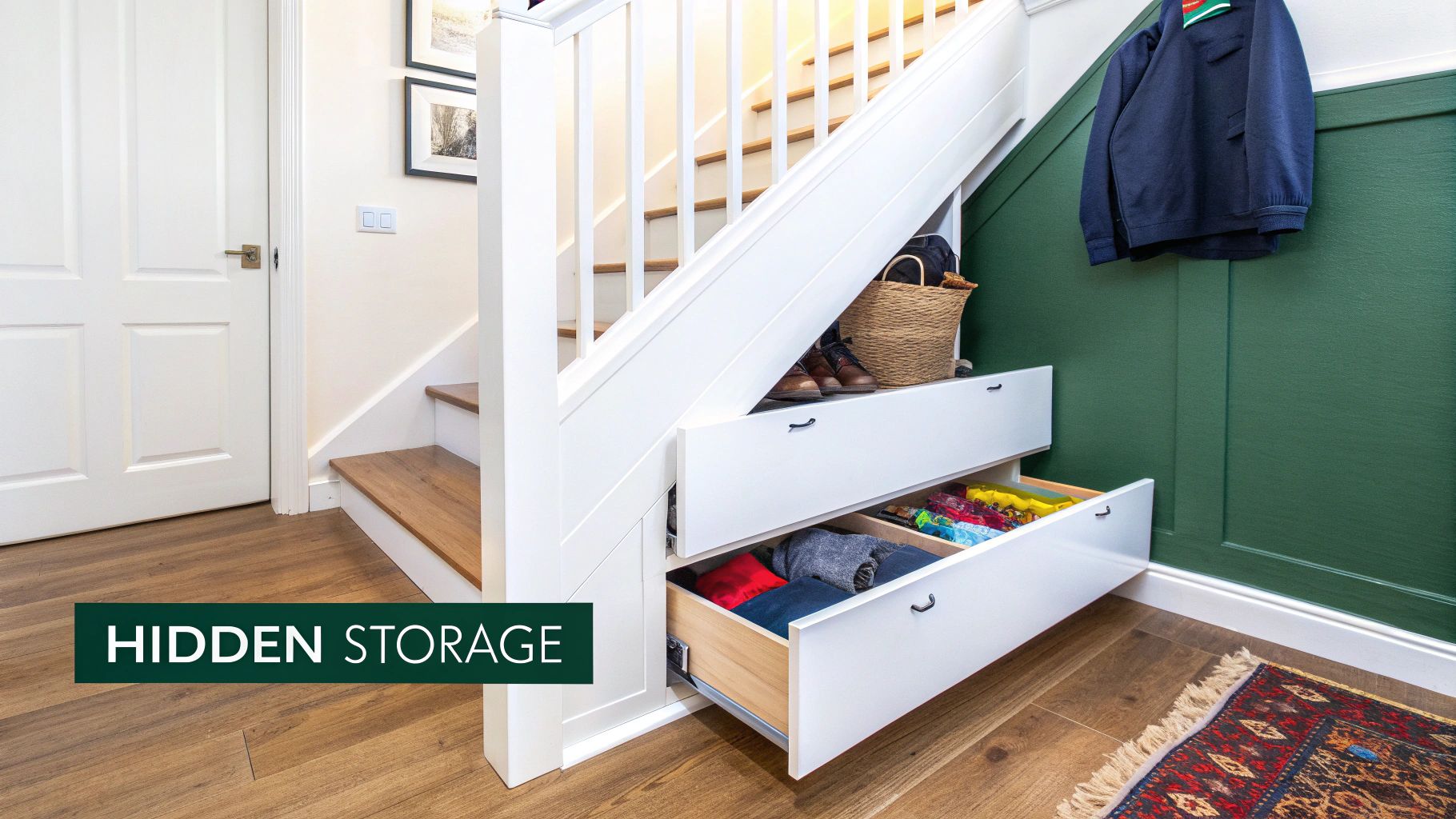
One of the most overlooked basement storage ideas involves capitalizing on awkward, unused areas. The space beneath your basement stairs, odd corners, and structural nooks represent prime real estate for clever storage. By installing custom or modular units, you can transform these "dead zones" into highly functional and discrete storage for everything from cleaning supplies to holiday decorations, all without sacrificing valuable floor space.
Why This Method Works
This approach excels at integrating storage seamlessly into your basement's existing structure, making it ideal for finished or multi-purpose spaces where aesthetics are important. Custom-built cabinets can be designed to match your decor, while pull-out drawer systems offer deep, accessible storage that keeps items neatly tucked away. This strategy is perfect for those who want to maximize every square inch of their home efficiently. Explore more creative ways to implement hidden storage ideas to further enhance your space.
Actionable Implementation Tips
To effectively utilize these unique spaces, precision and planning are key. Follow these tips to ensure a successful installation.
- Measure Meticulously: Accurately measure the height, width, and depth of the space. Double-check angles and account for any pipes or ductwork before ordering or building units.
- Prioritize Accessibility: Use pull-out drawers or rolling carts for the deepest parts of under-stair storage. This prevents items from getting lost in the back and makes them easy to retrieve.
- Choose Moisture-Resistant Materials: Basements are prone to humidity. Opt for materials like PVC, sealed MDF, or powder-coated metal to prevent warping, mold, and mildew.
- Ventilate Properly: If enclosing a space completely, consider adding small vents to the cabinet doors or walls to promote air circulation and prevent musty odors.
6. Dehumidifiers and Moisture Control Systems
Even the best basement storage ideas will fail if you ignore the environment's biggest threat: moisture. Basements are naturally prone to dampness, which can lead to mold, mildew, rust, and irreparable damage to your belongings. Active moisture control systems, particularly dehumidifiers, are not just an accessory but a necessity for protecting everything from furniture and clothing to important documents and electronics.
Why This Method Works
A dehumidifier actively removes excess moisture from the air, maintaining an optimal humidity level that prevents the growth of mold and mildew. This proactive approach preserves the integrity of your stored items, safeguarding them from the musty odors and destructive effects of a damp environment. Brands like Frigidaire and hOmeLabs offer powerful portable units ideal for most basements, while whole-home systems can be integrated for finished spaces.
Actionable Implementation Tips
To effectively manage humidity, strategic placement and maintenance are crucial for success.
- Set the Right Level: Aim to keep your basement's relative humidity between 30% and 50%. This range is dry enough to inhibit mold growth but not so dry that it could damage wooden items.
- Ensure Proper Placement: Place the dehumidifier in a central location with adequate airflow on all sides. Avoid pushing it against a wall, as this restricts its intake and efficiency.
- Use a Continuous Drain: Most models have a port for a drain hose. Connecting a hose that runs to a floor drain or sump pump eliminates the need to constantly empty the water collection bucket.
- Maintain Your Unit: Clean the filter regularly, typically once a month, to ensure your dehumidifier runs efficiently and effectively.
- Protect Specifics: Beyond general atmospheric regulation, it's also important to understand effective cabinet humidity control tips to protect specific items stored inside various units.
For more detailed strategies on safeguarding your items, you can find a comprehensive guide on our basement storage solutions blog.
7. Vertical File Cabinets and Document Storage
A cluttered basement often hides disorganized stacks of important paperwork. Vertical file cabinets and dedicated document storage systems are essential basement storage ideas that protect sensitive information from damage while keeping it organized and accessible. By containing tax records, warranties, and personal documents in a structured system, you prevent them from getting lost or damaged by moisture, pests, or simple neglect, transforming paper chaos into a secure archive.
Why This Method Works
This approach is crucial for long-term document preservation and household management. Fire-resistant metal cabinets from brands like HON or Steelcase provide ultimate protection for irreplaceable documents like birth certificates and deeds. For less critical but still important papers, archival-quality, acid-free document boxes prevent yellowing and degradation over time. This targeted solution keeps your main living areas free of paper clutter while ensuring your records are safe and sound.
Actionable Implementation Tips
To create a functional and secure document archive, follow these organizational best practices.
- Categorize and Color-Code: Use a color-coded folder system to categorize documents (e.g., green for financial, red for medical, blue for household). This allows for quick visual identification.
- Prioritize Accessibility: Store frequently referenced files, like current-year tax documents or active warranties, in the top drawers for easy access.
- Create a Digital Backup: Before storing physical copies, scan important documents. A digital backup provides an essential safety net against loss or damage. For more details, explore our guide on how to organize important documents.
- Maintain an Index: Keep a simple, updated index of what is stored in each drawer or box. Tape it to the outside of the cabinet or keep a digital version for quick reference.
8. Overhead and Ceiling-Mount Storage Racks
When floor and wall space are fully utilized, the next frontier for storage is the ceiling. Overhead and ceiling-mount storage racks are ingenious basement storage ideas that reclaim the vast, unused vertical space above your head. This method is perfect for storing bulky, lightweight, or seasonal items like holiday decorations, kayaks, and camping gear, keeping them secure and completely out of the way.
Why This Method Works
This approach maximizes every cubic foot of your basement, which is especially valuable in homes with limited square footage but higher ceilings. Systems range from static metal grids, like those from Racor, to dynamic motorized lifts and pulley systems that bring items down to you with the push of a button. This makes it possible to store larger items safely without needing a ladder, transforming inaccessible overhead space into a functional storage loft.
Actionable Implementation Tips
To safely and effectively use ceiling storage, strategic planning is essential.
- Mind the Weight: Always adhere to the manufacturer's weight limits. Reserve overhead storage for lightweight but bulky items like sleeping bags, empty luggage, or boxes of holiday decor. Avoid storing heavy or fragile items overhead.
- Install into Joists: Securely anchor all mounts directly into ceiling joists, not just the drywall. This is non-negotiable for safety and stability. If you're unsure, hire a professional for installation.
- Label for Visibility: Since you can't see into the bins from below, use large, bold labels on the bottom and sides of every container. This ensures you can identify contents with a quick glance.
- Perform Regular Checks: If you have a pulley or motorized system, inspect the cables, pulleys, and mechanisms annually for signs of wear and tear to ensure continued safe operation.
9. Sealed Plastic Cabinets and Lockers
For items requiring a higher level of protection, sealed plastic cabinets and lockers offer a robust defense against the specific challenges of a basement environment. Unlike open shelving, these enclosed units are designed to be waterproof, pest-resistant, and often lockable, providing a secure fortress for sensitive or valuable possessions. They are one of the best basement storage ideas for safeguarding items from moisture, dust, and potential damage.
Why This Method Works
This approach excels in unfinished basements or areas prone to dampness. Brands like Suncast, Keter, and Rubbermaid engineer these cabinets from durable, non-porous resin that won't rust, rot, or warp like metal or wood. Their sealed designs and tight-fitting doors are perfect for storing delicate hobby equipment, archived photos, or important documents that could be ruined by even minor humidity.
Actionable Implementation Tips
To maximize the protective benefits of sealed cabinets, proper placement and maintenance are key.
- Promote Air Circulation: Place cabinets a few inches away from concrete walls to prevent moisture from getting trapped behind them. Leaving a small gap between units also helps with airflow.
- Boost Moisture Control: Place silica gel packs or other desiccant products inside the cabinets to absorb any trapped humidity, creating a micro-environment for sensitive items.
- Secure Valuables: Utilize the locking features to secure power tools, expensive crafting supplies, or other valuable items from theft or unauthorized access.
- Maintain an Inventory: Keep a simple inventory list taped to the inside of each cabinet door. This helps you quickly locate what you need without rummaging through everything.
10. Zonation and Categorized Storage Systems
One of the most powerful basement storage ideas is to move beyond simply storing items and instead create a strategic, system-based layout. Zonation involves dividing your basement into dedicated areas for specific categories of belongings, such as seasonal decor, tools, or sports equipment. This methodological approach transforms a chaotic catch-all space into a highly functional, warehouse-style system where everything has a designated home, making items easy to find and put away.
Why This Method Works
Popularized by organizational experts like Marie Kondo and The Home Edit team, zonation reduces search time and prevents categories from becoming jumbled. By grouping all holiday decorations in one corner and all camping gear in another, you know exactly where to look. This method is exceptionally effective in large or multi-purpose basements, bringing logic and order to a potentially overwhelming space and simplifying inventory management.
Actionable Implementation Tips
To effectively implement a zonation system, think like a logistics manager for your own home.
- Create a Basement Map: Before moving anything, sketch a simple floor plan of your basement. Assign and label specific zones, placing frequently accessed categories like sports gear near the stairs.
- Use Visual Cues: Use color-coded labels or bins for each zone. For example, use red-labeled bins for the holiday zone and blue for the sports zone to make identification instant.
- Establish Clear Boundaries: Use shelving units, area rugs, or even tape on the floor to create clear visual separations between your zones. This prevents "category creep" over time.
- Digitize Your Inventory: Create a simple spreadsheet that lists the contents of each zone. For an advanced approach, add QR code labels to bins that link directly to your digital inventory list.
10-Point Basement Storage Comparison
Your Blueprint for a Better Basement
Transforming your basement from a cluttered catch-all into a functional, organized space is more than just a weekend project; it's a strategic investment in your home's value and your own peace of mind. Throughout this guide, we've explored a comprehensive toolkit of basement storage ideas, each designed to tackle a specific challenge. From maximizing vertical space with industrial shelving and overhead racks to protecting your valuables with robust moisture control, you now have the blueprint to reclaim this valuable square footage.
The journey to an organized basement begins not with buying bins, but with a clear strategy. Remember the power of zonation, creating designated areas for seasonal decor, archival documents, hobby supplies, and long-term storage. This methodical approach, combined with practical solutions like durable plastic containers and versatile pegboard systems, prevents the slow creep of chaos from returning. By thinking of your basement as a system rather than a single space, you create order that lasts.
The Hybrid Approach: Your Key to Sustainable Organization
The most powerful takeaway is the concept of a hybrid storage model. Your home has finite space, and not everything deserves to take up precious real estate. The most effective basement storage ideas integrate on-site solutions for accessible items with off-site solutions for everything else. This is where modern convenience truly elevates traditional organization.
By implementing a few core strategies at home, you can create an efficient hub for your frequently-used belongings:
- Go Vertical: Install heavy-duty shelving units to get items off the floor, protecting them from potential moisture and making them easy to find.
- Control the Climate: A dehumidifier isn't a luxury; it's a necessity for protecting documents, textiles, and electronics from mold and mildew.
- Label Everything: A clear, consistent labeling system on every box and bin is the single most important habit for long-term success.
For the items that don't fit into your daily or even seasonal rotation, such as inherited furniture, extensive document archives, or sentimental collections, a climate-controlled box service becomes your ultimate ally. This hybrid approach frees up your basement to be more than just storage; it can become a workshop, a gym, or a play area, all while your less-needed possessions are securely and professionally managed. You’re not just cleaning up; you're actively curating your living space and designing a system that adapts as your life evolves.
Ready to declutter your basement and reclaim your space without making endless trips to a storage unit? Let Endless Storage handle the heavy lifting with our convenient, climate-controlled box storage service. Visit Endless Storage to see how we can help you implement the ultimate hybrid storage solution today.
Frequently Asked Questions
Unveiling the Secrets to Effortless Storage
Endless Storage is available nationwide. You pick a plan, tell us where to pickup, and we'll send a UPS van to collect, whichever state you're in.
Your shipping label will be sent to your email within a few minutes, if not instantaneously. It can also be accessed through your customer profile.
Your box will be shipped to one of our climate controlled self storage facilities in our closest self storage facility. Our manager will accept your package, notify you that your box has been received, and securely stored. Only our managers will have access to Endless Storage boxes.
Email us at admin@endless-storage.com click to live chat with us, or send us a message below.
Never! We're committed to transparent pricing with no surprises. You'll lock in your rate with no hidden fees and no long-term contracts.
Fast access guaranteed! Your boxes will arrive at your doorstep within 48 hours of requesting them back. Need to check on delivery? We provide tracking information for complete peace of mind.
Totally flexible! Store month-to-month with no long-term commitment and cancel anytime.
Everything's online! Use your account dashboard to:
• Set up automatic monthly payments
• Request box returns
• Update your address
• Order additional boxes
• Track shipments
Your boxes are insured up to $100 each. Our customer service team will help you file any necessary claims and resolve issues quickly.
Don't worry – we'll email you right away if there's a payment issue. Your items stay safe, though you may have temporary service interruption or late fees until payment is resolved.
When you request our free storage kits, you'll have 30 days to send in your boxes to activate your 3 months of free storage. Think of it like starting a gym membership – your activation window begins when you receive your kits, and your full free trial begins once you send in your first box. During your free months, you'll experience our complete storage service at no cost.
Your 30-day activation window begins when you receive your storage kits. We'll send you an email confirmation when your kits are delivered, marking the start of your activation period.
If you haven't sent any boxes for storage within your 30-day activation window, your free trial will expire and we'll begin charging the regular monthly rate of $9.99 per box. This helps ensure our storage kits go to customers who are ready to use our service.
A box costs $9.99 per month to store (plus sales tax). This price includes free shipping for standard boxes under 50 lbs. and smaller than 16"x16"x16"
Log into your Endless Storage account, locate the box you would like returned, and simply click Return My Box.
Yes, each box stored with us is insured for up to $100 throughout transit as well as the duration of storage within our facilities.
Your box will be at your doorstep within 48 hours of you requesting it back.
Store 10+ boxes? We'll pick them up for free! After your purchase, we'll contact you to schedule a convenient pickup time and arrange UPS collection.
We trust UPS with all shipments, and every box includes $100 insurance coverage. You'll receive tracking information to monitor your items' journey.
Yes! Visit any of our locations by appointment. Just bring a photo ID matching your customer profile.
For everyone's safety, we can't store hazardous materials, firearms, or perishables. All items must fit within our standard boxes.
It's easy! Order your storage kit online, and we'll ship it to you within 1-2 business days. Your shipping labels will be emailed instantly and available in your account.
We're here to help! Email us at admin@endless-storage.com, use our live chat, or send us a message through your account.
To cancel your storage service with Endless Storage, please email your cancellation request to admin@endless-storage.com. Our team will process your request within 2 business days and confirm your cancellation via email.
We understand packing takes time. However, to maintain your free trial benefits, you'll need to send at least one box within the 30-day activation window. If you need more time, you can always start with one box to activate your trial and send the rest later. You can always reach out to admin@endless-storage.com if you have any issues or concerns.
When you request our free storage kits, you're starting a 30-day window to begin using our storage service.
Important: To activate your free trial, send at least one box for storage within 30 days. If no boxes are sent within this 30-day window, a one-time $50 fee applies to cover materials and shipping costs. This fee is clearly disclosed before you sign up.
Think of it like reserving a hotel room – we're setting aside space and sending specialized packing materials for your use. The fee only applies if you request materials but don't begin storage, similar to a hotel's no-show charge.