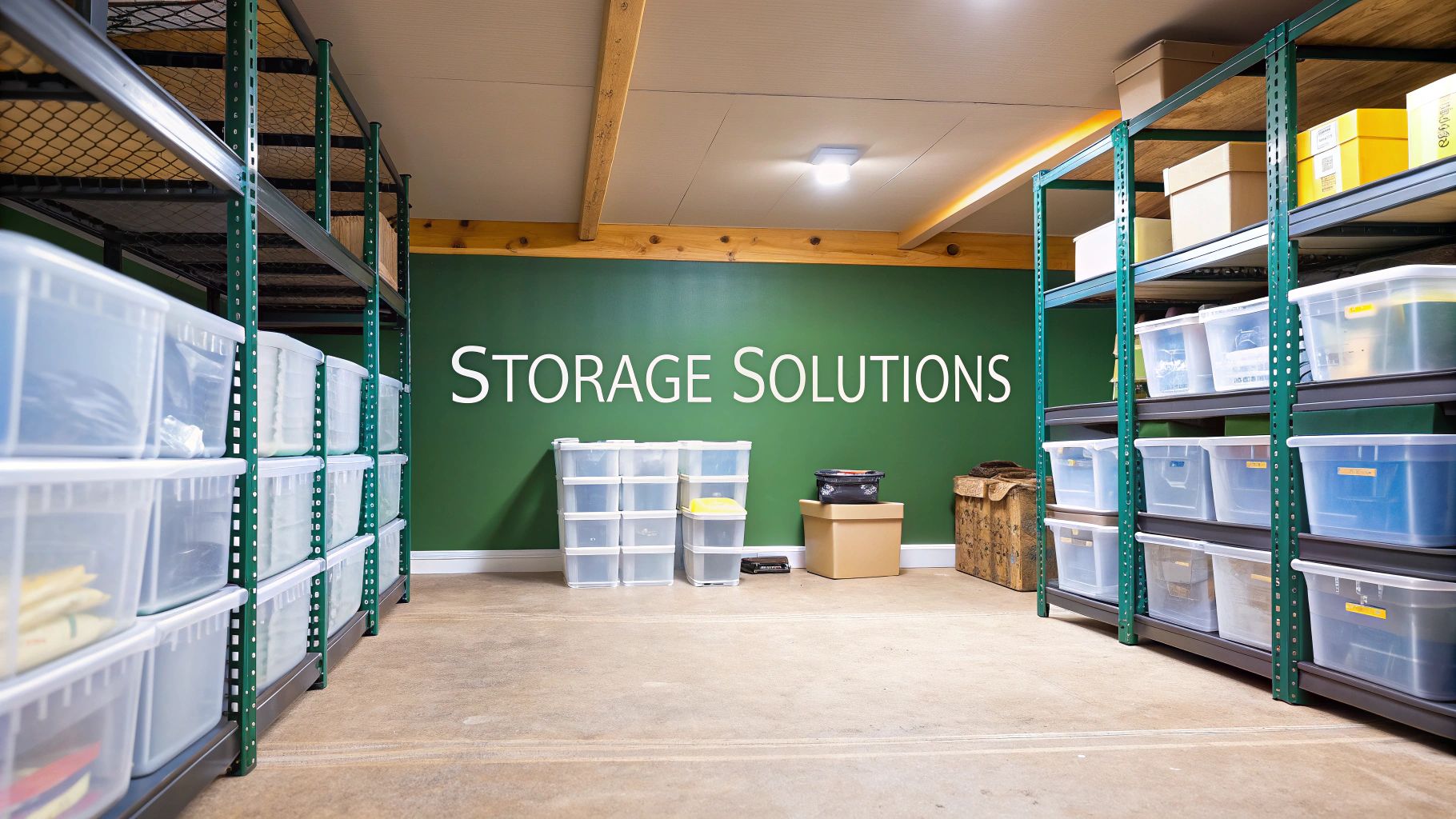
When you think of basement storage, what comes to mind? For most people, it’s probably a jumble of dusty shelves, mismatched plastic bins, and boxes that haven't been opened in years. The right approach, however, can turn this underused space into a seriously functional, orderly extension of your home. It’s like discovering a whole new room you never knew you had.
Transforming Your Basement From Chaos to Order
Let's be honest: the word "basement" often conjures images of a dim, slightly damp space. It’s the default dumping ground for holiday decorations, old furniture, and all those things you might need someday. Before you know it, it becomes the final frontier of home organization—an overwhelming mess you'd rather ignore.
But that overlooked area holds incredible potential. It’s not a problem space; it's an untapped asset just waiting to solve your home's storage crisis.
The key is to start seeing it differently. Instead of a chaotic mess, picture a well-lit, accessible library for your belongings. This guide is your roadmap to get there. We’ll walk through everything from assessing your needs and tackling environmental hurdles (like dampness) to putting a solid system in place that keeps your stuff safe, sound, and easy to find.
Your Roadmap to an Organized Basement
Creating a functional storage area involves a lot more than just buying a few shelving units. It's a strategic process that ensures your setup is practical and built to last. The journey breaks down into a few key steps:
- Prepare the Environment: First things first. Address moisture, pests, and lighting before a single box moves in.
- Choose Smart Systems: Select the right shelving, containers, and vertical solutions that actually fit the items you need to store.
- Implement a System: This is where the magic happens. Use effective packing, labeling, and zoning techniques so you can find anything in seconds.
- Long-Term Maintenance: Set up a few simple routines to keep the space organized for years to come, not just a few weeks.
This drive for better organization isn't just a personal goal; it’s part of a much bigger trend. The global home storage market was valued at $82.3 billion in 2024 and is expected to hit a massive $135.7 billion by 2035. Why the boom? More people are living in smaller spaces and need smart, space-efficient solutions.
By tackling your basement, you're not just cleaning up. You’re making a smart investment in your home's functionality and your own peace of mind. To get a head start on maximizing your space, check out our guide to declutter your home.
Conquering the Basement Environment Before You Organize
Before you even think about buying a single shelf or bin, you have to prepare the battlefield. Your basement has one primary enemy that will sabotage all your hard work if you let it: moisture. Think of your basement's air like a sponge; if it’s damp, everything it touches will eventually become damp, too. That’s a fast track to mold, mildew, and musty odors.
Getting this initial prep work right is the single most important step for successful basement storage solutions. Skipping it is like building a house on a shaky foundation—it’s only a matter of time before things start to go wrong. If you tackle the environment first, you’re creating a safe, stable space that will protect your belongings for years to come.
Assess and Control Moisture Levels
Your first job is to become a moisture detective. Basements are naturally prone to dampness simply because they’re below ground. Even a basement that seems dry can have humidity levels high enough to cause damage over time.
Start with a quick visual inspection. Look for the obvious signs of water getting in, like dark stains on the walls or floor, peeling paint, or a white, chalky powder on the masonry called efflorescence. These are all red flags signaling that water is seeping through the foundation. You'll want to seal any small cracks in the concrete walls or floors with a quality masonry crack filler to stop those minor leaks at the source.
A healthy basement should maintain a relative humidity level between 30% and 50%. Anything higher creates a breeding ground for mold and mildew, which can start growing in as little as 24 to 48 hours under the right conditions.
Next, invest in a reliable dehumidifier. Seriously, this device is non-negotiable for basement storage. It actively pulls moisture right out of the air, keeping everything dry and stable. For the best results, get a model with an automatic drain hose so you don't have to constantly empty a bucket. Getting this right is a huge deal, and you can learn how to reduce humidity in your home with a few other simple tricks.
Making sure your basement is dry is the crucial first step in turning chaos into order, as this simple visual guide shows.
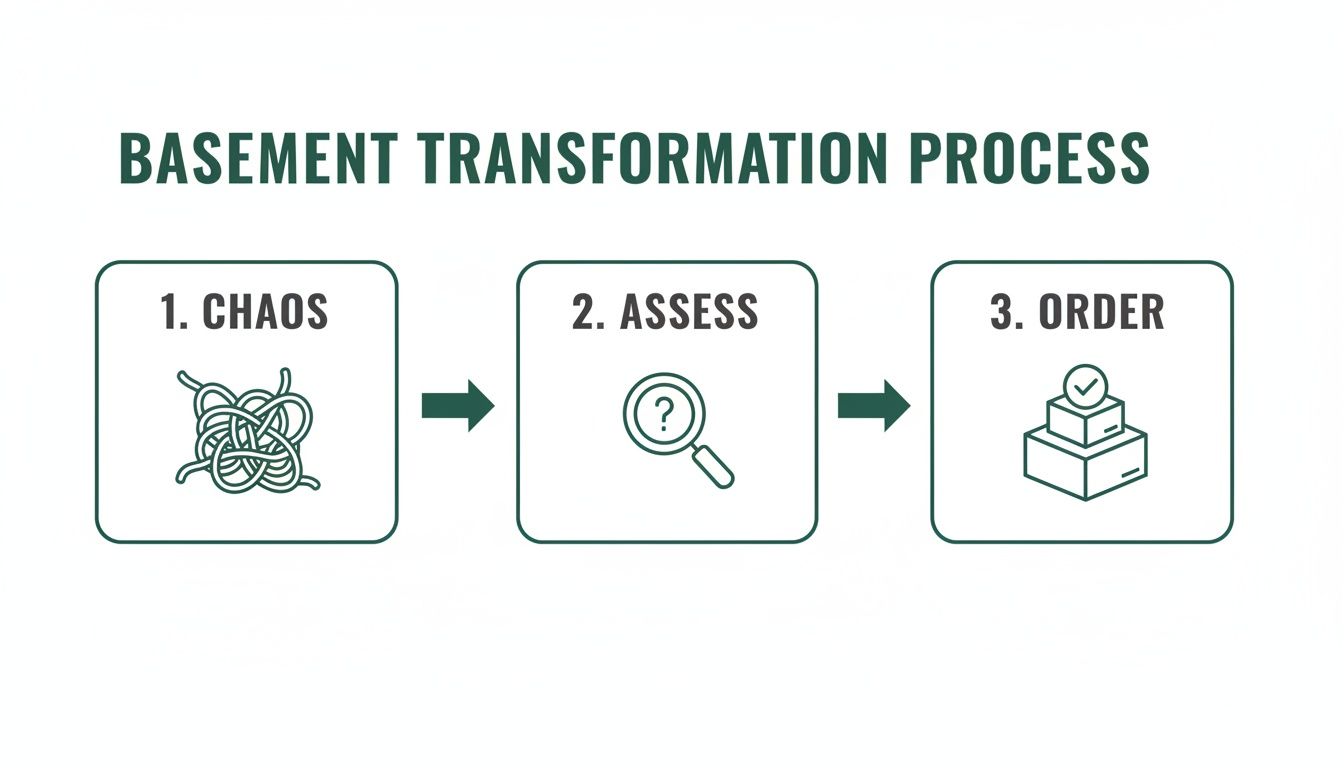
This process really drives home the point that moving from chaos to order requires that critical assessment phase, where getting the environment under control is everything.
Deep Clean and Prepare the Space
With moisture under control, it's time for a deep clean. This isn't just about making the space look nice; it’s about getting rid of potential food sources for pests and any mold spores that might be hanging around.
Declutter Ruthlessly: Before you start scrubbing, get everything out. This is the perfect time to sort items into keep, donate, and toss piles. Be brutally honest with yourself about what you truly need to store down there.
Scrub Everything: Clean the floors and walls with a heavy-duty cleaner made to kill mold and mildew. A simple mixture of water and bleach can work wonders, but make sure the area is well-ventilated while you work.
Implement Pest Control: Basements are prime real estate for pests like spiders, silverfish, and rodents. Seal up any gaps around pipes or windows where they might be sneaking in. You might also want to put down some traps or call a professional exterminator for a preventative treatment.
Upgrade Lighting for Safety and Functionality
Finally, let’s talk about lighting. A dimly lit basement isn't just depressing, it’s unsafe. You can’t organize what you can’t see, and trying to find something in the dark is a recipe for frustration.
Swap out those old, dim fixtures for bright, energy-efficient LED shop lights. They provide fantastic, even illumination and use way less power than old-school fluorescent bulbs. Good lighting completely transforms the space from a dark cave into a functional, welcoming room, which makes all your organizing efforts that much more effective.
And if you’re really concerned about creating the perfect environment for sensitive things like important documents or electronics, it might be worth looking into the benefits of off-site climate-controlled storage for total peace of mind.
Choosing The Right Basement Storage Systems
Once your basement is dry, clean, and well-lit, it’s time to bring in the hardware. This is the fun part—building the framework that will hold your entire organization system together. Picking the right basement storage solutions is more than just grabbing what looks good at the hardware store; it's about matching the system to your stuff, your budget, and the unique quirks of your basement.
Think of it like stocking a library. You wouldn’t put heavy, leather-bound encyclopedias on a flimsy paperback rack, right? The same logic applies here. The shelving that's perfect for your heavy toolboxes is going to be completely different from what you need for holiday decorations or old photo albums.
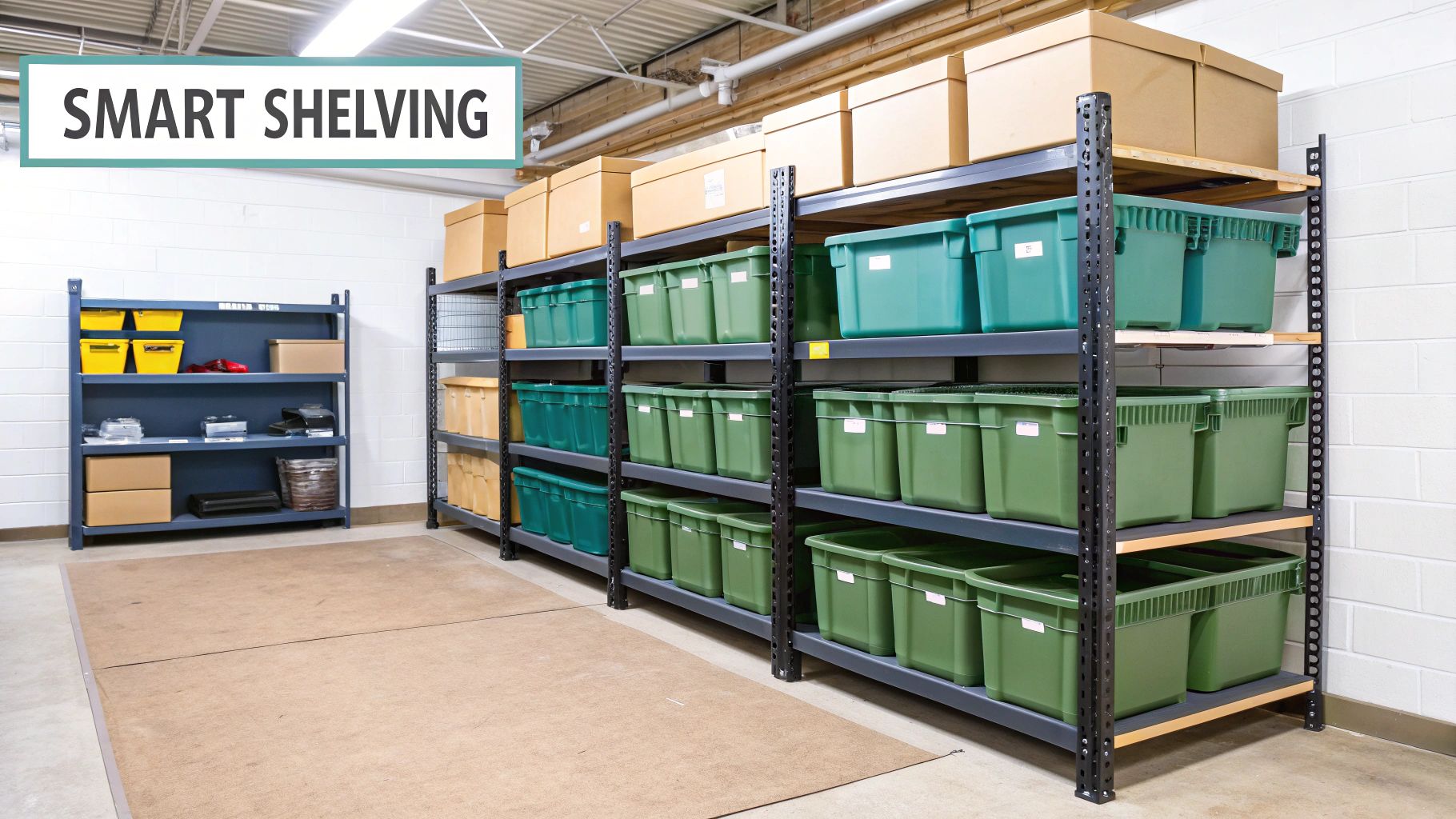
Heavy-Duty Metal Shelving
When you need pure, brute strength, nothing beats industrial-grade metal shelving. These are the Clydesdales of the storage world, built to handle serious weight without complaining, buckling, or sagging. Usually made from steel, they’re the go-to for anything bulky and heavy.
If you're a DIYer with a collection of power tools, paint cans, and bags of potting soil, metal racks are your best friend. They’re also typically designed with open sides, which is a huge plus for air circulation in a basement where moisture can be a lingering concern.
Just be aware that assembly can sometimes feel like a workout, and cheaper metal shelves might rust if your basement isn’t perfectly dry. Always look for units with a rust-resistant finish, like powder-coated steel, to make sure they go the distance.
Versatile Modular Plastic Units
If your middle name is "Flexibility," modular plastic shelving is calling your name. These systems are lightweight, a breeze to assemble (often without any tools), and incredibly versatile. The best part? They're plastic, so they’re 100% waterproof. They will never rust or rot, making them a fantastic choice for basements that still get a little damp now and then.
These are perfect for the average family's storage needs—think bins of kids' toys, seasonal clothes, and that growing collection of sporting gear. You can rearrange the shelves and change the layout as your life changes. While they don't have the same brute strength as metal, a good quality unit offers more than enough support for most household items.
The demand for these adaptable systems is booming. The home storage market in the United States was valued at around USD 12.05 billion in 2025 and is expected to climb to USD 15.21 billion by 2030. Homeowners are increasingly choosing modular setups for their basements because they can be customized so easily. You can see more on these trends from industry analysts like Mordor Intelligence.
Pro Tip: When you're looking at plastic shelving, always check the weight capacity. A solid unit should hold at least 150-200 pounds per shelf, which is plenty for most storage bins. Speaking of bins, if you want to get your container game right, check out our guide on choosing the best storage boxes.
To help you decide, let's break down the common materials side-by-side.
Comparison of Basement Shelving Materials
Each material has its place. The trick is to pick the right one for the right job in your specific basement environment.
Going Vertical with Wall and Overhead Racks
So many people forget to look up! The vertical space in your basement is pure, untapped potential. Getting things off the floor is priority number one to protect them from moisture, and this is where wall-mounted and overhead racks shine.
Wall-Mounted Shelving: Perfect for freeing up floor real estate. Install them over a workbench for easy access to tools or run them along a wall to hold smaller bins and supplies.
Pegboard Systems: A classic for a reason. A pegboard with an assortment of hooks and baskets is an amazing way to organize hand tools, craft supplies, and all those little odds and ends that would just get lost in a big bin.
Overhead Racks: These are the ultimate "set it and forget it" solution for long-term storage. Think camping gear, luggage, or the giant box of holiday lights you only need once a year. Ceiling-mounted racks get bulky items completely up and out of your way, reclaiming valuable floor space.
The best systems often mix and match. You might use heavy-duty metal racks for the workshop area, modular plastic units for family storage, and overhead racks for seasonal stuff. By combining them, you can build a truly custom, super-efficient storage space that fits your life perfectly.
The Art of Strategic Packing and Labeling
You’ve got the sturdy shelving in place, which is a great start. But the real secret to a functional basement is in the details—how you pack your stuff and, more importantly, how you find it again later. This is exactly where most organizing projects go off the rails. A good packing and labeling system is what makes all that hardware actually work for you.
First rule of basement club: say goodbye to cardboard boxes. Sure, they're fine for a move, but in a basement, they're basically a sponge for humidity. That moisture creates a five-star resort for mold, mildew, and pests, putting your belongings at risk. Over time, they also get soggy and collapse, which means crushed boxes and broken keepsakes.
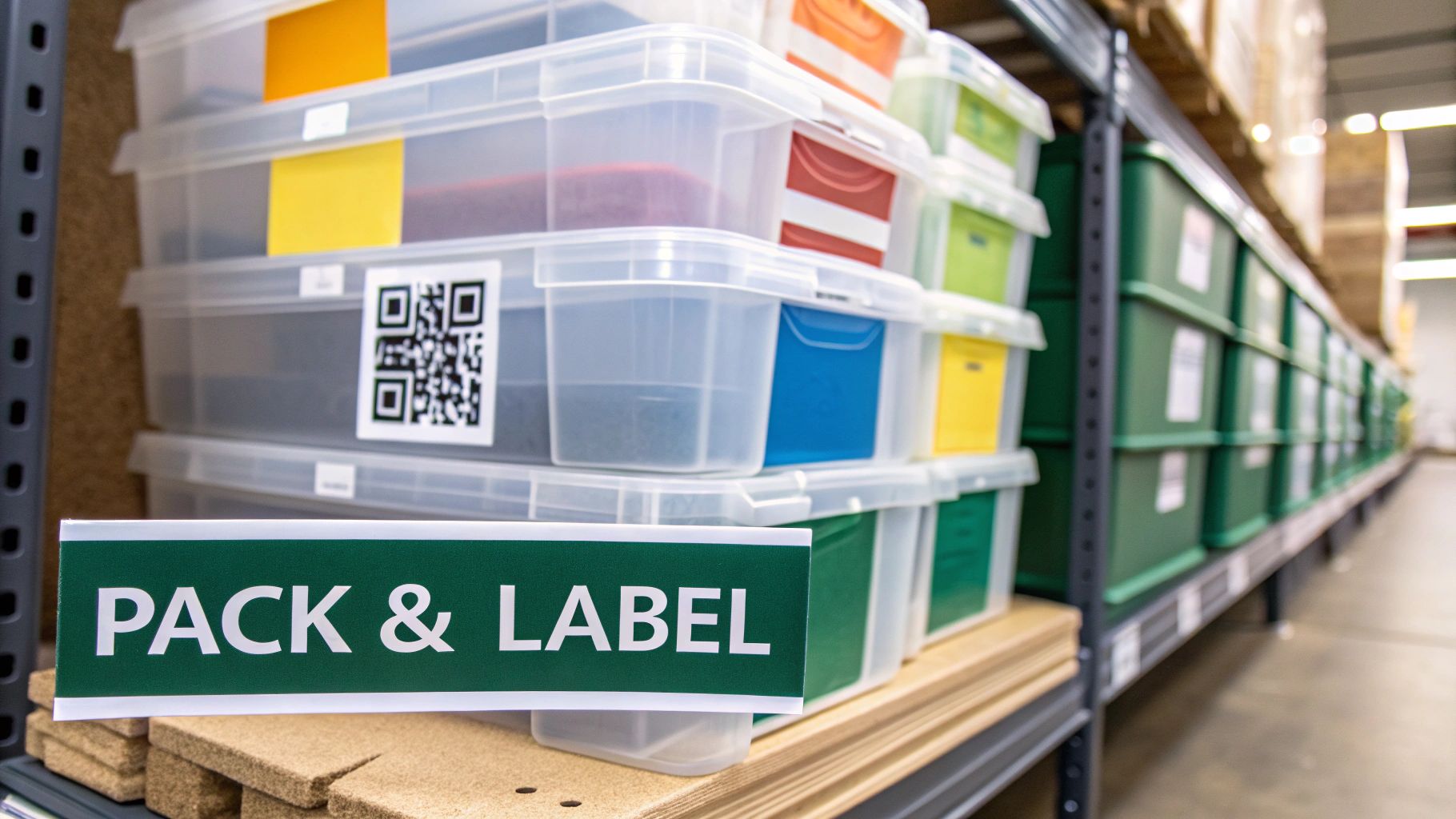
Your new best friend is the clear, airtight plastic bin with a locking lid. This isn't just a suggestion; it's a non-negotiable upgrade. Clear sides let you peek inside without unstacking everything, and the airtight seal is your best defense against moisture and critters. Consider them a core part of any smart basement storage solutions.
Creating an Intuitive Labeling System
A bin without a label is just a mystery box waiting to frustrate you. You need a system that tells you exactly what’s inside at a glance, turning a frantic search into a simple grab-and-go.
Think of it as creating a card catalog for your personal library of stuff. It needs to be clear, consistent, and instantly understandable.
Color-Coding for Quick Identification: Assign colors to categories. It's simple but incredibly effective. Maybe red is for holiday decor, blue for beach gear, and orange for camping equipment. A colored dot or label on each bin lets you spot the right category from across the room.
Detailed Content Lists: Don’t just scribble "Christmas Stuff" and call it a day. Be specific. A better label reads: "Christmas - Living Room Decor, Tree Skirt, Mantle Stockings." The more detail now, the less guesswork later.
QR Codes for a Digital Inventory: If you like a little tech in your organization, QR codes are a fantastic tool. Use a simple spreadsheet or an inventory app to list every single item in a bin. Generate a unique QR code for that list, print it out, and stick it on the side. When you need to find that specific ornament, a quick scan with your phone shows you the complete contents.
A great labeling system is the key to long-term success. It’s the difference between a truly useful storage area and a neatly stacked pile of clutter. Your goal is to find any item in minutes, not hours.
For some next-level ideas, check out our guide on the best way to label storage bins to really perfect your system.
The Power of Basement Zoning
With your bins all packed and labeled, there's one final step: creating "zones." Think of it like setting up different departments in a store. Instead of shoving bins wherever they fit, you’ll dedicate specific areas to specific categories. This simple layout makes finding and putting things away almost effortless.
Create zones that actually make sense for your life and how you use your things. A common setup might look something like this:
- Seasonal Zone: For holiday decorations, winter coats, and summer beach gear.
- Archives Zone: For sentimental items like photo albums and important documents (as long as they're in waterproof containers!).
- Utility & Tools Zone: For all your DIY supplies, paint cans, and household tools.
- Sporting Goods Zone: For bikes, skis, camping equipment, and other gear.
Zoning turns your basement from a dumping ground into a functional warehouse for your life. By grouping similar items together, you always know exactly where to look. It’s the final piece of the puzzle that ensures your newly organized basement stays that way. And when it comes to keeping bulk food or other goods fresh, picking the right food storage container is just as critical.
When Your Basement Isn't an Option
While having a big, organized basement is great, let’s be real—not everyone has one. For millions of people in apartments, condos, or homes built on a simple slab, that kind of on-site storage is a total luxury. When your living space is already tight, figuring out where to put seasonal gear, family keepsakes, or hobby equipment feels like an impossible puzzle.
This is where off-site storage stops being a simple convenience and becomes a smart extension of your home. It’s not about ditching your stuff; it’s about giving it a safe, accessible home of its own so you can get your living room back. The good news is that storage today has come a long way from the old-school roll-up door in some far-off industrial park.
Traditional Self-Storage Units
When most people hear "off-site storage," they picture a traditional self-storage facility. You know the ones—they offer individual, locked units in all sorts of sizes, from a tiny closet to a space big enough for an entire house's contents.
This route makes a lot of sense when you need to store a large amount of stuff and want to be able to get to it yourself, anytime. Think of a family doing a major home renovation. A big drive-up unit where they can easily load and unload furniture and tools would be a lifesaver. A small business owner might use a unit for the same reason, just for extra inventory or equipment.
The main downsides here are the effort and logistics. You’re on the hook for packing everything up, renting a truck, hauling heavy boxes, and then playing a real-life game of Tetris to cram it all in.
The Rise of Valet Storage Services
A much more modern take on this is the valet or "by-the-box" service. Basically, it's self-storage with a personal concierge. Instead of you driving to the storage unit, the storage comes right to you. Companies like Endless Storage ship you sturdy boxes, you pack them, and then they're picked up and taken to a secure, often climate-controlled facility.
Need something back? Just log into an online portal, click on the box you need, and it gets delivered right to your door. This model is a total game-changer for city dwellers and anyone in a small apartment who doesn't have a car or the time to schlep things across town. It’s perfect for storing specific items—like your winter parkas, camping equipment, or important files—without having to rent a whole room you’ll barely even use.
This shift toward more convenient, on-demand options isn't just a gimmick; it reflects a huge market trend. As more people move to cities and living spaces get smaller, the need for easy-access overflow storage has exploded, especially for those without a basement to fall back on.
The numbers don't lie. The global self-storage market was estimated at 2.6 billion rentable square feet in 2025 and is on track to hit 3.1 billion by 2030. The fastest-growing part of that market? Smaller, climate-controlled units designed specifically for apartment residents who just need a place for their extra stuff.
Making the Right Choice for Your Needs
So, how do you choose? Whether it's on-site vs. off-site, or traditional vs. valet storage, the best answer really just depends on your situation. Each option strikes a different balance between cost, convenience, and how easily you can get to your things.
Imagine a city dweller with a prized vinyl record collection but zero space in their tiny studio. A big, traditional self-storage unit would be overkill and might not have the climate control needed to protect the records. But a valet box storage service offers a secure, climate-stable spot for just those few specific boxes—a perfect fit. For people with targeted storage needs, it’s one of the best alternatives to self-storage.
To help you weigh your options, we've put together a simple comparison table that breaks down the three main approaches to storage.
On-Site Basement Storage vs. Off-Site Solutions
This table is designed to help you decide between using your own basement and opting for an external storage service by comparing the key features of each.
Ultimately, the best basement storage solutions are the ones that actually fit your life. And if you don't have a basement at all, knowing about these powerful off-site options means you still have a clear path to a decluttered, organized home.
Keeping Your Organized Basement in Shape for the Long Haul
Getting your basement organized is a huge win, but the real secret to success is keeping it that way. Think of it less as a one-and-done project and more like a living system. It needs a little ongoing attention to stay functional. After all that hard work, the last thing you want is for the chaos to slowly creep back in.
The trick is to build simple routines around the natural rhythm of your life. Your stuff will shift with the seasons anyway, so why not lean into it? Breaking down the upkeep into small, manageable tasks keeps it from ever feeling like a massive chore again.
Make a Seasonal Rotation Schedule Your New Habit
One of the best things you can do is the seasonal swap. It’s a simple, twice-a-year routine where you rotate out-of-season items with the stuff you need right now. This keeps your most-used gear front and center while everything else stays neatly tucked away.
- Spring Swap (think April or May): Time to pack up the heavy winter coats, snow boots, sleds, and those bulky holiday decoration bins. In their place, bring out the patio cushions, gardening tools, beach gear, and summer sports equipment.
- Fall Swap (around October or November): Now, put all that summer stuff away. Pull your winter gear to the front so snow shovels, ice melt, and holiday bins are easy to grab the moment you need them.
This process is also the perfect, built-in opportunity to declutter. As you handle each item, just ask yourself: "Did I actually use this last season?" If the answer is no, it might be time to donate or toss it.
Dedicating just a couple of hours twice a year to this swap actively stops clutter before it starts. It’s the single best way to make sure your basement storage solutions keep working for you.
Give Your Basement an Annual Check-Up
Beyond the seasonal swap, a yearly "basement audit" is your secret weapon. Think of it as a quick wellness check for your storage space. Pick a time each year that works for you—maybe a long weekend in January when things are quiet—and run through a quick checklist.
Your annual audit should cover these bases:
- Quick Declutter: Spot anything that has piled up over the year that doesn't have a home. This is where you put that "one in, one out" rule into practice.
- Moisture Check: Do a quick visual scan for any new damp spots on the walls or floor. Give it a sniff test for any musty smells that could signal a new leak.
- Dehumidifier TLC: Pull out the filter and give it a good cleaning. Make sure your dehumidifier is running properly—it’s the MVP for protecting your belongings.
- Label Refresh: Are all your labels still easy to read and accurate? Update any that have faded or no longer match what’s inside the bin.
- Pest Patrol: Look in the corners and along the walls for any signs of unwanted visitors. Catching a problem early is key to preventing a bigger issue.
This simple, proactive routine turns maintenance from a chore into a powerful habit. It’s your guarantee that your organized basement will stay that way.
Your Top Basement Storage Questions, Answered
Even the best-laid plans can hit a snag. When you're in the middle of a big basement organization project, a few specific questions always seem to pop up. Getting a straight answer can be the difference between making real progress and feeling stuck. Here are the most common questions we get about mastering basement storage solutions.
How Can I Store Clothes in a Basement Without Them Getting Musty?
This is the big one, and for good reason—no one wants to pull out their favorite sweater only to find it smells like a damp cave. The secret is creating an airtight, moisture-proof barrier. Your first step is to make sure every single piece of clothing is totally clean and bone-dry before it even thinks about going into a box.
Next up, get some vacuum-sealed bags. They're not just for saving space; they suck all the air out, which is mildew's worst enemy. Once your clothes are sealed up tight, place those bags inside sturdy plastic bins with locking lids. Most importantly, get those bins up off the ground and onto shelves. The concrete floor is where moisture loves to hang out.
Want some extra insurance? Toss a few silica gel packets or a couple of cedar blocks into the bins before you seal them. They'll absorb any sneaky moisture and help keep pests like moths away.
What Is the Best Way to Organize Small Items?
It’s the tiny things—screws, craft supplies, spare parts—that create the biggest messes. For these, you need a system where you can see what you have and grab it easily. My favorite solution is a set of clear, stackable containers with little pull-out drawers. You can spot what you need in a second without having to unstack a tower of bins just to find one little thing.
A great tip for organizing small parts is to label every single drawer, no matter how small. This small step saves an enormous amount of time and frustration later on when you're searching for that one specific screw or button.
Another fantastic option, especially for workshops or craft areas, is a classic pegboard. With a good assortment of hooks, baskets, and small bins, you can get all your tools and supplies off your workbench. It keeps everything visible and within reach, freeing up precious counter space for your actual projects.
Is It Safe to Store Important Photos and Documents in a Basement?
You can store irreplaceable paper items in a basement, but you have to be smart about it. Paper and photos are magnets for humidity, which can lead to warping, mold, or photos sticking together into one giant, ruined block.
The safest bet is to invest in a fireproof and waterproof document safe. Before anything goes inside, protect your photos and papers individually with archival-quality, acid-free sleeves. This simple step prevents ink from bleeding and stops the paper from slowly yellowing over time.
Finally, where you put the safe is just as important as what it is. It needs to live on a high, sturdy shelf. This keeps it safe from any ground-level dampness or, in a worst-case scenario, a minor flood. And for truly priceless things like one-of-a-kind family photos or legal papers, it's always a good idea to create a digital backup first.
Don't have a basement, or just need a more flexible way to store your stuff? Endless Storage is storage without the hassle. We bring the boxes to you, pick them up whenever you're ready, and deliver them back on demand. You get all the benefits of storage without any of the heavy lifting. Get started today at https://www.endless-storage.com.
Frequently Asked Questions
Unveiling the Secrets to Effortless Storage
Endless Storage is available nationwide. You pick a plan, tell us where to pickup, and we'll send a UPS van to collect, whichever state you're in.
Your shipping label will be sent to your email within a few minutes, if not instantaneously. It can also be accessed through your customer profile.
Your box will be shipped to one of our climate controlled self storage facilities in our closest self storage facility. Our manager will accept your package, notify you that your box has been received, and securely stored. Only our managers will have access to Endless Storage boxes.
Email us at admin@endless-storage.com click to live chat with us, or send us a message below.
Never! We're committed to transparent pricing with no surprises. You'll lock in your rate with no hidden fees and no long-term contracts.
Fast access guaranteed! Your boxes will arrive at your doorstep within 48 hours of requesting them back. Need to check on delivery? We provide tracking information for complete peace of mind.
Totally flexible! Store month-to-month with no long-term commitment and cancel anytime.
Everything's online! Use your account dashboard to:
• Set up automatic monthly payments
• Request box returns
• Update your address
• Order additional boxes
• Track shipments
Your boxes are insured up to $100 each. Our customer service team will help you file any necessary claims and resolve issues quickly.
Don't worry – we'll email you right away if there's a payment issue. Your items stay safe, though you may have temporary service interruption or late fees until payment is resolved.
When you request our free storage kits, you'll have 30 days to send in your boxes to activate your 3 months of free storage. Think of it like starting a gym membership – your activation window begins when you receive your kits, and your full free trial begins once you send in your first box. During your free months, you'll experience our complete storage service at no cost.
Your 30-day activation window begins when you receive your storage kits. We'll send you an email confirmation when your kits are delivered, marking the start of your activation period.
If you haven't sent any boxes for storage within your 30-day activation window, your free trial will expire and we'll begin charging the regular monthly rate of $9.99 per box. This helps ensure our storage kits go to customers who are ready to use our service.
A box costs $9.99 per month to store (plus sales tax). This price includes free shipping for standard boxes under 50 lbs. and smaller than 16"x16"x16"
Log into your Endless Storage account, locate the box you would like returned, and simply click Return My Box.
Yes, each box stored with us is insured for up to $100 throughout transit as well as the duration of storage within our facilities.
Your box will be at your doorstep within 48 hours of you requesting it back.
Store 10+ boxes? We'll pick them up for free! After your purchase, we'll contact you to schedule a convenient pickup time and arrange UPS collection.
We trust UPS with all shipments, and every box includes $100 insurance coverage. You'll receive tracking information to monitor your items' journey.
Yes! Visit any of our locations by appointment. Just bring a photo ID matching your customer profile.
For everyone's safety, we can't store hazardous materials, firearms, or perishables. All items must fit within our standard boxes.
It's easy! Order your storage kit online, and we'll ship it to you within 1-2 business days. Your shipping labels will be emailed instantly and available in your account.
We're here to help! Email us at admin@endless-storage.com, use our live chat, or send us a message through your account.
To cancel your storage service with Endless Storage, please email your cancellation request to admin@endless-storage.com. Our team will process your request within 2 business days and confirm your cancellation via email.
We understand packing takes time. However, to maintain your free trial benefits, you'll need to send at least one box within the 30-day activation window. If you need more time, you can always start with one box to activate your trial and send the rest later. You can always reach out to admin@endless-storage.com if you have any issues or concerns.
When you request our free storage kits, you're starting a 30-day window to begin using our storage service.
Important: To activate your free trial, send at least one box for storage within 30 days. If no boxes are sent within this 30-day window, a one-time $50 fee applies to cover materials and shipping costs. This fee is clearly disclosed before you sign up.
Think of it like reserving a hotel room – we're setting aside space and sending specialized packing materials for your use. The fee only applies if you request materials but don't begin storage, similar to a hotel's no-show charge.