Your Guide to the 10x10 Storage Unit What Fits Inside?
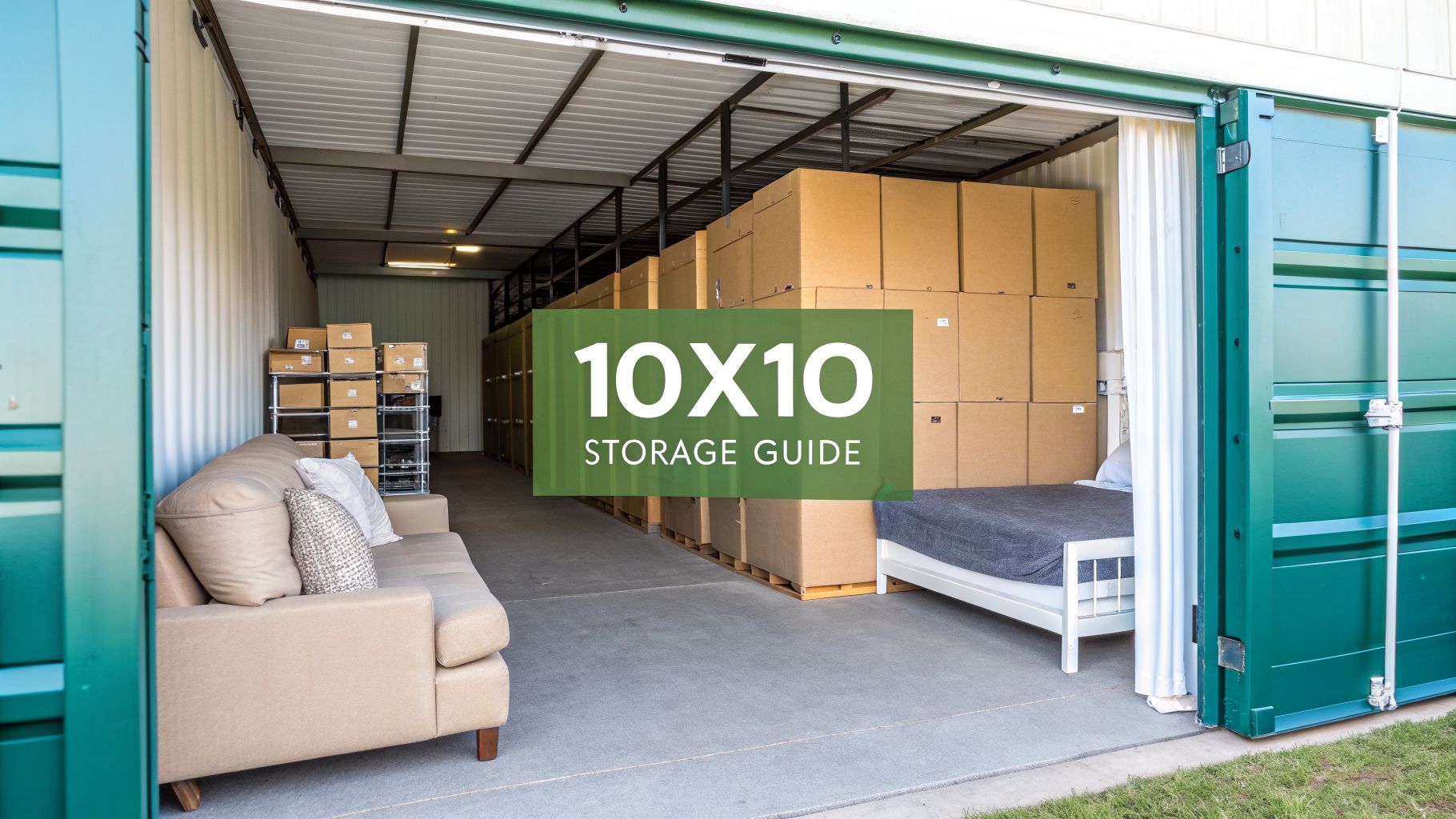
A 10x10 storage unit is one of the most popular sizes out there, and for good reason. It gives you a solid 100 square feet of floor space to work with—think of it as an extra small bedroom or about half of a one-car garage. This makes it the go-to choice for anyone moving out of a one-bedroom apartment or just trying to reclaim some space at home.
What Actually Fits in a 10x10 Storage Unit
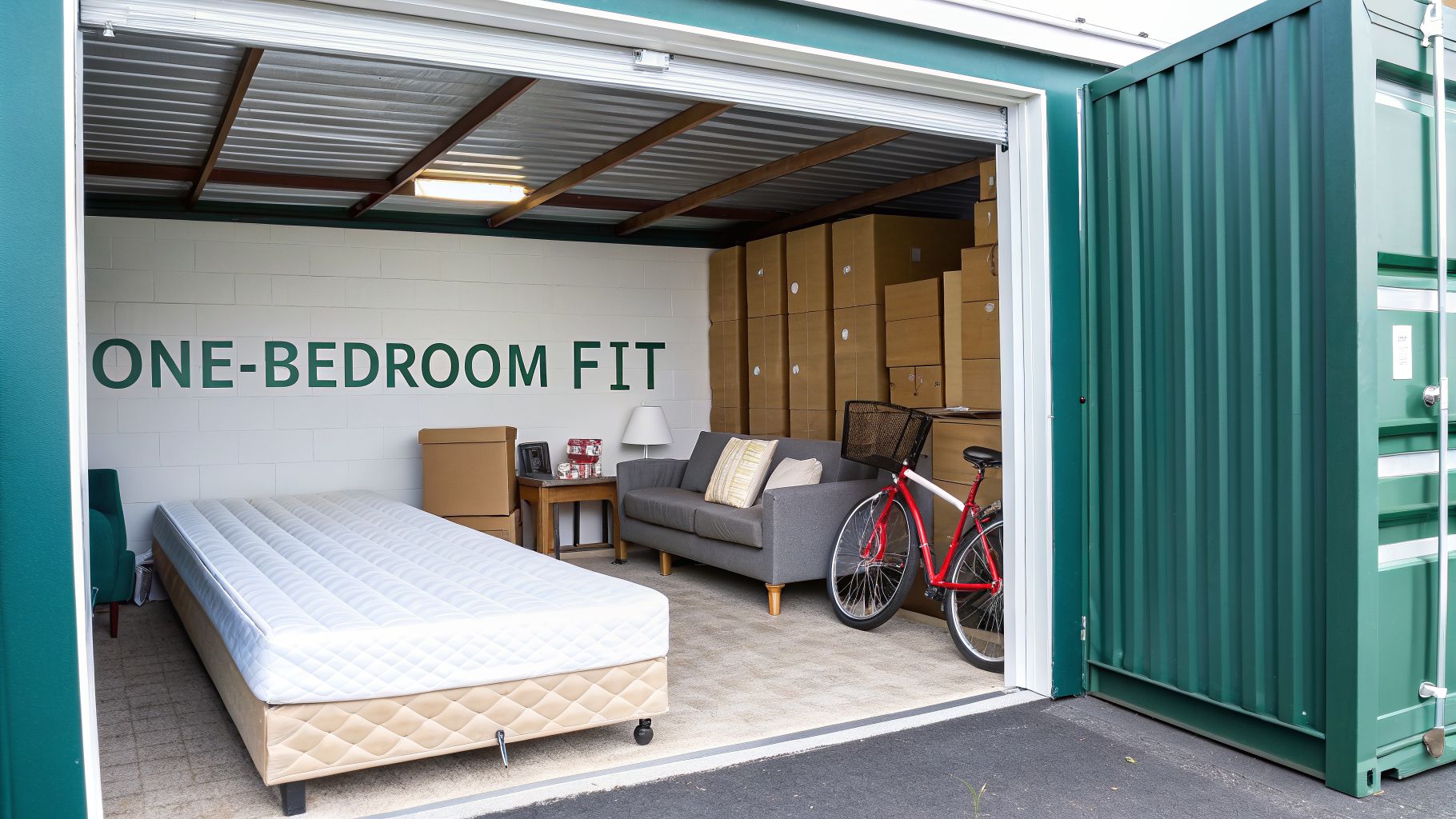
It can be tough to picture exactly what 100 square feet looks like in terms of your actual stuff. The easiest way to think about it is that a 10x10 unit is built to hold the contents of a one or two-room living space. It’s the perfect solution when you’re downsizing, merging two households, or just need to clear out a room for a renovation project.
To help you get a better sense of its capacity, here’s a quick breakdown of what you can typically fit inside.
A Quick Look at What Fits Inside a 10x10 Unit
This table gives you a general idea of how much you can pack into a 10x10 unit. Remember, strategic packing and stacking can make a huge difference in how much you can store.
Ultimately, a 10x10 unit is surprisingly spacious and can handle a wide variety of large and small items when organized well.
Visualizing Your Apartment in a 10x10 Unit
Let's put it in real-world terms. Say you're moving out of a one-bedroom apartment. A 10x10 unit can easily take on all your big-ticket items. You could fit your queen-sized bed, a sofa, a dresser, and a small dining set, and still have enough room left over for dozens of boxes filled with clothes, kitchen supplies, and other personal items.
The real trick is to think vertically. With a standard ceiling height of around eight feet, you actually have 800 cubic feet of volume to play with. This means stacking boxes high, standing sofas on their end, and taking apart bed frames to use every last inch of space.
A 10x10 storage unit is the sweet spot for many people—it's large enough for major furniture from a one or two-bedroom apartment but not so large that you feel like you're paying for empty air.
Storing Business and Recreational Items
This unit isn’t just for moving. Small business owners often use a 10x10 as a mini-warehouse to hold extra inventory, office furniture, or boxes of archived files. It gives you just enough room to keep supplies organized and accessible without cluttering up your main workspace.
It's also a fantastic choice for your fun stuff. While it's too small for a car, a 10x10 can easily store a motorcycle, a small tractor, or several kayaks and bikes. This helps you get that valuable garage space back at home, keeping your seasonal gear safe and out of the way until you need it. If your gear is just a little too big, you can always go up a size. To see what more space looks like, check out our guide on the capacity of a 10x15 storage unit.
Decoding the True Cost of a 10x10 Unit
When you start hunting for a 10x10 storage unit, the first thing you’ll notice is the advertised monthly rate. That number is a great starting point, but it rarely tells the whole story. The price you see upfront often doesn't include several other factors that can add up.
Getting a handle on these variables from the get-go is the key to budgeting accurately and avoiding any sticker shock later on. The national average for a standard 10x10 unit usually sits around $115 to $125 per month, but think of this as just a baseline. What you actually pay will depend on your location, the features you need, and a few other essential costs.
Key Factors That Influence Your Monthly Rate
By far, the biggest factor driving your monthly cost is geography. A 10x10 unit in a bustling city like Los Angeles can easily top $200 per month. Meanwhile, you might find the exact same size unit in a suburb or a smaller city like Houston for just $80. It all comes down to local real estate values and demand.
Beyond where you live, a few other key elements will move the price tag up or down.
- Seasonality: Demand for storage skyrockets during peak moving seasons—think summer months and around major holidays. Renting then can mean higher rates, while you’re more likely to snag a deal in the off-season.
- Amenities: Features like climate control are a must if you're storing sensitive items like wood furniture, electronics, or artwork. Expect to pay 20-30% more for a climate-controlled unit, but it’s worth it to protect your valuables from extreme temperatures and humidity.
- Access Type: A ground-floor, drive-up unit offers the ultimate convenience, letting you load and unload right from your car. This premium access usually costs more than an indoor unit on an upper floor where you’ll need to use an elevator.
The sticker price is your starting line, not the finish line. Always ask for a full breakdown of costs to understand the total monthly commitment before signing a lease.
The Hidden Costs You Cannot Ignore
The monthly rent is just one piece of the puzzle. Several other costs, some mandatory and others highly recommended, will contribute to your total bill. If you don't account for them, your budget could be off by a surprising amount.
First up, most facilities charge a one-time administrative fee when you sign the lease. This usually falls between $10 and $25 and covers the paperwork to get your account set up. It’s not a recurring charge, but it is an immediate out-of-pocket expense.
You'll also need a lock. While facilities often sell them on-site for convenience, you’re usually better off buying your own high-quality disc lock for better security. It’s a small but necessary investment of $15 to $50.
Insurance Is Not Optional
Perhaps the most significant extra cost is storage insurance. Almost every reputable facility will require you to have coverage for your belongings. They will likely offer their own insurance plan, which can tack on another $10 to $30 to your monthly bill.
As an alternative, some homeowner's or renter's insurance policies cover items in off-site storage. It’s always a good idea to check your existing policy first, as this could save you money. Just be sure to bring proof of coverage with you. For a deeper dive into this and other expenses, you can learn more about the complete cost of a storage unit in our detailed guide.
By adding up the base rent, potential fees, and mandatory insurance, you get a much clearer picture of what your 10x10 storage unit will actually cost you each month. Factoring in all these elements ensures you can compare different facilities accurately and find one that truly fits your budget.
How To Pack Your 10x10 Unit For Maximum Space
Getting all your stuff into a 10x10 storage unit is one thing, but organizing it so you can actually find anything later? That's a whole different ballgame. A little bit of strategy is the difference between a functional, easy-to-use space and a frustrating, Tetris-like mess. The goal is simple: make every square foot work for you.
The best packing plan starts long before you pull up to the facility. It all comes down to having the right supplies and a clear game plan. This prep work ensures your belongings stay safe, organized, and easy to grab whenever you need them.
Start with a Solid Foundation
Before a single box goes into the unit, take a minute to map out your layout. So many people make the mistake of just shoving everything to the back wall. Instead, think like a librarian and create aisles. A central walkway from the door to the back is a total game-changer, letting you get to items without having to move a dozen boxes first.
For a sturdy, organized stack, you'll want to use high-quality moving boxes that are all the same size. I know it's tempting to grab free boxes from anywhere you can find them, but their weird shapes and sizes create wobbly towers that are just asking to fall over.
- Standardize Your Boxes: Using same-sized boxes, like all medium or all large, lets you build stable columns. It's just like building with blocks.
- Label Everything: This is a big one. Clearly label each box on at least two sides with what's inside and which room it came from. It'll save you from ripping open ten boxes just to find the coffee maker.
- Create an Inventory: To really take it to the next level, make a simple map or a digital list. Just number your boxes and note their general spot in the unit (e.g., "Box #12: Kitchen gadgets, back left wall").
Professional movers will tell you the best-packed units are all about access. Leaving that walkway means you can grab something from the back of your 10x10 storage unit just as easily as the stuff you left right by the door.
This little bit of planning upfront pays off big time. It turns your unit from a chaotic dumping ground into a well-managed extension of your home.
Pack Smartly From Back To Front
Once you have your plan, it’s time to start loading. The golden rule is "LIFO"—Last In, First Out. This means the things you'll need the least should go to the very back of the unit. Think seasonal decorations, old photo albums, or sentimental items you want to keep but won't need to access regularly.
Heavy, bulky items like furniture and appliances should line the walls and form the base of your stacks. Get those sofas, dressers, and heavy boxes on the floor first. This gives you a solid foundation and keeps your lighter, more delicate items from getting crushed. For some great tips on getting your space in order, check out this guide on how to organize a storage unit.
As you start stacking, make sure you're keeping the weight distribution in mind. Lighter boxes and anything fragile should always be placed on top. If you want a deep dive into decluttering and arranging your items, you might find our guide to organizing your storage unit really helpful.
It's also worth remembering that the sticker price isn't always the final price.
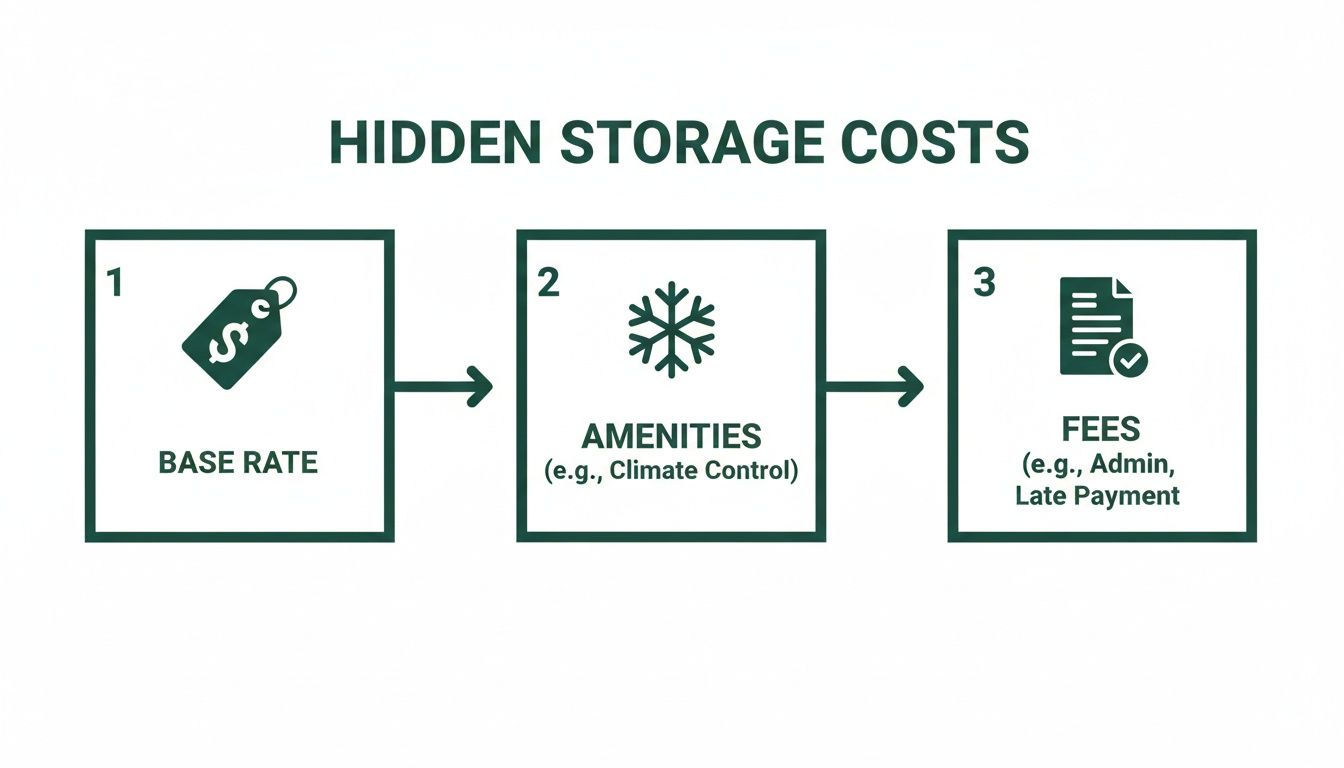
As you can see, things like amenities and fees can add up, so it's always smart to factor those in when you're budgeting.
Finally, anything you know you’ll need frequently should be placed right near the door for quick, grab-and-go access. This could be work tools, sports gear, or important files. This simple, strategic placement makes all the difference in making your 10x10 storage unit work for you.
Comparing Storage Solutions and Alternatives
Choosing a 10x10 storage unit might seem like the go-to move, but is it always the smartest one? Before you sign on the dotted line, it’s worth looking at all your options. Getting the size and type of storage right is key—it means you won't be paying for empty air or trying to cram everything into a space that’s just too small.
The real goal is to find a solution that fits your life perfectly. That means comparing different unit sizes, but also looking at totally different ways to store your stuff. For some people, a traditional unit is the answer; for others, a more modern, flexible approach just makes more sense.
Self-Storage Sizes Head-to-Head
While the 10x10 storage unit is a fantastic all-rounder, it sits right between two other popular sizes: the smaller 5x10 and the much larger 10x20. Knowing when to size up or down can save you a ton of money and a major headache.
The 5x10 Unit (50 sq. ft.): Think of this as a big walk-in closet. It's perfect if you're only storing items from a studio apartment or a single dorm room. If you mostly have boxes, a few small furniture pieces, and a mattress, the 5x10 is a much more wallet-friendly choice.
The 10x20 Unit (200 sq. ft.): Now we’re talking about a space the size of a standard one-car garage. This is what you need if you're moving the contents of a two or three-bedroom house. It can easily handle bulky furniture sets, all your major appliances, and a mountain of boxes with room to spare.
The trick is to be realistic about how much stuff you actually have. If you’re unsure, it’s usually better to go a little bigger. There’s nothing worse than showing up on moving day only to find your sofa won’t fit, forcing you into a stressful and expensive last-minute upgrade. When looking at your choices, it can help to check out guides on the best storage units Perth to get a feel for what the market offers.
Traditional Units vs Modern By-the-Box Services
It's not just about size anymore—the entire storage model is changing. The classic self-storage experience of renting a unit, hauling your things to it, and locking it up isn't the only option. A newer player, the by-the-box service, offers a totally different way of thinking about storage.
Services like Endless Storage work on a simple idea: you only pay for the exact space you use, one box at a time. Instead of renting an entire 10x10 storage unit, the company sends you sturdy boxes. You pack them, they pick them up, and your things are kept in a secure, climate-controlled facility. When you need something back, you just request it online, and it’s delivered right to you.
This shift from renting a fixed space to paying per item completely changes the storage game, especially for people in cities or anyone who doesn't have a roomful of stuff to store.
This model is a game-changer for city dwellers in small apartments who need to store seasonal clothes, documents, or sentimental items but don’t have enough to justify a whole unit. It completely cuts out the need to rent a truck or even leave your apartment. You can dive deeper into the pros and cons of these storage unit alternatives to see what fits your situation best.
Which Storage Model Is Right for You?
So, how do you decide between a traditional unit and a by-the-box service? It really boils down to three things: how much stuff you have, how you need to access it, and what level of convenience you’re looking for.
To make it simple, let's compare them head-to-head.
Storage Compared 10x10 Unit vs By-the-Box Service
A 10x10 storage unit is the obvious choice if you’re storing a whole home's worth of furniture. But if you’re just trying to declutter a dozen boxes of books, winter coats, and old records, paying for an entire unit is like buying a bus ticket for just one person. In that situation, a by-the-box service is a far more practical and budget-friendly solution.
When to Avoid a 10x10 Storage Unit
The 10x10 storage unit is one of the most popular choices out there, but it’s definitely not a one-size-fits-all solution. Sometimes, going for this middle-of-the-road option means you're either paying for space you don't need or, worse, you'll run out of room halfway through moving day.
Getting it wrong can cost you money and a whole lot of stress. Let's walk through the times when a 10x10 unit is the wrong call, so you can avoid the headache.
You Have Too Little to Store
The most common misstep is renting way more space than you actually need. If you're just looking to stash a handful of boxes or a few bulky items, a 10x10 storage unit is simply not cost-effective. You're basically paying for 100 square feet of expensive, empty air.
A 10x10 is overkill in these situations:
- Seasonal Items: A few boxes of holiday decorations, some winter gear, or beach chairs don't need a space the size of a small bedroom.
- Document Archiving: Most small businesses storing file boxes won’t come close to filling a 10x10 unit.
- Dorm Room Contents: A college student's mattress, desk, and a few boxes would look lonely and lost in a space this big.
In these cases, you’re just throwing money away. A standard 10x10 can easily run you over $120 per month, which is a high price to pay for storing five or six boxes.
Paying for an entire 10x10 unit to store a few boxes is like buying a whole pie when you only want a single slice. It's expensive and wasteful.
This is where more modern services really shine. For smaller loads, by-the-box storage like Endless Storage makes a lot more sense. You pay only for the items you store, matching your costs perfectly to your needs. Plus, it cuts out the hassle of driving to a facility.
You Have Way Too Much to Store
The flip side of the problem is just as common and way more stressful: underestimating how much stuff you actually own. It’s easy to stand in an empty 10x10 storage unit and feel like it’s a massive space, but furniture and appliances eat up square footage fast.
This is a classic mistake for people moving out of a two-bedroom home or larger. While a 10x10 can often handle the contents of a one or two-bedroom apartment, once you start adding large items like sectional sofas, big dining room tables, or multiple king-size beds, you'll hit the limit fast.
The result is a moving day nightmare. You’re standing there with a half-full moving truck and a storage unit packed to the ceiling. It forces you into a frantic game of Tetris that you can't win, usually ending with a last-minute call to rent a second, more expensive unit. It’s much smarter to be realistic from the start and look at a larger 10x15 or 10x20 unit instead.
Logistical Hurdles Make It Impractical
Finally, a traditional 10x10 storage unit might just be the wrong move because of the logistics involved. Not everyone has a pickup truck or the ability to haul heavy furniture around. The whole process has hidden costs and effort that people often forget to factor in.
Think about these common roadblocks:
- Transportation: Do you have a truck or a large van? If not, you’ll have to add the cost of a rental to your budget, which isn’t cheap.
- Physical Labor: Moving is tough work. Loading and unloading a storage unit involves serious heavy lifting that isn't practical for everyone.
- Urban Living: If you're in a city with tight streets and no parking, just getting a moving truck near your building is a major challenge, let alone driving it out to a storage facility.
If you’re facing these kinds of obstacles, the convenience of a service that picks your things up right from your door is a game-changer. It completely sidesteps the physical strain and logistical headaches, making it a far more practical choice for city dwellers or anyone who just wants to skip the hassle.
Your Pre-Rental Checklist for Choosing a Unit
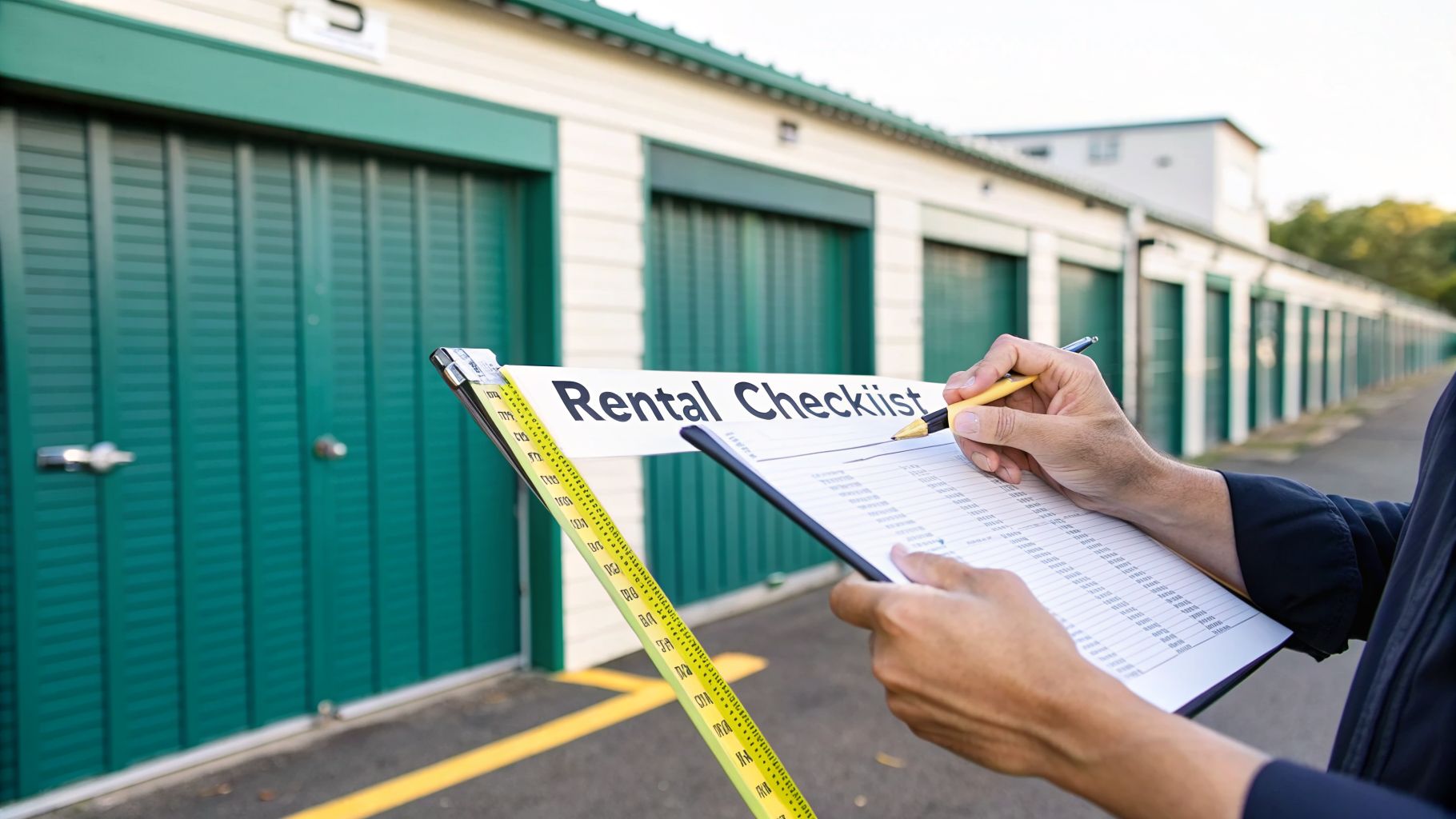
So, you're pretty sure a 10x10 storage unit is the right fit. Before you sign on the dotted line, taking a moment to run through a final checklist can save you from common headaches and make sure your stuff is truly safe. This simple to-do list boils down all the key advice into a few actionable steps.
First things first: take a real inventory. Don't just guess—actually measure your biggest items like sofas, bed frames, and appliances. This one step can prevent the moving-day nightmare of realizing your favorite armchair won't fit through the door.
Next, try to visit the facility in person if you can. A firsthand look reveals a lot more than any website ever could.
Key Inspection Points
When you visit, pay close attention to the facility's overall condition and security. Look for signs of active pest control, like traps or bait stations, and don't be shy about asking the manager about their methods. A clean, well-maintained property is usually a sign of good management.
You'll also want to verify the security features with your own eyes.
- Gated Access: Is the property fully fenced with a secure, computer-controlled gate?
- Surveillance Cameras: Can you see cameras covering the grounds, especially near where your unit would be?
- Sufficient Lighting: Is the facility well-lit? This is a huge factor for safety, especially if you plan on visiting after dark.
This personal inspection gives you a real-world sense of how secure the location is. For a deeper dive into what to look for, you might find our guide on what makes a great self-storage facility helpful.
Scrutinize the Rental Agreement
Finally, never, ever sign a rental agreement without reading the fine print. This contract spells out all your responsibilities and the facility’s rules, including details you could easily miss.
A rental agreement is more than a formality; it's a contract that defines your rights and potential costs. Pay close attention to clauses regarding price increases, late fees, and insurance requirements.
Ask about every potential fee before you commit. Be direct and inquire about admin fees, late payment penalties, and any other charges that aren't part of the monthly rent. You also need to clarify the insurance rules—most facilities require it, so find out if your homeowner's or renter's policy is enough, or if you have to buy theirs. A little due diligence now means no surprise bills later.
Frequently Asked Questions About 10x10 Units
Even with a solid plan, a few last-minute questions always seem to come up before you sign on the dotted line. Here are some quick, straightforward answers to the most common things people ask, giving you that final boost of confidence in your decision.
What Can I Legally Not Store in My Unit?
Every storage facility has ground rules to keep things safe and clean for everyone. While a 10x10 storage unit can hold quite a bit, some items are always off-limits. These rules protect your stuff, your neighbors' belongings, and the facility itself.
As a general rule, you can’t store:
- Hazardous Materials: This is a big one. It includes anything flammable, corrosive, or explosive. Think gasoline, propane tanks, paint, fertilizer, and fireworks.
- Perishable Food: Any food that can spoil or attract pests is a definite no. This is key to preventing infestations and keeping the entire facility clean.
- Living Things: It's illegal and unsafe to store plants, animals, or people in a storage unit.
- Stolen or Illegal Goods: This should go without saying, but firearms, drugs, and any illegally obtained items are strictly forbidden.
Can a Car Fit in a 10x10 Storage Unit?
The short answer is no. A 10x10 unit gives you 100 square feet of space, which just isn't enough to park a standard car. For that, you’ll almost always need a 10x20 unit, which is about the size of a single-car garage.
However, a 10x10 space is perfect for smaller rides. You can easily fit a motorcycle, a jet ski, an ATV, or even a riding lawnmower inside, with plenty of room to spare for your gear and other items.
A 10x10 storage unit is ideal for recreational vehicles and equipment, but for a car, you will need to size up to a 10x20 unit.
Is Climate Control Really Necessary?
Whether you need climate control really just depends on what you're storing. If you're just stashing patio furniture, basic tools, or seasonal outdoor gear, a standard unit will probably do the trick.
But for your more sensitive belongings, climate control is a must-have. It keeps the temperature and humidity stable, protecting your items from warping, cracking, mildew, and rust. You should absolutely opt for a climate-controlled unit if you’re storing:
- Wooden or leather furniture
- Electronics and appliances
- Artwork, photographs, or musical instruments
- Important documents or business records
How Do I Insure My Belongings?
Just about every storage facility will require you to have insurance for the items you store. They usually offer their own insurance policy, which you can add on for a monthly fee that’s typically between $10 and $30.
Before you sign up for their plan, it’s a good idea to check your existing homeowner's or renter's insurance policy. Many policies actually extend coverage to off-site storage, which could save you some money. If yours does, just bring proof of coverage when you go to sign your rental agreement.
Tired of paying for space you don't use? Endless Storage offers a modern alternative. We deliver boxes to your door, pick them up when you're ready, and store them in our secure, climate-controlled facility. Get a quote today and discover a smarter way to store.