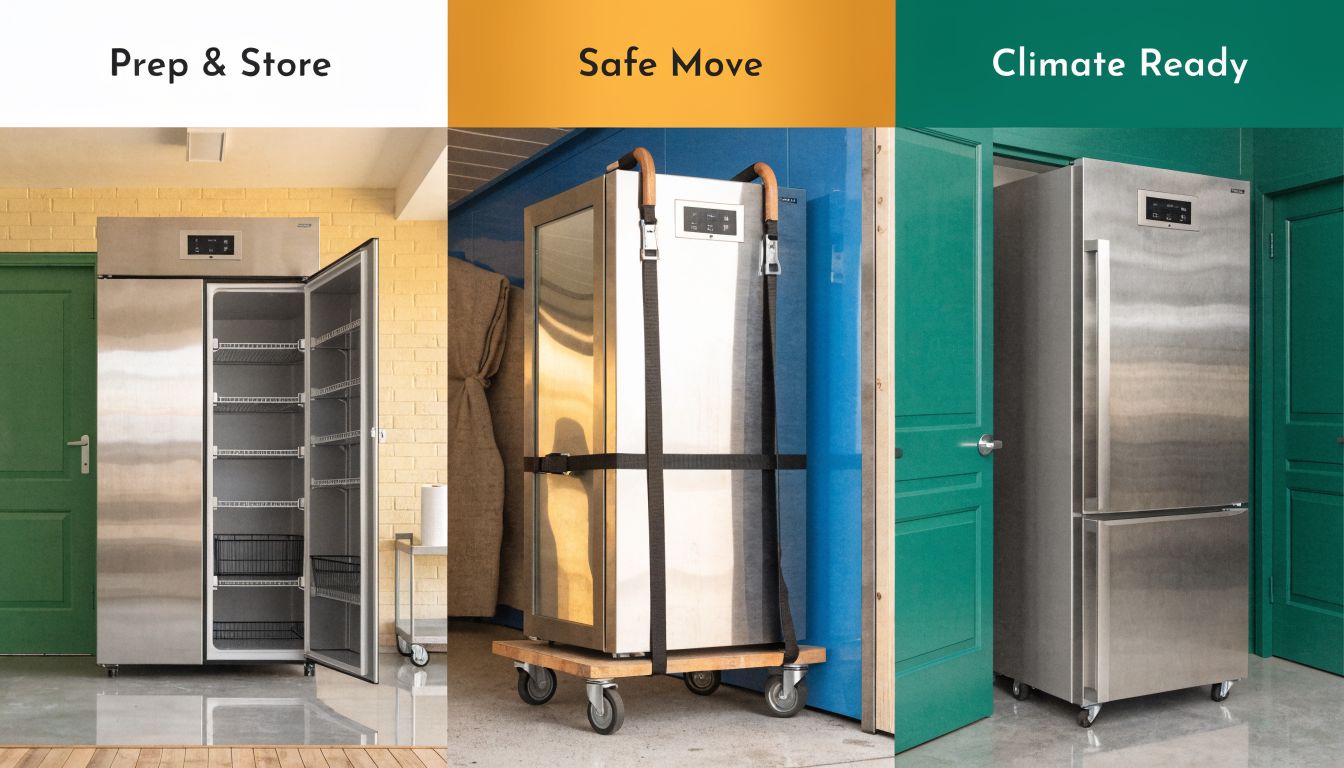
That sticker price you see on a storage unit? It's rarely the full story. While you might spot a deal for as little as $50, the national average usually falls somewhere between $100 and $300 per month. But even that number is just the beginning.
Decoding the Real Price of Your Storage Space

Think of renting a storage unit like booking a flight on a budget airline. The base fare looks great, but once you add essentials like a seat assignment, a checked bag, and maybe even a bottle of water, the final cost swells. The storage industry often plays by similar rules, where the advertised monthly rate is just one piece of a much larger puzzle.
The true cost is shaped by a surprising number of factors that go way beyond that monthly rent. These variables can seriously inflate your final bill, turning what looked like an affordable solution into a pricey commitment.
Beyond the Monthly Rent
To figure out what you’ll actually pay, you need to look past the flashy promotional offers and add up the total investment. These extra expenses are often mandatory and can catch you off guard if you aren't ready for them.
Here are a few common costs that get tacked on:
- Administrative Fees: Most facilities charge a one-time setup fee, usually between $20 and $50, just for the paperwork to get you started.
- Mandatory Insurance: You can’t store your stuff without it. If your current homeowner's or renter's policy doesn't cover items off-site, you'll have to buy a policy from the facility. That's another $10 to $30 per month.
- Security Upgrades: That low price probably doesn't include a high-quality lock. You'll likely need to buy one, and it's smart to invest in a good one by choosing the best padlocks for storage units to properly protect your belongings.
The most common mistake people make is choosing a unit based on the introductory offer alone. Always ask for a full breakdown of all potential fees—including administrative costs, insurance, and lock requirements—before signing any paperwork.
Size Matters Most
At the end of the day, the biggest thing driving your base rent is the size of the unit. Paying for more space than you need is the quickest way to burn through your budget.
It’s so easy to misjudge and end up with a unit that’s half-empty, but you're still stuck paying the full price month after month. Before you even start comparing prices, it’s crucial to figure out exactly what you need. To help with this critical first step, our detailed guide on selecting the perfect storage unit size can stop you from overspending right from the start.
What Factors Drive Your Final Storage Bill
Ever wondered why a 5x10 storage unit costs $80 in one part of town and shoots up to $180 just a few miles away? It’s because the advertised monthly rate is just the base model. To really get the full picture of the cost of a storage unit, think of it like building a custom car—every feature you add bumps up the final sticker price.
The size of the unit is your starting point, sort of like picking the car's chassis. But from there, several other critical factors start to shape the final bill, each adding another layer of expense. Getting a handle on these variables is the key to seeing past a tempting introductory offer and figuring out what you'll actually be paying long-term.
Location Location Location
After size, the single biggest price driver is the zip code. A storage unit in a dense, high-demand city center like downtown San Francisco or Manhattan will always cost a whole lot more than an identical unit out in the suburbs or a rural area.
It all comes down to real estate values. Facilities in prime locations are paying more for their land, and they pass those costs directly on to you. You're paying a premium for that proximity and convenience.
The Climate Control Premium
Next up is the most significant "upgrade" you can add to your unit: climate control. This isn't just basic heating and cooling. We're talking about maintaining a consistent temperature and humidity level to protect sensitive items from getting ruined.
If you’re storing things like wooden furniture, electronics, artwork, or important documents, this feature is pretty much non-negotiable. Extreme heat can warp wood, humidity invites mold, and freezing temperatures can crack electronics. Trying to save a few bucks by skipping it is a gamble that could cost you way more in the long run.
Climate control isn't a luxury—it's a necessity driving self-storage costs and growth, as 40% of users store temperature-sensitive stuff like documents, electronics, or wine. These premium units are a major part of the market, making up 30-40% of new builds and contributing to the $7 billion spent on U.S. construction in 2023. This is why a climate-controlled unit can cost 25-50% more than a standard one. Find out more about how these features impact pricing in our detailed guide on the climate controlled storage cost.
The growing demand for this feature says a lot about its importance. As facilities invest more in these advanced systems, the price gap between standard and climate-controlled units just keeps getting wider. You can dig deeper into this trend and other self-storage industry statistics by exploring data from ConsumerAffairs.
Hidden Costs and Additional Fees
Beyond the big-ticket items, a bunch of smaller fees can pile up quickly, inflating your monthly bill. Think of these as the "trim packages" and "dealership fees" of the storage world that many people don't notice until the first invoice hits.
Keep an eye out for a few common add-ons:
- Access Hours: Need to get to your stuff after work or on the weekend? Facilities that offer 24/7 access often charge more for that convenience. Standard access might be limited to typical 9-to-5 hours.
- Security Features: While most places have basic security like gates and lighting, enhanced features cost more. Units inside buildings with individual door alarms, video surveillance, and on-site staff will carry a higher price tag.
- Administrative Fees: Almost every facility charges a one-time, non-refundable administrative fee, usually somewhere between $25 and $50. This covers setting up your account and is due when you sign.
- Mandatory Insurance: Don't just assume your belongings are covered. Most rental agreements require you to have insurance, either through your own homeowner's or renter's policy or by buying a plan directly from the facility. This tacks on another $10 to $30 to your monthly expense.
By understanding how location, climate control, access, and all those sneaky fees play into the total price, you can start asking the right questions and build a realistic budget. This knowledge turns you from a casual renter into a savvy shopper, making sure you find a solution that fits your needs without any expensive surprises.
Traditional Units vs By-The-Box Storage Cost Showdown
When you’re looking at storage options, you’re really choosing between two completely different philosophies. Traditional self-storage is a bit like renting an entire apartment, even if you just need to stash a few boxes in a closet. The modern alternative, by-the-box storage, is more like booking just that closet—you only pay for the exact space your stuff occupies.
That single difference is where the real savings start to kick in.
With a traditional unit, the cost of a storage unit almost always includes paying for a lot of empty air. You have to guess how much space you’ll need, and most people play it safe by renting a bigger unit. Once you sign the lease, you're stuck paying for every last square foot, whether it’s full or not. It's a model built on fixed sizes and guesswork.
By-the-box services completely flip that idea around. Instead of you driving to a facility and committing to a big, empty room, you simply pack your things into sturdy boxes. The service picks them up from your door, stores them securely, and brings them back whenever you need them. Your bill is calculated based on the number of boxes you store, not a predetermined unit size.
This infographic breaks down the main factors that drive storage costs, which apply to both models but are handled very differently.

As you can see, size, location, and features are what make up your bill. But by-the-box services give you precise control over the "size" part of the equation, which is almost always the biggest expense.
Calculating the Total Cost of Ownership
To really see which option is better, you have to look past the monthly sticker price and figure out the total cost of ownership. This isn’t just about the rent; it’s about the hidden costs and the value of your time that traditional storage quietly eats up.
Think about the typical self-storage dance:
- Time and Gas: You're spending your weekends and your gas money driving back and forth to a facility, which is usually tucked away in some inconvenient industrial park.
- Hard Labor: It's all on you to load and unload everything. That might even mean renting a truck or begging friends to help you move heavy furniture.
- Wasted Space: Every square foot of your unit that isn’t packed to the ceiling is money you’re throwing away, month after month.
By-the-box storage was designed from the ground up to get rid of these extra hassles and costs. The service comes right to your doorstep to pick up packed boxes and returns them on demand. The whole process saves you time, fuel, and the back-breaking work of moving—all of which have a real dollar value. For a closer look at this convenient model, our guide on storage box rentals explains it all.
Cost and Feature Comparison: Traditional vs By-The-Box
So, let's put some real numbers on the table. Imagine you're decluttering a studio apartment in the city and need to store the contents of about 15 large boxes for six months. With traditional storage, you’d be forced into renting at least a 5x5 unit, even though your boxes will only fill a small corner of it. Here’s how the costs and features really stack up.
While the monthly costs can look similar at first glance, the by-the-box model eliminates all the extra expenses and labor associated with traditional units. You get a valet-style service for a predictable price, without ever having to leave your home. That’s the modern advantage.
Calculating Your Needs with Real-World Scenarios
Average costs and abstract numbers only get you so far. To really wrap your head around the cost of a storage unit, it helps to walk through a few situations you might actually find yourself in.
Let's see how different storage needs lead to very different outcomes by following the stories of three people facing common storage dilemmas.

These scenarios will help you connect the dots and apply these lessons to your own life. When you see the decision-making process in action, you can feel much more confident choosing a storage solution that won’t break the bank.
Scenario 1: The Urban Mover
Meet Alex. He’s moving between apartments in a packed city, but there’s a one-month gap between his old lease ending and the new one starting. He needs a temporary home for the contents of his one-bedroom apartment.
We’re talking a mattress, a small sofa, a desk, a TV, and about 20 boxes. His biggest priorities? Convenience and avoiding the absolute nightmare of renting and driving a moving truck downtown. He also definitely doesn't want to get locked into a long-term contract.
Traditional Option: A 5x10 unit is the smallest he can realistically get, setting him back around $120/month. Tack on a $25 admin fee and $15 for insurance. Renting a van for the day? That’s another $70.
Total Traditional Cost: $120 (rent) + $25 (fee) + $15 (insurance) + $70 (truck) = $230 for one month.
By-The-Box Option: Alex needs space for 20 boxes and a few bigger items. A by-the-box service can handle this with a custom quote that includes pickup and delivery, completely cutting out the truck rental. The all-inclusive cost for the month comes out to roughly $210.
For Alex, the by-the-box service isn't just a little cheaper—it saves him the massive headache of navigating city streets with a clunky van. The doorstep service is a perfect match for his temporary, high-stress move.
Scenario 2: The Home Declutterer
Now let’s look at Maya. She’s a homeowner desperate to reclaim her spare bedroom, which has slowly become a dumping ground for memories. She needs to store about 10 boxes of family keepsakes, photo albums, and old files—stuff she rarely needs but wants to keep safe.
Her main goal is finding a secure, long-term solution that’s affordable and truly "out of sight, out of mind." She hates the idea of paying for a big space she'll never actually fill.
This is a classic storage trap: paying for a large, mostly empty space. A typical 5x5 unit holds around 50 boxes, meaning someone like Maya would be paying for 80% unused space every single month.
- Traditional Option: The smallest unit available is a 5x5, which costs $60/month in her suburban area, plus $10/month for insurance. Over a year, that adds up to $840.
- By-The-Box Option: Maya only needs to store 10 boxes. At $7.99 per box per month, her monthly bill is $79.90. Over a year, this totals $958.80.
At first glance, the traditional unit seems cheaper. But Maya would be paying for a ton of empty air. With the by-the-box option, she gets climate-controlled storage and the convenience of having items returned without ever visiting a facility, giving her way better value for what she actually needs. If you need help with a precise storage needs calculation, detailed guides can offer practical methods.
Scenario 3: The Seasonal Storer
Finally, we have Ben. He lives in a small apartment with zero extra room for off-season items. He needs a place for a dozen boxes of holiday decorations, four bulky winter coats, and a set of skis. He’ll need to get these items back once a year, then send them right back to storage.
Ben is looking for maximum flexibility and the absolute lowest price for a small, specific collection of things. To get a better handle on his space requirements, he could use an online tool—our storage space calculator is a great place to start.
- Traditional Option: A 5x5 unit is his only choice, running $75/month in his area plus $10 for insurance. His total annual cost comes to $1,020.
- By-The-Box Option: Storing 12 boxes at $7.99/box costs $95.88/month. The total annual cost is $1,150.56.
Again, the by-the-box service has a slightly higher price tag, but the real value is in the valet service. Ben can just request his winter gear in the fall and his holiday boxes in December, and they’ll show up right at his door. For someone in a tight apartment with no car, that convenience is often worth the small premium.
Actionable Tips to Lower Your Storage Costs
Okay, you now understand the factors that drive up the cost of a storage unit. The next step is turning that knowledge into real savings. Let's walk through some practical strategies that can seriously shrink your monthly bill and help you sidestep the common traps that lead to overspending.
It sounds obvious, but the easiest way to save is simply to store less stuff. Before you even think about packing, get ruthless with decluttering. Sort your belongings into three simple piles: keep, donate, and toss. Paying month after month to store things you haven't touched in years is like setting cash on fire. Be honest with yourself and only hang onto what you genuinely need or love.
Master Your Packing Strategy
How you pack is almost as important as what you pack. Making the most of your space is a game of inches, and when you play it well, you can often get away with a smaller, cheaper unit. Or better yet, use far fewer boxes with a service like ours.
- Go Vertical: Always stack your boxes high to use the full height of your storage space, not just the floor area. Just make sure to put the heaviest boxes at the bottom to create a solid, stable base.
- Use Uniform Boxes: It might seem like a small detail, but using boxes of the same size makes stacking a breeze. It turns a chaotic mess into a simple game of Tetris.
- Fill Every Gap: Don't let empty space go to waste. Pack smaller boxes or soft goods like clothing and linens inside hollow items like dressers, wardrobes, or even large appliances.
Decode Promotions and Insurance
Those "first month free" signs are everywhere, and they can be incredibly tempting. But be warned: they often mask steep price hikes that kick in a month or two later. Always, always ask what the standard rate will be after the promotion ends. Sometimes, a facility with a slightly higher starting rate is actually cheaper in the long run. For a deeper look at this, check out our full guide to compare storage unit prices and learn how to spot these common traps.
And don't just automatically sign up for the facility's insurance policy. Give your homeowner's or renter's insurance provider a quick call first—you might find that your existing policy already covers items stored off-site. That one phone call could save you an extra $10-$30 every single month.
The most powerful cost-saving strategy is to avoid paying for empty space altogether. This is the fundamental flaw of traditional storage—you’re locked into a fixed-size room, whether you fill it or not.
Pay Only for What You Use
The ultimate hack for slashing your storage bill is to switch to a model built for efficiency from the ground up. By-the-box services let you pay only for the exact volume you're storing, which completely eliminates the money you'd waste on unused square footage in a traditional unit. This approach is a game-changer, especially for people in cities dealing with sky-high rental costs.
Since the pandemic, monthly rents for a standard 10x10 unit have shot up to $120-$250 in major cities. If you need climate control, you can expect to pay up to a 50% premium on top of that. For someone who only needs to store a few boxes, that can mean shelling out $1,200-$3,000 a year for a room that's mostly empty air.
In stark contrast, a service like Endless Storage offers a much smarter alternative at just $7.99 per box. It's a fraction of the cost, and you're never paying for space you don't need. You can read more about these pricing trends in a comprehensive self-storage market report.
Common Questions About Storage Unit Costs
Alright, let's wrap this up. Even with all this info, you probably have a few questions still bouncing around in your head. Getting the finer points of storage pricing is what separates a smart decision from a costly one. This last section is all about tackling those common questions head-on, so you can feel totally confident in your choice.
Is Storage Unit Insurance Really Necessary?
Yes. Thinking it's optional is one of the most expensive mistakes you can make. Insurance is your non-negotiable safety net.
While the storage facility has its own insurance, that policy covers their property—the building, the fences, the gate. It does not cover your stuff. That responsibility is 100% on you.
In fact, most facilities will require you to show proof of insurance before they’ll even hand you the keys. It's one of those "hidden fees" that always seems to catch people by surprise. You’ve got two main paths here:
- Use Your Existing Policy: Give your homeowner's or renter's insurance provider a call. Many policies already cover personal property stored off-site, but you have to confirm the details. Ask specifically about coverage limits and the deductible to make sure it’s enough for what you’re storing.
- Purchase Their Policy: If your current insurance doesn't cut it, you'll need to buy a policy directly from the storage company. This usually tacks on an extra $10 to $30 to your monthly bill.
This is another headache that modern storage services have smoothed out. Many by-the-box providers, for instance, bake a baseline insurance amount right into their per-box price. It’s one less thing to worry about and budget for.
What Is the Difference Between Climate Control and Temperature Control?
This is a fantastic question because facilities love to use these terms as if they mean the same thing. They absolutely do not, and getting it wrong can ruin your most valuable belongings.
Here’s a simple way to think about it: temperature control is like your car’s basic heater and A/C. It just stops things from getting ridiculously hot or cold. Climate control, on the other hand, is like a high-end home HVAC system that manages the entire environment.
- Temperature Control: This just means the facility is heated when it's cold out and cooled when it's hot. It keeps things within a very broad temperature range, basically preventing stuff from freezing or melting.
- Climate Control: This is the real deal. It’s a sophisticated system that regulates both temperature and humidity. It works year-round to maintain a perfectly stable environment.
So why is humidity such a big deal? Humidity is the silent killer of stored goods. It’s what causes mold and mildew on clothes, rust on metal, and warping and cracking in wood. If you're storing anything sensitive—antique furniture, musical instruments, electronics, artwork, or important documents—true climate control isn't a luxury. It's essential.
Always ask the manager to be specific: "Does your system control humidity, or just temperature?"
How Do I Accurately Estimate How Much Storage Space I Need?
This is, without a doubt, the trickiest part of renting a traditional unit. It's also the single biggest reason people overspend. It’s almost impossible to look at a pile of your life's belongings and accurately guess how much square footage it will fill.
What happens? Most people panic, thinking they’ll run out of room. So they play it safe and rent a unit that’s way too big. The result is paying month after month for a half-empty room. Sure, facilities have online calculators, but they’re just rough estimates. The old rule of thumb says a studio apartment fits in a 5x10 unit, but that can change dramatically depending on how much stuff you actually own.
This guessing game is the exact problem that by-the-box storage was built to solve. Instead of trying to cram your life into a pre-set metal box, you just pack what you actually need to store.
You only pay for the number of boxes you use. It completely removes the risk of paying for empty air, guaranteeing you never overspend on more space than you need. Your cost is tied directly to your usage. It's that simple.
Are There Long-Term Contracts for Storage Units?
For the most part, no. Self-storage facilities typically operate on a month-to-month lease, which gives you a nice bit of flexibility for short-term projects like moving or a decluttering spree.
But—and this is a big but—you have to watch out for the introductory offers. Those flashy "First Month for $1!" deals are designed to pull you in, and they almost always have a catch. Read the fine print. The rental agreement might stipulate that to get that amazing price, you have to commit to staying for a minimum of three or six months.
Even on a standard month-to-month plan, don't get too comfortable with your initial rate. It’s standard practice for facilities to raise your rent after the first few months, and sometimes again after a year. Always comb through the rental agreement for their policy on rate increases and how much notice they have to give you. The best storage options are the ones with straightforward, transparent billing—no promotional games, just the freedom to store your things for exactly as long as you need without any nasty surprises.
Ready to stop guessing and start saving? With Endless Storage, you only pay for the space you use, with free pickup, climate-controlled storage, and at-your-door delivery included. Get a smarter, more convenient storage solution today at https://www.endless-storage.com.
Frequently Asked Questions
Unveiling the Secrets to Effortless Storage
Endless Storage is available nationwide. You pick a plan, tell us where to pickup, and we'll send a UPS van to collect, whichever state you're in.
Your shipping label will be sent to your email within a few minutes, if not instantaneously. It can also be accessed through your customer profile.
Your box will be shipped to one of our climate controlled self storage facilities in our closest self storage facility. Our manager will accept your package, notify you that your box has been received, and securely stored. Only our managers will have access to Endless Storage boxes.
Email us at admin@endless-storage.com click to live chat with us, or send us a message below.
Never! We're committed to transparent pricing with no surprises. You'll lock in your rate with no hidden fees and no long-term contracts.
Fast access guaranteed! Your boxes will arrive at your doorstep within 48 hours of requesting them back. Need to check on delivery? We provide tracking information for complete peace of mind.
Totally flexible! Store month-to-month with no long-term commitment and cancel anytime.
Everything's online! Use your account dashboard to:
• Set up automatic monthly payments
• Request box returns
• Update your address
• Order additional boxes
• Track shipments
Your boxes are insured up to $100 each. Our customer service team will help you file any necessary claims and resolve issues quickly.
Don't worry – we'll email you right away if there's a payment issue. Your items stay safe, though you may have temporary service interruption or late fees until payment is resolved.
When you request our free storage kits, you'll have 30 days to send in your boxes to activate your 3 months of free storage. Think of it like starting a gym membership – your activation window begins when you receive your kits, and your full free trial begins once you send in your first box. During your free months, you'll experience our complete storage service at no cost.
Your 30-day activation window begins when you receive your storage kits. We'll send you an email confirmation when your kits are delivered, marking the start of your activation period.
If you haven't sent any boxes for storage within your 30-day activation window, your free trial will expire and we'll begin charging the regular monthly rate of $9.99 per box. This helps ensure our storage kits go to customers who are ready to use our service.
A box costs $9.99 per month to store (plus sales tax). This price includes free shipping for standard boxes under 50 lbs. and smaller than 16"x16"x16"
Log into your Endless Storage account, locate the box you would like returned, and simply click Return My Box.
Yes, each box stored with us is insured for up to $100 throughout transit as well as the duration of storage within our facilities.
Your box will be at your doorstep within 48 hours of you requesting it back.
Store 10+ boxes? We'll pick them up for free! After your purchase, we'll contact you to schedule a convenient pickup time and arrange UPS collection.
We trust UPS with all shipments, and every box includes $100 insurance coverage. You'll receive tracking information to monitor your items' journey.
Yes! Visit any of our locations by appointment. Just bring a photo ID matching your customer profile.
For everyone's safety, we can't store hazardous materials, firearms, or perishables. All items must fit within our standard boxes.
It's easy! Order your storage kit online, and we'll ship it to you within 1-2 business days. Your shipping labels will be emailed instantly and available in your account.
We're here to help! Email us at admin@endless-storage.com, use our live chat, or send us a message through your account.
To cancel your storage service with Endless Storage, please email your cancellation request to admin@endless-storage.com. Our team will process your request within 2 business days and confirm your cancellation via email.
We understand packing takes time. However, to maintain your free trial benefits, you'll need to send at least one box within the 30-day activation window. If you need more time, you can always start with one box to activate your trial and send the rest later. You can always reach out to admin@endless-storage.com if you have any issues or concerns.
When you request our free storage kits, you're starting a 30-day window to begin using our storage service.
To avoid any charges, simply send at least one box for storage within 30 days to activate your 3-month free trial. If you decide not to use our service and don't send any boxes within the 30-day window, a one-time $50 fee will apply to cover the costs of materials and shipping. This helps ensure our storage kits go to customers who are ready to use our service.
Think of it like reserving a hotel room – we're setting aside space and sending specialized packing materials for your use. The fee only applies if you request materials but don't begin storage, similar to a hotel's no-show charge.