
To live minimally is to consciously choose to own less, creating room for what actually matters in your life. This journey begins with a significant mindset shift long before you start decluttering, focusing on intentionality and value instead of just accumulating more. The whole process starts with figuring out your personal 'why' and making sure your possessions align with what you truly care about.
Shifting Your Mindset for Minimalist Living
Before you donate or sell a single thing, the real work of minimalism starts in your head. It’s a huge misconception that minimalism means living in a sterile white box or owning exactly 33 items. It’s really about building a life that feels lighter and more purposeful, free from the weight of too much stuff. This isn’t about deprivation—it’s about liberation.
The core of it is switching from a consumer-driven mindset to one of thoughtful intention. It forces you to pause and question the things you let into your home and your life. Instead of asking, “Where can I stuff this?” you start asking, “Does this actually add any real value to my life?”
Getting this mental groundwork right is critical. It’s the foundation for every practical step that comes next. If you don't truly understand why you want to live with less, decluttering just becomes a frustrating chore that never sticks. Sure, you might clear out a closet, but it’ll fill right back up if the habits and beliefs that got it there haven’t changed.
Define Your Personal Why
The strongest motivation for sticking with minimalism is a clear, personal reason. Why is this idea pulling you in? Vague goals like "I want to be more organized" usually aren't enough to get you through the tough decisions ahead. You have to dig a little deeper.
Maybe you’re after:
- Financial Freedom: To finally get out of debt, save more money, or stop feeling chained to a job you hate just to pay for things you don’t need.
- More Time and Energy: To spend less of your life cleaning, organizing, and maintaining possessions, freeing you up for hobbies, travel, or just spending time with people you love.
- Mental Clarity: To dial down the anxiety and overwhelm that a cluttered home and a packed schedule can cause.
- Environmental Responsibility: To reduce your consumption and waste, leaving a lighter footprint on the planet.
Once you nail down your core motivation, it becomes your north star. Every decision—from keeping a sentimental trinket to buying something new—gets filtered through that 'why'.
"Minimalism isn't about having nothing. It's about having a life where your actions feel like choices, not obligations—a home and a mind that aren’t overflowing with things you barely remember saying yes to."
This way of thinking is really taking hold, especially with younger generations who are prioritizing work-life balance and less stress. There's a growing global trend toward 'low-desire' living, where people actively choose experiences and well-being over bigger paychecks and more stuff. For a deeper look at this movement, check out John Rector’s analysis.
From Consumer to Curator
Shifting your perspective also means completely changing your relationship with 'stuff.' You stop being a passive consumer and become an active curator of your life. A curator doesn't just collect things randomly; they carefully select each piece to fit a specific vision and purpose. You can learn more about the incredible advantages of this approach by exploring the numerous minimalist lifestyle benefits.
Think of your home as your own personal gallery and yourself as the head curator. Does every single item on display deserve to be there? Does it contribute to the feeling you want your home to have? This mindset turns decluttering from a dreaded task into a creative act. You’re not just getting rid of things; you’re intentionally designing a space that supports and inspires you.
This table breaks down the mental shifts you'll need to make. It's a quick guide to help you move from feeling overwhelmed by stuff to living with intention.
Mindset Shifts From Overwhelmed to Intentional
Moving from a consumer to a curator isn't just about what you remove, but about what you intentionally choose to keep. It's a powerful change that puts you back in control of your home and your life.
Decluttering Your Home Room by Room
Okay, with your minimalist mindset dialed in, it's time for the really satisfying part: decluttering your physical space. This is where your intention to live a simpler life starts to take real shape.
But let's be realistic. Trying to tackle your entire house in one weekend is a surefire way to get overwhelmed and quit. The secret is a focused, room-by-room strategy. This isn't just about tidying up; it's about thoughtfully curating every corner of your home.
Choosing Your Decluttering Method
The way you declutter is deeply personal. There's no single "right" way to do it, and what works for a friend might feel totally wrong for you. The goal is to find a system that helps you make clear decisions without the stress.
Instead of locking yourself into one rigid rule, it's often best to try a few proven methods and see what clicks.
Here are some of the most effective approaches I've seen:
- The KonMari Method: Marie Kondo’s famous method is all about shifting your perspective. You hold each item and ask yourself, "Does this spark joy?" It brilliantly reframes the process from what you're losing to what you’re intentionally choosing to keep. It's a great way to build gratitude for the things you own.
- The 90/90 Rule: This one is incredibly practical and cuts through the emotion. For any item you're unsure about, just ask two simple questions: "Have I used this in the last 90 days?" and "Will I use it in the next 90 days?" If the answer is "no" to both, it’s probably just taking up space. This is a lifesaver for things like kitchen gadgets, clothes you're "saving," and old hobby supplies.
- The Packing Party: This is a bold move, but it’s incredibly revealing. Imagine you're moving and pack up everything in one room (or one category, like books) into boxes. Over the next month or so, only pull out what you actually need. You’ll be shocked by how much stays packed. Whatever’s still in the boxes after a few months can go with zero guilt.
This is all about using your values as a filter to make more intentional choices in your home.
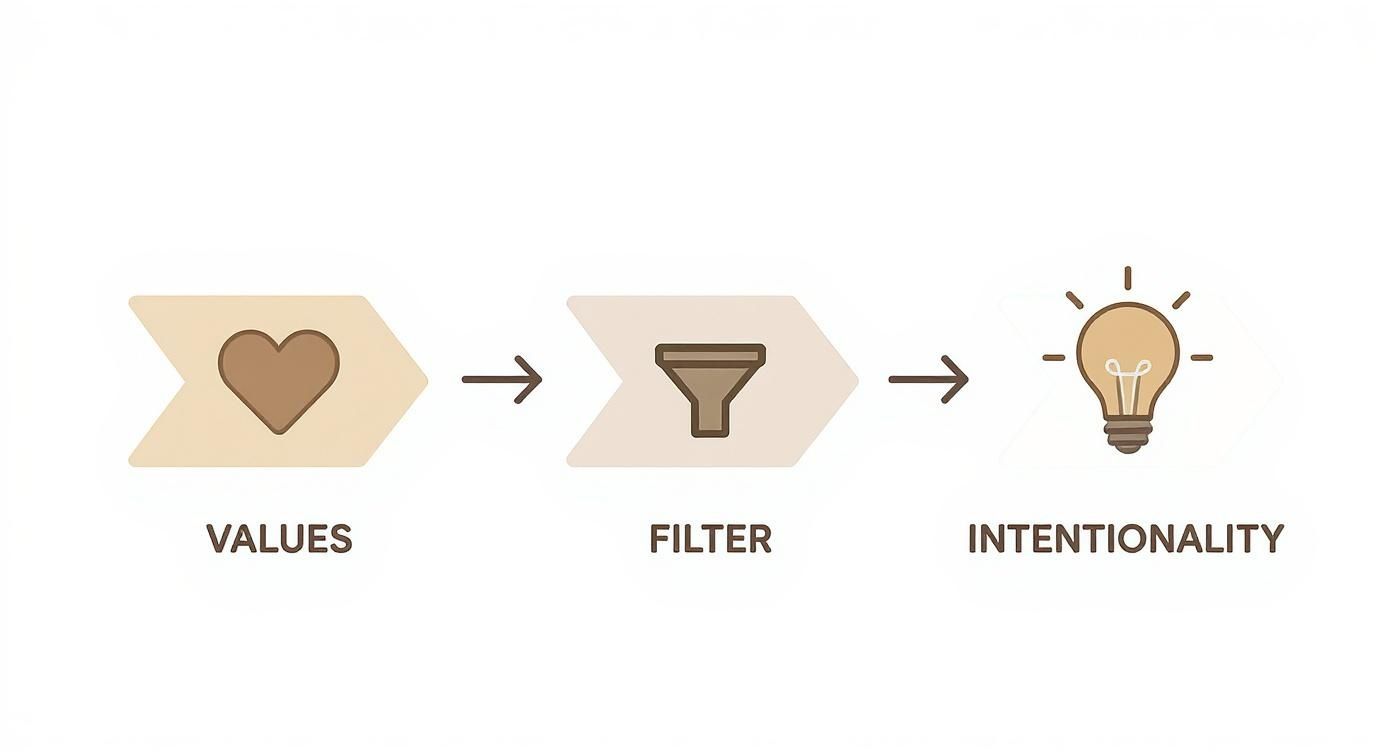
See? Minimalism isn't just about getting rid of stuff. It’s a thoughtful system for aligning your home with your life.
Practical Strategies for Tough Categories
Let's face it, some things are just harder to part with. Sentimental items, books, and those "just in case" objects are tough because they're tied to emotions or a sense of future need.
For sentimental items, remember to separate the memory from the object. You don’t need to keep every single thing to honor your past.
My favorite strategy is to create a single, beautifully organized "memory box." Pick only the most meaningful keepsakes to go inside. For everything else, take a high-quality photo—you get to keep the memory without the physical clutter.
And books! Getting rid of books can feel like you're discarding knowledge or a piece of your identity. But a minimalist bookshelf isn't empty; it's curated. Keep only the books you absolutely love, refer to often, or have a genuine, concrete plan to read. The rest can bring joy to someone else through a donation to a local library.
If you’re ready to dive in, you might find some great tips on how to get organized at home fast.
The Logistics of Letting Go
Once you’ve made your decisions, the final step is getting everything out of your house. Throwing things in the trash should always be your last resort.
What to Do with Unwanted Items
Having a clear plan for where everything will go makes the whole process feel less chaotic and much more purposeful.
For an even more structured game plan, a good checklist can be your best friend. We put together a comprehensive minimalist decluttering checklist to guide you every step of the way. It helps turn a huge task into small, satisfying wins, getting you closer to the simple, intentional home you're aiming for.
Creating a Functional Capsule Wardrobe
Your closet is ground zero for clutter. It’s where unworn clothes, “just in case” outfits, and the ghosts of purchases past go to hide. A huge part of learning how to live minimally is reclaiming this space—transforming it from a source of stress into a tool for simplicity. The best way to do that? Build a capsule wardrobe.
This isn't about owning ten things or wearing only black and gray. It’s about curating a small, intentional collection of versatile pieces you actually love to wear. The real goal is to kill decision fatigue. Imagine an easier, more enjoyable morning routine that saves you time and money. That's what we're aiming for.

The Decisive Closet Cleanout
First things first: you can’t build your dream wardrobe until you clear out the noise. This calls for a ruthless closet cleanout. It requires some real honesty and a willingness to let go of what isn't working for you anymore.
Start by pulling every single piece of clothing out of your closet, your drawers, everywhere. Pile it all on your bed. The sheer volume can be a shock, but that visual impact is exactly the motivation you need to make some tough calls.
Now, sort every single item into one of four piles:
- Love It & Wear It: These are your non-negotiables. They fit perfectly, make you feel great, and go right back in the closet.
- Maybe: This is for the tricky items. Maybe the fit is a little off, or you just haven't reached for it in a while. Box these up for now and get them out of sight.
- Donate or Sell: Good-condition items you no longer want or need. Let someone else enjoy them.
- Recycle or Toss: Anything stained, torn, or too worn out to pass on.
"A cluttered closet is a cluttered mind. By intentionally choosing what to keep, you're not just organizing clothes; you're creating mental space and simplifying your daily decisions."
This initial purge is the hardest part, I won't lie. But you have to be tough, especially with those "just in case" items. If you haven't worn something in a year, the chances you'll wear it again are pretty slim.
Building Your Core Capsule
With a much clearer space, it's time for the fun part—building your capsule. A good starting point is around 30-40 versatile pieces per season, which includes tops, bottoms, outerwear, and shoes. This isn't a hard-and-fast rule, just a helpful guideline.
The name of the game is versatility and quality. Focus on high-quality, timeless basics that you can mix and match without even thinking about it.
Essential Capsule Wardrobe Components
Think about a cohesive color palette. I find that two or three neutral colors paired with two or three accent colors works wonders. This ensures almost everything in your closet can be worn together, which massively expands your outfit options with fewer items.
What about seasonal items you love but don't need all year, like a heavy winter coat or that dress for weddings? Finding the best way to store clothes keeps your main closet pristine while protecting your garments. This lets you rotate your capsule with the seasons without having to get rid of valuable pieces.
Ultimately, a capsule wardrobe isn't a one-and-done project; it’s an ongoing process of refinement. It's simply a more mindful approach to fashion that perfectly aligns with a minimalist mindset, helping you consume less and choose better.
Applying Minimalism to Your Personal Finances
Learning how to live with less does more than just clear out your closet and countertops; it can fundamentally reshape your relationship with money.
When you apply minimalist principles to your finances, you start to break the cycle of mindless consumption and move toward intentional wealth-building. It’s about making your money work for the life you want, not the other way around.
This financial clarity is one of the most powerful benefits of minimalism. You stop reacting to sales and impulse buys and start proactively directing your funds toward what actually matters to you. Instead of chasing the temporary high from a new gadget, you begin building lasting security and freedom.
Create a Value-Based Budget
Forget those rigid, line-by-line budgets that make you feel guilty for buying a coffee. A minimalist budget isn’t about deprivation; it’s about alignment.
First, get clear on your core values. What truly brings you joy and fulfillment? Is it traveling the world, honing a creative skill, achieving financial independence, or just spending more quality time with family?
Once you know what you value, you can build a budget around it. This means you can be generous with your spending on the things that matter most, while ruthlessly cutting back on everything else.
For example:
- Value experiences? Your budget might prioritize a travel fund over frequent restaurant meals or subscription boxes.
- Value financial freedom? You’ll funnel extra cash toward paying off debt or investing instead of upgrading your car every few years.
- Value learning? You might invest in online courses or books rather than fast fashion.
This approach turns budgeting from a chore into a form of self-care. It ensures your spending is a direct reflection of your priorities, which makes it far easier—and more motivating—to stick to the plan.
Track Your Spending to Build Awareness
You can't change what you don't measure. The first step toward curbing mindless consumption is getting brutally honest about where your money is actually going.
For one month, track every single purchase. No matter how small. Use an app, a spreadsheet, or a simple notebook—the tool itself isn't nearly as important as the daily habit.
At the end of the month, sit down and categorize everything. The results are often shocking. You might discover that those "insignificant" daily coffees add up to hundreds of dollars, or that subscriptions you completely forgot about are quietly draining your bank account.
This awareness is the turning point. When you see the hard data, you can no longer ignore the disconnect between your stated values and your actual spending habits. It empowers you to make conscious changes.
With this data, you can start to identify your personal spending triggers. Do you shop when you're bored, stressed, or feeling down? Recognizing these patterns is the key to breaking the cycle of retail therapy and impulse buys.
Embrace Intentional Non-Consumption
The most effective way to save money is simply to buy less stuff. This doesn't mean you stop buying things altogether, of course. It just means you become incredibly intentional about every single purchase. It’s about choosing quality over quantity and genuine need over fleeting want.
Before making a non-essential purchase, try implementing a waiting period. The 30-day rule works wonders for larger items, while even a 48-hour pause can be enough to curb smaller impulse buys. More often than not, you'll find the initial desire fades, saving you money and preventing more clutter from entering your home.
The financial impact of this shift can be massive. By 2025, data suggests that households practicing minimalism could cut discretionary spending by up to 40% on non-essential items. This mindful consumption leads to higher savings rates and lower debt, which significantly reduces financial stress. For more on this, check out the insights at Rich in What Matters.
Reducing what you buy also helps you appreciate what you already own. As you declutter, you’ll inevitably find items you no longer need. Selling them can provide a nice financial boost. For practical tips on turning that clutter into cash, take a look at our guide on how to sell your unwanted items.
Ultimately, this journey is about more than just saving money. It's about reclaiming your financial power and building a life where you are in complete control of your resources, ensuring they serve your goals and bring you genuine, long-lasting contentment.
Maintaining a Simple and Sustainable Lifestyle
That first big declutter feels amazing, doesn't it? It’s like a massive reset button for your home and your head. But the real work in learning how to live minimally isn't just clearing everything out—it's keeping the clutter from creeping back in. To hold onto that calm, intentional space, you need to build some new habits that act as a gatekeeper.
This isn't about chasing perfection. It's about being consistently mindful. The goal is to create a lifestyle that feels simple and is sustainable in the long run, both for your own well-being and for the planet.
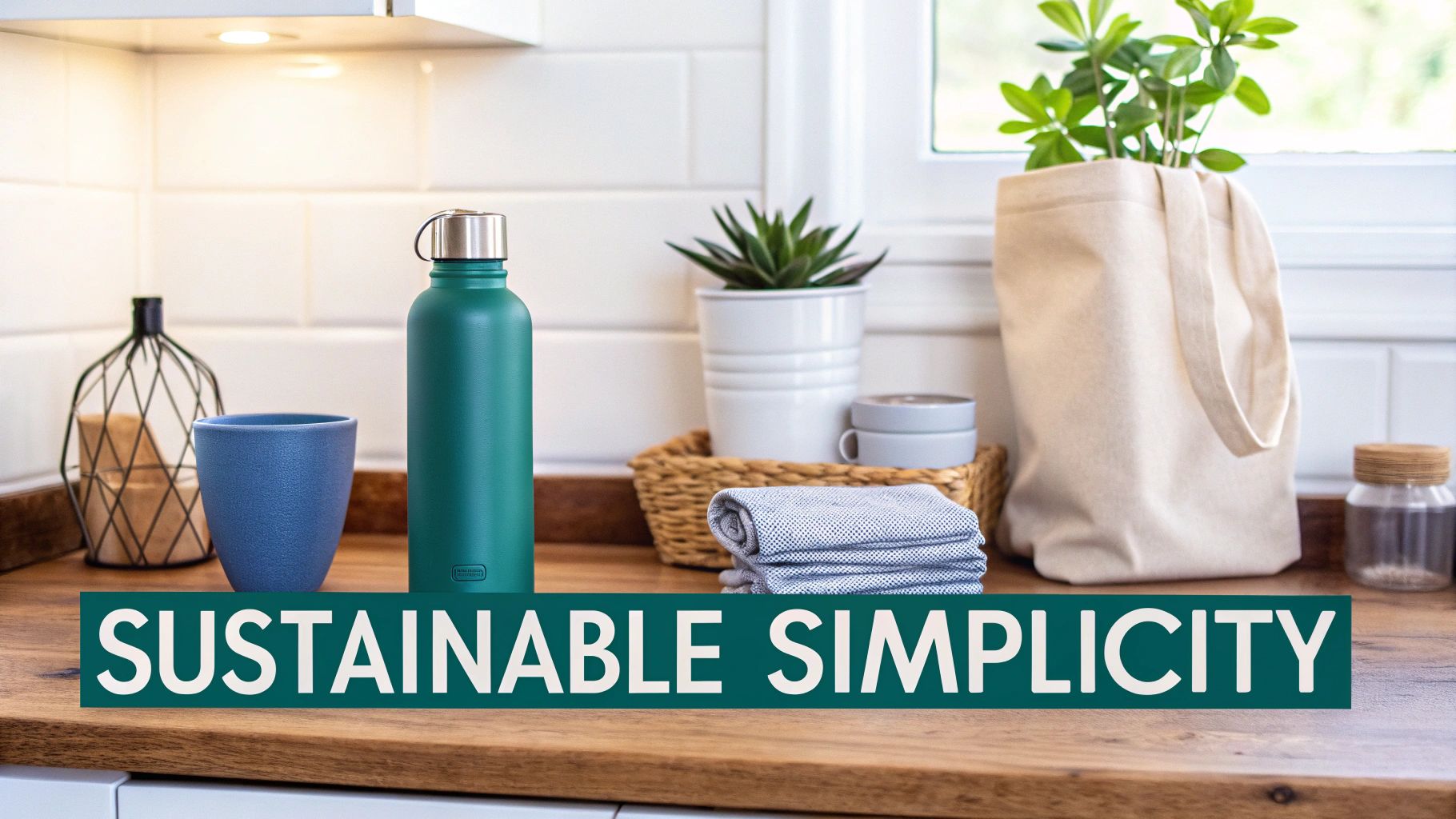
Adopt Conscious Consumption Habits
If you want to stop your home from refilling with stuff you don't need, you have to change how you bring things in. It’s a shift from reactive, impulse shopping to proactive, thoughtful decision-making. A couple of simple but powerful rules can completely transform your relationship with consumption.
The One-In, One-Out Rule
This is a game-changer for keeping your space clutter-free. For every new non-consumable item that comes through your door, a similar item has to go. Bought a new pair of jeans? An old pair gets donated. This simple exchange creates a natural balance and forces you to really think about whether a new purchase is an upgrade or just another thing.
The 30-Day Waiting Period
Impulse buys are the sworn enemy of a minimalist home. To fight back, try a waiting period for any non-essential purchase over a certain amount, maybe $50. When you get that sudden urge to buy something, just add it to a list and wait 30 days. More often than not, the initial desire completely fizzles out, proving it was a fleeting want, not a genuine need. It's a habit that saves both money and future decluttering time.
By making conscious choices about what enters our homes, we’re not just managing clutter. We are curating a life that reflects our values, ensuring every object has a purpose and a place.
Navigating Gifts and Freebies
One of the trickiest parts of maintaining this lifestyle is dealing with items you didn't choose yourself. Unwanted gifts and promotional freebies can undo all your hard work if you don't have a plan in place.
- Be Proactive with Gifts: When birthdays and holidays roll around, gently guide your loved ones. Suggest experience-based gifts like concert tickets, a nice dinner out, or a class you've wanted to take. If they insist on a physical gift, create a small, specific wish list of items you genuinely need and would truly value.
- Gracefully Decline: It is perfectly okay to politely say "no, thank you" to the free tote bag at a conference or the pen from the bank. Your home is valuable real estate; don't let items you never wanted take up residence just because they were free.
- Appreciate the Giver, Not the Gift: If you do receive an unwanted gift, remember to appreciate the thought behind it. You can express gratitude for the person's kindness without feeling obligated to keep the item forever. It’s okay to pass it along to someone who will love it or donate it.
Connecting Minimalism and Sustainability
Living with less naturally leads to a more sustainable life. It's a simple equation: when you consume less, you reduce the demand for new products, create less waste, and shrink your environmental footprint. This connection creates a powerful, positive feedback loop.
This isn't just a feel-good idea; it has a real-world impact. Adopting a minimalist lifestyle can significantly lower individual carbon footprints. The average person's carbon footprint is around 4 metric tons of CO2 each year, but to meet climate targets, that number needs to drop closer to 2 tons. Since nearly 40% of global emissions come from producing and shipping consumer goods, your personal choices really do matter.
For a deeper dive into this interconnected concept, you can explore what sustainable living truly entails.
The beauty of this journey is that the benefits go far beyond just having a tidy house. You simplify your life, save money, and contribute to a healthier planet—all by being more intentional. For more guidance on this part of the journey, our guide to minimize your belongings and live with less can help. Maintaining this lifestyle is an ongoing practice of choosing what truly matters, creating a life that feels both simple and deeply satisfying.
Got Questions About Minimalism? Let's Clear a Few Things Up.
Diving into a minimalist lifestyle always brings up a ton of questions. That’s completely normal. You start wondering how this clean, simple philosophy actually holds up against the beautiful mess of real life. Let's tackle some of the most common hurdles people think of.
Getting these doubts out of the way is so important. It helps you see that minimalism isn’t some rigid rulebook you have to follow perfectly. It's a mindset, a flexible way of living that you can bend and shape to fit your life. Knowing this keeps you from feeling like you're "doing it wrong" just because your home doesn't look like an Instagram photo.
"Can I Really Be a Minimalist with Kids?"
This is probably the number one question I hear, and the answer is a huge yes. Minimalism with a family isn’t about creating a sterile, toy-free environment. Not at all. It’s simply about being more intentional with what you bring into your home and your family’s life.
So, what does that actually look like?
- The Magic of a Toy Rotation: Instead of a mountain of toys overwhelming the living room, you keep a small, curated selection of favorites out. The rest get stored away and swapped out every few weeks. This simple trick makes old toys feel brand new and cuts down on the visual chaos.
- Choosing Experiences Over Things: The focus naturally shifts from accumulating stuff to making memories. Suddenly, family hikes, a trip to the local museum, or just a fun pizza night on the floor become the main event, not the next must-have gadget.
- Teaching What Matters: When you involve your kids in the decluttering process, they learn incredible lessons about gratitude, value, and the freedom of letting go of things they’ve outgrown.
Minimalism in a family home is all about function and joy, never deprivation. It’s about holding onto what truly adds to your family's happiness and releasing the excess that just adds stress.
Minimalism isn't a race to see who can own the least. It’s about crafting a life that feels lighter and more in line with what you value. Instead of asking, “How little can I get by with?” try asking, “What’s truly enough for the life I want to live?”
"Does This Mean I Can't Own Nice Things?"
Absolutely not. This is a massive misconception that confuses minimalism with being cheap or deprived. The reality is that minimalism is about intentionality, pushing you to swap quantity for quality.
Many minimalists actually end up owning nicer things. Think about it: instead of buying five trendy, fast-fashion sweaters that pill and fall apart after a few washes, a minimalist might invest in one timeless, beautifully made sweater that they absolutely love and will wear for years.
It’s about true value, not the price tag. You can absolutely own a designer handbag, a high-end espresso machine, or a stunning piece of art if those things genuinely make your life better. The only difference is that the purchase is a deliberate, thoughtful choice—not just another impulsive click.
"How Do I Deal with Unwanted Gifts?"
Ah, the gift dilemma. Navigating presents from well-meaning friends and family can feel like one of the trickiest social hurdles of this lifestyle. The best strategy is to be both proactive and incredibly gracious.
Before birthdays and holidays roll around, gently communicate your preferences. You could suggest experience-based gifts, like concert tickets, a gift card to your favorite restaurant, or even a contribution to a bigger savings goal (like a family vacation!).
When an unwanted physical gift does show up, remember to separate the object from the loving sentiment behind it. Always express your genuine gratitude for the person's thoughtfulness. You can honor their kindness without feeling obligated to keep something that doesn't fit your life or your home. It’s more than okay to quietly donate or re-gift it down the line.
Even with the best minimalist habits, you’ll always have items you cherish but don't need out all the time—things like seasonal decor, family heirlooms, or sentimental keepsakes. Instead of letting them take up precious space, a smart storage solution is your best friend. With Endless Storage, you can keep what matters safe and sound without cluttering up your beautifully simple home. Learn more about how Endless Storage works.
Frequently Asked Questions
Unveiling the Secrets to Effortless Storage
Endless Storage is available nationwide. You pick a plan, tell us where to pickup, and we'll send a UPS van to collect, whichever state you're in.
Your shipping label will be sent to your email within a few minutes, if not instantaneously. It can also be accessed through your customer profile.
Your box will be shipped to one of our climate controlled self storage facilities in our closest self storage facility. Our manager will accept your package, notify you that your box has been received, and securely stored. Only our managers will have access to Endless Storage boxes.
Email us at admin@endless-storage.com click to live chat with us, or send us a message below.
Never! We're committed to transparent pricing with no surprises. You'll lock in your rate with no hidden fees and no long-term contracts.
Fast access guaranteed! Your boxes will arrive at your doorstep within 48 hours of requesting them back. Need to check on delivery? We provide tracking information for complete peace of mind.
Totally flexible! Store month-to-month with no long-term commitment and cancel anytime.
Everything's online! Use your account dashboard to:
• Set up automatic monthly payments
• Request box returns
• Update your address
• Order additional boxes
• Track shipments
Your boxes are insured up to $100 each. Our customer service team will help you file any necessary claims and resolve issues quickly.
Don't worry – we'll email you right away if there's a payment issue. Your items stay safe, though you may have temporary service interruption or late fees until payment is resolved.
When you request our free storage kits, you'll have 30 days to send in your boxes to activate your 3 months of free storage. Think of it like starting a gym membership – your activation window begins when you receive your kits, and your full free trial begins once you send in your first box. During your free months, you'll experience our complete storage service at no cost.
Your 30-day activation window begins when you receive your storage kits. We'll send you an email confirmation when your kits are delivered, marking the start of your activation period.
If you haven't sent any boxes for storage within your 30-day activation window, your free trial will expire and we'll begin charging the regular monthly rate of $9.99 per box. This helps ensure our storage kits go to customers who are ready to use our service.
A box costs $9.99 per month to store (plus sales tax). This price includes free shipping for standard boxes under 50 lbs. and smaller than 16"x16"x16"
Log into your Endless Storage account, locate the box you would like returned, and simply click Return My Box.
Yes, each box stored with us is insured for up to $100 throughout transit as well as the duration of storage within our facilities.
Your box will be at your doorstep within 48 hours of you requesting it back.
Store 10+ boxes? We'll pick them up for free! After your purchase, we'll contact you to schedule a convenient pickup time and arrange UPS collection.
We trust UPS with all shipments, and every box includes $100 insurance coverage. You'll receive tracking information to monitor your items' journey.
Yes! Visit any of our locations by appointment. Just bring a photo ID matching your customer profile.
For everyone's safety, we can't store hazardous materials, firearms, or perishables. All items must fit within our standard boxes.
It's easy! Order your storage kit online, and we'll ship it to you within 1-2 business days. Your shipping labels will be emailed instantly and available in your account.
We're here to help! Email us at admin@endless-storage.com, use our live chat, or send us a message through your account.
To cancel your storage service with Endless Storage, please email your cancellation request to admin@endless-storage.com. Our team will process your request within 2 business days and confirm your cancellation via email.
We understand packing takes time. However, to maintain your free trial benefits, you'll need to send at least one box within the 30-day activation window. If you need more time, you can always start with one box to activate your trial and send the rest later. You can always reach out to admin@endless-storage.com if you have any issues or concerns.
When you request our free storage kits, you're starting a 30-day window to begin using our storage service.
Important: To activate your free trial, send at least one box for storage within 30 days. If no boxes are sent within this 30-day window, a one-time $50 fee applies to cover materials and shipping costs. This fee is clearly disclosed before you sign up.
Think of it like reserving a hotel room – we're setting aside space and sending specialized packing materials for your use. The fee only applies if you request materials but don't begin storage, similar to a hotel's no-show charge.