5 min read

Choosing a Storage Unit Size That Actually Fits Your Stuff

Choosing a Storage Unit Size That Actually Fits Your Stuff
Published on
December 27, 2025

Trying to pick the right storage unit size can feel like you're staring at a math problem. When you see numbers like 5x5 or 10x10, they don't really paint a clear picture.

The easiest way to start is by picturing a familiar space. A 5x5 unit? Think of a small walk-in closet. A 10x20 unit is basically a single-car garage. Making that simple mental comparison is the first step to avoiding the classic mistake: either paying for a bunch of empty air or, even worse, running out of room halfway through unloading the truck.

How to Choose the Right Storage Unit Size

Let's be real—those dimensions on a website mean nothing until you're wrestling a sofa through a narrow metal doorway. The key is to stop thinking about abstract numbers and start translating them into real-world terms that actually match what you own. This turns a confusing decision into a much more intuitive one.

And remember, it's not just about the floor space. A 5x5 unit gives you 25 square feet, sure, but with an 8-foot ceiling, you're actually getting 200 cubic feet of volume. That’s a ton of vertical room for stacking boxes of holiday decor, a small dresser, and your file boxes.

Before we dive into the specific sizes, here’s a quick reference table to help you visualize what might work for you.

Common Storage Unit Sizes and What They Hold

This table is a great starting point. It's designed to give you an instant idea of which unit size aligns with the amount of stuff you need to store.

Unit Size (Feet)Square FeetComparable ToWhat Typically Fits
5x525 sq ftSmall walk-in closetA few boxes, seasonal decor, a small dresser, files, or a twin mattress.
5x1050 sq ftLarge walk-in closetA queen bed, a sofa, a dresser, and several boxes. Contents of a studio apartment.
10x10100 sq ftSmall bedroomFurnishings for a one-bedroom apartment, including some appliances and boxes.
10x15150 sq ftLarge bedroomContents of a two-bedroom apartment or small house, including major appliances.
10x20200 sq ftOne-car garageFurnishings for a three-bedroom house, including bulky furniture, appliances, and patio sets.
10x30300 sq ftLarge one-car garageEverything from a four- to five-bedroom house, including vehicles, large furniture, or significant business inventory.

Now that you have a general idea, let’s dig a little deeper into what each of these sizes can realistically handle.

Small Storage Units (5x5 and 5x10)

The 5x5 storage unit is the perfect solution when you just need a little extra room. Think of it as the overflow closet you've always wished your apartment had.

It’s an ideal fit for:

  • College students needing a place for dorm furniture over the summer.
  • Apartment dwellers looking to offload seasonal gear like snowboards, holiday decorations, or AC units.
  • Small business owners who need to archive documents or store a bit of extra office supply inventory.

A 5x10 unit simply doubles your floor space to 50 square feet. This is usually enough to hold the contents of a studio apartment or a large bedroom. You can comfortably fit a queen-sized mattress and box spring, a couch, a dresser, and a decent stack of boxes. It’s a super popular pick for people doing a small home renovation.

Medium Storage Units (10x10 and 10x15)

There’s a reason the 10x10 storage unit is one of the most rented sizes—it hits the sweet spot for versatility. With 100 square feet, it’s about the size of an average bedroom and can generally handle everything from a one-bedroom apartment. For city folks, this size is often a lifesaver. If that sounds like you, our guide on storage units for apartment living has some extra tips.

When your needs are a bit bigger, the 10x15 unit bumps you up to 150 square feet. This size is great for storing the furniture from a two-bedroom apartment or a small house. It can handle big-ticket items like a washer, dryer, and fridge along with all your furniture and boxes.

Pro Tip: If you're stuck between two sizes, always go for the larger one. That small bump in the monthly cost is nothing compared to the stress of realizing you're out of space on moving day.

Large Storage Units (10x20 and 10x30)

For the big moves in life—like relocating a family or storing a business's inventory—you’ll need to size up. A 10x20 storage unit offers a generous 200 square feet, which is the same as a standard one-car garage. It can easily hold the contents of a three-bedroom house, including all the bulky stuff like major appliances and patio furniture.

The king of them all is the 10x30 unit, a massive 300-square-foot space. This is what you need when you're storing the contents of a four- or five-bedroom home. It can handle just about anything, from large furniture sets and vehicles to a serious amount of business inventory.

How to Confidently Calculate Your Required Space

Guessing your storage unit size is probably the most expensive mistake you can make in this process. You either end up paying for a bunch of empty space every month or, worse, find yourself in a frantic scramble for a bigger unit on moving day. Let's skip the headache and walk through a practical, field-tested way to figure out exactly what you need.

The most reliable way to do this is what I call the inventory method. It's less formal than it sounds—it really just means making a detailed list of every single thing you plan to put into storage. Go through your home room by room and jot it all down, from the big stuff like the king-size bed and sectional sofa down to the last floor lamp and box of books.

Once you have that master list, start grouping things by category (furniture, appliances, boxes) and their general size. This simple step transforms what feels like a chaotic pile of belongings into a manageable project. You’ll immediately start to see things you might have overlooked, like realizing just how much bulky furniture you actually have, which instantly helps you rule out those smaller units.

Think Vertically, Not Just Horizontally

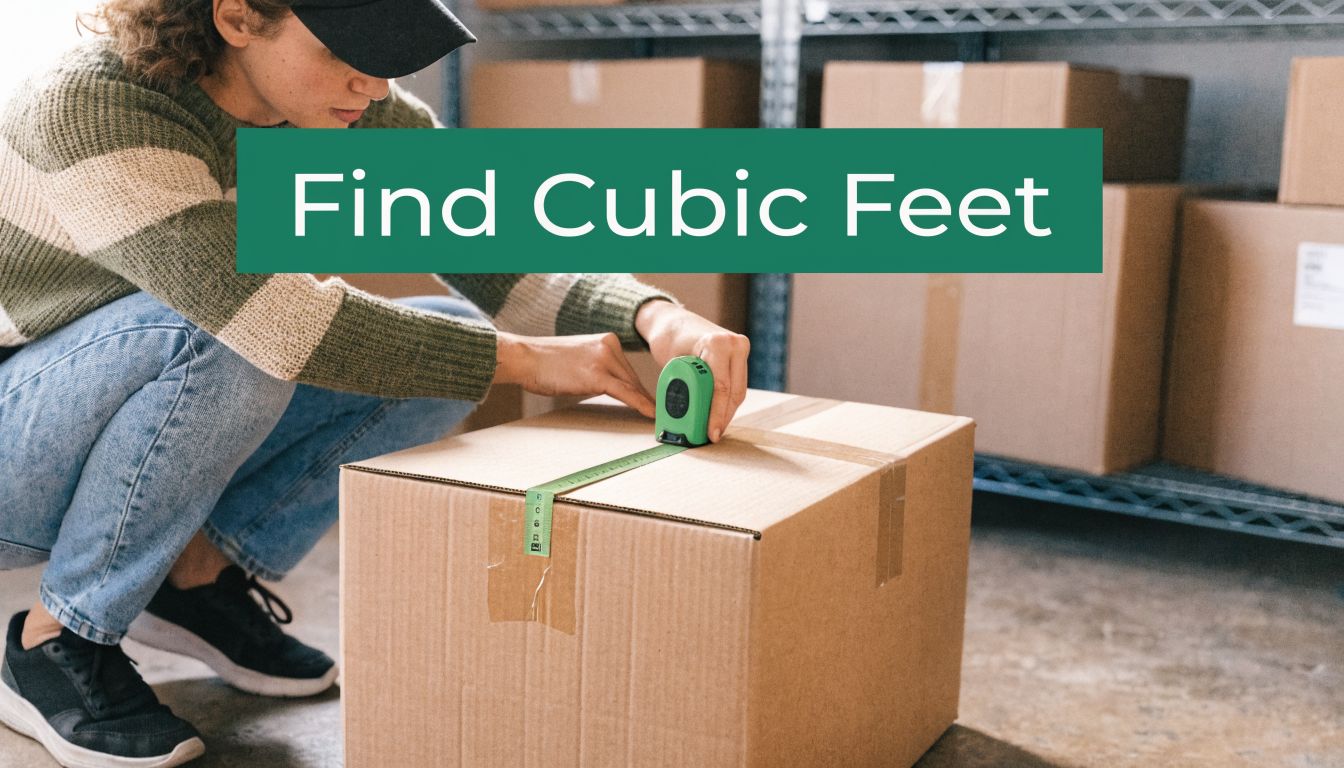
Here’s a pro tip that can save you a ton of money: square footage is only half the story. The vast majority of storage units have ceilings that are at least 8 feet high, and that vertical space is pure gold. You need to start thinking in cubic feet (length x width x height) to truly maximize every inch you're paying for.

For example, a 10x10 unit isn't just 100 square feet of floor space; it's 800 cubic feet of potential storage volume. This is why you can stack sturdy, uniform boxes way up high, stand mattresses and couches on their ends, or take apart bed frames to tuck them in against a wall. Honestly, failing to account for this vertical dimension is the number one reason people rent a unit that’s way too big for their stuff.

The real goal isn’t just to cram everything inside. It’s to pack it all in a way that’s stable, safe, and ideally leaves you a small aisle for access. Calculating cubic feet helps you plan for this from the start, ensuring you don't have to unpack the entire unit just to find that one box you need.

Using Tools Without Falling for Traps

Online size calculators can be a fantastic starting point. They give you a quick, visual estimate by letting you plug in common household items. But they have their limits and can be pretty inaccurate if you're not careful.

For a more precise estimate, you can check out our detailed storage unit size calculator, which gets into much more detail. But even with the best tool, keep these real-world tips in mind:

  • Be Specific: Don't just click "sofa." Is it a tidy two-seater loveseat or a massive L-shaped sectional that takes up half your living room? The difference could easily be 50 cubic feet or more.
  • Account for Awkward Items: Calculators almost never account for the annoying, non-stackable items like bicycles, standing lamps, or that elliptical you swear you'll use again. I always recommend adding a buffer of 10-15% to your final estimate just to handle these space hogs.
  • Consider Your Scenario: How you pack changes everything. If you're storing things during a home renovation, you'll need frequent access. That means leaving clear pathways, which requires a slightly larger unit. On the flip side, if it's long-term storage for a cross-country move, you can pack it tight like a game of Tetris and get away with a much smaller space.

This simple flowchart helps visualize the process, from grouping small closet-sized items to planning for the contents of an entire garage.

Flowchart illustrating how to choose the right storage unit size, showing small, medium, and large options with corresponding examples.

The key is to start by classifying your belongings into general "small," "medium," or "large" categories. That alone gets you halfway to an accurate estimate.

By combining a detailed inventory list with a smart understanding of cubic volume, you can calculate the space you need with real confidence. A little bit of prep work now saves you so much money and stress down the road, making sure you get the perfect storage unit size on the first try.

Visualizing Your Belongings Inside Popular Units

A well-organized 10x10 storage unit displaying a bedroom layout with furniture and moving boxes.

Sure, an inventory list and some abstract dimensions are a good starting point. But true confidence comes when you can actually see your stuff fitting perfectly before you ever sign a lease. It’s time to move beyond the numbers and paint a clear picture of how your move will look.

Let’s focus on the two workhorses of the storage world: the 10x10 and the 10x15 units.

These medium-sized units are popular for a reason. They hit the sweet spot for most movers and city dwellers, which is why they drive a huge chunk of the self-storage market. Last year alone, these mid-range spaces generated USD 27,893.1 million in revenue. This is part of a massive industry that was valued at USD 59,083.6 million and is expected to climb to USD 83,195.5 million by 2030, according to Grand View Research.

Their popularity makes them the perfect real-world examples to help you mentally map out your own move.

Mapping Out a 10x10 Storage Unit

Think of a 10x10 unit as a spare bedroom. You’re working with 100 square feet of floor space, and with a standard 8-foot ceiling, that gives you a solid 800 cubic feet of volume. This is typically the go-to size for everything in a one-bedroom apartment.

Here’s how you can mentally pack the contents of a typical one-bedroom apartment into this space:

  • Build Your Foundation: Start by placing your biggest, flattest items against the back wall. Stand your queen mattress and box spring upright (make sure they’re in protective covers!). Your disassembled bed frame pieces can slide in right beside them.
  • Establish the Sides: Along one of the long walls, stand your sofa on its end. This is a classic space-saving trick. Next to it, stack your dining chairs seat-to-seat, and your disassembled dining table can stand on its side against that same wall.
  • The Appliance Corner: Tuck major appliances like a mini-fridge or microwave into a back corner. These are sturdy, so you can often stack lighter, well-packed boxes on top of them.
  • Create a Walkway: This is non-negotiable. Leave a clear path down the middle. This aisle is your ticket to grabbing something from the back without having to unpack the entire unit.
  • Stack Your Boxes: In the remaining open space, create neat columns of your labeled boxes. Always put the heaviest ones on the bottom and the lightest on top to prevent anything from getting crushed.

Oddly shaped items, like a floor lamp (shade removed and boxed) or your bike, can usually squeeze in near the door for quick access.

Expanding into a 10x15 Storage Unit

When you’re moving the contents of a two-bedroom apartment or a small house, that extra five feet in a 10x15 unit makes all the difference. You’re now working with 150 square feet (1,200 cubic feet), which gives you some much-needed breathing room.

It’s not just about more floor space; it's about better organization. That extra 50 square feet lets you create wider walkways and pack less densely, which is a game-changer if you plan on accessing your things periodically.

Here’s how you could lay out this larger unit:

  • Furniture Zone: Dedicate the entire back third of the unit to furniture. This is where you can comfortably fit multiple big pieces, like two sofas, dressers, and bedroom sets.
  • Appliance Wall: The extra depth means you can line one full wall with your major appliances—refrigerator, washer, dryer—without cramping your central walkway.
  • Box Library: You can now create a more organized "library" of boxes along the opposite wall. Stack them with the labels facing out so you can find what you need without a major treasure hunt.
  • Outdoor & Garage Gear: This extra space is perfect for all the bulky stuff that never fits neatly, like patio furniture, a lawnmower, or a couple of bicycles.

Thinking about your move this way turns a daunting task into a simple puzzle. For a more detailed look at picking the right unit for your specific items, our guide on what size storage unit you might need is a great next step. Mentally mapping everything out first is the best way to make sure you get the perfect size from day one.

Smart Packing Strategies to Maximize Every Inch

A self-storage facility features green units, one open with boxes, and a hand truck carrying boxes.

Picking the right size unit is a solid start, but the real magic happens on moving day. How you load your unit is the difference between a neatly organized space and a chaotic mess you’ll dread sorting through later. The goal isn’t just to cram everything in; it's to create an accessible, stable, and safe home for your belongings.

Think of it like a game of Tetris. Every box and piece of furniture is a puzzle piece. With the right strategy, you can make everything fit perfectly while still leaving yourself room to get around. This approach turns you from a simple renter into a storage pro, guaranteeing you get the most value out of every square foot you’re paying for.

The Foundation of a Well-Packed Unit

The secret to a stable stack starts long before you even get to the facility. Using uniform, sturdy boxes is a non-negotiable rule if you want to maximize your vertical space. Sure, mismatched boxes from the grocery store are free, but they create wobbly, unsafe towers that are just waiting to collapse.

Investing in high-quality moving boxes of similar sizes allows you to build solid, interlocking walls with your stuff. That stability is the key to using the full cubic volume of your unit safely.

Also, it’s a simple rule but an important one: always place the heaviest boxes on the bottom to create a solid base. Your lighter, more fragile items can then go on top. This prevents your treasured dishware from getting crushed under a box of heavy books.

Plan Your Layout for Future Access

One of the biggest mistakes I see people make is packing their unit from back to front without any forethought. This creates a solid wall of stuff, forcing you to unpack the entire unit just to find that one item you unexpectedly need. The solution is simple but incredibly effective: create a central aisle.

By leaving a narrow walkway down the middle, you give yourself access to everything, even the boxes stored way in the back. This layout lets you read labels and grab what you need without a major excavation project.

Here’s a simple game plan:

  • Load large furniture first: Place things like dressers, couches (stood on end, if possible), and appliances along the side and back walls.
  • Build your box walls: Stack your uniform boxes along the sides, filling the space between the furniture and your planned aisle.
  • Keep frequent-access items near the door: Anything you might need sooner rather than later—like seasonal clothing or important documents—should be placed right at the front for easy retrieval.

Expert Insight: Always leave a small air gap between your belongings and the unit’s walls. This promotes air circulation and is one of the most effective ways to prevent moisture buildup and potential mildew, especially in non-climate-controlled units.

Protect Your Belongings for the Long Haul

Proper packing isn't just about efficiency; it's about preservation. You want your items to come out in the exact same condition they went in. That means disassembling furniture like bed frames and tables to save space and prevent damage during the move.

Wrap fragile items like mirrors, glassware, and artwork in bubble wrap or moving blankets. For a deeper dive into techniques that keep your items safe, check out our complete guide on how to pack efficiently for moving and storage.

Little details, like putting all the bolts and screws in a labeled bag and taping it to the corresponding piece of furniture, will save you a world of frustration later. Follow these strategies, and you won’t just maximize your storage unit—you’ll protect your valuables, too.

When a Whole Storage Unit Is Just Too Much

After going through the trouble of measuring your stuff and calculating the space you need, you might hit a wall. The frustrating reality? You don't actually need that much room.

What do you do when you only have a dozen boxes of winter clothes, a few bins of family photos, or some old files to archive? Renting even the smallest 5x5 storage unit can feel like throwing money away for space you'll never use.

This is a classic big-city problem, especially for anyone living in a smaller apartment where every single square foot is precious real estate. It just doesn't make sense to pay for an entire room when you'll only be using a tiny corner of it. Luckily, there’s a much smarter, more flexible way to handle this.

A Smarter Way to Store: Per-Box Solutions

Instead of locking yourself into a contract for a physical unit, services like Endless Storage offer an alternative built for modern life. It works like this: you realize you need to clear some space, so a storage kit with custom boxes shows up at your door. You pack what you need to store—and only what you need to store. Then, your packed boxes are picked up and whisked away to a secure, climate-controlled facility.

This per-box approach is a total game-changer. You’re only paying for the exact number of boxes you use, which is a world away from the fixed monthly rent of a traditional unit. It's the perfect fit for situations like:

  • Seasonal Swaps: Getting your bulky winter coats, ski gear, or holiday decorations out of your closet until you need them again.
  • Decluttering Projects: Finally freeing up precious apartment space by offloading books, old gadgets, or sentimental items you want to keep but don’t need every day.
  • Small Moves: Juggling your belongings during a minor move or transition without the headache and cost of a full-sized storage unit.

Why Per-Box Just Makes More Sense for Smaller Needs

The self-storage industry has come a long way since the first facility opened in the US back in 1958, growing into a global behemoth. This explosion is tied directly to how we live now. With research showing 40% of millennials renting apartments under 800 square feet, the demand for smarter storage is huge. It has fueled a projected 7.5% CAGR in the industry, which is on track to hit $89.94 billion by 2030.

Services like Endless Storage are designed for this exact urban reality. They offer box-based storage starting from $7.99/month with free kits and 48-hour returns. Compare that to the average $100-$200/month for a traditional 5x10 unit, and the savings are obvious.

But this isn't just about saving a few bucks; it's about pure convenience. The whole process, from packing up to getting your stuff back, is managed right from your couch. No more weekend trips to a storage facility on the outskirts of town.

To really dial in what you need to store, start by decluttering first. This guide on recycling electronic equipment is a great resource for responsibly getting rid of old gadgets you don't use anymore. For the things you absolutely can't part with, a per-box service is hands-down the most efficient option.

If you're interested in digging deeper, you can explore our full guide on finding an alternative to a traditional storage unit.

This modern approach gives you a practical, cost-effective solution that’s actually designed for people who don't need a whole room. It’s storage that fits your life, not the other way around.

Common Questions About Choosing a Storage Unit

You've made your inventory list, you’ve done the math, but maybe a few questions are still rattling around in your head. Choosing a storage unit is a big decision, and it’s completely normal to want to be sure before you sign on the dotted line.

Think of this section as the final check-in. We'll walk through the most common questions we hear from renters, giving you the clear, straightforward answers you need to choose your unit with confidence.

What Happens If I Choose the Wrong Storage Unit Size?

This is, hands down, the biggest worry for anyone renting storage. Picking a unit that’s too small creates a moving day nightmare. You’re left with a pile of belongings that won’t fit, forcing you to either leave things behind or rush to rent a second, often more expensive, unit.

On the other hand, renting a unit that’s too big means you're literally paying for empty space every month. Most places are pretty flexible about letting you swap sizes if another unit is open, but who needs that extra hassle? The best strategy is to be prepared—that inventory list you made is your best friend for getting it right the first time.

Key Takeaway: When in doubt, it’s almost always smarter and less stressful to go one size up. The small increase in monthly cost is a worthwhile trade-off for the peace of mind that everything will fit without a struggle.

Do I Really Need Climate Control?

This is a big one, as it affects both the price you pay and the safety of your stuff. Climate control isn't just about air conditioning; it maintains a stable temperature and humidity level, protecting your items from extreme heat, cold, and moisture. For some things, it’s not a luxury—it’s a must.

You absolutely need climate control if you are storing:

  • Wooden Furniture: Prevents the wood from warping, cracking, or splitting due to temperature swings.
  • Electronics: Protects sensitive internal parts from damage caused by moisture and extreme heat or cold.
  • Artwork and Photographs: Guards against fading, mildew, and other damage to canvases and prints.
  • Important Documents: Keeps paper from becoming brittle or being ruined by humidity.

If there’s any chance your belongings could be damaged by mold, rust, or warping, investing in a climate-controlled unit is the safest call, especially if you plan on storing for more than a couple of months.

How Much Should a Storage Unit Cost?

Storage unit prices can be all over the map, depending on three main things: size, location, and features. A small 5x5 unit might cost you $50-$75 a month, while a popular 10x10 is often in the $100-$200 range. For a large 10x20, you could be looking at $200-$350 or more, particularly in a high-demand urban area.

This price difference is heavily driven by urbanization. With global populations moving to cities at a rate of 2% annually, average home sizes are shrinking. This creates a "storage gap" that fuels demand in the self-storage market, which is projected to grow from $63.98 billion in 2025 to $107.36 billion by 2034.

One final cost to keep in mind is insurance. Most facilities require you to have it. It’s a good idea to check your current homeowner's or renter's policy to see how it handles your belongings off-site, specifically the details on personal property coverage. This will help you figure out if you need to buy an additional policy from the storage company to make sure your valuables are fully protected.


Still feel like a whole unit is more than you need? Endless Storage offers a modern solution tailored for smaller loads and urban living. We deliver storage kits to your door, you pack only what you need, and we handle the rest. Learn more about our per-box storage plans today!

Frequently Asked Questions

Unveiling the Secrets to Effortless Storage

How many states does Endless operate in?

Endless Storage is available nationwide. You pick a plan, tell us where to pickup, and we'll send a UPS van to collect, whichever state you're in.

How long will it take to get my shipping label?

Your shipping label will be sent to your email within a few minutes, if not instantaneously. It can also be accessed through your customer profile.

Where will my box be shipped to?

Your box will be shipped to one of our climate controlled self storage facilities in our closest self storage facility. Our manager will accept your package, notify you that your box has been received, and securely stored. Only our managers will have access to Endless Storage boxes.

Have additional questions?

Email us at admin@endless-storage.com click to live chat with us, or send us a message below.

Will my storage rate ever increase?

Never! We're committed to transparent pricing with no surprises. You'll lock in your rate with no hidden fees and no long-term contracts.

How quickly can I get my items back?

Fast access guaranteed! Your boxes will arrive at your doorstep within 48 hours of requesting them back. Need to check on delivery? We provide tracking information for complete peace of mind.

How flexible are the storage terms?

Totally flexible! Store month-to-month with no long-term commitment and cancel anytime.

How do I manage my account?

Everything's online! Use your account dashboard to:
• Set up automatic monthly payments
• Request box returns
• Update your address
• Order additional boxes
• Track shipments

What happens if something gets damaged?

Your boxes are insured up to $100 each. Our customer service team will help you file any necessary claims and resolve issues quickly.

What if I miss a payment?

Don't worry – we'll email you right away if there's a payment issue. Your items stay safe, though you may have temporary service interruption or late fees until payment is resolved.

How does the free trial work?

When you request our free storage kits, you'll have 30 days to send in your boxes to activate your 3 months of free storage. Think of it like starting a gym membership – your activation window begins when you receive your kits, and your full free trial begins once you send in your first box. During your free months, you'll experience our complete storage service at no cost.

When does my 30-day activation window start?

Your 30-day activation window begins when you receive your storage kits. We'll send you an email confirmation when your kits are delivered, marking the start of your activation period.

What happens if I don't send in my boxes within 30 days?

If you haven't sent any boxes for storage within your 30-day activation window, your free trial will expire and we'll begin charging the regular monthly rate of $9.99 per box. This helps ensure our storage kits go to customers who are ready to use our service.

How much does it cost to store a box?

A box costs $9.99 per month to store (plus sales tax). This price includes free shipping for standard boxes under 50 lbs. and smaller than 16"x16"x16"

How do I get my box back?

Log into your Endless Storage account, locate the box you would like returned, and simply click Return My Box.

Are boxes insured?

Yes, each box stored with us is insured for up to $100 throughout transit as well as the duration of storage within our facilities.

When will my box be shipped back to me?

Your box will be at your doorstep within 48 hours of you requesting it back.

How do I get my boxes picked up?

Store 10+ boxes? We'll pick them up for free! After your purchase, we'll contact you to schedule a convenient pickup time and arrange UPS collection.

What are the shipping and insurance details?

We trust UPS with all shipments, and every box includes $100 insurance coverage. You'll receive tracking information to monitor your items' journey.

Can I access my items in person?

Yes! Visit any of our locations by appointment. Just bring a photo ID matching your customer profile.

What items aren't allowed in storage?

For everyone's safety, we can't store hazardous materials, firearms, or perishables. All items must fit within our standard boxes.

How do I get started?

It's easy! Order your storage kit online, and we'll ship it to you within 1-2 business days. Your shipping labels will be emailed instantly and available in your account.

How do I contact customer support?

We're here to help! Email us at admin@endless-storage.com, use our live chat, or send us a message through your account.

How do I cancel my storage service?

To cancel your storage service with Endless Storage, please email your cancellation request to admin@endless-storage.com. Our team will process your request within 2 business days and confirm your cancellation via email.

What if I need more time to pack my boxes?

We understand packing takes time. However, to maintain your free trial benefits, you'll need to send at least one box within the 30-day activation window. If you need more time, you can always start with one box to activate your trial and send the rest later. You can always reach out to admin@endless-storage.com if you have any issues or concerns.

Is there a cancellation fee?

When you request our free storage kits, you're starting a 30-day window to begin using our storage service.

To avoid any charges, simply send at least one box for storage within 30 days to activate your 3-month free trial. If you decide not to use our service and don't send any boxes within the 30-day window, a one-time $50 fee will apply to cover the costs of materials and shipping. This helps ensure our storage kits go to customers who are ready to use our service.

Think of it like reserving a hotel room – we're setting aside space and sending specialized packing materials for your use. The fee only applies if you request materials but don't begin storage, similar to a hotel's no-show charge.