
You open a closet to grab a jacket, and a tote bag falls out. The hallway has a stack of moving boxes you meant to deal with months ago. Under the bed, there's a mix of winter clothes, old photo albums, cords you might need someday, and a lamp you definitely don't have room for right now.
That's the modern storage problem in one snapshot. People don't always need a whole storage unit. They need a sane way to get a small amount of stuff out of their home without renting a truck, driving across town, and paying for more space than they use.
That's where storage box central makes sense. Think of it as a more targeted version of storage. Instead of leasing a room-sized unit and filling part of it, you store item by item, usually box by box, with pickup and return built into the service.
Rethinking Your Space with Storage Box Central
Many people find their home works fine for everyday living but breaks down around overflow. A bedroom closet turns into off-season clothing storage. The entryway starts holding sports gear. Keepsakes stay nearby because they matter, even when you rarely need to touch them.
That mismatch is the core problem. The space is livable, but it is doing two jobs at once. It is trying to be both a home and a back room.
A traditional storage unit can help, but it often solves a larger problem than the one you face. Plenty of renters and apartment owners are not trying to store a sofa set or the contents of a full house. They are trying to get a manageable number of boxes, prints, suitcases, and memory bins out of the way without turning storage into a weekend project.
When a full unit feels like too much
A full storage unit fits big-volume situations. Per-box storage fits overflow. The difference is easier to understand with a simple comparison. Renting a unit is like paying for an extra garage across town, even if you only need one shelf. Box-based storage works more like valet service for your stuff. You pack what you want out of the house, it gets picked up, and later you can ask for specific items back.
That idea matters because it changes how people think about storage. Instead of asking, "Do I need a storage room?" the better question becomes, "Which things are taking up useful space at home, and how often do I need them?" If the answer is winter clothes, holiday decorations, archived papers, old textbooks, or sentimental items you want to keep but do not use often, storing by the box usually feels more natural.
One practical way to judge the fit is volume. If your storage issue is mostly boxed items and smaller household goods, per-box storage often matches the job better than a drive-up unit.
If you're sorting through oddly shaped or specialty moving containers before packing, this T chest box ultimate guide is a practical reference for understanding one box style people often encounter during moves.
You can also see how pickup-and-return services fit into broader modern storage solutions for smaller-space living. In this guide, we will use Endless Storage as a concrete example so the process feels less abstract, from packing your first box to requesting it back later.
How Per-Box Storage Services Work
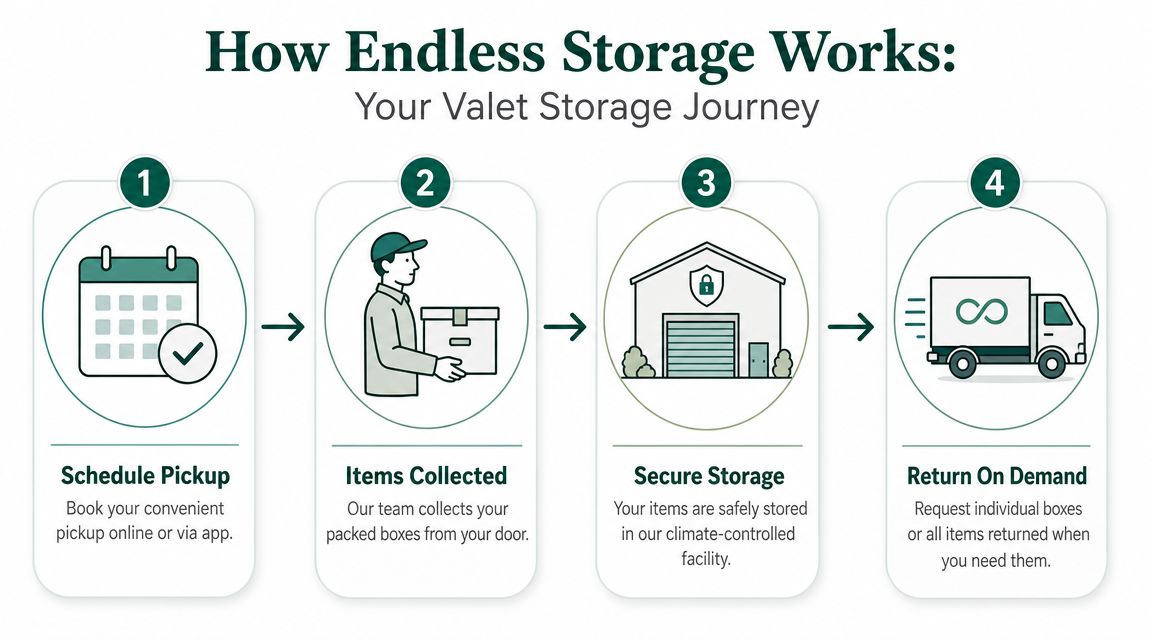
The easiest way to understand storage box central is this: it's valet storage for belongings you don't need every week. You don't drive to the facility. You don't walk down endless hallways to your unit. You pack your things, the service collects them, stores them, and brings them back when you ask.
The basic flow
Most per-box services follow a simple sequence:
Order empty boxes or a storage kit
The service sends standardized boxes to your home so you can pack on your own schedule.Pack and label your items
Organization is important. One box for winter clothes, one for books, one for holiday decorations, one for old paperwork.Schedule pickup
Instead of renting a vehicle, you choose a pickup time and hand the boxes off.Storage and digital tracking
Your boxes go to a managed storage facility, and your account usually reflects what you stored.Request returns when needed
If you want one box back, you ask for one box back. If you want everything returned, you can request that too.
That last step is what makes the model particularly effective. With a normal storage unit, access means travel. With a per-box system, access means a return request.
Why the box itself matters
Not every box is equal. For people storing papers, photos, or keepsakes, the material of the box affects how well those items age over time. Archival specifications call for acid-free, calcium-carbonate-buffered corrugated board with a board strength of at least 170 PSI to help reduce long-term paper degradation and crush damage during handling, based on archival and box specification guidance.
That matters more than many people realize. A cheap box can work for a weekend move. Long-term storage is different.
Packing rule: If an item would upset you to replace, don't treat the box as an afterthought.
If you want a closer look at how box-based services are set up, this guide to storage box rentals shows the model in more detail.
The Advantages of Valet Storage Services
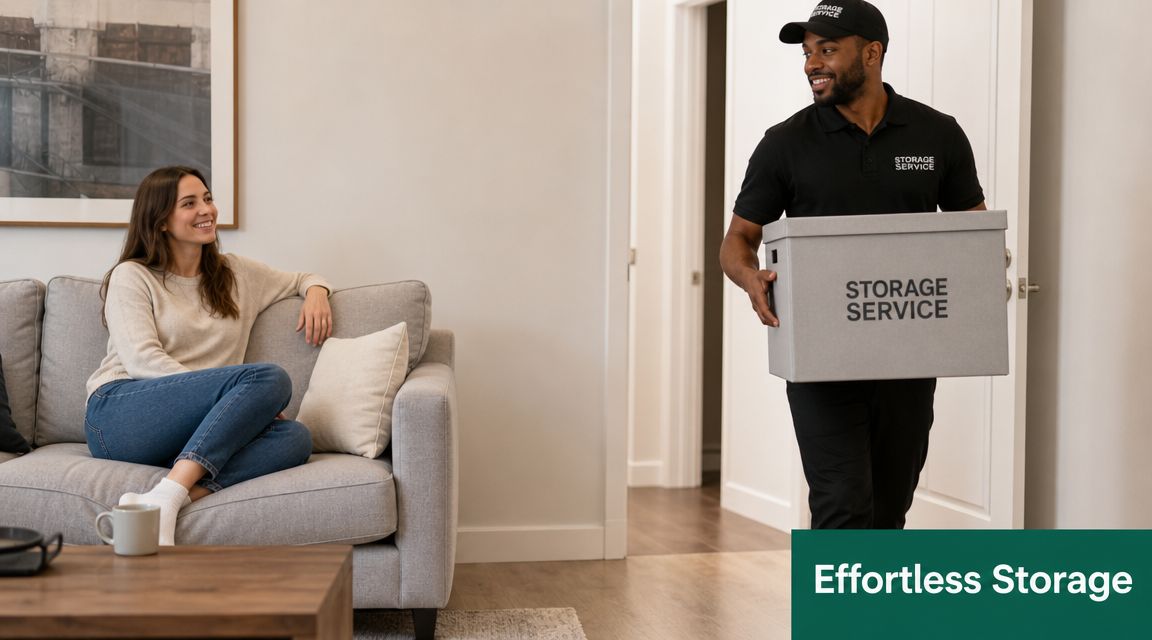
You open a hall closet to grab one winter coat, and three things slide out with it. That kind of clutter problem is common, but renting a whole storage unit often feels oversized for the job. Valet storage offers a middle option. It works more like a valet service for your stuff. You pack the boxes you need to move out of your home, and the service handles pickup, storage, and return.
You match storage to the amount you actually have
Traditional self-storage is sold in chunks of space. If your belongings would fill only half a small unit, you still pay for the whole unit. Per-box storage uses a different logic. The bill tracks more closely to your actual overflow, which is often a better fit for apartment renters, students, and households storing seasonal items.
That pricing model also changes how people make decisions. Instead of asking, "Should I rent a unit?" you ask, "Which boxes should leave my apartment for a while?" That is a smaller, easier choice.
As noted earlier, self-storage is a crowded market. Valet models stand out because they offer flexibility, not just square footage.
The convenience is not small. It changes the whole job.
With a standard unit, storage is a mini moving project every time. You load the car, drive across town, unload, and repeat the process when you need something back. If you live in a walk-up, a busy city, or a building with limited parking, that errand can be the hardest part.
Valet storage removes that repeated trip. The service picks up your boxes and returns them when requested, so access works more like ordering a return than planning a Saturday around a facility visit.
That is why the model clicks for people who are short on time, not just short on space.
Services like Endless Storage make that process concrete. You pack boxes at home, schedule pickup, store them in a climate-controlled facility, and request specific boxes back through your account. If you want a practical view of how that handoff works from pickup to return, this guide to storage pickup and delivery walks through the steps clearly.
Better handling for items that do not tolerate neglect
Some belongings can sit in a corner and be fine. Others cannot.
Books, paper records, photos, leather goods, and some electronics hold up better in managed conditions than in a damp garage or a unit that gets hot and cold with the weather. Climate-controlled storage helps by keeping temperature and humidity more stable. That does not make every item indestructible, but it lowers the chances of avoidable damage.
A useful way to think about it is this: long-term storage is not only about where an item fits. It is about what that item needs to stay usable.
Store according to the item, not just the size. A box of tax records and a box of ski boots do not have the same storage needs.
Many people also prefer the handling model. A managed warehouse workflow can feel closer to archived document storage than a do-it-yourself garage extension. For family keepsakes or paperwork, that distinction matters.
A short walkthrough helps make the convenience side more concrete:
Pricing is usually easier to follow
Another strength of per-box storage is clarity. With traditional storage, the advertised monthly rate is only part of the actual cost in many cases. You may also need to account for transportation, packing supplies, insurance, or the wasted value of renting more space than you use.
Per-box services are often easier to model in advance. If you add one more box, the monthly cost changes by a known amount. That makes budgeting simpler and reduces the guesswork.
For someone comparing options for a few seasonal bins, archived papers, or extra household items, that simpler math can be as valuable as the pickup itself.
Is Per-Box Storage Right for You
Some services make sense in theory and never match real life. Per-box storage usually clicks when you can see your own situation in it.
The apartment renter with closet overflow
You live in a one-bedroom or studio, and the apartment is fine except for the storage part. The coat closet has become a sports locker. The top shelf in the bedroom is full of travel gear. You don't need less stuff. You need less of it in the apartment at the same time.
Storage box central works well because your problem is usually rotation, not abandonment. You'll want those boots, jackets, and decorations later. Just not today.
The student between terms
Students often have a short storage window and a small inventory. Bedding, books, a lamp, some kitchen basics, maybe a monitor. Renting a full unit or handling a truck can feel disproportionate to the amount stored.
A box-based setup keeps the process smaller and more manageable. Pack, hand off, retrieve later.
The in-between mover
This person is common and often overlooked. They've moved out, but the next home isn't ready yet. Or they're downsizing and need breathing room while deciding what stays. They don't need a warehouse. They need a buffer.
Per-box storage helps when the inventory is mostly boxed household goods rather than sofas and dining tables.
The family archivist
Some belongings earn their place because they're meaningful, not because they're useful every week. Photo albums, letters, school papers, old notebooks, children's artwork. Those items need better handling than a garage shelf.
A key decision point here is climate risk. Box storage guidance focused on urban renters highlights the importance of thinking through break-even questions versus a 5x5 unit, along with climate-related concerns for books, electronics, or art. That's a practical way to think about fit.
If the items are small, valuable, and rarely needed, box-based storage usually makes more sense than leasing empty air in a unit.
Comparing Box Storage Self-Storage and Truck Rentals
The easiest way to choose is to compare the work each option asks you to do. Not just the monthly cost. The labor, the transport, the access model, and the likelihood that you'll pay for space you don't use.

A simple side by side view
| Option | Best for | Main tradeoff | Access style |
|---|---|---|---|
| Per-box storage | Small to medium boxed inventory | Less ideal for large furniture loads | Request individual returns |
| Self-storage unit | Bulk volume and larger household items | You may pay for unused space | Drive to the facility |
| Truck rental | One-time moves and DIY hauling | Highest effort and coordination | Fully self-managed |
Where traditional units still fit
Self-storage units are built around bulk capacity. Standardized storage containers and related systems commonly use 8-foot widths, with logistics optimized around large, uniform volume rather than item-level retrieval, as described in standard storage container specifications. That setup works well when you're storing equipment, furniture, or lots of large items.
It's less elegant when your actual inventory is ten boxes and a few personal items.
That's the core tradeoff:
- Container and unit logic: Efficient for bulk volume
- Box-based logic: Efficient for organization and selective retrieval
Effort changes the real cost
A truck rental can look straightforward until you count the actual tasks involved. You reserve the vehicle, pick it up, load it, drive it, park it, unload it, refuel it, and return it. If you're storing items rather than moving homes in one go, that can feel like building a project around a small problem.
Self-storage removes the truck from some scenarios, but not the travel and carrying. Per-box storage removes more of the physical workflow because the service is built around pickup and return.
If you're comparing off-site options for commercial stock, documents, or inventory overflow, this resource on how to find top storage for your business gives useful context on when larger-footprint storage may still be the better operational fit.
Which option usually fits which person
- Choose per-box storage if you live in a city, have limited inventory, and care about retrieval by item or box.
- Choose self-storage if you're storing large furniture, business equipment, or enough volume to justify a dedicated unit.
- Choose a truck rental if your main need is transportation for a one-time move, not ongoing storage.
For people weighing unit rental against mobile hauling, this explanation of storage units with truck rental can help clarify where each model fits.
Getting Started with Endless Storage
A common apartment problem starts the same way. The hallway closet is full, under-bed bins are overflowing, and the items you want to keep are not valuable enough to justify renting and visiting a whole storage unit. What helps is seeing the process from start to finish, because per-box storage makes more sense once you can picture each step.

With Endless Storage, the easiest way to think about it is a valet service for your stuff. You pack only what you want out of the way, the service picks it up, stores it off-site, and brings back a specific box when you ask for it. You are not planning a weekend around a storage run. You are setting up a system.
Start with the kit, then pack with retrieval in mind
The first step is ordering your storage kit and creating your account. Once the boxes arrive, resist the urge to clear a room by tossing random items together. That saves time today and creates confusion later.
Pack by category so your future retrievals stay simple:
- Keep categories together: books with books, winter clothes with winter clothes, documents with documents
- Write labels you will understand later: “Ski gloves and wool scarves” is better than “cold weather”
- Use padding for breakables: wrap fragile items and leave enough room so nothing is crushed by the box itself
A good label works like a folder name on your computer. If every file is called “misc,” nothing is organized.
Build an inventory that answers one question fast
Later, you will not be asking, “Where did I put my storage?” You will be asking, “Which box has the guest sheets?” That is why the inventory step matters.
Here is the difference:
| Weak label | Better label |
|---|---|
| Old papers | 2022 tax records and household files |
| Winter stuff | Winter coats, scarves, gloves |
| Bedroom items | Guest bedding and spare pillowcases |
Short, specific labels make the online dashboard useful instead of decorative.
Schedule pickup, store the boxes, request one back when needed
After packing, you schedule pickup through your account. The boxes go into managed storage, and your part of the job is mostly done. If you need something back, you request that box instead of driving across town to open a unit and dig through everything.
That end-to-end flow is what many definition-only guides miss. The primary value of a service like Endless Storage shows up after pickup, when retrieval is based on one labeled box at a time rather than an all-or-nothing trip.
Pricing clarity matters here too. As noted earlier, category FAQ pages often describe storage in broad terms while leaving extra charges and add-ons less clear than people expect. Per-box pricing is usually easier to compare because you can match the cost to the number of boxes you plan to store.
If you want to try the full process before committing to a larger setup, start with the Endless Storage free trial.
Common Questions About Central Storage Boxes
How secure are items in a central warehouse
Those asking this are really asking two things: who can access the items, and how controlled is the storage environment. Centralized warehouse storage usually relies on managed handling rather than open customer access, which is commonly preferred for boxed personal goods, documents, and seasonal items.
What if I need a box back quickly
That depends on the service's return process. The key advantage of per-box storage is that you can request a specific box instead of retrieving everything. That's much more practical than driving to a unit when you only need one archive box or one bin of winter clothes.
Can I store fragile or unusual items
Often yes, but the item should match the box and the packing method. Fragile items need cushioning and a realistic assessment of whether they should be boxed, specially packed, or kept at home. Unusually shaped items may need separate handling instead of a standard carton.
Are there hidden fees
This is one of the smartest questions to ask. In storage, the advertised price and the full price aren't always the same thing. Look for clear answers on pickup, returns, monthly billing, insurance, and any minimum commitment before you place an order.
Who gets the most value from storage box central
People with smaller inventories usually feel the benefit fastest. Apartment renters, students, people between homes, and families storing records or keepsakes tend to get more value from box-level storage than from paying for partially used unit space.
If you're trying to reclaim a closet, clear a hallway, or store a few meaningful boxes without renting a whole unit, Endless Storage is a straightforward place to start. You can order a kit, pack at home, schedule pickup, and request items back when you need them.
Frequently Asked Questions
Unveiling the Secrets to Effortless Storage
Endless Storage is available nationwide. You pick a plan, tell us where to pickup, and we'll send a UPS van to collect, whichever state you're in.
Your shipping label will be sent to your email within a few minutes, if not instantaneously. It can also be accessed through your customer profile.
Your box will be shipped to one of our climate controlled self storage facilities in our closest self storage facility. Our manager will accept your package, notify you that your box has been received, and securely stored. Only our managers will have access to Endless Storage boxes.
Email us at admin@endless-storage.com click to live chat with us, or send us a message below.
Never! We're committed to transparent pricing with no surprises. You'll lock in your rate with no hidden fees and no long-term contracts.
Fast access guaranteed! Your boxes will arrive at your doorstep within 48 hours of requesting them back. Need to check on delivery? We provide tracking information for complete peace of mind.
Totally flexible! Store month-to-month with no long-term commitment and cancel anytime.
Everything's online! Use your account dashboard to:
• Set up automatic monthly payments
• Request box returns
• Update your address
• Order additional boxes
• Track shipments
Your boxes are insured up to $100 each. Our customer service team will help you file any necessary claims and resolve issues quickly.
Don't worry – we'll email you right away if there's a payment issue. Your items stay safe, though you may have temporary service interruption or late fees until payment is resolved.
When you request our free storage kits, you'll have 30 days to send in your boxes to activate your 3 months of free storage. Think of it like starting a gym membership – your activation window begins when you receive your kits, and your full free trial begins once you send in your first box. During your free months, you'll experience our complete storage service at no cost.
Your 30-day activation window begins when you receive your storage kits. We'll send you an email confirmation when your kits are delivered, marking the start of your activation period.
If you haven't sent any boxes for storage within your 30-day activation window, your free trial will expire and we'll begin charging the regular monthly rate of $9.99 per box. This helps ensure our storage kits go to customers who are ready to use our service.
A box costs $9.99 per month to store (plus sales tax). This price includes free shipping for standard boxes under 50 lbs. and smaller than 16"x16"x16"
Log into your Endless Storage account, locate the box you would like returned, and simply click Return My Box.
Yes, each box stored with us is insured for up to $100 throughout transit as well as the duration of storage within our facilities.
Your box will be at your doorstep within 48 hours of you requesting it back.
Store 10+ boxes? We'll pick them up for free! After your purchase, we'll contact you to schedule a convenient pickup time and arrange UPS collection.
We trust UPS with all shipments, and every box includes $100 insurance coverage. You'll receive tracking information to monitor your items' journey.
Yes! Visit any of our locations by appointment. Just bring a photo ID matching your customer profile.
For everyone's safety, we can't store hazardous materials, firearms, or perishables. All items must fit within our standard boxes.
It's easy! Order your storage kit online, and we'll ship it to you within 1-2 business days. Your shipping labels will be emailed instantly and available in your account.
We're here to help! Email us at admin@endless-storage.com, use our live chat, or send us a message through your account.
To cancel your storage service with Endless Storage, please email your cancellation request to admin@endless-storage.com. Our team will process your request within 2 business days and confirm your cancellation via email.
We understand packing takes time. However, to maintain your free trial benefits, you'll need to send at least one box within the 30-day activation window. If you need more time, you can always start with one box to activate your trial and send the rest later. You can always reach out to admin@endless-storage.com if you have any issues or concerns.
When you request our free storage kits, you're starting a 30-day window to begin using our storage service.
Important: To activate your free trial, send at least one box for storage within 30 days. If no boxes are sent within this 30-day window, a one-time $50 fee applies to cover materials and shipping costs. This fee is clearly disclosed before you sign up.
Think of it like reserving a hotel room – we're setting aside space and sending specialized packing materials for your use. The fee only applies if you request materials but don't begin storage, similar to a hotel's no-show charge.