
A well-planned packing timeline for moving is the secret ingredient for a smooth, stress-free relocation. It’s what turns a monumental, overwhelming task into a series of calm, manageable steps.
The sweet spot? Start 8 weeks out. I know it sounds like a lot, but trust me, that first month isn't about frantically taping boxes. It's about smart planning and decluttering. This approach is your best defense against that last-minute chaos we all dread.
The Foundation Of A Flawless Move
Moving doesn’t have to be a mad dash to the finish line. With a little foresight, you can transform a notoriously stressful event into a controlled, organized process. The trick is to stop seeing "packing" as one giant task and start treating it like a project that unfolds over several weeks.
The most common mistake I see people make is wildly underestimating the time and energy it all takes. They push it off until the last two weeks, suddenly realize they own way more stuff than they thought, and end up in a frantic rush. This is a recipe for broken heirlooms, forgotten essentials, and a whole lot of unnecessary anxiety on moving day.
Why Starting Early Is Non-Negotiable
Kicking off your prep a full two months in advance might feel like overkill, but it’s the absolute cornerstone of an effective packing timeline. This buffer gives you the space to work through your home methodically without turning your daily life upside down.
Starting early gives you some serious advantages:
- Time for Thoughtful Decluttering: You can actually think about what you need and what you don't. This is your chance to make piles to keep, sell, donate, or store without pressure.
- Drastically Reduced Stress: Spreading the work out over weeks keeps that feeling of being overwhelmed at bay. You stay in control.
- Real Cost Savings: You’ll have time to hunt for free boxes, sell unwanted furniture for extra cash, and avoid paying premium rush fees for movers or supplies.
- Better Organization: When you aren't racing the clock, you can create detailed labels and inventory lists that will be a lifesaver on the other end.
The numbers back this up. Getting a head start on your packing timeline just 4-6 weeks out can slash moving-day stress by up to 40%. A solid plan helps you avoid the chaos that hits 70% of movers who procrastinate, which almost always leads to forgotten items and surprise costs.
Building Your Foundational Plan
Of course, your personal schedule will depend on your situation. Packing up a studio apartment is a different beast than tackling a four-bedroom family home. The first step is to do a quick, honest assessment of your space to build a timeline that actually fits your life.
A great moving plan is less about the boxes and more about the calendar. When you manage your time effectively, the physical work of packing becomes secondary to the strategy you've put in place.
As you lay the groundwork, don't forget to factor in tasks beyond just packing. For instance, figuring out if you should be cleaning the carpets in your new home before all your furniture arrives is a game-changer. This kind of detailed planning is what separates a good move from a great one.
To get the ball rolling, I've put together a high-level table that breaks down the core phases of an 8-week packing plan.
Your 8-Week Packing Timeline At A Glance
This gives you a bird's-eye view of the journey ahead. For a more granular, day-by-day breakdown, be sure to grab our comprehensive moving checklist and timeline.
The First Four Weeks: Declutter And Strategize
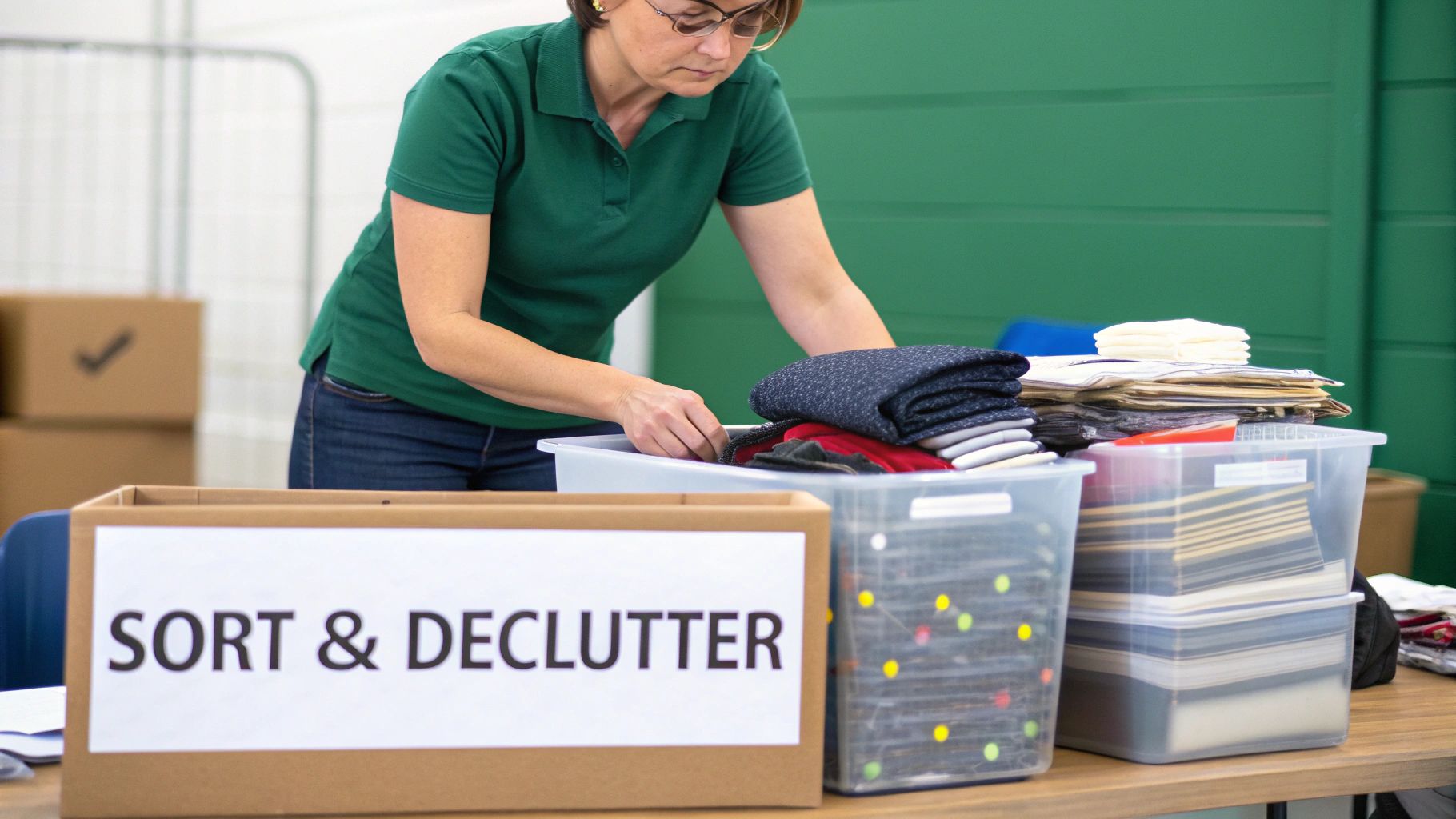
Alright, this is where your packing timeline really kicks off, but you can leave the packing tape in the drawer for now. I know the urge to start filling boxes is strong, but trust me on this: the first month is all about laying a solid foundation through smart decluttering and planning. Resisting that urge is the single best move you can make right now.
The goal here is simple: reduce the sheer volume of stuff you have to pack, move, and eventually unpack. Every single item you get rid of now is one less thing to deal with during those final, chaotic weeks.
Embrace The Four-Box Method
To bring some order to the chaos, tackle your home one room—or even just one closet—at a time. I’ve found the most effective way to do this is with a simple sorting system often called the Four-Box Method. Just grab four bins or designate four clear areas for every item you pick up.
- Keep: This is the easy pile. These are the things you use, love, and absolutely see in your new home.
- Sell: Items that are still in great shape but no longer fit your life. Think furniture that won't fit the new layout, electronics you've upgraded, or nice clothes that could fetch a decent price online.
- Donate: Anything in good, usable condition that isn’t worth the hassle of selling. Local charities and shelters are almost always looking for household goods, books, and clothing.
- Store: This is a crucial category for items you definitely want to keep but don't need right away. This includes things like seasonal decor, family heirlooms, or hobby gear you won't use for a few months.
Using this system forces you to make a real decision about every single possession. It’s the best way to avoid the classic mistake of just moving your clutter from one place to another. For a deeper dive into this, check out our guide on how to declutter before moving for more pro tips.
Identifying What To Store Early
That "Store" pile is your secret weapon for a manageable move, especially if you’re in a smaller apartment where every square foot counts. Getting non-essential items out of the way now creates the physical and mental space you need to pack efficiently later.
So, what can you realistically live without for a few months?
- Out-of-season clothing and sports equipment (think skis in summer or beach gear in winter).
- Holiday decorations and other bulky seasonal items.
- Archived documents, old photo albums, and sentimental keepsakes you don't look at daily.
- Books you’ve already read but can’t bear to part with.
- Specialty kitchen gadgets you only pull out a few times a year.
The most valuable resource during a move is space. By clearing out non-essentials early with a storage solution, you're not just decluttering; you're buying yourself room to breathe and organize.
This strategy is more common than you might think. Recent data shows that a whopping 65% of U.S. moves involved some form of temporary storage to handle timing gaps or simply reduce clutter. A smart packing timeline builds this in from the start. For urban movers, it's not uncommon for 25-35% of their belongings to be perfect for storage, which can cut the total volume of their move by 20%. Services like Endless Storage are perfect for this, offering nationwide, climate-controlled units with free kits. You can dig into more of these moving service trends over at ibisworld.com.
Navigating Sentimental Items
Let's be real—one of the biggest roadblocks in this whole process is getting stuck on sentimental items. It’s incredibly easy to lose an entire afternoon reminiscing over old photos or keepsakes, grinding your decluttering progress to a complete halt.
Here’s a trick that works: set a timer. Give yourself a strict 15-minute window to go through one box of sentimental things. When that timer buzzes, it's decision time: keep it, store it, or take a quick photo and let the physical item go. This little bit of structure keeps you moving forward without making you feel like you're rushing past precious memories.
By the end of these first four weeks, your home should feel noticeably lighter, and your path forward will be much, much clearer.
Weeks Four To Two Packing The Non-Essentials
Now that you've decluttered, your home should already feel a bit lighter. This is where your packing timeline for moving really kicks into gear. The next two weeks are all about building momentum, tackling everything you can live without for the next month. It’s in this phase that you’ll see the most satisfying progress—turning stacks of empty cardboard into neatly taped, move-ready boxes.
The strategy is simple: start with the items you use the least. Packing these non-essentials first gets the bulk of the heavy lifting out of the way without messing up your daily routine. It’s a huge psychological win that makes the final week feel way less chaotic.
Targeting The Low-Hanging Fruit
Your first move should be to clear out the rooms and closets you barely touch day-to-day. Think about the places where your stuff is already in a state of semi-storage. Packing up these areas completely not only checks major items off your list but also creates a dedicated, out-of-the-way zone to start stacking your packed boxes.
Here’s where I always suggest people start:
- Guest Bedrooms: Let's be real, you're not having overnight guests this close to a move. You can pack up this room almost entirely. Go ahead and box up the linens, lamps, decor—all of it.
- Home Office or Study: Leave out your laptop and a handful of essential files. Everything else can go. Books, extra supplies, old paperwork, and that framed diploma can all be safely packed away.
- Formal Living or Dining Rooms: These rooms are usually filled with things reserved for special occasions. It’s time to wrap up the fine china, fancy vases, artwork, and holiday tablecloths.
- Linen Closets: Keep just one set of sheets and towels for each person in the house. The rest of it—spare blankets, guest towels, extra pillows—can be packed.
This isn't just about mindlessly filling boxes. It’s a strategic move to clear out entire zones of your house. Every box you pack from a non-essential area is a small victory that makes the final, hectic week of moving that much easier.
By focusing on these spaces first, you avoid that classic mistake of packing something you realize you need tomorrow. It's a system that lets you make huge progress while keeping daily life running smoothly.
Mastering Your Labeling And Inventory System
As the packing marathon truly begins, a solid labeling system is absolutely non-negotiable. Trust me, a poorly labeled box is just a headache waiting to happen on the other end. Your system doesn’t need to be fancy, but it does need to be consistent.
Here’s a simple method that has never failed me:
- Grab a thick, black permanent marker so you can read it from a distance.
- Label at least two sides of every single box—I recommend the top and one of the long sides. This way, you can identify what’s inside even when they're stacked high.
- Destination Room: (e.g., "KITCHEN," "MASTER BEDROOM")
- General Contents: (e.g., "Books & Magazines," "Pots & Pans")
- Handling Instructions: A big, bold "FRAGILE" or "HEAVY" can save your back and your breakables.
- Pack Books in Small Boxes: Books are deceptively heavy. Sticking to smaller book boxes prevents them from becoming back-breakers and reduces the chance of the box bottom giving out.
- Use Linens as Padding: Wrap fragile things like picture frames or vases in your towels, sweaters, or pillowcases. It saves you money on bubble wrap and gets two packing jobs done at once.
- Nest Items Together: Think like a Russian doll. Put smaller kitchen items like spice jars and measuring cups inside your big pots and mixing bowls to use every last inch of space.
- Fill All Gaps: Empty space is the enemy of a well-packed box. Stuff any gaps with packing paper, socks, or small hand towels to stop items from shifting and breaking in transit.
- Plan your meals around using up perishables. Get creative—it's a great way to clean out the fridge and freezer.
- Donate non-perishable food you don't want to move. A local food bank would be grateful for things like canned goods and pasta.
- Keep out only the bare essentials: a single pot, a pan, one plate and set of utensils per person, and of course, the coffee maker. Everything else can get sealed up.
- Confirm with Movers: Give your moving company a call. Reconfirm the date, their arrival time, and double-check that they have the correct addresses for both your old and new homes.
- Transfer Utilities: Make sure you’ve scheduled services to be disconnected at your old home for the day after you move out and connected at your new home for the day before you arrive. Trust me, you don't want to arrive in the dark.
- Arrange for Kids and Pets: Finalize any plans for childcare or pet-sitting for moving day itself. This keeps them safe and drastically reduces stress for everyone involved.
- Toiletries: Toothbrushes, toothpaste, soap, and a roll of toilet paper. Don't forget the toilet paper.
- Medications: Any prescription or over-the-counter meds your family needs.
- Basic Tools: A box cutter, screwdriver, hammer, and trash bags are non-negotiable.
- Kitchen Basics: Paper towels, disposable plates and cutlery, instant coffee, and some simple, non-perishable snacks.
- Electronics: Phone and laptop chargers are a must.
- Important Documents: Keep your moving contract, new lease or closing papers, passports, and birth certificates in a separate, secure folder that stays with you.
- Weeks 4-3: Declutter Ruthlessly. With limited square footage, this is your most important job. Your goal is to drastically reduce what you need to pack and shuffle around in a tight space.
- Week 2: Pack Non-Essentials. Time to tackle the books, seasonal clothes, and decor. Use under-bed storage or stack boxes neatly in a corner to save precious floor space.
- Week 1: Pack the Rest. The final week is a sprint through the kitchen, bathroom, and bedroom essentials. Since you have less to pack, this phase goes much quicker than in a big house.
- Weeks 8-5: Declutter and Plan. This is your chance to sort through years of accumulated stuff. Get the kids involved by having them make "keep" and "donate" piles for their own toys.
- Weeks 4-3: Pack Storage and Lesser-Used Areas. Hit the garage, attic, and guest rooms first. Clearing these spaces early gives you a staging area for packed boxes so your main living areas stay usable for as long as possible.
- Weeks 2-1: Focus on Individual Rooms. Dedicate a few days to each major room—living room, kids' rooms, master bedroom. Label every box with tons of detail. It will feel tedious now, but you'll thank yourself later.
- Weeks 10-7: The Great Downsize. This phase is critical. Sell furniture that isn't worth moving and donate anything you can easily replace.
- Weeks 6-3: Book Movers and Pack Non-Essentials. Good long-distance moving companies get booked up months in advance. Lock in your spot early, then start packing the things you won't miss.
- Weeks 2-1: Final Logistics and Essentials. Confirm travel plans, transfer medical and school records, and pack your personal suitcases. Make sure you have enough clothes and necessities to last until your shipment arrives, which could take a week or more.
- Toiletries for everyone (and please, do not forget the toilet paper!)
- A change of clothes and any daily medications.
- Phone chargers and a basic toolkit with a box cutter.
- Paper towels, soap, and some easy snacks that don't need a fridge.
This simple habit will save you hours of frustration when you're unpacking. You'll know exactly where everything is instead of tearing open random boxes just to find the coffee maker. For a more detailed guide and some handy checklists you can print, grab our free moving box packing guide.
Techniques For Efficient Packing
Alright, let's talk about what goes inside the box. Smart packing is an art form—a careful balance of speed, space, and safety. You want to fit as much as you can into each box without making it impossible to lift or risking your stuff getting smashed.
Here are a few pro tips I've picked up over the years:
A good rule of thumb is to always place the heaviest items on the bottom of the box and stack lighter items on top. Once you’ve taped a box shut, give it a gentle shake. If you hear or feel a lot of rattling, open it back up and add more padding. A little extra care now means unpacking your belongings in one piece at your new home.
The Final Two Weeks Countdown To Moving Day
The final two weeks before you move are when all that early planning really starts to pay off. This is the home stretch. Think of it as a focused sprint where your packing timeline for moving pivots from the non-essential stuff to the core items you use every day. The goal now is to pack with precision, leaving out just enough to live on without feeling like you're camping in your own home.
This period isn’t about packing the most volume—it's about being strategic. You're balancing boxing up daily-use items while making sure all the final logistical dominoes fall into place. Let’s break down this critical countdown into a manageable, day-by-day game plan.
Days 14 To 7: The Kitchen And Linens
With just one week to go, your place should start to feel noticeably emptier. Now’s the time to tackle the high-traffic zones, starting with the heart of any home: the kitchen. Begin by boxing up all the specialty kitchenware you haven’t gotten to yet, like the fine china, big serving platters, and any small appliances you only pull out once in a while.
This is also the perfect moment to start shrinking your pantry and fridge.
At the same time, you can pack up the rest of the linen closet. Just keep one set of towels for each family member and one set of sheets for each bed. You can even set aside old towels or blankets to use as extra padding for furniture on moving day.
Days 6 To 3: Final Room Sweeps And Logistics
As you get into the last few days, your focus should shift to clearing out what’s left in the main living areas and bedrooms. It's time to pack up any remaining books, kids' toys, and electronics. Leave out just a laptop or a tablet to keep from going stir-crazy.
This is also your final chance to lock down all the logistical arrangements. Don't put these off—they're absolutely critical for a smooth move.
Getting these administrative tasks done now frees up your mental space to focus completely on packing during those last 48 hours.
The final week of a move is a test of your organizational skills, not your strength. A well-executed plan means you'll be calmly labeling your 'Essentials Box' while others might be frantically searching for packing tape.
The Last 48 Hours: Creating The Essentials Box
The final two days are all about packing the absolute last of your belongings and getting ready for your first 24 hours in the new place. This is when you'll assemble your "Essentials Box" or "Open First Box." This box is your lifeline, and it should ride with you in your car, not on the moving truck. For more ideas on what to prioritize, our article on what to pack first when moving is a great resource, but here we’re focused on what to pack last.
Your Essentials Box should have everything you'll need right away:
Once that box is packed and set aside, you can tackle the last few items: bedding, bathroom towels, and any clothes still in the closet. Lastly, defrost your refrigerator and freezer and give your home one final clean. When moving day arrives, you’ll be prepared, in control, and ready for your new chapter.
How To Customize Your Timeline For Any Move
An eight-week packing timeline is a fantastic starting point, but let’s be real—no two moves are ever the same. The effort it takes to move a studio apartment across town is worlds apart from relocating a four-bedroom family home across the country. The trick is to take the core principles of planning and tweak them to fit your actual situation.
Your personal timeline will really come down to three things: the size of your home, the distance of your move, and your own life circumstances (like whether you're juggling kids or pets). By adjusting your start date and shifting priorities, you can build a custom plan that keeps the chaos at bay.
The Small Apartment Express Plan
For those in a one or two-bedroom apartment, a full eight-week plan can feel like overkill. You can usually get everything done in a more focused four to five weeks.
The biggest challenge here isn't the amount of stuff—it's the lack of space. You probably don't have a spare room to pile up boxes, so efficiency is everything.
The Family Home Relocation Schedule
Moving a larger family home, even just locally, is going to require the full eight-week timeline, maybe even a bit more. The sheer volume of belongings, plus managing kids' schedules, means you’ll be grateful for that extra buffer.
Here, your strategy is less about speed and more about steady, systematic progress. Tackling one room at a time is the only way to stay sane.
When moving a family, the goal isn't to be fast; it's to be organized. A well-paced timeline keeps daily routines as normal as possible, which is a huge help in reducing stress for children.
The Long-Distance Move Timeline
A cross-country move is a whole different beast, demanding an eight to ten-week timeline at a minimum. The extra time isn't just for packing—it's for handling all the complex logistics that come with crossing state lines. When mapping out your schedule, don't forget special considerations like packing safe pet travel items to get your furry family members ready for the trip.
Downsizing isn't just a suggestion; it’s a financial necessity. Movers charge by weight and volume, so every item you leave behind saves you money.
Sample Packing Timeline Templates
To give you a clearer picture of how these adjustments play out, I've put together a quick comparison table. It shows how key tasks shift depending on the type of move you're facing.
As you can see, while the core tasks remain the same—declutter, pack, finalize—the timing and intensity change dramatically. Use these templates as a guide to build a schedule that feels manageable for your move, not just a generic one.
This infographic is a great visual for what to pack during those final, crucial weeks.
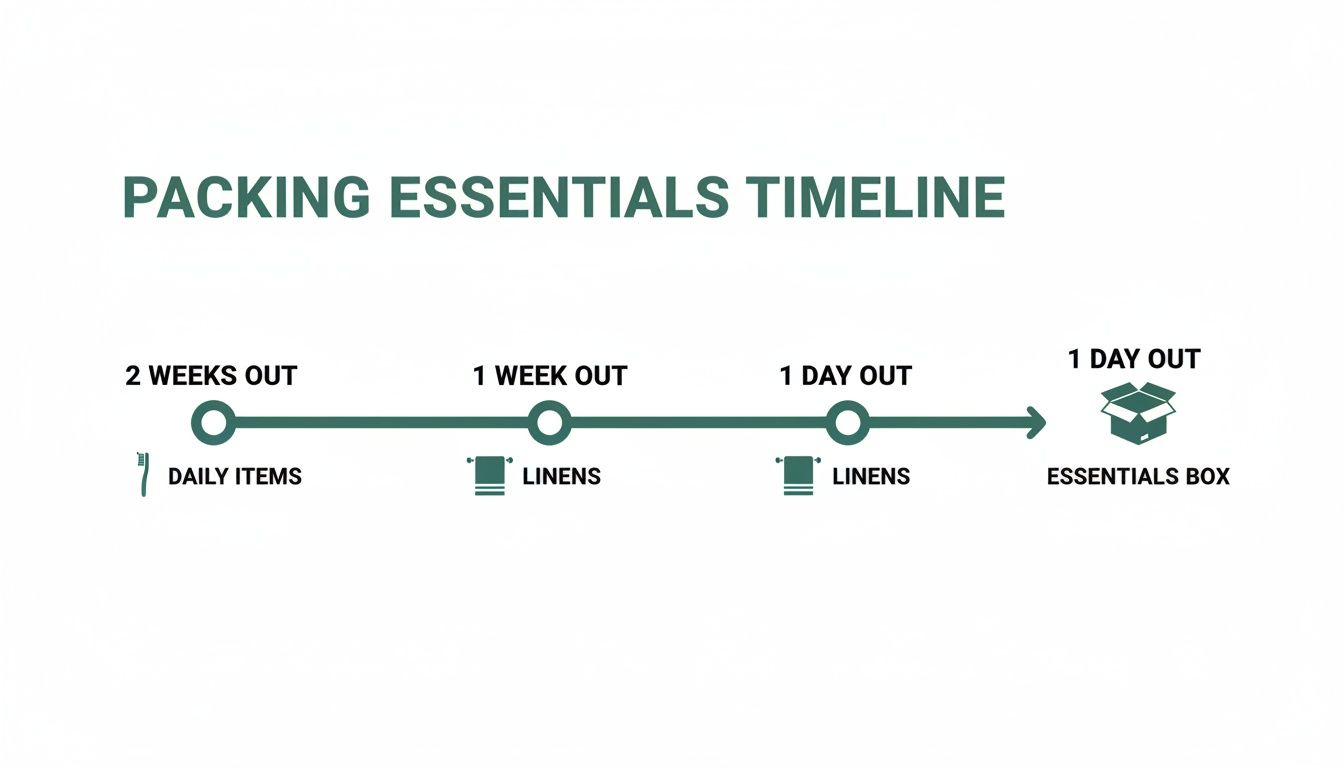
It really shows that strategic shift from packing away non-essentials to getting your critical "first day" box ready to go.
Common Questions About Your Moving Timeline
Even the best-laid plans run into snags. That’s just the reality of moving. Think of creating a packing timeline for moving as more of an art than a science—you have to know how to pivot when things don’t go exactly as planned.
To help you out, I’ve pulled together the questions I hear most often. These are the details that can make the difference between a move that feels seamless and one that’s a total stress-fest.
How Far In Advance Should I Really Start Packing?
The magic number is eight weeks before your move date. I know, that sounds like a lifetime. But you won’t be living in a sea of cardboard boxes for two months, I promise. That first month is purely for planning and purging.
Starting this early gives you the breathing room you desperately need to declutter without feeling the pressure. You’ll have time to sell valuable items, donate the rest, and figure out storage. The active packing—the stuff you don’t use every day, like off-season clothes or decorative art—should kick off about four to five weeks before the truck shows up. Trust me, this slow-and-steady approach is your best defense against last-minute panic.
What Should I Pack Last When Moving?
Your final packing mission is to put together your "Essentials Box." This is your 24-to-48-hour survival kit for the new place, and it should ride in the car with you, never on the truck.
Think about what you'll need right away:
Critical Reminder: Keep your most important documents—passports, birth certificates, moving contracts, the new lease—in a separate, clearly labeled folder that you carry personally. Never, ever let these items get loaded onto the moving truck.
Is It Better To Pack Room By Room Or By Category?
Nine times out of ten, packing room by room is the way to go. It just makes more sense. It keeps everything that belongs together together, which makes unpacking a million times easier. When you have boxes labeled "Living Room," you know exactly where they go when you arrive.
Packing by category—like gathering every single book from all over the house into one series of boxes—sounds efficient, but it usually creates chaos on the other end. You’ll find yourself hauling items from one room to another, creating more work for yourself. Stick to the room-by-room method, starting with the spaces you use the least.
How Can A Storage Service Help With My Packing Timeline?
This is one of my favorite pro-tips. A storage service fits perfectly into the early stages of your move, right in that initial decluttering phase (Weeks 8-6). It’s the ideal time to pack up seasonal gear, sentimental items you can’t part with, or bulky hobby equipment you won't need for a while.
Getting those things out of the house frees up a shocking amount of physical and mental space. Suddenly, the rest of the packing feels way less cramped and overwhelming. It also cuts down on the total volume you’re moving on the big day, which can lower your final bill. Of course, you’ll want to know how that impacts your budget, and you can learn more about how to estimate moving costs to get the complete picture. With a service like Endless Storage, you just have your boxes delivered to your new home whenever you’re settled and ready for them.
Ready to create more space for your move? With Endless Storage, you can store your non-essentials by the box, clearing the clutter so you can focus on what matters. We deliver free kits to your door and handle the pickup, making it the easiest part of your packing timeline. Start storing today.
Frequently Asked Questions
Unveiling the Secrets to Effortless Storage
Endless Storage is available nationwide. You pick a plan, tell us where to pickup, and we'll send a UPS van to collect, whichever state you're in.
Your shipping label will be sent to your email within a few minutes, if not instantaneously. It can also be accessed through your customer profile.
Your box will be shipped to one of our climate controlled self storage facilities in our closest self storage facility. Our manager will accept your package, notify you that your box has been received, and securely stored. Only our managers will have access to Endless Storage boxes.
Email us at admin@endless-storage.com click to live chat with us, or send us a message below.
Never! We're committed to transparent pricing with no surprises. You'll lock in your rate with no hidden fees and no long-term contracts.
Fast access guaranteed! Your boxes will arrive at your doorstep within 48 hours of requesting them back. Need to check on delivery? We provide tracking information for complete peace of mind.
Totally flexible! Store month-to-month with no long-term commitment and cancel anytime.
Everything's online! Use your account dashboard to:
• Set up automatic monthly payments
• Request box returns
• Update your address
• Order additional boxes
• Track shipments
Your boxes are insured up to $100 each. Our customer service team will help you file any necessary claims and resolve issues quickly.
Don't worry – we'll email you right away if there's a payment issue. Your items stay safe, though you may have temporary service interruption or late fees until payment is resolved.
When you request our free storage kits, you'll have 30 days to send in your boxes to activate your 3 months of free storage. Think of it like starting a gym membership – your activation window begins when you receive your kits, and your full free trial begins once you send in your first box. During your free months, you'll experience our complete storage service at no cost.
Your 30-day activation window begins when you receive your storage kits. We'll send you an email confirmation when your kits are delivered, marking the start of your activation period.
If you haven't sent any boxes for storage within your 30-day activation window, your free trial will expire and we'll begin charging the regular monthly rate of $9.99 per box. This helps ensure our storage kits go to customers who are ready to use our service.
A box costs $9.99 per month to store (plus sales tax). This price includes free shipping for standard boxes under 50 lbs. and smaller than 16"x16"x16"
Log into your Endless Storage account, locate the box you would like returned, and simply click Return My Box.
Yes, each box stored with us is insured for up to $100 throughout transit as well as the duration of storage within our facilities.
Your box will be at your doorstep within 48 hours of you requesting it back.
Store 10+ boxes? We'll pick them up for free! After your purchase, we'll contact you to schedule a convenient pickup time and arrange UPS collection.
We trust UPS with all shipments, and every box includes $100 insurance coverage. You'll receive tracking information to monitor your items' journey.
Yes! Visit any of our locations by appointment. Just bring a photo ID matching your customer profile.
For everyone's safety, we can't store hazardous materials, firearms, or perishables. All items must fit within our standard boxes.
It's easy! Order your storage kit online, and we'll ship it to you within 1-2 business days. Your shipping labels will be emailed instantly and available in your account.
We're here to help! Email us at admin@endless-storage.com, use our live chat, or send us a message through your account.
To cancel your storage service with Endless Storage, please email your cancellation request to admin@endless-storage.com. Our team will process your request within 2 business days and confirm your cancellation via email.
We understand packing takes time. However, to maintain your free trial benefits, you'll need to send at least one box within the 30-day activation window. If you need more time, you can always start with one box to activate your trial and send the rest later. You can always reach out to admin@endless-storage.com if you have any issues or concerns.
When you request our free storage kits, you're starting a 30-day window to begin using our storage service.
Important: To activate your free trial, send at least one box for storage within 30 days. If no boxes are sent within this 30-day window, a one-time $50 fee applies to cover materials and shipping costs. This fee is clearly disclosed before you sign up.
Think of it like reserving a hotel room – we're setting aside space and sending specialized packing materials for your use. The fee only applies if you request materials but don't begin storage, similar to a hotel's no-show charge.