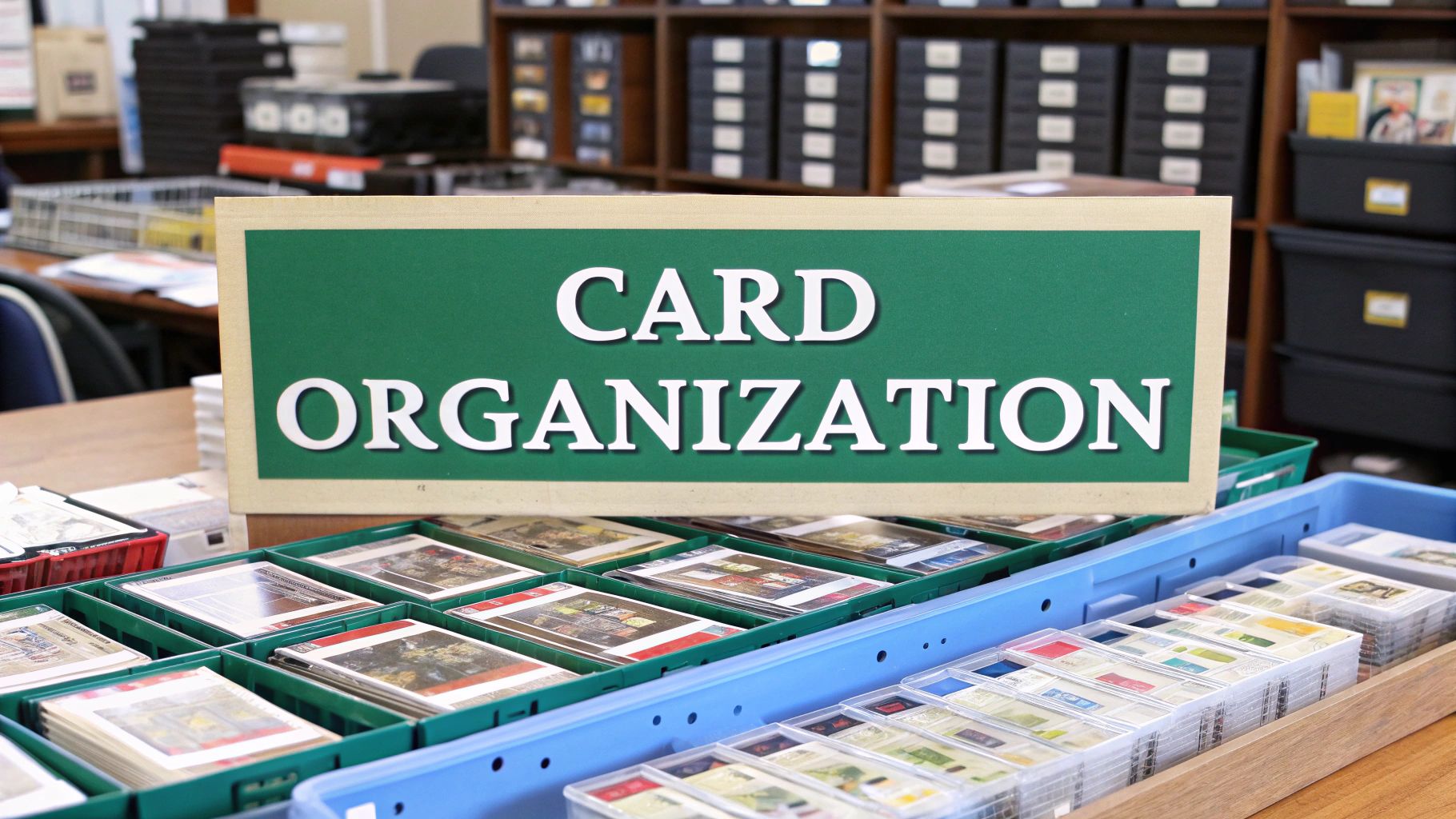
Tackling a baseball card collection, big or small, really comes down to a simple, four-part philosophy: sort, protect, catalog, and store. Getting this rhythm down is what turns a chaotic pile of cardboard into a collection you can actually enjoy and manage, making sure your cards stay in great shape for years to come.
Your Game Plan for Card Organization
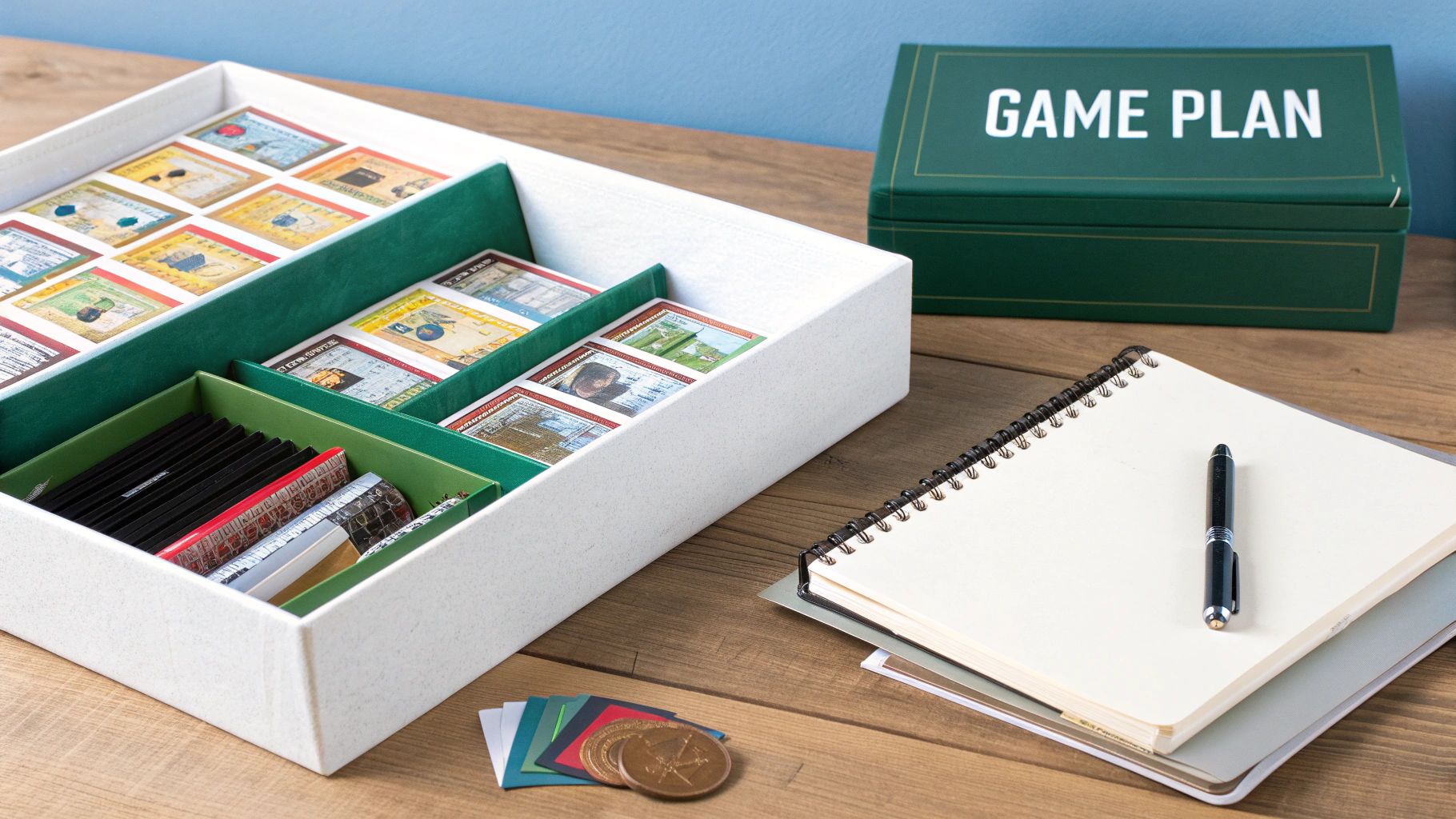
Staring down a mountain of baseball cards without a plan can feel like you’re trying to count grains of sand. It’s easy to get overwhelmed. But whether you’ve got a single shoebox or an entire room stacked high, having a clear strategy is your best friend. The core ideas of sorting, protecting, and storing your collection are the same for everyone—they’re the roadmap for turning clutter into a source of pride.
This is more important than ever, especially with how much the hobby is booming. The global sports trading card market was valued at around USD 871.82 million and is on track to hit a staggering USD 6,670.67 million by 2034. Baseball cards, along with basketball, make up over 75% of those transactions. It just goes to show that keeping your collection in good order isn’t just for fun; it’s a smart move.
To give you a quick overview, here's the essential framework I use for every collection I work on.
Essential Card Organization Framework
This table breaks down the entire process into manageable phases, outlining what you need to do and what you'll need to get it done.
Following this framework helps keep the process from feeling like a chore and turns it into a rewarding project.
Core Principles for Every Collector
A consistent system is everything. Once you figure one out, stick with it. The right supplies—everything from basic penny sleeves to rock-solid storage boxes—are your first line of defense against bent corners, scuffs, and fading.
Think of these foundational steps as your personal checklist for getting started:
- Establish a Sorting Logic: Before you even touch a card, decide how you’re going to sort. Will it be by set, player, team, or year? Pick one and commit. It’ll save you a ton of headaches later.
- Prioritize Protection: Every single card deserves at least basic protection. Even the common cards from the junk wax era will hold up better if they’re handled carefully and stored correctly.
- Create an Inventory: You can't manage what you don't measure. Knowing what you have is a game-changer for insurance purposes, trading with others, or just figuring out what you need to complete a set. A simple spreadsheet does the job perfectly.
- Choose Smart Storage: This is the final and most crucial step. You need a safe, stable place for your cards, far away from humidity, sunlight, and wild temperature swings.
If you’re just getting into collecting or want to brush up on the fundamentals, a good antique collecting for beginners guide can offer a solid foundation in preservation that applies to more than just antiques. And if organizing your cards is just one piece of a bigger decluttering puzzle, our complete https://www.endless-storage.com/blog-posts/decluttering-guide has even more tips to help you get your space in order.
The Foundational Sort: From Chaos to Order
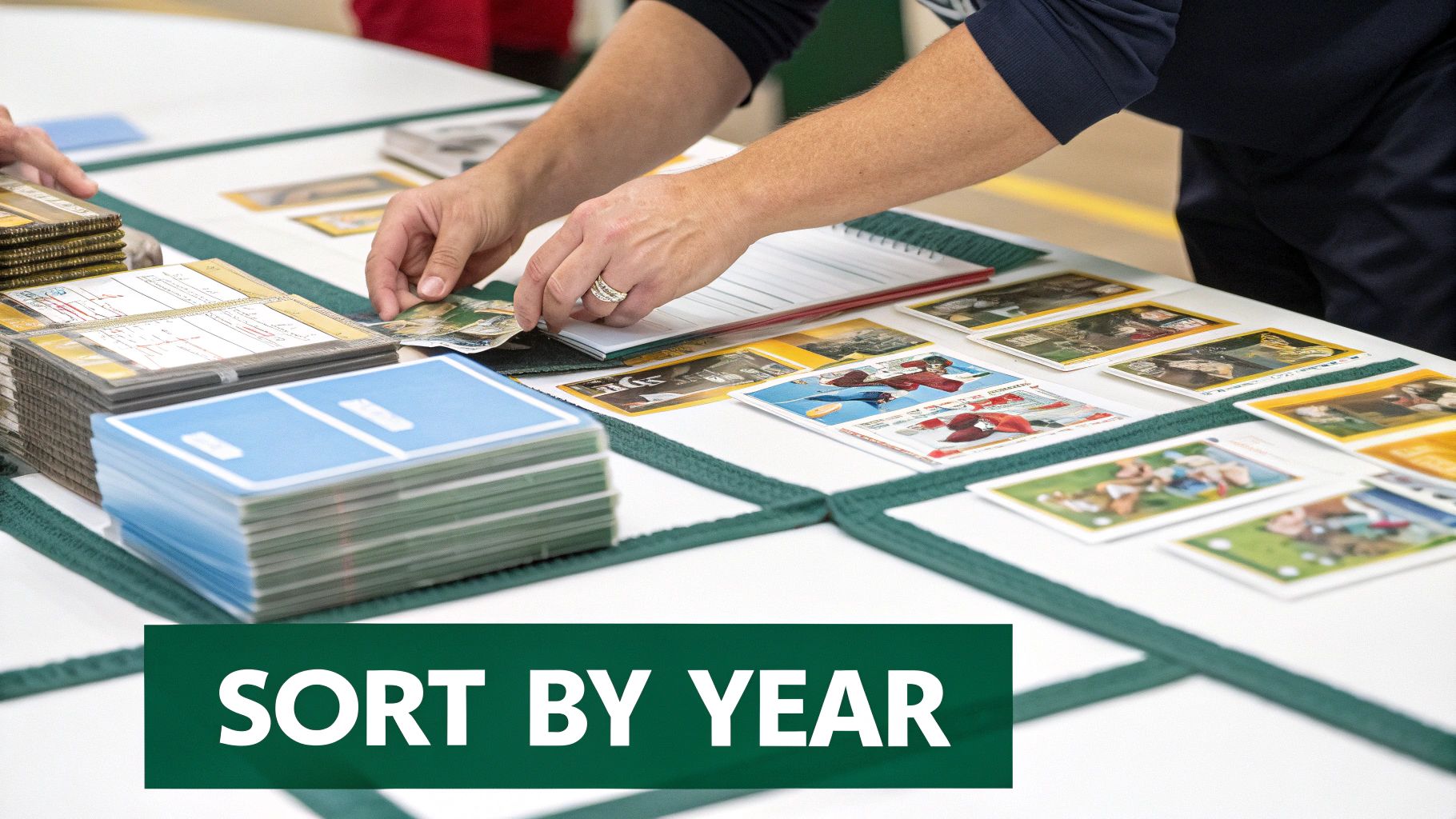
Before you even think about sleeving a card or putting it in a box, you need a sorting strategy. This is the single most important part of getting your collection organized. It lays the groundwork for everything else. Without it, you’re just making neat piles of chaos.
Let's say you just scored a massive lot of 5,000 cards from a garage sale, spanning four decades. Staring at that mountain of cardboard is overwhelming. The trick is to break the big job into smaller, more manageable chunks. Start broad, then get specific. It’s the only way to keep your sanity.
Establish Your Primary Sorting Method
How you sort really comes down to your goals as a collector. There's no one-size-fits-all answer, but whatever you choose, stick with it. Consistency is king.
Most collectors land in one of these camps:
- By Year, then Set: The classic approach, especially for set builders. You’d pull out all the 1989 cards, then separate the 1989 Topps from the 1989 Fleer, and so on down the line.
- By Player: If you’re a player collector, this one’s a no-brainer. Get all your Ken Griffey Jr. cards together in one pile, then maybe sort those chronologically to watch his career unfold.
- By Team: Perfect for the die-hard fan. You can pull together all the cards for your favorite team and then organize them by year or player from there.
My go-to for a huge, unsorted lot is a "rough sort" by decade first—all the '80s in one box, '90s in another. This simple first pass makes diving into specific years and sets feel way less intimidating.
The Practical Workflow for Bulk Sorting
Once you’ve picked a method, it’s time to get your hands dirty. Grab some card dividers or a stack of sticky notes and clear off a big, clean surface like your dining room table.
Start making piles for your main categories. If you're going by year, you'll have a 1985 pile, a 1986 pile, a 1987 pile, and so on. As you work through the cards, you’ll naturally start spotting the stars and key rookies. I always keep a separate, designated stack for any high-value cards so I can get them into protective sleeves right away.
This is also the perfect moment to deal with duplicates. You need a system.
Pro Tip: Don't just make a single "duplicates" pile. Be strategic. Create separate stacks for trade bait, cards you plan to sell, and commons you'll store in bulk. Making this call now will save you from re-sorting the exact same cards later.
After sorting, the next step is tracking what you have. Creating a digital catalog is a game-changer for managing your collection's value and finding what you need. That initial sort sets you up perfectly for this next phase. To get started, check out our guide on how to create an inventory system for all your stuff.
Choosing the Right Protection for Every Card
Once your cards are sorted, it’s time to suit them up. The key here is realizing that not every card needs the Fort Knox treatment. Matching the level of protection to a card's actual value and importance is a skill every collector learns, usually after overspending on cases for common cards.
Think of it as a tiered system. Your common player gets basic coverage, while that prized rookie autograph gets the best defense you can find.
The absolute, non-negotiable first layer of defense for any card you want to keep is the penny sleeve. These simple, soft plastic sleeves are your first line of defense against surface scratches, dust, and the natural oils from your fingers. Seriously, every single card, from a bench player to a Hall of Famer, should go into a penny sleeve. It's the cheapest and best insurance you can buy.
Upgrading Your Card Armor
For cards that have a bit more going for them—think rookies, star players, or numbered short prints—a flimsy penny sleeve just isn't going to cut it. You need to add some structural support to prevent nasty bends and corner dings. This is where you bring in the heavy hitters.
Your main options for adding rigid protection are:
- Top-Loaders: These are the workhorses of the hobby. A top-loader is a rigid plastic holder you slide your penny-sleeved card into. They’re the standard for most cards worth more than a buck or two and offer fantastic protection for storing in boxes.
- Semi-Rigid Holders: You’ll often hear these called "Card Savers." They're a bit more flexible than top-loaders, which is exactly why they’ve become the industry standard for submitting cards to grading companies. Graders can get cards out of them easily without risking damage.
- One-Touch Magnetic Holders: For your absolute best cards, these are the top-shelf choice. They are crystal-clear, two-piece hard cases that snap together with a strong magnet, sealing your card inside a recessed, UV-protected chamber. They look incredible and are perfect for displaying your most valuable assets.
This strategic approach means you aren't wasting money on expensive cases for common cards, while still giving your valuable pieces the Fort Knox-level security they truly deserve. For a deeper look at protecting all your prized possessions, check out our guide on how to store collectibles.
The Ultimate Protection: Professional Grading
For the most important cards in your collection—the ones you see as long-term investments or crown jewels—the final step is professional grading. Powerhouses like PSA, CGC, and SGC will authenticate, grade, and then encapsulate your card in a sonically sealed, tamper-proof slab.
This process does two things: it offers the highest possible level of physical protection, and it officially certifies the card’s condition and authenticity. This certification can dramatically boost its market value.
Grading has become a massive part of the modern hobby. It takes a piece of cardboard and turns it into a certified, liquid asset by verifying its legitimacy and condition, which is everything for serious collectors and investors.
The numbers don't lie. Baseball card grading services are now a critical part of the hobby's ecosystem. A mind-boggling 26 million cards have been graded recently, showing just how mature this market has become.
While PSA is still the big name on the block, other reputable services like CGC and TAG have seen explosive growth of 121% and 83% respectively. This competition is great for collectors, giving us more high-quality grading options than ever before. You can explore more about this market explosion and what it means for the future of collecting.
Building Your Digital Collection Catalog
Once you've sorted and sleeved your cards, it's time to figure out exactly what you own. Think of a digital catalog as your collection's master key—it transforms a few stacks of cardboard into a real, manageable inventory. This isn’t just about making a list. It's about creating an essential tool for insurance, tracking your collecting goals, and making sure you don’t accidentally buy that third 1989 Griffey Jr. rookie at the next card show.
You don't need some fancy, expensive software to pull this off. Honestly, a simple spreadsheet in Google Sheets or Excel works wonders. If you want something a bit more automated, dedicated apps like Cardbase or Sports Card Investor offer cool features like real-time price tracking and collection value analysis. The platform you choose is less important than the habit of actually doing it.
Essential Data to Track
No matter what tool you land on, consistency is everything. You need to log the same core details for every single card that matters to you. A well-organized digital inventory should function like a comprehensive home inventory checklist template, giving you a complete picture of your assets at a glance.
Make sure your catalog includes at least these data points for each card:
- Player Name: The most obvious starting point.
- Year and Set: For example, "1989 Upper Deck."
- Card Number: Absolutely crucial if you're trying to build a complete set.
- Condition: Your best guess (like NM or EX) or the official grade if it’s already slabbed.
- Purchase Price: This helps you track how your investment is doing over time.
- Current Value: Update this every so often using market data to stay current.
With a digital ledger like this, you have a real-time snapshot of your collection's worth and can instantly see which cards you're missing to finish off a set.
Creating a detailed catalog is the difference between simply owning cards and actively managing a collection. It provides the clarity needed to make smart decisions, whether you're buying, selling, or simply enjoying what you've built.
This decision tree gives you a great visual for how to approach protecting your cards based on their value and whether they're graded—a key part of the cataloging process.
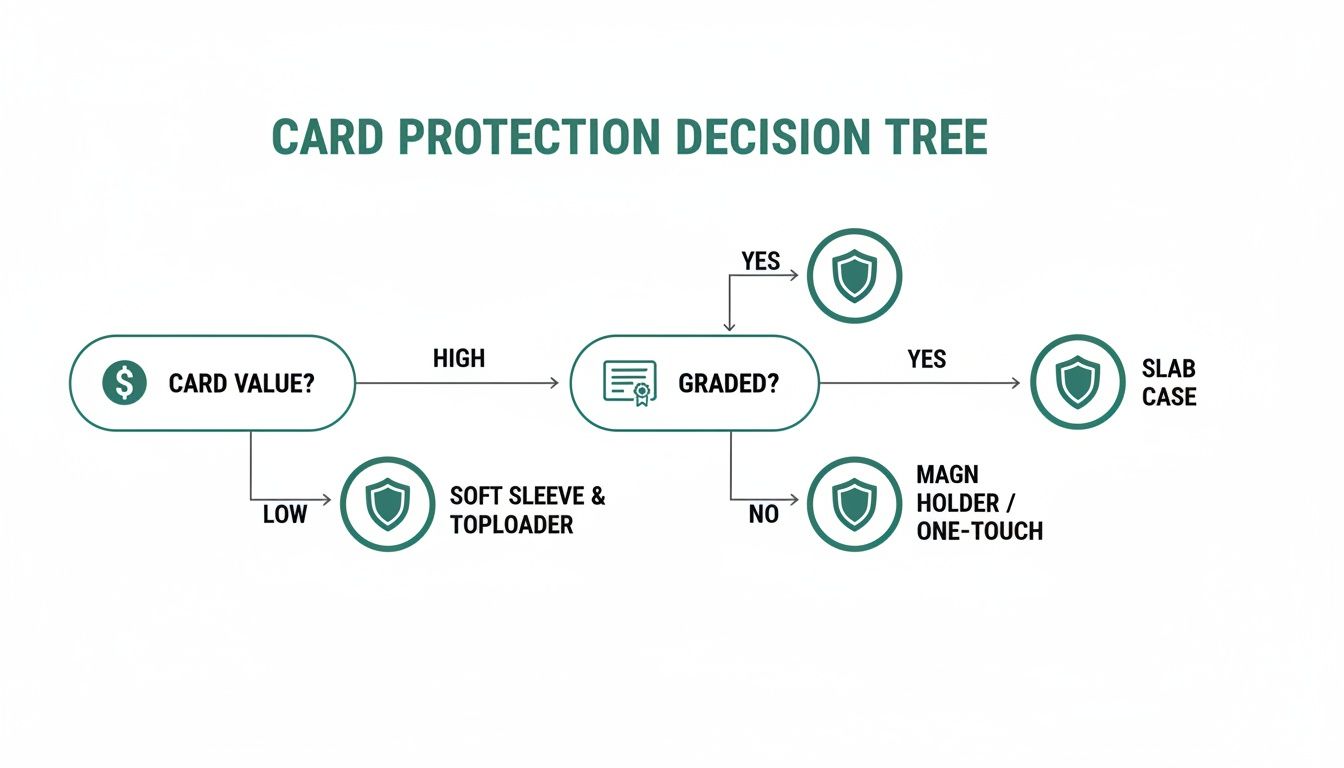
As you can see, a card's value is the first thing to consider, which then branches into different protection strategies depending on if it's been professionally graded.
For a deeper dive into building out your catalog, check out this guide on How to Catalog Coins. The techniques for documenting valuables are pretty universal, and the principles of careful organization will ensure your collection is well-managed for years to come.
Smart Storage Solutions for Any Collector
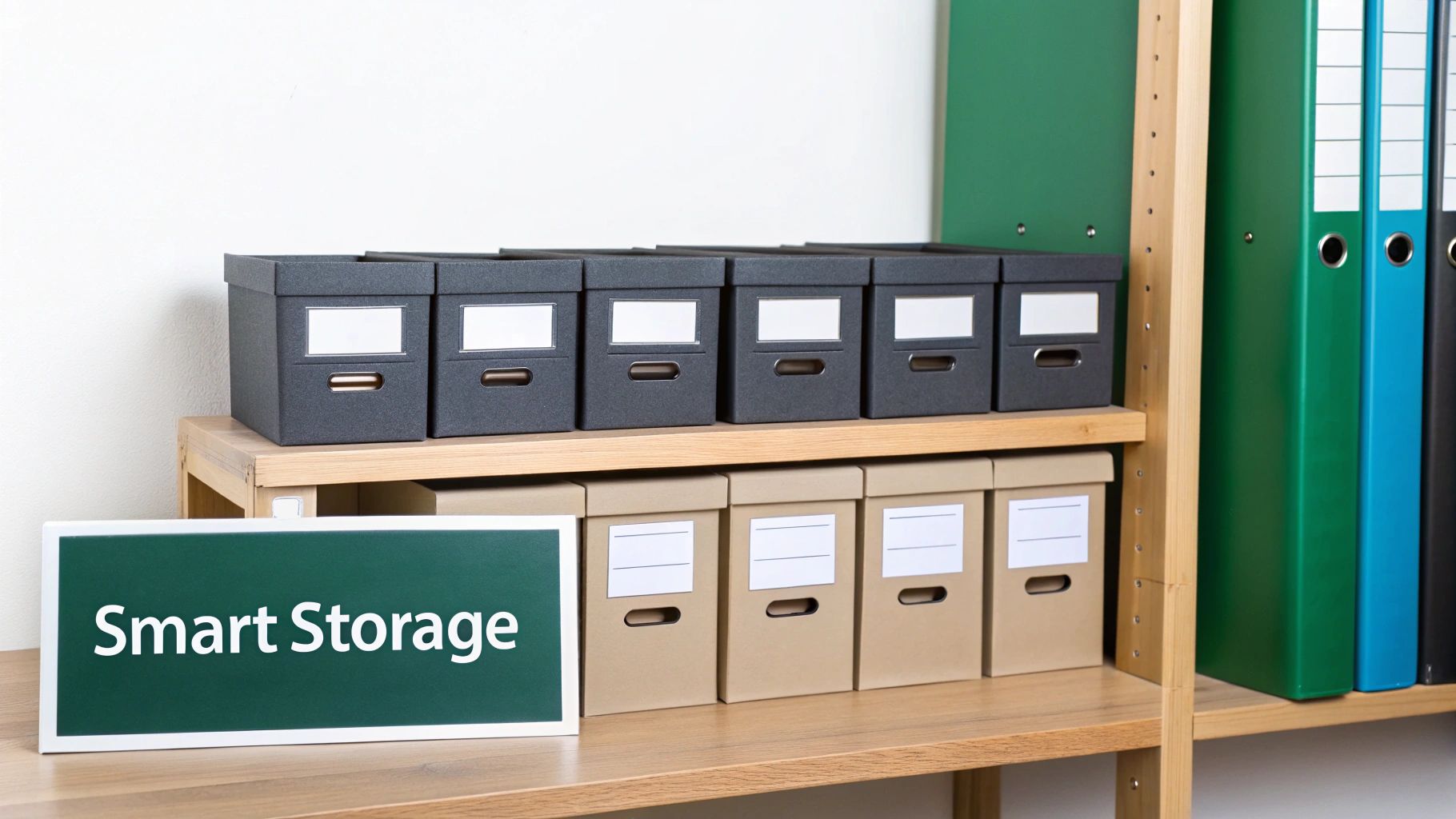
Alright, you've sorted, protected, and cataloged your collection. Now comes the final boss: finding a permanent home for it all. This is where a lot of collectors, especially those tight on space, hit a wall. The storage solution you land on will make or break your cards' long-term condition and how much you actually get to enjoy them.
The classic debate comes down to a simple trade-off: display and accessibility versus bulk preservation. Honestly, there's a place for both, and most serious hobbyists I know use a mix of the two.
Binders for Active Collections and Sets
Binders are the MVP for sets you're actively trying to complete or the collections you just love to flip through. Sliding cards into nine-pocket pages makes them incredibly easy to view, show off to friends, and rearrange on a whim. Think of a binder as the perfect showcase for your complete 1987 Topps set or your favorite player’s entire flagship card run.
But they do come with risks. Overstuff a binder, and the rings can press into the cards, leaving permanent dents. I’ve seen it happen. Let the pages sag over time, and you’ll put stress on the card edges. Binders are fantastic for curated sets, not for housing thousands of commons.
Cardboard Boxes for Bulk Storage
When you’re talking about storing a mountain of cards, nothing beats the raw efficiency of cardboard storage boxes. These multi-row containers, often called "monster boxes," are specifically built to store thousands of sleeved or top-loaded cards standing upright. That vertical orientation is key—it prevents cards from bowing under their own weight.
This method is the undisputed champion for:
- Bulk Commons: Stashing away thousands of cards you don't need to look at every day.
- High-Value Cards: Keeping valuable, top-loaded, or graded cards safe from light and accidental dings.
- Long-Term Preservation: Creating a stable, dark environment that’s perfect for archival.
These boxes are the backbone of any large-scale organization project. We've got more details on picking the right ones in our guide to different types of storage boxes. The only real downside is that finding one specific card means digging through rows, so they aren't ideal for your most-viewed sets.
The real question isn't binders versus boxes; it's about using each for what it does best. Binders are for display and interaction. Boxes are for secure, space-saving preservation. Using both is the hallmark of an experienced collector.
A Modern Solution for Limited Space
But what if you don't have a dedicated hobby room or a spare closet with a stable climate? For collectors in apartments or homes without a basement, this is a huge challenge. Let me be clear: storing cards in an attic or garage is a recipe for disaster. The wild swings in temperature and humidity will cause irreversible warping, fading, and even mold.
This is where a modern, offsite storage solution can be a total game-changer. Imagine packing up your neatly organized boxes and sending them to a secure, climate-controlled facility. When you want to work on a set or pull some cards for a trade show, you just request that specific box, and it's shipped right back to you.
This approach gives you the ultimate peace of mind. Your collection is safe from environmental threats, and your living space stays clean and uncluttered. Given that the trading card market was valued at around USD 11.4 billion globally, protecting these assets is more critical than ever. It's no wonder professional storage is becoming such a popular choice for serious collectors.
Answering Your Top Card Organizing Questions
Even with a perfect plan, you're bound to run into a few tricky situations once you start digging into your collection. It happens to everyone. Let's tackle some of the most common questions that pop up, so you can get unstuck and keep your project rolling.
How Should I Handle Thousands of Common Cards?
This is the big one, especially if you’ve ever bought a bulk lot or ripped open a few hobby boxes. The answer is surprisingly simple: multi-row cardboard storage boxes. You'll often hear these called "monster boxes," and for good reason—they're the most efficient way to store thousands of cards.
The process for your commons is pretty straightforward:
- First, get every single card into a penny sleeve. This is non-negotiable if you want to prevent surface scratches and stop them from sticking together over the years.
- Stand the sleeved cards up in the monster box. Laying them flat is a recipe for warping.
- Grab some dividers and label them by set or year. This little bit of effort now will save you a massive headache later when you're trying to track down a specific card to complete a set.
This method keeps your commons safe and organized without eating up precious binder space or turning your home into a cardboard maze.
What's the Best Way to Organize for a Player Collection?
When you’re a player collector, your whole organization system should tell the story of that player's career. The most logical way to start is by organizing your collection alphabetically by the player's last name.
Once you have a dedicated binder or box for a player, sort their cards chronologically by year and then by card number. What you end up with is a fantastic visual timeline of their entire career, from that fresh-faced rookie debut all the way to their final seasons. It also makes it painfully obvious which cards you're still missing from their checklist.
The best environment for long-term card storage is cool, dry, and, most importantly, stable. Consistency is everything when you're trying to prevent damage from the elements.
What Is the Ideal Temperature and Humidity?
At the end of the day, cards are just fragile pieces of paper, and they do not like environmental mood swings. You're looking for a sweet spot between 65-72°F (18-22°C) with a relative humidity hovering around 45-55%.
Whatever you do, stay away from attics and basements. Those areas are famous for wild temperature shifts and moisture, which is a fast track to warped cards, stuck-together gloss, or even mold. A closet in a climate-controlled part of your house is a much, much safer bet.
How Do I Prepare My Collection for a Move?
Moving a card collection can be absolutely nerve-wracking. The key to keeping your sanity is preparation, and your number one priority is making sure nothing can shift or get bumped around during the trip.
Start by securing every valuable card in a top-loader or, even better, a one-touch magnetic case. Pack your filled storage boxes snugly into sturdy moving boxes, using packing peanuts or bubble wrap to fill every last gap. You want zero wiggle room.
Label those moving boxes clearly: "FRAGILE - COLLECTIBLES." For your absolute best cards—the ones that make your stomach drop just thinking about them getting damaged—I always tell people to transport them in their own car. It's the only way to have total peace of mind that they'll get to your new place safely.
Feeling buried by the sheer volume of your collection or just plain out of climate-controlled space? Endless Storage offers a modern way out. We send you the boxes, you pack your cards, and we handle the rest, storing them in our secure, climate-controlled facility. Whenever you want a box back, we ship it right to you. Get your space back without putting your collection at risk.
Learn more about our storage-by-the-box service at Endless Storage
Frequently Asked Questions
Unveiling the Secrets to Effortless Storage
Endless Storage is available nationwide. You pick a plan, tell us where to pickup, and we'll send a UPS van to collect, whichever state you're in.
Your shipping label will be sent to your email within a few minutes, if not instantaneously. It can also be accessed through your customer profile.
Your box will be shipped to one of our climate controlled self storage facilities in our closest self storage facility. Our manager will accept your package, notify you that your box has been received, and securely stored. Only our managers will have access to Endless Storage boxes.
Email us at admin@endless-storage.com click to live chat with us, or send us a message below.
Never! We're committed to transparent pricing with no surprises. You'll lock in your rate with no hidden fees and no long-term contracts.
Fast access guaranteed! Your boxes will arrive at your doorstep within 48 hours of requesting them back. Need to check on delivery? We provide tracking information for complete peace of mind.
Totally flexible! Store month-to-month with no long-term commitment and cancel anytime.
Everything's online! Use your account dashboard to:
• Set up automatic monthly payments
• Request box returns
• Update your address
• Order additional boxes
• Track shipments
Your boxes are insured up to $100 each. Our customer service team will help you file any necessary claims and resolve issues quickly.
Don't worry – we'll email you right away if there's a payment issue. Your items stay safe, though you may have temporary service interruption or late fees until payment is resolved.
When you request our free storage kits, you'll have 30 days to send in your boxes to activate your 3 months of free storage. Think of it like starting a gym membership – your activation window begins when you receive your kits, and your full free trial begins once you send in your first box. During your free months, you'll experience our complete storage service at no cost.
Your 30-day activation window begins when you receive your storage kits. We'll send you an email confirmation when your kits are delivered, marking the start of your activation period.
If you haven't sent any boxes for storage within your 30-day activation window, your free trial will expire and we'll begin charging the regular monthly rate of $9.99 per box. This helps ensure our storage kits go to customers who are ready to use our service.
A box costs $9.99 per month to store (plus sales tax). This price includes free shipping for standard boxes under 50 lbs. and smaller than 16"x16"x16"
Log into your Endless Storage account, locate the box you would like returned, and simply click Return My Box.
Yes, each box stored with us is insured for up to $100 throughout transit as well as the duration of storage within our facilities.
Your box will be at your doorstep within 48 hours of you requesting it back.
Store 10+ boxes? We'll pick them up for free! After your purchase, we'll contact you to schedule a convenient pickup time and arrange UPS collection.
We trust UPS with all shipments, and every box includes $100 insurance coverage. You'll receive tracking information to monitor your items' journey.
Yes! Visit any of our locations by appointment. Just bring a photo ID matching your customer profile.
For everyone's safety, we can't store hazardous materials, firearms, or perishables. All items must fit within our standard boxes.
It's easy! Order your storage kit online, and we'll ship it to you within 1-2 business days. Your shipping labels will be emailed instantly and available in your account.
We're here to help! Email us at admin@endless-storage.com, use our live chat, or send us a message through your account.
To cancel your storage service with Endless Storage, please email your cancellation request to admin@endless-storage.com. Our team will process your request within 2 business days and confirm your cancellation via email.
We understand packing takes time. However, to maintain your free trial benefits, you'll need to send at least one box within the 30-day activation window. If you need more time, you can always start with one box to activate your trial and send the rest later. You can always reach out to admin@endless-storage.com if you have any issues or concerns.
When you request our free storage kits, you're starting a 30-day window to begin using our storage service.
Important: To activate your free trial, send at least one box for storage within 30 days. If no boxes are sent within this 30-day window, a one-time $50 fee applies to cover materials and shipping costs. This fee is clearly disclosed before you sign up.
Think of it like reserving a hotel room – we're setting aside space and sending specialized packing materials for your use. The fee only applies if you request materials but don't begin storage, similar to a hotel's no-show charge.