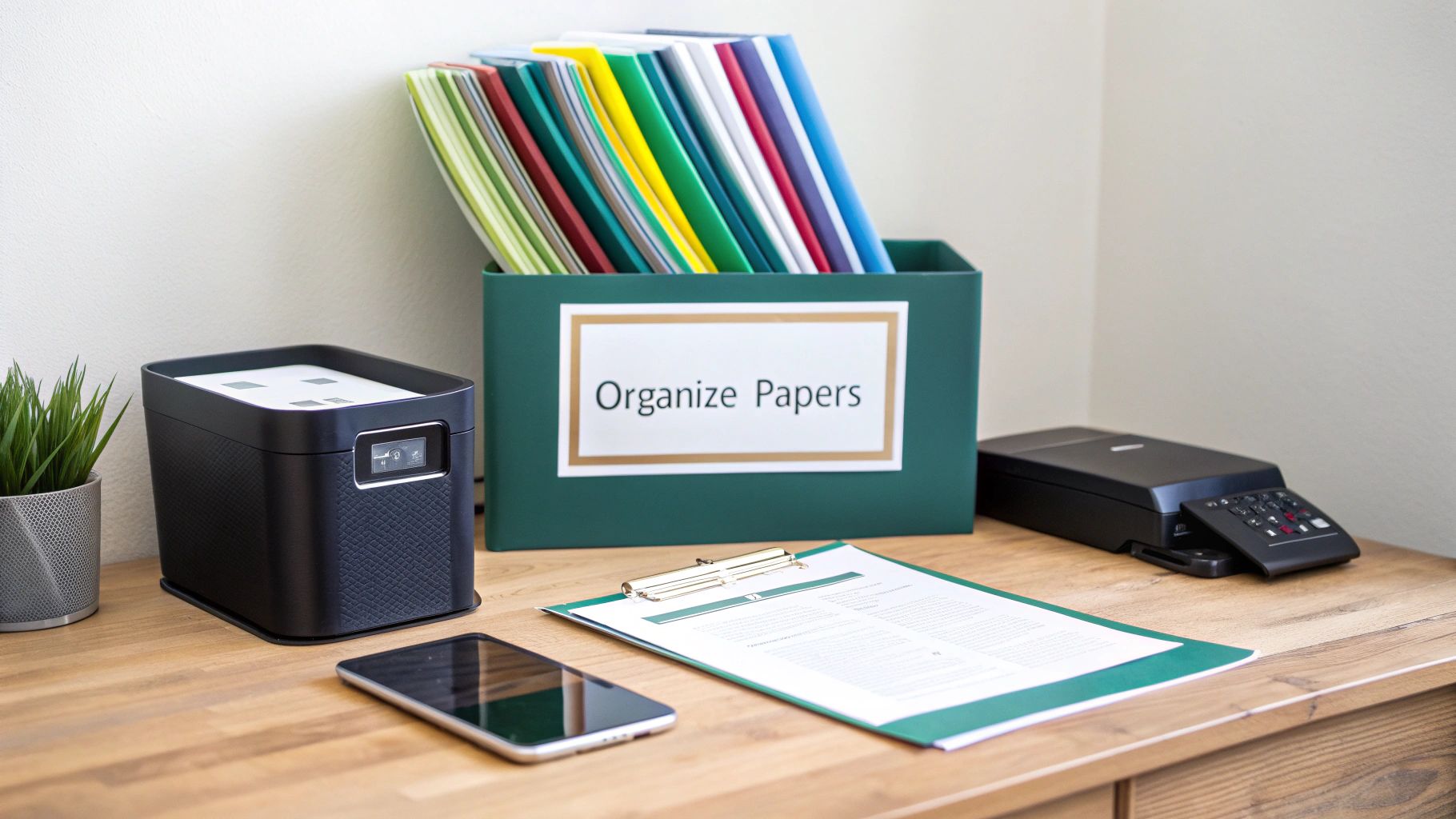
Getting your paper situation under control is a lot easier than you think. It really boils down to a simple, four-part flow: Sort everything into a few key piles, Shred the sensitive stuff you don't need, Digitize what you can, and Store only what’s absolutely essential. This is the exact framework that helps you finally tackle those piles without getting completely overwhelmed.
Confronting the Paper Problem in Your Small Space
Let's be real—paper piles are a universal struggle, especially when you’re living in a small apartment. Mail, receipts, school flyers, and old bills seem to appear out of thin air, quickly taking over countertops, junk drawers, and any other flat surface.
It's more than just a visual mess; it’s a real mental weight. The core of the problem usually comes down to indecision. We hang onto paper "just in case," terrified we might accidentally toss something important. This fear leads to stacks of documents that just sit there, weighing us down. What if you could make quick, confident decisions and reclaim that space for good?
Why Paper Piles Up So Fast
The sheer volume of paper that enters our lives is staggering. The average office worker deals with around 10,000 pieces of paper a year, and a surprising amount of that ends up coming home with us.
This isn't just a minor annoyance. A recent survey showed that nearly 70% of millennials struggle to find important papers when they need them. That disorganization has a real cost, too—Americans waste about 2.5 days a year just searching for misplaced items. Crazy, right?
Here’s the simple truth: 80% of the paper and other items people keep are never used or looked at again. Once you truly accept that, it's so much easier to give yourself permission to let go of the vast majority of your paper clutter without fear.
This guide gives you a clear plan of attack that doesn't involve buying a giant, clunky filing cabinet that eats up precious floor space. The goal isn't just to hide the mess, but to create a sustainable system that keeps it from coming back. Adopting this simple framework can completely change your relationship with paper and help you enjoy the mental clarity that comes with an organized home. You can learn more about the powerful benefits of decluttering and how it can slash stress and boost your focus.
Your 15-Minute Paper Sorting Plan
Feeling overwhelmed and don't know where to start? Don't. Just grab a timer, set it for 15 minutes, and use this simple plan to make a real dent in that pile. This is all about quick decisions to build momentum.
Just focus on these four categories. Once your 15 minutes are up, you’ll have a much more manageable situation and a clear idea of your next steps.
A Realistic Sorting System That Actually Works
If there’s one secret to conquering paper piles, it’s this: stop shuffling them around. The moment you pick up a piece of paper, you have to decide its fate. I call it the "touch it once" rule—no putting it back down in a "deal with this later" stack.
This single habit is what separates progress from perpetual mess. Every single document gets an immediate assignment to one of four destinations. That’s it. You’re not just moving clutter; you’re eliminating it.
The Four Essential Piles
Forget complex filing systems. To get started and build momentum, you only need four categories. This simple framework is the key to organizing paper clutter without getting overwhelmed.
- Action: This is your "do something" pile. It's for anything that requires a task, like a bill you need to pay, an RSVP for a wedding, or a permission slip for your kid’s school that needs your signature.
- File: Think of this as your short-term, active document pile. You might need to get to these relatively soon. Your current apartment lease, the latest vet records for your dog, or your car insurance policy all fit here.
- Archive: This is for the long-haul stuff you’re legally required to keep but almost never look at. We're talking old tax returns (keep for 7 years!), property deeds, and maybe your university transcripts.
- Recycle/Shred: Get ready, because this will be your biggest pile by far! It's the new home for junk mail, expired coupons, old newsletters, and utility bills you've already paid and confirmed online. Just be sure to shred anything with personal information.
Want a quick mental shortcut? Ask yourself two things: "Do I legally need a physical copy?" and "Can I find this exact document online in less than two minutes?" If the answers are "no" and "yes," you can let it go.
This decision tree gives you a great visual for how to think through the process.
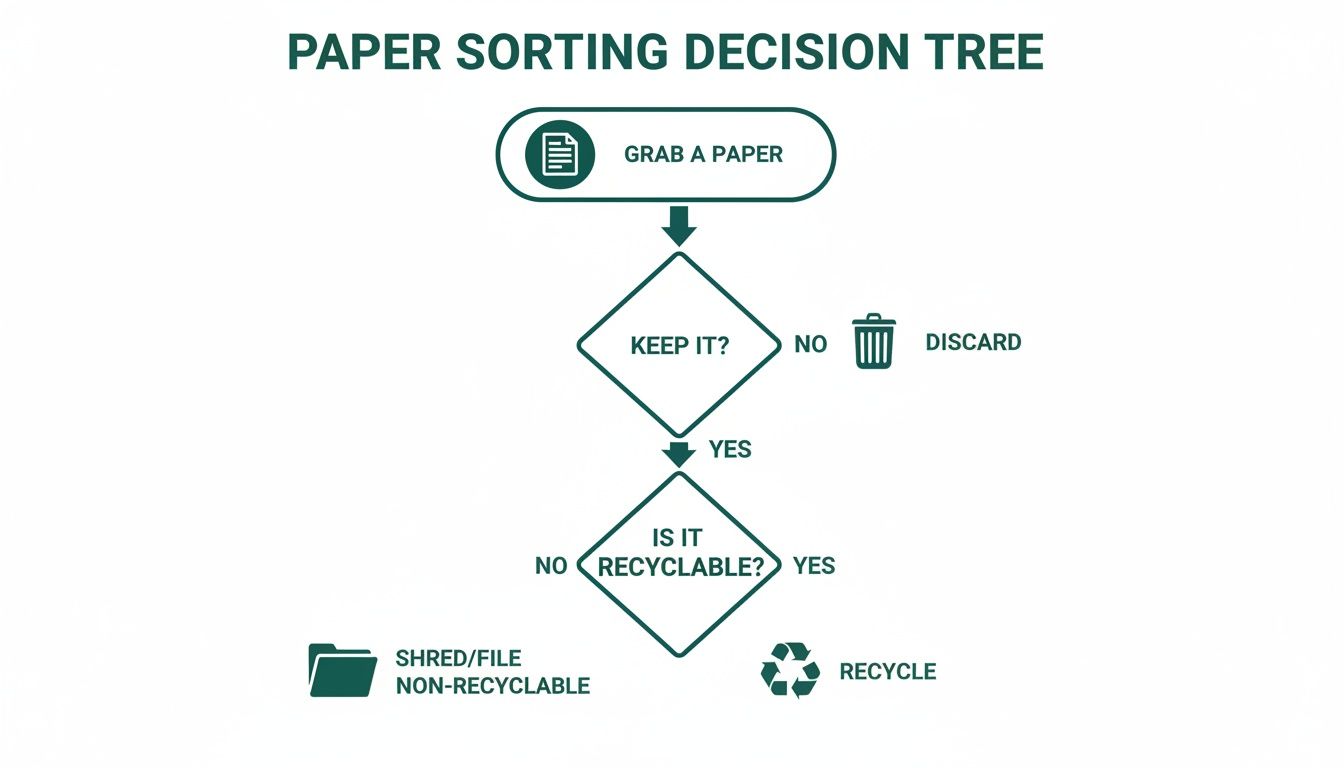
As you can see, most of the paper that enters our lives really doesn't need to stick around.
From Piles to Progress
Once your big mountain of paper is sorted into these four smaller, manageable hills, the next steps are clear. Your "Action" pile goes right on your desk to be tackled this week. The "File" items can go into a small, accessible file folder or box.
For the "Archive" pile, I recommend using clearly labeled bins. Learning the best way to label storage bins will save you a massive headache if you ever actually need to dig out that one specific document years from now.
This system isn’t just about making your apartment look neater; it’s about reducing genuine stress. It's no surprise that 54% of Americans feel overwhelmed by clutter. Even worse, 23% of adults admit they’ve paid a bill late just because they couldn’t find it. This four-pile method tackles that problem head-on, giving you back a sense of control.
Going Digital And What You Can Safely Shred
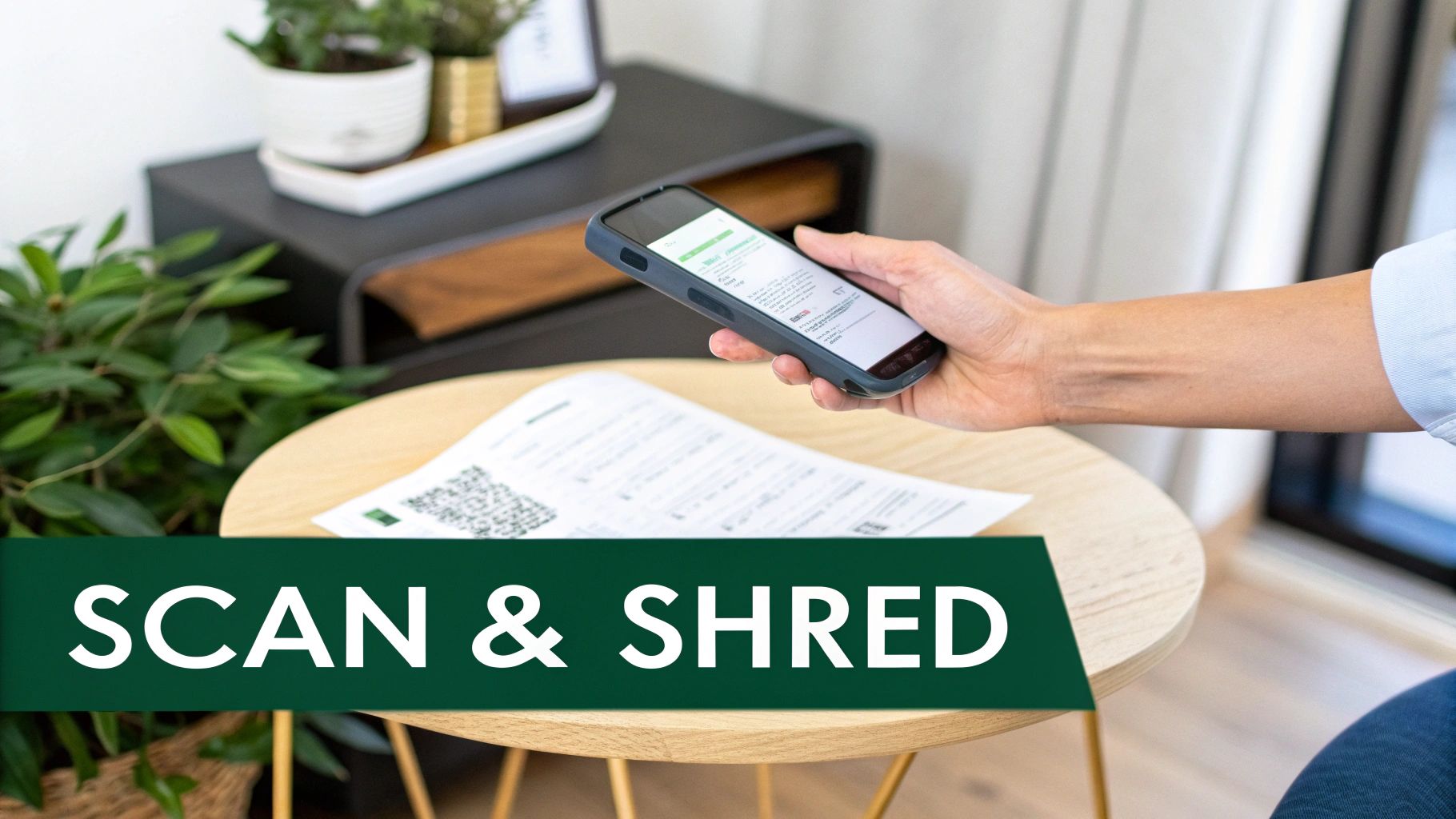
Once you’ve sorted through your papers, it’s time to make that physical pile shrink. A lot. This is where getting smart about digitization becomes your secret weapon in the war against paper clutter. You don't need some bulky, expensive office scanner, either—your smartphone is more than capable.
Powerful apps like Adobe Scan or Microsoft Office Lens turn your phone into a high-quality scanner in seconds. The trick is knowing what to scan, what to shred, and what to keep in its original paper form. This single step can free up an unbelievable amount of shelf and drawer space in a small apartment.
What To Digitize And What To Keep Physical
Not all paper is created equal, and figuring out the difference is the key to decluttering responsibly without accidentally shredding something you’ll need later.
Ready to Scan & Shred:
- Bank and Credit Card Statements: Once you’ve checked them for accuracy, these are perfect for digitizing.
- Utility Bills: As soon as you’ve confirmed payment, a digital copy is all you need.
- Pay Stubs: I like to scan these and file them in a digital folder labeled by year.
- Most Receipts: Especially for things that have a warranty or might need to be returned. If you run a business, it's a good idea to effectively organize business receipts digitally for tax time.
Must Keep the Physical Copy:
- Vital Records: Think birth certificates, marriage licenses, death certificates, and adoption papers.
- Official IDs: Social Security cards, passports, and driver's licenses. These are no-brainers.
- Property Documents: The original, hard copies of titles, deeds, and mortgage paperwork are essential.
- Legal Documents: Wills, trusts, and power of attorney documents should always be kept in their physical form.
Identity theft is a real threat, and your junk mail is often a goldmine for thieves. Shred anything with your name, address, account numbers, or Social Security number. And trust me on this: get a cross-cut shredder. It offers way more security than the basic strip-cut models.
For those critical documents you absolutely have to keep, you'll want to protect them properly. For a deeper dive, check out our guide on how to store important documents so they stay safe for years without taking over your living space.
Smart Storage Solutions for Small Apartments
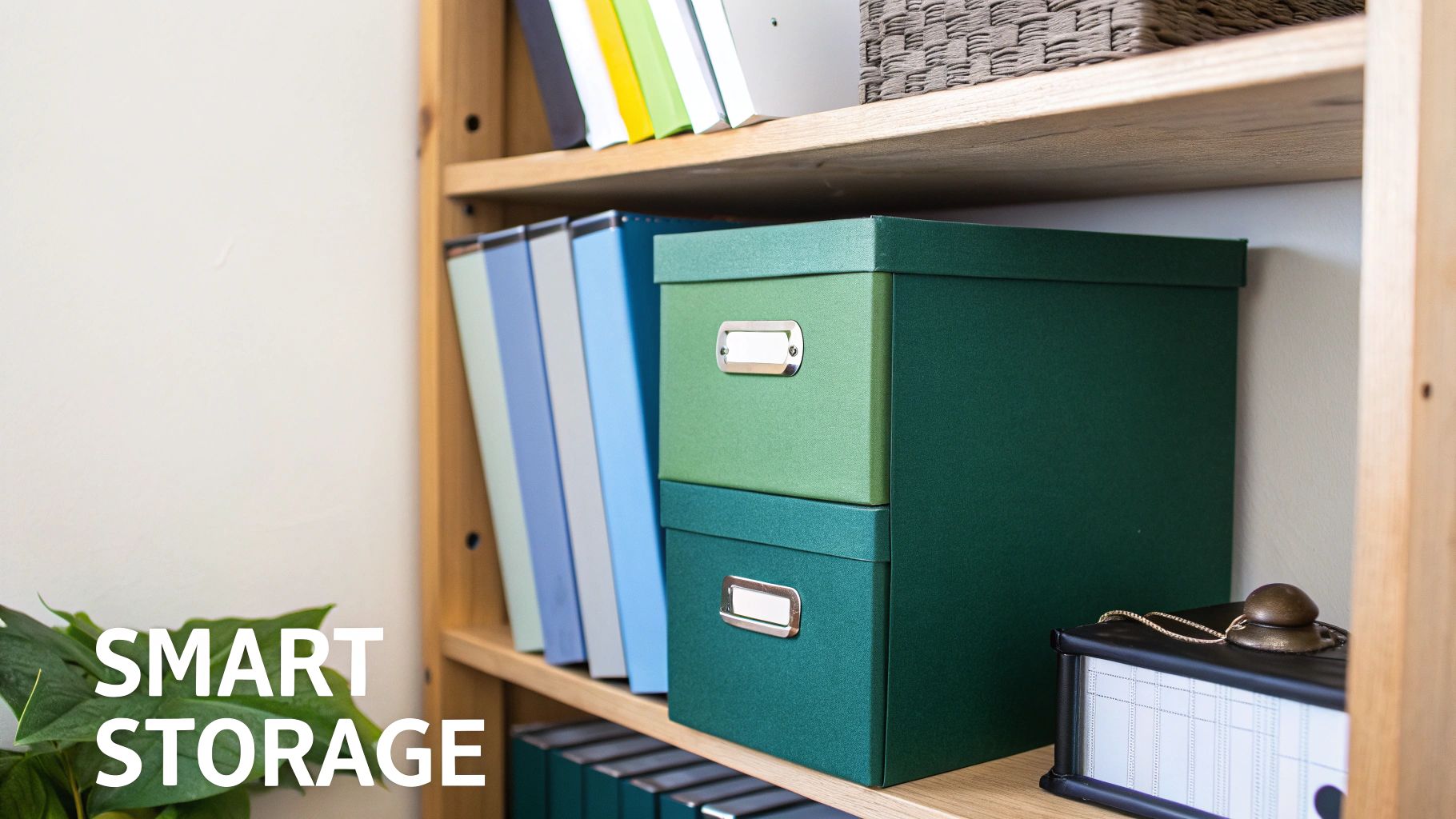
Alright, you've sorted, scanned, and shredded. Now you’re left with the pile of papers you absolutely have to keep. In a cozy apartment, a clunky old filing cabinet isn't just an eyesore—it's a space-killer. The trick is to think vertically and find furniture that pulls double duty.
Your short-term "action" and "file" papers—the ones you need to grab regularly—don't belong in deep storage anyway. Get creative with your walls and desktop instead.
- Wall-Mounted Folders: These are a game-changer for getting active papers off your kitchen counter. Have one for bills, one for mail that needs a response, and another for things like event tickets or permission slips.
- Vertical File Holders: A slim, upright file holder on your desk or a bookshelf keeps current project papers or your kid's latest school forms tidy. They're visible but contained.
- Integrated Furniture: When space is really tight, multi-functional furniture is your best friend. Options like futon bed storage drawers are perfect for tucking away items you don't need every day.
Rethinking Long-Term Archival Storage
But what about that "archive" pile? You know, the old tax returns and legal documents you rarely touch but can't legally toss. This is where most apartment dwellers get stuck, sacrificing precious closet real estate. The modern fix? Move these items completely off-site with a by-the-box storage service.
The average American home has over 300,000 items, and a staggering 1 in 10 households rents a self-storage unit to manage it all. For apartment living, a whole unit is usually overkill, which is why a more targeted approach makes so much sense.
Services like Endless Storage were practically designed for this exact urban-living headache. Instead of paying for a whole unit you'll never fill, you store only what you need—one box at a time. Your archives are kept safe in a secure, climate-controlled facility and can be delivered back to you with a simple online request.
This one move frees up your limited home storage for the stuff you actually use. Check out our complete guide to storage solutions for small apartments for more ideas. By combining smart at-home systems for your active papers with an off-site solution for your archives, you finally create a clutter-free system that actually lasts.
Keeping the Clutter Gone for Good
Getting all your paper sorted is a huge win, but the real challenge—and the real victory—is keeping it that way. The secret isn't another weekend-long purge. It's about shifting from a massive, one-time project to a simple, ongoing habit that prevents new piles from ever taking root.
This is how you keep your small space permanently clear.
Create Your Paper Processing Station
The first step is to set up a small paper processing station right near your entryway. This doesn't have to be anything fancy. All you really need is a simple vertical file sorter and maybe a small shredder tucked nearby.
The rule is simple: the moment mail, receipts, or any other paper enters your home, it goes directly to this station. No more dropping it on the kitchen counter or the dining table. This single change corrals the chaos before it has a chance to spread.
The 10-Minute Weekly Reset
Now for the magic that makes it all stick. Dedicate just 10 minutes every week to clear out your paper inbox. I like to do this on Sunday evening as a way to reset for the week ahead, but find a time that works for you.
During this quick session, sort everything into your designated piles: action, file, scan, or shred. Because you're only dealing with a week's worth of paper, the task never feels overwhelming. It’s this tiny commitment that stops the problem before it can even begin.
Once a year, schedule a quick check-in with your archived files, both the physical box and your digital folders. It’s the perfect time to purge what you no longer need, like tax records past the seven-year mark. This annual clean-out ensures you’re only storing what is absolutely essential.
This simple routine is the final piece of the puzzle, turning a daunting chore into a manageable habit.
If you’re ready to apply these same principles to your entire home, our guide to the ultimate decluttering challenge is a great place to start.
Answering Your Top Paper Clutter Questions
Even with the best system in place, you're going to hit a few snags when you're deep in a decluttering project. Knowing the answers to these common hurdles before you start helps you make quick, confident decisions and keep the momentum going.
How Long Should I Keep Important Documents?
This is the big one, isn't it? The question I get asked more than any other. The rules can feel a little intimidating, but they're simpler than you think once you break them down.
- Tax Records: The IRS generally advises keeping these for three to seven years. This window covers you for the most common audit scenarios.
- Bank Statements: Unless you specifically need a statement to back up a tax deduction, holding onto them for one year is plenty.
- Vital Documents: Now, these are your "forever" papers. Think birth certificates, Social Security cards, property deeds, and wills. These should always be kept in their original physical form, tucked away somewhere secure.
Here's a little rule of thumb that has saved me tons of time: If you can easily pull up a digital copy from the original source (like your bank's website or the power company's portal), you probably don't need to keep the paper version.
What About Sentimental Papers?
This is where the process can get emotionally sticky. You're holding old letters, postcards from friends, or that finger painting your kid made in kindergarten. The goal here isn't to erase memories—it's to honor them without drowning in the clutter they create.
My go-to strategy is to designate one, and only one, "memory box." This is for your absolute must-keep, can't-part-with favorites. For everything else that still brings a smile to your face, snap a high-quality photo or scan it. You can create a beautiful digital album that preserves the feeling without taking up an entire closet.
How Can I Reduce Junk Mail?
Honestly, the best defense is a good offense. Stopping unwanted paper at the source is a total game-changer for long-term organization.
Start by using a free service like DMAchoice to opt out of national direct mailing lists. It's surprisingly effective. When you get an unwanted catalog, don't just toss it. A quick call to their customer service line is usually all it takes to get removed. Taking these proactive steps will drastically cut down on the clutter that even makes it through your front door.
Ready to store your long-term archives and that precious memory box without cluttering your apartment? Endless Storage offers secure, by-the-box storage that’s perfect for city living. Get a free quote and reclaim your space.
Frequently Asked Questions
Unveiling the Secrets to Effortless Storage
Endless Storage is available nationwide. You pick a plan, tell us where to pickup, and we'll send a UPS van to collect, whichever state you're in.
Your shipping label will be sent to your email within a few minutes, if not instantaneously. It can also be accessed through your customer profile.
Your box will be shipped to one of our climate controlled self storage facilities in our closest self storage facility. Our manager will accept your package, notify you that your box has been received, and securely stored. Only our managers will have access to Endless Storage boxes.
Email us at admin@endless-storage.com click to live chat with us, or send us a message below.
Never! We're committed to transparent pricing with no surprises. You'll lock in your rate with no hidden fees and no long-term contracts.
Fast access guaranteed! Your boxes will arrive at your doorstep within 48 hours of requesting them back. Need to check on delivery? We provide tracking information for complete peace of mind.
Totally flexible! Store month-to-month with no long-term commitment and cancel anytime.
Everything's online! Use your account dashboard to:
• Set up automatic monthly payments
• Request box returns
• Update your address
• Order additional boxes
• Track shipments
Your boxes are insured up to $100 each. Our customer service team will help you file any necessary claims and resolve issues quickly.
Don't worry – we'll email you right away if there's a payment issue. Your items stay safe, though you may have temporary service interruption or late fees until payment is resolved.
When you request our free storage kits, you'll have 30 days to send in your boxes to activate your 3 months of free storage. Think of it like starting a gym membership – your activation window begins when you receive your kits, and your full free trial begins once you send in your first box. During your free months, you'll experience our complete storage service at no cost.
Your 30-day activation window begins when you receive your storage kits. We'll send you an email confirmation when your kits are delivered, marking the start of your activation period.
If you haven't sent any boxes for storage within your 30-day activation window, your free trial will expire and we'll begin charging the regular monthly rate of $9.99 per box. This helps ensure our storage kits go to customers who are ready to use our service.
A box costs $9.99 per month to store (plus sales tax). This price includes free shipping for standard boxes under 50 lbs. and smaller than 16"x16"x16"
Log into your Endless Storage account, locate the box you would like returned, and simply click Return My Box.
Yes, each box stored with us is insured for up to $100 throughout transit as well as the duration of storage within our facilities.
Your box will be at your doorstep within 48 hours of you requesting it back.
Store 10+ boxes? We'll pick them up for free! After your purchase, we'll contact you to schedule a convenient pickup time and arrange UPS collection.
We trust UPS with all shipments, and every box includes $100 insurance coverage. You'll receive tracking information to monitor your items' journey.
Yes! Visit any of our locations by appointment. Just bring a photo ID matching your customer profile.
For everyone's safety, we can't store hazardous materials, firearms, or perishables. All items must fit within our standard boxes.
It's easy! Order your storage kit online, and we'll ship it to you within 1-2 business days. Your shipping labels will be emailed instantly and available in your account.
We're here to help! Email us at admin@endless-storage.com, use our live chat, or send us a message through your account.
To cancel your storage service with Endless Storage, please email your cancellation request to admin@endless-storage.com. Our team will process your request within 2 business days and confirm your cancellation via email.
We understand packing takes time. However, to maintain your free trial benefits, you'll need to send at least one box within the 30-day activation window. If you need more time, you can always start with one box to activate your trial and send the rest later. You can always reach out to admin@endless-storage.com if you have any issues or concerns.
When you request our free storage kits, you're starting a 30-day window to begin using our storage service.
Important: To activate your free trial, send at least one box for storage within 30 days. If no boxes are sent within this 30-day window, a one-time $50 fee applies to cover materials and shipping costs. This fee is clearly disclosed before you sign up.
Think of it like reserving a hotel room – we're setting aside space and sending specialized packing materials for your use. The fee only applies if you request materials but don't begin storage, similar to a hotel's no-show charge.