You open a storage box in late summer, and the first thing you notice isn’t damage you can see. It’s the smell. A faint musty odor on winter coats. A wooden chair that feels slightly sticky. Photos that seem to have absorbed the season.
That’s a Raleigh problem as much as a storage problem.
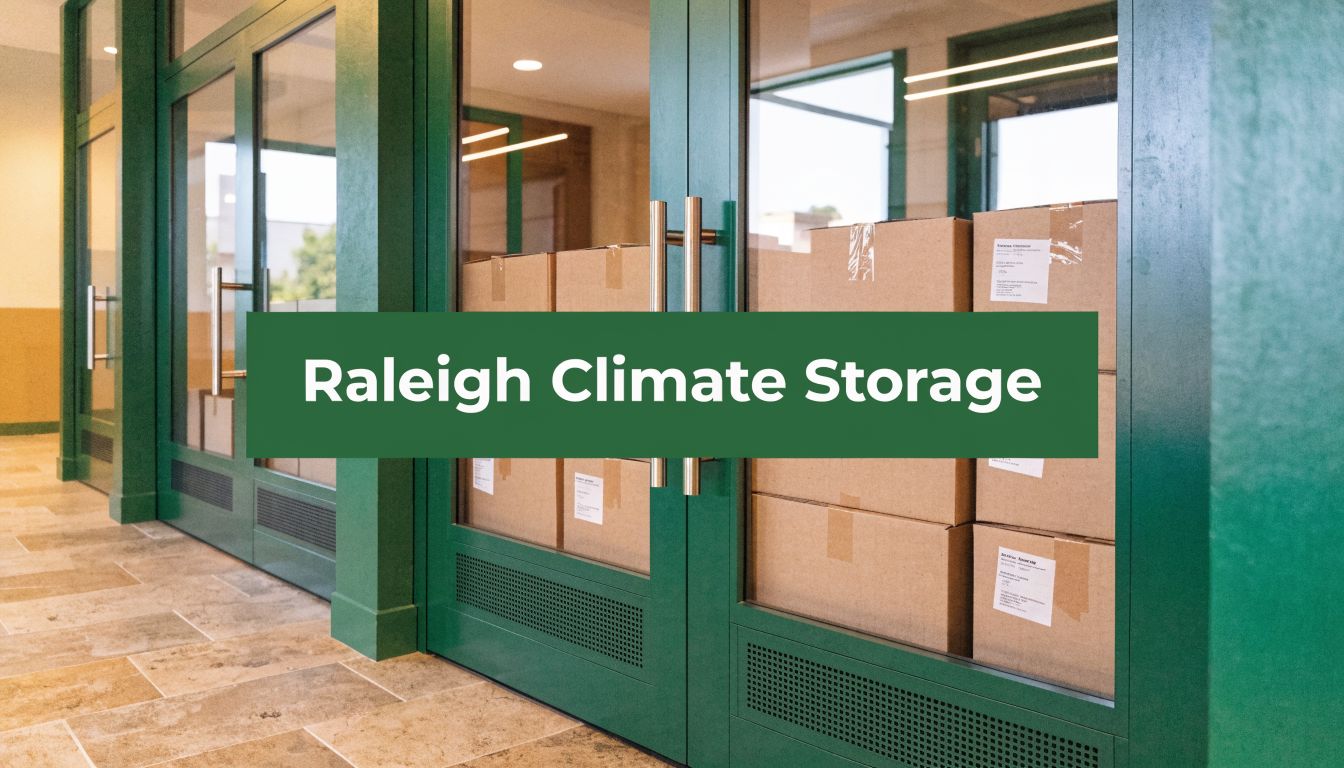
People looking for climate controlled storage raleigh nc usually aren’t just shopping for square footage. They’re trying to avoid the kind of slow, quiet damage that humidity causes in apartments, garages, attics, and standard storage units. In a city where many residents are juggling smaller living spaces, moves across the Triangle, or temporary overflow during renovations, choosing the right storage setup matters more than often realized.
Your Guide to Storage in North Carolina's Climate
Raleigh makes storage tricky because the risk isn’t only heat. It’s moisture that hangs in the air for long stretches, then mixes with seasonal temperature swings. That combination is hard on wood, paper, fabric, leather, and electronics.
North Carolina’s self-storage market is projected to grow at a 4.91% CAGR through 2031, driven in large part by demand for climate-controlled units that help address the state’s year-round humidity, according to North Carolina self-storage market analysis. More people are using storage because more people need flexible space.
For Raleigh residents, that usually looks like one of a few real-life situations. You’re in a downtown apartment and need room for off-season clothes. You’re moving between leases and need a temporary home for furniture. You’re trying to clear a guest room without sending family keepsakes into a damp garage.
A good starting point is understanding your options before you rent anything. If you want a broad overview of formats, tradeoffs, and common storage use cases, this complete self-storage options handbook is a useful companion read. If you want to compare what’s available nearby, Raleigh-area storage location options can help you see how different service models are set up.
Raleigh storage decisions usually come down to one question. Are you protecting empty space, or are you protecting specific items?
That’s the lens to use through the rest of this guide. Not every item needs the same level of protection. Not every renter needs a full unit. And not every “climate-controlled” claim means the same thing.
What Climate Control Really Means in Raleigh
A lot of renters hear “climate controlled” and assume it means only air conditioning. That’s only part of the story.
In Raleigh, true climate control should mean a unit is designed to regulate both temperature and humidity. According to Extra Space Storage’s Raleigh climate-controlled guidance, these units are engineered to maintain temperatures between 55°F and 85°F, with humidity control targeting below 50% RH. That matters because mold tends to proliferate above 65% RH.
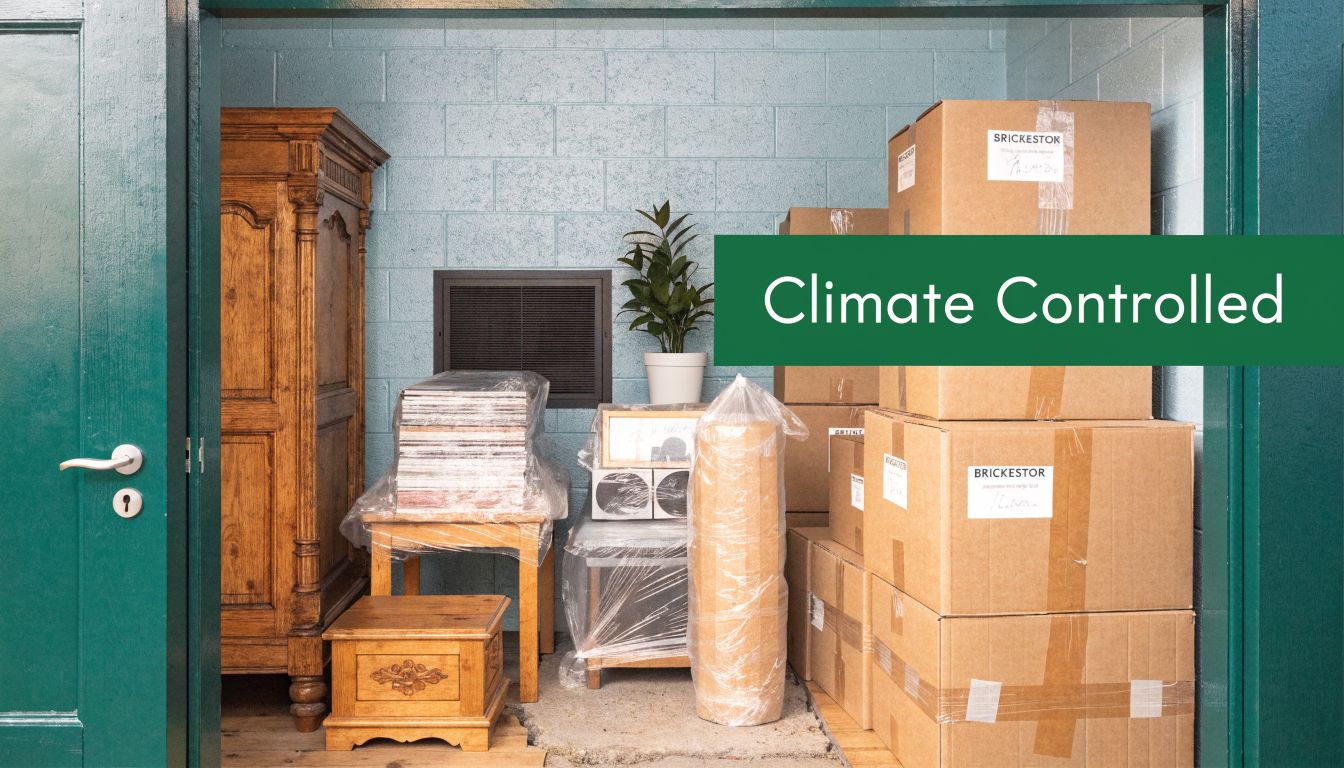
Think wine cellar, not garage
The easiest analogy is a wine cellar.
A garage keeps rain off your belongings. A wine cellar manages the environment around them. That’s what proper climate control is supposed to do. It doesn’t just shield items from outside weather. It creates a steadier indoor setting so materials don’t absorb and release moisture over and over.
That repeated swelling and drying is what ruins a lot of stored items in North Carolina. Wood can warp. Metal can rust. Paper can curl. Fabric can pick up odors and mildew.
If you’ve ever looked into how insulated containers work, this insulated shipping container guide gives a helpful way to think about why insulation and air management matter. The same principle applies in storage. The shell matters, but the interior conditions matter more.
What renters often confuse
Not every premium unit offers the same protection. These labels can sound similar, but they aren’t identical:
- Climate controlled: Usually the best fit for sensitive household goods because it aims to manage temperature and humidity together.
- Temperature controlled: Better than a basic unit, but may not address moisture well enough for delicate items.
- Air cooled or heated only: Useful in some conditions, but not the same as a balanced environment.
For a deeper look at how temperature-focused environments differ from full protection, this explanation of temperature controlled storage can clarify the terms.
Practical rule: In Raleigh, a unit that only cools the air may still leave your belongings exposed to moisture problems.
Why this matters locally
Raleigh’s weather can make a standard unit feel fine one week and risky the next. A stable interior environment reduces the stress on stored materials. That’s the whole point. You’re not paying for cold air. You’re paying for consistency.
Who in Raleigh Absolutely Needs Climate Control
Some storage decisions are optional. This one often isn’t.
The clearest way to decide is to stop thinking about “stuff” as one category. Your belongings react differently to Raleigh’s conditions. A plastic patio chair and a walnut dresser don’t have the same needs. A box of holiday lights and a box of family documents don’t either.
The student storing summer overflow
An NC State student heads home for the summer and needs to store textbooks, notebooks, a monitor, speakers, bedding, and maybe a guitar.
Books and paper goods can absorb moisture and develop a stale smell. Electronics don’t like prolonged humidity, especially if they’ll sit untouched for months. Musical instruments are even more sensitive. If the stored items include anything you’d keep in your bedroom instead of a porch closet, climate control is usually the safer call.
The apartment renter rotating seasons
A young professional in downtown Raleigh may not need a full garage’s worth of space. But they might need somewhere for coats, boots, extra linens, luggage, and a few sentimental pieces that don’t fit in a small apartment.
That mix is exactly where people get tripped up. Clothes seem harmless until they come back smelling musty. Leather accessories can dry unevenly or mildew. Suitcases stored next to cardboard can pick up odors.
If this sounds familiar, a guide to items that need climate-controlled storage can help you separate true risk items from things that are fine in less protective storage.
If you’d be upset to replace it, or if moisture would quietly ruin it before you noticed, climate control makes sense.
The family between homes
A family moving to Apex, Cary, or another part of the Triangle may need temporary storage while waiting for closing, renovations, or a builder timeline.
Antique furniture, framed photos, rugs, upholstered chairs, and heirloom pieces often end up in limbo. Wood furniture is especially vulnerable because it reacts to changing moisture in the air. Upholstery can trap odors. Artwork and photos can deteriorate in ways that aren’t obvious until much later.
The collector or hobbyist
Records, cameras, artwork, old magazines, sewing materials, sports cards, and similar collections deserve more care than people often assume.
Collectors usually understand value in a broad sense, not just resale value. Sometimes the point is sentimental value, rarity, or years spent building a hobby. Climate control helps preserve condition, which is the whole reason to store these items instead of giving them away.
A Practical Guide to Raleigh Storage Prices and Sizes
Price matters, but so does fit. Many Raleigh renters don’t need a large storage unit. They need a realistic sense of what local climate-controlled space costs, and whether they’re paying for room they won’t use.
According to Public Storage’s Raleigh climate-controlled unit pricing, the average monthly rent for a climate-controlled storage unit in Raleigh is about $214. The same source lists a standard 10x10 unit at $119 to $199 per month, and notes that climate-controlled units carry a 20% to 40% premium over non-controlled units.
What those numbers mean in practice
A 10x10 is the size many people search first because it feels like the default option. But it often becomes the “just in case” choice. That can lead to paying for a lot of unused floor space.
Here’s a simple way to think about common size needs:
| Storage need | Typical fit |
|---|---|
| A handful of seasonal boxes, clothes, or documents | Smaller space or box-based storage |
| A studio or partial apartment overflow | Small to medium unit |
| Furniture from an apartment or several rooms | 10x10 range |
| Larger household moves or broad temporary storage | Larger unit |
The budgeting question isn’t only “What’s the monthly rate?” It’s also “How much empty space am I renting because traditional units come in fixed sizes?”
Why Raleigh pricing feels high
Raleigh has a strong storage market. One source focused on local climate-controlled inventory notes there are 49 facilities offering more than 820 climate-controlled units, with prices varying by size and averaging around the local market level described above in this Raleigh climate-controlled storage overview. In plain terms, there’s plenty of supply, but there’s also strong demand from movers, apartment residents, and people trying to manage city living with less closet space.
That’s why climate controlled storage raleigh nc searches often lead to sticker shock. The premium isn’t just for the room. It’s for indoor protection.
A better way to estimate what you need
Before you reserve, make an item list instead of guessing by room count.
- Small quantity, high sensitivity: Documents, electronics, keepsakes, and off-season clothes may not justify a full unit.
- Bulky furniture: Sofas, bed frames, and dining tables usually push you toward traditional unit sizing.
- Mixed load: If you have a few large pieces plus many boxes, compare a unit against a more flexible service model before committing.
For a fuller breakdown of how climate protection affects monthly rates, this guide to climate-controlled storage cost is useful for comparing the logic behind the pricing.
How to Evaluate a Raleigh Storage Facility
The wrong facility can undo the benefit of choosing climate control in the first place. A polished website doesn’t tell you whether the building feels dry, clean, secure, and competently managed.
Start with the basics when you visit or take a virtual tour.

What to check on site
Walk slowly. Look at corners, ceilings, doors, and hallways. You’re checking for evidence of consistent care, not just a nice front desk.
- Cleanliness: Floors should be free of heavy dust, debris, and signs of pests. A climate-controlled building shouldn’t feel neglected.
- Air feel and smell: Trust your senses. If the hallway smells damp or stale, ask questions.
- Access layout: Indoor hallways, carts, elevators, and loading areas matter more than people expect when moving furniture or repeated boxes.
- Lighting and visibility: Bright common areas make it easier to inspect your own unit and feel safe during visits.
- Security features: Look for gated access, cameras, and clear building entry controls.
- Contract clarity: Read how the facility describes climate control and any limits around humidity expectations.
Questions worth asking directly
A short conversation with staff can save you from a poor fit. Ask plain questions, not technical ones.
Try these:
- How is the building monitored for temperature and moisture?
- What happens if there’s a power issue or equipment problem?
- Are there any items you recommend not storing here?
- What insurance or protection is required?
- How easy is it to change unit size if I overestimate or underestimate?
A good storage manager answers these questions clearly. A vague answer is a warning sign.
A quick visual walkthrough can also help you know what a well-run facility looks like before you visit in person.
Read reviews like a detective
Online reviews are most useful when you ignore the star rating for a moment and scan for patterns.
Look for repeated mentions of mold smells, billing confusion, elevator outages, break-ins, or poor communication. One angry review may not mean much. Repeated complaints about the same issue usually do.
Also watch for positive signs. People often mention clean hallways, easy move-in, responsive staff, and smooth access when a facility is doing the basics well.
Smart Packing and Insurance for Humid Conditions
Climate control helps. Bad packing can still create problems inside a good unit.
The biggest mistake Raleigh renters make is packing as if dry indoor storage automatically means zero moisture risk. That’s not how it works. If you seal damp items, overstuff cardboard, or block airflow around furniture, you can create your own little humidity pocket inside the unit.
Pack for airflow, not just stacking
A few habits make a big difference:
- Use plastic bins when possible: They protect better than cardboard against ambient moisture and are easier to stack neatly.
- Leave breathing room: Don’t wedge every item tightly wall to wall. Air circulation matters.
- Store nothing damp: Towels, rugs, shoes, coolers, and sports gear need to be fully dry first.
- Lift soft goods off the floor: Shelving or pallets can help keep fabrics and paper products better organized.
- Cover furniture lightly: Breathable covers are usually better than wrapping everything in a way that traps moisture.
Packing reality: Climate-controlled storage is not a substitute for dry, clean, well-prepared belongings.
Insurance deserves a close read
Insurance is the part many people rush through, then regret later.
Following major weather events like hurricanes, searches in North Carolina for humidity-proof storage can spike by over 40%, and many standard insurance policies include nuanced exclusions for mold or flood damage, according to Extra Space Storage’s discussion of humidity-proof storage and insurance gaps. That doesn’t mean you’re uninsured. It means you need to verify exactly what your policy does and doesn’t cover.
Check these points before move-in:
- Off-premises coverage: Ask whether your renter’s or homeowner’s policy covers belongings in storage.
- Mold wording: Read the exclusions. Mold claims often have conditions or limits.
- Water and flood language: Don’t assume “water damage” means every kind of event.
- Storage provider plans: Compare any offered protection plan with your own insurance.
If an item matters enough to place in climate-controlled storage, it matters enough to insure properly.
The Modern Alternative Box-By-Box Storage
Traditional self-storage works well for many situations. If you’re storing furniture from multiple rooms, large equipment, or the contents of a whole move, a standard unit is often the right tool.
But many Raleigh residents don’t have that kind of storage need.
They have six boxes of books, two bins of winter clothes, family keepsakes, baby gear they aren’t ready to part with, or work materials that won’t fit in an apartment closet. Renting a fixed-size unit for that kind of load can feel like leasing a parking spot for a bicycle.
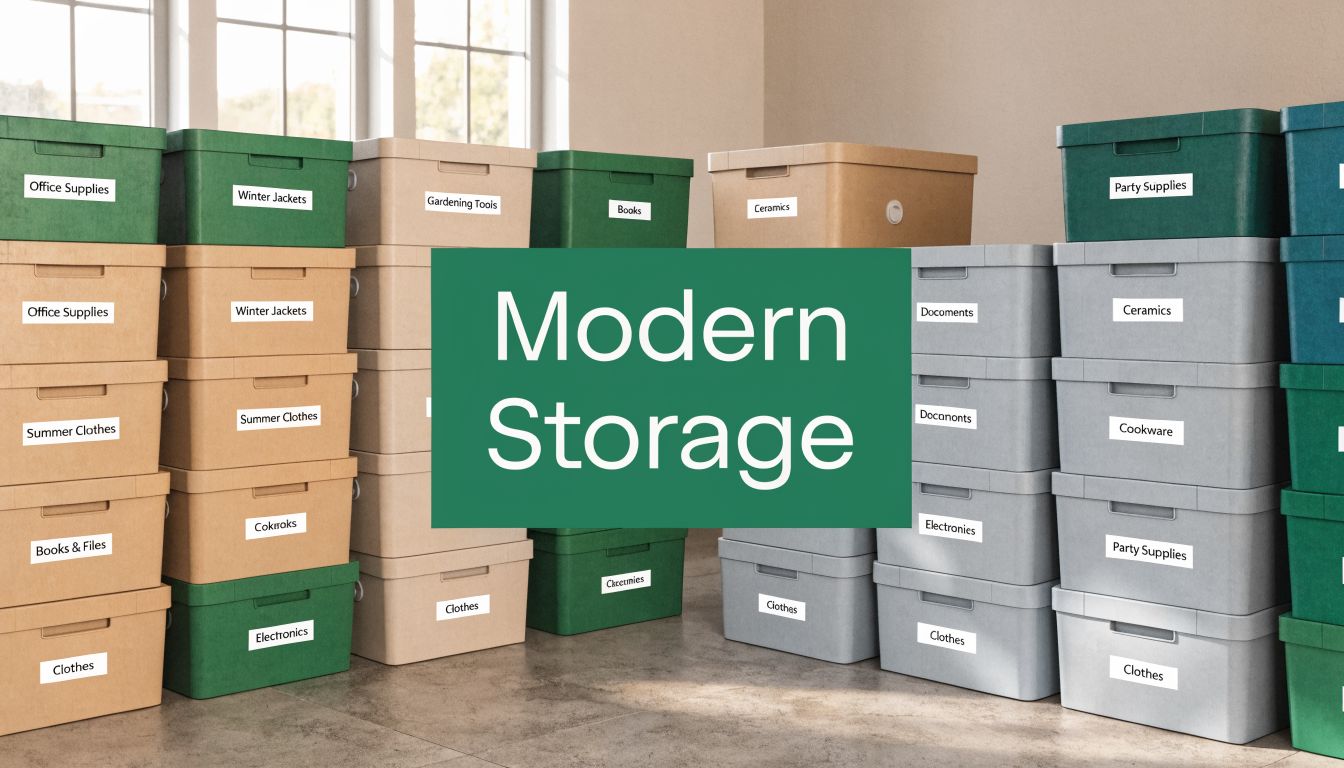
Traditional unit versus smaller-scale storage
Here’s the practical difference.
With a traditional facility, you choose from preset unit sizes. You drive your things there, load them in, lock the unit, and visit again when you need access. That model is familiar, and for large-volume storage it makes sense.
With a box-by-box model, the pricing matches the amount you are storing. You’re not trying to estimate square footage for a few containers. You’re storing item by item, box by box.
That can be a better fit for:
- Apartment residents who only need overflow storage, not a full room
- People between moves who want a lighter, shorter-term setup
- Decluttering projects where the goal is to free up living space without losing access to important items
- Seasonal rotation for clothes, decor, and household extras
Why the model appeals in Raleigh
Raleigh’s mix of growth, apartment living, and frequent life transitions makes flexibility valuable.
A by-the-box service can remove several of the usual pain points. You don’t have to drive across town to check on a few bins. You don’t have to rent around the nearest standard unit size. You don’t have to commit your budget to more capacity than you need.
According to Endless Storage, climate-controlled storage through a by-the-box model starts at $7.99 per box per month, includes insurance, and eliminates the need to visit a facility. For readers comparing service styles rather than just prices, that changes the decision from “Which unit should I rent?” to “Do I even need a unit?”
When each option makes the most sense
This side-by-side test is useful:
| If your situation looks like this | Best fit |
|---|---|
| You’re storing furniture, mattresses, or larger household pieces | Traditional unit |
| You need regular in-person access to lots of items at once | Traditional unit |
| You mainly have boxes, bins, and smaller valuables | Box-by-box storage |
| You live in a small apartment and want less hassle | Box-by-box storage |
If you want a broader look at how pickup-and-delivery storage works compared with the old self-storage routine, this guide to modern storage pickup and delivery solutions lays out the workflow clearly.
The smartest storage option isn’t always the biggest one. It’s the one that fits the amount of stuff you actually have and the amount of friction you’re willing to tolerate.
For many people searching climate controlled storage raleigh nc, that’s the primary decision. Not “Which building?” but “Which model matches my life?”
If you want a simpler way to store a few boxes, seasonal items, or apartment overflow without renting a whole unit, Endless Storage is worth a look. It gives Raleigh residents a climate-controlled, insured alternative to traditional self-storage, with a setup that’s easier to manage when your space is tight and your storage needs are modest.
Frequently Asked Questions
Unveiling the Secrets to Effortless Storage
Endless Storage is available nationwide. You pick a plan, tell us where to pickup, and we'll send a UPS van to collect, whichever state you're in.
Your shipping label will be sent to your email within a few minutes, if not instantaneously. It can also be accessed through your customer profile.
Your box will be shipped to one of our climate controlled self storage facilities in our closest self storage facility. Our manager will accept your package, notify you that your box has been received, and securely stored. Only our managers will have access to Endless Storage boxes.
Email us at admin@endless-storage.com click to live chat with us, or send us a message below.
Never! We're committed to transparent pricing with no surprises. You'll lock in your rate with no hidden fees and no long-term contracts.
Fast access guaranteed! Your boxes will arrive at your doorstep within 48 hours of requesting them back. Need to check on delivery? We provide tracking information for complete peace of mind.
Totally flexible! Store month-to-month with no long-term commitment and cancel anytime.
Everything's online! Use your account dashboard to:
• Set up automatic monthly payments
• Request box returns
• Update your address
• Order additional boxes
• Track shipments
Your boxes are insured up to $100 each. Our customer service team will help you file any necessary claims and resolve issues quickly.
Don't worry – we'll email you right away if there's a payment issue. Your items stay safe, though you may have temporary service interruption or late fees until payment is resolved.
When you request our free storage kits, you'll have 30 days to send in your boxes to activate your 3 months of free storage. Think of it like starting a gym membership – your activation window begins when you receive your kits, and your full free trial begins once you send in your first box. During your free months, you'll experience our complete storage service at no cost.
Your 30-day activation window begins when you receive your storage kits. We'll send you an email confirmation when your kits are delivered, marking the start of your activation period.
If you haven't sent any boxes for storage within your 30-day activation window, your free trial will expire and we'll begin charging the regular monthly rate of $9.99 per box. This helps ensure our storage kits go to customers who are ready to use our service.
A box costs $9.99 per month to store (plus sales tax). This price includes free shipping for standard boxes under 50 lbs. and smaller than 16"x16"x16"
Log into your Endless Storage account, locate the box you would like returned, and simply click Return My Box.
Yes, each box stored with us is insured for up to $100 throughout transit as well as the duration of storage within our facilities.
Your box will be at your doorstep within 48 hours of you requesting it back.
Store 10+ boxes? We'll pick them up for free! After your purchase, we'll contact you to schedule a convenient pickup time and arrange UPS collection.
We trust UPS with all shipments, and every box includes $100 insurance coverage. You'll receive tracking information to monitor your items' journey.
Yes! Visit any of our locations by appointment. Just bring a photo ID matching your customer profile.
For everyone's safety, we can't store hazardous materials, firearms, or perishables. All items must fit within our standard boxes.
It's easy! Order your storage kit online, and we'll ship it to you within 1-2 business days. Your shipping labels will be emailed instantly and available in your account.
We're here to help! Email us at admin@endless-storage.com, use our live chat, or send us a message through your account.
To cancel your storage service with Endless Storage, please email your cancellation request to admin@endless-storage.com. Our team will process your request within 2 business days and confirm your cancellation via email.
We understand packing takes time. However, to maintain your free trial benefits, you'll need to send at least one box within the 30-day activation window. If you need more time, you can always start with one box to activate your trial and send the rest later. You can always reach out to admin@endless-storage.com if you have any issues or concerns.
When you request our free storage kits, you're starting a 30-day window to begin using our storage service.
Important: To activate your free trial, send at least one box for storage within 30 days. If no boxes are sent within this 30-day window, a one-time $50 fee applies to cover materials and shipping costs. This fee is clearly disclosed before you sign up.
Think of it like reserving a hotel room – we're setting aside space and sending specialized packing materials for your use. The fee only applies if you request materials but don't begin storage, similar to a hotel's no-show charge.