

You notice the closet door first when the room stops working. The bed is too close, the nightstand gets clipped, the hamper has nowhere to go, and getting dressed feels harder than it should. In smaller city bedrooms, that door affects more than looks. It decides how much floor space you can use.
That is why closet doors deserve the same attention as shelving and drawer organizers. The right style changes clearance, furniture placement, sightlines, and how easy it is to keep the closet from turning back into a catch-all. For anyone downsizing, preparing for a move, or trying to calm visual clutter, the door choice has a direct effect on daily use.
Good bedroom closet door ideas solve a specific problem. Some free up swing space. Some bounce more light around a narrow room. Some hide mess better than others, which matters if your closet is still a work in progress. Some are realistic for renters. Others are worth the extra labor if you own the place and plan to stay.
I always recommend handling the storage side at the same time. If you clear the closet for a door upgrade, use that window to remove off-season clothes, sentimental items, and backup bedding that do not need to live in the bedroom every day. A practical closet space guide with smart storage solutions can help you decide what stays accessible and what should move off-site so the new setup stays lean.
The eight options below focus on real trade-offs. What each style does well, where it causes headaches, and which one makes the most sense in a tight bedroom rather than a showroom.
1. Sliding Barn Doors

Your bed is six inches too close to the closet door, the nightstand blocks the swing path, and every morning starts with a small wrestling match. Sliding barn doors fix that specific problem well. They keep the floor area usable because the door moves across the wall instead of out into the room.
They also make sense during a move or decluttering reset. Installation is usually simpler than a pocket door because the wall stays intact, which matters if you want a visible upgrade without opening drywall in a small apartment or condo bedroom.
The catch is just as practical. A barn door saves swing space, but it does not save wall space. You need a clear run beside the closet opening, and that wall cannot be doing other jobs. If it holds a light switch, artwork, a tall dresser, or the only good spot for a hamper, the trade-off may not pencil out.
Practical rule: Measure the closet opening, then measure the full wall area where the door will slide. If that path is crowded now, the door will be inconvenient later.
Barn doors also hide less than people expect. Because they mount on the outside face of the wall, small gaps at the edges are normal. If the closet is overfilled, you will notice it. This style looks best when the closet is edited down to what you wear and use each week.
That is why I pair barn doors with a storage reset, especially in tight urban bedrooms. Keep daily clothing, shoes in season, and one backup bedding set in the closet. Move the low-frequency items out first. Off-site box storage like Endless Storage is useful for out-of-season coats, memory items, and spare linens that eat shelf depth without helping your day-to-day routine. If you need a starting point, this step-by-step bedroom decluttering guide for a calmer sleep space helps you decide what should stay close and what should leave the room.
A few details make a big difference:
- Choose soft-close hardware: It reduces noise and wear, which matters in a bedroom you use early and late.
- Check handle projection: Deep pulls can bump dressers or catch on bedding in narrow layouts.
- Use a flatter panel if you want a cleaner look: You can get the sliding function without pushing the room into farmhouse style.
- Add simple edge sealing for dust-prone closets: This helps if the closet holds linens or stored clothing.
If the room already includes reflective furniture, such as a bedroom set with mirrors, be careful with the door finish. A heavy rustic wood slab plus multiple glossy surfaces can make a small bedroom feel visually busy. In that case, a painted or simple barn door usually lands better.
Barn doors are strongest in rooms where swing clearance is the main problem and the wall beside the closet is open. In the wrong room, they create layout conflicts. In the right one, they make a cramped bedroom easier to live in every single day.
2. Mirrored Closet Doors
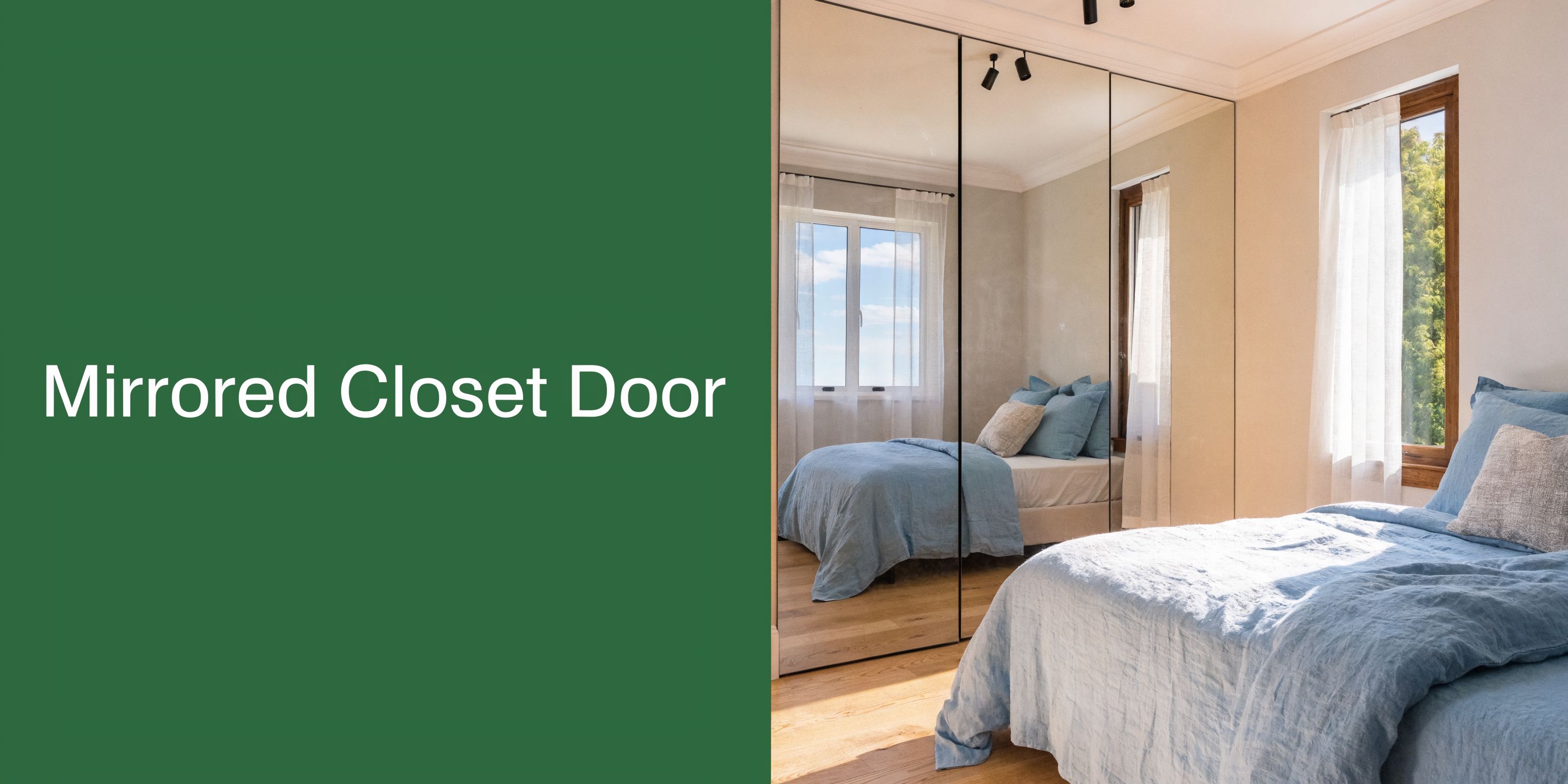
You come home to a small bedroom with one window, limited wall space, and no good spot for a full-length mirror. Mirrored closet doors solve all three problems at once. They bounce light around the room, give you a place to dress, and free up a wall that would otherwise hold another piece of glass.
That practicality is why they keep showing up in apartments, condos, and smaller guest rooms. In tight layouts, getting one feature to handle two jobs matters.
What works well, and what can get annoying
The room usually feels brighter right away. Morning dressing gets easier. A single mirrored surface can also look cleaner than hanging a separate mirror over a dresser or behind a door.
The trade-off is maintenance. Mirrors show fingerprints, dust, pet nose marks, and whatever is happening across the room. If the chair in the corner collects laundry, the doors reflect that clutter all day. Mirrored doors tend to work best for people who already keep visual noise under control, or who are ready to.
I usually suggest them during a reset, not after the room is already overloaded.
Best use in a move, downsizing phase, or decluttering project
Mirrored doors reward editing. Before you install them, reduce what lives in the closet to the clothes and daily-use items you reach for. Off-season layers, extra bedding, keepsakes, and move-related overflow can go elsewhere so the closet stays functional instead of becoming a catchall.
If you're sorting through a bedroom before a move or trying to calm down a crowded setup, this step-by-step bedroom decluttering guide for a calmer sleep space is a useful place to start. For bulky categories you do not need every week, off-site box storage such as Endless Storage can take pressure off the closet during the renovation, then help you keep the room minimal after the project is done.
Mirrored doors also need coordination. If you already own a bedroom set with mirrors, check how many reflective surfaces the room can handle before adding more. In some bedrooms, that layered shine feels open and polished. In others, it starts to look busy fast.
A few details matter before you commit:
- Use safety-backed or anti-shatter glass: A smart upgrade in homes with kids, pets, or narrow walkways.
- Check what the doors will reflect: A pretty window view helps. An open laundry basket does not.
- Watch the morning glare: Strong direct sun can bounce light where you do not want it.
- Keep the closet interior disciplined: Matching bins, slimmer hangers, and clear shelf zones make the reflected view feel calmer.
Mirrored closet doors are a strong choice for small urban bedrooms because they save wall space and make the room work harder. They also demand better habits. If you want a door that hides mess, choose something else. If you want the room to feel lighter and more open, and you're willing to keep the setup edited, they earn their place.
3. Louvered Closet Doors
Louvered doors are the workhorse choice. They're common, affordable, easy to paint, and useful in closets that need air circulation.
I don't recommend them because they're trendy. I recommend them because they solve a specific problem better than many sleeker options. If the closet holds shoes, laundry baskets, or fabrics in a humid climate, the slatted design helps the space breathe. That's why they've stayed common in rentals, older apartment buildings, coastal homes, and transitional spaces.
Why they still earn a spot
A lot of people dismiss louvered doors as builder-grade. Sometimes that's fair. But they can be a smart pick when the closet tends to trap stale air.
The problem is visual softness. The slats create texture, which can either add character or read as busy, depending on the room. In a very small bedroom, too many slatted lines can make the wall feel fussy. Painting them the same color as the trim or wall usually helps.
What to watch before choosing them
Louvered doors also collect dust. If you already hate dusting blinds, know that these create the same chore on a smaller scale. They don't fully conceal clutter either. Depending on angle and lighting, you can sometimes catch glimpses inside.
That means organization matters more. Keep the front edge of shelves neat. Don't stack overfilled bins right against the opening. Leave a little setback so the closet doesn't visually leak into the room.
A practical routine helps:
- Vacuum the slats regularly: A brush attachment works better than a dry cloth.
- Use a semi-gloss paint finish: It wipes down more easily than flatter finishes.
- Store low-use items elsewhere: Seasonal overflow is what usually pushes a louvered closet from tidy to visibly packed.
Off-site box storage helps more than people expect. If the closet only holds active wardrobe items, louvered doors look crisp. If the closet is stuffed with everything you own, they expose that quickly.
Louvered doors aren't the most elegant option in this list. They are one of the most forgiving on budget and airflow, which is why they still deserve consideration.
4. Pocket Closet Doors
You move the bed six inches to make room for a desk, then realize the closet door still clips the chair. That is the kind of bedroom problem pocket doors solve well.
A pocket door slides into the wall, so the area in front of the closet stays usable. In a small apartment bedroom, that can be the difference between fitting a nightstand, adding a laundry hamper, or keeping a clear path when you're packing, unpacking, or trying to declutter after a move.
Why they work in tight rooms
Pocket doors give back swing space. They also keep the wall cleaner visually than surface-mounted options, which matters in narrow rooms where every protruding element makes the layout feel tighter.
I usually recommend them when the closet sits next to a bed corner, dresser, or work zone. In those spots, a standard hinged door creates daily friction. A pocket door removes that obstacle and makes the room easier to use, not just easier to look at.
The trade-off is construction. This is usually a remodel job, not a simple door swap. The wall has to be opened, framed for the pocket system, and checked for plumbing, wiring, switches, or vents that may be running through that cavity.
Before committing, watch a full installation example:
When they are worth the effort
Pocket doors make sense when floor clearance is the main problem and you plan to stay in the home long enough to justify the work. They are harder to justify in a rental, and they usually cost more than replacing an existing bi-fold or hinged setup.
They also reward disciplined closet editing. If the door disappears neatly but the closet is crammed with off-season clothes, moving boxes, and backup bedding, the upgrade only solves half the problem. During a renovation or post-move reset, I like to pull low-use items out first, store only active wardrobe pieces in the closet, and use closet organization tips for a smaller, easier-to-maintain setup. Off-site box storage can help during that transition, especially in urban apartments where there is no spare room to absorb the overflow.
Pocket doors look calm and efficient once they are in. A key question is whether the wall and your budget can support them.
5. Bi-Fold Closet Doors
Bi-fold doors make sense in the bedroom where every inch has to work. In a small apartment, a full swing door can block a nightstand or laundry basket, while a pocket door often asks for wall construction that is hard to justify during a move or light refresh. Bi-folds solve that problem with a simpler swap.
They stay popular because they offer a practical balance. You get wider access than many single-door setups, but you usually avoid the carpentry, drywall work, and higher labor costs tied to built-in alternatives. Analysts at Market Data Forecast project folding doors to be the fastest-growing segment in the North American doors market, and aluminum to be the fastest-growing material segment from 2024 to 2030. That tracks with what works in real homes. People want lighter doors, straightforward installation, and parts they can replace without turning a closet update into a renovation.
Why bi-folds work well in everyday bedrooms
A well-installed bi-fold door opens up a large portion of the closet at once. That is useful in reach-in closets where you need to see hanging clothes, upper shelves, and the floor area without stepping around a swinging panel.
They are also a good fit for rentals, first homes, and builder-grade bedrooms. Replacement panels, tracks, and pivots are easy to find. Most installers know the system. If one panel gets damaged during a move, fixing it is usually simpler than matching a specialty door style.
The downside is hardware quality.
Low-cost bi-folds often fail at the pivot, top track, or bottom guide. When they bind, scrape, or pop loose, the issue is usually poor installation, cheap components, or years without adjustment.
A few choices make a big difference:
- Choose better hardware first: Solid tracks and pivots matter more than decorative panel details.
- Keep the opening square: Even a decent door will work poorly in an out-of-plumb frame.
- Use simple panel designs: Flat-panel and shaker styles look cleaner in compact bedrooms and date less quickly.
- Edit the closet before reinstalling doors: Bi-folds expose a wide section of the interior, so clutter shows fast.
That last point matters most in small urban homes. If the closet is doing double duty for off-season coats, spare linens, moving boxes, and daily clothes, the door style will not fix the frustration. Clear out low-use items first, keep only current wardrobe pieces inside, and use a best way to store clothes during a closet reset or move so the closet stays functional after the upgrade. Off-site box storage is especially useful when there is no guest room, basement, or garage to absorb the overflow.
Bi-fold doors are rarely the most dramatic option. They are often one of the smartest. If you want broad access, manageable cost, and a door system that can be repaired instead of rebuilt, they earn their place.
6. Glass and Frame Closet Doors

You finally clear the bedroom floor after a move, swap in sleek glass closet doors, and then realize every spare tote, wire hanger, and shoe box is now on display. That is the main trade-off with glass and frame doors. They add light and structure, but they also demand a better storage system than solid doors do.
The style is easy to understand. Slim aluminum or steel frames give the closet a built-in look that works well in apartments, modern condos, and small bedrooms that need to feel lighter. Clear glass creates the strongest visual impact. Frosted, fluted, or other textured panels are usually the smarter pick for everyday use because they soften the view of whatever is inside.
Clear glass only works when the closet is tightly controlled. If the bedroom closet also holds moving supplies, extra bedding, luggage, or overflow from a dresser that never fit, the door will highlight the problem instead of solving it.
That is why I recommend glass and frame doors mainly for edited closets, especially in urban homes where every square foot has to work harder. Before installing them, pull out anything seasonal, sentimental, or bulky and store it elsewhere. A simple clothing rotation using this guide on the best way to store clothes keeps the closet limited to what you wear now. Off-site box storage helps even more when there is no basement, attic, or guest room to catch the overflow.
Textured glass is the practical middle ground. It still lets the closet feel brighter than a solid slab door, but it gives you more forgiveness if the shelves are not styled like a showroom.
A few details determine whether this option looks expensive or frustrating:
- Match the frame finish to nearby metal finishes: Black frames suit modern rooms. Brushed aluminum feels lighter and less heavy in compact bedrooms.
- Plan for fingerprints and dust: Glass needs routine cleaning, especially at hand height and along the frame edges.
- Use matching bins and hangers inside: Glass turns interior organization into part of the room design.
- Check the door swing or track clearance carefully: Framed glass panels can be heavier than they look, so hardware quality matters.
If you are still comparing softer, less permanent ways to cover a closet, these closet curtain door ideas are worth reviewing before you commit to glass.
Glass and frame closet doors can look excellent. They just reward restraint. In a bedroom that is still carrying clutter from a recent move or years of overflow, fix the storage first, then add the glass.
7. Curtain or Fabric Closet Covers
Fabric closet covers are the most underrated option on this list, especially for renters and anyone in the middle of a move. They aren't a built-in solution. That's their advantage.
The biggest gap in most closet-door advice is temporary, damage-free upgrades for people who can't tear out tracks or drill into walls. That gap is specifically noted in Emily Henderson's renter-friendly closet door upgrade discussion. For lease-bound bedrooms, curtains, removable panels, and tension-mounted solutions deserve much more attention.
Why fabric works better than people expect
A curtain softens the room. It cuts visual hardness, installs quickly, and lets you adjust color and texture without committing to carpentry. In bohemian rooms, simple minimalist bedrooms, student housing, and short-term apartments, it can look intentional rather than improvised.
This only works if the fabric has enough weight. Thin, wrinkled material tends to look temporary in the bad sense. Linen blends, canvas, heavier cotton, or drapery panels usually hang better and conceal more.
The right way to use it
This isn't a good solution for someone who wants a crisp built-in aesthetic. It is a smart solution for someone who needs flexibility now.
Try this setup:
- Use a sturdy tension rod when possible: It avoids drilling in many openings.
- Choose darker or lined fabric for concealment: Light sheers won't hide a crowded closet.
- Keep the inside edited: Curtains move and gap more than hard doors do.
If you want visual inspiration before committing, these closet curtain door ideas show the range from casual to polished.
Fabric covers are especially useful during transitions. If you're packing, purging, or waiting on a future renovation, they give you a cleaner bedroom now without locking you into a permanent decision.
8. Accordion-Style Folding Closet Doors
Accordion doors are easy to underestimate until you need one. In a narrow room where a standard door is awkward and a full renovation isn't realistic, they can be the most functional answer.
They compress into a tight stack and stay out of the way. That's why they remain common in compact apartments, transitional spaces, and narrow secondary bedrooms. They aren't glamorous by default, but they can be effective.
When this style makes sense
Use accordion doors when the closet opening is awkward, the bedroom is narrow, or you need something lighter and simpler than a heavy panel system. They also make sense when the closet isn't a showpiece and the priority is straightforward access.
This style aligns with broader market demand for compact, space-saving door systems. The global closet doors market is estimated at USD 11.6 billion by 2025 with a 6% CAGR, driven by urbanization and renovation demand, according to Data Insights Market's closet doors report.
What separates good from bad
Material choice is everything here. Thin plastic versions tend to warp, sound cheap, and age badly. Composite or better-made vinyl options hold up better and move more smoothly.
A few practical habits improve the result:
- Clean inside the folds with a soft brush: Dust builds up where panels compress.
- Lubricate the track periodically: Most sticking starts at the top track.
- Paint only if the material accepts it well: Some low-grade plastics don't take finish cleanly.
This style also benefits from simple closet planning. Use vertical shelves, shoe risers, and narrow bins so the interior stays accessible when the opening is partially stacked to one side.
Accordion doors aren't the luxury pick. They're the efficient pick when the room gives you very little to work with.
Bedroom Closet Door Ideas: 8-Style Comparison
| Door Type | Implementation 🔄 | Resources ⚡ | Effectiveness ⭐ | Expected outcomes 📊 | Ideal use cases | Tips 💡 |
|---|---|---|---|---|---|---|
| Sliding Barn Doors | Moderate, wall-mounted track; precise measuring; pro install optional | Moderate cost; visible wall track; durable hardware | ⭐⭐⭐⭐, strong style + good space use | Frees swing clearance; creates focal point; may produce sliding noise | Small apartments; style-forward bedrooms | Measure track length carefully; add soft-close |
| Mirrored Closet Doors | Moderate, heavier panels; may need reinforced track/hinges | Moderate–high cost for safety glass; regular cleaning | ⭐⭐⭐⭐, expands perceived space; functional | Visually enlarges room; requires upkeep; privacy considerations | Small bedrooms lacking full-length mirror | Use anti-shatter film; avoid direct sun exposure |
| Louvered Closet Doors | Low, simple install; lightweight | Low cost; available in common materials | ⭐⭐⭐, budget-friendly with ventilation | Promotes airflow; affordable; can look dated; dust between slats | Budget-conscious renters; humid climates | Vacuum slats monthly; paint semi-gloss for easy cleaning |
| Pocket Closet Doors | High, requires wall cavity or renovation; pro install typical | High cost; wall modification; quality track systems | ⭐⭐⭐⭐⭐, maximal space efficiency and clean look | Completely clears floor/sightline; seamless aesthetic; limited where wall changes not allowed | Narrow bedrooms; minimalist and high-efficiency designs | Confirm cavity depth before purchase; use soft-close tracks |
| Bi-Fold Closet Doors | Low, common DIY install; standard hardware | Low cost; widely available | ⭐⭐⭐, affordable, practical access to width | Compact opening; some floor clearance needed; visible contents when partly open | Renters, movers, budget builds | Lubricate track quarterly; check roller alignment |
| Glass & Frame Closet Doors | Moderate, careful handling; possible pro install | Moderate–high cost; safety glass/options for frosting | ⭐⭐⭐⭐, light transmission and modern aesthetic | Increases light flow; showcases organized closets; fingerprints visible | Modern apartments; light-filled bedrooms | Choose frosted glass for privacy; use streak-free cleaner |
| Curtain / Fabric Closet Covers | Very low, minimal tools; tension rod or simple hardware | Very low cost; highly customizable | ⭐⭐, flexible and renter-friendly | Immediate concealment; soft aesthetic; needs frequent washing | Renters, dorms, bohemian/minimalist rooms | Use quality tension rods; wash monthly; pick blackout fabric to hide contents |
| Accordion-Style Folding Doors | Low, straightforward track install | Low cost; lightweight materials (vinyl/composite) | ⭐⭐, space-efficient but less premium finish | Maximizes clearance; may look inexpensive; seams collect dust | Narrow closets; temporary/transition spaces | Choose durable composite over thin plastic; clean folds monthly |
Choosing Your Door and Clearing Your Clutter
The best closet door isn't the one that looks best in a showroom. It's the one that solves the problem your bedroom has.
If the room feels cramped because a door swings into everything, sliding barn, pocket, bi-fold, or accordion styles are usually the right direction. If the room feels dark and visually tight, mirrored or reeded-glass options can help open it up. If you're renting or moving soon, fabric covers may be the smartest move because they improve the space without creating a permanent installation project.
That's the part many people miss when searching for bedroom closet doors ideas. The door choice and the storage strategy have to work together. A beautiful door won't fix an overstuffed closet. In fact, some of the most attractive options, especially mirrored and glass styles, make clutter feel more obvious.
I usually tell people to make the closet easier before they make it prettier. Empty it fully. Group what you use every week. Pull out what belongs somewhere else. Separate sentimental items from practical ones. If you're replacing doors during a move or a larger bedroom refresh, that is the perfect moment to decide what deserves space in the room at all.
For small apartments, this matters even more. Prime closet space should go to active clothing, shoes you wear often, and daily essentials. Not old paperwork, backup bedding, holiday decor, luggage accessories, or clothes that only come out once a year. Those categories eat the room.
That is where off-site box storage becomes useful, not as a last resort, but as part of a better closet system. If the closet only holds what supports your daily routine, every door style on this list performs better. Barn doors look cleaner. Mirrors reflect less visual noise. Glass feels intentional. Even basic bi-fold or louvered doors look more polished when the interior isn't under pressure.
There's also a practical renovation benefit. While you're swapping tracks, painting frames, or installing new hardware, clearing out the closet protects your things from dust and keeps the project moving. You don't want to step around piles of clothing for a week and then stuff everything back in untouched.
Choose the door based on space, access, maintenance, and your tolerance for visual exposure. Then edit the closet so the upgrade lasts. That's what turns a door change into a bedroom improvement instead of a cosmetic detour.
If you're ready to declutter before installing new closet doors, Endless Storage makes the process much easier. You can store seasonal clothes, keepsakes, spare linens, and other low-use items by the box instead of crowding your bedroom closet. For apartment living, moves, and small-space resets, it's a simple way to keep your new closet setup functional long after the project is done.
Frequently Asked Questions
Unveiling the Secrets to Effortless Storage
Endless Storage is available nationwide. You pick a plan, tell us where to pickup, and we'll send a UPS van to collect, whichever state you're in.
Your shipping label will be sent to your email within a few minutes, if not instantaneously. It can also be accessed through your customer profile.
Your box will be shipped to one of our climate controlled self storage facilities in our closest self storage facility. Our manager will accept your package, notify you that your box has been received, and securely stored. Only our managers will have access to Endless Storage boxes.
Email us at admin@endless-storage.com click to live chat with us, or send us a message below.
Never! We're committed to transparent pricing with no surprises. You'll lock in your rate with no hidden fees and no long-term contracts.
Fast access guaranteed! Your boxes will arrive at your doorstep within 48 hours of requesting them back. Need to check on delivery? We provide tracking information for complete peace of mind.
Totally flexible! Store month-to-month with no long-term commitment and cancel anytime.
Everything's online! Use your account dashboard to:
• Set up automatic monthly payments
• Request box returns
• Update your address
• Order additional boxes
• Track shipments
Your boxes are insured up to $100 each. Our customer service team will help you file any necessary claims and resolve issues quickly.
Don't worry – we'll email you right away if there's a payment issue. Your items stay safe, though you may have temporary service interruption or late fees until payment is resolved.
When you request our free storage kits, you'll have 30 days to send in your boxes to activate your 3 months of free storage. Think of it like starting a gym membership – your activation window begins when you receive your kits, and your full free trial begins once you send in your first box. During your free months, you'll experience our complete storage service at no cost.
Your 30-day activation window begins when you receive your storage kits. We'll send you an email confirmation when your kits are delivered, marking the start of your activation period.
If you haven't sent any boxes for storage within your 30-day activation window, your free trial will expire and we'll begin charging the regular monthly rate of $9.99 per box. This helps ensure our storage kits go to customers who are ready to use our service.
A box costs $9.99 per month to store (plus sales tax). This price includes free shipping for standard boxes under 50 lbs. and smaller than 16"x16"x16"
Log into your Endless Storage account, locate the box you would like returned, and simply click Return My Box.
Yes, each box stored with us is insured for up to $100 throughout transit as well as the duration of storage within our facilities.
Your box will be at your doorstep within 48 hours of you requesting it back.
Store 10+ boxes? We'll pick them up for free! After your purchase, we'll contact you to schedule a convenient pickup time and arrange UPS collection.
We trust UPS with all shipments, and every box includes $100 insurance coverage. You'll receive tracking information to monitor your items' journey.
Yes! Visit any of our locations by appointment. Just bring a photo ID matching your customer profile.
For everyone's safety, we can't store hazardous materials, firearms, or perishables. All items must fit within our standard boxes.
It's easy! Order your storage kit online, and we'll ship it to you within 1-2 business days. Your shipping labels will be emailed instantly and available in your account.
We're here to help! Email us at admin@endless-storage.com, use our live chat, or send us a message through your account.
To cancel your storage service with Endless Storage, please email your cancellation request to admin@endless-storage.com. Our team will process your request within 2 business days and confirm your cancellation via email.
We understand packing takes time. However, to maintain your free trial benefits, you'll need to send at least one box within the 30-day activation window. If you need more time, you can always start with one box to activate your trial and send the rest later. You can always reach out to admin@endless-storage.com if you have any issues or concerns.
When you request our free storage kits, you're starting a 30-day window to begin using our storage service.
Important: To activate your free trial, send at least one box for storage within 30 days. If no boxes are sent within this 30-day window, a one-time $50 fee applies to cover materials and shipping costs. This fee is clearly disclosed before you sign up.
Think of it like reserving a hotel room – we're setting aside space and sending specialized packing materials for your use. The fee only applies if you request materials but don't begin storage, similar to a hotel's no-show charge.