
You may be surrounded by half-filled boxes, tabs open for movers, utility transfers, and address changes, while one stubborn corner of your apartment still looks untouched. That mix of clutter, urgency, and uncertainty is exactly where anxiety about moving takes hold.
In small city apartments, the stress often feels sharper. There is no spare bedroom to stage boxes. No garage to hide overflow. No easy place to put the things you are not ready to keep, toss, or donate. Decisions pile up fast, and so do emotions.
That reaction is not a personal failure. It is common, human, and manageable.
Why Moving Feels So Overwhelming
A move asks you to do too many things at once. You have to make financial decisions, sort through personal belongings, coordinate schedules, and prepare for a new environment while your current home is already in partial shutdown. That alone can make anxiety about moving feel constant.
It also helps to know this is not just your private struggle. A 2024 survey found that 53% of Americans experienced anxiety during the moving process, and 27% said moving felt more overwhelming than losing a job. The same survey reported that people often get rid of 36% of their possessions because clutter and lack of help make the process feel unmanageable.
For urban movers, that pressure often lands on one painful question. What do I do with all this stuff when I do not have space to sort it calmly?
The core problem is decision overload
Moving stress is not only about lifting boxes. It is about being forced to make too many decisions under a deadline.
In practice, I see people freeze on items that are emotionally loaded or awkwardly useful:
- Sentimental items that feel too important to discard
- Seasonal belongings that do not fit in the current apartment
- Furniture or decor that might work in the next place, but might not
- Paperwork and keepsakes that take time to review properly
When every shelf, closet, and floor corner is already crowded, even simple choices start to feel heavy. That is one reason decluttering for mental health matters so much before a move. Less visual noise usually means less mental friction.
If your move feels bigger than it “should,” the issue is rarely laziness. It is usually that the number of decisions has outpaced your available time, space, and energy.
A calmer relocation starts when you stop treating stress like a character flaw and start treating it like a planning problem.
Pinpointing Your Personal Moving Anxiety Triggers
Not all moving anxiety comes from the same place. Some people fear the bill. Others fear the goodbye. Many urban movers think they are “bad at moving” when the underlying issue is that several triggers are stacking at once.

Four common trigger categories
A useful way to lower anxiety about moving is to name the source as specifically as possible.
| Trigger | What it sounds like in your head | What it often affects |
|---|---|---|
| Money stress | “I know this will cost more than I planned.” | Delays, avoidance, rushed choices |
| Social loss | “I do not know anyone there.” | Sadness, second-guessing, loneliness |
| Uncertainty | “What if I hate the new place?” | Rumination, sleeplessness |
| Logistical overload | “I do not even know where to start.” | Procrastination, clutter paralysis |
That matters because the solution depends on the trigger.
What stress tends to look like by profile
If your stress is mostly financial, you need estimates, cutoffs, and a backup cushion. If your stress is social, you need a reconnection plan before the move happens. If it is logistical, you need smaller tasks and fewer open loops.
Here is a fast self-check:
- You keep opening spreadsheets or quote emails. Your main trigger is probably cost uncertainty.
- You keep thinking about the people or routines you are leaving. Your main trigger may be grief or social dislocation.
- You bounce between rooms and finish nothing. That usually points to task overload, not lack of effort.
- You have moved several times already and this one feels harder, not easier. Repetition may be building stress instead of reducing it.
Build a simple anxiety profile
Write down three sentences:
- What am I most afraid will go wrong?
- What task am I avoiding most?
- What part of this move feels emotionally loaded?
That gives you a working profile. It is more useful than saying “I’m just stressed.”
For practical planning, it also helps to review the likely cost of moving early, because vague money fears tend to spread into every other part of the move.
The more specific the trigger, the more targeted the fix. “I’m overwhelmed” is a feeling. “I’m afraid of running over budget and ending up alone in a new neighborhood” is something you can plan for.
Your Pre-Move Timeline to Prevent Panic
Panic thrives in blank space. A calendar with small, defined tasks lowers the pressure because each week has a job.
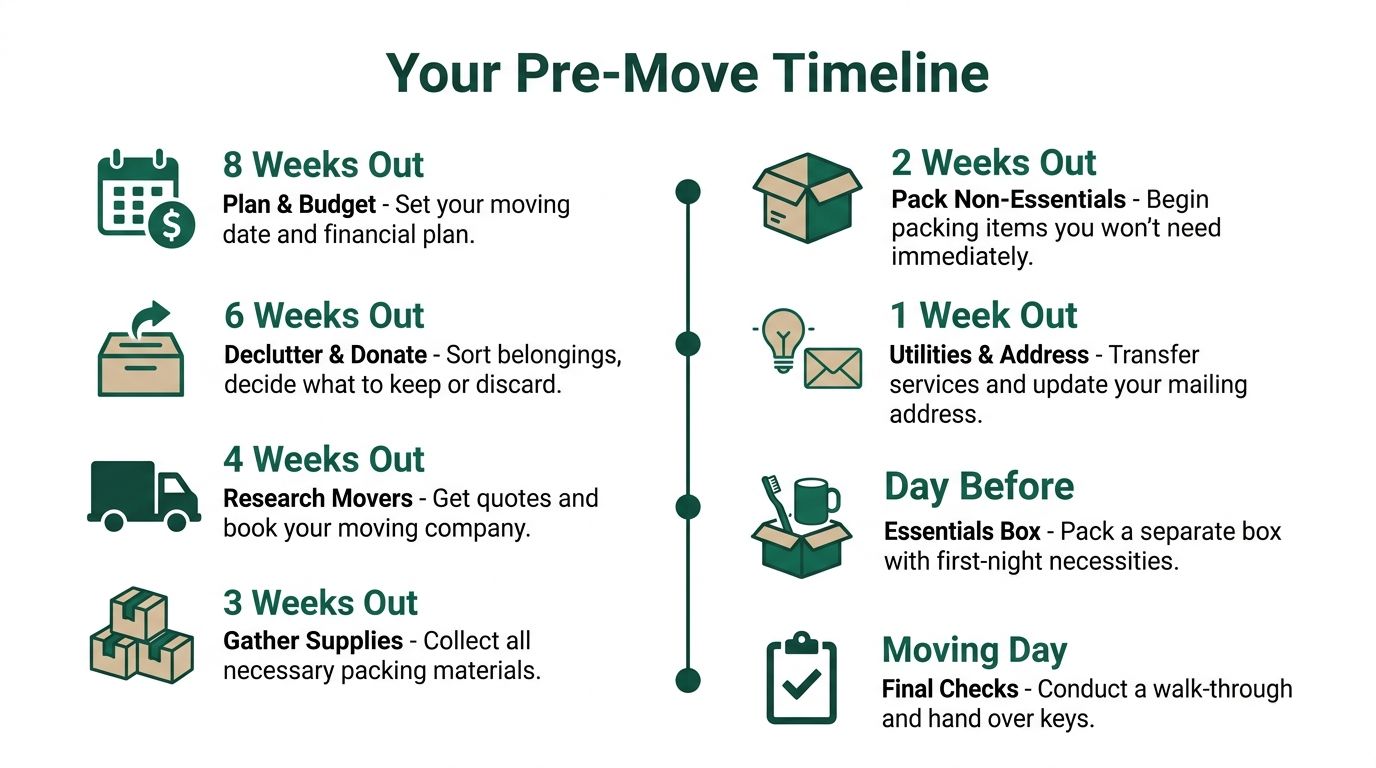
Eight weeks out
Set your move date. Build a rough budget. Start one running document for every moving detail so information stops living in texts, screenshots, and mental reminders.
Add one emotional task too. Tell one trusted person that moving is stressing you out and ask if they can be your check-in contact.
Six weeks out
Declutter by category, not by room. Clothing, books, kitchen overflow, paperwork, sentimental items.
This is also the right moment to make a “not ready to decide” group. Urban movers often get stuck because they assume every object needs an immediate final answer. It does not.
Four weeks out
Research and book movers if you are using them. Confirm building logistics for both addresses, especially elevators, loading rules, parking, and move-in windows.
Then create your first packing map:
- Essentials first list for what must stay accessible
- Go first boxes for low-use items
- Last week items for daily essentials
- Open later items for non-urgent belongings
Three weeks out
Gather supplies and label more clearly than you think necessary. Write both the room and the function on each box. “Bedroom” is less useful than “Bedroom closet shoes” or “Desk cables and chargers.”
Use this stage to reduce hidden stressors:
- Back up paperwork you may need during the move
- Refill routine medications
- Set aside keys, ID, lease papers, and payment confirmations
- Create a short list of people or services you still need to notify
A printable moving checklist and timeline can help keep these details from slipping.
Two weeks out
Pack non-essentials in short sessions. Do not block off an entire exhausting day if that pattern makes you shut down. A focused hour is often more productive than six anxious ones.
Try this rhythm:
- Pick one micro-task
- Finish it fully
- Label the box
- Pause for water, breathing, or a quick walk
- Log what is done
A completed small task lowers stress better than a grand plan you do not start.
One week out
Transfer utilities, update your address, and confirm timing with anyone helping. Build your first-night setup now, not the night before.
Include practical basics, but also include comfort. A clean towel, phone charger, mug, sleepwear, and one familiar item can soften the landing.
Day before and moving day
The day before, stop trying to optimize everything. Focus on access, clarity, and rest.
On moving day, keep one short checklist in your pocket or notes app:
- Final walk-through
- Keys and entry instructions
- Essentials bag
- Charged phone
- Water and snacks
- Room-by-room box placement
An organized move does not mean a perfect move. It means fewer avoidable surprises.
Smart Packing Strategies to Reduce Overwhelm
Packing is where anxiety about moving becomes physical. You can see it in crowded closets, the pile of “deal with later” items, and the unopened bins under the bed. For city movers, the hardest part is often not packing itself. It is deciding what deserves space in the next home.
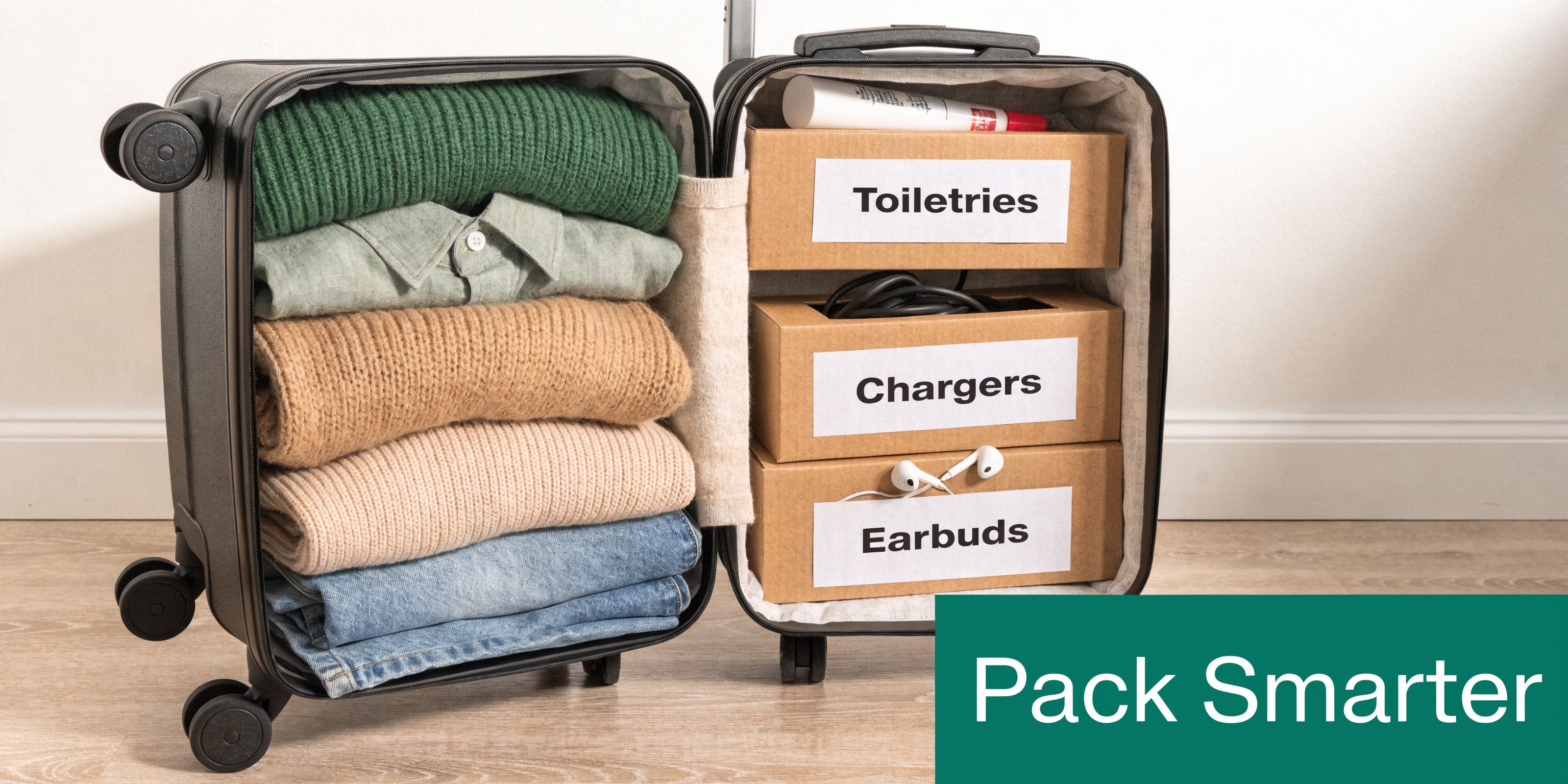
A useful shift is this. You do not have to force every decision right now. For many people, especially in small apartments, the most calming packing strategy is decision deferral. That means separating “I am not keeping this” from “I am not ready to decide this under pressure.”
Stop sorting by guilt
People often use the wrong question while packing. They ask, “Should I have gotten rid of this by now?” That question creates shame, not clarity.
Use these instead:
- Will I need this in the next three months?
- Does this fit the next home, or just the old one?
- Am I keeping this because it matters, or because I feel bad deciding?
- Can this decision wait without harming the move?
That last question matters most in a small apartment. If a decision can wait, let it wait in an organized way.
Use a three-lane packing system
This works well when floor space is tight.
| Lane | What goes there | How to label it |
|---|---|---|
| Move now | Daily use and known keepers | Room + category |
| Store for later review | Useful but uncertain items | Review month + contents |
| Donate or discard | Clear exits | Action + deadline |
This approach lowers pressure because it gives uncertain items a place to go without taking over your living room.
A detailed guide on how to pack efficiently for moving can help you set up labels, categories, and packing order in a way that keeps your apartment functional while you pack.
Pack by emotional weight, not just room
Most guides tell you to start with guest linens and off-season clothes. Fine advice, but it misses the emotional bottlenecks.
In real moves, these categories slow people down more:
- Photos and keepsakes
- Old notebooks and paperwork
- Gifts
- Clothing tied to identity changes
- Items from past homes or relationships
Give these their own session. Do not squeeze them in when you are tired.
If a box carries emotional weight, treat it like a separate project. Rushing sentimental decisions often creates regret.
A short visual refresher can help if your brain is fried mid-pack.
What usually does not work
Some packing advice sounds efficient but backfires in small spaces.
- “Pack the whole apartment this weekend.” Too vague. Too big. Easy to avoid.
- “Be ruthless.” That can push people into panic-discarding useful or meaningful items.
- “Just donate anything you haven’t used lately.” City living changes storage patterns. Some infrequently used items are still worth keeping.
- “Sort as you pack.” Better to pre-sort categories first, then pack with clear labels.
What works better is visible progress. One shelf. One drawer. One category. One box of uncertain items with a clear next review point.
The move gets lighter when every object does not demand a final verdict today.
Practical Self-Care Techniques During Your Move
There is a point in almost every move when your thinking gets noisy. You lose your charger for ten minutes. Tape disappears. Someone texts a question you cannot answer. That is when self-care needs to be quick, usable, and built for real life.

A clinical review of Mindfulness-Based Interventions found they reduce worry and anxiety, and it highlights practical methods such as 10 to 15 minute daily sessions of deep breathing or pairing small packing tasks with a post-task mindfulness check-in. That matters because moving stress responds better to small repeated resets than to one big attempt to “calm down.”
Use the two-minute reset
When stress spikes, stop for two minutes.
- Put both feet on the floor.
- Inhale slowly.
- Exhale longer than you inhaled.
- Name five things you can see.
- Choose one next task only.
This interrupts the runaway feeling that everything must be handled at once.
Pair tasks with short check-ins
A useful method is to link physical tasks to mental resets.
Examples:
- Pack one bookshelf, then sit for one minute and breathe.
- Finish one kitchen box, then drink water before starting the next.
- Tape and label three boxes, then step outside or look out a window.
The check-in is not wasted time. It helps prevent the sharp drop in focus that turns a productive hour into a spiral.
Keep your mind anchored to the future, not just the loss
A simple exercise helps many movers. Write down three to five specific things you may enjoy about the new place. Keep them concrete. A nearby park. Better light. A quieter bedroom. A shorter commute. A kitchen table that finally fits.
This is not forced positivity. It is balance. Anxiety narrows attention toward risk. You need to widen it on purpose.
A move becomes easier to tolerate when your mind has something real to move toward, not just something to leave behind.
Make support explicit
Do not wait until you snap. Tell people what kind of help helps.
Try clear requests like:
- “Can you stay on the phone while I pack this last room?”
- “Can you help me choose between these two keep piles?”
- “Can you check in with me tonight after the movers leave?”
Specific support reduces friction. Vague support often creates more work.
Adjusting to Your New Home and Building Routines
The move is not emotionally finished when the truck leaves. Many people feel a strange drop afterward. The crisis is over, but nothing feels settled yet.
The first evening matters. Open the essentials first. Make the bed. Set up one surface where you can drink water, charge your phone, and sit down without staring at unopened boxes. That single functional corner changes the mood of the whole home.
Start with anchors
Do not try to “complete” the apartment immediately. Rebuild routine before aesthetics.
A practical first sequence is:
- Bedroom first so sleep has a chance
- Bathroom next so basic care feels normal
- Kitchen basics for coffee, breakfast, and one simple meal
- Work or entry zone if your daily schedule depends on it
An unpacking-oriented moving-in checklist can help you focus on function instead of reacting to whichever box is closest.
Let familiarity arrive in layers
Walk the block. Find one grocery store, one coffee spot, one pharmacy, one easy route home. Repeat them. Routine makes a new place feel less foreign.
If sadness or unease lingers for a while, that does not mean you made the wrong decision. It often means your nervous system is still catching up. But if distress feels persistent, intense, or disruptive well beyond the normal adjustment period, professional support is worth considering.
Frequently Asked Questions About Moving Anxiety
Does moving get easier if you have done it before?
Not always. Experience can help with logistics, but repeat moves can build emotional wear instead of resilience. A resource on repeat movers reports that 41% of urban millennials experience escalating relocation stress, and says proactive “belonging rituals” such as keeping sentimental items accessible can cut recurring anxiety by 28%.
If you move often, do not assume your stress is irrational. Your body may be reacting to repeated disruption.
What are belonging rituals?
They are small ways of carrying continuity into the next home. Keep one meaningful photo, blanket, journal, mug, or other sentimental item easy to reach on day one. Unpack it early. The point is not decoration. The point is recognition.
Is my stress normal, or is it something more serious?
Normal moving stress usually rises around decisions, deadlines, and change. It often softens once plans become clearer and daily life starts to restabilize.
It may be time to seek professional help if anxiety about moving becomes constant, interferes with sleep for an extended period, triggers panic, or makes it hard to function before or after the move. A therapist can help you separate situational stress from an anxiety pattern that deserves deeper care.
What if I cannot make decluttering decisions?
Then stop forcing final answers under maximum pressure. Make the move easier first. Use clear categories, pack by emotional weight, and allow uncertain items to be reviewed later instead of demanding certainty now.
If clutter and tight apartment space are making your move harder, Endless Storage offers a practical middle path. Their storage-by-the-box model can help you get uncertain items out of the way without the hassle of a traditional unit, which is especially useful when you need breathing room more than another all-or-nothing decluttering session.
Frequently Asked Questions
Unveiling the Secrets to Effortless Storage
Endless Storage is available nationwide. You pick a plan, tell us where to pickup, and we'll send a UPS van to collect, whichever state you're in.
Your shipping label will be sent to your email within a few minutes, if not instantaneously. It can also be accessed through your customer profile.
Your box will be shipped to one of our climate controlled self storage facilities in our closest self storage facility. Our manager will accept your package, notify you that your box has been received, and securely stored. Only our managers will have access to Endless Storage boxes.
Email us at admin@endless-storage.com click to live chat with us, or send us a message below.
Never! We're committed to transparent pricing with no surprises. You'll lock in your rate with no hidden fees and no long-term contracts.
Fast access guaranteed! Your boxes will arrive at your doorstep within 48 hours of requesting them back. Need to check on delivery? We provide tracking information for complete peace of mind.
Totally flexible! Store month-to-month with no long-term commitment and cancel anytime.
Everything's online! Use your account dashboard to:
• Set up automatic monthly payments
• Request box returns
• Update your address
• Order additional boxes
• Track shipments
Your boxes are insured up to $100 each. Our customer service team will help you file any necessary claims and resolve issues quickly.
Don't worry – we'll email you right away if there's a payment issue. Your items stay safe, though you may have temporary service interruption or late fees until payment is resolved.
When you request our free storage kits, you'll have 30 days to send in your boxes to activate your 3 months of free storage. Think of it like starting a gym membership – your activation window begins when you receive your kits, and your full free trial begins once you send in your first box. During your free months, you'll experience our complete storage service at no cost.
Your 30-day activation window begins when you receive your storage kits. We'll send you an email confirmation when your kits are delivered, marking the start of your activation period.
If you haven't sent any boxes for storage within your 30-day activation window, your free trial will expire and we'll begin charging the regular monthly rate of $9.99 per box. This helps ensure our storage kits go to customers who are ready to use our service.
A box costs $9.99 per month to store (plus sales tax). This price includes free shipping for standard boxes under 50 lbs. and smaller than 16"x16"x16"
Log into your Endless Storage account, locate the box you would like returned, and simply click Return My Box.
Yes, each box stored with us is insured for up to $100 throughout transit as well as the duration of storage within our facilities.
Your box will be at your doorstep within 48 hours of you requesting it back.
Store 10+ boxes? We'll pick them up for free! After your purchase, we'll contact you to schedule a convenient pickup time and arrange UPS collection.
We trust UPS with all shipments, and every box includes $100 insurance coverage. You'll receive tracking information to monitor your items' journey.
Yes! Visit any of our locations by appointment. Just bring a photo ID matching your customer profile.
For everyone's safety, we can't store hazardous materials, firearms, or perishables. All items must fit within our standard boxes.
It's easy! Order your storage kit online, and we'll ship it to you within 1-2 business days. Your shipping labels will be emailed instantly and available in your account.
We're here to help! Email us at admin@endless-storage.com, use our live chat, or send us a message through your account.
To cancel your storage service with Endless Storage, please email your cancellation request to admin@endless-storage.com. Our team will process your request within 2 business days and confirm your cancellation via email.
We understand packing takes time. However, to maintain your free trial benefits, you'll need to send at least one box within the 30-day activation window. If you need more time, you can always start with one box to activate your trial and send the rest later. You can always reach out to admin@endless-storage.com if you have any issues or concerns.
When you request our free storage kits, you're starting a 30-day window to begin using our storage service.
Important: To activate your free trial, send at least one box for storage within 30 days. If no boxes are sent within this 30-day window, a one-time $50 fee applies to cover materials and shipping costs. This fee is clearly disclosed before you sign up.
Think of it like reserving a hotel room – we're setting aside space and sending specialized packing materials for your use. The fee only applies if you request materials but don't begin storage, similar to a hotel's no-show charge.