You're probably asking a simple question that gets messy fast. Is an 800 sq ft apartment actually spacious, or does it only look that way in listing photos?
The honest answer is that it can feel either generous or cramped, depending on layout, storage, and how many jobs the apartment has to do every day. Sleeping is easy. Living is easy. The strain starts when the same home also has to handle remote work, shared routines, overflow gear, and the ordinary clutter that shows up after the excitement of move-in wears off.
That's why the useful question isn't whether 800 square feet is “big enough” on paper. It's whether the space can stay functional after the first few months, when the dining table becomes a desk, the entry collects packages, and the closet starts carrying more than it should.
What 800 Square Feet Actually Feels Like
An 800 sq ft apartment sits in the middle of a very realistic range for U.S. renters. RentCafe's 2024 analysis puts the average new U.S. apartment at 908 sq ft, while Apartments.com reports an average U.S. one-bedroom at 696 sq ft and two-bedroom at 998 sq ft. That makes 800 sq ft larger than a typical one-bedroom by 104 sq ft and smaller than a typical two-bedroom by 198 sq ft, which is why it often lands in the sweet spot between the two (national apartment size comparison).
In practice, that usually means one of two things. It's either a comfortable one-bedroom with breathing room, or a compact two-bedroom where layout discipline matters a lot. That distinction matters more than the raw number.
Why the same size can feel completely different
Two apartments can both be listed at 800 square feet and live very differently. One might give you an open living area, a real bedroom, a dining nook, and enough wall space for storage. Another might burn square footage on hallways, awkward corners, and oversized circulation paths that look fine on a floor plan but waste usable room.
Practical rule: Judge an apartment by what daily routines it can support, not by the square footage headline.
That's the part most apartment tours miss. They show you a styled sofa, a tidy coffee table, and maybe a cute breakfast bar. They rarely show whether two adults can work from home without taking meetings in the bedroom, or whether winter coats and cleaning supplies have anywhere sensible to go.
For renters coming from a smaller footprint, 800 square feet can feel like a major upgrade. For people downsizing from a larger home, it can feel tight until they stop treating every possession as a permanent resident. If you're still figuring out how small-space planning works at the extreme end, these studio apartment layout ideas are useful because they sharpen your eye for flow, zoning, and visual clutter.
What matters more than the number
The actual test is functional density. How many people live there? Does someone work from home? Do you need a separate dining spot, guest sleep space, hobby area, or serious kitchen storage?
An 800 sq ft apartment usually works well when each area has one clear priority and one secondary role. It struggles when every corner is trying to do three things at once. That's where long-term livability wins over styling. A place that looks polished for a walkthrough can still become frustrating by day 90 if the furniture is oversized, the storage is shallow, or the work setup never had a real home.
Create Your Apartment Blueprint Before You Move
Most small-apartment mistakes happen before the first box arrives. People guess. They eyeball the room. They assume their old furniture will “probably fit.” Then the sofa blocks a vent, the bed crowds the doorway, and the desk ends up in the only spot with bad lighting.
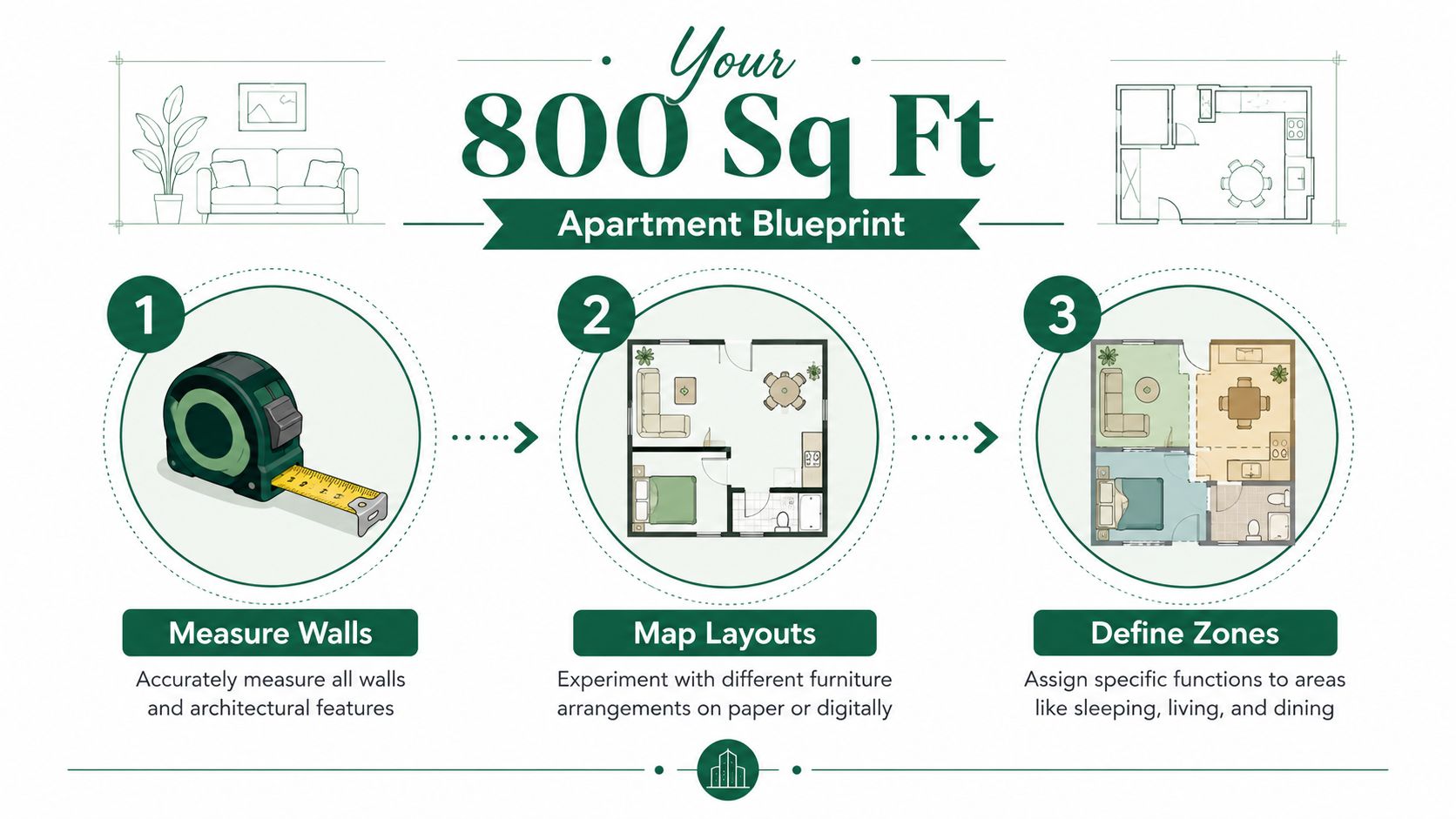
A better approach starts with a real blueprint. A common geometric approximation for 800 square feet is about 25 ft × 32 ft, and that's a useful mental model when you're planning. But don't stop there. Measure each room separately, because advertised square footage may include non-livable areas such as balconies, which can make the place feel smaller than the headline number suggests (how to think about 800 square feet).
Step one, measure what actually affects placement
The walls matter, but so do the details people forget:
- Door swing: A door that opens wide can wipe out your best dresser wall.
- Window placement: Low windows can block headboards, desks, and shelving.
- Radiators and vents: These eliminate furniture options.
- Outlet locations: If the only useful work zone has no practical power access, it's not a work zone.
- Closet depth: A shallow closet changes your storage plan fast.
Measure room by room. Then measure your biggest furniture pieces. If you're unsure how to calculate bulky item volume before moving, this quick guide on how to find cubic feet helps you compare what you own with what the apartment can realistically absorb.
Step two, zone the apartment before you decorate it
Don't start with furniture names. Start with activities.
Ask which spaces need to exist every single day. Usually that includes sleeping, lounging, eating, working, dressing, and item drop-off near the entry. Once those are identified, assign each function a rough area on paper before you commit to specific pieces.
A simple planning grid works well:
| Zone | Primary use | Common mistake |
|---|---|---|
| Living area | Seating and daily downtime | Oversizing the sofa |
| Bedroom | Sleep and clothing storage | Adding too many small pieces |
| Dining spot | Eating, mail, laptop overflow | Using a table that never scales down |
| Work area | Focused computer use | Borrowing space from circulation |
| Entry | Shoes, bags, packages | Leaving it undefined |
If a zone has no boundary, it usually becomes a dumping ground.
Step three, test the layout before move-in day
Use painter's tape on the floor, a floor-plan app, or even graph paper. The goal isn't perfect design. It's avoiding bad purchases and bad assumptions.
This is also where moving logistics matter. Good planning isn't only about what fits after move-in. It's about what arrives first, what gets assembled later, and what shouldn't come upstairs at all. A practical checklist like these apartment moving tips can help you sequence the move so the apartment doesn't become unusable on day one.
The strongest blueprint does one thing well: it protects open floor area. Empty space isn't wasted space in a small apartment. It's what makes the apartment feel livable.
A Smart Furniture Strategy for Small Spaces
Furniture decides whether an 800 sq ft apartment stays comfortable or starts feeling crowded. Not decor. Not paint color. Furniture.
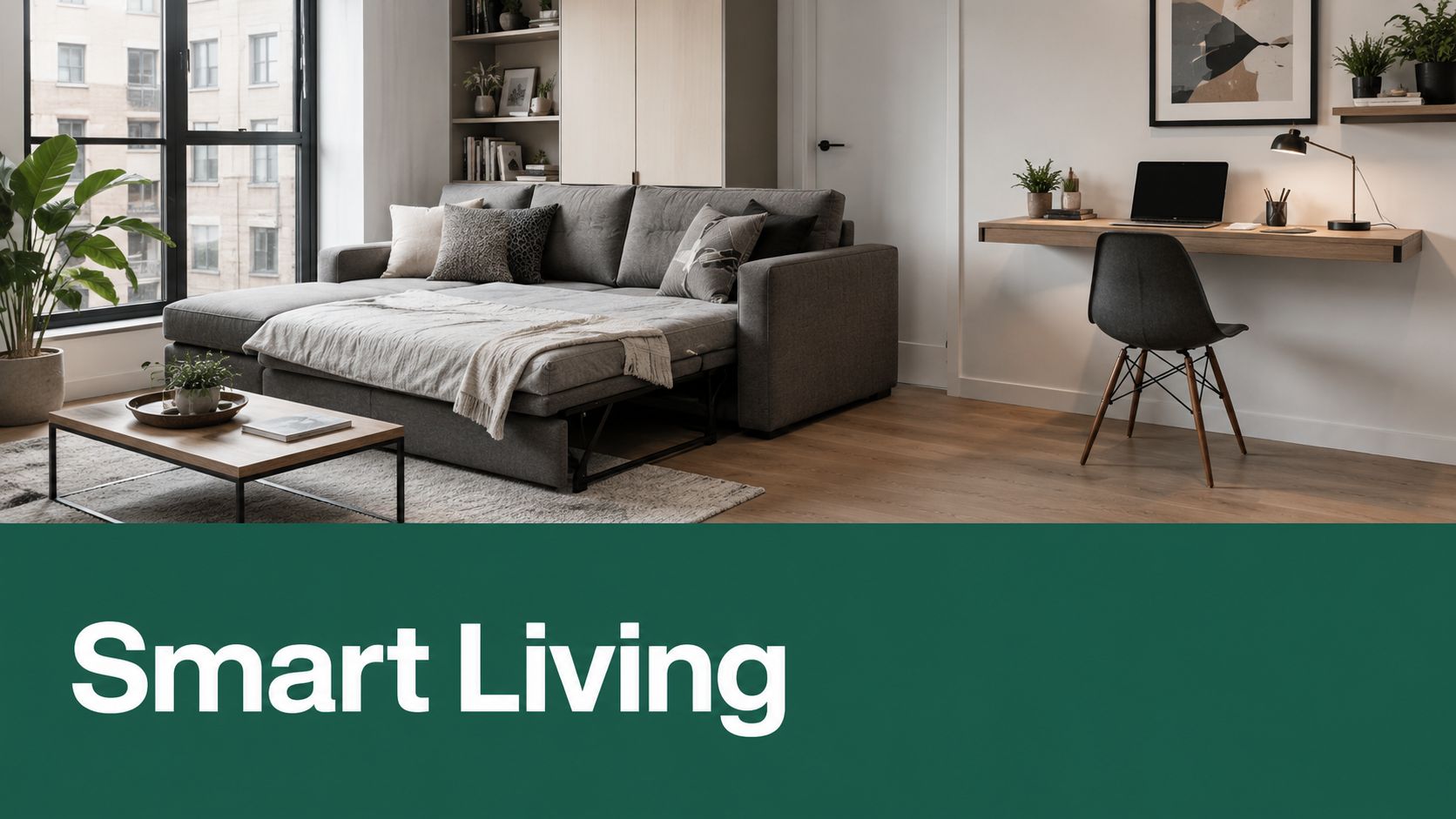
Most apartment tours focus on styling and ignore long-term functional density. They don't answer whether the space works for a couple, a remote-work setup, or seasonal routine changes. The harder problem is keeping the apartment livable after the first 90 days, and that usually comes down to smart, multi-functional furniture choices rather than photo-ready staging (discussion of long-term livability in small apartments).
Buy for conflict reduction, not just for looks
Every furniture piece should solve a real friction point. In a smaller home, the worst pieces are often the ones that do only one job while taking up premium floor area.
A stronger mix looks like this:
- A dining table that can double as a desk: Especially useful if one person works from home only part of the week.
- A storage ottoman: Better than a decorative coffee table if blankets, chargers, or game controllers keep floating around.
- A bed with drawers or clearance underneath: This gives dead space a purpose.
- A narrow console behind the sofa: It can hold lighting, work gear, or baskets without the bulk of another cabinet.
- Stackable or folding guest seating: Easy to deploy, easy to hide.
The right question is not “Will this fit?” It's “What problem does this solve every day?”
Right-size the anchors first
The apartment's biggest pieces shape everything else. Start there.
A sofa that's too deep makes the living room feel blocked, even if it technically fits. A bed frame with a bulky footboard can kill circulation in a bedroom. A wide desk can overwhelm a multipurpose room and trap you into treating the apartment like a permanent office.
Here's a cleaner way to choose:
| Anchor piece | Choose this | Avoid this |
|---|---|---|
| Sofa | Open base, lighter visual profile, modest depth | Overstuffed arms and bulky recliners |
| Bed | Storage base or simple frame | Thick headboard plus extra bench at foot |
| Desk | Closed-away or dual-use surface | Dedicated office furniture that dominates |
| Dining table | Round or expandable if needed | Large fixed table “just in case” |
A small apartment feels bigger when furniture reveals floor, wall, and light.
Make work disappear when the day ends
This matters more than expected. If your work setup is always visible, the apartment starts feeling like a workplace that happens to contain a bed.
For remote work, the best solutions often use containment rather than size. A desk inside a living-room corner with a lamp, cable tray, and closed storage can work better than a larger setup spread across multiple surfaces. For couples, separate task lighting and clear seat ownership matter more than matching furniture.
If you want help visualizing alternate arrangements before buying, tools that offer AI solutions for small interiors can help you test layouts and furniture scale in a practical way. Once you know the room's pressure points, compare your options against these space-saving furniture ideas to avoid filling the apartment with pieces that only work in theory.
Maximize Every Inch with Clever Storage
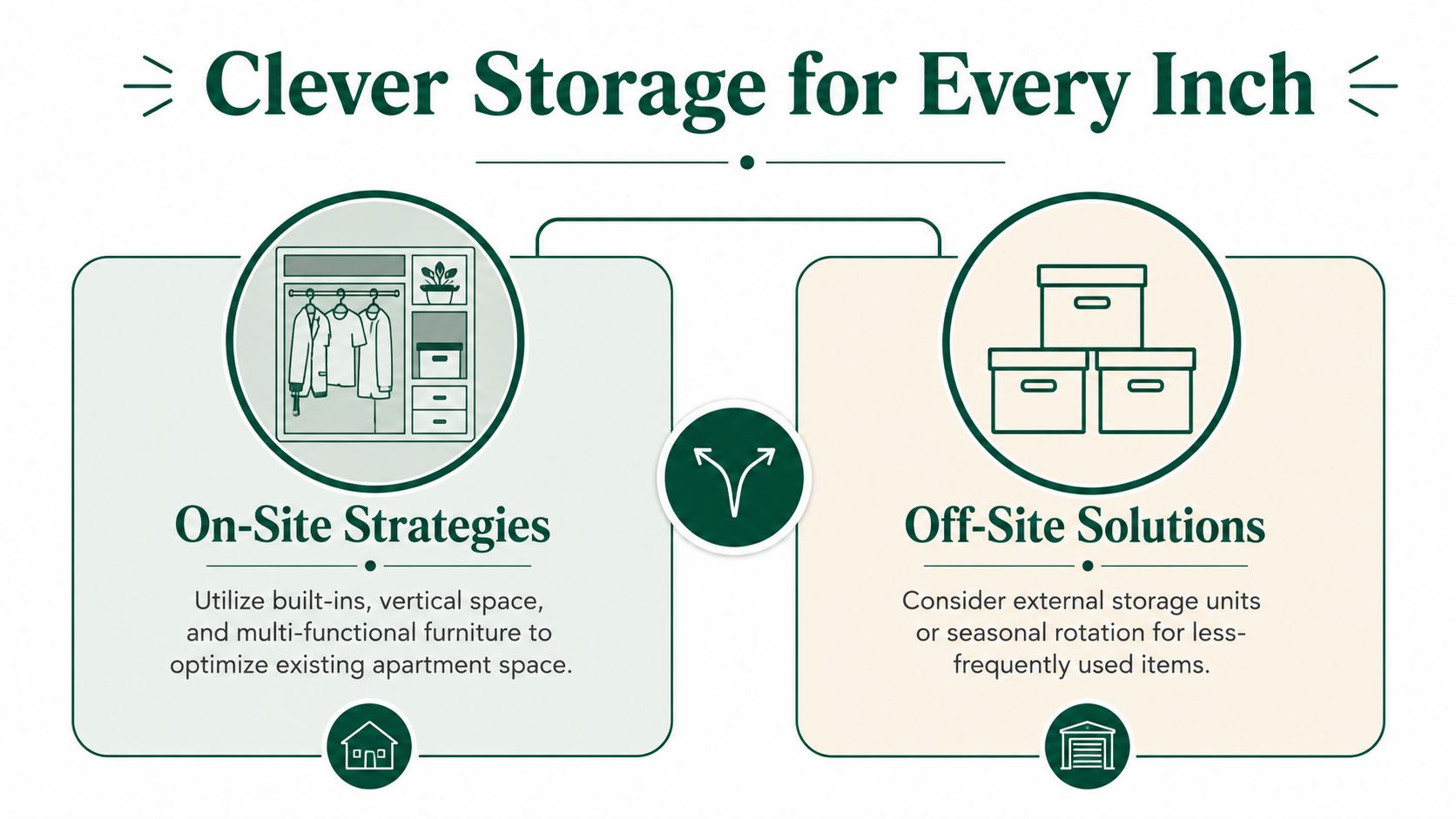
Storage problems in an 800 sq ft apartment usually aren't about having “too much stuff” in the abstract. They're about keeping high-use items accessible while preventing low-use items from occupying your best space.
That calls for a two-part system. Keep daily-life items on-site and easy to reach. Move low-frequency, awkward, or seasonal items out of the apartment's prime zones.
What should stay in the apartment
On-site storage should support your routine, not hide random overflow. The most useful spaces are usually vertical and low-traffic.
- Use height aggressively: Tall bookcases, upper shelves, and over-toilet storage work because they preserve floor space.
- Claim the under-bed zone: Off-season clothes, extra linens, and backup toiletries belong here, not in your main closet.
- Work the backs of doors: Hooks and organizers are ideal for bags, cleaning tools, and accessories.
- Group by frequency: Daily items should sit between knee and shoulder height. Rarely used items can go higher.
- Give the entry a job: A tray, shoe cabinet, or slim bench prevents drift into the living room.
A closet packed without categories is just delayed clutter. The fastest fix is to separate what you use weekly from what you use occasionally.
For more ideas that work in real rentals, these apartment storage ideas are useful because they focus on the awkward, overlooked spaces that often matter most.
A quick visual can help if you're planning room by room.
What should leave the apartment
Some belongings don't deserve daily real estate. Holiday decor, archived paperwork, keepsakes, out-of-season outerwear, spare bedding for occasional guests, and hobby supplies with long gaps between uses all compete with your current life.
That doesn't mean you need to get rid of everything. It means you need a storage workflow.
| Belonging type | Best place |
|---|---|
| Daily clothing | Closet or dresser |
| Weekly-use tools or supplies | Cabinet or labeled bin nearby |
| Seasonal items | Off-site storage |
| Sentimental keepsakes | Off-site storage or one defined memory bin |
| Guest-only items | High shelf or off-site storage |
Storage test: If an item hasn't supported your current routine in a meaningful way, it shouldn't occupy your easiest-to-reach space.
One option for low-use belongings is Endless Storage, which offers storage by the box rather than requiring a full traditional unit. That model can make sense when you need to clear closet pressure without storing furniture or making regular facility visits. In a smaller apartment, that's often the difference between a functional bedroom closet and one that turns into a general warehouse.
Two Layout Examples for an 800 Sq Ft Apartment
An 800 sq ft apartment becomes easier to judge when you stop thinking about square footage as one fixed design. The same footprint can support very different lives.
Design guidance for 800 square foot ADUs shows that the space can comfortably accommodate two bedrooms, a bathroom, kitchen, and open living space. The deciding factor is often minimizing hallways to maximize usable living area, which is what separates a spacious one-bedroom from a compact two-bedroom within the same envelope (800 sq ft layout guidance).

Layout one for a couple or solo renter who works from home
This version treats the apartment like a roomy one-bedroom. The bedroom stays private and simple, with the bed, clothing storage, and little else. The main living area carries more weight, but in a controlled way.
A practical arrangement looks like this:
- Open living and dining zone: One side for the sofa and media wall, the other for a compact table that can host meals or laptop work.
- Dedicated office nook: Not a full room, but a defined corner with lighting, a real chair, and closed storage.
- Kitchen left unobstructed: No island carts or extra furniture unless they solve a specific need.
- One main circulation path: You should be able to move from entry to kitchen to living room without weaving.
This layout works because it protects shared space. A couple gets more comfort when the apartment has one generous common area rather than several cramped mini-rooms.
If the apartment already feels tight while empty, adding more partitions usually makes it worse.
Layout two for roommates or a small family
The same 800 square feet can become a compact two-bedroom if the plan trims excess circulation and keeps the common space open. Such optimization is hindered by over-partitioning. Every divider creates privacy, but it also eats flexibility.
A stronger two-bedroom version usually has these traits:
| Area | Priority in this layout |
|---|---|
| Bedrooms | Sleeping, clothes, minimal extras |
| Living room | Shared seating and overflow activity |
| Kitchen | Full function, little decorative sprawl |
| Dining | Often combined with living space |
| Storage | Built upward, not outward |
The bedrooms need discipline. Once each one tries to hold a desk, dresser, lounge chair, and hobby gear, the layout starts collapsing. In a compact two-bedroom, the common area has to stay useful because private rooms can't absorb everything.
For roommates, the best outcome usually comes from agreeing early on what stays communal and what doesn't. For a small family, the same principle applies. Don't force adult storage, child storage, work supplies, and household overflow into whichever corner looks open. Assign homes before clutter assigns them for you.
Your Move-In Action Plan and Budget
Move-in success comes from sequencing, not speed. If you bring everything in at once, the apartment feels smaller than it is. If you stage the move, you get time to test the layout before the space locks up.
Current market context helps frame the decision. The average U.S. apartment size rebounded to 908 sq ft in 2024 after falling to 889 sq ft in 2022, and while 800 sq ft is below the new-build average, it remains significantly larger than typical units in dense urban markets like Brooklyn, where the average is 708 sq ft (apartment size rebound and urban comparison). In other words, 800 square feet isn't unusually small. It just demands better planning than a larger, more forgiving layout.
A move-in sequence that keeps the apartment usable
Start with only the pieces you know define the layout. Bed, sofa, table or desk, basic lighting, and storage essentials come first. Decorative extras should arrive later, after you've lived in the space long enough to notice where friction shows up.
A clean order looks like this:
- Confirm measurements again before move day
- Move in anchor furniture first
- Assemble storage before unpacking loose items
- Set up the bedroom completely
- Create one functional landing zone at the entry
- Live with the layout briefly before buying fill-in pieces
A detailed moving checklist and timeline helps here because it turns move-in from a scramble into a sequence.
Budget for pressure points, not impulse fixes
Overspending typically doesn't occur on the obvious pieces. Instead, it happens on corrections. The second desk. The extra shelf bought in frustration. The bins that don't fit the closet. The side table that solves nothing.
Focus your budget on:
- The mattress and bed setup
- The sofa or primary seating
- Work-friendly lighting and chair support
- Storage that matches actual dimensions
- A small reserve for problem-solving after move-in
If you want a location-specific checklist to keep the process organized, this guide to plan your Sydney move is a useful example of the kind of practical moving prep that prevents last-minute chaos.
The best budget is the one that leaves room to learn from the apartment. An 800 sq ft apartment usually tells you what it needs once you live in it for a few weeks. Listen to that before buying more stuff.
If your 800 sq ft apartment feels tight because closets are overloaded with seasonal, sentimental, or low-use items, Endless Storage can help you clear space without renting a full traditional unit. Their storage-by-the-box model fits the way small apartments work. Keep daily essentials at home, move the rarely used items out, and make the apartment easier to live in all year.
Frequently Asked Questions
Unveiling the Secrets to Effortless Storage
Endless Storage is available nationwide. You pick a plan, tell us where to pickup, and we'll send a UPS van to collect, whichever state you're in.
Your shipping label will be sent to your email within a few minutes, if not instantaneously. It can also be accessed through your customer profile.
Your box will be shipped to one of our climate controlled self storage facilities in our closest self storage facility. Our manager will accept your package, notify you that your box has been received, and securely stored. Only our managers will have access to Endless Storage boxes.
Email us at admin@endless-storage.com click to live chat with us, or send us a message below.
Never! We're committed to transparent pricing with no surprises. You'll lock in your rate with no hidden fees and no long-term contracts.
Fast access guaranteed! Your boxes will arrive at your doorstep within 48 hours of requesting them back. Need to check on delivery? We provide tracking information for complete peace of mind.
Totally flexible! Store month-to-month with no long-term commitment and cancel anytime.
Everything's online! Use your account dashboard to:
• Set up automatic monthly payments
• Request box returns
• Update your address
• Order additional boxes
• Track shipments
Your boxes are insured up to $100 each. Our customer service team will help you file any necessary claims and resolve issues quickly.
Don't worry – we'll email you right away if there's a payment issue. Your items stay safe, though you may have temporary service interruption or late fees until payment is resolved.
When you request our free storage kits, you'll have 30 days to send in your boxes to activate your 3 months of free storage. Think of it like starting a gym membership – your activation window begins when you receive your kits, and your full free trial begins once you send in your first box. During your free months, you'll experience our complete storage service at no cost.
Your 30-day activation window begins when you receive your storage kits. We'll send you an email confirmation when your kits are delivered, marking the start of your activation period.
If you haven't sent any boxes for storage within your 30-day activation window, your free trial will expire and we'll begin charging the regular monthly rate of $9.99 per box. This helps ensure our storage kits go to customers who are ready to use our service.
A box costs $9.99 per month to store (plus sales tax). This price includes free shipping for standard boxes under 50 lbs. and smaller than 16"x16"x16"
Log into your Endless Storage account, locate the box you would like returned, and simply click Return My Box.
Yes, each box stored with us is insured for up to $100 throughout transit as well as the duration of storage within our facilities.
Your box will be at your doorstep within 48 hours of you requesting it back.
Store 10+ boxes? We'll pick them up for free! After your purchase, we'll contact you to schedule a convenient pickup time and arrange UPS collection.
We trust UPS with all shipments, and every box includes $100 insurance coverage. You'll receive tracking information to monitor your items' journey.
Yes! Visit any of our locations by appointment. Just bring a photo ID matching your customer profile.
For everyone's safety, we can't store hazardous materials, firearms, or perishables. All items must fit within our standard boxes.
It's easy! Order your storage kit online, and we'll ship it to you within 1-2 business days. Your shipping labels will be emailed instantly and available in your account.
We're here to help! Email us at admin@endless-storage.com, use our live chat, or send us a message through your account.
To cancel your storage service with Endless Storage, please email your cancellation request to admin@endless-storage.com. Our team will process your request within 2 business days and confirm your cancellation via email.
We understand packing takes time. However, to maintain your free trial benefits, you'll need to send at least one box within the 30-day activation window. If you need more time, you can always start with one box to activate your trial and send the rest later. You can always reach out to admin@endless-storage.com if you have any issues or concerns.
When you request our free storage kits, you're starting a 30-day window to begin using our storage service.
Important: To activate your free trial, send at least one box for storage within 30 days. If no boxes are sent within this 30-day window, a one-time $50 fee applies to cover materials and shipping costs. This fee is clearly disclosed before you sign up.
Think of it like reserving a hotel room – we're setting aside space and sending specialized packing materials for your use. The fee only applies if you request materials but don't begin storage, similar to a hotel's no-show charge.