You’re probably searching 24 hours self storage near me because your timing is bad in the most normal way possible. Moves run late. Work shifts end after midnight. A family member suddenly needs documents, tools, inventory, or winter gear that got boxed up months ago. You don’t need “convenient access.” You need the gate to open when you arrive.
That’s where people get burned.
After helping people sort moves, downsize apartments, and untangle storage mistakes, I’ve seen the same pattern over and over. A facility says “24-hour storage,” the renter assumes that means round-the-clock entry, and the fine print says something very different. Sometimes the property has cameras all night but no customer access. Sometimes one location in a chain allows late entry and the next one doesn’t. Sometimes the website is vague enough that you won’t know until you call, or worse, until you show up.
The Myth of 24-Hour Access
The most frustrating storage mistake happens before you ever sign. You search 24 hours self storage near me, see a listing that looks right, and assume “24-hour” means you can enter at any hour. Often, it doesn’t.
What the label usually means
The term “24-hour storage” is often misleading. Some Extra Space Storage locations that advertise this feature restrict gate access to 6 AM to 10 PM, and similar mismatches show up at other operators, including facilities that offer 24/7 surveillance but not 24/7 customer entry, as shown on this Extra Space facility page.
That distinction matters. Surveillance hours are not access hours. A camera recording your unit overnight doesn’t help if you need to retrieve a suitcase, ladder, sample kit, or tax file at 2 AM.
The wording that causes the confusion
Storage operators often bundle several ideas together:
- “24-hour surveillance” means cameras run all day.
- “24-hour security” can mean remote monitoring, lighting, or recorded video.
- “24-hour storage” may describe the facility’s operating model, not your access rights.
- “Extended access” sometimes means late evening, not overnight.
Practical rule: If the listing doesn’t say “gate access 24/7” in plain language, assume it isn’t guaranteed.
This is why I tell renters to treat storage access like after-hours building entry. If your apartment building needed a reliable overnight gate or roll-up door, you’d care about actual operating access, not just whether the property had cameras. That same logic shows up in discussions around true 24/7 door service for commercial properties. The system either works when you need it, or it doesn’t.
Why this hits some renters harder
A lot of people can live with standard access hours. Plenty can’t.
Shift workers, medical staff, restaurant owners, event crews, contractors, musicians, and people in the middle of a chaotic move often need odd-hour access. If you’re in that group, vague language isn’t a minor annoyance. It changes which storage model fits your life.
The first mistake is trusting the search result. The second is assuming a chain uses the same rules at every location. In storage, site-level rules beat brand-level marketing every time.
Smarter Search Tactics for Finding 24-Hour Storage
A plain maps search is a common starting point, but it’s a bad place to stop. If you rely only on top results, you’ll get a mixed pile of real 24/7 options, extended-hours facilities, and listings that lean on fuzzy wording.
Search for access language, not just facility type
Most renters type “24 hours self storage near me” and click whatever appears first. A better approach is to search for phrases that describe the actual access method you need.
Try queries like:
- “storage with 24/7 keypad access”
- “late night storage units near me”
- “self storage open all night”
- “storage with gate code access 24 hours”
- “unstaffed storage with coded gate”
Those searches tend to surface pages that talk about entry systems, gate hours, and whether access depends on office hours. That’s more useful than a broad listing stuffed with generic amenities.
Use operator sites like a filter, not a decision maker
Major operators often have cleaner search tools than map listings, but their location pages still need scrutiny. Look for:
- Access hours listed separately from office hours
- Any note telling you to contact the manager
- Mentions of keypad, RFID, app entry, or personal code access
- Warnings that access varies by site
If a location page gives you polished marketing copy but no clear gate schedule, move it to a “verify by phone” list rather than a “book now” list.
A good storage search narrows the field. It doesn’t confirm the answer.
Build a shortlist before you call
Don’t compare ten facilities from scratch on the phone. Build a short list first based on geography, property type, and how likely the access setup matches your schedule.
A practical screening method looks like this:
| Search step | What to look for | What to ignore |
|---|---|---|
| Map search | Nearby clusters near your route home or work | Star ratings alone |
| Location page | Separate gate and office hours | Generic “secure facility” claims |
| Photos | Visible gates, fencing, lighting, keypad entry | Lifestyle photos and stock images |
| Reviews | Mentions of access, lockouts, after-hours entry | Complaints unrelated to access |
If you want to compare geographic availability across a different storage model, it can help to review a nationwide location map for service coverage and see whether your city has an option that doesn’t depend on driving to a facility at all.
Search the way a skeptic searches
This is the part often overlooked. Once you’ve found a possible facility, run a second search using the business name plus terms like:
- gate hours
- after hours
- locked out
- access code
- manager said
- review midnight
- power outage
That search often reveals the reality customers experience. You’re looking for patterns. Do renters mention being unable to enter late? Do they say the gate closes earlier than expected? Do multiple reviews mention needing manager approval for overnight access?
A facility that’s set up for odd-hour use usually leaves a trail. Its website, photos, reviews, and call answers line up. When those don’t line up, trust the inconsistency. It’s usually a warning.
Your Ultimate Verification Checklist Before You Rent
By the time you call a facility, you should already know the basics. The phone call is where you verify the details that websites blur; only around 70% of advertised “24-hour” units nationwide deliver that access, and facilities with strong security, coded entry, and climate control often see 85% to 92% occupancy in major markets, which tells you these premium features are in demand according to American Business Magazine’s self-storage analysis.
The questions that cut through sales talk
Ask direct questions and wait for direct answers. If the manager answers loosely, ask again in simpler language.
Use this checklist:
- Gate access question: “Can I open the gate and enter my unit at 2 AM tonight if I rent right now?”
- Office versus access question: “What are your office hours, and what are your gate hours? Please give both.”
- Everyday or exception question: “Is overnight access standard for all tenants, or only by special approval?”
- Unit-specific question: “Do all unit types have the same access, or do indoor units and climate-controlled units have different hours?”
- Move-in timing question: “If I complete my rental online, when does my code start working?”
- Exit issue question: “If I enter before closing, can I still exit after closing?”
That last one matters more than people expect. Some facilities let you in during access hours but won’t let you linger beyond them without creating a problem at the gate.
Ask about the access system itself
A real 24/7 setup usually has a system behind it, not just a promise.
Here’s what to ask:
- Entry method: keypad, app, RFID, or some other system
- Unique credentials: whether each renter gets a personal code
- Remote support: whether anyone can help if your code fails after hours
- Backup procedure: what happens if the gate system goes down
- Lighting and cameras: whether the gate lane and building entries are covered
If they can describe the equipment clearly, that’s a good sign. If the answer sounds like “you should be fine,” keep looking.
Don’t ask, “Is it secure?” Ask, “What happens if my code fails at midnight, and who answers that call?”
Don’t skip climate and policy details
People who need odd-hour access often store things they use, not just things they forgot about. That makes climate control, billing terms, and damage risk more important.
Ask these before signing:
- Climate reliability: “Is the climate-controlled area accessible on the same schedule as the gate?”
- Insurance requirement: “Do I need facility insurance, or can I use my own policy?”
- Late fee policy: “What happens if I’m late, and does that affect gate access immediately?”
- Lock rules: “Do I need a specific lock type?”
- Delivery rules: “Can carriers or friends access the unit on my behalf?”
If you want a clearer picture of how coverage works before you commit, this guide to self-storage insurance cost and coverage basics is a useful starting point.
A simple call script
If you’re comparing several places in one afternoon, use the same short script every time.
- “I need actual 24/7 access, not just surveillance.”
- “Can I enter at any hour with my own code?”
- “Are there any unit types or days where that changes?”
- “What happens if the gate system fails overnight?”
- “Can you text or email me the access terms before I reserve?”
That final request is underrated. If the answer changes after you arrive, having the written terms helps. More important, serious operators usually don’t hesitate to send them.
How to Assess Safety and Trust at Unstaffed Facilities
A facility that allows overnight access is often quiet and lightly staffed when you use it. That doesn’t make it unsafe by definition, but it does mean you need to inspect the property with a different mindset.
What solid overnight security looks like
The strongest unstaffed facilities don’t rely on one perimeter gate and wishful thinking. They layer controls. According to Movebuddha’s overview of 24-hour storage units, modern facilities using AI-driven cameras and individual unit alarms can reduce break-ins by 40% to 60% compared with sites that rely only on perimeter gates, and tenant satisfaction at top-tier facilities exceeds 90%.
That tells you what to look for in person:
- Camera placement: You want visible coverage at entry points, main lanes, elevators, hallways, and loading areas.
- Lighting quality: Bright, even lighting matters more than one glaring pole at the gate.
- Unit-level protection: Ask whether your specific unit has an individual alarm or just general site monitoring.
- Perimeter condition: Fences, hinges, gate arms, and pedestrian access points should look maintained, not patched together.
Walk the property like you’ll use it
Visit around dusk if you can. Daytime hides a lot.
Pay attention to:
- Sightlines: Can you see clearly from the gate to your building?
- Dead zones: Are there long side corridors or rear lanes with poor visibility?
- Cleanliness: A property that stays clean usually has better day-to-day management discipline.
- Signage: Clear rules and emergency instructions suggest the operator expects real after-hours use.
If a place feels neglected at 6 PM, it won’t feel better at 1 AM.
Also inspect the lock setup on the unit itself. If you’re unsure what kind of hardware you’re looking at, this breakdown of a public storage cylinder lock and how it differs from other lock types helps you spot whether the door hardware is standard, proprietary, or awkward to replace.
Reviews that matter more than star ratings
For overnight access, not all reviews carry equal weight. The comments worth reading mention:
- actual entry experiences after hours
- management response when codes failed
- break-ins or attempted theft
- lighting complaints
- whether tenants felt safe arriving alone
Skip broad comments like “great place” or “bad customer service” unless they mention a concrete storage issue. You’re not booking a coffee shop. You’re judging whether you and your belongings will be okay on a quiet property when no one is at the desk.
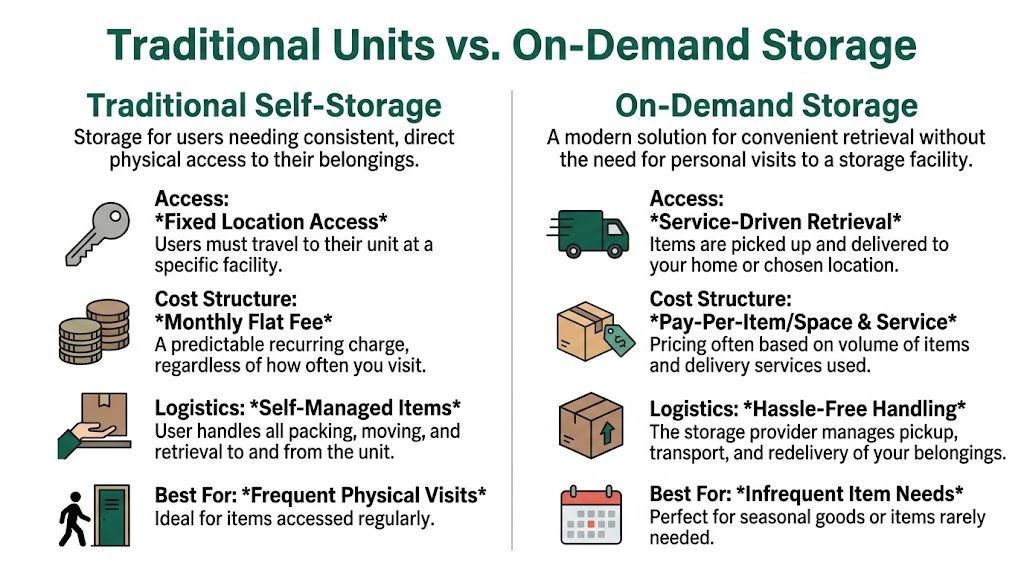
Traditional Units vs On-Demand Storage A Modern Comparison
Some people need a unit they can physically enter whenever they want. Contractors, resellers, field teams, and anyone cycling inventory may need that direct access. But a lot of renters searching 24 hours self storage near me are solving a different problem. They want reliable retrieval without wasting an evening driving across town to a roll-up door.
Two different access models
Traditional self-storage gives you place-based access. Your stuff sits in a unit at a fixed address, and you go there when you need it.
On-demand box storage gives you service-based access. Instead of visiting a facility, you request pickup and return of specific items or boxes. That model can make more sense if your stored items are seasonal, sentimental, or rarely needed, and your real frustration is the trip itself.
For people sorting move logistics, it also helps to understand how hybrid services fit into the picture. If you’re comparing relocation help plus temporary storage, this overview of moving companies with storage gives a useful read on how those bundled services differ from standard self-storage.
Here’s a side-by-side view:
| Feature | Traditional 24/7 Self-Storage | On-Demand Box Storage (e.g., Endless Storage) |
|---|---|---|
| Access | You drive to a facility and enter your unit | You request item return without visiting a storage site |
| Best use case | Frequent physical visits | Infrequent retrieval and home decluttering |
| Space model | Rent the whole unit | Store by box or item |
| Work required | You pack, haul, load, unload, and revisit | Service handles the storage flow differently |
| Friction point | Travel time, elevators, gate issues, loading | Waiting for return delivery instead of same-minute access |
A short video can help if you’re comparing modern storage workflows and how they fit apartment living or life transitions.
Which option fits your real life
Choose a traditional unit if:
- You need direct physical access often
- You store bulky equipment or inventory
- You’re in and out enough that delivery-based retrieval would slow you down
- You don’t mind managing loading, locks, and travel
Choose an on-demand model if:
- You’re storing seasonal clothes, books, keepsakes, baby gear, or decor
- You live in a dense city and hate driving to storage
- You don’t need to walk into a unit whenever you want
- You’d rather retrieve specific items than maintain a whole locker
The better question isn’t “Do I need 24-hour storage?” It’s “Do I need to visit a storage facility at all?”
If you’re weighing that second path, this explainer on how on-demand storage works lays out the model in plain terms.
The biggest mistake here is buying maximum access when what you need is minimum hassle. Plenty of apartment renters pay for a full unit because they think flexibility lives at the facility. Sometimes it lives in a storage model that removes the facility trip entirely.
Your Final Checklist and FAQ for a Quick Decision
When you’re down to two or three options, don’t overcomplicate it. The right choice usually becomes obvious once you compare access reality, safety, and the amount of effort you’re willing to carry every time you need something back.
Quick decision checklist
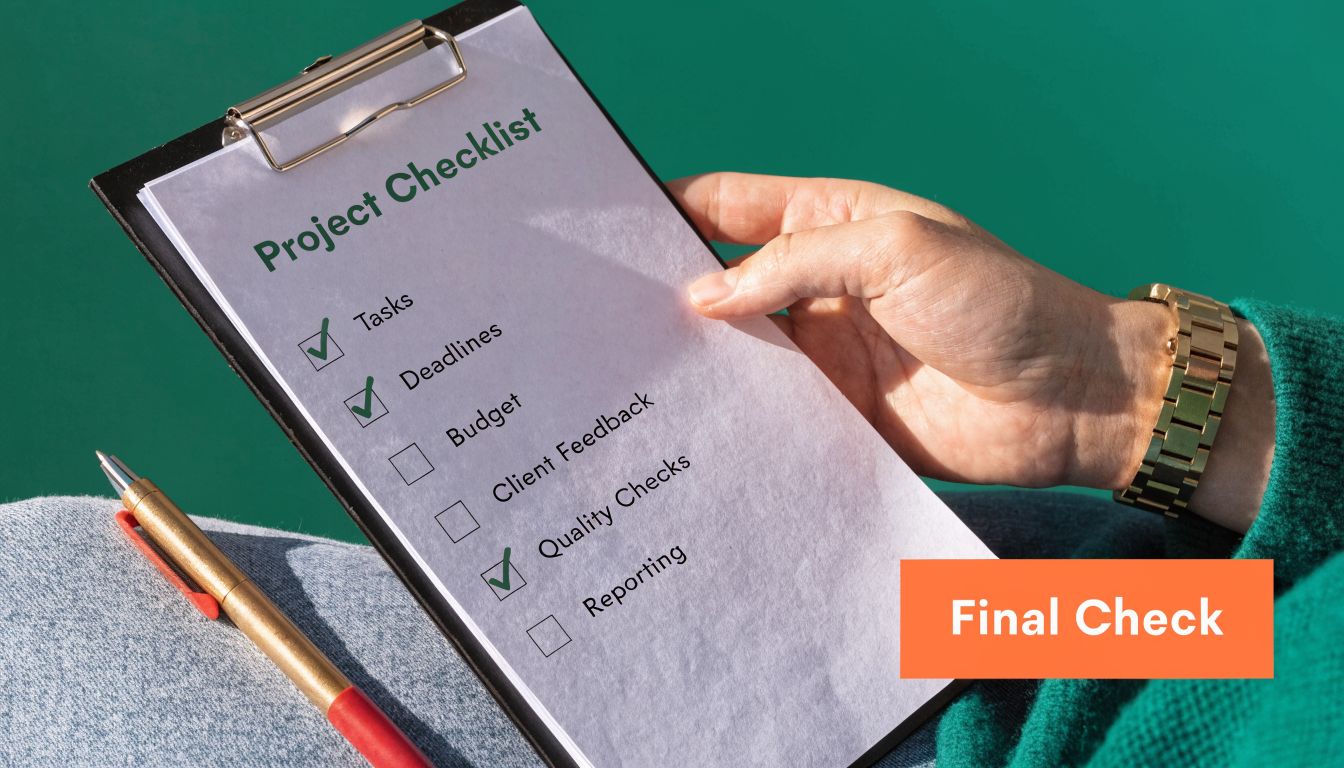
Use this before you reserve:
- Confirm actual gate hours: Ask whether you can enter at 2 AM with your code.
- Separate office from access: Don’t assume late gate entry because the brand advertises convenience.
- Verify the entry system: Keypad, app, or RFID should be clearly explained.
- Inspect the property at realistic hours: Evening visits reveal lighting and visibility issues.
- Read reviews for access problems: Search for lockouts, gate errors, and after-hours complaints.
- Check policy friction: Late fees, insurance requirements, and lock rules can change the total experience.
- Match the model to your usage: Frequent visits favor a unit. Occasional retrieval may not.
If you’re still comparing the economics of different setups, this guide to storage unit cost comparison factors is worth reviewing before you commit.
FAQ
Is 24-hour storage usually more expensive
Often, yes, but the bigger issue is value. Paying more makes sense only if you’ll use overnight access. If your visits are rare, convenience can come from a different storage model instead of longer gate hours.
What should I ask about power outages or gate failures
Ask who provides after-hours support, whether there’s a backup entry process, and whether tenants can still exit if the system goes down. A good facility should answer that without hesitation.
Can I send packages to a storage unit
Sometimes, but it depends on the operator and the site rules. Don’t assume package acceptance, signed deliveries, or third-party access are allowed.
Is climate control worth it
If you’re storing anything sensitive to heat, cold, or humidity, it usually is. Electronics, documents, instruments, media, leather, and fabrics are where people most regret choosing the cheapest unit.
If you want to avoid gate hours, facility visits, and the usual self-storage friction, Endless Storage offers a simpler alternative. You store by the box, keep everything in a climate-controlled facility, and request returns when you need them. For people decluttering small apartments, handling a move, or storing seasonal items, it can be a much cleaner fit than chasing “24-hour” access that isn’t 24/7.
Frequently Asked Questions
Unveiling the Secrets to Effortless Storage
Endless Storage is available nationwide. You pick a plan, tell us where to pickup, and we'll send a UPS van to collect, whichever state you're in.
Your shipping label will be sent to your email within a few minutes, if not instantaneously. It can also be accessed through your customer profile.
Your box will be shipped to one of our climate controlled self storage facilities in our closest self storage facility. Our manager will accept your package, notify you that your box has been received, and securely stored. Only our managers will have access to Endless Storage boxes.
Email us at admin@endless-storage.com click to live chat with us, or send us a message below.
Never! We're committed to transparent pricing with no surprises. You'll lock in your rate with no hidden fees and no long-term contracts.
Fast access guaranteed! Your boxes will arrive at your doorstep within 48 hours of requesting them back. Need to check on delivery? We provide tracking information for complete peace of mind.
Totally flexible! Store month-to-month with no long-term commitment and cancel anytime.
Everything's online! Use your account dashboard to:
• Set up automatic monthly payments
• Request box returns
• Update your address
• Order additional boxes
• Track shipments
Your boxes are insured up to $100 each. Our customer service team will help you file any necessary claims and resolve issues quickly.
Don't worry – we'll email you right away if there's a payment issue. Your items stay safe, though you may have temporary service interruption or late fees until payment is resolved.
When you request our free storage kits, you'll have 30 days to send in your boxes to activate your 3 months of free storage. Think of it like starting a gym membership – your activation window begins when you receive your kits, and your full free trial begins once you send in your first box. During your free months, you'll experience our complete storage service at no cost.
Your 30-day activation window begins when you receive your storage kits. We'll send you an email confirmation when your kits are delivered, marking the start of your activation period.
If you haven't sent any boxes for storage within your 30-day activation window, your free trial will expire and we'll begin charging the regular monthly rate of $9.99 per box. This helps ensure our storage kits go to customers who are ready to use our service.
A box costs $9.99 per month to store (plus sales tax). This price includes free shipping for standard boxes under 50 lbs. and smaller than 16"x16"x16"
Log into your Endless Storage account, locate the box you would like returned, and simply click Return My Box.
Yes, each box stored with us is insured for up to $100 throughout transit as well as the duration of storage within our facilities.
Your box will be at your doorstep within 48 hours of you requesting it back.
Store 10+ boxes? We'll pick them up for free! After your purchase, we'll contact you to schedule a convenient pickup time and arrange UPS collection.
We trust UPS with all shipments, and every box includes $100 insurance coverage. You'll receive tracking information to monitor your items' journey.
Yes! Visit any of our locations by appointment. Just bring a photo ID matching your customer profile.
For everyone's safety, we can't store hazardous materials, firearms, or perishables. All items must fit within our standard boxes.
It's easy! Order your storage kit online, and we'll ship it to you within 1-2 business days. Your shipping labels will be emailed instantly and available in your account.
We're here to help! Email us at admin@endless-storage.com, use our live chat, or send us a message through your account.
To cancel your storage service with Endless Storage, please email your cancellation request to admin@endless-storage.com. Our team will process your request within 2 business days and confirm your cancellation via email.
We understand packing takes time. However, to maintain your free trial benefits, you'll need to send at least one box within the 30-day activation window. If you need more time, you can always start with one box to activate your trial and send the rest later. You can always reach out to admin@endless-storage.com if you have any issues or concerns.
When you request our free storage kits, you're starting a 30-day window to begin using our storage service.
Important: To activate your free trial, send at least one box for storage within 30 days. If no boxes are sent within this 30-day window, a one-time $50 fee applies to cover materials and shipping costs. This fee is clearly disclosed before you sign up.
Think of it like reserving a hotel room – we're setting aside space and sending specialized packing materials for your use. The fee only applies if you request materials but don't begin storage, similar to a hotel's no-show charge.