
Putting your car away for the winter isn't just about throwing a tarp over it and hoping for the best. It’s a complete process of prepping your vehicle—whether it's a daily driver, a classic, or an RV—to survive months of cold, inactive weather. Think of it as a crucial tune-up before a long nap.
Without proper prep, you’re setting yourself up for dead batteries, bad fuel, and even rust. A solid winter storage plan is what ensures your ride is in top shape and ready to go the moment spring arrives.
Why Proper Winter Storage Is Critical
Letting a vehicle sit through a harsh winter unprepared is a gamble, and a costly one at that. It goes way beyond just keeping it clean. You're actively protecting its value, its mechanics, and its lifespan against everything the cold weather throws at it. It doesn't matter if it's a prized sports car or your summer-only daily driver; a smart storage plan is non-negotiable.
The Hidden Costs Of Neglect
The risks of skipping proper winter storage are much bigger than just a dead battery. Every part of your vehicle is vulnerable to different winter threats, and the repairs can be both expensive and a huge hassle. Ignoring these things will absolutely diminish your car's condition and its resale value.
Just think about these all-too-common headaches:
- Corrosion from Road Salt: Even parked in a driveway, leftover salt and de-icing chemicals on your car's underbody can slowly eat away at the frame, exhaust, and brake lines.
- Battery Failure: Freezing temperatures can slash a battery's power by over 50%. If it fully drains and stays that way, the battery might be permanently damaged, forcing you to buy a new one.
- Tire Damage: When a car sits in one spot for months, the tires can develop flat spots from the constant pressure. This leads to annoying vibrations when you drive and might mean you need a whole new set of tires.
- Pest Infestations: To a mouse or a squirrel, your dormant car is a five-star hotel. They love to build nests in warm engine bays and chew through wiring and upholstery, causing thousands in damage.
To see just how many things can go wrong—and how to stop them—it's worth diving into a full guide on how to winterize your vehicle.
Proper preparation is your best defense against these preventable issues. A few hours of work now can save you from a world of frustration and unexpected bills when you're ready to drive again.
This table breaks down the most common winter threats and the simple steps you can take to protect your investment.
Winter Risks vs Protective Actions
| Winter Risk | Potential Damage | Protective Storage Action |
|---|---|---|
| Cold Temperatures | Dead battery, thickened fluids, cracked hoses | Use a battery tender, top off all fluids, check for worn parts |
| Moisture & Condensation | Rust on the frame and body, moldy interior, fuel system corrosion | Store in a dry location, use a fuel stabilizer, clean interior |
| Pest Infestation | Chewed wires and upholstery, nests in engine bay and exhaust | Clean the vehicle thoroughly, block entry points like tailpipes |
| Tire Inactivity | Flat spots on tires, pressure loss | Over-inflate tires slightly or place the vehicle on jack stands |
| Road Salt Residue | Undercarriage rust, corrosion on brake lines and suspension parts | Wash and wax the car thoroughly before storing |
By tackling each of these risks head-on, you're not just storing your car—you're preserving it for the long haul.
More and more vehicle owners are catching on. The global market for vehicle storage units was valued at an impressive US$13.64 billion in 2026, and it's expected to keep growing, largely because of seasonal storage needs. People are investing in protection against expensive problems like hail damage, which can run anywhere from $2,000 to $10,000 per car.
At the end of the day, a small investment of your time now will save you from major headaches and expenses down the road. For the ultimate peace of mind, you might also want to explore the benefits of climate-controlled storage for complete protection.
Mechanical Prep for a Smooth Spring Startup
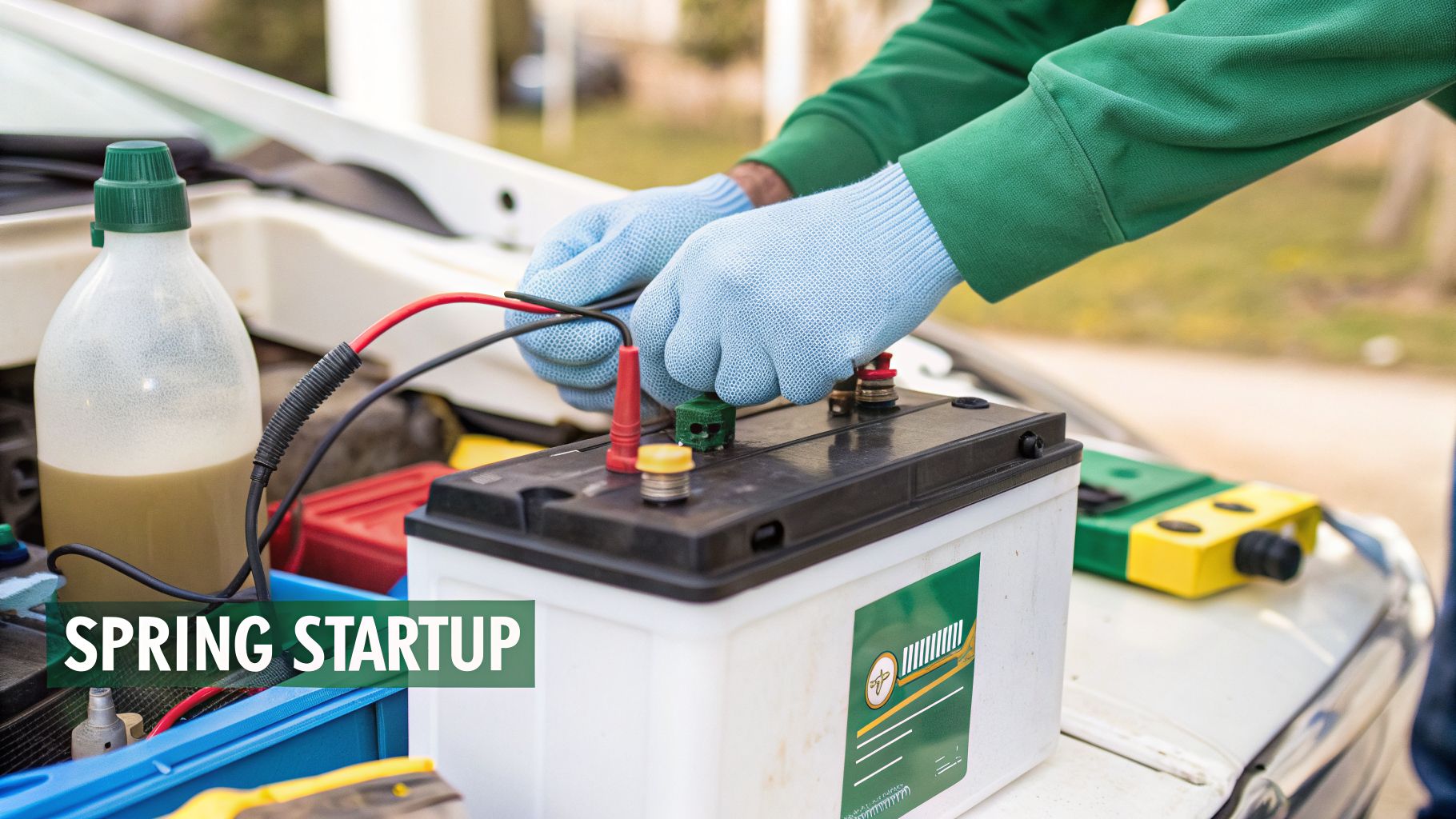
There’s nothing worse than pulling the cover off your car on that first sunny spring day, turning the key, and hearing… absolute silence. A little bit of prep work now is the single best thing you can do to avoid that headache and ensure your vehicle fires right up when you’re ready to drive again.
Think of this as putting your car into a healthy hibernation. These steps protect your engine, battery, and fuel system from the damage that can happen when a vehicle just sits for months on end.
Fortify Your Fuel and Fluids
First up, let's talk about the fuel tank. An empty tank is an invitation for trouble. As temperatures fluctuate, condensation forms inside, and that water can lead to rust in the tank and fuel lines—a repair that is never cheap.
The fix is simple: fill the tank to about 90% full. Then, pour in a quality fuel stabilizer. This little step is huge, as it stops the gasoline from breaking down and creating gummy deposits that can clog up your entire fuel system. A pro tip is to add the stabilizer right before you fill up, so the incoming gas mixes it in perfectly.
Next on the list is an oil change. Old, used engine oil is full of contaminants that can eat away at internal engine parts when left sitting for a long winter. Giving it a fresh oil and filter change ensures that only clean, protective lubricant is coating your engine's vital components. While you’re at it, top off the other fluids like coolant, brake fluid, and windshield washer fluid.
Manage Your Battery Wisely
A dead battery is easily the most common surprise waiting for owners in the spring. Car batteries naturally lose their charge over time, and cold weather just makes it happen faster. You have two solid options to make sure yours has juice when you need it.
- Use a Battery Maintainer: This is the best “set it and forget it” approach. A modern battery maintainer, often called a tender, intelligently monitors your battery and gives it a slow trickle of power only when necessary. It prevents both discharging and overcharging, making it the ideal choice if you have access to an outlet.
- Disconnect the Battery: If you're storing the car where there’s no power, disconnecting the negative battery terminal is your next best bet. This effectively stops the slow, constant drain from your car's onboard electronics. Just be prepared to reset your clock, radio stations, and other settings in the spring.
A battery maintainer is not the same as a trickle charger. A simple trickle charger can overcharge and damage a battery if left on indefinitely, while a smart maintainer is designed for long-term connection.
Protect Your Tires and Brakes
When a car sits in one spot for months, the tires can develop annoying flat spots. This happens from the constant weight pressing down on the same section of rubber, and it can cause a nasty vibration when you start driving again.
To prevent this, inflate your tires to the maximum recommended pressure printed on the tire's sidewall, which is usually about 10 PSI over what you'd use for daily driving. This helps the tire hold its proper round shape. For very long storage periods, some enthusiasts even put the vehicle on jack stands to take all weight off the tires completely.
Finally, do not engage the parking brake, especially if the storage area might get damp. Over a winter, brake pads can literally rust themselves to the rotors, seizing them in place. Instead, use a good set of wheel chocks to keep the car from moving and leave it in gear (manual) or in park (automatic). Mastering these small details is key, and you can find more in-depth advice in our guide covering 8 long-term storage tips for any situation.
A Deep Clean to Defend Against Pests and Grime
Tucking a dirty car away for the winter is a mistake you’ll only make once. It’s basically rolling out a welcome mat for pests and giving grime a free pass to ruin your paint. Things like road salt, bird droppings, and tree sap won’t just sit there—they’ll actively eat away at your clear coat. Meanwhile, any crumbs inside turn your car into a five-star resort for rodents.
A deep clean is non-negotiable. Forget a quick drive-thru wash; this requires some real elbow grease. Start with a meticulous hand wash, and don't skip the undercarriage and wheel wells where all that corrosive salt collects. After the car is bone dry, give it a good coat of high-quality carnauba or synthetic polymer wax. This isn't just for shine. That wax is a shield, protecting your paint from moisture and dust all winter long.
Eradicate Interior Temptations
With the outside protected, your next mission is to make the inside completely uninviting for critters looking for a warm place to stay. Rodents are smart; they’re searching for food and nesting material, and they can cause thousands in damage by chewing up wires and upholstery in a single season.
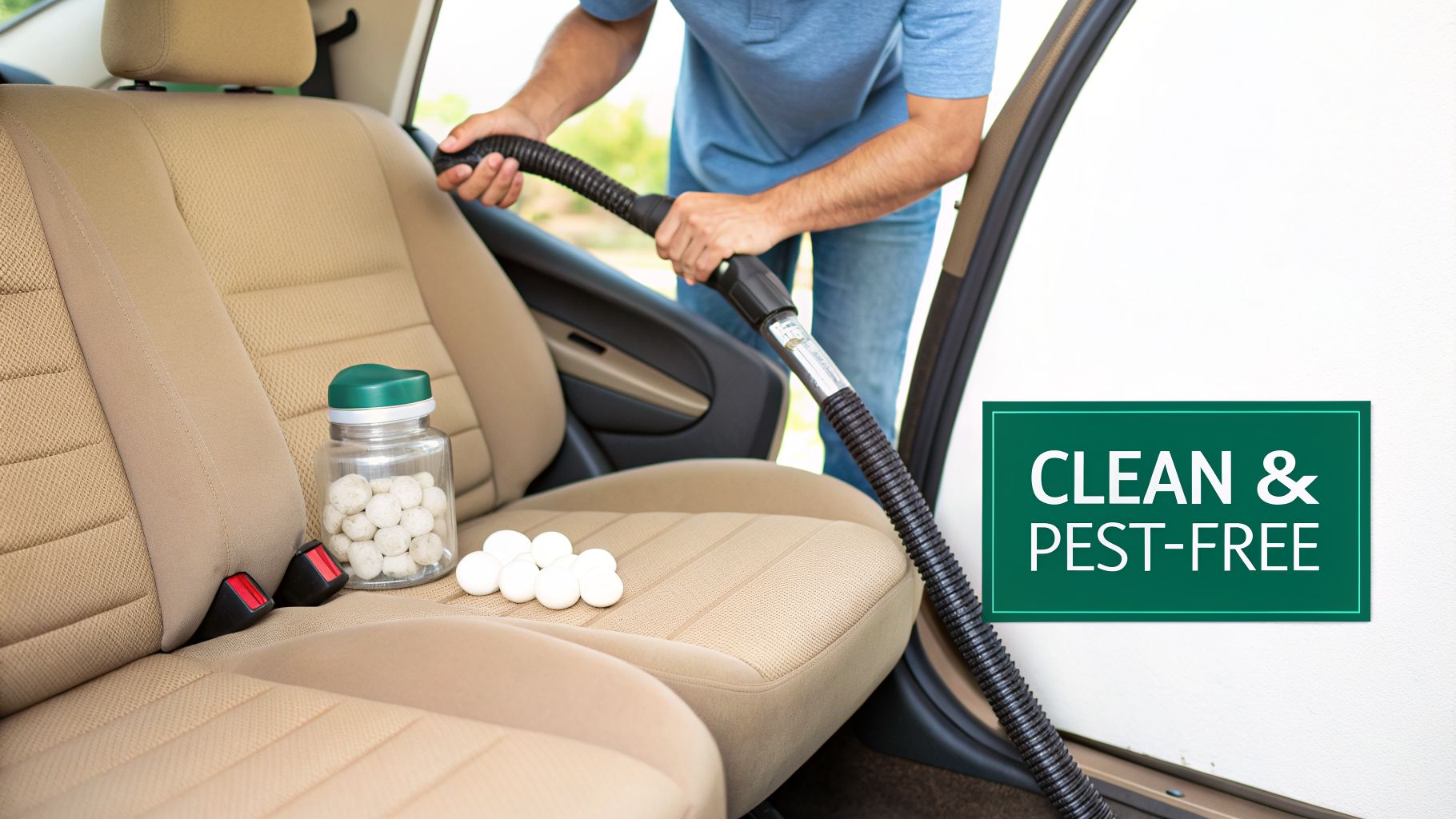
First, empty the car. Everything. Pull out the floor mats, clear the glove box, and check under every seat. That one forgotten french fry is a dinner bell for mice. Vacuum every single nook and cranny, then hit the trunk. If you've got leather, now is the perfect time to apply a good conditioner to stop it from drying out and cracking in the cold.
Leaving your car immaculate isn't just for appearances. A pristine, crumb-free interior is your single best deterrent against a pest infestation. A clean car offers no food, making it a far less attractive winter home for rodents.
Create a Pest-Proof Fortress
Now that your car is sparkling clean, it’s time to play defense. I’d strongly advise against using poison baits. The last thing you want is a mouse dying somewhere inside your dashboard, creating a smell you’ll never get rid of. The better route is humane deterrents.
These are a few tried-and-true methods that work wonders:
- Blocking Entry Points: Gently stuff some steel wool into the end of your exhaust pipe and the air intake. Rodents can’t chew through it. Just make sure to tie a bright, can't-miss reminder tag to your steering wheel so you remember to pull it out before you start the car in the spring.
- Using Natural Repellents: Critters can't stand strong smells. Soak a few cotton balls in peppermint oil and scatter them in the cabin, trunk, and engine bay (just keep them away from belts). Cedar blocks or those rodent-repellent pouches you can buy online also work great.
- Maintaining the Storage Area: Your garage or storage spot needs to be clean, too. Taking a few extra steps for essential winter pest control for a pest-free spring keeps the entire area free from unwanted guests.
Just as you're taking care of your vehicle, don't forget about other seasonal items. If you’re also packing away your cold-weather gear, take a look at our guide on how to expertly store your winter clothes.
Choosing the Right Storage Environment
Where you decide to tuck your vehicle away for the winter is just as important as how you prep it. The right spot will shield it from the worst of the weather, prevent unexpected damage, and let you rest easy until the spring thaw.
Your main choices really boil down to your own garage or a professional storage facility. Each has its pros and cons, and the best one for you depends on your car, your space, and your budget.
If you have a garage, that's often the most convenient and wallet-friendly option. You've got immediate access and total control over who comes and goes. The downside? Most home garages aren't climate-controlled. This exposes your car to wild temperature swings and moisture, especially if you're constantly pulling a snow-covered daily driver in and out.
Professional Storage Facilities
When a home garage just isn’t in the cards, a professional storage facility is your next best move. These places are built for one thing: keeping vehicles safe during their off-season. They usually have a few different service tiers, so you can find a match for your car's needs and your budget.
As you look around, you'll likely run into these common options:
- Outdoor Covered Parking: Think of this as a big step up from your driveway. A roof keeps direct snow and hail off your car, but it's still exposed to the cold, wind, and humidity. It's a solid, budget-conscious choice for a more rugged vehicle.
- Indoor Unheated Storage: This gets your vehicle completely out of the elements. It's safe from sun, snow, and wind, and far more secure than an outdoor spot. While it’s not heated, the enclosed space acts as a buffer against the most brutal temperature drops.
- Climate-Controlled Storage: This is the gold standard. These units maintain a steady temperature and humidity level, typically keeping things above freezing and below 60% humidity. For a classic, exotic, or high-value car, this is really the only way to go. It guards against the silent damage from moisture, like rust, mold, and electronic gremlins. To see if it's the right fit, take a look at our guide on the benefits of a climate-controlled storage unit.
Picking the right professional storage isn't just about finding a spot; it's a strategic move you need to make early. Demand goes through the roof as winter gets closer.
Why You Need to Book Early
Don't wait for the first frost to start your search. The market for seasonal vehicle storage gets incredibly tight, fast.
Just look at the RV and boat storage world, which is a great parallel. In regions with tough winters, facilities are often booked solid by October. With monthly rates jumping from $149 to $279, every available spot is prime real estate. In fact, a detailed report on storage market trends found that over 30% of RV owners have trouble finding storage because of this rush.
The exact same thing happens with winter vehicle storage for cars. The best spots—especially the secure, climate-controlled units—are always the first to fill up.
Start your hunt in late summer or early fall. This gives you the best selection and saves you from the last-minute scramble for a leftover spot you’re not happy with. A little planning now goes a long way to securing a safe winter home for your vehicle.
Smart Storage for Your Automotive Gear
Getting your car tucked away for the winter is a great feeling, but it often kicks off another headache: what do you do with all the gear that comes with it? Suddenly, your garage is overflowing, and if you live in a condo or apartment, finding a spot for summer tires, roof racks, or boxes of detailing supplies is a genuine puzzle.
This common problem pushes many people toward a traditional self-storage unit. But that often means paying for a big, half-empty room you don't really need. It just feels wasteful, especially when you only have a few bulky items.
A Modern Fix for Automotive Accessories
Instead of renting an entire room, a more flexible and budget-friendly option is by-the-box storage. For anyone struggling with limited space, this service is a total game-changer. Just imagine having your pricey summer performance tires or boxes of spare parts picked up right from your door, stored safely, and brought back whenever you need them.
This approach is perfect for vehicle-related gear because you only pay for the exact space you use. It helps you reclaim your home, keeps your equipment protected in a professional setting, and makes the whole winter storage shuffle a lot simpler.
This decision tree gives you a quick visual on the main choices for vehicle storage, from your own garage to various professional facilities.
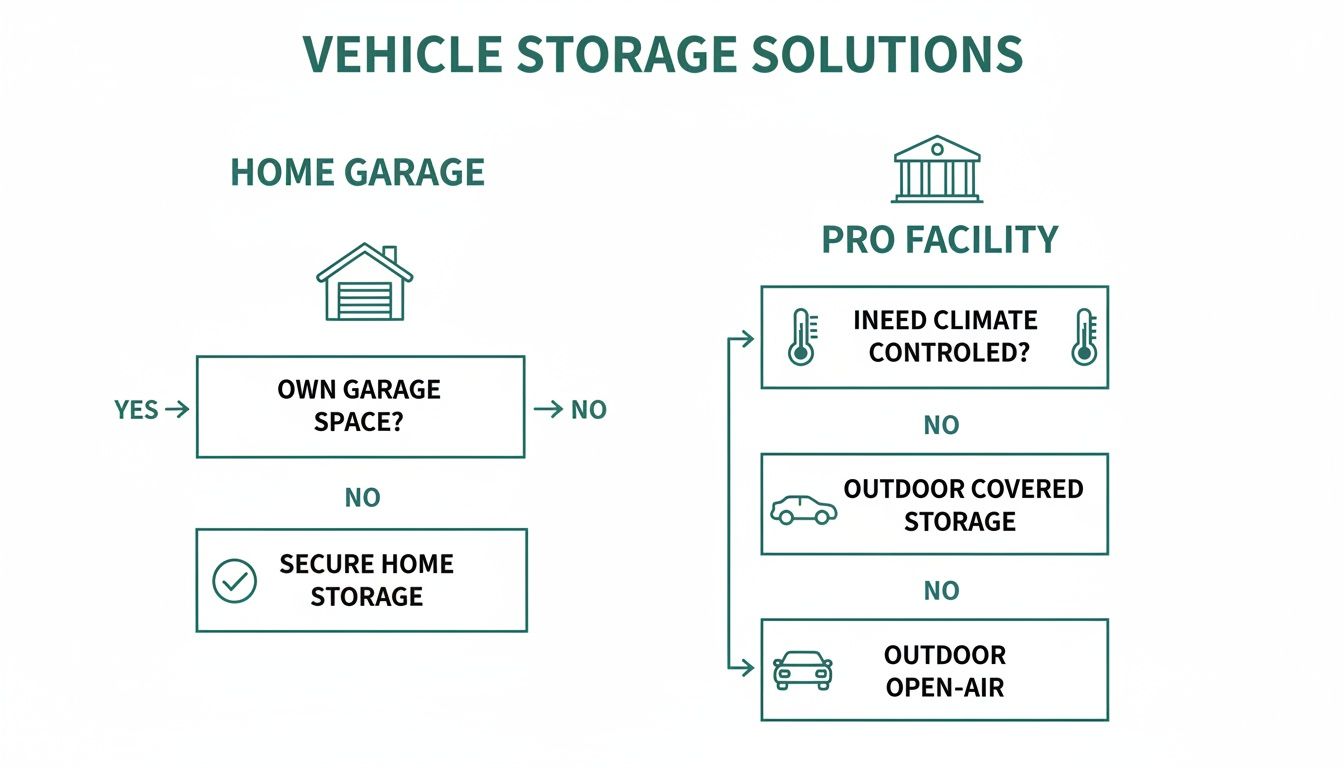
As the chart shows, while a home garage is the most direct route, professional facilities can offer specialized protection like climate control, which is crucial for keeping sensitive items in top condition.
How On-Demand Storage Works
This modern take on storage gets rid of the usual hassles. If you’re an urban dweller in a small apartment, you’re no longer stuck wrestling with an oversized unit. Services like Endless Storage offer a smarter alternative: store your car gear, spare parts, or accessories by the box. For instance, plans can start as low as $7.99 per month for two or more boxes, often including free shipping kits and 48-hour returns. This declutters your life and protects your investment, tapping into a growing demand for hassle-free, month-to-month solutions. In fact, market analysis shows that flexible options like these are getting more and more popular.
This type of service makes everything easier:
- Convenience: The company sends you uniform, heavy-duty boxes. You pack them with your gear—anything from spare brake pads and filters to buffing pads and car covers.
- Pickup and Delivery: Once you’re all packed, just schedule a pickup. Your items are then taken to a secure, often climate-controlled, facility. When spring rolls around, you simply ask for them back.
- Organization: Every box is tracked, which creates a handy digital inventory of your items. You always know exactly what you have in storage and where it is.
This method is perfect for those high-value items you want to keep safe but just don't have room for. Think of it as a personal valet service for your automotive accessories, making sure they’re protected from theft, pests, and damaging temperature swings.
For anyone prepping their car for its long winter nap, this service is the missing piece of the puzzle. It takes care of all the "extra stuff" that comes with seasonal car ownership, keeping your living space clear and your gear in perfect shape. To see how this works for different kinds of items, check out our guide on using an equipment storage service.
Your Winter Storage Questions Answered
Even after you’ve done all the prep work, a few nagging questions and persistent myths about winter vehicle storage can still cause some uncertainty. Let's clear the air on a few of the most common ones.
Getting these last few details right is the difference between a smooth spring startup and a frustrating, expensive headache.
Do I Really Need a Fuel Stabilizer for a Few Months?
Absolutely, and this is one corner you just can't afford to cut. Modern gasoline can start to break down in as little as 30 days. As it degrades, it leaves behind a sticky, varnish-like gunk that clogs up fuel lines, filters, and injectors.
On top of that, a half-empty gas tank is an open invitation for condensation. That water mixes with your fuel, which is never a good thing. A simple bottle of fuel stabilizer handles both problems, potentially saving you from a fuel system repair bill that could easily run into the hundreds.
Can I Just Use a Plastic Tarp as a Car Cover?
Please don’t. Wrapping your car in a non-breathable plastic tarp is one of the worst things you can do to the paint. Tarps trap moisture right against the vehicle’s body, basically creating a mini-greenhouse perfect for mildew and even rust.
That trapped moisture can cause real, permanent damage to your clear coat, leaving behind hazy spots or bubbles. You need to invest in a proper, multi-layer car cover designed to be both water-resistant and breathable. It lets moisture out while keeping dust, dings, and scratches away.
A purpose-built car cover is a small investment that protects the single most valuable aspect of your car's appearance—its paint.
Should I Start My Car Periodically During Storage?
This is probably the most stubborn myth out there, and it often causes more harm than good. Just starting your car to let it idle for a few minutes is a bad idea for a handful of reasons:
- It creates condensation. The engine and exhaust never get hot enough to burn off the moisture that naturally builds up inside, which can speed up internal corrosion.
- It drains the battery. A quick idle doesn't give the alternator nearly enough time to recharge the massive amount of power it took to start the cold engine in the first place.
- It doesn't circulate fluids properly. Key parts in the transmission and differential only get fully lubricated when the car is actually driven, not when it's just sitting there idling.
It’s far better to prep the car correctly and just leave it be. Trust that your pre-storage fluid changes, fuel stabilizer, and a good battery maintainer are doing their jobs. This "set it and forget it" method is the professional standard for a reason.
Ready to declutter and protect your automotive gear without the hassle of a traditional storage unit? Endless Storage offers a modern, by-the-box solution with free pickup, climate-controlled facilities, and on-demand returns. Get your personalized storage plan today and experience storage made simple.
Frequently Asked Questions
Unveiling the Secrets to Effortless Storage
Endless Storage is available nationwide. You pick a plan, tell us where to pickup, and we'll send a UPS van to collect, whichever state you're in.
Your shipping label will be sent to your email within a few minutes, if not instantaneously. It can also be accessed through your customer profile.
Your box will be shipped to one of our climate controlled self storage facilities in our closest self storage facility. Our manager will accept your package, notify you that your box has been received, and securely stored. Only our managers will have access to Endless Storage boxes.
Email us at admin@endless-storage.com click to live chat with us, or send us a message below.
Never! We're committed to transparent pricing with no surprises. You'll lock in your rate with no hidden fees and no long-term contracts.
Fast access guaranteed! Your boxes will arrive at your doorstep within 48 hours of requesting them back. Need to check on delivery? We provide tracking information for complete peace of mind.
Totally flexible! Store month-to-month with no long-term commitment and cancel anytime.
Everything's online! Use your account dashboard to:
• Set up automatic monthly payments
• Request box returns
• Update your address
• Order additional boxes
• Track shipments
Your boxes are insured up to $100 each. Our customer service team will help you file any necessary claims and resolve issues quickly.
Don't worry – we'll email you right away if there's a payment issue. Your items stay safe, though you may have temporary service interruption or late fees until payment is resolved.
When you request our free storage kits, you'll have 30 days to send in your boxes to activate your 3 months of free storage. Think of it like starting a gym membership – your activation window begins when you receive your kits, and your full free trial begins once you send in your first box. During your free months, you'll experience our complete storage service at no cost.
Your 30-day activation window begins when you receive your storage kits. We'll send you an email confirmation when your kits are delivered, marking the start of your activation period.
If you haven't sent any boxes for storage within your 30-day activation window, your free trial will expire and we'll begin charging the regular monthly rate of $9.99 per box. This helps ensure our storage kits go to customers who are ready to use our service.
A box costs $9.99 per month to store (plus sales tax). This price includes free shipping for standard boxes under 50 lbs. and smaller than 16"x16"x16"
Log into your Endless Storage account, locate the box you would like returned, and simply click Return My Box.
Yes, each box stored with us is insured for up to $100 throughout transit as well as the duration of storage within our facilities.
Your box will be at your doorstep within 48 hours of you requesting it back.
Store 10+ boxes? We'll pick them up for free! After your purchase, we'll contact you to schedule a convenient pickup time and arrange UPS collection.
We trust UPS with all shipments, and every box includes $100 insurance coverage. You'll receive tracking information to monitor your items' journey.
Yes! Visit any of our locations by appointment. Just bring a photo ID matching your customer profile.
For everyone's safety, we can't store hazardous materials, firearms, or perishables. All items must fit within our standard boxes.
It's easy! Order your storage kit online, and we'll ship it to you within 1-2 business days. Your shipping labels will be emailed instantly and available in your account.
We're here to help! Email us at admin@endless-storage.com, use our live chat, or send us a message through your account.
To cancel your storage service with Endless Storage, please email your cancellation request to admin@endless-storage.com. Our team will process your request within 2 business days and confirm your cancellation via email.
We understand packing takes time. However, to maintain your free trial benefits, you'll need to send at least one box within the 30-day activation window. If you need more time, you can always start with one box to activate your trial and send the rest later. You can always reach out to admin@endless-storage.com if you have any issues or concerns.
When you request our free storage kits, you're starting a 30-day window to begin using our storage service.
Important: To activate your free trial, send at least one box for storage within 30 days. If no boxes are sent within this 30-day window, a one-time $50 fee applies to cover materials and shipping costs. This fee is clearly disclosed before you sign up.
Think of it like reserving a hotel room – we're setting aside space and sending specialized packing materials for your use. The fee only applies if you request materials but don't begin storage, similar to a hotel's no-show charge.