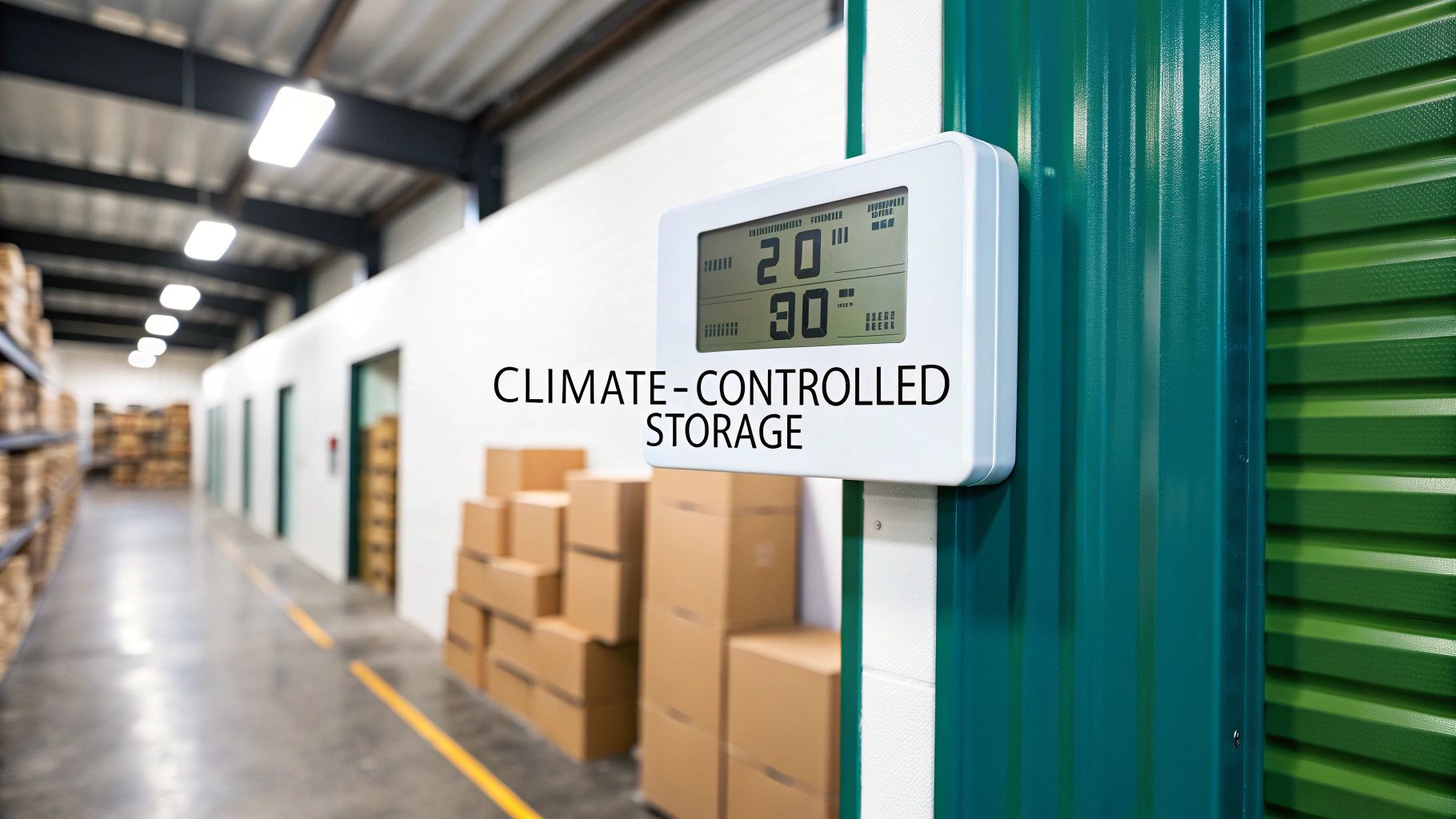
Think of storage with climate control as creating a protective bubble for your belongings. It's a carefully managed space designed to shield your sensitive items from the wild swings in temperature and humidity that can cause irreversible damage like mold, rust, and warping. Essentially, it keeps the indoor environment stable, acting as a critical line of defense for your valuables.
The Essential Guide to Climate-Controlled Storage
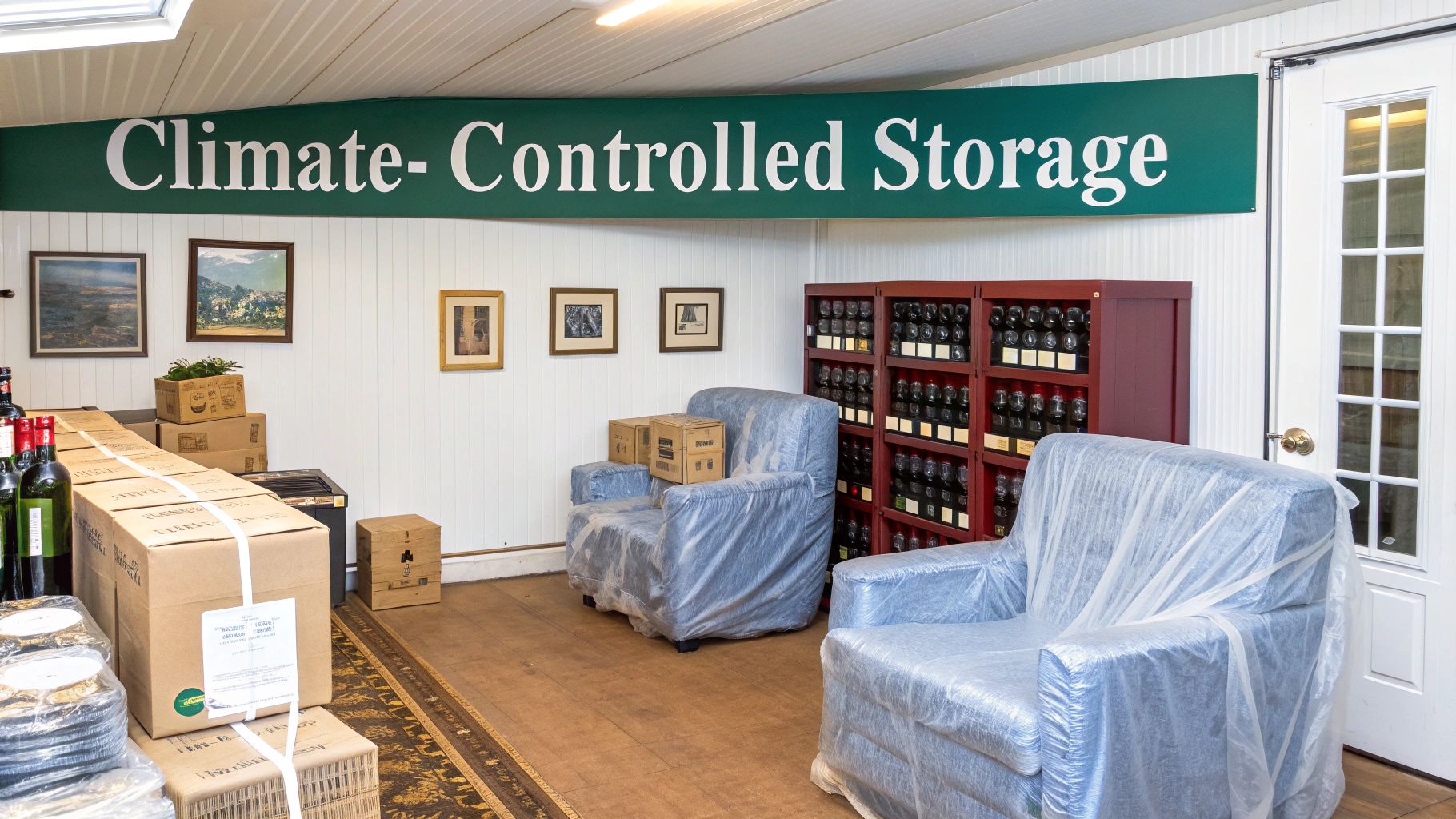
Putting your items in a standard storage unit is a bit like leaving them in an outdoor shed or an uninsulated garage. They’re left to face the full brunt of Mother Nature—scorching summer heat, freezing winter cold, and the damp, heavy air that often comes with both. For a lot of things, that kind of exposure is a disaster waiting to happen.
Picture a high-end wine cellar. Its job isn't just to keep the wine cool; it maintains a very specific, unwavering temperature and humidity to preserve the quality and taste. Climate-controlled storage applies that exact same idea to your belongings. We're not just talking about turning on the AC when it's hot. It’s about creating a consistent, stable atmosphere all year long.
Why Stability Is the Key
The real culprit behind damaged items isn't just extreme heat or cold—it's the constant change. When temperatures jump up and down, materials expand and contract. This cycle puts enormous stress on your possessions, leading to serious damage over time.
- Wood Furniture: Can crack, split, or warp as it soaks up and then releases moisture from the air.
- Electronics: Humidity can corrode delicate internal parts, while intense cold can make them brittle.
- Documents and Photos: Paper gets yellow and fragile, and ink can fade or run in damp conditions.
- Textiles and Upholstery: Become a perfect breeding ground for mold and mildew once humidity climbs above 50%.
Climate control stops these threats in their tracks by regulating the environment. Most climate-controlled spaces keep the temperature between 55°F and 80°F and manage humidity levels carefully. This creates a balanced setting where your belongings can rest safely, whether it's for a few months or several years. You can dig deeper by checking out our guide on what climate-controlled storage is and how it works.
In essence, climate-controlled storage isn't an unnecessary luxury—it's an insurance policy. It provides peace of mind, ensuring that the items you store come out in the same condition they went in, regardless of the weather outside.
This makes it a must-have for anyone storing items with significant monetary or sentimental value. Whether it’s a family heirloom, a cherished vinyl record collection, or expensive business inventory, choosing the right environment is the single most important decision you can make. It’s about preserving your memories and investments, not just putting them in a box.
The Hidden Dangers Climate Control Protects Against
Choosing storage with climate control is way more than a simple upgrade—it's your best defense against the silent destroyers that can wreck your most treasured belongings. A standard storage unit is basically a garage, leaving your stuff exposed to the full force of every season. The real damage doesn’t happen from one hot day or a sudden cold snap; it’s the relentless cycle of change happening behind that closed roll-up door.
Picture a beautiful antique wooden dresser. When it's humid, the wood fibers soak up moisture and swell. Then, a dry spell hits, and the wood shrinks back down. This constant expanding and contracting puts a ton of stress on the material, eventually causing ugly, permanent cracks and warping. The same thing can happen to musical instruments, artwork frames, and family heirlooms.
The Threat of Humidity and Moisture
Moisture is probably the sneakiest and most destructive force your belongings will face in storage. It quietly attacks all sorts of materials, causing damage that’s often impossible to fix. When humidity levels stay above 50%, you’ve created the perfect breeding ground for mold and mildew.
- Fabric and Upholstery: Your sofa, mattress, and clothes can end up with that musty smell and nasty mold stains that are nearly impossible to get out.
- Documents and Photos: Irreplaceable family photos and important records can turn yellow, become brittle, or even get stuck together in a clump.
- Electronics: Moisture gets inside TVs, computers, and sound systems, corroding the delicate circuits and leading to glitches or total failure.
Mold and mildew are notorious for ruining valuable items. For some solid advice on how to effectively prevent mold growth, this is a really helpful resource. A climate-controlled unit actively manages humidity, keeping it at a safe level to stop these problems before they even start.
The Impact of Extreme Temperatures
Wild swings in temperature bring their own set of dangers. An unregulated storage unit can easily top 100°F in the summer and dip below freezing in the winter, creating a hostile environment for anything sensitive. This constant fluctuation is a huge reason why the climate-controlled storage market has blown up recently.
A stable environment is a safe environment. By eliminating extreme temperature fluctuations and managing humidity, climate-controlled storage acts as a shield, preserving the integrity, value, and usability of your belongings for the long term.
Demand for this kind of protection is soaring, especially in cities where people need to shield their things from harsh weather. Globally, this market was valued at a massive USD 12.5 billion and is expected to hit USD 23.37 billion by 2033, all thanks to more people living in urban areas.
The peace of mind you get from knowing your things are safe is priceless. Whether it’s a valuable collection, expensive electronics, or just a box of cherished memories, a controlled environment is the best protection against these hidden threats. It’s an investment to make sure your items come out of storage looking just as good as when they went in. To learn more, check out our complete guide on the key benefits of climate-controlled storage.
Identifying Items That Require Climate Protection
Deciding whether you need storage with climate control really boils down to one simple question: what are you storing? Some things can tough out the seasonal highs and lows of a standard unit, but other items are much more sensitive.
It helps to think of it like your garden plants. Some are hardy enough to stay on the patio all winter, while others need to be brought inside at the first sign of frost. To make the right call, you need to do a mental walkthrough of your home and take an honest inventory. This isn't just about monetary value; sentimental items like old family photos or your grandmother's rocking chair are priceless. The goal is to separate the tough stuff from the fragile stuff.
Furniture Made From Natural Materials
Wooden and leather furniture are often the first casualties of extreme temperature and humidity swings. Because they're natural, porous materials, they react to their environment—kind of like a sponge soaking up water.
- Wooden Furniture: When it’s humid, wood absorbs moisture and swells up. When the air is dry, it releases that moisture and shrinks. This constant cycle of expanding and contracting is what causes joints to crack, wood to split, and surfaces to warp. It can permanently ruin anything from an antique dresser to a dining room table.
- Leather and Upholstery: Extreme cold can make leather brittle enough to crack. On the flip side, high humidity is an open invitation for mold and mildew to grow on both leather and fabric upholstery, leading to discoloration, musty smells, and irreversible decay.
Electronics and Media Collections
Your gadgets and media collections are packed with delicate components that were never meant to survive the conditions of an uninsulated garage or attic. Their internal parts are extremely vulnerable to damage from both moisture and temperature extremes.
Extreme cold can drain batteries for good and make plastic parts so brittle they shatter. High heat can literally melt sensitive components, but humidity is the real villain, causing corrosion on circuit boards and metal connections that leads to permanent failure. This applies to a whole range of items:
- Televisions, computers, and stereo systems
- Vinyl records, which can warp into unplayable Frisbees in the summer heat
- Cassette tapes, CDs, and DVDs, all of which can degrade and become useless over time
A good rule of thumb is: if you wouldn't feel comfortable leaving an item in your car for a year, it probably needs climate protection. This simple test helps put the risks of a standard unit into perspective.
Important Documents and Sentimental Items
Anything paper-based is incredibly fragile and can be ruined by even a little bit of moisture. Important documents, family photos, and books can quickly become yellowed, brittle, and even stick together in damp air. The ink on old photos can fade or bleed, erasing precious memories forever.
The diagram below shows the main threats that climate control stops in their tracks, protecting your belongings from the most common types of damage.
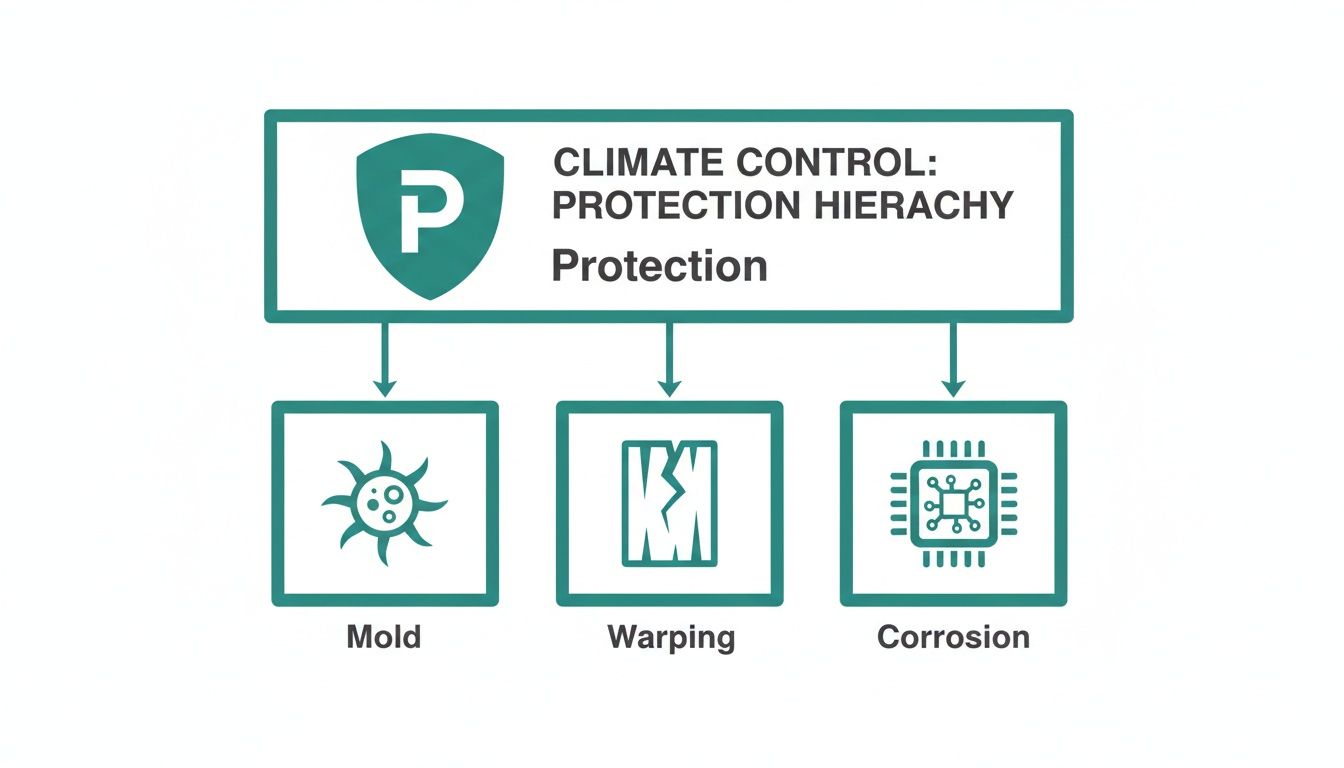
As you can see, a single stable environment protects your things from a whole cascade of potential problems, from mold growing on your clothes to the wood on your favorite chair warping beyond repair.
Collectibles and Special Belongings
Collections—whether art, wine, or antiques—almost always need stable conditions to maintain their integrity and value. Fluctuations in temperature and humidity can be absolutely disastrous for these sensitive items.
- Artwork: Canvases can slacken in humidity and tighten in dry air, causing the paint to crack and flake right off.
- Wine: Needs a very specific, cool temperature range to age correctly. Too much heat will "cook" the wine, spoiling its flavor entirely.
- Musical Instruments: Things like guitars, pianos, and violins are often made from delicate woods that can warp or crack, completely changing their sound and making them unplayable.
To help you decide, here's a quick reference guide for some common household items.
Which Items Need Climate-Controlled Storage vs Standard Storage
This table should give you a good starting point, but always err on the side of caution with items that are valuable or irreplaceable.
For a more detailed breakdown, check out our comprehensive list of what items need climate-controlled storage. By taking a few minutes to think about what you're storing, you can confidently decide if the extra protection of a climate-controlled environment is the right investment for you.
Comparing Standard and Climate-Controlled Storage Options
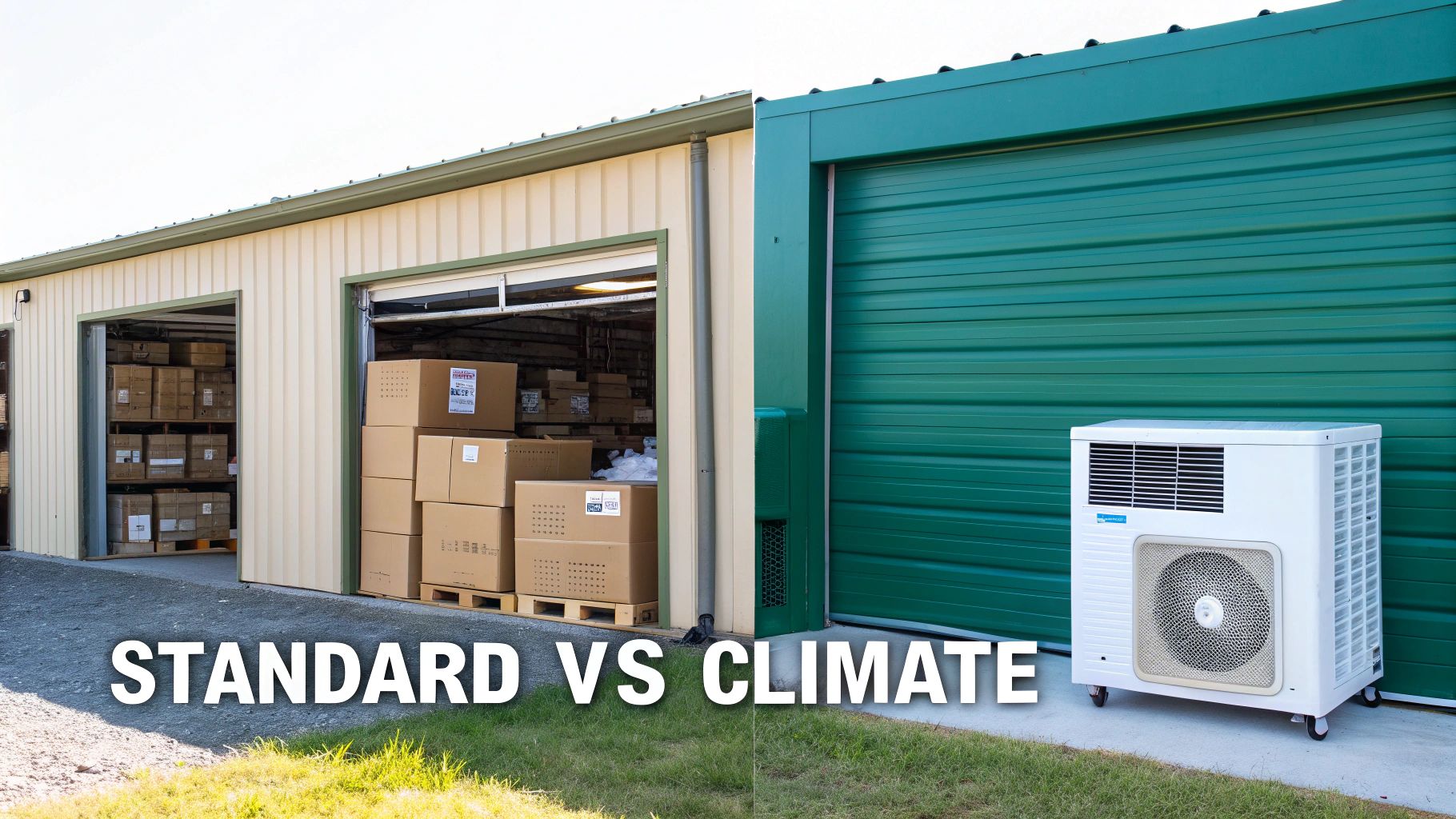
When you’re looking for a storage solution, the big question usually boils down to one thing: standard or climate-controlled? It helps to think of a standard, drive-up unit as a detached garage. It’s a simple, uninsulated metal box that will keep your stuff dry from the rain and out of the wind, but it won’t do much to fight off the brutal summer heat or a winter deep freeze.
On the other hand, a unit with storage with climate control is more like an extra room inside your house. It’s an indoor space where the temperature and humidity are actively managed all year long, creating a stable, protective bubble for your more sensitive belongings. This isn't just about comfort; it's about preservation.
The Core Differences at a Glance
The right choice really depends on what you plan to store and for how long. A standard unit is probably fine for tough items like garden tools or your plastic patio furniture. But for anything valuable, sentimental, or delicate, it's a huge gamble.
- Environmental Shield: A standard unit is passive. Its internal temperature can skyrocket 30 degrees higher than the outside air in summer or plunge below freezing in winter. In contrast, a climate-controlled unit actively heats and cools the air to keep everything in a safe, consistent range.
- Moisture Management: Standard units offer zero protection against humidity—the silent killer that brings mold, mildew, and rust. Climate control actively pulls moisture from the air, keeping humidity low enough to stop these problems before they ever start.
People are catching on to these environmental risks, which is why the climate-controlled storage market is booming. It's now the fastest-growing category in self-storage, with demand easily outpacing traditional drive-up units. These spaces typically hold temperatures between 55-80°F and humidity at 30-50%, protecting everything from your vinyl record collection to leather furniture.
The decision isn't just basic versus premium. It's about risk assessment—weighing the upfront cost against the potential cost of irreversible damage to your irreplaceable belongings.
A New Generation of Climate-Controlled Storage
While traditional climate-controlled units offer fantastic protection, they aren’t without their own headaches. They can be expensive, and you’re often stuck renting a large, fixed space you might not even fill. This is where modern, more flexible solutions are changing the game and reframing the choice as "old versus new."
To get a full picture of all the choices out there, it helps to look through a complete self-storage options handbook for some broader context. Innovative services now deliver the premium protection of climate control but on a more practical, per-item basis. Instead of leasing an entire room, you can store individual boxes in a secure, climate-controlled facility and even have them picked up and delivered.
This model is perfect for city dwellers, people on the move, or anyone just trying to make the most of limited space. You get the peace of mind that comes with top-tier protection without wasting money on empty square footage. It’s a smarter approach that gives you all the benefits of climate control without the old-school drawbacks. For a better breakdown of the financial side, check out our guide on climate-controlled storage costs and see how these newer options can work for your budget.
How to Choose the Right Storage Solution
Making the final call between a standard unit and one with storage with climate control really comes down to your unique situation. It’s not about finding a single "best" option, but about matching the right solution to what you actually need to store.
To get it right, you'll need to weigh a few key factors. Think of it as a quick risk assessment for your stuff. A little bit of honest evaluation about what you're storing, where you live, and for how long will point you toward the smartest choice for both your belongings and your wallet.
Evaluate Your Personal Storage Needs
Before you sign any dotted lines, ask yourself three simple but critical questions. Your answers will tell you pretty quickly whether the extra shield of climate control is a smart investment or just an extra cost.
- What's the real value of my items? Think about both the price tag and the sentimental value. That antique leather sofa or a box of irreplaceable family photos carries a much higher risk than a set of plastic patio chairs.
- What's my local climate like? If you live somewhere with brutal summers, freezing winters, or sticky humidity, the threat from the environment is real and constant. A standard unit in a humid city is a perfect breeding ground for mold, while one in the desert can literally bake your belongings.
- How long will I be storing my items? For a short-term move during a mild season, you might be fine with a standard unit. But if you're looking at long-term storage that spans different seasons, the cumulative effect of those temperature swings can cause some serious damage.
The longer your items sit in storage, the more exposed they are to environmental stress. For anything stored longer than a few months, especially through changing seasons, climate control stops being a "nice-to-have" and becomes essential for keeping your valuables safe.
Embracing Modern, Flexible Storage Solutions
The old-school storage model often presented a tough choice: either pay a premium for a big, climate-controlled unit you might not even fill, or gamble with your valuables in a standard one. Thankfully, there’s a new approach that perfectly aligns premium protection with the way we live now.
Services like Endless Storage have completely changed the game by offering all the benefits of storage with climate control, but on a flexible, per-box basis. This model hits directly on the pain points for city dwellers, people on the move, and anyone just trying to reclaim a little space at home.
The demand for smarter storage is undeniable. The U.S. self-storage market recently saw transaction volumes climb to USD 5.9 billion, with climate-controlled units seeing rate hikes in most major cities. This trend highlights a growing awareness that climate control can prevent up to 90% of common damages like mildew and cracking. It’s a perfect fit for people who move often or millennials looking to declutter. You can dig deeper into these self-storage market trends and what they mean for consumers.
The Advantages of Box-by-Box Climate Control
This pay-for-what-you-use model has some clear advantages that make top-tier protection both accessible and practical for just about anyone.
- Cost-Effectiveness: Why rent an entire room when you only need to store a few boxes? With per-box pricing, you’re never throwing money away on empty space. It’s a budget-friendly way to get the best protection.
- Unmatched Convenience: The whole ordeal of renting a truck, hauling boxes, and finding your way through a huge facility is gone. At-home pickup and delivery are total game-changers, especially if you live in a small apartment or don’t have a car.
- Guaranteed Protection: Every single box is kept in a secure, climate-controlled environment. This ensures your most sensitive items get the protection they need without any compromises.
This is the kind of smart solution that just makes sense for a busy, modern lifestyle. It delivers the security of traditional climate control with the flexibility and ease that people expect today. To help narrow down your options even more, take a look at our guide on how to find the best self-storage facility for you.
Common Questions About Climate-Controlled Storage
Even after getting the rundown, it’s totally normal to have a few questions before you commit to storage with climate control. We get it. To make sure you’re confident in your choice, we’ve put together answers to the questions we hear the most.
Think of this as the final check-in, where we tackle the practical details—like temperature ranges, cost, and whether it’s truly necessary for your stuff. Let's clear up any last bits of uncertainty.
What Is the Ideal Temperature and Humidity Range for Most Items?
Most climate-controlled facilities aim to create an environment that feels just like a comfortable, well-maintained home. The industry standard keeps the temperature between 55°F and 80°F (that’s about 13°C to 26°C).
But temperature is only half the story. Humidity is just as critical, and it’s typically kept between 30% and 50%. This range is the sweet spot for stopping common problems in their tracks, like mold, warping wood, rusting metal, and the slow decay of papers and fabrics. It’s like hitting pause on aging, no matter the weather outside.
Do I Really Need Climate Control for Short-Term Storage?
That really depends on two things: what you're storing and when you're storing it. If you’re putting away sensitive items—think electronics, wooden furniture, or important papers—during a season with wild weather, then yes. A humid summer or a freezing winter can do damage fast, making climate control a smart move even for a short time.
A few weeks of intense humidity is more than enough time for mildew to start growing or for wood to begin warping. For hardier items or during mild seasons, you might be just fine with a standard unit.
But if we're being honest, for total peace of mind with things you can't replace, choosing climate control is always the safest bet, no matter how long you're storing.
Is Climate-Controlled Storage Significantly More Expensive?
It used to be. Traditionally, you could expect to pay 25% to 50% more for a climate-controlled unit, which can definitely put a dent in your budget. But modern storage models are flipping that old-school pricing on its head.
Services that let you pay on a per-box basis change the whole game. You only pay for the exact space you’re using, which often makes it a much more affordable and sensible choice than renting an entire unit you can’t even fill. You get the top-tier protection of storage with climate control without the premium price tag of a traditional locker, making it a smart option for just about everyone.
Making the Smart Choice for Your Belongings
Choosing the right storage really just comes down to protecting what matters to you. We've walked through how storage with climate control is basically an insurance policy against the silent destroyers of extreme temperatures and humidity. It's more than just renting space; it's a smart, proactive investment in keeping your things in great shape.
Think about the real risks here. A standard unit is no different than an uninsulated garage. It exposes your items to wild temperature swings that can crack wood, corrode electronics, and invite mold into your favorite fabrics. The worst part? The damage happens slowly and quietly, and by the time you notice, it's often too late.
Recapping the Essentials
By now, you should have a good sense of which of your belongings are in the "at-risk" category. Let's quickly recap what we covered:
- Vulnerable Materials: Things like wood, leather, and fabrics are magnets for damage. They can warp, crack, and grow mildew in environments that aren't regulated.
- Sensitive Electronics: Those delicate internal parts can be fried by moisture and extreme temperature swings. It’s a permanent kind of damage.
- Irreplaceable Items: We're talking about family photos, important papers, and sentimental heirlooms. These deserve the best protection possible to stop them from fading, yellowing, and falling apart.
When you choose a stable, managed environment, you’re not just stashing your items away—you're actively preserving their condition, function, and value for the long haul.
Choosing storage with climate control is a deliberate act of preservation. It's the difference between hoping your items survive and ensuring they do, providing you with invaluable peace of mind.
The Modern Solution for Smart Storage
The great news is that getting this level of protection doesn't mean you have to rent a huge, expensive locker you only half-fill. The storage world has caught up with modern needs, especially for those of us in cities or constantly on the move.
Newer, innovative services have completely changed the game. They give you the best of both worlds: top-notch climate protection without the old-school hassle. With a box-by-box model, you only pay for the exact space you're using, which makes premium storage surprisingly affordable and incredibly efficient.
This approach is a total game-changer. Imagine someone picking up your items right from your door, storing them in a perfectly controlled facility, and bringing them back whenever you need them. It's the intelligent choice for anyone who values their belongings and their time. You get the robust defense of a climate-controlled environment without any of the logistical headaches.
When it comes right down to it, the choice is pretty clear. For anything with real monetary or sentimental value, a stable environment is the only way to guarantee it comes back to you in the same condition you left it. You now know what’s at stake and have discovered the smart, convenient solutions out there. You're fully equipped to make the best possible decision for your valuables.
Ready to protect your belongings with the ultimate convenience? At Endless Storage, we offer nationwide, box-by-box climate-controlled storage with at-home pickup and delivery. Secure your items today at Endless Storage.
Frequently Asked Questions
Unveiling the Secrets to Effortless Storage
Endless Storage is available nationwide. You pick a plan, tell us where to pickup, and we'll send a UPS van to collect, whichever state you're in.
Your shipping label will be sent to your email within a few minutes, if not instantaneously. It can also be accessed through your customer profile.
Your box will be shipped to one of our climate controlled self storage facilities in our closest self storage facility. Our manager will accept your package, notify you that your box has been received, and securely stored. Only our managers will have access to Endless Storage boxes.
Email us at admin@endless-storage.com click to live chat with us, or send us a message below.
Never! We're committed to transparent pricing with no surprises. You'll lock in your rate with no hidden fees and no long-term contracts.
Fast access guaranteed! Your boxes will arrive at your doorstep within 48 hours of requesting them back. Need to check on delivery? We provide tracking information for complete peace of mind.
Totally flexible! Store month-to-month with no long-term commitment and cancel anytime.
Everything's online! Use your account dashboard to:
• Set up automatic monthly payments
• Request box returns
• Update your address
• Order additional boxes
• Track shipments
Your boxes are insured up to $100 each. Our customer service team will help you file any necessary claims and resolve issues quickly.
Don't worry – we'll email you right away if there's a payment issue. Your items stay safe, though you may have temporary service interruption or late fees until payment is resolved.
When you request our free storage kits, you'll have 30 days to send in your boxes to activate your 3 months of free storage. Think of it like starting a gym membership – your activation window begins when you receive your kits, and your full free trial begins once you send in your first box. During your free months, you'll experience our complete storage service at no cost.
Your 30-day activation window begins when you receive your storage kits. We'll send you an email confirmation when your kits are delivered, marking the start of your activation period.
If you haven't sent any boxes for storage within your 30-day activation window, your free trial will expire and we'll begin charging the regular monthly rate of $9.99 per box. This helps ensure our storage kits go to customers who are ready to use our service.
A box costs $9.99 per month to store (plus sales tax). This price includes free shipping for standard boxes under 50 lbs. and smaller than 16"x16"x16"
Log into your Endless Storage account, locate the box you would like returned, and simply click Return My Box.
Yes, each box stored with us is insured for up to $100 throughout transit as well as the duration of storage within our facilities.
Your box will be at your doorstep within 48 hours of you requesting it back.
Store 10+ boxes? We'll pick them up for free! After your purchase, we'll contact you to schedule a convenient pickup time and arrange UPS collection.
We trust UPS with all shipments, and every box includes $100 insurance coverage. You'll receive tracking information to monitor your items' journey.
Yes! Visit any of our locations by appointment. Just bring a photo ID matching your customer profile.
For everyone's safety, we can't store hazardous materials, firearms, or perishables. All items must fit within our standard boxes.
It's easy! Order your storage kit online, and we'll ship it to you within 1-2 business days. Your shipping labels will be emailed instantly and available in your account.
We're here to help! Email us at admin@endless-storage.com, use our live chat, or send us a message through your account.
To cancel your storage service with Endless Storage, please email your cancellation request to admin@endless-storage.com. Our team will process your request within 2 business days and confirm your cancellation via email.
We understand packing takes time. However, to maintain your free trial benefits, you'll need to send at least one box within the 30-day activation window. If you need more time, you can always start with one box to activate your trial and send the rest later. You can always reach out to admin@endless-storage.com if you have any issues or concerns.
When you request our free storage kits, you're starting a 30-day window to begin using our storage service.
Important: To activate your free trial, send at least one box for storage within 30 days. If no boxes are sent within this 30-day window, a one-time $50 fee applies to cover materials and shipping costs. This fee is clearly disclosed before you sign up.
Think of it like reserving a hotel room – we're setting aside space and sending specialized packing materials for your use. The fee only applies if you request materials but don't begin storage, similar to a hotel's no-show charge.