

Coordinating storage and movers isn't just a tactic for massive, cross-country moves anymore. It's become a go-to strategy for anyone looking to make their relocation smoother and less chaotic. This approach can turn a single, high-stress moving day into a manageable, phased process, giving you breathing room when dealing with closing date gaps, downsizing, or even home renovations.
Why Combining Storage and Movers is a Smarter Strategy
We’ve all been there—that feeling of pure chaos on moving day. You're trying to pack the last few boxes, direct the moving crew, and clean the old place all at once. This is exactly where bringing storage into the mix changes the game completely.
Instead of a frantic one-day scramble, you create a multi-stage plan. It lets you separate what you need right away from everything you can deal with later. This isn't just about renting a random unit; it's about making storage a core part of your moving logistics right from the start.
Picture this: you're staging your home to sell. Weeks before the open house, you can send all the extra furniture, seasonal clothes, and personal clutter to storage. The result is a clean, inviting space that helps buyers imagine themselves living there. It's a small investment in storage that can lead to a faster sale and maybe even a better offer. Or, if there's a gap between selling your old home and getting the keys to the new one, this combination provides the perfect bridge.
The Modern Approach to Moving Logistics
The real secret is to stop thinking of your belongings as one giant pile of boxes. Instead, break everything down into three distinct categories. This mental shift is the key to coordinating storage and movers like a pro.
- Immediate Essentials: These are the non-negotiables that go directly to your new home. Think daily-use furniture, kitchen basics, a week's worth of clothes, and that critical "first-night" box with toiletries, phone chargers, and coffee supplies.
- Long-Term Storage: This pile is for everything you won't need for a few months (or longer). We're talking seasonal decorations, sentimental items you can't part with, or furniture that doesn’t quite fit the new place but you want to hang onto.
- Donations and Discards: This is all the stuff you sort through and get rid of before a single box gets packed. Cutting down on volume at this stage saves you money on both moving and storage.
By breaking your move into distinct phases, you can slash the pressure on moving day by up to 50%. You're no longer just moving boxes—you're executing a smart, organized plan that saves you time, energy, and a whole lot of stress.
This strategy gets even better when you use modern services designed for this exact purpose. For instance, a flexible storage pickup service lets you schedule a separate pickup for your storage items before the main moving day even happens. This keeps everything completely separate and is the foundation for a much smoother, more organized transition.
Building Your Moving and Storage Timeline
A great move comes down to one thing: timing. Leave things to the last minute, and you’re signing up for stress, forgotten heirlooms, and costs you didn't see coming. But with a clear, week-by-week timeline, you can turn the chaos of juggling movers and storage into a surprisingly calm, managed process. Think of it less like a to-do list and more like a game plan that puts you in control.
The secret is starting early. Give yourself about eight weeks. That’s the sweet spot. It gives you enough breathing room to properly research movers, declutter without feeling rushed, and book services before the good ones are all taken. This is especially true during the peak moving season from May to September, when everyone else is trying to book the same trucks and storage slots you are.
Your Eight-Week Countdown Begins
With eight weeks to go, your job is research. Start calling around and get quotes from at least three different moving companies and three storage providers. This is also the perfect time to get ruthless with your stuff. Make four piles: keep, store, donate, and toss. Trust me, the less you have to move, the happier your back and your wallet will be.
Fast forward to six weeks out—this is when you book it. Make your final choice on a mover and lock in your moving day. Then, and this is crucial, schedule a separate, earlier pickup day for all the things you plan on storing. Doing this one thing completely changes the game, preventing a massive logistical headache on the day of the actual move.
Pro Tip: Stagger your pickups. Seriously. Schedule the storage company to come the week before your main move. This gets all the non-essential stuff out of the way, making it way easier for the movers to navigate your home and cutting your moving-day stress in half.
This timeline gives you a bird's-eye view of how these phases fit together for a modern, organized move.

As you can see, tackling decluttering and home staging before the big move makes for a much smoother transition.
To help you stay on track, we’ve put together a simple week-by-week checklist.
8-Week Moving And Storage Coordination Checklist
Following this timeline helps break down what feels like a massive project into small, manageable steps.
Fine-Tuning The Final Month
With four weeks to go, it's packing time. Start with the boxes you've marked for storage—things like seasonal clothes, holiday decorations, and that extra armchair you love but have no room for yet. Pack them, seal them, and label them clearly. Now is also a good time to start a master inventory list that details which boxes are going into storage versus which are coming with you to the new place. For an even more detailed breakdown, you can grab our complete moving checklist and timeline.
In the final two weeks, it's all about packing everything else. Make sure to pack a "first-night" box with essentials like toiletries, phone chargers, medications, and a fresh change of clothes. You'll thank yourself later. Call to confirm all the dates and arrival windows with both your storage provider and your movers. The last week is for final cleaning, packing the last few items, and watching your carefully laid plan come to life.
More and more people are catching on to this combined approach. The global self-storage and moving services market was valued at around $48.10 billion in 2019 and is on track to hit $58.12 billion by 2029. That growth tells you one thing: people are realizing just how much value there is in a strategic, less stressful approach to relocation.
Smarter Packing for a Split Destination Move

Packing for a typical A-to-B move is one thing. But when you’re sending belongings to two different destinations—your new home and a storage facility—you need a more deliberate approach. A smart packing strategy is the only thing standing between an organized move and total chaos.
Without a solid plan, you risk your winter coats ending up in your new closet in July while your coffee maker gets locked away in storage. Trust me, it happens more than you'd think.
The simplest, most effective technique I’ve seen is a color-coded system. It’s a visual shortcut that instantly tells everyone exactly where a box is headed.
- Green Tape: Assign one color, like green, to everything going directly to your new home. Use this colored tape to seal the boxes, making sure it’s visible on at least two sides.
- Blue Tape: Pick another distinct color, such as blue, for all boxes destined for storage. This clear separation is a total game-changer on moving day.
When the storage and movers teams arrive, you can just point and say, "Everything with green tape stays on the truck for the new house; blue tape goes with the storage pickup." This removes all the guesswork and dramatically cuts down the risk of mix-ups.
Protecting Your Stored Belongings
Items bound for storage need more than just a different color of tape. These boxes might sit for months or even years, so they need extra protection against dust, moisture, and temperature swings. This is not the place to skimp on materials.
Invest in sturdy, new boxes instead of grabbing used ones from the grocery store. For your fragile items, be generous with packing paper or bubble wrap. And for clothing or textiles, consider vacuum-sealed bags to save a ton of space and keep out any dampness. A huge part of smarter packing is mastering the art of protecting your valuable furniture from damage during the move and while it's stored away.
Here's a pro tip for long-term storage: toss a few silica gel packets or moisture absorbers into boxes with sensitive stuff like electronics, documents, or leather goods. It’s a tiny step that can prevent major humidity damage over time.
The Power of a Digital Inventory
The final piece of your packing strategy is creating a simple digital inventory. Think of this as your secret weapon for finding something specific months down the road. You don’t need fancy software—a basic spreadsheet or even a note-taking app on your phone works perfectly.
As you pack each box heading to storage, just follow this quick process:
- Number Each Box: Write a unique number on each box (e.g., Storage-01, Storage-02).
- Log the Contents: In your spreadsheet, create a row for that box number and list the key items inside. Be descriptive enough to be helpful. "Winter Coats (John's parka, kids' snow pants)" is way better than just "Clothes."
- Snap a Photo (Optional): For an extra layer of detail, take a quick picture of the box's contents before you seal it up. You can often link the photo right in your spreadsheet.
This inventory system, paired with a solid labeling method, completely changes how you manage your stored items. For more on this, check out our detailed post on how to label boxes for moving.
When you need that specific box of holiday decorations in December, there's no more guessing. You can just look at your inventory, find the exact box number, and request its return with total confidence.
How to Choose Services and Control Your Budget
Trying to sort through all the options for storage and movers can make your head spin. You’re hit with a ton of different services and price tags, and it’s easy to get overwhelmed. But here’s a pro tip: staying on budget isn't just about grabbing the cheapest quote you can find. It’s really about picking the right type of service for what you actually need.
Making the wrong call at the start is a classic mistake that leads to surprise fees, scheduling nightmares, and a whole lot of unnecessary stress down the road.
First things first, you need to understand the basic difference between a traditional full-service mover and a modern valet storage company. They’re designed to solve different problems, so their costs are structured in totally different ways.
A full-service mover is the whole nine yards—they pack up your entire house, load the truck, drive it to your new place, and unpack everything. It’s the all-in-one choice for big, complicated moves where you’d rather pay to have someone else handle the heavy lifting. Valet storage (sometimes called storage-by-the-box) is different. It's more of an à la carte service. You pack specific boxes, they pick them up for storage, and then bring them back whenever you need them. This is a lifesaver for decluttering or if you have a gap between your old and new lease.
Vetting Your Vendors Like a Pro
Once you've figured out what kind of service you’re after, it's time to get some detailed quotes. Never, ever just go with the first company you talk to. A great way to compare apples to apples is to get familiar with a solid moving company estimate template. It helps you look past the final price and really see what you're paying for.
When you start calling around, have a list of questions ready to go. The way they answer will tell you a lot about how transparent and reliable they are.
- What’s really included in the base price? Get specific. Ask about fuel surcharges, travel time, and any extra fees for things like stairs or long carries from the truck to your door.
- How does your insurance and valuation coverage work? You need to know the difference between basic liability (which is often just pennies per pound) and full-value protection.
- Can I get to my stuff in storage? If you can, what's the process? Are there fees? How much notice do you have to give?
- Do you have blackout dates or charge more during peak season? A little-known secret is that scheduling your move in the off-season (usually October to April) can save you a surprising amount of money.
I’ve seen it a hundred times: someone picks a mover with a low initial quote, only to get slammed with extra charges for packing materials or a weekend move. Suddenly, that "cheaper" option costs more than the all-inclusive quote they passed on.
Smart Strategies for Saving Money
Keeping your moving and storage budget in check is about more than just haggling over quotes. The global moving services market is expected to hit a staggering USD 111.23 billion by 2025, and in a market that big, there are always ways for a smart consumer to save.
Honestly, one of the best ways to cut costs is simply to move and store less stuff. Before you pack a single box, be absolutely ruthless with decluttering. Sell it, donate it, or toss it if you haven't used it in the last year. Every single item you get rid of is one less thing you have to pay someone to move or store.
If you want to get into the nitty-gritty of how different services compare financially, check out our moving company cost comparison for a detailed breakdown. When you combine the right service choice with some smart cost-cutting moves, you can build a plan that works for your logistics and your wallet.
Getting Through the Move and Handling Retrievals
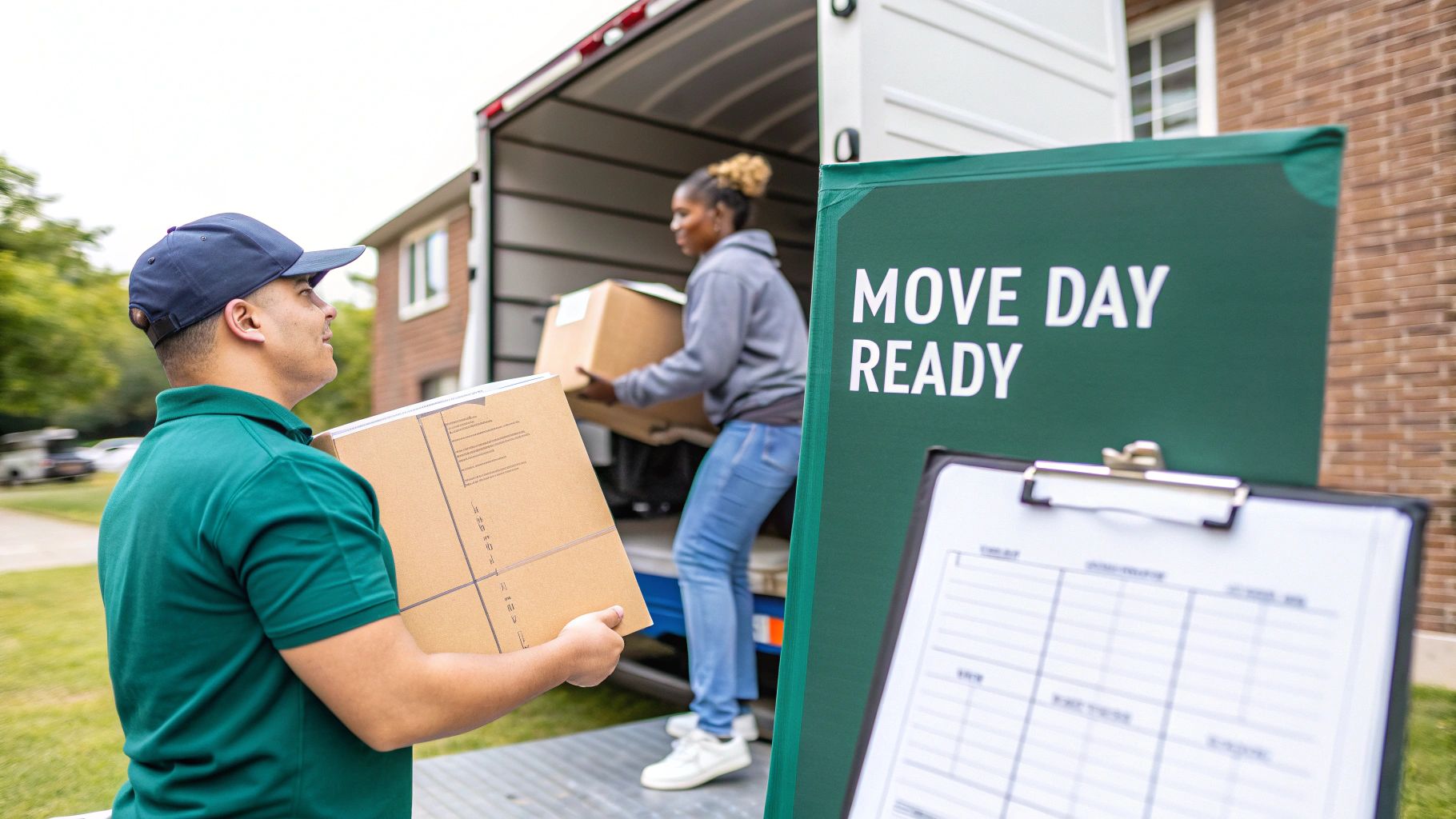
After all that planning and packing, moving day boils down to one thing: execution. Your color-coded labels and digital inventory are no longer just organizational tools; they're your command center. They give you the power to direct both the storage and movers teams with confidence, making sure the handoff is as smooth as possible.
When the crews show up, take a minute to walk the lead mover through your system. A simple explanation like, "Green tape stays on this truck for the new place, blue tape is for the storage pickup," can prevent a world of confusion and costly mistakes. This quick briefing transforms you from a stressed-out observer into the move's project manager.
Your inventory list becomes the final source of truth. As boxes get loaded onto the trucks, you can check them off, one by one. It’s a small step, but it provides incredible peace of mind knowing everything is accounted for before the doors close.
How Valet Storage Pickups Work
Compared to the controlled chaos of the main move, a valet or by-the-box storage pickup is refreshingly simple. The team usually arrives with a clear list of exactly what they’re there to collect. Because you’ve already packed, labeled, and staged these boxes, their job is incredibly fast.
They'll scan each box, logging it into their system right before they load it up. You will almost always get a digital receipt or confirmation on the spot, which officially starts your storage term. It’s a streamlined process that minimizes disruption on an already hectic day.
The real magic of valet storage isn't just the pickup—it's what happens weeks or months later. Instead of driving to a storage unit and digging through stacks of boxes, you just log into your online portal to see everything you stored, neatly cataloged.
The Art of Getting Your Stuff Back Seamlessly
This is where your digital inventory truly pays off. When you need something back, you don't have to rack your brain trying to remember which box you put it in. Just pull up your spreadsheet, find the right box number (like Storage-07 for your winter coats), and request its return.
Most modern services, valet storage included, will handle the entire delivery for you. If you want a deeper dive into how it works, our guide on self-storage delivery breaks down exactly what you can expect. This kind of "on-demand" access is a game-changer compared to old-school storage.
When the delivery arrives, inspect your items right away. Check the boxes for any obvious external damage before you even sign for them. Once you get them open, cross-reference the contents with your inventory list to make sure everything is there and in the same condition. If you notice any problems, take photos immediately and contact the company to start a claims process. Acting fast is the key to getting it resolved.
Got Questions About Movers and Storage? You're Not Alone.
Even the most meticulously planned move has its curveballs. When you're trying to juggle movers and storage, a few key questions always seem to pop up. Getting the right answers ahead of time is the secret to sidestepping common headaches and keeping your move on track.
One of the first dilemmas people face is a classic chicken-or-egg problem: book the movers first, or the storage? My advice is always to lock in your moving company first. This is especially true if you’re moving during the peak season from May to September, when their calendars fill up fast. Once you have that critical date secured, scheduling a more flexible storage pickup around it becomes a whole lot easier.
What’s the Deal with Insurance Coverage?
This is a big one, and it trips a lot of people up. It’s a common (and costly) assumption that your movers' insurance will cover your items once they’re in a storage unit. In reality, that's almost never the case.
A moving company’s liability, which they often call valuation, typically ends the second your belongings are unloaded at the storage facility. That can leave a serious gap where your stuff is completely unprotected.
Before you do anything else, pull out your homeowner's or renter's insurance policy and see what it says about personal property stored off-site. Some policies offer limited coverage, but many don't cover it at all. If you find yourself in that boat, you'll need a dedicated storage insurance policy. Our guide to insuring items in storage walks you through all the details.
Don't leave this to chance. Most reputable storage companies offer their own insurance plans, and they're often the simplest way to make sure you're covered from day one. Confirm your coverage before a single box is picked up.
Is It Cheaper to Use the Mover’s Storage?
It can be really tempting to just go with the storage-in-transit (SIT) option your moving company offers. It feels convenient, right? And for super short-term needs—think less than 90 days—it can be.
But for anything longer than that, a dedicated self-storage or valet storage service is almost always the more budget-friendly choice. My advice? Always get separate quotes. It’s the only way to see the real cost and avoid paying a premium for convenience.
This whole idea of bundling services is getting more popular, especially on the corporate side of things. The corporate relocation market is set to hit a massive $32.47 billion by 2032, largely because businesses want these integrated moving and storage solutions. You can read more about these commercial moving trends on clancymoving.com. For the rest of us, it just goes to show how valuable it is when your moving and storage services can work together seamlessly.
Ready to simplify your move with a smarter storage solution? With Endless Storage, you get by-the-box storage with pickup and delivery right from your door, starting at just $7.99 per box. Visit https://www.endless-storage.com to see how easy it can be.
Frequently Asked Questions
Unveiling the Secrets to Effortless Storage
Endless Storage is available nationwide. You pick a plan, tell us where to pickup, and we'll send a UPS van to collect, whichever state you're in.
Your shipping label will be sent to your email within a few minutes, if not instantaneously. It can also be accessed through your customer profile.
Your box will be shipped to one of our climate controlled self storage facilities in our closest self storage facility. Our manager will accept your package, notify you that your box has been received, and securely stored. Only our managers will have access to Endless Storage boxes.
Email us at admin@endless-storage.com click to live chat with us, or send us a message below.
Never! We're committed to transparent pricing with no surprises. You'll lock in your rate with no hidden fees and no long-term contracts.
Fast access guaranteed! Your boxes will arrive at your doorstep within 48 hours of requesting them back. Need to check on delivery? We provide tracking information for complete peace of mind.
Totally flexible! Store month-to-month with no long-term commitment and cancel anytime.
Everything's online! Use your account dashboard to:
• Set up automatic monthly payments
• Request box returns
• Update your address
• Order additional boxes
• Track shipments
Your boxes are insured up to $100 each. Our customer service team will help you file any necessary claims and resolve issues quickly.
Don't worry – we'll email you right away if there's a payment issue. Your items stay safe, though you may have temporary service interruption or late fees until payment is resolved.
When you request our free storage kits, you'll have 30 days to send in your boxes to activate your 3 months of free storage. Think of it like starting a gym membership – your activation window begins when you receive your kits, and your full free trial begins once you send in your first box. During your free months, you'll experience our complete storage service at no cost.
Your 30-day activation window begins when you receive your storage kits. We'll send you an email confirmation when your kits are delivered, marking the start of your activation period.
If you haven't sent any boxes for storage within your 30-day activation window, your free trial will expire and we'll begin charging the regular monthly rate of $9.99 per box. This helps ensure our storage kits go to customers who are ready to use our service.
A box costs $9.99 per month to store (plus sales tax). This price includes free shipping for standard boxes under 50 lbs. and smaller than 16"x16"x16"
Log into your Endless Storage account, locate the box you would like returned, and simply click Return My Box.
Yes, each box stored with us is insured for up to $100 throughout transit as well as the duration of storage within our facilities.
Your box will be at your doorstep within 48 hours of you requesting it back.
Store 10+ boxes? We'll pick them up for free! After your purchase, we'll contact you to schedule a convenient pickup time and arrange UPS collection.
We trust UPS with all shipments, and every box includes $100 insurance coverage. You'll receive tracking information to monitor your items' journey.
Yes! Visit any of our locations by appointment. Just bring a photo ID matching your customer profile.
For everyone's safety, we can't store hazardous materials, firearms, or perishables. All items must fit within our standard boxes.
It's easy! Order your storage kit online, and we'll ship it to you within 1-2 business days. Your shipping labels will be emailed instantly and available in your account.
We're here to help! Email us at admin@endless-storage.com, use our live chat, or send us a message through your account.
To cancel your storage service with Endless Storage, please email your cancellation request to admin@endless-storage.com. Our team will process your request within 2 business days and confirm your cancellation via email.
We understand packing takes time. However, to maintain your free trial benefits, you'll need to send at least one box within the 30-day activation window. If you need more time, you can always start with one box to activate your trial and send the rest later. You can always reach out to admin@endless-storage.com if you have any issues or concerns.
When you request our free storage kits, you're starting a 30-day window to begin using our storage service.
Important: To activate your free trial, send at least one box for storage within 30 days. If no boxes are sent within this 30-day window, a one-time $50 fee applies to cover materials and shipping costs. This fee is clearly disclosed before you sign up.
Think of it like reserving a hotel room – we're setting aside space and sending specialized packing materials for your use. The fee only applies if you request materials but don't begin storage, similar to a hotel's no-show charge.