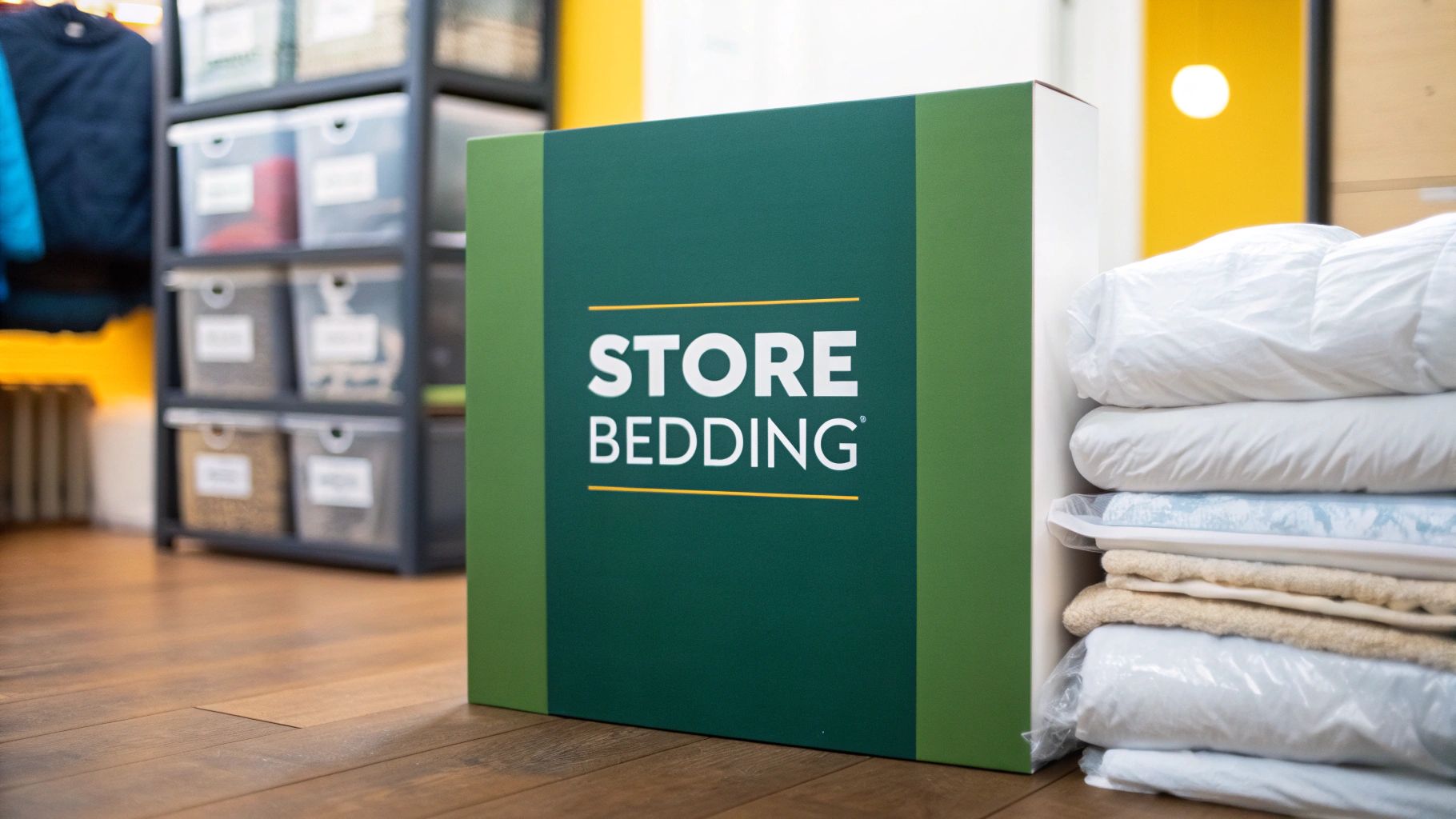
The secret to storing extra bedding is pretty simple: always start with clean, completely dry linens. From there, it's all about choosing containers that shield them from dust and moisture, and finding a cool, dark spot to tuck them away. Following these rules is the best way to prevent musty smells and fabric damage, ensuring your bedding is always fresh and guest-ready.
Why Proper Bedding Storage Matters
Let's be honest, figuring out where to put those extra comforters and sheet sets without them taking over an entire closet is a universal struggle. And it's not just a few items—people are investing in quality linens, with the home bedding market valued at a massive USD 113.49 billion in 2024.
Considering the average North American household has three to five extra bedding sets for each bed, having a smart storage strategy is more critical than ever. You can dig into more details on these bedding market trends and projections if you're curious.
Without a solid plan, you're setting yourself up for some common headaches:
- Musty Odors: This is almost always caused by trapped moisture. Even a slightly damp comforter will come out of storage smelling stale.
- Pest Damage: Moths and other pests are drawn to the natural oils or tiny food particles left on unwashed bedding.
- Discoloration: Storing linens in direct sunlight or sealed in the wrong kind of plastic can cause them to yellow over time.
- Wasted Space: We all know how bulky comforters and quilts can be. Without an efficient packing method, they’ll eat up precious real estate in your closets and shelves.
This simple decision tree lays out the foundational steps for getting it right every single time.
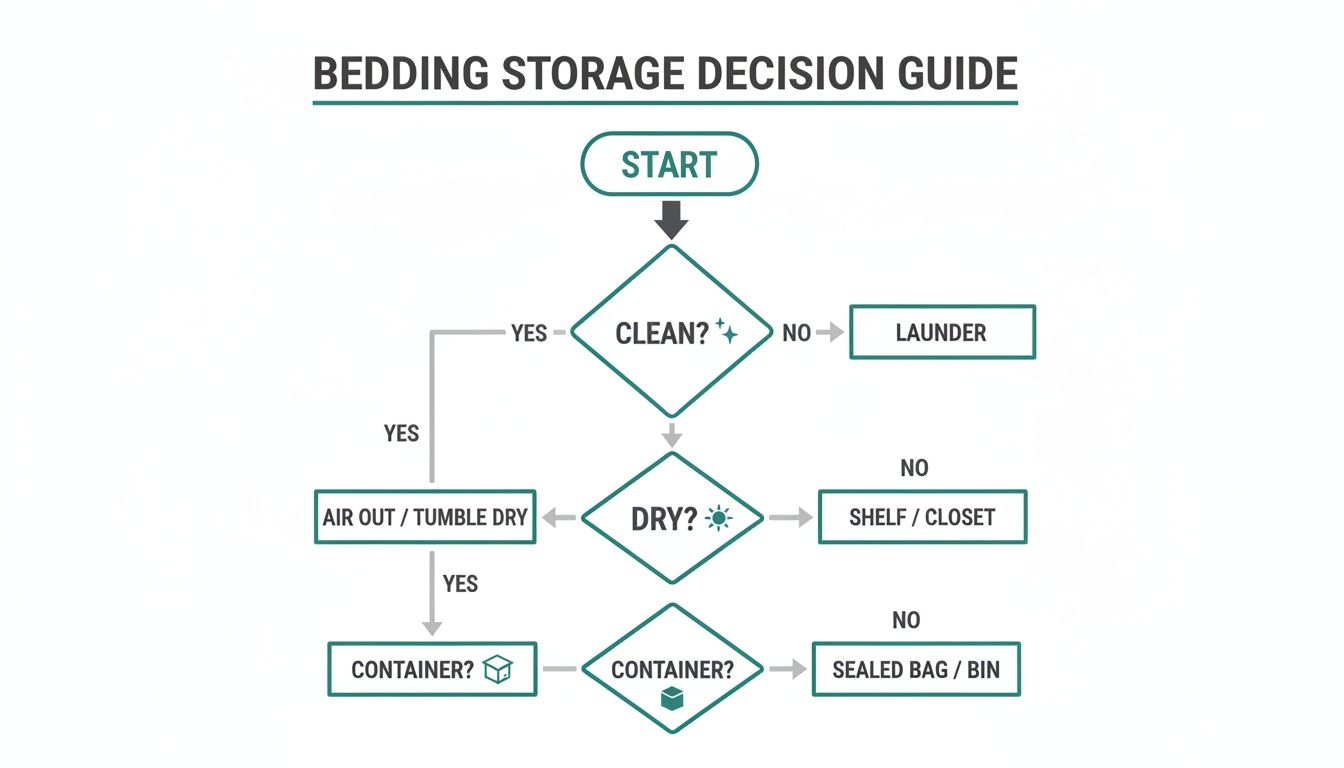
As the flowchart shows, starting with clean, bone-dry items isn't just a suggestion—it's the non-negotiable first step before you even think about what kind of bin or bag to use.
Key Takeaway: The time you spend prepping your bedding for storage directly impacts its condition and longevity. A few extra minutes of prep work now saves you from the frustration of rewashing musty linens or, worse, replacing damaged ones down the road. This guide will walk you through the practical solutions that actually work.
Prepping Linens for Flawless Long-Term Storage
The single most important part of storing extra bedding happens long before anything goes into a box. Honestly, proper prep is what separates fresh, ready-to-use linens from a musty, disappointing pile of fabric down the road.
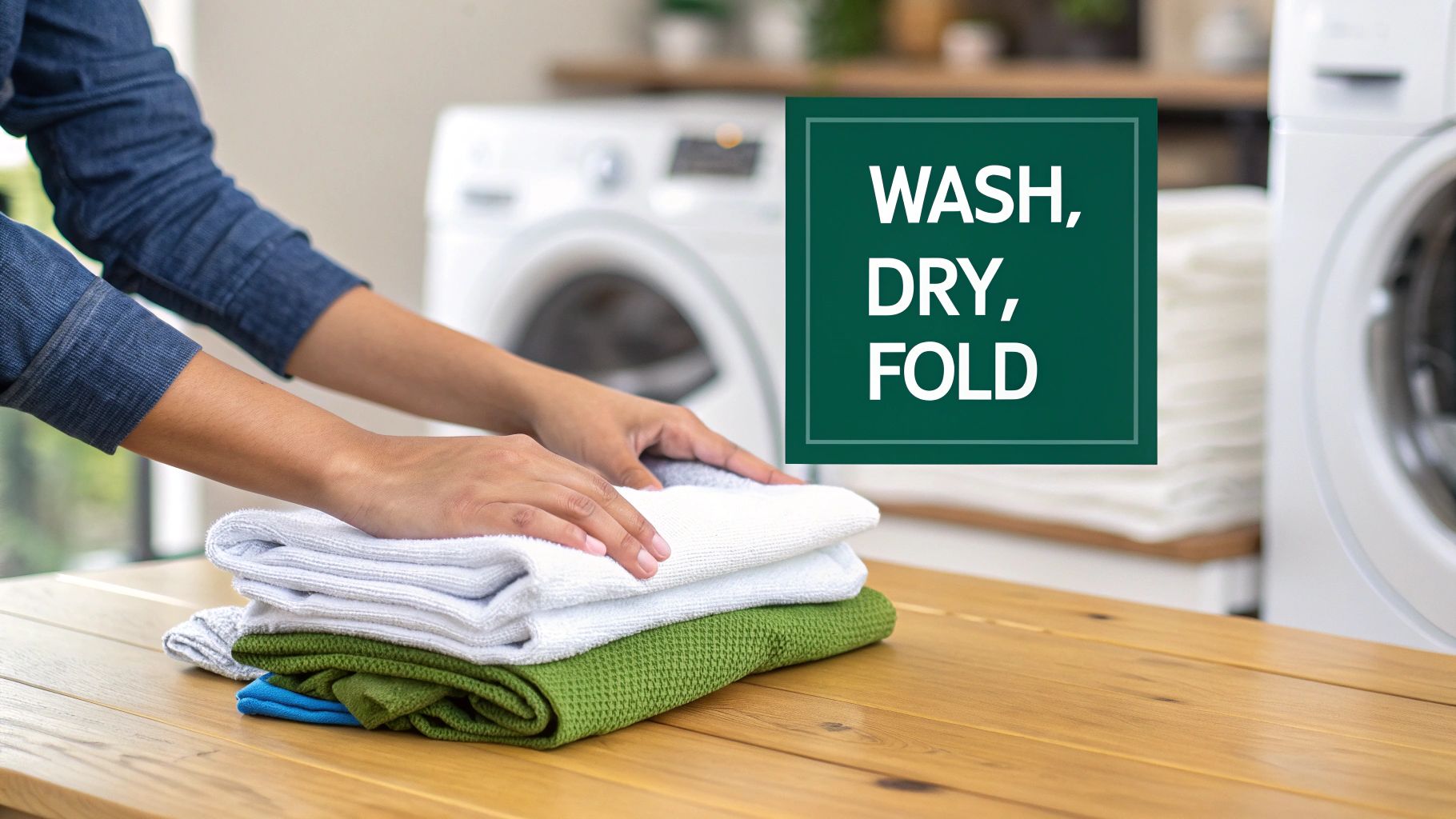
Your absolute first step, and it's non-negotiable, is to wash and thoroughly dry every single item.
Even the tiniest bit of moisture can turn into mildew, and any lingering body oils or dirt are basically an open invitation for pests. You're not just cleaning the bedding; you're making it a terrible place for anything that might want to ruin it over the next few months.
The Wash and Dry Method
Different fabrics need different handling. For a bulky down comforter, you'll want to use a gentle cycle with just a little bit of detergent. When you dry it, toss in a few dryer balls on low heat to keep the feathers from clumping up. Be prepared for this to take a few cycles—that dense filling needs to be 100% dry.
On the other hand, delicate materials need a gentler touch. Every fabric is unique, and getting the prep right is crucial. For example, you can find some great tips on how to care for bamboo sheets that will help keep them soft and durable through both washing and storage.
Pro Tip: Before you pack anything away, give it the "cool-down test." Right out of the dryer, fabric can feel dry even when it's still warm and holding onto a bit of moisture. Let everything cool down to room temperature so you can get a true feel for any damp spots, especially along thick seams or deep inside duvet corners.
Smart Folding Techniques
Once everything is sparkling clean and bone-dry, the way you fold it really matters. Your goal is twofold: minimize those hard creases that can become permanent over time and make everything as compact as possible.
A tried-and-true method for sheet sets is to fold the flat sheet, fitted sheet, and one pillowcase together, then tuck the whole bundle inside the second pillowcase.
This creates a neat little packet that's easy to stack and even easier to identify later. For big comforters, fold them into a clean rectangle and then roll them up tightly to squeeze out any extra air before tying them off with fabric ties.
If you want to get deeper into the specifics, our guide on how to properly store linens has more step-by-step advice.
Choosing the Right Storage Containers for Your Bedding
Once your bedding is perfectly clean and dry, the next mission is picking the right container. This isn't a step you want to rush—the right choice is what stands between your linens and dust, moisture, or pests.
Think of it like this: your bulky synthetic comforter has completely different storage needs than your delicate linen sheets. The container you choose should match the item's requirements to ensure it comes out of storage just as fresh as it went in.
Vacuum-Sealed Bags for Maximum Space Saving
When it comes to compression, vacuum bags are the undisputed champions. They’re fantastic for shrinking bulky duvets and pillows down to a fraction of their original size, freeing up a shocking amount of closet space. It’s no wonder the home organization market is booming, with projections showing it could hit USD 76.1 billion by 2033. Many of us have found these bags can slash bedding volume by up to 80%.
But here's a critical word of caution: never fully compress natural fibers like down or feathers. Sucking all the air out will crush their delicate structure, permanently ruining the loft that keeps you warm. If you’re storing a down comforter, leave about 25% of the air inside to give it breathing room. For a deeper dive, check out our guide on the best vacuum storage bags and how to use them correctly.
Breathable vs. Plastic Containers
When it comes to other common options, the best choice really depends on your bedding’s material and where you plan to store it.
Breathable Cotton Bags: These are the gold standard for long-term storage, especially for anything made of natural fibers like wool, cotton, or linen. The fabric allows air to circulate, which is absolutely crucial for preventing that dreaded musty smell from moisture buildup. If you’re storing high-quality quilts or family heirlooms, this is the way to go.
Clear Plastic Bins: Let’s be honest, these are incredibly practical. They stack perfectly, keep everything safe from dust, and let you see exactly what’s inside without digging. The only real downside is that they’re airtight. Any leftover moisture in your bedding will get trapped, creating a perfect environment for mildew. The workaround? Make sure your linens are 100% bone-dry before packing and toss in a few silica gel packets to absorb any sneaky humidity.
Key Insight: Your container choice should prioritize the health of the fabric over pure convenience. While plastic bins are great for getting organized, breathable bags offer far superior protection for your valuable, natural-fiber bedding during long-term storage.
Finding the Best Storage Spots in Your Home
Where you store your extra bedding is just as important as the container you put it in. The goal is to find a spot that’s consistently cool, dark, and dry. Think of a classic linen closet or the top shelf of a wardrobe—these places are perfect for protecting fabrics from sunlight and humidity.
But let’s be real, not everyone has a sprawling linen closet. That’s when it’s time to get creative and scout out some overlooked spaces that can do the job just as well.

Unlocking Creative Home Storage Spaces
You'd be surprised at the prime real estate hiding in plain sight. An empty drawer in the guest room dresser is a fantastic option, keeping linens ready for visitors and out of your way. A storage ottoman in the living room can easily hold a couple of comforters or throw blankets, pulling double duty as functional furniture.
The space under the bed is another goldmine. It’s the perfect spot for low-profile bins or zippered bags filled with seasonal bedding. If you want to make the most of that area, check out our guide on smart under-bed storage solutions to reclaim some valuable floor space.
Storage beds themselves have exploded in popularity, often featuring deep drawers or hydraulic lifts that can hide away multiple sets of queen-size bedding. In fact, by 2025, 42% of new bed purchases included built-in storage, a huge jump from just 28% in 2019. It's a clear trend showing how much people value clever, integrated storage.
Critical Warning: Never, ever store your bedding in uninsulated attics, damp basements, or garages. These areas are notorious for wild temperature swings and high humidity, which is a recipe for mildew, pests, and fabric damage that you just can't undo.
A stable environment is your best defense against ruining your favorite linens. Picking the right spot is the final piece of the puzzle to storing your extra bedding like a pro.
Maintaining Freshness and Preventing Damage Over Time
Once your bedding is packed away, the job isn't quite done. A little ongoing care is what keeps everything in perfect condition down the line. This isn't a "set it and forget it" task; simple maintenance is your best defense against musty odors, pests, and fabric damage.
A great first step is to tuck a few natural deterrents into your storage containers. Cedar blocks or lavender sachets work wonders. They naturally repel moths and other pests without that harsh chemical smell of traditional mothballs, leaving your linens with a subtle, pleasant scent.

Seasonal Check-Ins and Pest Prevention
Get into the habit of checking on your stored bedding every few months—tying it to the change of seasons is an easy way to remember. This quick inspection lets you catch any potential issues before they become real problems. Beyond just a general look-over, recognizing and addressing bed bug infestations is critical, as these pests specifically target bedding.
Pro Tip: When you check on your items, take a minute to unfold and then refold them differently. This simple trick prevents deep, permanent creases from setting in and gives the fabric a chance to breathe, keeping everything fresh.
For anyone storing bedding long-term, especially in a place with high humidity, a stable environment is crucial. You can learn more about how a consistent temperature and humidity protect delicate fabrics in our guide to the benefits of climate-control storage. These simple habits are your secret weapon for making sure your bedding is always fresh and ready to use, whenever you need it.
Your Questions on Bedding Storage Answered
Even with a solid plan, a few specific questions always seem to pop up once you start pulling out boxes and bags. Let’s tackle some of the most common ones I hear, so you can get the details right and store your bedding with confidence.
Should I Wash Bedding Again After Taking It Out of Storage?
Probably not, but it depends. If you packed everything away clean and dry inside a sealed, breathable container, a full wash is usually overkill.
That said, for anything stored longer than six months, it’s a good idea to let it air out for a few hours. A quick tumble in the dryer on a no-heat cycle with a wool dryer ball is also a great trick to fluff things up and shake off any stale smells. But if you catch even a hint of mustiness, don't hesitate—straight to the washing machine it goes.
Can Vacuum Bags Damage My Comforters or Pillows?
They absolutely can, which is why you have to use them correctly. Vacuum bags are fantastic for synthetic-fill items, letting you shrink them down to save a ton of space.
But for your nice down or feather-filled bedding, you need to be careful. Never compress them 100%. Sucking every last bit of air out will crush those delicate feathers and down clusters, permanently ruining their loft and ability to keep you warm. Always leave a little air in the bag to give them some breathing room. And for memory foam? Just don't. The compression will destroy its structure for good.
Important Reminder: The goal with vacuum-sealing natural-fiber bedding is to reduce its bulk, not turn it into a pancake. Think of it as making your comforter more manageable, not flat. That little bit of air you leave inside is protecting your investment.
What Is the Best Way to Store a Bulky Comforter Without Vacuum Bags?
A large, breathable cotton storage bag or a zippered under-bed container works perfectly. The key is in the technique: first, fold the comforter into a tidy, compact rectangle. Then, roll it up as tightly as you can, pressing the air out as you go.
Once it’s a tight cylinder, you can use a couple of fabric straps or ribbons to keep it from unrolling inside its container. This method keeps it compact without damaging the fill. If you're dealing with multiple sets, our detailed guide on how to store sheets has even more folding and packing tips.
When you've run out of closets and under-bed space, Endless Storage offers a simple, modern solution. We send you the boxes, you pack them up, and we'll come pick them up for safekeeping in our climate-controlled facility—all starting at just $7.99 per box. Reclaim your space by visiting https://www.endless-storage.com to get started.
Frequently Asked Questions
Unveiling the Secrets to Effortless Storage
Endless Storage is available nationwide. You pick a plan, tell us where to pickup, and we'll send a UPS van to collect, whichever state you're in.
Your shipping label will be sent to your email within a few minutes, if not instantaneously. It can also be accessed through your customer profile.
Your box will be shipped to one of our climate controlled self storage facilities in our closest self storage facility. Our manager will accept your package, notify you that your box has been received, and securely stored. Only our managers will have access to Endless Storage boxes.
Email us at admin@endless-storage.com click to live chat with us, or send us a message below.
Never! We're committed to transparent pricing with no surprises. You'll lock in your rate with no hidden fees and no long-term contracts.
Fast access guaranteed! Your boxes will arrive at your doorstep within 48 hours of requesting them back. Need to check on delivery? We provide tracking information for complete peace of mind.
Totally flexible! Store month-to-month with no long-term commitment and cancel anytime.
Everything's online! Use your account dashboard to:
• Set up automatic monthly payments
• Request box returns
• Update your address
• Order additional boxes
• Track shipments
Your boxes are insured up to $100 each. Our customer service team will help you file any necessary claims and resolve issues quickly.
Don't worry – we'll email you right away if there's a payment issue. Your items stay safe, though you may have temporary service interruption or late fees until payment is resolved.
When you request our free storage kits, you'll have 30 days to send in your boxes to activate your 3 months of free storage. Think of it like starting a gym membership – your activation window begins when you receive your kits, and your full free trial begins once you send in your first box. During your free months, you'll experience our complete storage service at no cost.
Your 30-day activation window begins when you receive your storage kits. We'll send you an email confirmation when your kits are delivered, marking the start of your activation period.
If you haven't sent any boxes for storage within your 30-day activation window, your free trial will expire and we'll begin charging the regular monthly rate of $9.99 per box. This helps ensure our storage kits go to customers who are ready to use our service.
A box costs $9.99 per month to store (plus sales tax). This price includes free shipping for standard boxes under 50 lbs. and smaller than 16"x16"x16"
Log into your Endless Storage account, locate the box you would like returned, and simply click Return My Box.
Yes, each box stored with us is insured for up to $100 throughout transit as well as the duration of storage within our facilities.
Your box will be at your doorstep within 48 hours of you requesting it back.
Store 10+ boxes? We'll pick them up for free! After your purchase, we'll contact you to schedule a convenient pickup time and arrange UPS collection.
We trust UPS with all shipments, and every box includes $100 insurance coverage. You'll receive tracking information to monitor your items' journey.
Yes! Visit any of our locations by appointment. Just bring a photo ID matching your customer profile.
For everyone's safety, we can't store hazardous materials, firearms, or perishables. All items must fit within our standard boxes.
It's easy! Order your storage kit online, and we'll ship it to you within 1-2 business days. Your shipping labels will be emailed instantly and available in your account.
We're here to help! Email us at admin@endless-storage.com, use our live chat, or send us a message through your account.
To cancel your storage service with Endless Storage, please email your cancellation request to admin@endless-storage.com. Our team will process your request within 2 business days and confirm your cancellation via email.
We understand packing takes time. However, to maintain your free trial benefits, you'll need to send at least one box within the 30-day activation window. If you need more time, you can always start with one box to activate your trial and send the rest later. You can always reach out to admin@endless-storage.com if you have any issues or concerns.
When you request our free storage kits, you're starting a 30-day window to begin using our storage service.
Important: To activate your free trial, send at least one box for storage within 30 days. If no boxes are sent within this 30-day window, a one-time $50 fee applies to cover materials and shipping costs. This fee is clearly disclosed before you sign up.
Think of it like reserving a hotel room – we're setting aside space and sending specialized packing materials for your use. The fee only applies if you request materials but don't begin storage, similar to a hotel's no-show charge.