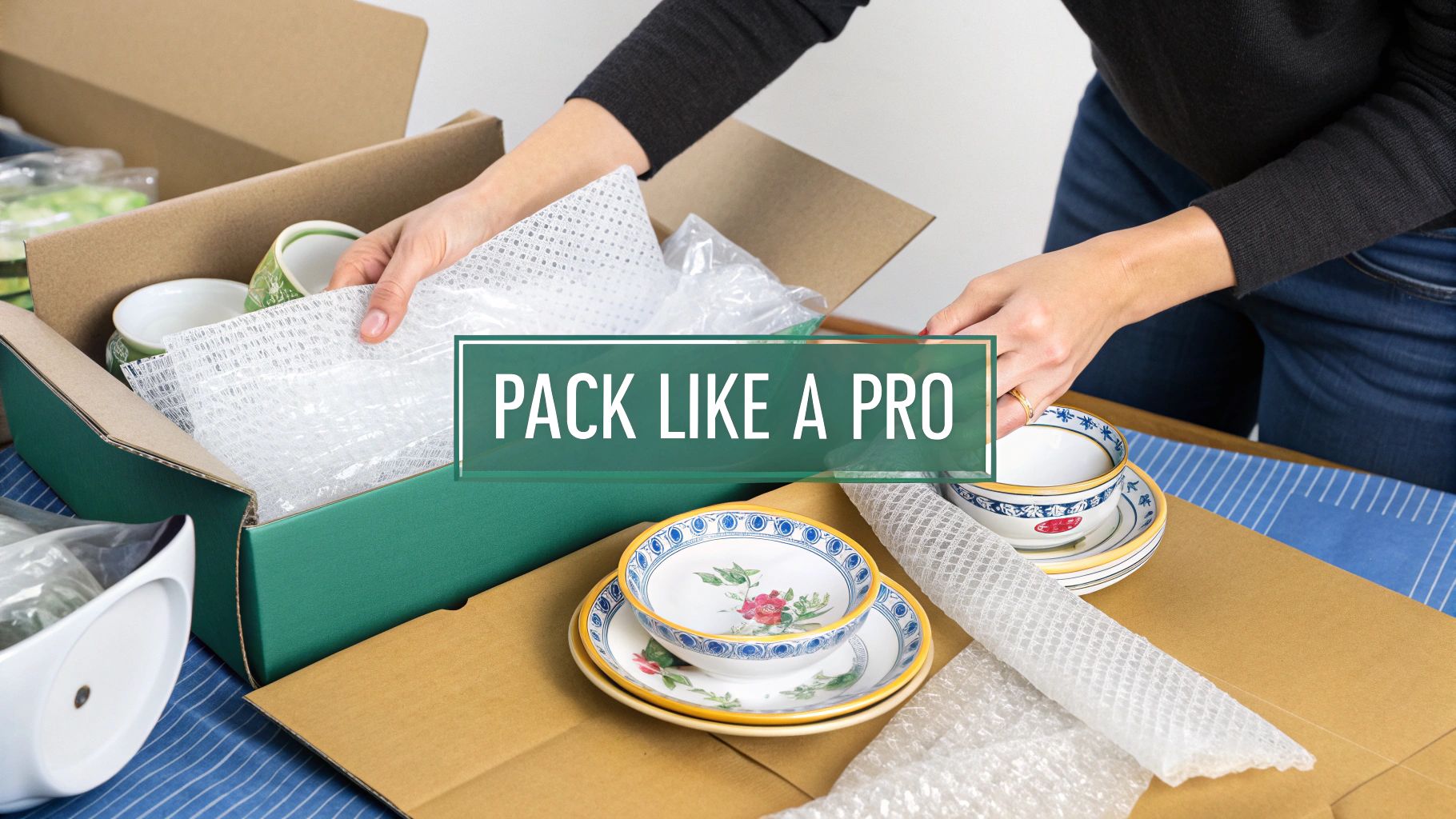
When you're packing up your fine china, a solid strategy is everything. This isn't the time for shortcuts. You'll need double-walled dish boxes, plenty of clean packing paper for cushioning, and the patience to wrap every single item. The real secret is to make sure nothing can move an inch once it's inside the box—that means packing plates vertically and filling every gap.
Why Your Packing Strategy Matters for Fine China
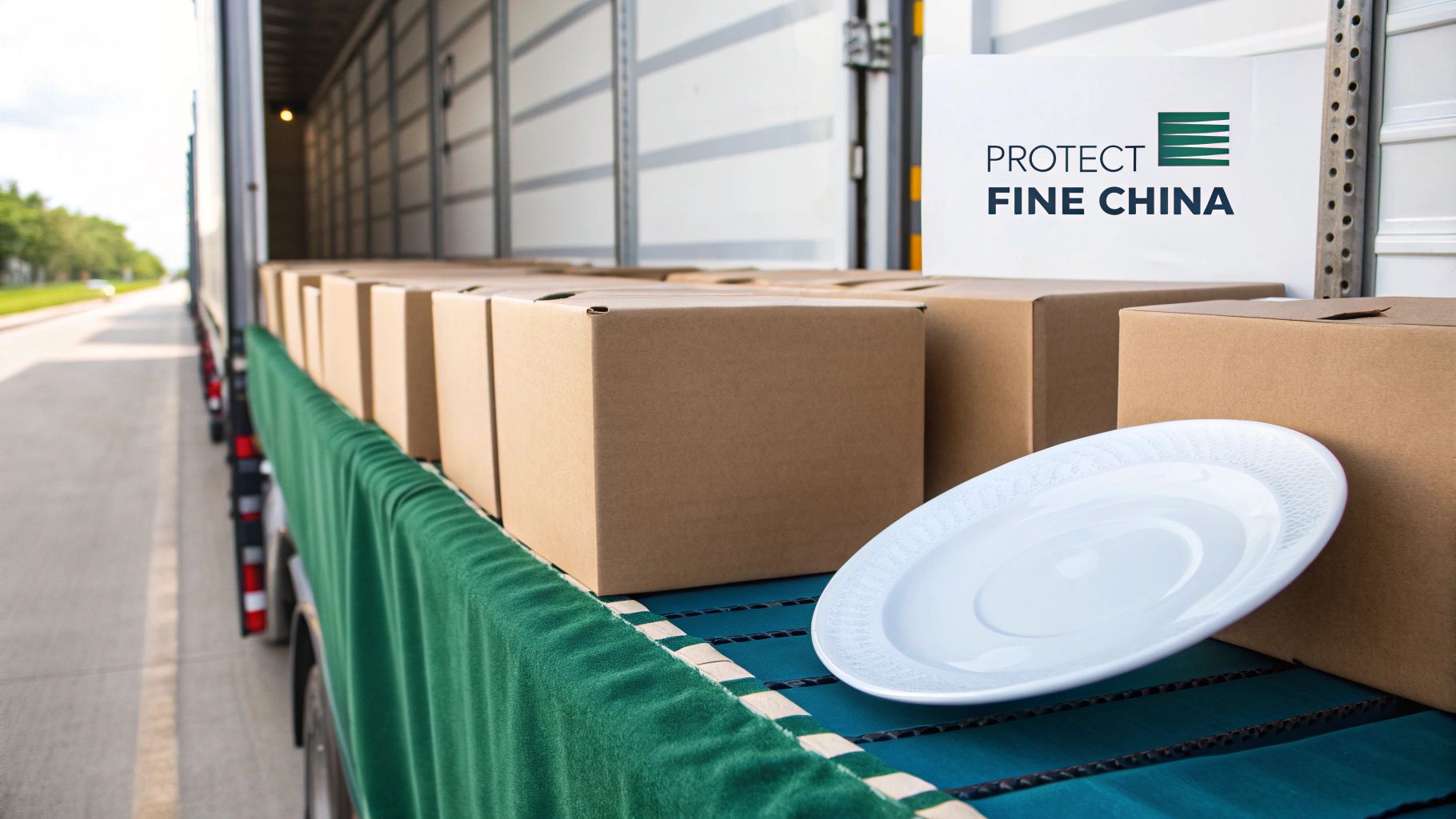
Let's be honest, moving is chaotic. The last thing you need is the nagging worry of whether your treasured heirlooms will make it to the new place in one piece. For something as delicate as fine china, your usual packing methods—like tossing things into a box with a bit of newspaper—just won't do. Protecting valuable dinnerware sets like Lenox Castle Garden starts with acknowledging how fragile they truly are.
The risks on the road are very real. The constant vibration of a moving truck, not to mention sudden stops and bumpy roads, can easily cause chips, cracks, or worse. A well-thought-out packing plan is your best defense against heartbreak, protecting pieces that often carry immense sentimental and financial value.
The Professional Approach to Protection
Professional movers have this down to a science, and it all boils down to three core principles:
- Cushioning: Every piece needs a soft, shock-absorbing buffer. This also means lining the bottom and top of each box with plenty of padding.
- Separation: No two pieces of china should ever touch directly. Direct contact is a recipe for friction and impact damage.
- Immobilization: You must fill every single empty space inside the box. This prevents items from shifting, sliding, or knocking against each other during the trip.
This isn’t just about wrapping a few plates. It's about building a complete protective fortress inside each box, designed specifically to counter the rough-and-tumble physics of a move. Think about this: while damage claims happen in about 20–25% of long-distance moves, dishes and china make up a whopping 30–40% of those claims. Using professional packing methods can slash breakage rates to under 2%, a huge improvement over the 10% or higher rate for self-packed boxes.
Your goal is to make the contents of the box one solid, unmovable block. If you can gently shake the sealed box and feel or hear anything shift inside, it needs more padding.
Taking the time to get this right means your cherished pieces will arrive safely, ready to grace the table in your new home. If your items are going to be in transit for a while or need to be stored, understanding the benefits of climate-controlled storage is another critical piece of your moving plan.
Gathering Your Essential Packing Arsenal
Before you even think about wrapping a single saucer, you need to assemble the right gear. Trust me on this one—using whatever you have lying around, like flimsy grocery store boxes or old newspapers, is one of the biggest mistakes you can make. Think of this as putting together a specialized toolkit; every item has a critical job to do in protecting your valuables.
Your first, and most important, investment is in the right kind of boxes. Don't just grab any standard single-walled cardboard box. You absolutely need double-walled dish pack boxes, sometimes called dish barrels. Their two-layer construction provides the kind of rigidity and shock absorption that's non-negotiable for fragile items bouncing around in a moving truck. They’re specifically built to handle the weight and delicacy of dishware.
Your Fine China Packing Supply Checklist
Getting your supplies in order beforehand makes the entire process smoother and safer for your china. Here's a quick checklist of what you'll need and, more importantly, why you need it.
Having these specific items on hand isn't just about being organized; it’s about creating a protective system that gives your china the best possible chance of arriving in one piece.
Choosing the Right Cushioning Materials
Now, let's talk about what goes inside the box. Clean packing paper is your workhorse here. Unlike newspaper, it's totally ink-free, so you won’t spend hours scrubbing black smudges off your pristine white porcelain. The paper is soft enough to prevent scratches but sturdy enough to create protective layers when crumpled.
For that extra layer of shock absorption, you have a couple of great options:
- Bubble Wrap: This is your best friend for wrapping especially delicate items like the stems on wine glasses or the handles on teacups after you’ve already wrapped them in paper.
- Foam Pouches: Honestly, these are fantastic time-savers. You can slide individual plates or bowls right into them for instant, perfectly fitted cushioning before they go into the box.
The whole point is to create a soft, protective cocoon around every single item. Never, ever let two pieces of china touch directly. That direct contact is how most chips and fractures happen during a move.
Finally, you’ll need some high-quality packing tape to properly seal your boxes and a good, thick permanent marker for labeling. Don't forget filler like packing peanuts or just more crumpled-up packing paper. You'll use this to fill every last void in the box, which is the secret to immobilizing the contents and preventing them from shifting around.
For a deeper dive into all your options, check out our complete guide on the best packing supplies for moving. Assembling this arsenal upfront really does set the stage for a smooth, break-free pack.
Mastering Pro Wrapping Techniques for Each Piece
Alright, you’ve got your supplies. Now for the most important part: wrapping each piece of china like a pro. Different shapes need different approaches to keep them safe. This isn't just about tossing them in some paper; it's about creating a custom suit of armor for every plate, bowl, and cup you own.
Think about it this way: every item has a weak point. For a plate, it’s that big, flat surface. For a teacup, it's the delicate handle. For a wine glass, it's that slender stem. The wrapping techniques we're about to cover are all designed to neutralize these weak spots, making sure everything is snug and secure. Let’s dive into the specific methods the professionals use.
This quick visual shows the simple but essential flow for using your packing supplies.
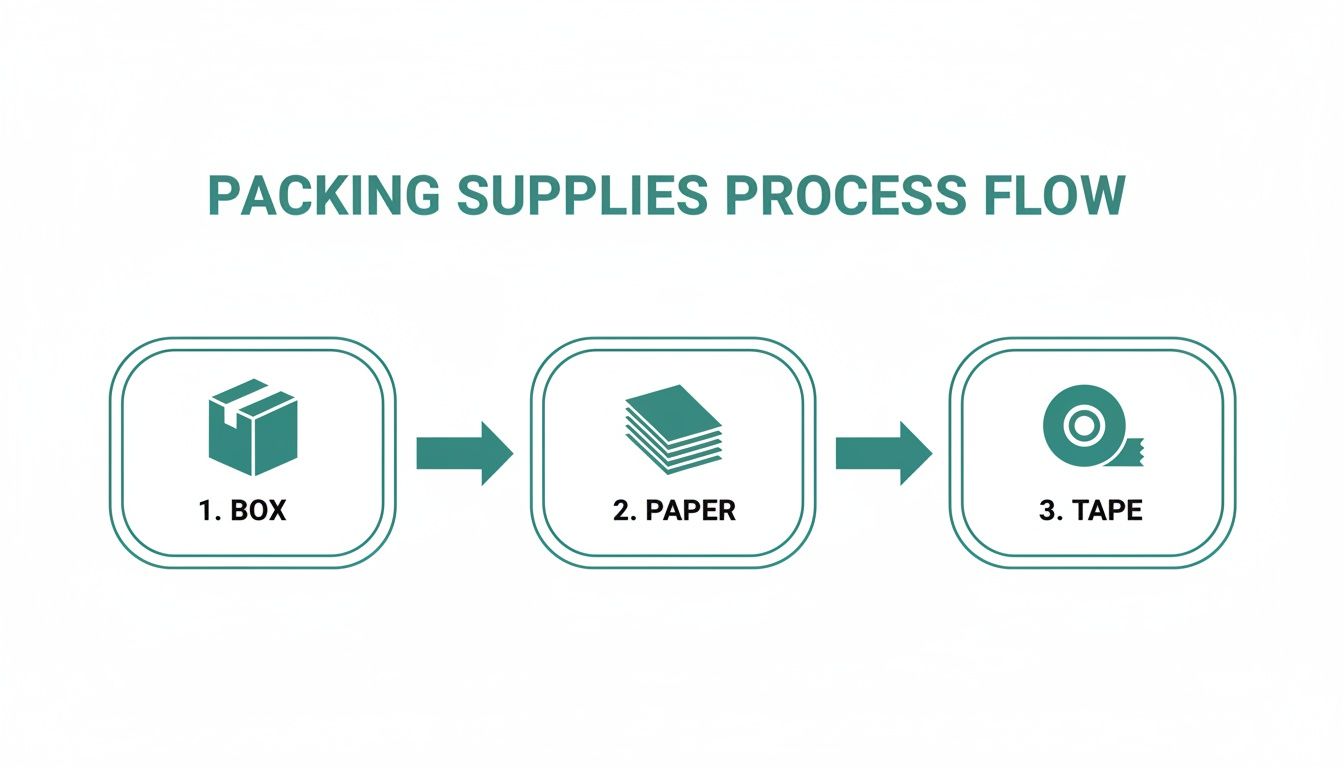
It boils down to three pillars: a sturdy box, plenty of paper, and strong tape. Get these right, and you're halfway there.
Handling Plates and Saucers
Plates and saucers are usually the most numerous items, and there’s a specific "bundling" method that works like a charm. Stacking them flat on top of each other in a box is a recipe for disaster. All the weight ends up on the bottom plate, making it incredibly vulnerable to pressure cracks.
Here’s how the pros do it:
- Start by laying a single plate face-down on a stack of packing paper.
- Fold the paper's corners over the plate until it’s totally covered, then secure it with a small piece of painter's tape.
- Place a second plate right on top of the wrapped one and repeat the process, wrapping it individually.
- Once you have a bundle of 3-4 individually wrapped plates, wrap that entire bundle one more time in a final, secure layer of paper.
This bundling technique creates a tight, well-cushioned packet that can be placed vertically in the box—which is far safer than stacking.
Protecting Bowls and Cups
The trick to protecting bowls and cups is supporting their hollow shape from the inside out. An empty bowl can easily crack under pressure, but one that’s properly filled is much stronger.
First, crumple up some packing paper and stuff it firmly into the bowl or cup. This internal bracing helps the piece resist pressure and absorb any shocks. Once the inside is supported, wrap the entire exterior with several sheets of paper.
Pay extra attention to teacup handles, as they're notoriously fragile. Wrap the handle first with a small piece of paper before wrapping the whole cup.
A common mistake is nesting unwrapped bowls inside each other. Even with paper between them, the direct rim-to-surface pressure is a prime cause of chipping. Always wrap each bowl on its own before you even think about stacking them.
Securing Delicate Stemware
Stemware often feels like the most intimidating thing to pack because of its fragile structure. The secret is to treat the stem, bowl, and base as three separate zones that all need their own protection.
- The Stem: This is the weakest point. Gently wrap the stem with a few layers of packing paper or a small piece of bubble wrap.
- The Bowl: After the stem is secure, stuff crumpled paper inside the glass's bowl for that crucial internal support.
- The Full Wrap: Lay the glass on its side on a sheet of packing paper and roll it, tucking the edges of the paper into the opening as you go.
Nailing these specialized wrapping techniques is a cornerstone of any successful move. For more in-depth strategies, you can also learn how to pack fragile items for moving with our detailed guide. Taking your time with each piece is the best insurance you can have that your treasured china will arrive at your new home without a single scratch.
How to Properly Pack Your Moving Boxes
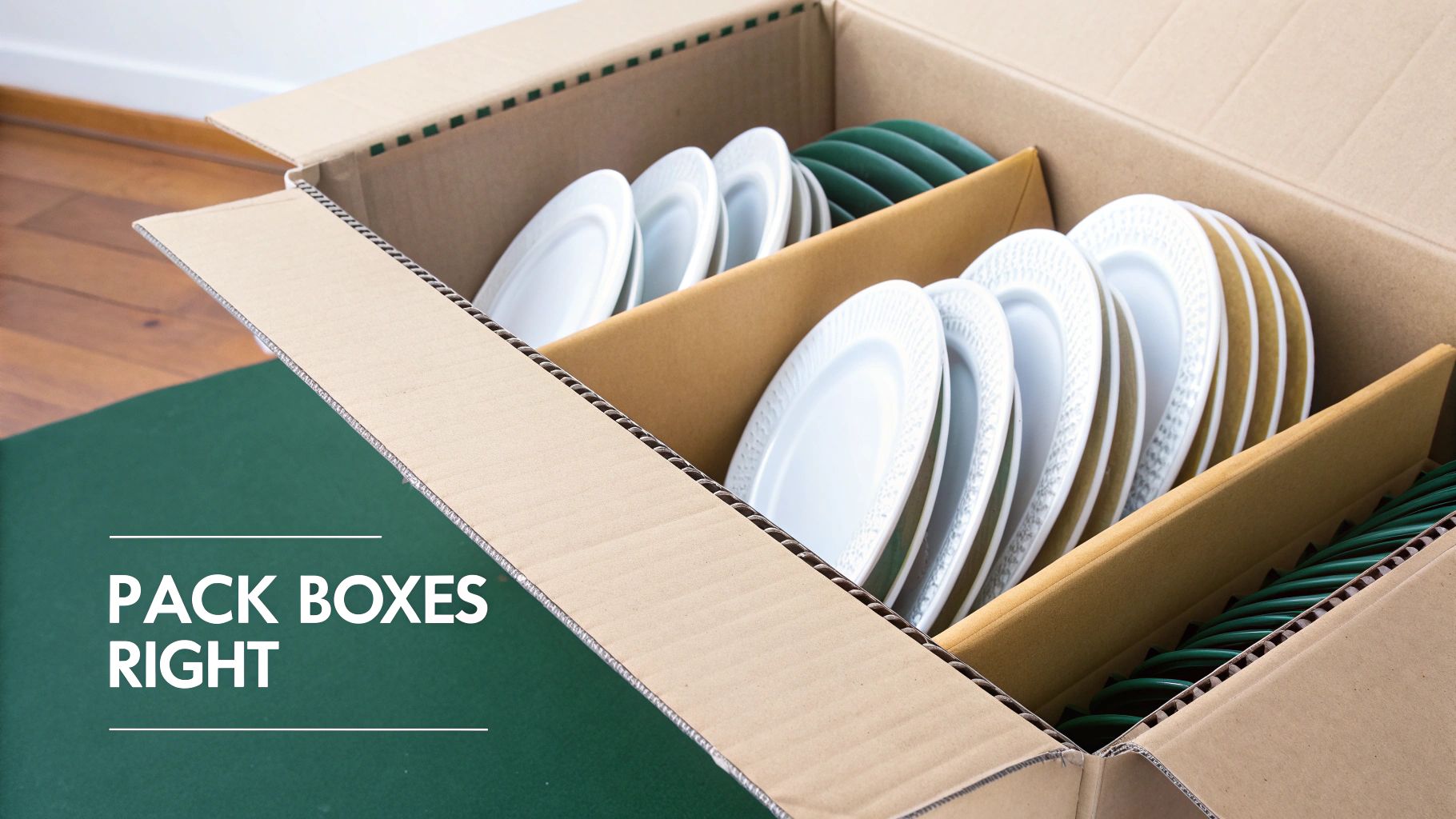
Even the most carefully wrapped plate is still vulnerable if you just toss it into a poorly packed box. Think of proper box packing as the final, and most important, layer of defense for your china. The goal is to create a single, solid unit where every item is locked in place, allowing the box itself to absorb any shocks from the outside world.
Before a single dish goes inside, you have to build a generous cushion. Grab a good amount of packing paper, crumple it up, and create a thick, fluffy layer at the bottom of the box. You're aiming for at least four to six inches of padding. This is your first line of defense against every bump and jolt on the road.
Arranging Your China for Maximum Safety
Now it’s time to start loading, and there's one rule you absolutely can't break: heaviest items on the bottom, lightest on top. Start with your big stuff—dinner plates, platters, and hefty serving bowls. Once they're in, you can move on to the lighter salad plates and saucers, saving the most delicate teacups and stemware for the very top layer.
Here’s a technique that feels a little counterintuitive but makes a huge difference: pack your plates and bowls vertically, standing on their edges. Picture them like files in a filing cabinet or records on a shelf. This orientation is far better at handling the pressure and vibration of a moving truck compared to stacking them flat, which puts all the weight on the piece at the very bottom.
A standard 12-piece place setting can easily weigh 8–12 pounds and take up nearly a cubic foot of space once it's all wrapped. Professional dish cartons are specifically designed for this density. In fact, industry data shows that using them can cut down on wasted air space by up to 25% and keep breakage below a remarkable 2%.
Using Dividers and Filling Every Void
Cell kit dividers are an absolute game-changer, especially for your most fragile glassware and teacups. These simple cardboard grids create individual, cushioned compartments that stop items from clanking against each other. For stemware, always wrap each piece and place it upside down in the cells to give that delicate rim the best possible protection.
The final, and most critical, part of packing is to eliminate every last bit of empty space. Any gap allows for movement, and movement is what leads to breakage. Get in there with crumpled packing paper and stuff it firmly into every nook and cranny—between items, along the sides of the box, and across the top.
When you're done, the box should feel completely solid. Give it a gentle shake. If you hear or feel anything shift inside, you need more padding. For a deeper dive into these packing principles, check out our ultimate guide on how to pack moving boxes for a stress-free move.
Before you grab the tape, add one last thick layer of crumpled paper on top to create a final cushion. Now you can seal it up, confident that everything inside is secure.
Smart Labeling and Transport for a Safe Arrival
You’ve done the hard part—expertly wrapping and boxing your fine china. But don’t celebrate just yet. The final steps of the journey are just as critical. A perfectly packed box is still vulnerable if it gets treated like a carton of old t-shirts.
This is where a solid labeling and transport strategy becomes your last line of defense, making sure all that careful work pays off when you’re ready to unpack.
Creating an Unmistakable Labeling System
Your labels need to be impossible to miss. They aren't just for you; they’re clear, non-negotiable commands for anyone who lays a hand on that box. Grab a thick, waterproof permanent marker and make your instructions known.
On at least three sides of every box (and the top!), write the following:
- FRAGILE – HANDLE WITH CARE in big, bold capital letters.
- THIS SIDE UP with large, clear arrows pointing to the top.
- A specific description of the contents like “Dining Room – Dinner Plates & Platters” or “Kitchen – Wine Glasses.”
This level of detail does two things: it screams "be careful!" to movers and helps you find exactly what you need when you're surrounded by a sea of cardboard in your new home. For a complete masterclass on labeling, check out our detailed guide on how to label boxes for a move.
Don’t just write on the top of the box. I’ve seen it happen a thousand times: boxes get stacked, and top labels disappear. Labeling the sides ensures your handling instructions are always visible, no matter how the box is positioned in a truck or a storage unit.
Safely Loading Your China for the Move
How you load these boxes is just as important as how you packed them. Never, ever place your china boxes directly on the metal floor of a moving truck. They’ll feel every single bump and vibration from the road.
Instead, create a stable, level base using sturdy furniture or stacks of boxes filled with soft items like bedding or pillows.
Always place your china boxes on top of this foundation. Keep them away from heavy furniture or appliances that could shift during transit and crush them. The goal is to wedge them in snugly so there’s no room for them to slide, shift, or topple over.
Considering Modern Storage Solutions
Sometimes, a move isn't a simple A-to-B event. You might be downsizing, caught between leases, or just realizing you don't have room for a full china set right away. This is becoming more and more common.
With over 55% of the world's population now living in urban areas—a number expected to hit 68% by 2050—frequent moves and smaller living spaces are the new normal. And as Mordor Intelligence points out, dishes and kitchenware are a top concern for renters who move every few years.
This is where modern storage solutions can be a lifesaver. Services like Endless Storage are designed for exactly this scenario. You can safely store your fragile items in a climate-controlled facility without having to rent a huge, traditional unit you don't need.
Common Questions About Packing Fine China
After helping countless people pack their most treasured possessions, I've heard just about every question you can imagine. When it comes to fine china, a few key concerns pop up time and again. Let's tackle them head-on so you can move forward with total confidence.
These are the most common dilemmas people run into, and my straight-up answers backed by years of experience.
Can I Use Newspaper to Save Money?
I get it, packing supplies add up, and it's tempting to grab that stack of old newspapers. But you should never let newsprint touch your fine china directly. The ink can easily transfer and permanently stain your dishes—a risk that just isn't worth the small savings.
Newspaper is also far too thin to offer any real cushioning against the bumps and vibrations of a move.
If you want to be budget-conscious, here’s a pro tip that works:
- For Wrapping: Use clean, ink-free packing paper for the initial layer that makes direct contact with each piece.
- For Filler: After your china is safely wrapped, feel free to use crumpled newspaper as filler material to pack out the empty spaces inside the box.
This hybrid approach gives you professional-level protection where it matters most, without blowing your budget.
Is It Actually Better to Pack Plates on Their Edges?
Yes, this is 100% true and probably one of the most important secrets of the pros. It might feel completely unnatural, but plates are structurally much, much stronger when positioned vertically on their edges.
Think about it: when you stack plates flat, the entire weight of the stack presses down on that one plate at the bottom. Every jolt from the road concentrates that pressure, making stress fractures almost inevitable.
Packing plates vertically—like records in a crate or books on a shelf—distributes any force much more effectively. This simple trick allows them to withstand the constant vibrations of a move without cracking under pressure. It's a game-changer.
What Is the Biggest Mistake People Make?
Hands down, the most common and costly mistake is failing to fill all the empty space inside the box. People often do a fantastic job wrapping each item individually but then leave gaps between the pieces when they load them in.
During transit, those gaps allow everything to shift, slide, and knock against each other. That movement is exactly how most breakage happens. Your number one goal is to achieve total immobilization.
The box should be packed so firmly with crumpled paper that nothing moves when you give it a gentle shake. Remember, cushioning protects from a direct hit, but immobilization prevents that hit from ever happening in the first place.
Don't let a move or a lack of space put your valuable china at risk. For a flexible and secure storage solution, trust Endless Storage to keep your treasures safe in our climate-controlled facilities until you need them again. Learn more at https://www.endless-storage.com.
Frequently Asked Questions
Unveiling the Secrets to Effortless Storage
Endless Storage is available nationwide. You pick a plan, tell us where to pickup, and we'll send a UPS van to collect, whichever state you're in.
Your shipping label will be sent to your email within a few minutes, if not instantaneously. It can also be accessed through your customer profile.
Your box will be shipped to one of our climate controlled self storage facilities in our closest self storage facility. Our manager will accept your package, notify you that your box has been received, and securely stored. Only our managers will have access to Endless Storage boxes.
Email us at admin@endless-storage.com click to live chat with us, or send us a message below.
Never! We're committed to transparent pricing with no surprises. You'll lock in your rate with no hidden fees and no long-term contracts.
Fast access guaranteed! Your boxes will arrive at your doorstep within 48 hours of requesting them back. Need to check on delivery? We provide tracking information for complete peace of mind.
Totally flexible! Store month-to-month with no long-term commitment and cancel anytime.
Everything's online! Use your account dashboard to:
• Set up automatic monthly payments
• Request box returns
• Update your address
• Order additional boxes
• Track shipments
Your boxes are insured up to $100 each. Our customer service team will help you file any necessary claims and resolve issues quickly.
Don't worry – we'll email you right away if there's a payment issue. Your items stay safe, though you may have temporary service interruption or late fees until payment is resolved.
When you request our free storage kits, you'll have 30 days to send in your boxes to activate your 3 months of free storage. Think of it like starting a gym membership – your activation window begins when you receive your kits, and your full free trial begins once you send in your first box. During your free months, you'll experience our complete storage service at no cost.
Your 30-day activation window begins when you receive your storage kits. We'll send you an email confirmation when your kits are delivered, marking the start of your activation period.
If you haven't sent any boxes for storage within your 30-day activation window, your free trial will expire and we'll begin charging the regular monthly rate of $9.99 per box. This helps ensure our storage kits go to customers who are ready to use our service.
A box costs $9.99 per month to store (plus sales tax). This price includes free shipping for standard boxes under 50 lbs. and smaller than 16"x16"x16"
Log into your Endless Storage account, locate the box you would like returned, and simply click Return My Box.
Yes, each box stored with us is insured for up to $100 throughout transit as well as the duration of storage within our facilities.
Your box will be at your doorstep within 48 hours of you requesting it back.
Store 10+ boxes? We'll pick them up for free! After your purchase, we'll contact you to schedule a convenient pickup time and arrange UPS collection.
We trust UPS with all shipments, and every box includes $100 insurance coverage. You'll receive tracking information to monitor your items' journey.
Yes! Visit any of our locations by appointment. Just bring a photo ID matching your customer profile.
For everyone's safety, we can't store hazardous materials, firearms, or perishables. All items must fit within our standard boxes.
It's easy! Order your storage kit online, and we'll ship it to you within 1-2 business days. Your shipping labels will be emailed instantly and available in your account.
We're here to help! Email us at admin@endless-storage.com, use our live chat, or send us a message through your account.
To cancel your storage service with Endless Storage, please email your cancellation request to admin@endless-storage.com. Our team will process your request within 2 business days and confirm your cancellation via email.
We understand packing takes time. However, to maintain your free trial benefits, you'll need to send at least one box within the 30-day activation window. If you need more time, you can always start with one box to activate your trial and send the rest later. You can always reach out to admin@endless-storage.com if you have any issues or concerns.
When you request our free storage kits, you're starting a 30-day window to begin using our storage service.
Important: To activate your free trial, send at least one box for storage within 30 days. If no boxes are sent within this 30-day window, a one-time $50 fee applies to cover materials and shipping costs. This fee is clearly disclosed before you sign up.
Think of it like reserving a hotel room – we're setting aside space and sending specialized packing materials for your use. The fee only applies if you request materials but don't begin storage, similar to a hotel's no-show charge.