If your home is constantly cluttered, the problem probably isn't you. It’s the sheer volume of stuff we all deal with. Getting organized for good starts with understanding why the mess builds up in the first place, long before you even touch a single item.
This isn't about a lack of effort. It's usually about decision fatigue, sentimental attachment, or just the pace of modern life. When you shift your mindset first, you’re setting yourself up for real, lasting change—not just a temporary tidy-up.
Why Our Homes Get So Cluttered and How to Shift Your Mindset
Before you even think about sorting and organizing, we need to talk about the psychology behind the piles. A messy space is rarely just about "stuff." It’s a physical sign of what's going on in our heads—our habits, our emotions, and our attachments. Figuring this out is the real first step to organizing a cluttered home for good.
Most people get overwhelmed because they see the symptom (the clutter) but not the cause. It usually comes down to a few common culprits that sabotage even our best intentions.
Understanding the Psychology of Clutter
So, what’s really stopping you from having a tidy space? From my experience, it almost always boils down to one of these three things:
Decision Fatigue: Think about it—every single item in your home represents a decision. "Should I keep this?" "Where does it go?" "Do I need it?" Our brains have a limited capacity for making good choices each day. When that runs out, things just get dropped on the nearest flat surface. That’s decision fatigue in action.
Sentimental Attachment: We hang onto things because they remind us of a person, a place, or a happy memory. The fear of losing that memory can make it feel impossible to let go of the physical object, even if it’s just collecting dust in a closet.
The "Just in Case" Mindset: This is the sneaky logic that convinces you to keep a tangled mess of old cables for electronics you don’t even own anymore. Or clothes that haven't fit in a decade. It’s a mindset rooted in a fear of future scarcity, and it ends up cluttering your present with items for a hypothetical "some day."
This isn't just a personal struggle; it’s a massive, widespread issue. Clutter has a real, measurable impact on our well-being. In fact, surveys show that about 54% of adults feel stressed out by the clutter in their homes. This stress is a big reason the home organization market is booming, expected to hit nearly $20 billion by 2032.
Tackling clutter is so much more than cleaning. It's an act of self-care that directly impacts your mental clarity and dials down daily stress. You're not just creating a tidy room; you're creating a peaceful mind.
Once you recognize these patterns in yourself, you can approach decluttering with a bit more empathy. Instead of feeling guilty, you can address the root cause. This mental shift is the key to moving from a chronically messy house to a calm, functional home. For a deeper look into this connection, check out our guide on the powerful benefits of decluttering for mental health.
Your Practical Game Plan for Decluttering Success
Let’s be honest: staring down a cluttered home feels overwhelming. The natural instinct is to try and fix everything at once, but that's a surefire path to burnout. A successful decluttering journey starts with a clear, simple strategy—not a frantic weekend overhaul.
The real key is to break the project down. Think small, manageable zones. We’re going to use a proven system to help you make decisions quickly and confidently, turning a mountain of a task into a series of satisfying little wins.
Gather Your Decluttering Toolkit
Before you dive in, grab a few essentials. Having everything on hand means you can stay in the zone without having to stop and search for supplies. It’s a simple setup, but it makes all the difference.
- Four Boxes or Bins: Laundry baskets, cardboard boxes, even sturdy tote bags will do the trick.
- Labels or Markers: You’ll want to clearly label each box so sorting becomes second nature.
- Cleaning Supplies: Keep a cloth and an all-purpose cleaner nearby. As you empty shelves and surfaces, you can give them a quick wipe-down.
This prep work keeps you focused on the main event: sorting your stuff.
Adopt the Four-Box Sorting Method
The heart of an effective decluttering session is a dead-simple sorting system. As you pick up each item, you’ll immediately decide which of your four boxes it belongs in. This eliminates the endless "should I or shouldn't I?" debate that leads to decision fatigue.
To make this even easier, here's a quick-reference guide to help you make fast, effective sorting decisions for every single item you touch.
The Four-Box Decluttering System
This methodical approach takes the abstract challenge of "getting organized" and turns it into a concrete series of actions. If you want to dig deeper into building this mindset, our guide on how to start decluttering is packed with more foundational tips.
Break It Down into Manageable Zones
Here it is—the single biggest mistake people make: trying to tackle too much at once. Looking at an entire messy room is paralyzing. The secret is to shrink your focus to something ridiculously small.
Don’t organize a room; organize a single drawer. Don't organize a closet; organize one shelf. These small wins build the momentum you need to keep going.
Pick one micro-zone to start. It could be your nightstand, the kitchen "junk drawer," or that one pile of mail on the counter. Set a timer for just 15-20 minutes and focus only on that area. When the timer dings, you can stop, knowing you've made real, tangible progress.
The infographic below shows some common reasons clutter builds up in the first place, which can help you spot the root cause as you get started.
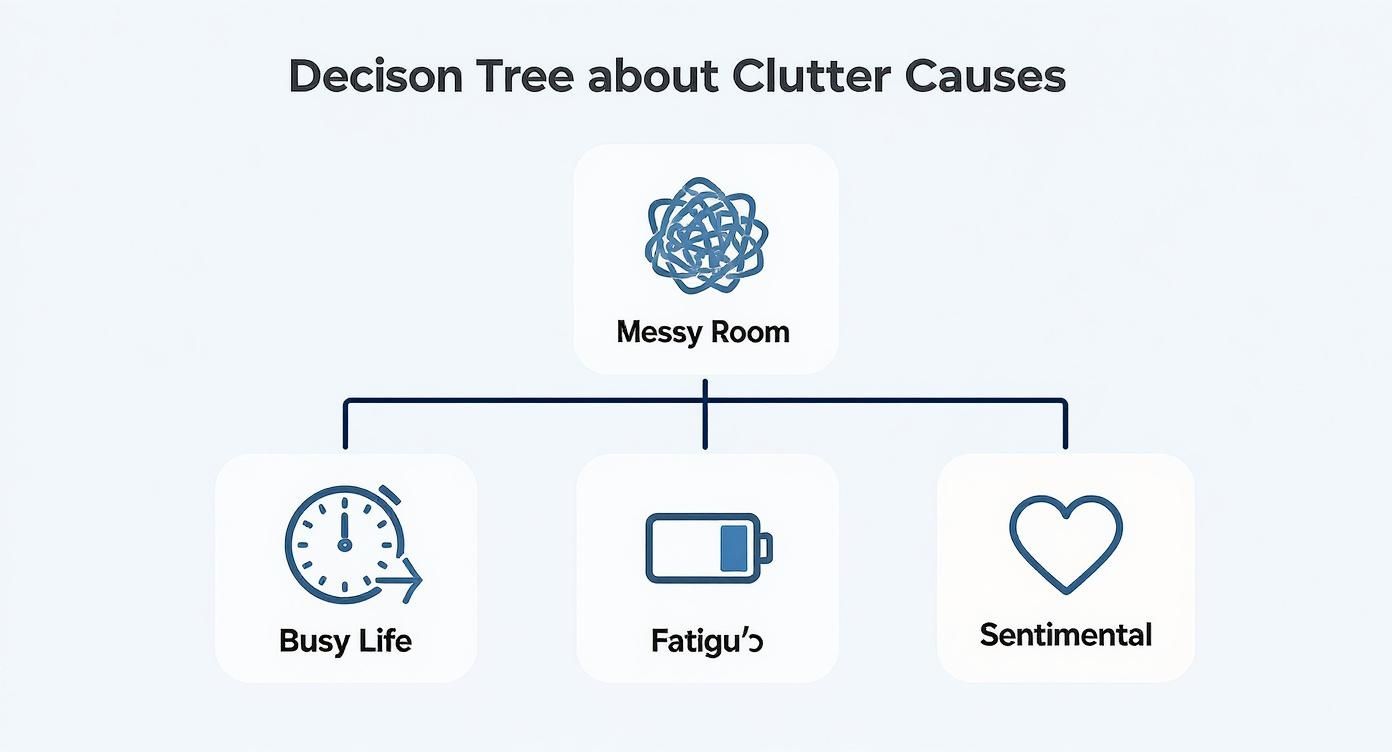
As the decision tree illustrates, a messy room often comes from being busy, tired, or holding onto things for sentimental reasons. Understanding your own clutter trigger is the first step toward creating a system that will actually stick.
A Room-by-Room Guide to Reclaiming Your Space
Alright, you’ve got your game plan and sorting system ready to go. Now for the fun part: putting it all into action. The secret to learning how to organize a cluttered home without completely burning out is to break it down into strategic phases. We’ll kick things off with the rooms that give you those quick, satisfying wins. This builds momentum and confidence before you tackle the tougher spots.

This isn’t about some magical overnight transformation. It’s about making real, tangible progress, one small zone at a time, until you've taken back your entire home. Let's dive into the usual clutter hotspots and create a simple, actionable checklist for each.
Start With the Living Room
The living room is supposed to be the heart of the home, but it often becomes a magnet for mail, shoes, toys, and all sorts of random stuff. Getting this space organized first delivers a massive psychological boost because it’s an area you see and use constantly. A calm living room creates a ripple effect of peace throughout the rest of the house.
Your main goal here is to carve out distinct zones for different activities—a spot for relaxation, a media zone, and maybe a small play area if you have kids.
Living Room Decluttering Checklist
- Clear the Coffee Table: This is your command center. Get everything off it except for a few intentional items, like a couple of books, a candle, or a small plant.
- Tackle Media Clutter: Sift through that collection of DVDs, CDs, and old video games. Be honest—will you really use them again? Donate the rest. A simple media console or cabinet works wonders for hiding consoles and wrangling cables.
- Sort Through Books and Magazines: Keep only the books you genuinely love or plan to read soon. Recycle old magazines and newspapers. If you haven't read them by now, you probably won't.
- Audit Decorative Items: Too many knick-knacks can make a room feel chaotic. Try grouping items in threes or fives for a more curated, intentional look. Store or donate the rest.
- Create a Home for Blankets and Pillows: Instead of letting them take over the sofa, tuck them away in a large decorative basket or an ottoman with hidden storage.
By zeroing in on these key areas, you'll see a huge difference almost immediately, making the whole project feel much more manageable.
Move on to the Bedroom Sanctuary
Your bedroom should be your personal sanctuary, a place for rest and relaxation. But for many of us, it’s ground zero for clothing piles and overflowing nightstands. A cluttered bedroom can mess with your sleep and start your day off with a dose of chaos. The goal is simple: create a peaceful environment that actually feels calm.
The closet is often the biggest beast in this room. Resist the temptation to pull everything out at once. Instead, start with just one category, like shoes or sweaters, to keep it from feeling so overwhelming.
A study found that people who describe their homes as "cluttered" or full of "unfinished projects" are more likely to be depressed and fatigued. Transforming your bedroom from a cluttered space into a serene retreat is a powerful act of self-care.
Bedroom Decluttering Checklist
- Clear the Nightstand: Your nightstand should only hold the essentials for your evening and morning routine—a lamp, a book, your phone, and maybe a glass of water. That's it.
- The Closet Purge: Go through your clothes one category at a time. If you haven't worn something in the last year, it's time to let it go. Be brutally honest about what fits and what actually makes you feel good.
- The "Chair-drobe": We all have one—that chair that's more closet than furniture. Make a new rule: at the end of each day, spend two minutes putting away any clothes that landed there.
- Under the Bed: This is prime real estate for storage, not a black hole for forgotten junk. Use labeled, low-profile bins for out-of-season clothes or extra bedding.
- Drawer by Drawer: Tackle one dresser drawer at a time. Pop in some simple drawer dividers to keep socks, underwear, and t-shirts neatly organized and easy to grab.
Conquer the Kitchen Chaos
The kitchen is the functional core of the home, but all its small gadgets and high traffic can lead to serious clutter. From expired food in the pantry to duplicate appliances you never touch, kitchen clutter can make cooking feel like a real chore. Your aim here is to streamline the space so it's efficient and easy to work in.
Start by clearing your countertops. A clear counter instantly makes the entire kitchen feel cleaner and bigger. You'll be surprised how many of those items can find a home in a drawer or cabinet.
Kitchen Decluttering Checklist
- Empty and Clean One Cabinet: Start small. Pick just one cabinet or even a single shelf. Take everything out, give it a good wipe, and only put back the items you actually use.
- The Pantry Edit: Pull everything out. Toss expired food, group similar items together, and use clear containers for things like pasta, rice, and cereal so you can see what you have.
- Tackle the Junk Drawer: Yes, that one. Dump the whole thing out, sort through it, and use small dividers to give every little thing a designated home.
- Assess Your Appliances: Do you really need that bread maker you used exactly once? If an appliance is just collecting dust, it's time to donate it.
- Organize Under the Sink: This spot can quickly become a jumble of cleaning supplies. A simple stackable shelf or a tension rod can create more vertical storage and keep bottles from toppling over.
Streamline the Bathroom
Bathrooms are usually small spaces, which means they get cluttered in a hurry. Expired medications, half-empty bottles of lotion, and a mountain of old towels are the usual suspects. Your mission is to make this small space as functional and spa-like as you can.
Vertical storage is your best friend in a tiny bathroom. Think over-the-toilet shelving, wall-mounted cabinets, or even tiered trays for the countertop.
Bathroom Decluttering Checklist
- The Medicine Cabinet: Safely get rid of any expired medications, makeup, or skincare.
- Under the Sink: Pull everything out, wipe down the area, and group items by category (hair care, skincare, first aid). Clear bins are perfect for keeping everything contained.
- Shower and Tub Ledges: Ditch those nearly-empty shampoo bottles. Try to limit yourself to only the products you use every day.
- The Linen Closet: Go through your towels and bedding. Keep only what you truly need and donate the worn-out ones. Learning how to properly fold a fitted sheet will save you a shocking amount of space.
For those living in really tight quarters, learning how to organize a small studio apartment can offer some brilliant strategies for making every inch count—many of which are perfect for a small bathroom.
Optimize the Home Office
Whether it's a dedicated room or just a corner of the living room, the home office is a magnet for paper clutter. Piles of mail, old documents, and tangled cords can make it nearly impossible to focus. The goal is to create a streamlined, functional workspace that actually makes you feel productive.
Your biggest battle here will be with paper. Set up a simple system: one inbox tray for all incoming papers. Go through it once a week and decide immediately whether to file, shred, or act on each item.
Home Office Decluttering Checklist
- Clear the Desk Surface: Your desk should be for current work, not long-term storage.
- Go Through the Paper Piles: Sort every single piece of paper. Shred what you don't need and create a dead-simple filing system for what you have to keep.
- Tackle Desk Drawers: Use drawer organizers for pens, paper clips, and all those other small supplies.
- Manage the Cords: Use cable ties, clips, or a cable management box to tame that snake pit of wires behind your desk.
- Review Your Bookshelves: Be ruthless. Keep only the books that are relevant to your work or that you genuinely love to look at.
By working through your home room by room, you turn a massive, overwhelming task into a series of small, manageable projects. Each cleared countertop and organized drawer builds momentum, bringing you one step closer to the calm, functional home you deserve.
Implementing Smart Storage to Keep Clutter Away
Alright, you’ve sorted through everything, and the piles are gone. Now comes the real challenge: keeping it that way. Just shoving things into bins and calling it a day is a temporary fix at best. To truly keep your home organized, every single item you decided to keep needs a logical, accessible home—a designated spot where it actually belongs.
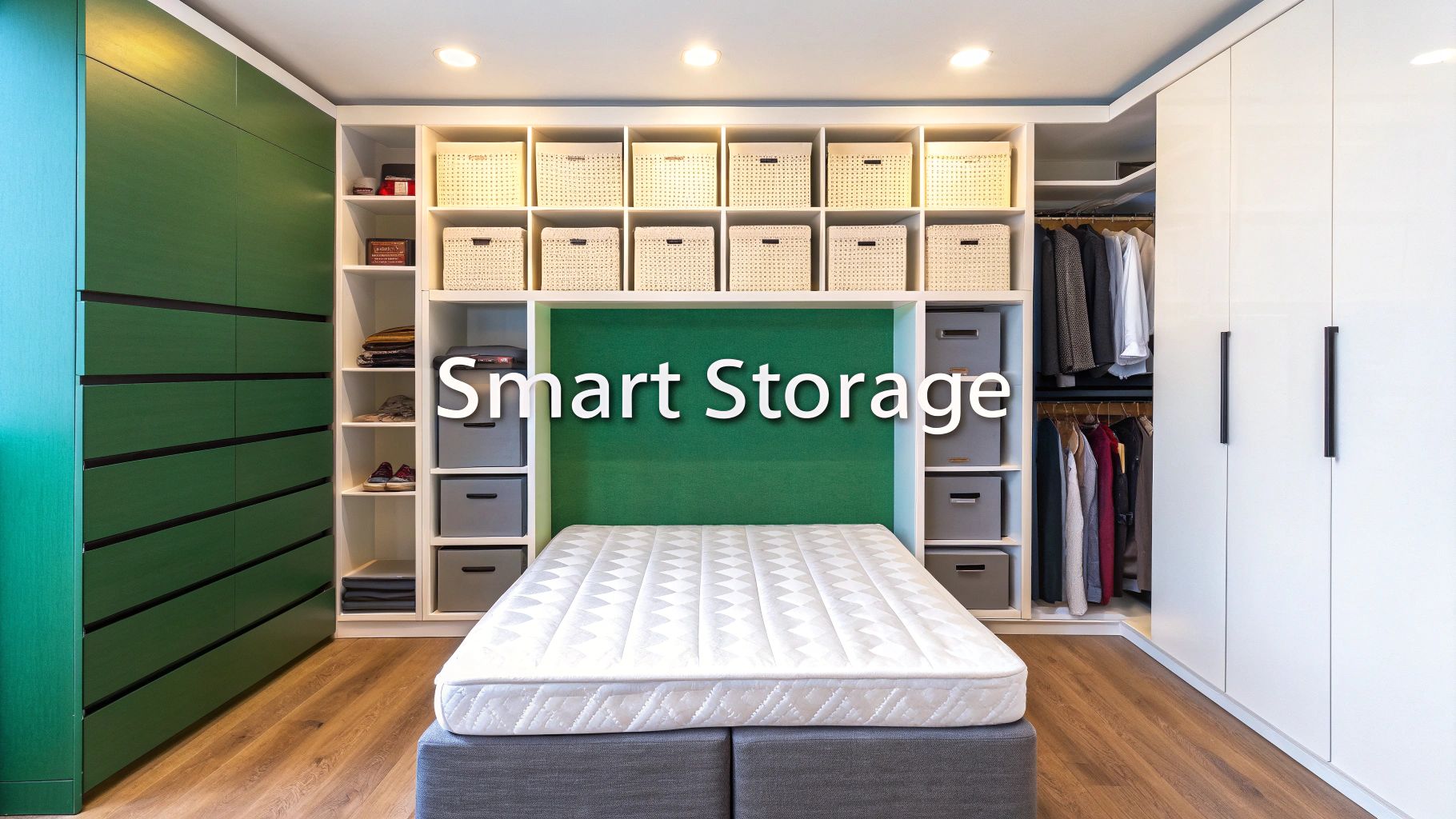
This is where smart storage becomes your secret weapon. It’s all about finding solutions that work with your space and your daily flow, not against them. The goal is to make putting things away just as easy as taking them out. If the system is easy, you'll actually stick with it.
Think Vertically and Find Hidden Spaces
In most homes, and especially in smaller city apartments, vertical space is the most overlooked asset. When you can’t build out, you have to build up. Shifting your perspective this way can unlock a ton of storage potential you never realized you had.
- Go Up the Walls: Install some floating shelves above your desk or tuck tall, slender bookcases into empty corners. This draws the eye upward and gives you valuable real estate without eating up your floor space.
- Leverage Door Space: Don't forget about the back of your doors! Over-the-door organizers are fantastic for more than just shoes—use them inside a pantry for spices, in the bathroom for toiletries, or in a closet for scarves and belts.
- Utilize Underutilized Areas: The space under your bed is prime real estate. Instead of letting it become a haven for dust bunnies, grab some low-profile rolling containers for stashing out-of-season clothes, extra linens, or sentimental keepsakes.
Strategically chosen storage is what makes or breaks a tidy space. For example, if you learn how to maximise your bedroom storage, you can tackle one of the most common clutter hotspots head-on.
Choose Furniture That Works Smarter
Your furniture shouldn't just look good; it should be working for you. Multifunctional pieces are an absolute game-changer in compact living spaces where every square foot is precious. It's no surprise that the home organization market is projected to hit around $13.27 billion by 2025—people are realizing the power of smart design.
Think about swapping a standard coffee table for an ottoman with hidden storage inside for blankets and remotes. Or maybe a bed frame with built-in drawers. Every piece that pulls double duty is a major win against clutter.
Smart storage isn't about buying more bins. It's about making your space work for you. The goal is to create a system so intuitive that tidying up becomes a natural habit, not a dreaded chore.
For items you need but don't use often—like holiday decorations, important paperwork, or sentimental items—an off-site solution can be a lifesaver. Per-box storage services let you clear out valuable closet space without having to part with things that matter. If you're weighing the options, looking into affordable storage solutions can help you figure out what makes sense for your budget and your stuff.
Create Zones and Use a Container System
Once you've made the most of your space, the final piece of the puzzle is to group similar items together into designated zones. This is the "everything has a place" philosophy in action. I recommend using clear or labeled containers to make it dead simple to see where everything goes.
- In the Kitchen: Keep all your baking supplies together in one cabinet. Use drawer dividers to finally tame that utensil drawer.
- In the Office: Dedicate one drawer just for electronics and chargers. Get a simple filing system going for important papers.
- In the Closet: Arrange clothes by type (shirts, pants, etc.) and use shelf dividers to stop those sweater piles from collapsing.
This container-based system makes it ridiculously easy to see what you own, which helps prevent you from buying duplicates. More importantly, it gives you a clear road map for where to put things back when you're done, finally breaking that endless cycle of clutter for good.
Building Habits to Maintain Your Organized Home for Good
You’ve done it. You’ve conquered the clutter, sorted through the chaos, and carved out a space that finally feels calm and functional. The heavy lifting is over, but the real secret to keeping that cluttered home organized for good? It all comes down to what you do next.
This isn’t about scheduling more marathon cleaning sessions. It’s about weaving small, consistent habits into your everyday life—simple routines that stop the mess before it even has a chance to take root. Lasting organization is built on small, repeated actions, not just the occasional heroic overhaul.
The Power of Daily Resets and Simple Rules
To keep your home from sliding back into its old ways, you need a couple of non-negotiable systems. Don't worry, these aren't complicated. In fact, their power is in their simplicity. They act as your first line of defense against clutter.
Two of the most effective habits I’ve seen people successfully adopt are the five-minute reset and the one in, one out rule.
The Five-Minute Reset: Every evening before you settle in for the night, set a timer for just five minutes. Use that time for a quick sweep of the main living areas. Put the remote back, fluff the sofa cushions, wipe down the kitchen counter, and deal with any stray mail or shoes. It's a tiny investment that prevents small daily messes from snowballing into a weekend-long project.
The "One In, One Out" Rule: This one is your best defense against accumulating new clutter. Every time you bring something new into your home—whether it's a new pair of jeans, a book, or a kitchen gadget—an old item from the same category has to go. It forces you to be more mindful about your purchases and keeps your home at a perfect equilibrium.
With these rules in place, organization stops being a big, daunting event and becomes a natural, ongoing part of your life.
Creating Systems the Whole Family Can Follow
Let's be real: your beautifully organized home will only stay that way if everyone living there is on the same page. The trick is to make the systems so simple and logical that it’s actually easier to follow them than to ignore them.
Start by creating a designated “landing zone” right by your main entrance. This is where keys, mail, wallets, and backpacks live the second they come through the door. A simple tray, a few hooks, and a small basket can completely eliminate those frustrating piles that always seem to sprout on the kitchen counter or dining table.
An organized home is the product of hundreds of small, easy decisions made every day. When you create simple systems, you remove the guesswork and make tidiness the path of least resistance for everyone.
For a weekly rhythm, give each family member a small "reset" task. One person could be in charge of sorting and recycling the week's mail, while another makes sure all the shoes have made it back to the closet. When the responsibility is shared and the tasks are small, it feels like a team effort instead of a chore.
If you’re looking for a little extra motivation to keep going, joining an ultimate decluttering challenge can be a fun way to stay on track.
By weaving these tiny routines into the fabric of your family’s life, you shift the dynamic entirely. You’re no longer fighting a constant battle against clutter; you’re simply living in a way that doesn’t create it in the first place. That’s how you make sure your peaceful, organized home is here to stay.
Common Questions About Organizing a Home
Even with the best game plan, you’re bound to hit a few snags when you start organizing a cluttered home. It’s completely normal to feel stuck, especially when you’re dealing with years of accumulated stuff. Let's walk through some of the most common challenges people run into and give you some real-world answers to keep the momentum going.
One of the biggest hurdles isn't physical at all—it’s emotional. What on earth do you do with items that hold huge sentimental value but are taking over your space?
Handling Sentimental Items
Letting go of sentimental items can feel like you're letting go of a precious memory, and that's what makes it so tough. The real key here is to learn how to separate the memory from the actual object. You don’t need to keep every single crayon drawing your child ever made to cherish their childhood.
Instead of letting these items pile up, create a system that honors the memories without sacrificing your living space:
- Create a Memory Box: Get one—and only one—reasonably-sized box for your most treasured keepsakes. The limit forces you to really think about what’s irreplaceable.
- Take a Picture: For bulky items or things you just can't keep, snap a high-quality photo. Start a digital album called "Sentimental Things" so you can look back on the memory anytime you want, minus the physical clutter.
This approach lets you hold onto the past without letting it crowd out your present.
Getting Your Family on Board
You can't declutter a home in a vacuum. If you live with other people, getting them on your side is absolutely essential if you want the changes to stick. The trick is to frame it as a team effort, not a chore you’re forcing on them.
Start with the "why"—explain how a tidier, more organized home will benefit everyone. Think less stress, more room to relax, and no more frantic searching for lost keys. Give each person ownership over their own stuff and their personal spaces, like their closet or their side of the bedroom. The common areas? Those are a shared responsibility. Using a clear, step-by-step guide like our complete home organization checklist can be a huge help in getting everyone on the same page with well-defined tasks.
The goal isn’t a flawless, magazine-perfect home. It’s a functional one that actually works for everyone living in it. Frame this whole process as a way to build a better, more peaceful life together.
By tackling these common roadblocks with a clear strategy, you can navigate both the emotional and logistical hurdles of decluttering. What felt like a sticking point can become a chance to build better habits and a more collaborative household.
For all those seasonal items or boxes of keepsakes you just can't part with, Endless Storage offers a simple solution. We'll send you boxes, you pack them up, and we’ll store them safely until you need them again. Clear out your closets without losing what matters at https://www.endless-storage.com.
Frequently Asked Questions
Unveiling the Secrets to Effortless Storage
Endless Storage is available nationwide. You pick a plan, tell us where to pickup, and we'll send a UPS van to collect, whichever state you're in.
Your shipping label will be sent to your email within a few minutes, if not instantaneously. It can also be accessed through your customer profile.
Your box will be shipped to one of our climate controlled self storage facilities in our closest self storage facility. Our manager will accept your package, notify you that your box has been received, and securely stored. Only our managers will have access to Endless Storage boxes.
Email us at admin@endless-storage.com click to live chat with us, or send us a message below.
Never! We're committed to transparent pricing with no surprises. You'll lock in your rate with no hidden fees and no long-term contracts.
Fast access guaranteed! Your boxes will arrive at your doorstep within 48 hours of requesting them back. Need to check on delivery? We provide tracking information for complete peace of mind.
Totally flexible! Store month-to-month with no long-term commitment and cancel anytime.
Everything's online! Use your account dashboard to:
• Set up automatic monthly payments
• Request box returns
• Update your address
• Order additional boxes
• Track shipments
Your boxes are insured up to $100 each. Our customer service team will help you file any necessary claims and resolve issues quickly.
Don't worry – we'll email you right away if there's a payment issue. Your items stay safe, though you may have temporary service interruption or late fees until payment is resolved.
When you request our free storage kits, you'll have 30 days to send in your boxes to activate your 3 months of free storage. Think of it like starting a gym membership – your activation window begins when you receive your kits, and your full free trial begins once you send in your first box. During your free months, you'll experience our complete storage service at no cost.
Your 30-day activation window begins when you receive your storage kits. We'll send you an email confirmation when your kits are delivered, marking the start of your activation period.
If you haven't sent any boxes for storage within your 30-day activation window, your free trial will expire and we'll begin charging the regular monthly rate of $9.99 per box. This helps ensure our storage kits go to customers who are ready to use our service.
A box costs $9.99 per month to store (plus sales tax). This price includes free shipping for standard boxes under 50 lbs. and smaller than 16"x16"x16"
Log into your Endless Storage account, locate the box you would like returned, and simply click Return My Box.
Yes, each box stored with us is insured for up to $100 throughout transit as well as the duration of storage within our facilities.
Your box will be at your doorstep within 48 hours of you requesting it back.
Store 10+ boxes? We'll pick them up for free! After your purchase, we'll contact you to schedule a convenient pickup time and arrange UPS collection.
We trust UPS with all shipments, and every box includes $100 insurance coverage. You'll receive tracking information to monitor your items' journey.
Yes! Visit any of our locations by appointment. Just bring a photo ID matching your customer profile.
For everyone's safety, we can't store hazardous materials, firearms, or perishables. All items must fit within our standard boxes.
It's easy! Order your storage kit online, and we'll ship it to you within 1-2 business days. Your shipping labels will be emailed instantly and available in your account.
We're here to help! Email us at admin@endless-storage.com, use our live chat, or send us a message through your account.
To cancel your storage service with Endless Storage, please email your cancellation request to admin@endless-storage.com. Our team will process your request within 2 business days and confirm your cancellation via email.
We understand packing takes time. However, to maintain your free trial benefits, you'll need to send at least one box within the 30-day activation window. If you need more time, you can always start with one box to activate your trial and send the rest later. You can always reach out to admin@endless-storage.com if you have any issues or concerns.
When you request our free storage kits, you're starting a 30-day window to begin using our storage service.
Important: To activate your free trial, send at least one box for storage within 30 days. If no boxes are sent within this 30-day window, a one-time $50 fee applies to cover materials and shipping costs. This fee is clearly disclosed before you sign up.
Think of it like reserving a hotel room – we're setting aside space and sending specialized packing materials for your use. The fee only applies if you request materials but don't begin storage, similar to a hotel's no-show charge.