
How Much Is a Storage Unit Per Month? A Pricing Guide
So, you're trying to figure out how much a storage unit is going to set you back each month. It’s a common question, and the honest answer is: it depends.
On average, you can expect to pay somewhere between $90 and $200 per month for a self-storage unit. But that’s a pretty wide range, right? Your final bill is going to hinge on a few key things, like the unit’s size, where you live, and whether you need special features like climate control.
Your Guide to Monthly Storage Unit Costs
Getting a handle on the typical price of a storage unit is the first step toward making a smart rental decision. While there's no single price tag that fits everyone, looking at national averages gives you a solid baseline for your budget. The most popular size, a 10x10 unit, usually lands right in the middle of that price spectrum.
Recent industry data shows the average cost has settled around $128.00 per unit. For that common 10x10 size, the average monthly bill is about $160.
Now, if you’re storing anything sensitive—think wood furniture, old photos, or electronics that can't handle extreme temperatures—you'll want to spring for a climate-controlled unit. That feature typically adds another $20 to $50 to your monthly cost. If you're a data person, you can get a really detailed look at market trends in the US Self Storage Market Outlook from Cushman & Wakefield.
To make this a bit more tangible, here's a quick visual breakdown of what you might pay for small, medium, and large units.
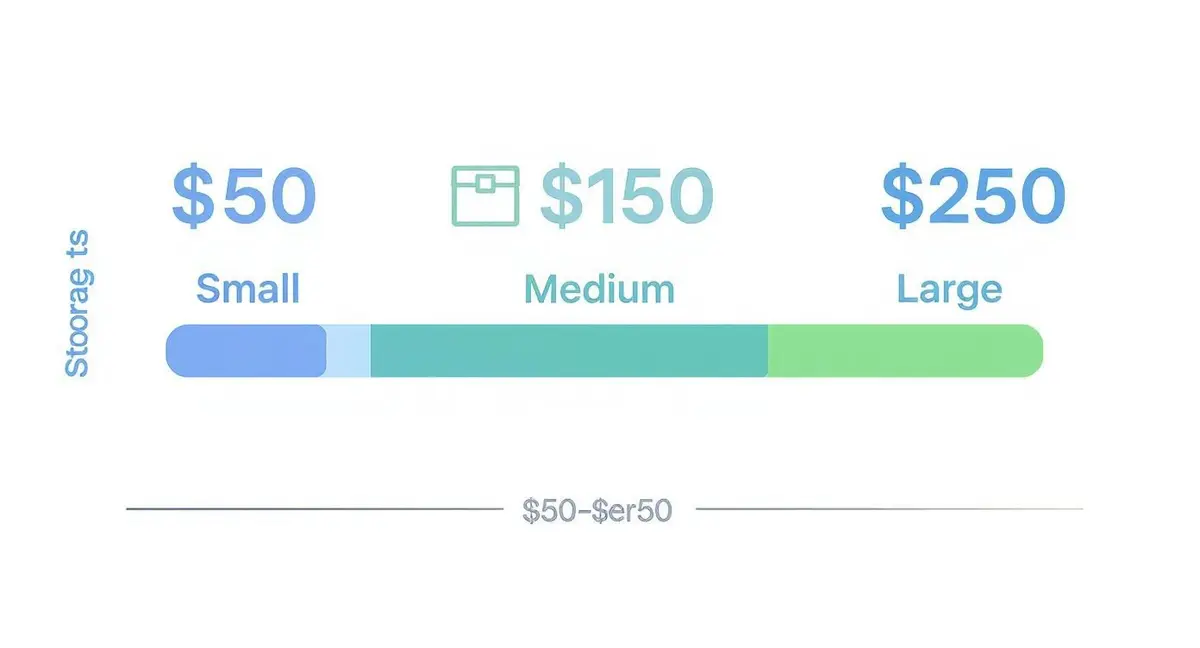
As you can see, the price jumps pretty significantly as you go from storing just a few boxes to the contents of an entire home. Let's dig into those numbers a little more.
Estimated Monthly Storage Unit Costs by Size and Type
To give you a clearer idea, here's a quick overview of typical monthly price ranges for the most common self-storage unit sizes. I've broken it down by standard units and their climate-controlled counterparts.
These figures are a great starting point, but just remember that they can definitely shift based on your city and what local demand looks like at the moment. For a deeper dive into all the little things that can influence your final bill, check out our comprehensive guide on the price of a storage unit.
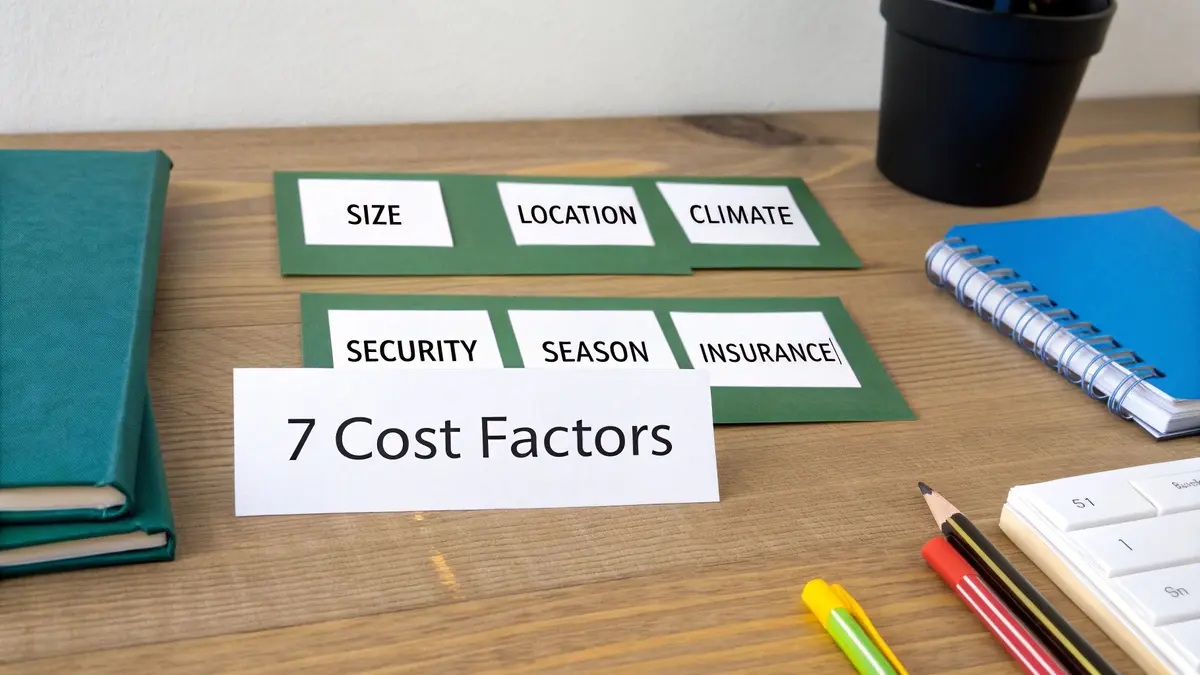
The 7 Key Factors That Determine Your Monthly Cost
The price you see advertised online for a storage unit is rarely the full story. To really get a handle on what you'll pay each month, you have to look at all the ingredients that make up that final number. Think of it like buying a car—the base model has one price, but tacking on leather seats, a sunroof, or a better sound system will definitely change what you drive off the lot with.
Storage unit pricing works the same way. It's a blend of several crucial factors. Once you understand these seven core components, you can figure out which features are must-haves for your stuff and which you can skip to save a few bucks. It's all about empowering you to compare facilities accurately and find the best value for your specific situation.
1. Unit Size: The Foundation of Your Bill
This one’s straightforward: the single biggest factor influencing your monthly cost is the unit's size. Facilities price their units based on square footage, so the more space you rent, the more you’ll pay. It’s a basic real estate principle—bigger spaces simply cost more.
A small 5x5 unit, which is perfect for stashing a few boxes or some seasonal decorations, is always going to be your most budget-friendly option. On the other end of the spectrum, a large 10x20 unit can hold the entire contents of a three-bedroom house and will naturally sit at the top of the price scale. Getting an accurate estimate of your space needs is the first and most important step to keeping costs in check.
2. Location: The Neighborhood Premium
Just like with apartments and houses, location is a massive price driver for self-storage. A facility plopped in the middle of a dense, high-demand city center has way higher overhead—think land costs, taxes, and general operations. Those costs get passed right along to you, the renter.
An identical 10x10 unit in downtown Manhattan could easily cost three or four times what you'd pay for the same space in a rural town a few hours away. Even within the same city, prices can swing wildly from one neighborhood to the next. If you don't need to pop in and out of your unit every day, checking out facilities a few miles outside the city center can lead to some serious savings.
3. Climate Control: An Essential Upgrade for Valuables
Climate control is one of the most common—and valuable—add-ons you can get, and it absolutely comes at a premium. These units are designed to maintain a stable temperature and humidity level, protecting your items from the kind of extreme heat, cold, and moisture that leads to warping, mildew, and rust.
This feature typically adds $20 to $50 to your monthly rent, but it's a non-negotiable expense if you're storing sensitive items like wood furniture, electronics, artwork, important documents, or musical instruments. For a detailed breakdown, you can learn more about the specific climate controlled storage cost in our detailed guide.
Figuring out if you need this is a crucial step. If you’re just storing things that could sit safely in a garage, a standard unit will do the job and save you money. But for anything valuable or sentimental, that extra cost is a worthwhile investment in keeping your belongings safe.
4. Facility Amenities and Security
The features a facility offers also play a big part in your monthly bill. A brand-new facility decked out with advanced security systems, 24/7 access, and bright, well-lit hallways is going to charge more than an older, more basic spot.
Key amenities that can bump up the price include:
- Advanced Security: Things like individual door alarms, comprehensive video surveillance, and on-site managers provide extra peace of mind, but at a higher cost.
- 24/7 Access: The convenience of getting into your unit whenever you want often comes with a slightly higher monthly fee compared to facilities with limited gate hours.
- Drive-Up Access: Those ground-floor, drive-up units are a lifesaver for loading and unloading heavy items, so they are typically priced higher than indoor units on upper floors.
5. Seasonal Demand: The Moving Season Surge
The self-storage industry has its own version of a busy season, much like the travel industry. You'll see prices start to climb in the spring and peak during the summer months—that’s when everyone is moving. College students looking to store their dorm stuff for the summer also contribute to this surge.
If you have some flexibility in your timeline, you can often score better rates by renting a unit during the off-season, which is usually from late fall through winter. Facilities are much more likely to offer promotions and discounts when demand is low.
6. Required Storage Insurance
Heads up: nearly every storage facility will require you to have insurance for your belongings. This is because their own property insurance covers the building, not the stuff you put inside your unit. You’ll generally have two choices: buy a protection plan directly from the facility or use your existing homeowner's or renter's insurance.
Facility plans usually run between $10 and $30 per month, depending on how much coverage you want. Before you sign up for their plan, it’s worth checking your personal insurance policy—many already cover off-site storage at no extra charge. Just providing proof of your own insurance can save you a decent chunk of change each year.
7. Lease Duration and Promotions
While most storage rentals operate on a month-to-month basis, some facilities will offer discounts for a longer commitment. If you know for sure you'll need storage for six months or a year, it never hurts to ask if they have a long-term rate. On top of that, many companies run eye-catching promotions like "first month free" or 50% off the first three months. These deals can offer great savings upfront, but always, always read the fine print to see what the rate will jump to after the promotional period ends.
How Location Dramatically Affects Storage Unit Prices
Of all the things that determine what you'll pay for a storage unit each month, location is the undisputed king. The difference between renting a unit in a busy city center versus a quiet suburb can be absolutely staggering.
Think of it like buying a cup of coffee. That same simple brew costs way more in Times Square than it does at a local cafe in a small town. The product is identical, but the real estate it sits on dictates the price. It's the same deal with storage.
This all comes down to basic economics. A storage facility in a prime downtown spot pays a fortune for its land, gets hit with higher property taxes, and has bigger operational costs. Naturally, those expenses get passed on to you. An identical 10x10 unit might cost $250 per month in a major urban core, while that same space could be just $90 a mere 30-minute drive away.
The Urban vs. Suburban Price Gap
This price difference isn't just about a big city versus the countryside; it can be just as dramatic within the same metro area. A facility in a trendy, high-demand neighborhood will always charge a premium over one in a more industrial part of town. You're paying for the convenience of being close to business districts or wealthy residential zones.
But here’s where you can find a major opportunity for savings. If you don't need to get to your stuff every day, expanding your search radius by just a few miles can unlock some serious discounts. Just looking at facilities right outside the city limits or in a less-congested neighboring town can often slash your monthly bill by 30-50%.
The self-storage rental market exhibits dramatic geographic variations, with major metropolitan areas commanding significantly higher premiums. In London, for example, the average monthly rent for a unit can be three to four times higher than in the North East of England, reflecting the city's scarce land and intense demand. Discover more insights about these global self-storage trends.
This is why it pays to be a savvy renter. You have to weigh convenience against cost. Ask yourself: how often will I really need to visit my unit? If it’s only once a month or less, the savings from a short drive can easily add up to hundreds of dollars a year.
How to Leverage Location for a Better Deal
Finding the best price is all about being a little strategic. Don't just punch "storage units near me" into a search engine and call it a day. Instead, broaden your scope to find that sweet spot between affordability and accessibility.
Here’s a simple plan to follow:
- Map Your Radius: Start by searching in your immediate area to get a baseline price. You need to know what the "convenience price" is.
- Expand Your Search: Next, widen that search to include suburbs or towns about 10-15 miles away.
- Compare Prices: Jot down the price differences for the same unit size. You'll almost certainly see costs drop the farther you get from the city center.
- Calculate Your Savings: Finally, figure out if the monthly savings are worth the extra travel time for your specific needs.
By exploring different storage unit locations, you put yourself in the driver's seat. You get to make a decision based on real value, not just what's closest. A little bit of research here can make a huge difference in your monthly budget.
Calculating Your True Monthly Storage Bill
The price you see advertised on a storage facility's website is the starting line, not the finish line. To figure out what a storage unit really costs per month, you need to look past the base rent and account for all the extra fees that pop up on the final bill.
It’s a lot like buying a concert ticket—the ticket price is one thing, but the service fees, facility charges, and taxes always make the final cost higher.
If you're renting for business, it’s especially important to know how to efficiently track all your business expenses. Adopting that mindset from the start helps you see the complete financial picture and prevents any nasty surprises down the road. Let’s break down how that simple base rate can grow into a much larger monthly commitment.
From Base Rent To Your Final Bill: An Example
Let's say you've found a 10x10 climate-controlled unit, which is a really common size and a good benchmark for pricing. The facility is advertising a great promotional rate of $160 per month. Looks good, right? But that's just the first piece of the puzzle. Here’s how other costs start to layer on top of that initial price.
Let's walk through a typical scenario to see how quickly it all adds up.
The sticker price is designed to get you in the door, but your actual monthly payment will almost always be higher. Common additions like mandatory insurance, one-time admin fees, and local sales tax can easily add 15-25% or more to your base rent.
Now, let's put these numbers into a clear, practical format. The table below shows a sample calculation, turning that initial $160 quote into a much more realistic monthly expense.
Sample Monthly Storage Cost Calculation
This example breaks down how the base rent and additional fees combine to create the total monthly cost you'll actually pay for a storage unit.
As you can see, the advertised $160 rate quickly became $187.80 per month—an increase of nearly 18%. This is exactly why getting a full, itemized quote is absolutely essential before you commit to anything.
And if you’re not even sure what size you need, using a good storage unit size calculator can stop you from overpaying for space you won't even use.
Essential Questions To Ask Before You Sign
To avoid getting blindsided by hidden costs, you need to become an informed renter. Before you sign any lease, arm yourself with a checklist of questions for the facility manager. This one simple step can save you from a world of financial headaches.
Be ready to ask the following:
- What is the total monthly cost, including all taxes and fees? Get a complete, itemized breakdown in writing.
- Is insurance required, and what does your plan cover? Ask if you can use your existing homeowner's or renter's policy instead.
- Are there any one-time fees, like an administrative or setup fee?
- What is your policy on rent increases? You'll want to know how often they raise rates and by how much.
- What are the fees for late payments or other potential penalties?
- Does this rate expire after a promotional period? Confirm when the standard rate will kick in.
By asking these direct questions, you take control of the conversation and make sure the price you agree to is the price you'll actually pay.
Smart Strategies to Lower Your Monthly Bill

Knowing what drives storage unit prices is one thing, but using that information to your advantage is how you really save money. With a few smart moves, you can knock a surprising amount off your monthly bill and make sure you’re not overpaying for space you don’t need. It really just comes down to being a strategic shopper and knowing where to look for value.
These are tried-and-true strategies that you can put into practice right away. From simply picking the right size to timing your rental perfectly, every tip is designed to keep more money in your pocket.
Choose the Perfect Unit Size
This is the big one. The most common mistake people make is renting way more space than they actually need. Getting a 10x20 unit when a 10x10 would have done the job means you’re literally paying for empty air, month after month. It’s the easiest way to waste money in self-storage.
Before you even start looking at facilities, make a quick inventory of everything you’re putting away. Online storage calculators can help, but it’s also useful to visualize the space. A 5x5 unit is basically a small walk-in closet, while a 10x10 is about the size of an average bedroom. Getting this right is the absolute foundation of a good deal.
Pro Tip: Think vertically when you pack. Sturdy, stackable boxes let you use the full height of the unit, which often means you can squeeze into a smaller—and cheaper—space than you first thought.
Don't pay for square footage you’re not going to use. A little planning here saves you cash from day one.
Hunt for Move-In Specials and Promotions
The self-storage world is surprisingly competitive, with facilities constantly fighting for new customers. That competition is great news for you because it leads to all sorts of move-in specials. These deals are designed to get you in the door and are one of the best ways to slash your initial costs.
Keep an eye out for these common promotions:
- First Month Free: You can't beat this one. It completely wipes out your first payment.
- 50% Off the First Three Months: This offers a really nice discount over a longer period, giving you significant savings upfront.
- $1 for the First Month's Rent: A classic offer that makes your first bill almost disappear.
Of course, always glance at the fine print for things like minimum stay requirements. But these deals are a fantastic way to give your budget some breathing room. To get a better handle on spotting the best offers, it helps to learn how to effectively compare storage unit prices and find those hidden gems.
Look Just Outside the City Limits
Like we talked about earlier, location is a massive factor in pricing. A storage unit in a prime downtown spot is always going to cost more than one in a suburb just a 15-minute drive away. If you don't need to get to your stuff every day, expanding your search radius is a guaranteed win.
Just think about how often you'll actually visit the unit. If you're storing long-term items you only need a couple of times a year, the savings from a short drive can be huge. It’s not uncommon to see a 20-40% drop in your monthly bill just by picking a facility a few miles outside a major city center.
Additional Money-Saving Tips
Beyond those big-ticket strategies, a few smaller tactics can help you chip away at the monthly cost. They all add up over time.
- Skip Unnecessary Insurance: First, check your homeowner's or renter's insurance policy. Many policies already cover personal items stored off-site. If yours does, you can confidently decline the facility’s in-house plan, often saving $10-$25 a month.
- Ask for Discounts: You'd be surprised what's available if you just ask. Many facilities have special rates for students, military members, or seniors that they don't always advertise. It never hurts to inquire.
- Rent During the Off-Season: Storage demand hits its peak in the summer when everyone is moving. If you have the flexibility, try to rent your unit in the fall or winter. Facilities are often more willing to cut a deal to fill empty units during these slower months.
- Consider an Upper-Floor Unit: Ground-floor and drive-up units come with a premium for convenience. If you don't mind using an elevator and can handle a little extra walking, choosing a unit on an upper floor can often shave a few bucks off your monthly rate.
Frequently Asked Questions About Storage Costs
Even after you've crunched the numbers, a few questions about the real cost of storage can linger. It's totally normal. This last section is all about tackling the common "what ifs" and "wait a minutes" we hear from renters all the time.
Think of it as your final checklist. We'll clear up any confusion around hidden fees, insurance rules, move-out policies, and whether you can actually negotiate the price. By the end, you'll be able to sign on the dotted line with confidence, knowing exactly what to expect.
Are There Hidden Fees I Should Watch Out For?
Yes, almost always. The price you see advertised is rarely the final price you'll pay, and a few common fees can sneak up on you if you're not looking for them.
One of the most common is a one-time administrative fee, which usually runs between $10 and $30. This is a setup charge for new customers and is typically non-negotiable.
Another thing to look out for is the lock. Some places include one, but many require you to buy a specific high-security lock directly from them. And you definitely want to ask about late fees—they can be surprisingly steep.
Always ask for a complete, itemized list of all potential fees before you sign the rental agreement. This simple step forces transparency and ensures you won't be caught off guard by unexpected charges on your first or subsequent bills.
Also, be sure to read the fine print on any special promotions. That "first month free" deal might lock you into a minimum stay, and that great introductory rate could jump up significantly after a few months.
Is Storage Unit Insurance Really Necessary?
In almost every case, yes, it's mandatory. This is a huge point of confusion for first-time renters. The facility's insurance covers their building—the roof, the doors, the concrete—but it does not cover your personal belongings inside the unit.
So, if a fire, flood, or break-in were to happen, you'd be out of luck unless you have your own coverage. That’s why facilities require proof of insurance before they'll hand you the keys.
You generally have two options here:
- Buy Their Protection Plan: Most facilities offer their own insurance plans. They're convenient and usually cost between $10 and $25 per month, depending on how much coverage you need.
- Use Your Own Insurance: This is often the smarter financial move. Before buying the facility's plan, check your homeowner's or renter's insurance policy. Many policies already cover items stored off-site, sometimes for free or a tiny additional fee.
A quick call to your insurance agent can confirm the details and get you the paperwork you need for the storage manager. That one phone call could easily save you over a hundred dollars a year.
How Much Notice Do I Need Before Moving Out?
This is a critical detail you should check in your lease from day one. Move-out policies can vary, but the industry standard is to require written notice anywhere from 7 to 30 days before your next billing date.
Forgetting to give proper notice is a common and costly mistake. For example, if your rent is due on the 1st and you clear out your unit on the 2nd without telling them ahead of time, you’ll almost certainly be on the hook for that entire month’s rent.
To avoid that headache, just follow these steps:
- Check Your Lease: Find the specific clause that details the move-out procedure.
- Give Written Notice: Even if you tell them in person, send an email. It creates a paper trail.
- Clean Your Unit: Sweep it out completely to avoid getting hit with a cleaning fee.
- Confirm with the Manager: Let them know in person that the unit is empty to officially close out your account.
Following the rules ensures a smooth exit and keeps you from paying for a unit you aren't even using.
Can I Negotiate The Monthly Price Of A Storage Unit?
It's definitely possible, but your success will depend on a few things. Large, corporate-owned chains tend to have rigid pricing, but smaller, independent facilities often have more wiggle room. You also have more leverage during slower seasons, like late fall and winter, when they're trying to fill empty units.
Even if you can’t get them to budge on the monthly rent, you can often negotiate the other costs. That's where you can find some real savings.
Don't be afraid to politely ask for a better deal. Here are a few things you can try to negotiate:
- Waive the Admin Fee: Ask if they can drop the one-time administrative fee.
- Include a Free Lock: See if they’ll throw in a high-quality lock with your rental.
- Extend a Promotion: If a deal is for 50% off for three months, ask if they can make it four.
- Long-Term Discounts: If you know you’ll be renting for six months or more, ask for a discount for committing long-term.
The worst they can say is no. A friendly question can often lead to a much better deal, cutting down the total cost of your storage.
If the hassle and hidden fees of traditional storage feel overwhelming, there's a simpler way. Endless Storage offers a modern, by-the-box solution starting at just $2.99 per box. We send you the boxes, you pack them, and we pick them up for storage in our secure, climate-controlled facilities. When you need something back, we deliver it right to your door. Skip the truck rentals, the surprise fees, and the trips to a facility—discover the future of storage at https://www.endless-storage.com.