
Downsizing from house to apartment: A Practical Guide to a Clutter-Free Move
Swapping a house for an apartment isn't just about moving—it's a deliberate choice to trade extra space and endless upkeep for a simpler, more flexible lifestyle. This is more than a change of address; it's a fundamental shift in mindset that puts your freedom, finances, and experiences first.
Why a Smaller Home Can Mean a Bigger Life
Let's be honest, trading a big house for a cozy apartment isn’t a sacrifice. It’s a life upgrade. Think about it: all those weekends lost to yard work, the nagging worry of unexpected repairs, the constant cleaning—they all just disappear. What you get back is time and energy to actually do what you love.
You're not just losing square footage; you're gaining a whole new sense of freedom.
And you're not alone in making this move. In 2023, the trend of moving from houses to apartments shot up by 13% in major cities. Apartment moves actually became 87% more common than house moves, driven by soaring housing costs and people simply wanting a more manageable way to live.
Embracing a More Intentional Lifestyle
Downsizing is one of the most intentional decisions you can make. It forces you to take a hard look at everything you own and ask, "Do I really need this?" The process itself is a powerful way to declutter your home and, just as importantly, your mind.
For most people, living in a smaller, more central spot brings some incredible perks:
- Less Maintenance: No more mowing lawns, cleaning gutters, or panicking about a leaky roof. That’s someone else’s job now.
- More Freedom: With fewer responsibilities at home, you have the flexibility to travel, pick up a new hobby, or just say "yes" to last-minute plans.
- Better Access to Community: Apartments are often plopped right in the middle of vibrant, walkable neighborhoods, putting great restaurants, parks, and events just outside your door.
- Financial Breathing Room: Lower utility bills, property taxes, and repair costs can free up a surprising amount of cash for savings, travel, or whatever else you've been dreaming of.
At its core, downsizing is simple: you’re trading the burden of things for the freedom to create experiences. It's about choosing to live a fuller life with less stuff weighing you down.
To get a deeper sense of what this journey entails, this guide on Downsizing and Decluttering: A Simpler Life Awaits is a fantastic resource. It's great for helping you shift your perspective before you even pack the first box.
Building Your Downsizing Timeline
Successfully downsizing from a house to an apartment is a marathon, not a sprint. If there's one piece of advice I can give, it's this: start early. The key to avoiding that last-minute, everything-is-chaos feeling is to break the entire process into manageable chunks. A solid timeline turns an overwhelming project into a series of achievable goals.
This gives you the breathing room to make thoughtful decisions instead of panicked ones. Rushing is a recipe for regret—you’ll end up tossing things you wish you'd kept or making costly moving mistakes. Giving yourself at least three to four months creates the space you need for a deliberate, less stressful transition into your new life.
The Four-Month Countdown Starts Now
Here’s a practical, phased checklist to guide you from the initial "what if" stage all the way to moving day. This isn't just about packing; it's about methodically dismantling one life to build another, more streamlined one.
Your 4-Month Downsizing Checklist
Breaking it down this way makes the process feel much more in control. Instead of one giant, terrifying task, you have a clear, step-by-step plan to follow. For an even more granular breakdown, our moving checklist and timeline offers a deeper dive into organizing every little detail.
The first couple of months are all about research, planning, and setting the stage for the physical work. You’ll be figuring out where you're going and what’s not coming with you. This is when you measure your big furniture pieces and compare them against the floor plan of your potential new apartment.
Pro Tip: Don't just measure the furniture. Measure the doorways, hallways, and elevators in the new building, too. That beautiful oversized sofa won't do you any good if it can't get through the front door.
From Sorting to Moving Day
As you hit the two-month mark, the focus shifts to logistics and execution. This is when your plan really comes to life. Your decluttering should be in full swing—garage sales, donation pickups, and trips to the recycling center become your new weekend routine.
This is also the time to start packing the things you don't use every day. Think out-of-season clothing, books you've already read, and decorative items. Get those boxes packed, sealed, and clearly labeled with the contents and the room they’ll go into.
The final month is all about coordinating the moving parts. You’ll be confirming everything with your movers, transferring utilities, and handling all the administrative odds and ends. The most important task in this final stretch? Packing that "first night" box. Having your essentials—from toiletries and medications to phone chargers and a fresh set of sheets—easily accessible will make your first 24 hours in the new place infinitely smoother.
How to Declutter for Your New Life
Let's be honest: the emotional side of decluttering can feel a lot heavier than the physical task of moving. Sorting through a lifetime of belongings is deeply personal. When you’re downsizing from house to apartment, you’re forced to make what feels like hundreds of tiny, difficult decisions.
The key is to go in with a clear strategy and give yourself a little grace. This isn’t about ruthlessly tossing everything you own. It’s about curating a life that fits beautifully into your new, more intentional space.
This shift is happening everywhere, by the way. It's not just you. The median size of new single-family homes in the US actually dropped by 12% between 2015 and 2023. People are actively choosing quality of life over sheer square footage.
This timeline breaks down the journey into manageable phases, helping you stay on track and avoid that last-minute panic.
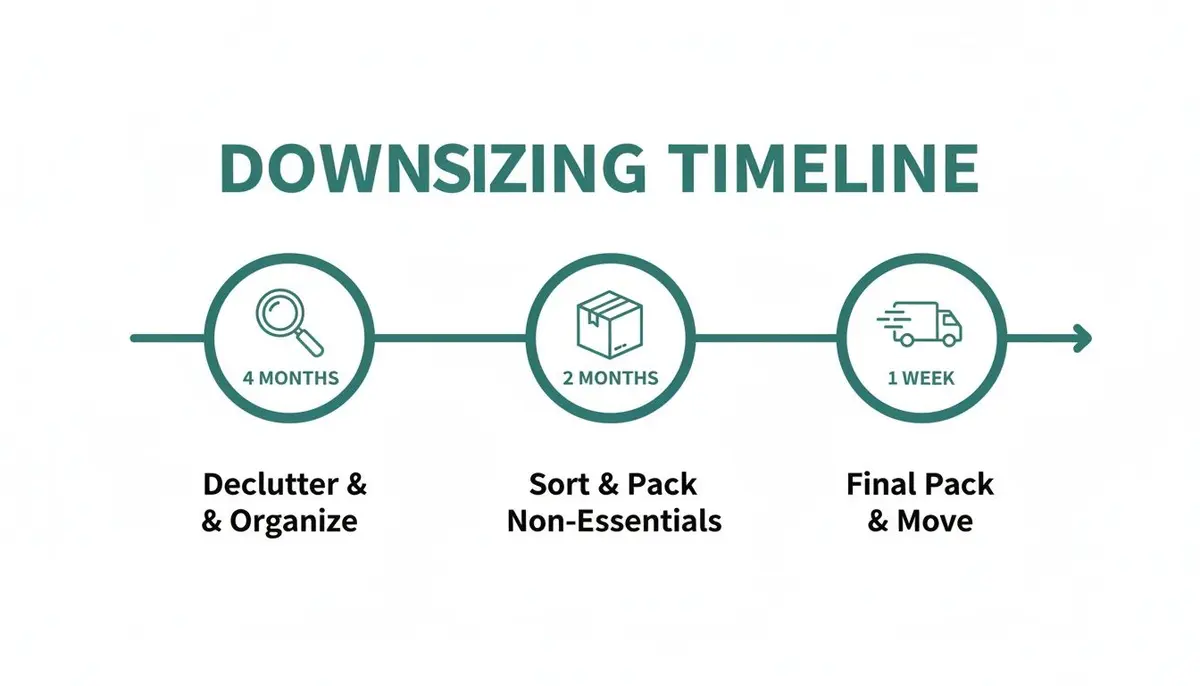
Starting early is the biggest favor you can do for yourself. Tackling the major decluttering months ahead of time prevents the stress and rushed decisions that lead to regret.
Adopt a Practical Sorting Framework
To sidestep decision fatigue, you need a system. The Four-Box Method is a classic for a reason—it’s simple, effective, and works for every single item you touch. Grab four large boxes (or just designate four corners of a room) and label them:
- Keep: These are the non-negotiables. They have a definite home and a clear purpose in your new apartment.
- Donate/Sell: Good-condition items that you no longer need can find a new life with someone else.
- Store: This is your solution for things you can't part with but won't have room for, like seasonal decor or sentimental family heirlooms.
- Discard: Anything broken, expired, or unusable. Be honest with yourself and let it go.
This simple framework turns a chaotic mess into an organized, step-by-step process. For a deeper dive into sorting strategies, check out our complete guide on how to declutter before you move.
Letting go doesn't mean you don't care. It means you're making room for a new chapter. The goal is to surround yourself only with things that support the life you want to live now.
How to Handle Sentimental Items
This is where things get tough. Emotional attachments make certain items the hardest to part with. Your grandmother's china, your kids' messy art projects, old photo albums—these things hold memories, not just monetary value.
Forcing yourself to discard them can lead to serious regret, but keeping it all is just not practical. The answer lies somewhere in the middle.
- Digitize Your Memories: Get a scanner and go to town on old photos, letters, and important documents. This preserves the memory perfectly without taking up an inch of physical space.
- Create a Memory Box: Designate one or two specific boxes for your most cherished keepsakes. Having a defined, limited space forces you to prioritize what truly matters most.
- Repurpose or Display: Can that old sewing table become a chic entryway console? Could you frame a single, beautiful piece of your grandmother's china as art? Get creative and find ways to honor an item by giving it a new purpose.
Plan for Your In-Between Items
So what do you do with the things that don't quite fit the "keep" or "donate" piles? I'm talking about seasonal gear like skis and holiday decorations, bulky hobby equipment, or that antique armchair you plan to give to your kids one day.
These are the items that cause the most downsizing stress, but they don't have to.
This is where a modern storage solution can be a game-changer. Instead of renting a big, traditional unit you'll only half-fill, services that let you store things on a per-box basis essentially act as an extension of your closet. This approach keeps your apartment wonderfully clutter-free while ensuring your valued possessions are safe, sound, and accessible whenever you need them.
Planning Your Apartment Layout Before You Move
One of the most common—and most painful—mistakes people make when downsizing is trying to cram their house-sized life into an apartment. It's the classic move-in day disaster: the giant sectional sofa that completely blocks the only window, or the heirloom armoire that can’t even make the turn into the bedroom.
To dodge that bullet, you have to stop thinking about moving furniture and start thinking about designing your new space. This is called space planning. It’s the process of intentionally arranging your things to create a home that flows and functions perfectly from day one. If you want to dive deeper, we have a whole guide that explores what is space planning.
Measure Everything Twice
Before a single box is packed, you need a blueprint. Your first job is to get the real, hard numbers on your new apartment. Don’t just go by the square footage listed online. Ask the property manager for a detailed floor plan that includes precise measurements for every room, wall, window, and door swing.
With the floor plan in hand, grab a tape measure and get intimately acquainted with your "must-keep" furniture. Don't just get the basic width, depth, and height.
- Go diagonal: Measure the diagonal length of bulky pieces. This is often the only way you'll know if it can be tilted and maneuvered through a tight doorway.
- Factor in the details: Note anything that eats into usable space, like baseboard heaters, radiators, or awkward architectural bump-outs.
- Check the path: Measure every doorway, hallway, and—critically—the elevator in your new building. Your couch might fit in the apartment, but that means nothing if it can't get off the ground floor.
Your tape measure is the single most important tool in your downsizing arsenal. An hour spent measuring now will save you hundreds of dollars and a world of frustration later. It’s the difference between a smooth move and a desperate "must sell today" post online.
Visualize Your New Space
Now for the fun part. With your measurements collected, you can start laying things out. You don't need fancy design software for this. A roll of painter's tape is all it takes.
In your current home, use the tape to mark the exact dimensions of your new living room on the floor. This simple trick gives you a powerful, tangible feel for the scale you're about to work with.
Try placing your furniture inside this taped-off area. How does it really fit? Is it instantly cramped? Can you walk a clear path from the door to the window? This real-world test makes it painfully obvious which pieces are just too big for their new home. As you map it all out, you might want to check out these expert tips for decorating a small apartment to get inspired.
This process is also great for spotting what's missing. You might realize your clunky, square coffee table is a no-go, but a slim, rectangular one would be perfect. Maybe you see an opportunity for a storage ottoman instead of a regular one, or a drop-leaf dining table that can shrink down to a console table when you don't have guests. Planning ahead lets you start looking for the right furniture now, ensuring your new apartment feels like home from the moment you arrive.
Unlocking Your Apartment's Storage Potential
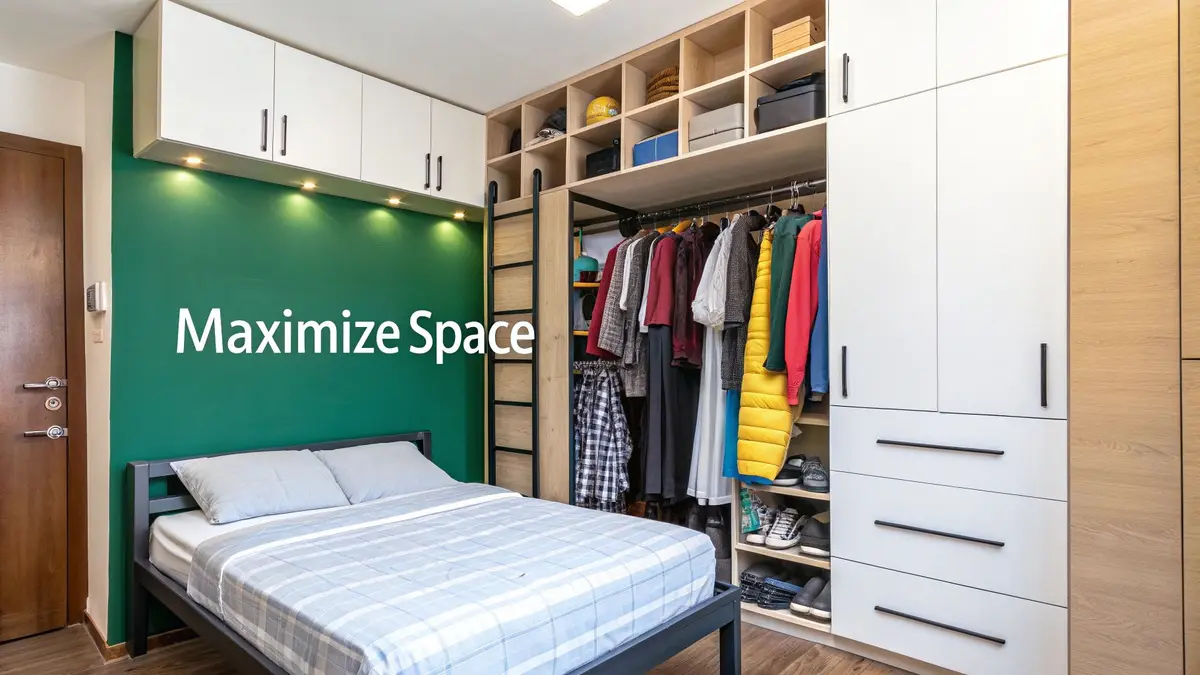
Once you've decluttered and mapped out your furniture, the final piece of the downsizing puzzle is making every square inch of your new apartment work for you. In a smaller space, storage isn't just about closets—it's a creative mindset.
The secret to a calm, organized home is a two-part strategy: combine clever in-home solutions with flexible off-site options. This way, your living areas stay functional and beautiful, free from the clutter of things you only need once in a while. You don't have to give up cherished belongings just because you're moving from a house to an apartment.
Master Your In-Home Storage
Before you even think about outside help, your first mission is to tap into the hidden storage potential within your apartment's four walls. This means looking beyond the obvious and getting creative with your space.
A good place to start is by thinking vertically. Your walls offer a huge amount of untapped real estate.
- Go Up the Walls: Install tall, narrow bookcases or floating shelves. They draw the eye upward and give you tons of room for books, decor, and bins without eating up precious floor space.
- Leverage Door Backs: Over-the-door organizers are brilliant. Use them for shoes in the bedroom, spices in the kitchen, or cleaning supplies in the pantry.
- Utilize Under-Bed Space: A bed frame with built-in drawers is a game-changer. If that's not an option, low-profile rolling containers are perfect for stashing away extra linens, shoes, and seasonal clothing.
The golden rule of apartment storage is to make your furniture work harder. A coffee table with a lift-top, a bench with hidden storage, or a decorative ottoman that opens up can solve dozens of clutter problems.
By putting these tactics to work, you can dramatically increase your apartment’s capacity. For a complete list of creative solutions, you can explore more storage ideas for apartments to help you make the most of every corner.
Extend Your Closet with Flexible Off-Site Storage
Even with the smartest in-home organization, some things just don’t belong in your daily living space. This is where modern, flexible storage becomes your secret weapon for maintaining a serene and uncluttered home.
Think about the items that are important but not essential day-to-day:
- Holiday decorations you only use for a few weeks a year.
- Bulky seasonal gear like skis, snowboards, or camping equipment.
- Sentimental keepsakes and family heirlooms you want to keep safe.
- Archived documents or business files you’re required to keep but don’t need to access regularly.
Traditional self-storage units often feel like overkill for apartment dwellers—you end up paying for a big space you only partially use. That's why on-demand, per-box storage services have become so popular for people who are downsizing.
Instead of renting a whole unit, you can store individual boxes and bulky items. The process is simple: a company sends you boxes, you pack them up, and they’re picked up and stored in a secure, climate-controlled facility. When you need something back, you just request it online, and it’s delivered right to your door.
This model acts as an extension of your home—a "cloud closet" where your less-used belongings are kept safe and out of sight, but are still easy to get to. It’s the perfect way to bridge the gap between what you want to keep and what you have room for, letting you enjoy a spacious, organized apartment without making painful sacrifices.
Common Questions About Downsizing Your Home
Even the best-laid plans can hit a few snags. When you’re making a move as big as downsizing from a house to an apartment, a lot of "what ifs" are bound to pop up. Let’s tackle some of the most common questions head-on.
How Much Does Downsizing Actually Cost?
It’s easy to focus on the long-term savings of a smaller space, but the upfront costs of getting there can add up quickly. It’s more than just paying for the movers.
Here’s a realistic look at what you should budget for:
- Moving Services: This is usually the biggest ticket item. Costs can range from a few hundred dollars for a simple local move to several thousand if you're going a long distance or need full-service packing.
- Selling Your House: If you’re selling, don’t forget about realtor commissions (typically 5-6% of the sale price), closing costs, and any last-minute repairs needed to get the house market-ready.
- New Apartment Fees: Get ready for the initial cash outlay. This usually includes a security deposit, the first month's rent, and sometimes application or pet fees.
- Storage Solutions: You’ll likely have items that won't fit but you're not ready to part with. Storage costs can vary dramatically, so it's a good idea to research how much storage costs to get an accurate estimate for your budget.
What If I Regret Getting Rid of Something?
"Downsizer's remorse" is a legitimate fear. Nobody wants to realize they donated a cherished heirloom in a fit of decluttering. But you can avoid this with a bit of strategy.
The key is to sidestep any hasty decisions, especially when you’re tired or feeling the pressure.
Try creating a "quarantine box" for anything you're on the fence about. Seal it up, label it, and stick it in the garage or a closet for a month. If you completely forget what's inside and don't miss a single item, you can let it go with confidence. It's a simple trick that provides a much-needed buffer against impulse purges.
The point of downsizing isn't to get rid of everything you love. It's about curating a home filled with things that actively support the life you want to live now. If an item isn't useful or joyful, it’s just taking up space.
Will I Feel Cramped in a Smaller Space?
Going from a rambling house to a cozy apartment is a huge shift, and it’s totally normal to worry about feeling boxed in. But a smaller footprint doesn’t automatically mean a cramped lifestyle.
Honestly, it all comes down to smart planning and living more intentionally.
When you choose multi-functional furniture, learn to love vertical storage, and keep only what you truly need, an apartment can feel surprisingly open and liberating. Many people find that the freedom from maintaining a large, mostly unused house is more than worth the trade-off.
Ready to make your downsizing journey smoother? Let Endless Storage act as your extended closet. We provide the perfect solution for those cherished items you can't part with but don't have room for. https://www.endless-storage.com