
A successful cross-country move all comes down to planning, and the magic starts about two months before your moving date. This is your golden window to build a solid foundation by figuring out your budget, seriously decluttering, and exploring your moving options—long before the last-minute chaos kicks in.
Laying the Groundwork for Your Long Distance Move
The secret to a stress-free cross-country move isn't what happens in the final week. It’s built in the quiet, deliberate steps you take months before a single box gets taped shut. This two-month window is your mission control, the time to get organized, make the big decisions, and set the stage for a smooth transition.
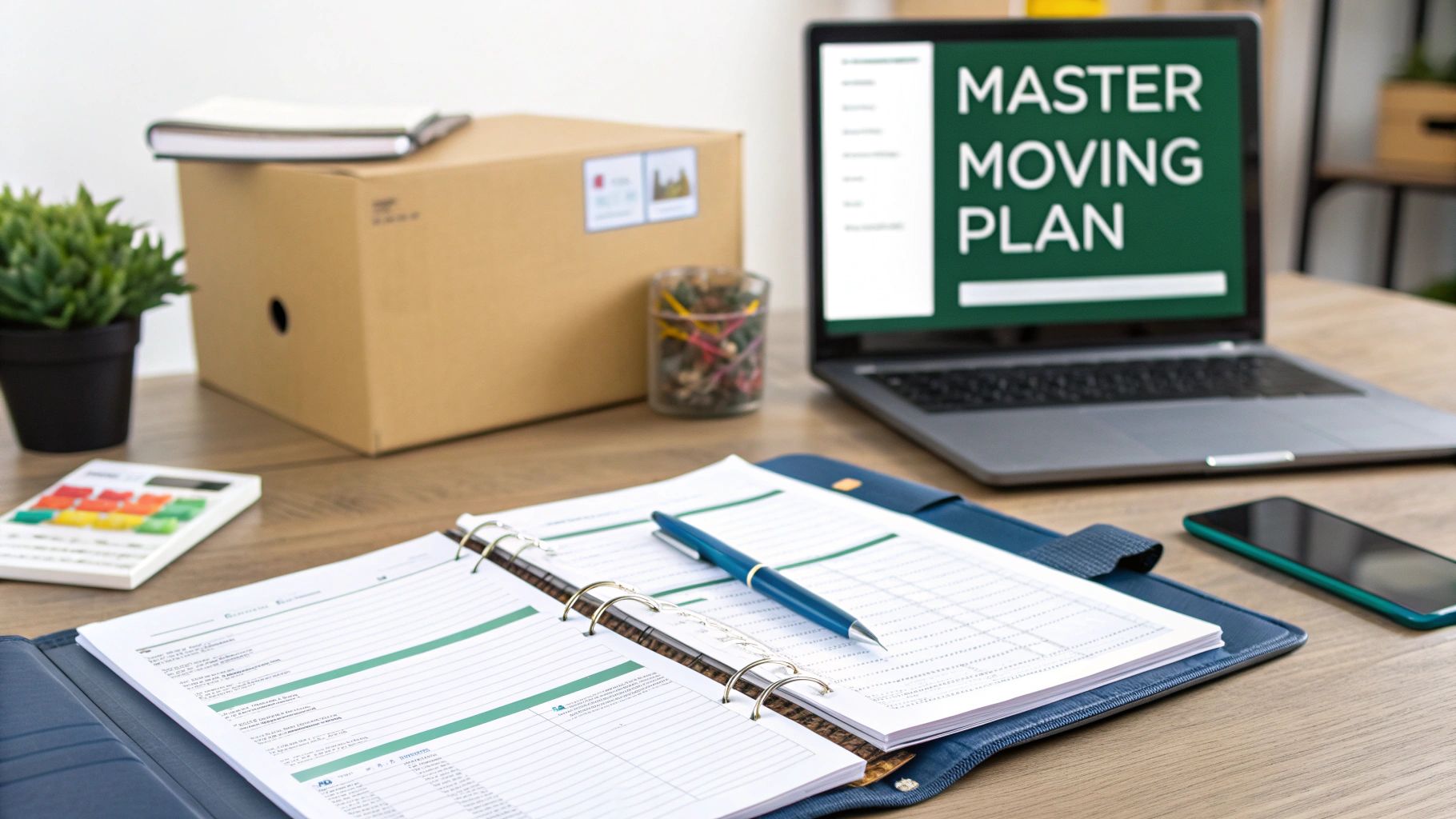
Think of this phase as building your move’s command center. Your first, and arguably most important, tool is a master moving binder or a dedicated digital folder. This isn't just a place for checklists; it's the central hub for every single piece of information related to your move.
- Quotes and Contracts: Keep all estimates from movers, truck rental companies, and storage facilities in one spot. It makes comparing them a breeze.
- Receipts: Track every moving expense. You'll need this for your budget and potentially for tax deductions later on.
- Important Contacts: Have a running list of realtors, movers, utility companies, and new local services you'll need.
- Checklists and Timelines: Print out your schedules and to-do lists. Seeing your progress in black and white is incredibly motivating.
This timeline is a great visual guide for mapping out these early stages and hitting key milestones.
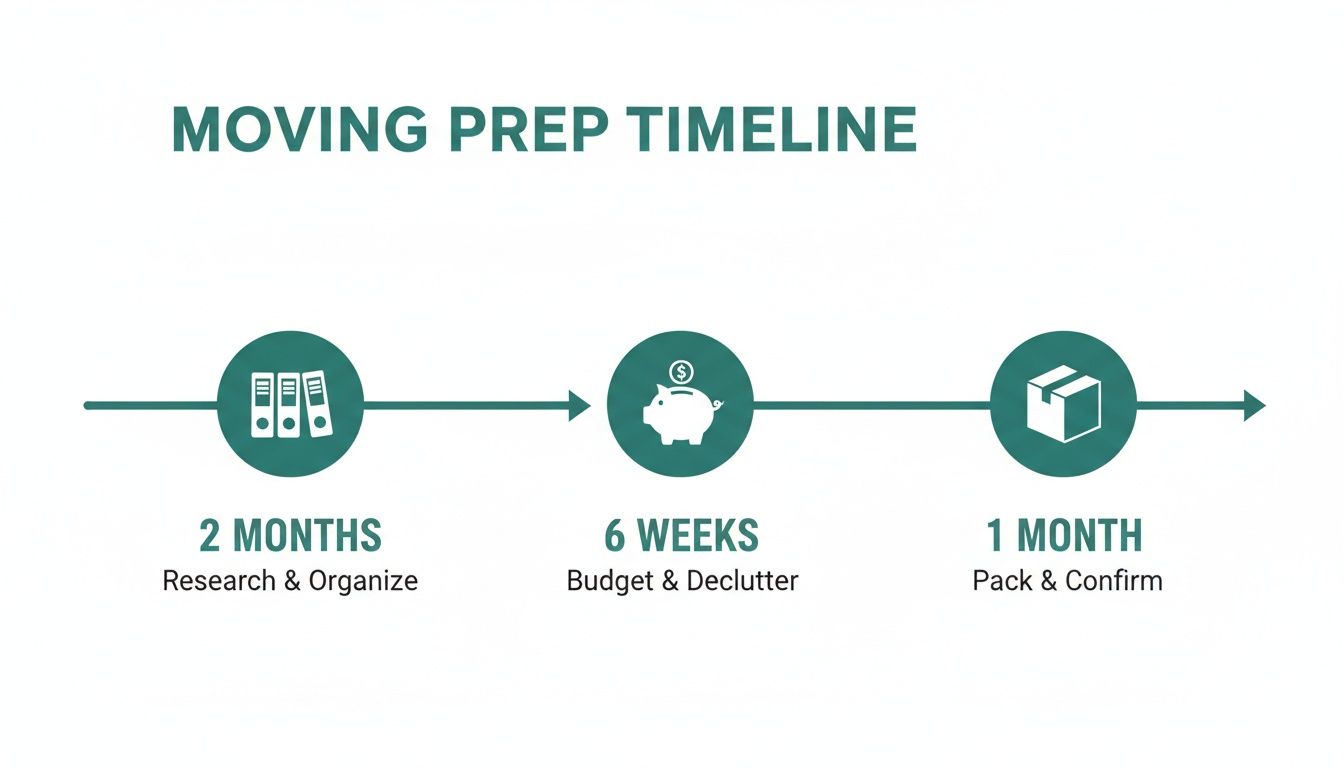
Starting with research two months out gives you plenty of breathing room to lock in a solid budget by the six-week mark and dive into packing a full month before you go.
Building Your Realistic Moving Budget
With your binder ready, it’s time to talk money. A cross-country move is more than just the price of a moving truck. Little expenses add up fast and can easily wreck your finances if you haven't planned for them. Remember to factor in costs for packing supplies, moving insurance, and potential storage. Don't forget the journey itself—gas, hotels, and food for a multi-day drive can be a significant expense.
A contingency fund of at least 10-15% of your total moving budget isn't just a good idea; it's a non-negotiable safety net. Trust me, something unexpected always comes up, whether it's a last-minute hotel or replacing a broken coffee pot.
The Great Decluttering Initiative
Before you even think about getting a moving quote, you need to know exactly what you're moving. The less stuff you haul across the country, the less you pay. It’s that simple. Go through every single room, closet, and cabinet with a critical eye and sort everything into four piles:
- Keep: The essentials, the valuable items, and anything with serious sentimental meaning.
- Sell: Good-condition furniture, electronics, or decor that just won’t fit your new life or new space.
- Donate: Clothes, books, and household goods that someone else could use.
- Store: Seasonal gear, family heirlooms, or hobby equipment you don’t need right away but definitely want to keep.
This process does more than just lower your moving costs; it gives you a completely fresh start in your new home. While you're laying this groundwork, it's also the perfect time to choose an internet provider for your new address to make sure you're connected from day one.
It’s also interesting to see where people are headed. The 2025 migration landscape shows a huge shift southward, with over 60% of long-distance PODS moves landing in states like Tennessee, the Carolinas, and Georgia. This trend is driven by the South's 1.1% population growth in 2022, as people chase affordability and new opportunities.
Choosing Your Mover and Finalizing the Budget
With a few quotes in hand, your cross-country move suddenly feels very real. Now comes the moment of truth: picking the right way to get everything from Point A to Point B. This one decision will shape your entire moving experience—your stress levels, your schedule, and your wallet—so it's time to weigh the options carefully.
Every moving method comes with a different price tag and a different level of personal involvement. Figuring out the right balance between the two is the key to a choice you won't regret halfway across the country.
Comparing Your Moving Options
Your main choices typically fall into a few categories, and understanding the trade-offs is everything. Are you looking to save money, time, or your back? Let’s break down the most common approaches.
- Full-Service Movers: This is the "we'll handle it" option. A team of pros shows up to pack, load, drive, and unload everything. It’s perfect if you're on a tight deadline or simply can't handle the physical work, but it's also the most expensive route by far.
- Moving Containers (like Pods): A popular hybrid choice. A company drops off a large container, you load it up on your own time, and then they pick it up and drive it to your new home. It’s a great balance of convenience and cost savings, especially since you don’t have to drive a massive truck yourself.
- Freight Trailers: This is similar to moving containers, but you’re essentially renting a portion of a large commercial trailer. You only pay for the space you use, which can make it incredibly cost-effective for bigger moves. You’re still on the hook for all the loading and unloading.
- DIY Truck Rental: The classic, budget-friendly approach. You rent a truck, pack it, load it, drive it across the country, and unload it yourself. This gives you total control and the lowest upfront cost, but it also demands the most time and physical labor.
To make this decision easier, here's a quick look at how these options compare for a typical 3-bedroom home move.
Comparing Cross Country Moving Options
Ultimately, it’s a trade-off. How much is your time, energy, and sanity worth? Answering that question will point you in the right direction.
Vetting Movers and Avoiding Scams
Once you have an idea of the method you prefer, it's time to get serious about vetting companies. A little due diligence now can save you from a world of hurt later. The moving industry has its fair share of shady operators.
First, check their credentials. Any legitimate full-service mover operating between states must have a U.S. Department of Transportation (USDOT) number. You can look this up in seconds on the Federal Motor Carrier Safety Administration (FMCSA) website to verify they're a registered business.
Pay close attention to the kind of estimate they give you. A binding estimate is a contract that locks in your price, as long as you don't add more stuff to the truck later. A non-binding estimate is just a ballpark guess—if your shipment is heavier than they thought, the final bill will be higher. For peace of mind, always push for a binding estimate.
Red Flag Warning: Run the other way if a mover demands a large cash deposit, gives you a quote over the phone without a virtual or in-person survey, or shows up in a generic, unmarked truck. These are classic signs of a potential moving scam.
Finalizing Your Comprehensive Budget
Hiring a mover is a huge part of your budget, but it's not the whole story. Hidden and overlooked costs can quickly turn a well-planned budget upside down. Now is the time to account for everything.
Your final, realistic budget should have specific line items for:
- Travel Expenses: Don't forget about the cost of your own journey! Factor in gas, food, and hotels for the days you’ll be on the road. This can easily run into hundreds of dollars.
- Moving Insurance: The basic liability coverage movers offer is next to nothing, typically just $0.60 per pound. If a 100-pound solid wood dresser breaks, they'd owe you $60. Seriously consider purchasing full-value protection to properly cover your belongings.
- Temporary Housing: Is there a gap between when you have to be out of your old place and when you can get into the new one? Be sure to budget for a potential Airbnb or hotel stay.
- Contingency Fund: Life happens. Set aside an extra 10-15% of your total estimated cost for the unexpected. Whether it’s for replacing a toaster that didn't survive the trip or just ordering pizza for a few nights, you'll be glad to have that cushion.
Building out this detailed budget gives you a clear picture of the true cost of your move. Knowing you’re financially prepared for the road ahead lets you move forward with confidence. For more detailed advice, you can learn more about how to choose a moving company and ensure you're making the best decision for your needs.
Executing a Strategic Packing Plan
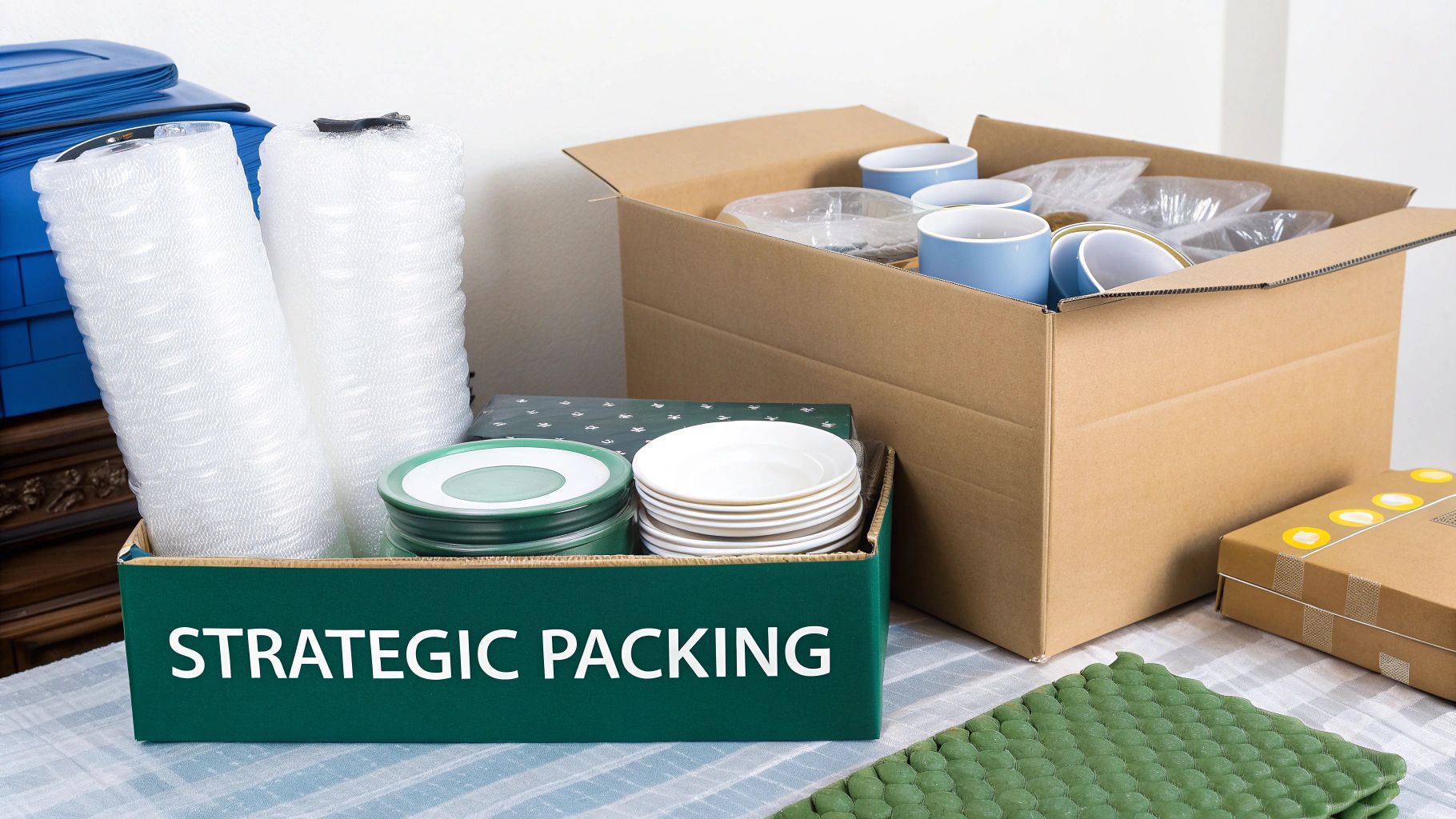
Packing for a move across the country isn't something you can knock out in a weekend. Think of it more like a strategic operation. Kicking things off about a month before you move is the sweet spot—it gives you enough breathing room to be methodical and avoid that last-minute panic.
The whole game is about having a plan. Don't just stare at a pile of boxes. A room-by-room approach is the only way to stay sane, see your progress, and avoid burnout.
Starting with the Least-Used Spaces
Dive into the rooms and spaces you barely touch first. We're talking about guest rooms, basements, attics, and those closets filled with stuff you forgot you even had. Getting these areas packed up early gives you a huge psychological win and clears a surprising amount of space.
Here’s what to tackle in that first wave:
- Off-season clothing and shoes: Moving in July? Those heavy winter coats can definitely go into a box.
- Books, DVDs, and decorative items: These are usually easy to pack and you probably won't miss them in the final weeks.
- Guest room linens and supplies: Pack up extra bedding, towels, and anything else you won't need for last-minute visitors.
This is also the perfect time to get strategic about what doesn't need to come with you right away. Bulky sports gear, cherished family heirlooms, or that massive collection of vinyl can really drive up the weight—and cost—of your move.
Think of this as a chance to lighten your load. By sending important but non-essential items to a flexible storage service, you shrink the volume of your move. This doesn’t just cut your shipping costs; it frees up your energy to focus on what you'll need the second you walk into your new home.
Sourcing Quality Supplies Smartly
You can't do the job without the right tools. It's fine to grab free boxes from local stores, but give them a good once-over to make sure they're sturdy and clean. For a cross-country trip, I always recommend investing in new, high-quality moving boxes for fragile and heavy items. It's worth it.
Make sure you've got a solid inventory of other supplies, too:
- Packing tape: Buy more than you think you need. Seriously. A good rule of thumb is at least one roll for every 10-15 boxes.
- Bubble wrap and packing paper: Use paper for wrapping everyday items and save the bubble wrap for the real breakables, like glassware and electronics.
- Markers: Get thick, permanent markers for clear labeling. You can even create a color-coded system with different colored tape for each room to make unpacking a breeze.
For a deeper dive into packing like a pro, check out our guide on how to pack efficiently for your upcoming move.
Mastering the Art of Labeling and Protection
How you pack and label is going to make or break your unpacking experience. Every single box needs three pieces of information: the room it's going to, a quick summary of what's inside, and a big, clear "FRAGILE" if needed.
Don't just write "Kitchen." That’s a rookie mistake. A much better label is: "KITCHEN - Pots & Pans, Mixing Bowls." This little bit of detail will stop you from tearing open ten boxes just to find a skillet on your first night.
When it comes to fragile items, pack like a pro. Wrap each piece individually in packing paper, then add a layer of bubble wrap for good measure. Plates are strongest when packed vertically, like records in a crate. And whatever you do, fill every empty gap in the box with crumpled paper or packing peanuts. Items shifting in transit is the number one cause of breakage on a long-distance move.
Managing Final Logistics and Paperwork
Once you hit that two-week mark before a cross-country move, your focus has to shift. The big-picture stuff is done; now it’s all about the nitty-gritty details. This is where you tie up all the loose ends to make the transition from your old life to your new one as smooth as possible. Trust me, getting these administrative tasks handled now will save you from some serious headaches down the road.
First things first, make sure your new home is actually ready for you. Call to arrange for utilities like electricity, gas, water, and internet to be turned on either the day you arrive or the day before. At the same time, schedule the disconnection at your old place for the day after you're officially out.
Your Essential Paperwork Checklist
With everything in motion, the last thing you want is to be digging through a mountain of boxes for a birth certificate or car title. I always tell people to create a dedicated "Go-Folder"—a specific binder or accordion file that travels with you, not in the moving truck.
This folder is your lifeline. Make sure it contains:
- Personal ID: Passports, driver's licenses, Social Security cards, and birth certificates for the whole family.
- Moving Docs: Your signed moving contract (the Bill of Lading), inventory lists, and all contact info for the moving company.
- Financial Records: A few recent bank statements, key tax documents, and any loan info you might need to access quickly.
- Vehicle Info: Car titles, registration, and insurance policies.
- Key Records: Any medical prescriptions, vaccination records, and school transfer paperwork.
Having these documents physically on hand provides incredible peace of mind. Think of it as your administrative toolkit for setting up your new life.
Notifying Key People and Services
Next up, it's time to let everyone know you're on the move. The official USPS Change of Address form is a must—get it done online about two weeks before you leave. While that’s a great first step for redirecting mail, it's just the beginning. You need to update your address directly with several key places.
Your cross-country move is part of a larger trend. In 2022, an impressive 19.9% of all American movers—around 5.6 million people—relocated to a different state. This increase from 18.8% the previous year highlights a growing willingness to move for better opportunities and lifestyles. Discover more insights about current moving statistics on clancymoving.com.
Don't forget to personally contact:
- Banks, credit card companies, and any loan providers
- Your employer’s HR department (for payroll)
- Insurance companies (auto, home, and health)
- Subscription services like magazines, streaming platforms, and meal kits
Yes, this part is tedious, but it's absolutely essential for a smooth transition. To make it a little easier, check out our guide on how to properly change your address when you move.
Preparing Your Arrival Survival Kit
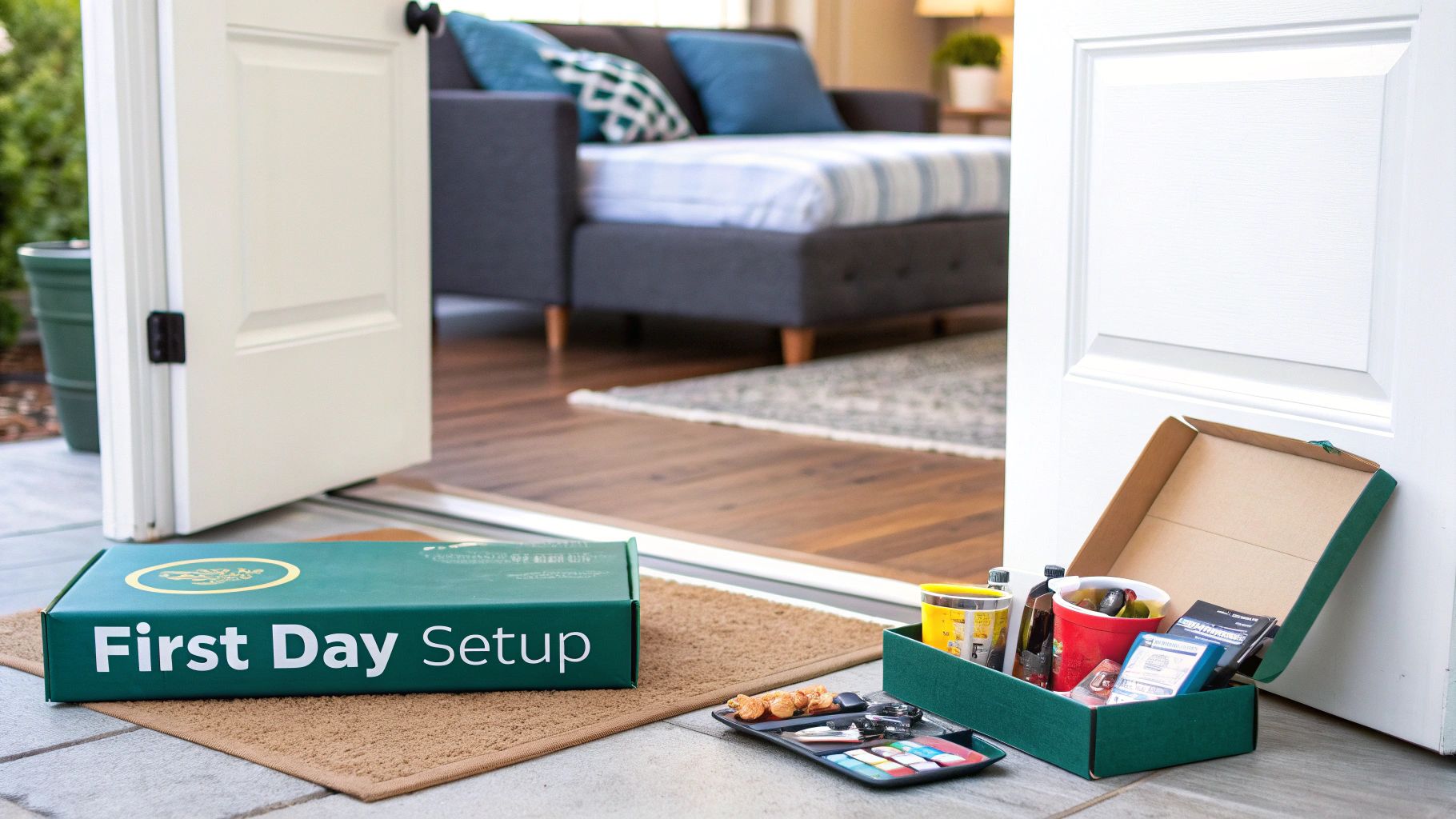
This might be the most important box you pack. Your "First 24 Hours" box is the one that stays with you in the car. It holds everything you need to function before the moving truck arrives or before you have the energy to start unpacking.
Think about what you'll need right away. This survival kit should have basic toiletries, a change of clothes for everyone, essential medications, and, of course, phone chargers. I also recommend throwing in a small tool kit with a box cutter, scissors, and a multi-head screwdriver. And don't forget some non-perishable snacks and bottled water—you’ll be so grateful you did.
Navigating Moving Week and Your First Days
The final week before your cross-country move is pure execution. All the planning is done, and it’s time for that final push before you hit the road. It's an absolute whirlwind of last-minute packing, deep cleaning, and mover coordination, but if you have a solid game plan, you can get through it without a complete meltdown.
The trick is to just take it one day at a time. Concentrate on finishing up the non-essential boxes, give your moving crew a call to confirm their arrival time, and start getting the house ready for handover. This is also when you have to manage the emotional side of things—kids and pets can feel the stress, so keep their routines as normal as possible.
The Final Push Before Departure
When moving day finally arrives, your job description flips from packer to project manager. You need to be there when the movers show up to answer questions and point out which boxes are fragile. Make sure you get your hands on the Bill of Lading—that's the official contract for your move—and read it carefully before they even think about loading the first box.
To keep the chaos to a minimum:
- Keep Kids and Pets Secure: The best move is to have a friend or family member watch them for the day. If that’s not an option, set them up in an empty room with snacks, toys, and entertainment, well away from the heavy lifting.
- Do a Final Sweep: Once the truck is loaded, walk through every single room. Open every closet, every cabinet, every drawer. You’d be surprised what gets left behind in the rush.
- Ensure a Smooth Handover: Have the keys ready for the new tenants or realtor. Double-check that you have all the closing documents or final walkthrough paperwork you need.
Your "First 24 Hours" survival kit, kept with you in your car, is an absolute lifesaver. Pack it with medications, toiletries, phone chargers, a change of clothes, a basic toolkit, and some snacks. It’s your safety net for that initial chaotic period when you can't find anything.
Your Arrival Playbook: First Steps in a New Home
You made it! The long drive is over, but now the real work of settling in begins. It’s tempting to start ripping open every box in sight, but resist that urge. A more strategic approach will help you create a functional living space fast and avoid that overwhelming "buried in boxes" feeling.
The very first thing you need to do when the truck arrives is to check the inventory list. As the crew brings your stuff in, check each item off on your copy. This is your one and only chance to note any obvious damage on the official paperwork before you sign off on the delivery.
This whole experience is a huge life event, and you’re not alone. While total relocations saw a 3% dip between 2024 and 2025, interstate moves are a constant part of American life. State-to-state moves hit 8.2 million back in 2022, and with the average American moving 11.7 times in their life, you're in good company. You can learn more about these fascinating migration patterns from Atlas Van Lines.
Creating Livable Zones Immediately
Before you even think about unpacking the whole house, focus on setting up two critical zones for immediate comfort and sanity: the bedroom and a bathroom.
- Set Up the Bedroom: Get that bed frame assembled and make the bed with fresh linens. Trust me, having a comfortable place to crash after a draining day is non-negotiable.
- Stock a Bathroom: Find the box with your toiletries, towels, and a shower curtain. A hot shower can wash away the stress of the road and make you feel human again.
- Basic Kitchen Essentials: Locate the box with the coffee maker, a couple of mugs, and some paper plates. Being able to brew a cup of coffee the next morning is a small victory that feels massive.
By carving out these small pockets of order, you give yourself a calm home base to work from as you tackle the mountain of boxes. It turns a daunting task into a manageable project and helps your new house start to feel like a home from day one. For a complete guide to all phases of your move, you might be interested in our ultimate moving checklist and timeline.
Common Cross Country Move Questions Answered
Even with the most detailed plan, a move across the country is bound to bring up some questions. It's just part of the process. Having answers to the common ones ahead of time can give you the confidence to handle any curveballs that come your way.
We've rounded up the questions we hear most often to give you clear, straightforward guidance. Think of this as your personal FAQ for those "what if" moments that can keep you up at night. Getting these details sorted out now will help you avoid costly mistakes and keep things running smoothly.
What Is the Cheapest Way to Move Cross Country?
The simplest answer is a DIY truck rental, but it's a trade-off. What you save in cash, you pay for with your own time and hard work. You’re the one packing, loading, driving for days on end, and then unloading it all. Once you add up the cost of gas, hotels, and food on the road, the savings might not look as impressive as you first thought.
For a more balanced option, look into hybrid solutions like moving containers or freight trailers. They strike a great middle ground. You still handle the packing and loading (which is a huge money-saver), but a professional driver deals with the long, grueling haul across the country.
Another smart tactic, especially if you don't have a lot of expensive furniture, is to sell your big, bulky items. Sometimes, the cost to ship an old sofa is way more than buying a new one when you arrive. For a full breakdown of the numbers, check out our guide on the cheapest way to move your belongings.
How Far Ahead Should I Schedule a Cross Country Move?
The sweet spot for booking your movers is two to three months in advance. I can't stress this enough, especially if you're moving during peak season, which runs from May through September. In those busy summer months, moving companies get booked up incredibly fast, and prices shoot way up.
Booking early isn't just about securing your date; it’s about locking in a better price before demand goes through the roof. If you wait until the last month, particularly in the summer, you're taking a huge gamble. You could face sky-high prices or, even worse, find that no reputable movers are available at all.
Pro Tip: If your schedule has any wiggle room, aim for a mid-week, mid-month move. Weekends and the end of the month are the busiest times for movers, so steering clear of them can often get you a better deal and more focused service.
What Are the Best Ways to Save Money on My Move?
Saving money on a long-distance move really comes down to one golden rule: move less stuff. Your most powerful cost-cutting tool is aggressive decluttering. Every single item you can sell, donate, or toss is one less thing you have to pay to haul thousands of miles.
The final cost of your move is almost always determined by the weight and volume of your belongings. Going through your home room by room and being ruthless about what you really need will save you hundreds, maybe even thousands, of dollars. It’s that simple.
Beyond downsizing, here are a few other tried-and-true ways to cut costs:
- Do Your Own Packing: Full-service packing is a wonderful luxury, but it’s an expensive one. Packing your own boxes will slash your labor costs significantly.
- Source Free Supplies: Hit up your local grocery stores, liquor stores, and big-box retailers for used boxes. As long as they're clean and sturdy, they'll do the job just fine.
- Be Flexible: Like we mentioned, moving on a Tuesday in the middle of October will almost always be cheaper than a Saturday in July. If you can, use timing to your advantage.
By combining a smart moving plan with a serious commitment to decluttering, you can make your cross-country journey a whole lot more affordable.
Feeling overwhelmed by all the stuff you need to move? Lighten your load with Endless Storage. We send you boxes, you pack what you want to store, and we pick them up and store them for you. When you're settled in your new home, we’ll deliver your items right to your door. Get a free quote and simplify your cross country move at https://www.endless-storage.com.
Frequently Asked Questions
Unveiling the Secrets to Effortless Storage
Endless Storage is available nationwide. You pick a plan, tell us where to pickup, and we'll send a UPS van to collect, whichever state you're in.
Your shipping label will be sent to your email within a few minutes, if not instantaneously. It can also be accessed through your customer profile.
Your box will be shipped to one of our climate controlled self storage facilities in our closest self storage facility. Our manager will accept your package, notify you that your box has been received, and securely stored. Only our managers will have access to Endless Storage boxes.
Email us at admin@endless-storage.com click to live chat with us, or send us a message below.
Never! We're committed to transparent pricing with no surprises. You'll lock in your rate with no hidden fees and no long-term contracts.
Fast access guaranteed! Your boxes will arrive at your doorstep within 48 hours of requesting them back. Need to check on delivery? We provide tracking information for complete peace of mind.
Totally flexible! Store month-to-month with no long-term commitment and cancel anytime.
Everything's online! Use your account dashboard to:
• Set up automatic monthly payments
• Request box returns
• Update your address
• Order additional boxes
• Track shipments
Your boxes are insured up to $100 each. Our customer service team will help you file any necessary claims and resolve issues quickly.
Don't worry – we'll email you right away if there's a payment issue. Your items stay safe, though you may have temporary service interruption or late fees until payment is resolved.
When you request our free storage kits, you'll have 30 days to send in your boxes to activate your 3 months of free storage. Think of it like starting a gym membership – your activation window begins when you receive your kits, and your full free trial begins once you send in your first box. During your free months, you'll experience our complete storage service at no cost.
Your 30-day activation window begins when you receive your storage kits. We'll send you an email confirmation when your kits are delivered, marking the start of your activation period.
If you haven't sent any boxes for storage within your 30-day activation window, your free trial will expire and we'll begin charging the regular monthly rate of $9.99 per box. This helps ensure our storage kits go to customers who are ready to use our service.
A box costs $9.99 per month to store (plus sales tax). This price includes free shipping for standard boxes under 50 lbs. and smaller than 16"x16"x16"
Log into your Endless Storage account, locate the box you would like returned, and simply click Return My Box.
Yes, each box stored with us is insured for up to $100 throughout transit as well as the duration of storage within our facilities.
Your box will be at your doorstep within 48 hours of you requesting it back.
Store 10+ boxes? We'll pick them up for free! After your purchase, we'll contact you to schedule a convenient pickup time and arrange UPS collection.
We trust UPS with all shipments, and every box includes $100 insurance coverage. You'll receive tracking information to monitor your items' journey.
Yes! Visit any of our locations by appointment. Just bring a photo ID matching your customer profile.
For everyone's safety, we can't store hazardous materials, firearms, or perishables. All items must fit within our standard boxes.
It's easy! Order your storage kit online, and we'll ship it to you within 1-2 business days. Your shipping labels will be emailed instantly and available in your account.
We're here to help! Email us at admin@endless-storage.com, use our live chat, or send us a message through your account.
To cancel your storage service with Endless Storage, please email your cancellation request to admin@endless-storage.com. Our team will process your request within 2 business days and confirm your cancellation via email.
We understand packing takes time. However, to maintain your free trial benefits, you'll need to send at least one box within the 30-day activation window. If you need more time, you can always start with one box to activate your trial and send the rest later. You can always reach out to admin@endless-storage.com if you have any issues or concerns.
When you request our free storage kits, you're starting a 30-day window to begin using our storage service.
Important: To activate your free trial, send at least one box for storage within 30 days. If no boxes are sent within this 30-day window, a one-time $50 fee applies to cover materials and shipping costs. This fee is clearly disclosed before you sign up.
Think of it like reserving a hotel room – we're setting aside space and sending specialized packing materials for your use. The fee only applies if you request materials but don't begin storage, similar to a hotel's no-show charge.