5 min read

Best Way to Ship Large Boxes: Quick, Affordable Options

Best Way to Ship Large Boxes: Quick, Affordable Options
Published on
February 22, 2026

When it comes to shipping large boxes, almost everything boils down to a single, critical factor: weight.

If your box is under 150 pounds, your best bet is usually a standard parcel service like UPS Ground or FedEx Ground. They're built for this. But the moment you cross that 150-pound threshold, it’s time to think differently. To get the best value and avoid headaches, you’ll need to shift over to freight shipping.

Finding the Right Shipping Method From the Start

Picking the right shipping method from the get-go is the most important decision you'll make. It directly impacts your cost, delivery time, and overall experience. What catches most people by surprise is that carriers don’t just charge you for how heavy a box is. They use a system called dimensional weight (DIM weight).

Essentially, you get charged for the space your box hogs on the truck, not just its actual weight. This is especially true for items that are big but not particularly heavy. Getting this part wrong can lead to some seriously nasty, unexpected fees.

This is exactly why the parcel vs. freight choice is so pivotal. It’s like choosing between a taxi and a moving truck—you wouldn’t call a rideshare to haul a new refrigerator.

This simple flowchart can help you visualize the decision.

Decision tree flowchart for shipping methods, choosing freight truck for over 150 lbs or delivery van.

As you can see, that 150-pound mark is the clear line in the sand. Once you cross it, freight becomes the only logical (and sometimes, the only possible) option.

To make things even clearer, here’s a high-level comparison to help you instantly see which shipping method is the right fit for your large box.

Parcel vs Freight A Quick Decision Guide

Key FactorParcel Shipping (UPS, FedEx)Freight Shipping (LTL Carriers)
Max WeightUp to 150 lbs per box150 lbs to over 20,000 lbs
Best ForSingle, manageable boxesMultiple boxes, oversized items, pallets
HandlingHighly automated, more risk of damageMore manual handling, often safer for large items
Cost StructurePriced per box, heavily influenced by DIM weightPriced by freight class, density, and distance
Pickup/DeliveryStandard doorstep pickup and deliveryTypically requires a loading dock or liftgate service

Ultimately, choosing the right service comes down to knowing your shipment's specs and matching them to the carrier's strengths.

When to Stick With Parcel Shipping

Everyday carriers like UPS, FedEx, and even the USPS are perfect for those "large" boxes that are still within their strict limits. These services shine for single-item shipments that don’t need any kind of white-glove treatment.

  • Weight Limit: The hard cutoff is usually 150 lbs.
  • Size Limit: Generally up to 165 inches in combined length and girth.
  • Best For: Shipping things like large electronics, disassembled furniture, or a few boxes of personal belongings.

When to Level Up to Freight Shipping

If your box tips the scales over 150 lbs or is just plain massive, you’re in freight territory. The most common option here is Less-Than-Truckload (LTL) freight. With LTL, your big shipment shares space on a semi-truck with other people’s stuff, which makes it surprisingly affordable for oversized items.

For really big jobs, you’ll often hear about stacking your boxes on a pallet. Understanding what is palletizing is a key step, as this is the standard for making large shipments secure and easy to handle in the freight world.

The single biggest mistake you can make is trying to cram an oversized, overweight item into the standard parcel system. It’ll either get rejected outright or, worse, get hit with massive surcharges that dwarf the original shipping cost.

These decisions are even more crucial when you’re in the middle of a move. If you're figuring out the logistics of getting your life from one place to another, our guide on how to ship boxes when moving has a ton of specific advice for that exact situation.

Packing Your Box for a Damage-Free Journey

How you pack your large box is just as critical as the carrier you choose. The right materials and techniques are your best defense against the bumps, drops, and stacking that are an inevitable part of shipping. Let's be honest, simply tossing items inside with some old newspaper won't cut it, especially when you're dealing with heavy or fragile contents.

It all starts with picking the right box. For anything heavy, fragile, or traveling a long distance, a double-wall corrugated box is non-negotiable. This isn’t just a friendly suggestion; it’s a must-have for giving your shipment the structural integrity to survive. Single-wall boxes might be fine for lighter items, but they can easily get crushed under the weight of other packages.

Person measuring a cardboard box with a tape measure, checking dimensional weight on a laptop.

Box size is just as important. You're aiming for about two to three inches of clearance on all sides between your item and the box walls. That empty space gets filled with cushioning, which acts as a shock absorber. Too little space offers zero protection, but too much space is just as bad—it lets the item shift around and build momentum, which is a recipe for disaster.

Mastering Your Cushioning and Sealing

The type of cushioning you grab should match what you're shipping. Not all materials are created equal, and using the wrong one can lead to a heartbreaking delivery day.

  • Bubble Wrap: Your go-to for wrapping individual fragile items like glassware or electronics. Don't be shy; use multiple layers for anything precious.
  • Foam Inserts: These are ideal for high-value electronics or delicate equipment. Getting foam custom-cut gives your item a snug, secure fit that prevents any movement at all.
  • Packing Peanuts: Excellent for filling those big empty voids around sturdy items that you've already wrapped. Just know they aren't great for flat or heavy things, which tend to sink straight to the bottom.
  • Kraft Paper: A fantastic, cost-effective option for filling smaller gaps and creating a base layer of padding. The trick is to crumple it tightly to make it dense.

Once everything is snug inside, sealing the box correctly is your final line of defense. Get a roll of high-quality, 2-3 inch wide pressure-sensitive packing tape. The pro move here is the H-taping method: tape down the center seam where the flaps meet, and then tape along both edge seams. This creates a strong "H" on the top and bottom, reinforcing the box’s weakest points.

Your packing job is the only thing protecting your item from a multi-story drop onto a concrete floor—because at some point, that will probably happen. Pack for the worst-case scenario, not the best.

A Real-World Packing Example

Let's say you need to ship a vintage, awkwardly-shaped table lamp. First, you'd take out the lightbulb and harp, wrapping them separately in bubble wrap. The lampshade is far too delicate to be packed with the heavy base, so it gets its own box.

Next, you would wrap the entire lamp base in several layers of bubble wrap, securing it all with tape. After lining the bottom of your double-wall box with a thick layer of crumpled kraft paper, you'd place the lamp inside. Finally, you would fill every single remaining void with packing peanuts, making sure the lamp can't shift an inch. Our detailed guide offers more tips on how to pack boxes for shipping all sorts of household items.

If you're dealing with items that need extra care or you'd just rather leave it to the pros, looking into dedicated packing services can give you peace of mind that everything is packed perfectly for its journey.

Choosing the Right Carrier and Service for Your Needs

With your box packed and sealed like a pro, it's time for the next big decision: who’s going to ship it? This choice dramatically impacts your final cost, how quickly your package gets there, and its overall safety. It's not about just picking a name you recognize; it's about matching your box's specific size and weight to the carrier best suited for the job.

A person is taping a cardboard box filled with white packing peanuts, ensuring damage-free packing.

It's also worth noting that the world of shipping is getting more expensive. Last-mile delivery costs are on the rise across the board, pushing parcel rates to historic highs. The TD Cowen/AFS Freight Index reports that ground parcel rates are projected to be a staggering 38.9% higher than they were back in January 2018. That’s a serious jump.

In this climate, making a smart carrier choice is more crucial than ever if you want to ship large boxes without breaking the bank.

Parcel Carriers for Everyday Large Boxes

For most large boxes that weigh less than 70 pounds, you’ll be looking at the usual suspects: USPS, UPS, and FedEx. Each has its own sweet spot and service levels designed for different needs.

  • USPS (United States Postal Service): Often the most budget-friendly choice, especially for boxes that are heavy for their size. Their USPS Ground Advantage service is a solid bet for non-urgent shipments. Just be mindful of their limits—they are the most restrictive, maxing out at 70 lbs and 130 inches in combined length and girth.
  • UPS and FedEx: These two are head-to-head competitors and offer a lot more wiggle room for bigger items. Both will take packages up to 150 lbs and 165 inches in combined length and girth. They're known for excellent tracking and reliability, but their services can come with a higher price tag, especially after you add surcharges for things like residential delivery or fuel.

A critical takeaway: Don't ever assume one carrier is always the cheapest. I've seen FedEx Ground come out on top for a 50 lb box, while USPS Ground Advantage saved a customer a ton of money on a 20 lb box. The only way to know for sure is to compare real-time quotes.

When Freight Shipping Is the Only Answer

Once your shipment tips the scales over the 150-pound mark, you've officially entered freight territory. You simply can't send something that heavy through a standard parcel service. This is where Less-Than-Truckload (LTL) freight becomes your best friend.

LTL works by putting your large shipment on a truck with others, so you only pay for the space your items take up. It is, without a doubt, the best way to ship exceptionally heavy or oversized things like furniture, appliances, or a whole pallet of boxes. It might sound a bit intimidating at first, but using a freight broker can simplify everything and help you find competitive rates. Picking the right freight option is just as important as understanding how moving company costs are calculated to get the best value.

Choosing the right carrier isn't just a final checkbox—it’s a strategic move that dictates your budget and ensures your stuff arrives in one piece.

Real Strategies to Lower Your Shipping Bill

High shipping costs can be a real headache, but they aren't always set in stone. With the right approach, you can find some serious savings. The trick is to be proactive and know where to look.

One of the biggest levers you can pull right now is simply paying attention to the market. The freight and logistics world is currently seeing softer demand, creating what insiders call a "shipper's market." This gives you a surprising amount of leverage when negotiating. Carriers are more willing to compete for your business, putting you in a great position to find better rates. This 2024 shipping industry report digs into the economic pressures that are creating these opportunities.

Unlock Discounts with Third-Party Software

You don't have to be a Fortune 500 company to get great shipping rates. One of the best-kept secrets for shipping large boxes affordably is using third-party shipping software.

Platforms like Pirate Ship, Shippo, or Easyship have already done the hard work of negotiating volume discounts with major carriers like UPS and USPS. They pass those savings on to you, giving you access to commercial rates that are way lower than what you’d pay walking up to the counter.

  • Commercial Pricing: Instantly tap into pricing tiers that were once reserved for huge businesses.
  • Rate Shopping: Compare real-time quotes from multiple carriers on one screen. No more jumping between websites.
  • Total Convenience: Print your labels at home and schedule a pickup. It saves you time and gas money.

Honestly, using one of these platforms is one of the easiest and fastest ways to cut your costs on every single package you send.

The Power of Planning Ahead

If you take only one piece of advice, let it be this: avoid paying for speed you don’t actually need. Express and overnight services come with a massive premium that can easily double or even triple your shipping bill.

The price difference between a 2-day delivery and a 5-day ground service can be absolutely staggering. Unless it’s a genuine emergency, choosing a slower ground service is the single biggest money-saver in your toolkit.

Just by planning your shipments with a buffer of a few extra days, you unlock the most economical options available. This simple shift in timing often has a bigger impact on your wallet than any other strategy. If you're coordinating a move, our guide on the cheapest way to move your belongings explores how smart scheduling can save you a ton.

Finally, don't be afraid to consolidate items. Yes, dimensional weight is a real thing, but sometimes it's still cheaper to pack multiple smaller items into one well-organized large box than to pay the base rate for several separate shipments. It pays to run the numbers both ways and see which one comes out on top.

Considering Storage as a Smarter Alternative

Sometimes, the best way to ship a large box is… not to ship it at all.

Before you find yourself wrestling with packing tape and comparing carrier rates, it’s worth asking one simple question: do these items need to arrive somewhere right now, or do they just need to be out of my current space?

That single shift in perspective can be a total game-changer, especially during those big life transitions. Maybe you’re caught between apartment leases, staging your home to sell, or you're a college student who doesn't need to haul everything home for the summer.

In those moments, shipping isn't just a hassle—it can be a huge, unnecessary expense. You’re trying to solve a temporary space problem with a permanent (and costly) logistics solution.

When Storage Simply Makes More Sense

Picture this: you're moving to a new city but haven't found a permanent place yet. Instead of dropping hundreds of dollars to ship your life's belongings to a friend's already-cramped garage or a temporary rental, what if you put them in storage? This gives you the breathing room to find the right home without tripping over boxes.

Here are a few classic scenarios where storage is the smarter move:

  • Temporary Relocations: Heading out for a short-term work assignment for a few months? There’s no need to take everything with you.
  • Seasonal Decluttering: Those bulky winter coats, holiday decorations, and sports gear take up a surprising amount of closet space. Storing them frees up your home.
  • Downsizing: Moving to a smaller place is tough. If you're not ready to part with cherished items, storage gives you time to decide without pressure.
  • Relationship Changes: Moving out can be complicated. A neutral storage space gives you a place to keep items while you sort out the details.

A Modern Solution: Storage by the Box

The word "storage" might conjure up images of driving out to a dusty, inconvenient lock-up unit on the edge of town. But modern services have completely flipped that script. “Storage-by-the-box” companies like Endless Storage have streamlined the entire process.

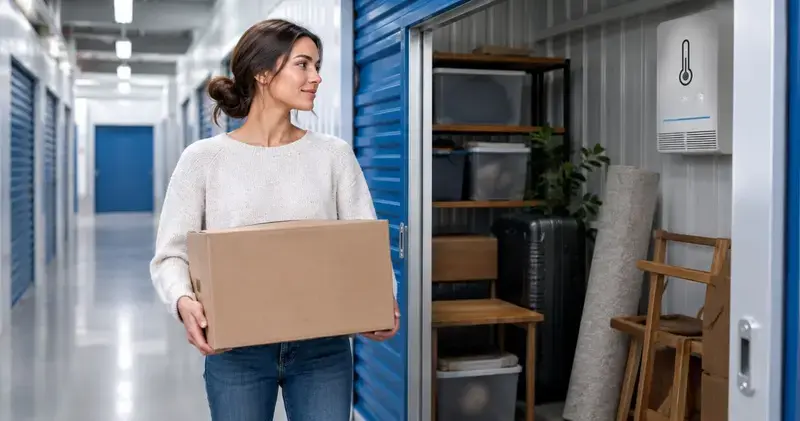
The concept is refreshingly simple: they send you a kit with heavy-duty boxes and packing supplies. You pack your stuff, schedule a pickup online, and they handle the rest, whisking it all away to a secure, climate-controlled facility.

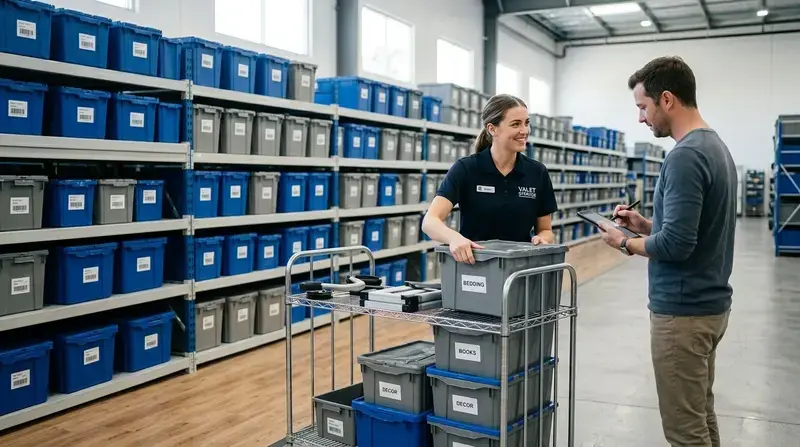
Better yet, your items are inventoried online with photos, so you always know exactly what you have stored. When you need something back—whether it's a single box of winter sweaters or all your belongings—you just request a delivery online.

This approach reframes the whole challenge. It's no longer a shipping problem; it's a simple storage solution that saves you time, money, and a whole lot of stress. For anyone dealing with a temporary space crunch, it’s one of the most cost-effective storage solutions you can find.

Answering Your Top Questions About Shipping Large Boxes

Even after you’ve wrestled a giant box into submission and started comparing carriers, a few specific questions always seem to pop up. Let's be honest, shipping big items isn't an everyday task for most of us, so it's completely normal to have some lingering "what ifs."

To clear things up, I’ve put together some straight answers to the most common questions we get. Think of this as your quick-reference guide for those last-minute details, so you can finish the job with confidence.

What Is the Cheapest Way to Ship a Large Heavy Box?

Figuring out the most affordable way to ship a large, heavy box really comes down to one critical number: 70 lbs.

For anything under that weight, standard parcel services like UPS Ground, FedEx Ground, or USPS Ground Advantage are almost always going to be your most economical bet. Their whole system is built for packages in this weight class.

But the second your box tips the scales over 70 lbs—or if it's just plain huge—the entire game changes. Less-Than-Truckload (LTL) freight shipping almost always becomes the cheaper, and frankly, safer option. Don't just default to parcel out of habit. Always use a shipping platform to compare real-time quotes from both to see where you land.

How Does Dimensional Weight Affect My Price?

This is the one that catches everyone off guard. Dimensional weight, or DIM weight, is a big deal in the shipping world. Carriers will charge you based on whichever is greater: the actual weight of your box or its DIM weight. It's their way of making sure you pay for the space your package eats up on their truck.

Here's how they figure it out: multiply your box's Length x Width x Height (in inches), then divide that number by the carrier’s divisor—usually 139 for retail rates.

If you're shipping something large but light, like a big box of pillows or a couple of lampshades, you are absolutely going to be billed for its size, not its weight.

Is Shipping Insurance for a Large Box Worth It?

Yes, one hundred percent. Especially if what's inside has any real value. While carriers include some base liability coverage, it's typically capped at just $100. That's rarely going to be enough to cover a replacement if your item gets lost or seriously damaged in transit.

Buying extra shipping insurance is a small price to pay for serious peace of mind. It’s a financial safety net that protects you from a total loss, ensuring you aren’t left high and dry if something goes wrong.

Can I Ship Disassembled Furniture in a Box?

You bet. This is a fantastic strategy for smaller pieces of furniture. Things like nightstands, small computer chairs, or desks that you can break down will ship perfectly in a strong, double-walled box.

The trick is to wrap every single component individually—think bubble wrap or moving blankets. Then, pack them in there snugly so nothing can shift or slide around during its journey. For anything bigger, like a dresser or a sofa, you'll need to look at freight. It's the only practical and safe way to go.


Feeling like the logistics of shipping are more trouble than they're worth? Sometimes, the best move is to not ship at all. Endless Storage offers a hassle-free alternative by picking up, storing, and returning your items right on your schedule. Learn more at https://www.endless-storage.com.

Frequently Asked Questions

Unveiling the Secrets to Effortless Storage

How many states does Endless operate in?

Endless Storage is available nationwide. You pick a plan, tell us where to pickup, and we'll send a UPS van to collect, whichever state you're in.

How long will it take to get my shipping label?

Your shipping label will be sent to your email within a few minutes, if not instantaneously. It can also be accessed through your customer profile.

Where will my box be shipped to?

Your box will be shipped to one of our climate controlled self storage facilities in our closest self storage facility. Our manager will accept your package, notify you that your box has been received, and securely stored. Only our managers will have access to Endless Storage boxes.

Have additional questions?

Email us at admin@endless-storage.com click to live chat with us, or send us a message below.

Will my storage rate ever increase?

Never! We're committed to transparent pricing with no surprises. You'll lock in your rate with no hidden fees and no long-term contracts.

How quickly can I get my items back?

Fast access guaranteed! Your boxes will arrive at your doorstep within 48 hours of requesting them back. Need to check on delivery? We provide tracking information for complete peace of mind.

How flexible are the storage terms?

Totally flexible! Store month-to-month with no long-term commitment and cancel anytime.

How do I manage my account?

Everything's online! Use your account dashboard to:
• Set up automatic monthly payments
• Request box returns
• Update your address
• Order additional boxes
• Track shipments

What happens if something gets damaged?

Your boxes are insured up to $100 each. Our customer service team will help you file any necessary claims and resolve issues quickly.

What if I miss a payment?

Don't worry – we'll email you right away if there's a payment issue. Your items stay safe, though you may have temporary service interruption or late fees until payment is resolved.

How does the free trial work?

When you request our free storage kits, you'll have 30 days to send in your boxes to activate your 3 months of free storage. Think of it like starting a gym membership – your activation window begins when you receive your kits, and your full free trial begins once you send in your first box. During your free months, you'll experience our complete storage service at no cost.

When does my 30-day activation window start?

Your 30-day activation window begins when you receive your storage kits. We'll send you an email confirmation when your kits are delivered, marking the start of your activation period.

What happens if I don't send in my boxes within 30 days?

If you haven't sent any boxes for storage within your 30-day activation window, your free trial will expire and we'll begin charging the regular monthly rate of $9.99 per box. This helps ensure our storage kits go to customers who are ready to use our service.

How much does it cost to store a box?

A box costs $9.99 per month to store (plus sales tax). This price includes free shipping for standard boxes under 50 lbs. and smaller than 16"x16"x16"

How do I get my box back?

Log into your Endless Storage account, locate the box you would like returned, and simply click Return My Box.

Are boxes insured?

Yes, each box stored with us is insured for up to $100 throughout transit as well as the duration of storage within our facilities.

When will my box be shipped back to me?

Your box will be at your doorstep within 48 hours of you requesting it back.

How do I get my boxes picked up?

Store 10+ boxes? We'll pick them up for free! After your purchase, we'll contact you to schedule a convenient pickup time and arrange UPS collection.

What are the shipping and insurance details?

We trust UPS with all shipments, and every box includes $100 insurance coverage. You'll receive tracking information to monitor your items' journey.

Can I access my items in person?

Yes! Visit any of our locations by appointment. Just bring a photo ID matching your customer profile.

What items aren't allowed in storage?

For everyone's safety, we can't store hazardous materials, firearms, or perishables. All items must fit within our standard boxes.

How do I get started?

It's easy! Order your storage kit online, and we'll ship it to you within 1-2 business days. Your shipping labels will be emailed instantly and available in your account.

How do I contact customer support?

We're here to help! Email us at admin@endless-storage.com, use our live chat, or send us a message through your account.

How do I cancel my storage service?

To cancel your storage service with Endless Storage, please email your cancellation request to admin@endless-storage.com. Our team will process your request within 2 business days and confirm your cancellation via email.

What if I need more time to pack my boxes?

We understand packing takes time. However, to maintain your free trial benefits, you'll need to send at least one box within the 30-day activation window. If you need more time, you can always start with one box to activate your trial and send the rest later. You can always reach out to admin@endless-storage.com if you have any issues or concerns.

Is there a cancellation fee?

When you request our free storage kits, you're starting a 30-day window to begin using our storage service.

To avoid any charges, simply send at least one box for storage within 30 days to activate your 3-month free trial. If you decide not to use our service and don't send any boxes within the 30-day window, a one-time $50 fee will apply to cover the costs of materials and shipping. This helps ensure our storage kits go to customers who are ready to use our service.

Think of it like reserving a hotel room – we're setting aside space and sending specialized packing materials for your use. The fee only applies if you request materials but don't begin storage, similar to a hotel's no-show charge.