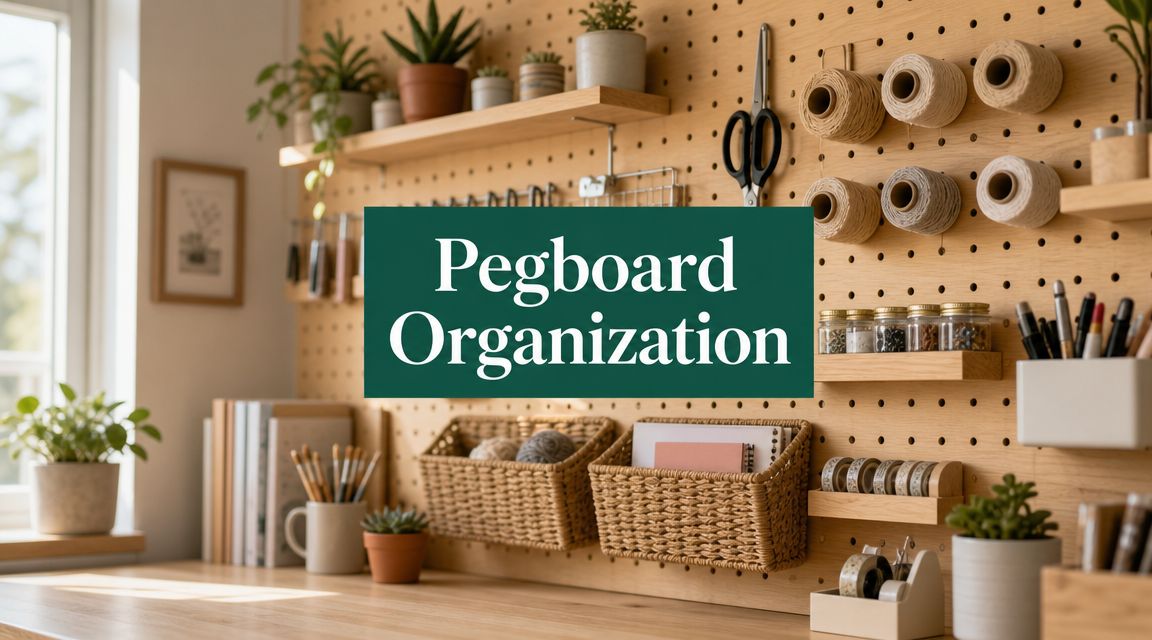
You're probably looking at one wall right now that could solve half your clutter problem. The kitchen drawer that won't close, the entry table buried in keys and receipts, the desk with chargers snaking everywhere, the closet shelf where scarves and belts become one tangled pile. That's exactly where pegboard works best. It turns dead wall space into storage you can see, adjust, and keep usable.
Pegboard isn't just a workshop staple anymore. Its staying power comes from a simple design: a board with evenly spaced holes that accept hooks, pegs, baskets, and shelves, which is why major home improvement retailers still position it as a flexible organizer for garages, kitchens, offices, and craft rooms. Lowe's also notes that pegboard boards come in wood, metal, or fiberboard, which matters when you're matching function, budget, and style for a room-specific setup in your home (Lowe's pegboard ideas and materials guide). If you want a broader overview of wall-based systems before you commit, this wall mounted organizer guide is a useful companion.
The best pegboard organization ideas don't stop at hanging things neatly. They account for weight, reach, daily habits, and what doesn't belong on the wall at all. That's where a hybrid setup helps. Use pegboard for the items you need in rotation, and move backup stock, seasonal gear, duplicates, and project overflow into off-site box storage so the board stays functional instead of becoming a vertical junk drawer.
1. Tool and Hardware Organization System
A compact tool pegboard works best when it acts like a service station, not a museum. Keep the tools you reach for first, screwdriver, tape measure, utility knife, hammer, hex keys, picture-hanging kit, on the center band of the board. Put lighter, less-used items higher, and anything with more weight lower.
That basic layout advice has stayed useful for decades because it reflects how people move. Heavier tools belong lower on the board, the most-used ones should sit within easy reach, and empty space matters because your setup will change over time. In practice, overcrowding is what ruins most apartment tool walls, not lack of accessories.
A simple layout sketch
Try this for a narrow wall near a laundry closet, utility nook, or hall cabinet:
- Top row: Small labeled bins for nails, wall anchors, screws, felt pads
- Middle left: Pliers, adjustable wrench, box cutter, stud finder
- Middle right: Tape measure, level, flashlight, painter's tape
- Bottom row: Hammer, small drill accessories, heavy-duty hooks, compact tool pouch
- Side strip: Magnetic bar for bits and driver heads
I like baskets for odd-shaped repair supplies because hooks make small items look organized right up until they fall off.
Material list that actually works
- Board choice: Metal pegboard or sealed hardboard for a home maintenance zone
- Accessories: Assorted single hooks, double hooks, cups, shallow baskets, magnetic strip
- Labeling: Adhesive labels on bins, not on the board itself
- Finish: Paint or powder-coated panel if the wall is visible from living space
Before moving overflow into storage, set up your active wall first. Then you'll know what's extra and what belongs nearby. For garage-adjacent planning, this hands-on garage organization guide is a good next step.
A real apartment scenario: one household keeps everyday repair tools on the pegboard, while the seasonal painting kit, spare caulk, grout touch-up supplies, and duplicate hand tools go off-site in labeled boxes. That split keeps the board easy to scan.
To see a few mounting and accessory ideas in action, this video is helpful:
2. Kitchen Supply and Gadget Organization
Kitchen pegboard only works when you're ruthless about what earns wall space. Daily utensils, prep tools, measuring gear, and one or two high-use baskets belong there. Specialty gadgets that come out twice a year don't.
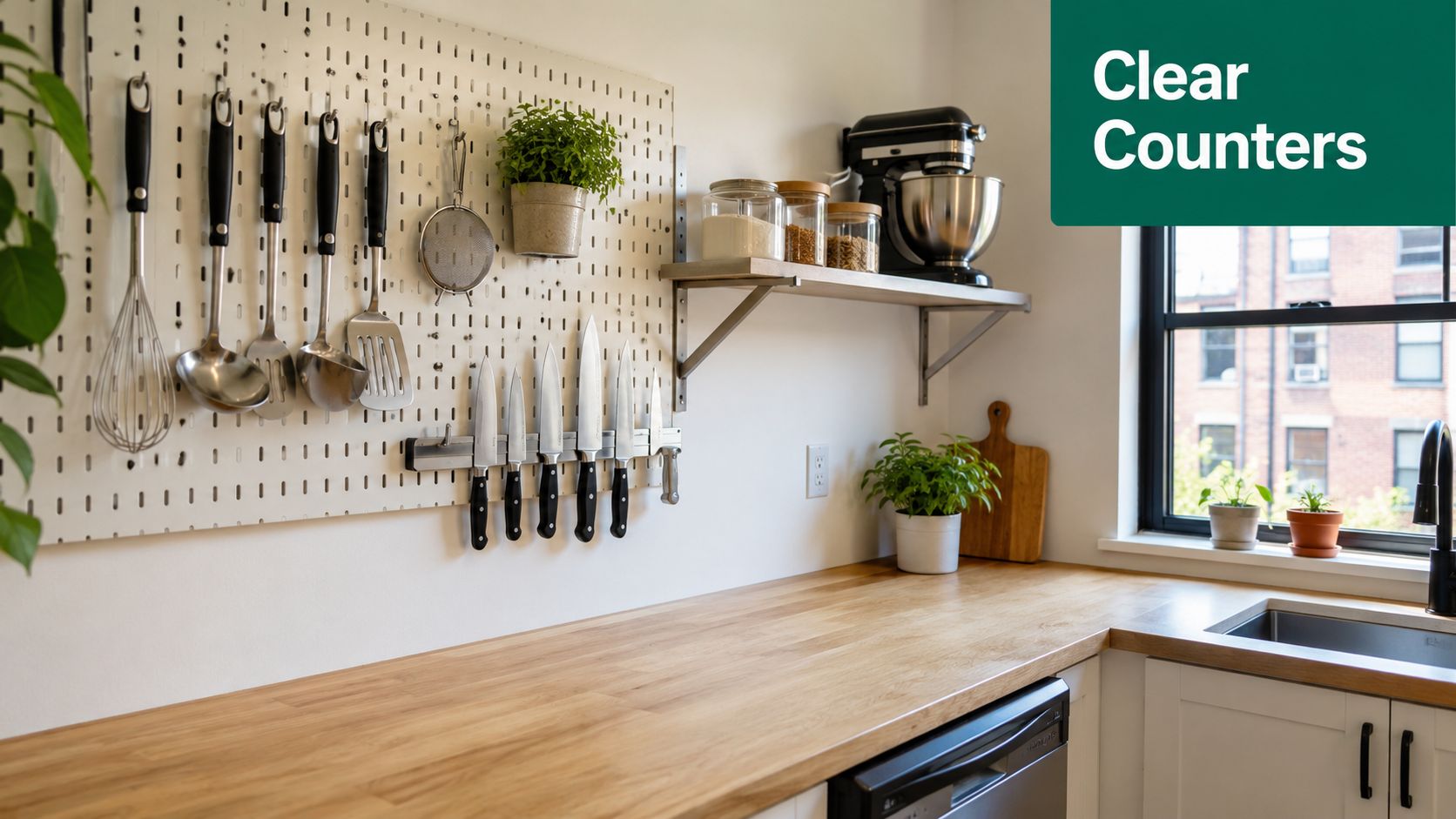
In small kitchens, the pegboard should reduce counter spread, not create a decorative backdrop for clutter. Keep the active zone around where you prep most often, and place the items you grab mid-cook at arm's reach. That approach lines up with practical pegboard guidance that emphasizes easy reach for high-use items and preserving open space so the system stays usable as routines change.
A working kitchen blueprint
For a wall beside a galley counter or breakfast nook:
- Upper section: Shelf for salt cellar, olive oil, pepper grinder, tea tin
- Center band: Spatulas, tongs, measuring cups, measuring spoons, microplane
- Lower section: Small basket for bag clips, labels, marker, kitchen twine
- Side hooks: Oven mitts, apron, dish brush
Avoid hanging anything greasy, bulky, or hard to clean. Blenders, food processors, and backup bakeware usually make the wall feel heavier than they save in space.
Keep the board in service of cooking flow. If an item needs two hands to remove, drips after use, or blocks three smaller tools, it probably doesn't belong there.
Materials and trade-offs
Use a painted or moisture-resistant board near food prep areas, and choose wipeable containers instead of fabric bins. Metal accessories tend to handle frequent cleaning better. Wooden shelves can look warmer, but they need more maintenance around steam and splatter.
The off-site storage piece matters in kitchens more than people expect. Holiday platters, duplicate mixing bowls, specialty cake tools, and bulk backup pantry containers don't need to compete with your daily zone. If your kitchen storage is already overstuffed, this kitchen pantry organization guide pairs well with a pegboard plan.
A good urban example is a studio kitchen with one bank of lower cabinets and no pantry. The wall handles meal-prep essentials, while backup baking gear and entertaining pieces live off-site until needed.
3. Closet and Clothing Accessory Organization
Closet pegboard shines when drawers fail you. Belts coil into knots, sunglasses disappear, jewelry gets buried, and scarves become fabric avalanches on a shelf. A slim pegboard panel on a side wall or inside a closet door fixes that fast.
This setup works best when you organize by how you dress, not by what looks pretty on the wall. Put daily accessories in the center zone, occasion pieces higher, and seasonal items either lower in labeled bins or out of the closet entirely.
Layout for a small closet
For a standard reach-in closet, use a vertical arrangement:
- Top hooks: Hats, special-event clutches, occasion belts
- Middle row: Everyday belts, crossbody bags, sunglasses, watch tray shelf
- Lower zone: Scarves on loops, jewelry cups, lint roller, garment brush
- Bottom baskets: Socks to pair later, collar stays, spare buttons, travel pouches
Clear containers help with jewelry and small accessories because hidden storage inside a closet often becomes forgotten storage.
What usually goes wrong
The most common mistake is trying to hang too much fabric on individual pegs. Heavy scarves or multiple bags on one hook quickly create sag and visual clutter. Another mistake is putting accessories on the back wall behind clothes, where you can't see or reach them.
A better method is simple:
- Group by season: Keep current-season accessories active
- Separate by function: Work, casual, event, travel
- Photograph the setup: Useful before rotating items out
- Reserve open holes: Your wardrobe changes, especially between seasons
For deeper closet planning in a small apartment, this expert closet space guide can help you decide what stays in rotation and what should move elsewhere.
A strong real-world use case is a shared bedroom closet where two people need separate accessory zones. Pegboard lets each person claim a vertical strip without giving up shelf space. Off-site box storage is the relief valve for winter scarves in summer, extra handbags, and event accessories you don't need staring at you every day.
4. Office Supply and Desk Organization
A desk gets messy for one reason. Too many categories are trying to live on one flat surface. Pens, notes, chargers, receipts, headphones, notebooks, reference papers, camera gear, and random adapters all compete for the same square footage.
Pegboard solves that by moving active tools upright and visible. I've found that the best home office boards don't hold everything. They hold the things that interrupt your work when you have to search for them.
Desk-back pegboard blueprint
Mount a board behind or beside the desk with clear categories:
- Top shelf: Notebook, planner, current reference folder
- Left zone: Pens, markers, scissors, ruler
- Right zone: Chargers, cables, earbuds, adapters
- Center: Sticky notes, task cards, timer, headphone hook
- Bottom cups: Binder clips, USB drives, stamps, spare batteries
Use separate hooks for each cable type. If two cords share one hook, people stop putting them back neatly after about a week.
Practical rule: Label by use, not by object. “Podcast mic cable” is easier to return than “USB-C.”
What belongs off the wall
Archive files, backup notebooks, unopened stationery, tax paperwork, old class materials, and duplicate tech accessories don't help your daily workflow. They create visual drag. Keep the pegboard focused on current work only, and move the rest out of the room.
That's especially useful in apartment offices that double as guest rooms or dining corners. If your workspace has to collapse visually daily, a lean pegboard plus boxed storage is more sustainable than stuffing drawers. For additional ideas on making a small work area function, this DIY small-space storage guide is a practical resource.
One broader industry signal is that pegboard storage systems aren't just a hobby category. A market report projects the global pegboard storage systems market at $3.8 billion in 2025, growing to $6.4 billion by 2034 at a 5.9% CAGR, which suggests ongoing demand for modular wall storage where floor space is limited (pegboard storage systems market projection).
5. Craft and Hobby Supply Management
Craft rooms and hobby corners are where pegboard can be brilliant or completely chaotic. The difference is whether you organize by active process or by shopping category. If you knit, sew, paint, or make jewelry, you don't work by aisle. You work by project flow.
Put the tools and materials for your current projects front and center. Store the exciting but inactive stash somewhere else. That one decision keeps a creative space inspiring instead of overwhelming.
Blueprint for a hobby wall
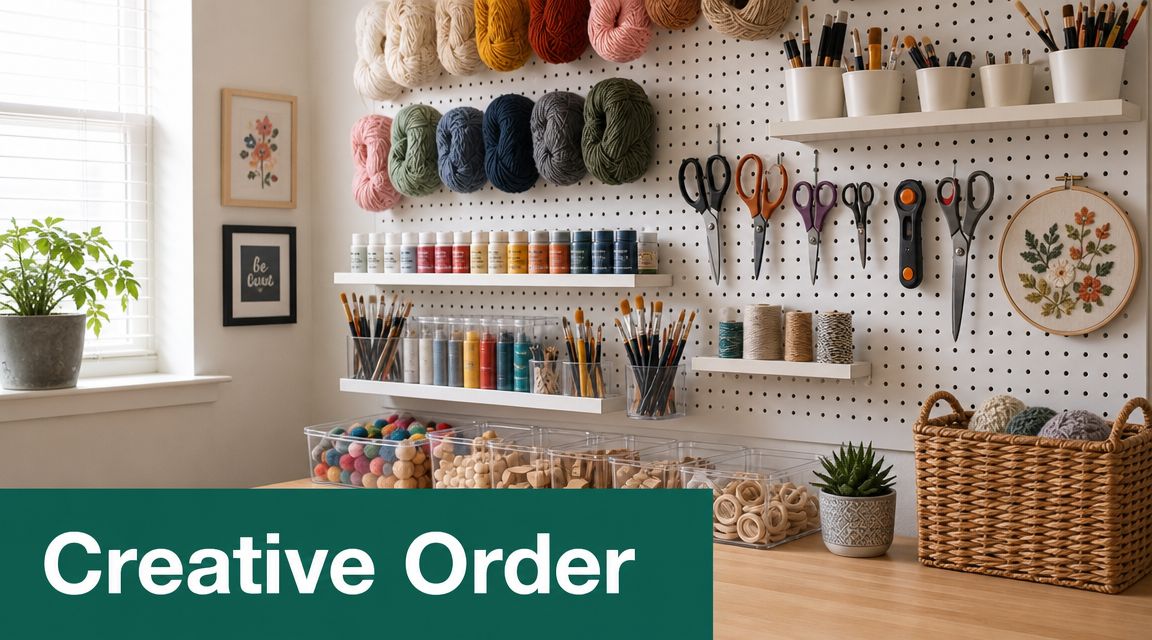
A flexible craft pegboard usually needs a mix of rods, cups, and shelves:
- Upper shelf: Sketchbooks, pattern folders, cutting mats
- Center left: Scissors, rotary cutter, rulers, palette knives
- Center right: Thread spools, washi tape, brushes, crochet hooks
- Lower baskets: Glue, clips, elastics, beads, chalk, markers
- Side pegs: Ribbon rolls, yarn hanks, small fabric cuts
Clear bins work better than opaque ones here because creative supplies are easy to forget when hidden.
Better rotation for active and inactive projects
Use the board for what's in progress. Keep one basket for the current project, one for the next project, and no more. Bulk yarn, duplicate paint colors, seasonal décor supplies, and old unfinished projects should leave the room if they're crowding your work area.
That's why off-site storage can be a huge relief for crafters in apartments. You still keep the supplies, but you don't force them to live in your sightline every day. If your materials tend to spread across multiple rooms, this craft supply organization guide is worth bookmarking.
A common real-world example is the dining-table crafter. The pegboard holds the active toolkit near natural light, while archival paper, holiday supplies, and fabric surplus move into storage until the season or project returns.
6. Cleaning Supply and Household Item Storage
Cleaning supplies need a pegboard system that values safety over aesthetics. Pretty rows of spray bottles aren't enough if the board is flimsy, damp, or overloaded. Utility storage has to survive real weight and repeated grabbing.
One technical point matters more than most mainstream decorating guides admit. Pegboard needs at least 1/2 inch of clearance behind the board so hooks can seat properly, and secure mounting into studs plus washers helps keep screw heads from pulling through the board under load. That's a practical issue if you're hanging heavier household items or moving hooks often (pegboard mounting and load-safety video).
Household utility layout
This works well in a laundry closet, utility alcove, or pantry wall:
- Top row: Dusters, microfiber cloth bin, spare gloves
- Middle zone: Brush, handheld scrubber, lint roller, small squeegee
- Lower zone: Spray bottles, laundry scoop, stain tools, refill funnel
- Bottom hooks: Broom, dustpan, foldable drying rack accessory
- Closed bin or cabinet nearby: Chemicals and anything hazardous
If children or pets can access the area, don't use open pegboard for chemicals. Store those in a secured cabinet and let the board hold tools, cloths, and non-hazardous supplies.
What works and what doesn't
Use sealed or moisture-resistant panels in damp zones. Don't overload baskets with heavy liquid containers. It's also smart to separate by room, such as kitchen cleaning, bathroom cleaning, laundry, and floor care, instead of mixing everything in one visual cluster.
A practical apartment scenario is a stacked washer-dryer closet with almost no shelf space. Pegboard lets you hang the everyday cleaning tools vertically, while backup detergent, seasonal deep-clean items, and bulk refills move off-site so the closet door can still close.
7. Gaming and Entertainment Equipment Organization
Gaming setups get messy fast because each device brings its own ecosystem. Controllers, charging cables, headsets, handhelds, remote controls, game cases, streaming accessories, and spare batteries all pile up around the screen.
A pegboard wall works if you treat it like a docking station. Every device needs a defined home, and every cable needs a route back to that home. If the board becomes a decorative display for things you never use, the console cabinet will still be a mess.
A layout that supports actual play
For a living room or bedroom entertainment setup:
- Top shelf: Handheld console case, media remote, VR accessories
- Center hooks: Headset, two current controllers, charging dock cable loops
- Side cups: Thumb grips, adapters, rechargeable battery packs
- Lower shelf or bracket: Small speaker, router accessory, game case holder
- Cable lane: One vertical strip with clips or ties by device name
Labeling matters here more than in most rooms. A black cable is just a black cable until you need the right one quickly.
Old consoles, duplicate controllers, collector packaging, and backup accessories should leave the active setup. The board should support what you use this month, not everything you've ever owned.
Where people overbuild
Many setups fail because the board is mounted too high and turns into display storage instead of reach storage. Keep controllers and headphones where you can grab and return them without stretching. Also be careful with weight if you're tempted to mount larger electronics directly on the board. In most homes, it's smarter to support devices on shelves or furniture and let pegboard manage accessories.
A solid small-space example is a one-bedroom apartment where the living room also serves as a media room and office. Pegboard keeps gaming accessories vertical, and older systems move into labeled off-site storage so the entertainment center doesn't dominate the room.
8. Pet Supplies and Accessories Organization
Pet clutter spreads because it arrives in many small forms. Leashes, waste bags, grooming tools, medication reminders, food scoops, travel bowls, toys, and seasonal gear all get dropped where they're used. Pegboard gives those grab-and-go items a consistent home.
This works especially well near the door, inside a laundry area, or along the side of a kitchen pantry. Keep the active daily routine visible. Keep bulk consumables and overflow elsewhere.
Pet station blueprint
For one or multiple pets, try this arrangement:
- Upper shelf: Treat jar, medication pouch, grooming wipes
- Center hooks: Leashes, harnesses, collars, poop-bag dispenser
- Lower baskets: Brushes, nail clippers, toy rotation, travel bowl
- Side hook: Towel for muddy paws
- Nearby floor bin or cabinet: Food container
Airtight food storage should stay in proper containers, not open pegboard baskets. The board is best for accessories and routine-care tools.
For more general product selection ideas for pet households, this expert guide for pet owners can help you think through categories that deserve a dedicated home.
Smart separation by use
Divide supplies into daily, weekly, and occasional use. Daily items stay on the board. Backup leashes, outgrown gear, extra beds, bulk toy purchases, and seasonal pet coats don't need wall space year-round.
A good urban example is a dog owner in a walk-up apartment. The pegboard by the entry keeps leash, keys, towel, flashlight, and treat pouch ready for fast exits. Backup pee pads, spare shampoo, extra carriers, and winter accessories can move off-site to keep the apartment calm.
9. Entryway and Personal Item Drop Zone
The entryway pegboard is often the most impactful one in the home because it stops clutter before it spreads. Keys don't hit the counter. Bags don't land on chairs. Mail doesn't drift to the kitchen. The wall catches all of it at the door.
This setup needs to reflect your real exit routine. If you leave with headphones, sunglasses, tote bag, transit card, and umbrella, those are the items that deserve the prime spots. Decorative filler won't help you on a rushed morning.

Entryway blueprint by zone
- Top shelf: Sunglasses case, wallet tray, outgoing mail slot
- Center hooks: Keys, everyday bag, dog leash, compact umbrella
- Lower baskets: Reusable bags, lip balm, hand sanitizer, gloves
- Side strip: Notes, reminder cards, small clipboard
- Bottom area: Space below for shoes or a narrow bench
If more than one person uses it, assign each person a vertical lane or clearly labeled hook group. Shared entryway systems fall apart when everyone claims the same two hooks.
How to keep it from becoming a junk wall
Only hang what you use often. Don't use your entry pegboard for memorabilia, random chargers, unopened mail piles, or every hat you own. Keep it tight and obvious.
Practical placement matters too. Hooks should sit at heights the actual users can reach, especially if children need their own bag or jacket spot. Seasonal overflow, such as winter accessories or extra umbrellas, can move into off-site storage when the weather changes so the drop zone stays clean.
One of the most useful pegboard habits for mixed-use households is preserving open space for frequently grabbed items and shared routines. That's especially relevant when one board has to serve an entryway, family command center, and quick-access household station.
10. Bathroom and Personal Care Product Organization
Bathroom pegboard has one job. It should make the morning and evening routine easier without turning the room into product display clutter. In small bathrooms, that means keeping only active daily items visible and controlling moisture.
This is one room where material choice matters immediately. Use a sealed or moisture-resistant board, avoid absorbent containers, and don't mount it where it gets soaked. Good ventilation also matters because damp storage ages badly even when it looks tidy on day one.
A compact bathroom layout
For a wall beside the vanity or over the toilet:
- Upper shelf: Daily skincare tray, tissue box, small plant if the room allows
- Center cups: Toothbrush accessories, comb, razor stand, makeup brushes
- Side hooks: Hair dryer, headband, washcloth, shower cap
- Lower bins: First aid basics, cotton pads, hair ties, travel toiletries
Use clear containers if several people share the bathroom. It cuts down on rummaging and accidental duplication.
In bathrooms, less on the board is better. The minute products start blocking one another, the system stops supporting your routine and starts slowing it down.
What should stay elsewhere
Backup soap, extra toothpaste, refill bottles, bulk paper goods, unopened skincare, and seasonal personal care items are better stored outside the bathroom if space is tight. That's true in most apartments, where the room itself can only support active use.
A strong real-world example is a shared apartment bath with one tiny vanity drawer. Pegboard keeps the everyday routine sorted by person or category, while reserve stock lives off-site or in a separate backup bin so the wall doesn't become overstuffed.
Pegboard Organization: 10-Category Comparison
| System | Implementation Complexity 🔄 | Resource Requirements ⚡ | Expected Outcomes ⭐ | Ideal Use Cases 📊 | Key Advantages & Tips 💡 |
|---|---|---|---|---|---|
| Tool and Hardware Organization System | Medium, wall mounting and load planning 🔄 | Low–Medium, pegboard, hooks, magnetic strips ⚡ | High, visibility & quick access ⭐⭐⭐⭐ | Apartment DIYers; craft enthusiasts; condo maintenance 📊 | Maximizes wall space; place heavy tools lower; photograph layout 💡 |
| Kitchen Supply and Gadget Organization | Medium, moisture-resistant prep and layout 🔄 | Medium, shelves, magnetic knife strip, sealed board ⚡ | High, clear counters, faster meal prep ⭐⭐⭐⭐ | Urban kitchens; studio apartments; minimal kitchens 📊 | Use moisture-resistant pegboard; keep frequent items reachable 💡 |
| Closet and Clothing Accessory Organization | Low, often fits inside closet door 🔄 | Low, hooks, small baskets, shelf dividers ⚡ | Medium–High, better outfit planning & visibility ⭐⭐⭐ | Small/shared closets; accessory rotation before storage 📊 | Organize by color/season; use clear containers; install on door 💡 |
| Office Supply and Desk Organization | Low–Medium, cable and layout management 🔄 | Low, holders, cable hooks, small shelves ⚡ | High, reduced desk clutter, improved focus ⭐⭐⭐⭐ | Home offices; student study areas; remote workstations 📊 | Group by project; label containers; install behind desk 💡 |
| Craft and Hobby Supply Management | Medium, many small containers and layout choices 🔄 | Medium, baskets, clear bins, shelves ⚡ | High, prevents waste, boosts productivity ⭐⭐⭐⭐ | Small craft studios; knitting/painting spaces; hobbyists 📊 | Group by craft/color; rotate projects; store bulk supplies offsite 💡 |
| Cleaning Supply and Household Item Storage | Low–Medium, safety & ventilation planning 🔄 | Low–Medium, hooks, sealed board, labeled bins ⚡ | Medium, centralized supplies, easier inventory ⭐⭐⭐ | Laundry closets; utility areas; condo supply centers 📊 | Use sealed pegboard; label bins; store chemicals safely 💡 |
| Gaming and Entertainment Equipment Organization | Medium, stable mounting and heat considerations 🔄 | Medium, reinforced hooks, shelves, cable management ⚡ | High, tidy setup and cable control ⭐⭐⭐⭐ | Apartment gaming corners; living room entertainment centers 📊 | Ensure ventilation; label cables; reinforce mounts for electronics 💡 |
| Pet Supplies and Accessories Organization | Low, simple hooks and baskets 🔄 | Low, airtight containers, baskets, hooks ⚡ | High, quick access, spoilage prevention ⭐⭐⭐⭐ | Urban pet owners; multi-pet households; small spaces 📊 | Use airtight food containers; install out of pets' reach; rotate toys 💡 |
| Entryway and Personal Item Drop Zone | Low, straightforward install but durable materials needed 🔄 | Low, hooks, small shelves, baskets ⚡ | High, prevents clutter & lost items ⭐⭐⭐⭐ | Apartment entryways; condo drop zones; small mudrooms 📊 | Label hooks per person; keep daily items at eye level; durable materials 💡 |
| Bathroom and Personal Care Product Organization | Medium, must use moisture-resistant materials 🔄 | Medium, sealed pegboard, clear containers, shelves ⚡ | Medium, better visibility but humidity risk ⭐⭐⭐ | Small/shared bathrooms; studio bathrooms; tight vanities 📊 | Use moisture-resistant materials; ensure ventilation; store backups offsite 💡 |
Beyond the Board: Maintaining Your Organized Space
Putting up a pegboard feels productive right away. Keeping it useful is the part that changes your home. The biggest mistake people make is treating the board like the final answer instead of one layer in a storage system. Pegboard handles access well. It doesn't solve overflow on its own.
That's why the best pegboard organization ideas always include a rotation habit. The wall should hold what you use in the current season, current routine, or current project cycle. Everything else needs a different home. If you skip that step, even a well-designed board slowly turns into a vertical holding pen for things you don't want to decide about.
I recommend a simple maintenance rhythm. Stand in front of each pegboard once a month and ask three questions: Did I use this recently? Is this the best spot for it? Does this item belong on the wall at all? Those questions keep the board honest. They also stop accessories from multiplying without purpose.
Another useful habit is to leave deliberate space. That can feel wrong at first because empty hooks and open bins seem like wasted capacity. They're not. Open space is what lets the system adapt when your routine changes, when you add a new household task, or when one season replaces another. Practical pegboard advice has long emphasized that combination of lower placement for heavier items, easy reach for high-use items, and room for future additions, and that principle still holds because daily life keeps shifting.
Shared homes need one more layer of discipline. Label bins. Assign hook zones. Make the system obvious enough that another person can put something back without asking where it goes. That's especially important in entryways, kitchens, utility spaces, and kid-accessible areas. A clever layout doesn't last if only one person can understand it.
Safety matters too, especially once a board starts carrying more than light accessories. If you're mounting tools, household gear, or weighted baskets, secure installation matters more than styling. A board that looks neat but fails under use isn't organized. It's fragile. Keep an eye on mounting hardware, basket weight, and whether hooks are still seating cleanly after repeated adjustments.
The final step is what most homes are missing. Pair pegboard with off-site box storage. The board should carry your active layer. Off-site storage should carry your reserve layer. That's the cleanest way to store seasonal accessories, backup toiletries, old gaming gear, holiday kitchen items, archived documents, extra craft materials, duplicate tools, and anything else you want to keep but don't need on hand every day.
That's where Endless Storage fits naturally. Instead of forcing your closet, cabinets, and pegboards to absorb everything you own, you can box up the less-frequently used categories and keep your everyday walls clear and functional. It's a particularly smart setup for urban residents, people moving, and anyone trying to declutter without giving up the things they still want to keep.
The goal isn't a perfect wall. It's a home where the things you use most are easy to reach, easy to return, and no longer buried under everything else.
If your pegboard is exposing how much overflow your home is carrying, Endless Storage can help you finish the job. Store seasonal gear, backup supplies, archived documents, hobby overflow, and duplicates by the box, so your walls hold items in regular use and your home stays easier to live in.
Frequently Asked Questions
Unveiling the Secrets to Effortless Storage
Endless Storage is available nationwide. You pick a plan, tell us where to pickup, and we'll send a UPS van to collect, whichever state you're in.
Your shipping label will be sent to your email within a few minutes, if not instantaneously. It can also be accessed through your customer profile.
Your box will be shipped to one of our climate controlled self storage facilities in our closest self storage facility. Our manager will accept your package, notify you that your box has been received, and securely stored. Only our managers will have access to Endless Storage boxes.
Email us at admin@endless-storage.com click to live chat with us, or send us a message below.
Never! We're committed to transparent pricing with no surprises. You'll lock in your rate with no hidden fees and no long-term contracts.
Fast access guaranteed! Your boxes will arrive at your doorstep within 48 hours of requesting them back. Need to check on delivery? We provide tracking information for complete peace of mind.
Totally flexible! Store month-to-month with no long-term commitment and cancel anytime.
Everything's online! Use your account dashboard to:
• Set up automatic monthly payments
• Request box returns
• Update your address
• Order additional boxes
• Track shipments
Your boxes are insured up to $100 each. Our customer service team will help you file any necessary claims and resolve issues quickly.
Don't worry – we'll email you right away if there's a payment issue. Your items stay safe, though you may have temporary service interruption or late fees until payment is resolved.
When you request our free storage kits, you'll have 30 days to send in your boxes to activate your 3 months of free storage. Think of it like starting a gym membership – your activation window begins when you receive your kits, and your full free trial begins once you send in your first box. During your free months, you'll experience our complete storage service at no cost.
Your 30-day activation window begins when you receive your storage kits. We'll send you an email confirmation when your kits are delivered, marking the start of your activation period.
If you haven't sent any boxes for storage within your 30-day activation window, your free trial will expire and we'll begin charging the regular monthly rate of $9.99 per box. This helps ensure our storage kits go to customers who are ready to use our service.
A box costs $9.99 per month to store (plus sales tax). This price includes free shipping for standard boxes under 50 lbs. and smaller than 16"x16"x16"
Log into your Endless Storage account, locate the box you would like returned, and simply click Return My Box.
Yes, each box stored with us is insured for up to $100 throughout transit as well as the duration of storage within our facilities.
Your box will be at your doorstep within 48 hours of you requesting it back.
Store 10+ boxes? We'll pick them up for free! After your purchase, we'll contact you to schedule a convenient pickup time and arrange UPS collection.
We trust UPS with all shipments, and every box includes $100 insurance coverage. You'll receive tracking information to monitor your items' journey.
Yes! Visit any of our locations by appointment. Just bring a photo ID matching your customer profile.
For everyone's safety, we can't store hazardous materials, firearms, or perishables. All items must fit within our standard boxes.
It's easy! Order your storage kit online, and we'll ship it to you within 1-2 business days. Your shipping labels will be emailed instantly and available in your account.
We're here to help! Email us at admin@endless-storage.com, use our live chat, or send us a message through your account.
To cancel your storage service with Endless Storage, please email your cancellation request to admin@endless-storage.com. Our team will process your request within 2 business days and confirm your cancellation via email.
We understand packing takes time. However, to maintain your free trial benefits, you'll need to send at least one box within the 30-day activation window. If you need more time, you can always start with one box to activate your trial and send the rest later. You can always reach out to admin@endless-storage.com if you have any issues or concerns.
When you request our free storage kits, you're starting a 30-day window to begin using our storage service.
Important: To activate your free trial, send at least one box for storage within 30 days. If no boxes are sent within this 30-day window, a one-time $50 fee applies to cover materials and shipping costs. This fee is clearly disclosed before you sign up.
Think of it like reserving a hotel room – we're setting aside space and sending specialized packing materials for your use. The fee only applies if you request materials but don't begin storage, similar to a hotel's no-show charge.